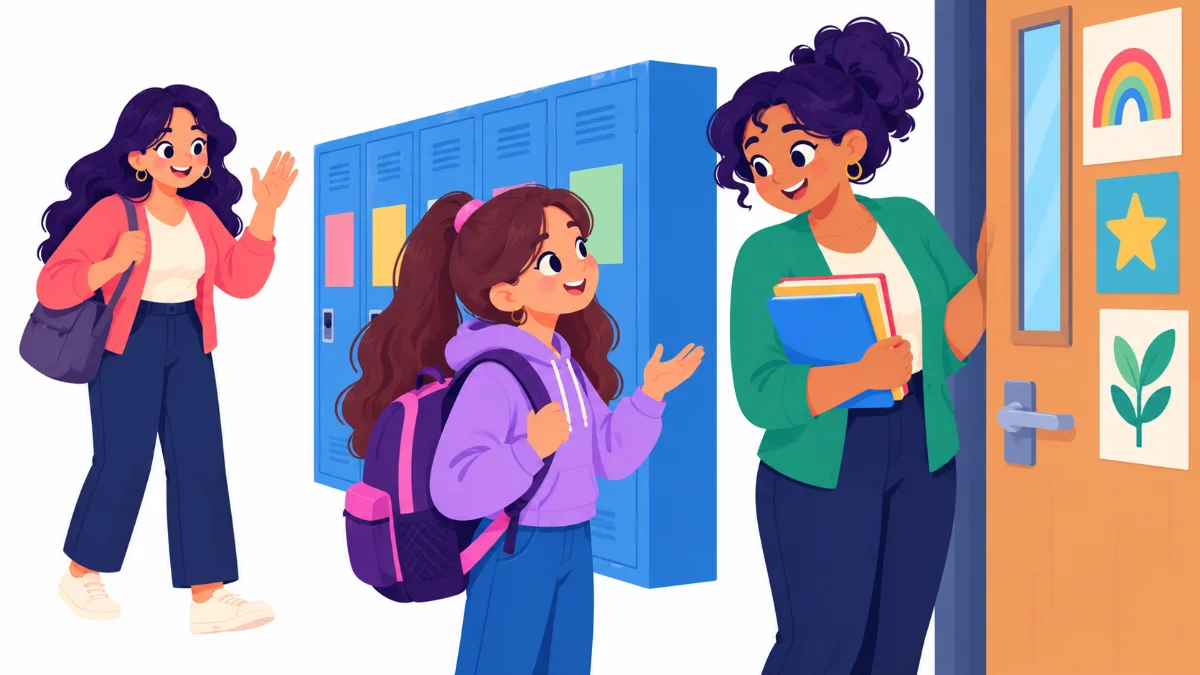

Knowing when your child is ready to self-advocate can feel tricky, especially in middle school, when there are more teachers, more classes and fewer chances for parents to step in. Picture Nora, a sixth grader with ADHD and a 504 plan. Her mom, Ms. Patel, still emails teachers about every missed accommodation, yet Nora has started saying, “Mom, I can ask myself.”
This list is for parents of middle schoolers with IEPs or 504 plans. It describes seven signs that your child is ready to take on more self-advocacy, ordered from the earliest to the most advanced. Each sign explains what it looks like, why it matters, how you can build on it at home and how it played out for Nora. By the end, you will know which skills to encourage next and how to step back without stepping away.
Examples are fictional. Adapt to the student’s goals and agreed supports. This is guidance, not a diagnosis.
At a glance
- Self-advocacy means understanding your needs and asking for them.
- Readiness grows in small steps, not all at once.
- Early signs often show up at home before school.
- Parents can coach, practice and then step back gradually.
- The school team can include self-advocacy in the IEP or 504 process.
How we ordered these signs
We ordered the seven signs from the earliest to the most advanced, based on how much independence each one needs. Signs 1 to 3 are about self-awareness. Signs 4 and 5 are about speaking up in everyday moments. Then, signs 6 and 7 are about planning and formal meetings. Figure 1 shows the full order.
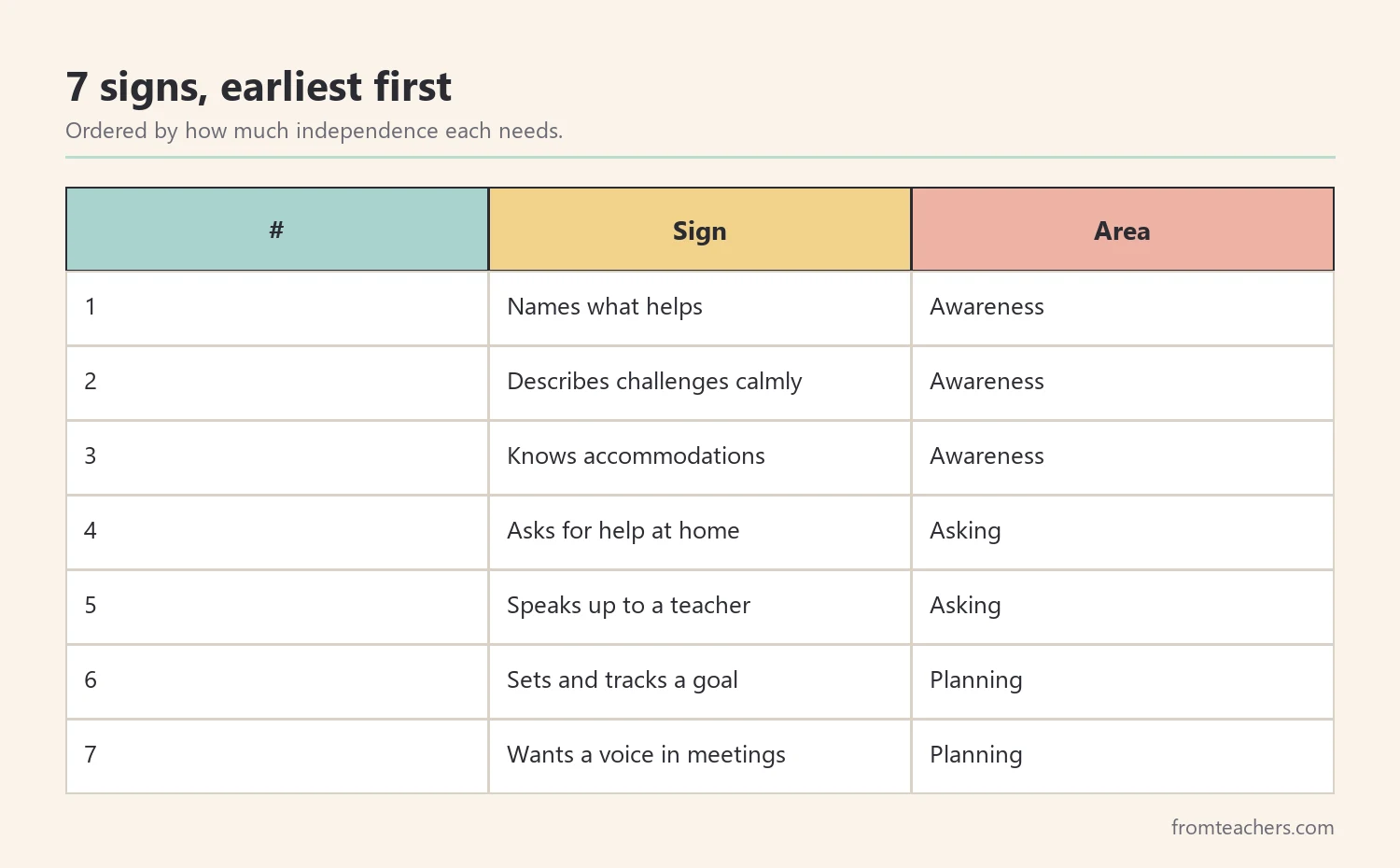
Your child does not need to show every sign to start. Most children show a few early signs while still needing support with the later ones. That is normal. The goal is to notice what is already there and build the next step.
1. Your child can name what helps them learn
What it looks like: your child says things like “I focus better with headphones” or “I need the instructions written down.”
Why it matters: knowing what helps is the foundation. A child cannot ask for a support they do not recognize.
How to build on it: after homework, ask, “What made that easier today?” Write their answers on a small card.
Example: Nora told her mom she finished math faster when she sat away from the window. Ms. Patel added “seat away from distractions” to Nora’s card.
2. Your child can describe their challenges without shame
What it looks like: your child talks about their disability or difficulty in a matter-of-fact way, such as “I have ADHD, so I lose track of time.”
Why it matters: describing a challenge calmly makes it easier to ask for help. Shame often keeps students silent.
How to build on it: talk about strengths and challenges together, and share your own. Use the same respectful words your child’s team uses.
Example: Nora explained her ADHD to a cousin without embarrassment. That told Ms. Patel she was ready for the next step.
3. Your child knows their accommodations
What it looks like: your child can list some of the supports in their plan, such as extra time or a copy of notes.
Why it matters: students cannot use what they do not know they have. Middle school teachers may assume students will ask.
How to build on it: read a short, child-friendly summary of the plan together. Explain the purpose of each support in one sentence.
Example: Nora learned she had extended time on tests. Before that, she thought she just had to rush.
4. Your child asks for help at home
What it looks like: instead of shutting down, your child says, “Can you explain this part?” or “I need a break first.”
Why it matters: asking at home is low risk practice for asking at school.
How to build on it: praise the asking, not just the answer. Role-play the same request with a pretend teacher.
Example: Ms. Patel played the role of Nora’s science teacher, and Nora practiced, “Could I get a copy of the notes?”
5. Your child speaks up to a teacher once
What it looks like: your child reports that they asked a teacher for something, even a small thing.
Why it matters: the first real attempt builds confidence, especially when it works. This is often the clearest sign a child is ready to self-advocate more often.
How to build on it: celebrate the attempt. If it did not go well, problem-solve together and try again.
Example: Nora asked her math teacher for extended time on a quiz. The teacher agreed, and Nora came home proud.
6. Your child sets a small goal and tracks it
What it looks like: your child chooses a goal, such as “I will use my planner every day this week,” and checks their own progress.
Why it matters: goal setting moves self-advocacy from asking to planning. It also gives your child evidence of their own growth.
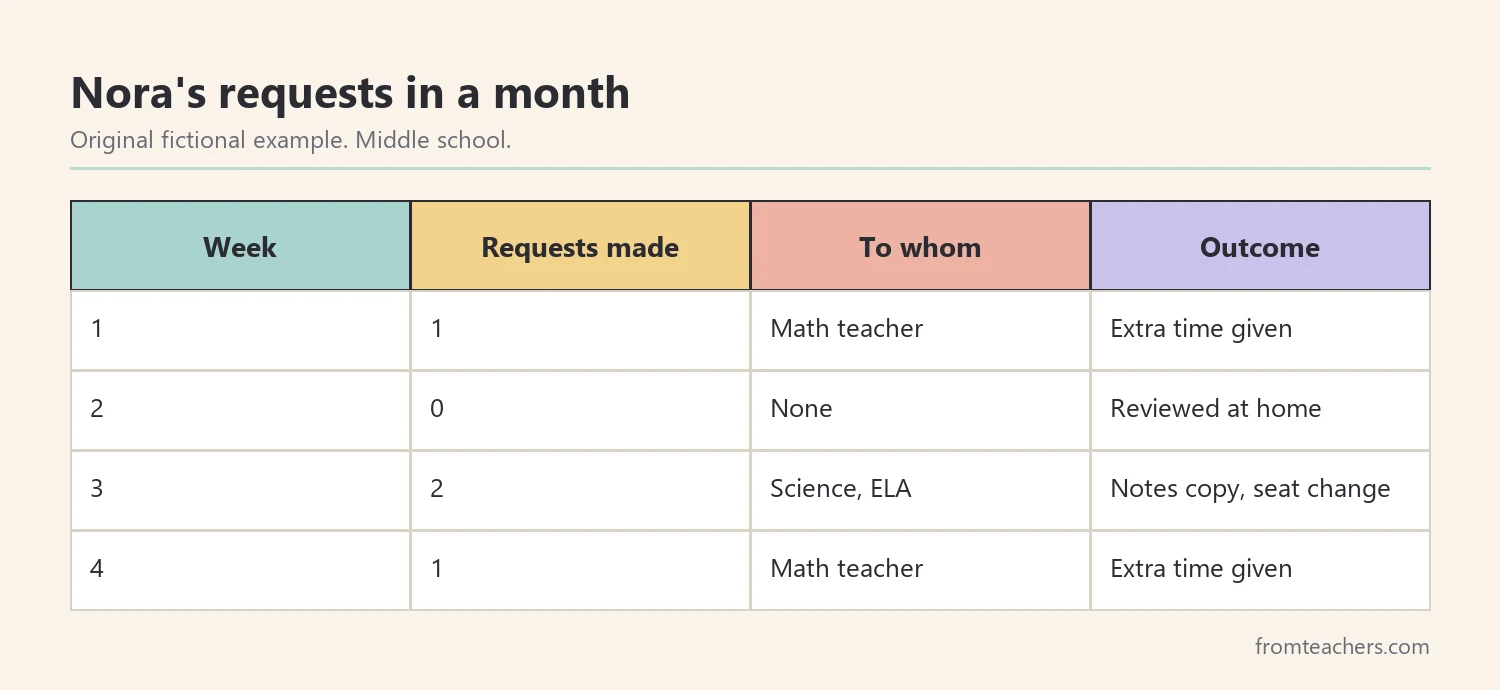
How to build on it: keep goals small and short. Review them on the weekend. Figure 2 shows how Nora tracked her requests for a month.
Example: Nora set a goal to ask for a support at least once a week. She met it three weeks out of four.
7. Your child wants a voice in the IEP or 504 meeting
What it looks like: your child asks what happens in the meeting or wants to share their own ideas.
Why it matters: students who take part in planning often understand and use their supports better. In addition, the team hears directly from the person the plan is for.
How to build on it: ask the case manager how your child can take part. Start small, for example by sharing three things that help. A structured resource such as the Self-Advocacy Skills intervention toolkit for students with disabilities includes guides on understanding rights and accommodations, communicating with teachers and setting personal goals that you and the team can use to prepare.
Example: Nora joined the first ten minutes of her 504 meeting and read her support card aloud. The team added one of her ideas to the plan.
Early signs versus advanced signs
It helps to see the difference between early and advanced readiness. Figure 3 compares them so you can see where your child is today.
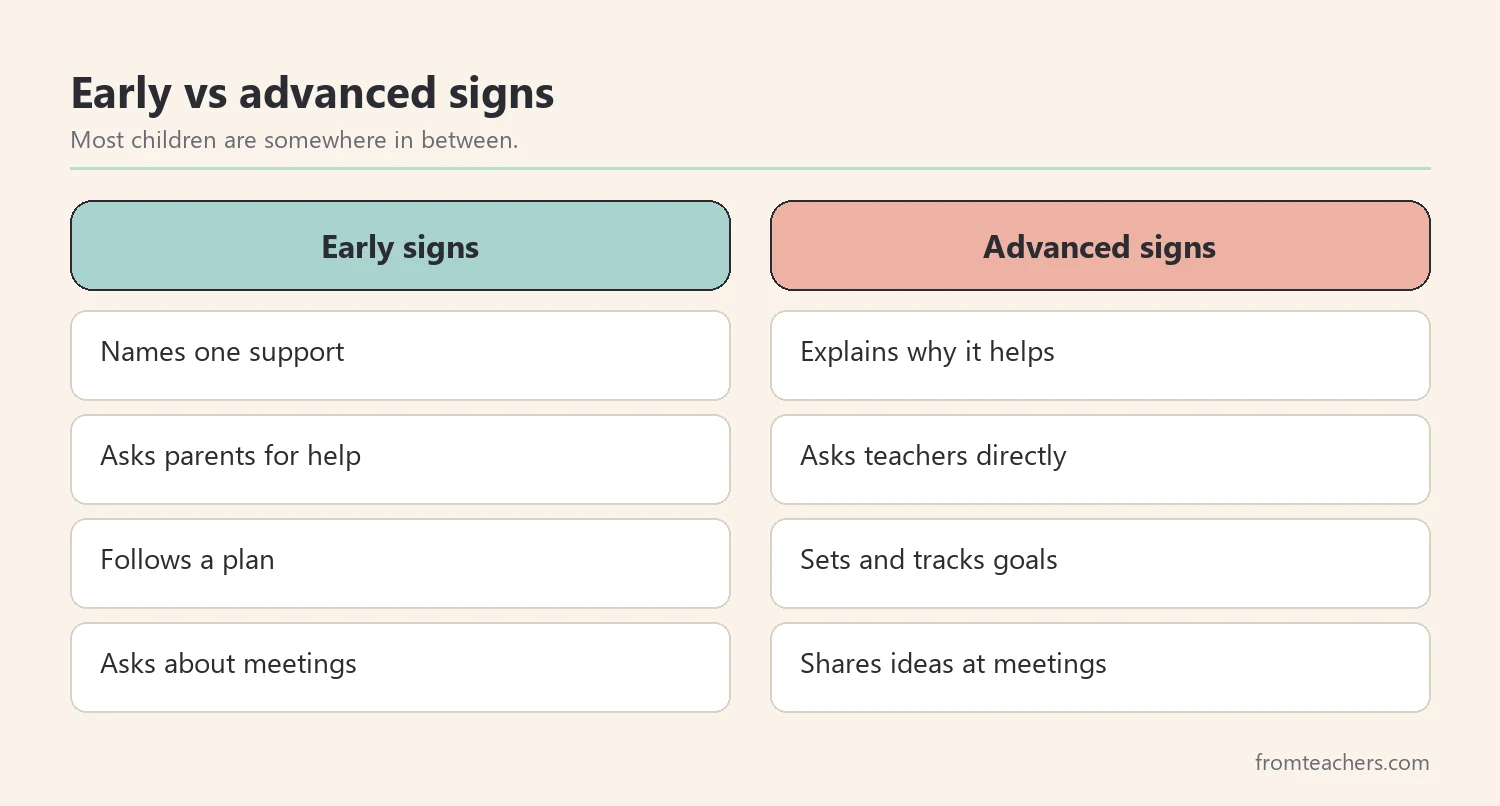
| Area | Early sign | Advanced sign |
|---|---|---|
| Awareness | Names one helpful support | Explains why it helps |
| Asking | Asks parents | Asks teachers directly |
| Planning | Follows a plan | Sets and tracks goals |
| Meetings | Asks what happens | Shares ideas at the meeting |
How parents can step back gradually
When your child is ready to self-advocate, the hardest part is often for the parent. Stepping back too fast can leave a child alone with a problem. Stepping back too slowly can send the message that they cannot do it. Figure 4 shows a simple four stage approach.
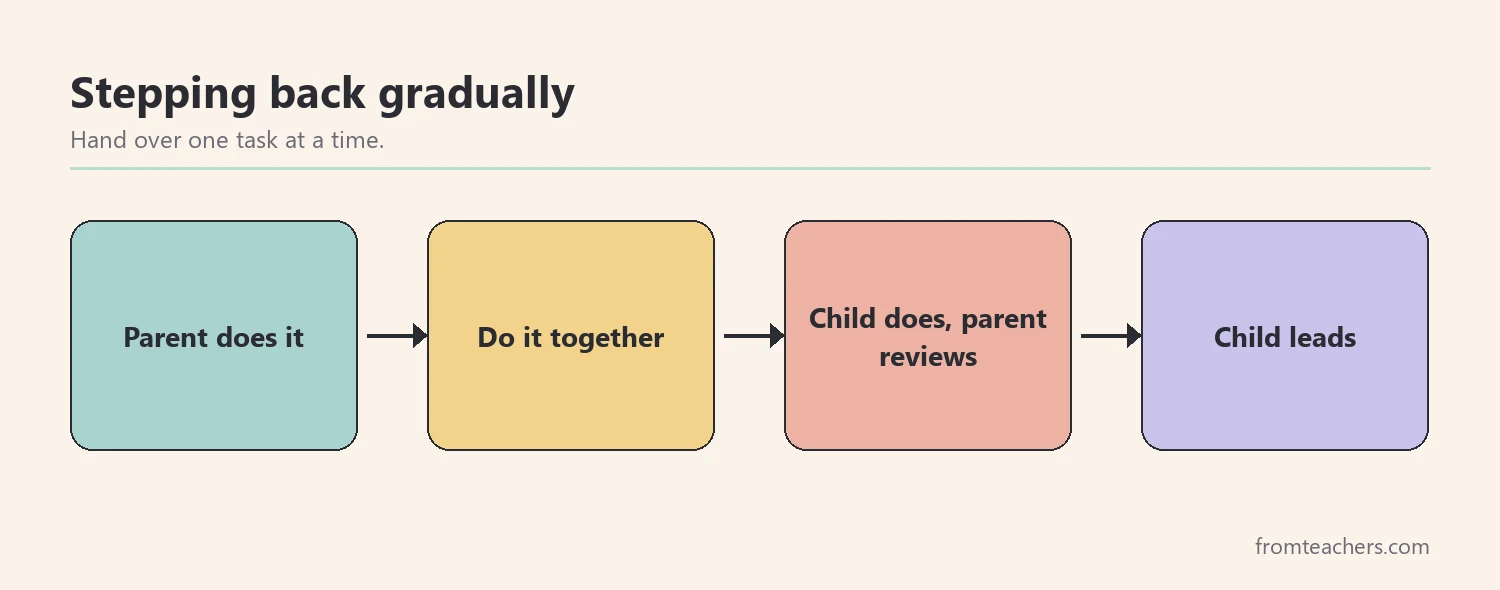
For Nora, Ms. Patel first stopped emailing about small issues, then reviewed requests with Nora on Sunday, and finally checked in only when Nora asked. She still stayed in touch with the case manager about bigger concerns.
Keep your partnership with the school strong during this shift. Let teachers know that your child is practicing self-advocacy, so they can respond warmly and give feedback.
Practicing requests at home
Role-play is one of the simplest ways to help a child who is almost ready to self-advocate. First, choose one real situation from the past week, such as not understanding homework instructions. Next, take turns playing the student and the teacher. Then switch roles, so your child hears how a polite request sounds from the other side.
Keep the script short. A useful pattern has three parts: say what is happening, say what would help and say thank you. For example, “I did not understand the last step. Could you show me one more example? Thank you.” Writing the pattern on a sticky note in the planner gives your child a quick reminder at school.
Ms. Patel and Nora practiced for five minutes on two evenings. Afterwards, Nora said the real conversation felt “like the second time, not the first.” That feeling of familiarity is exactly what practice is meant to create.
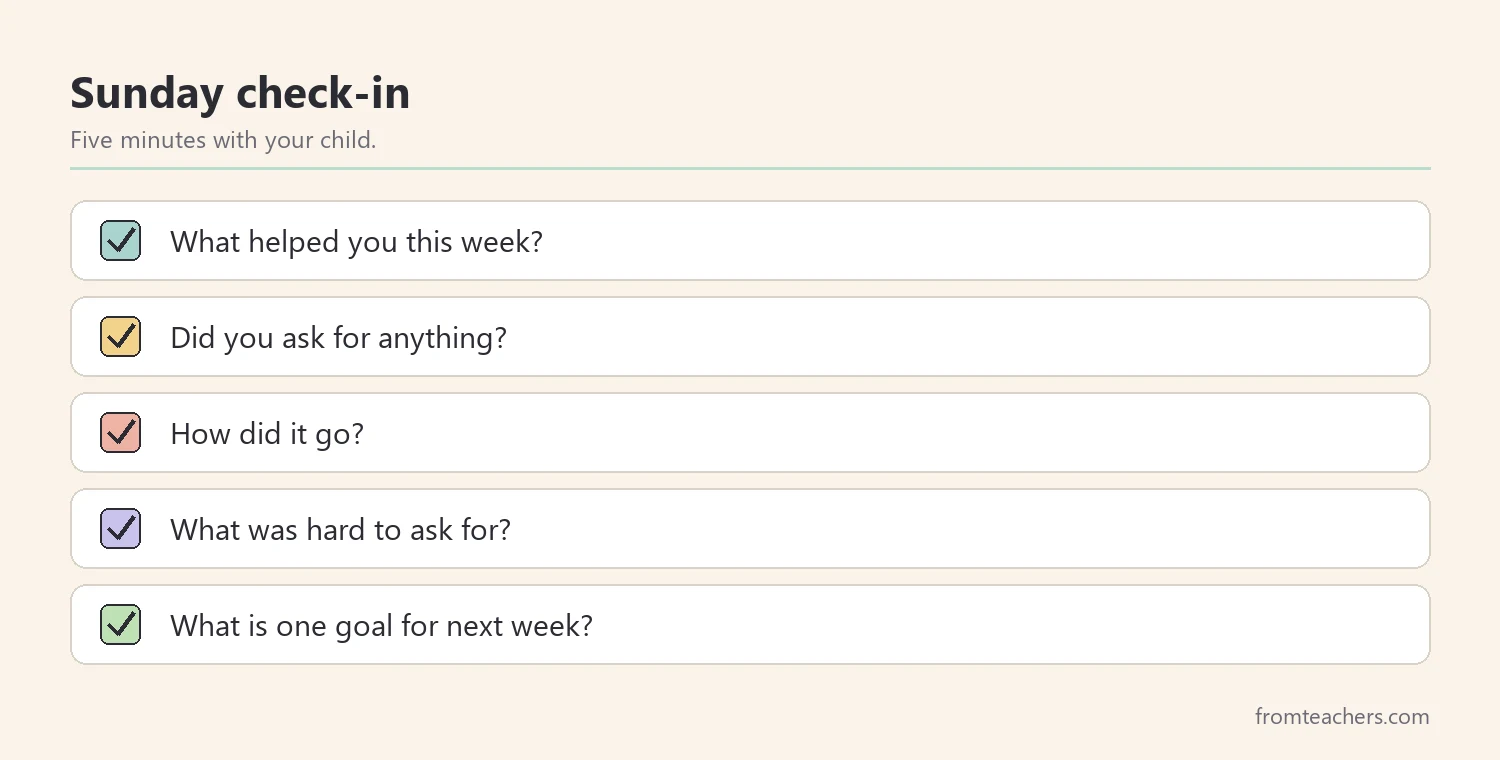
Questions to ask your child each week
Short, regular check-ins keep progress visible. Figure 5 lists five questions Ms. Patel used on Sunday evenings.
Common mistakes and how to avoid them
- Waiting for full readiness. Fix: build on early signs now.
- Stepping back all at once. Fix: hand over one task at a time.
- Treating a failed request as proof. Fix: problem-solve and try again.
- Keeping the plan secret from the child. Fix: share a child-friendly summary.
- Not telling teachers. Fix: let them know your child is practicing.
Questions parents ask about kids being ready to self-advocate
At what age should children start self-advocating?
Early skills, such as naming what helps, can start in elementary school. Middle school is a natural time to practice asking teachers directly.
What if my child is too anxious to speak up?
Start with written requests, such as a note or an email, and practice at home first. If anxiety is strong, talk with the school counselor.
Should my child attend their IEP meeting?
Many families and schools encourage it, often for part of the meeting at first. Ask the case manager how to prepare.
Will teachers think my child is demanding?
Polite, specific requests usually go well. Practice respectful phrases at home, and tell teachers your child is learning this skill.
What if a request is refused?
Help your child stay calm and tell you. Then contact the case manager to clarify what the plan says.
Related reading: Teacher and Parent Communication in Special Education, Accommodations vs Modifications, and Transition to Adulthood.
You may also need: Self-Advocacy Starters Poster.
A companion resource for parents whose child is ready to self-advocate:
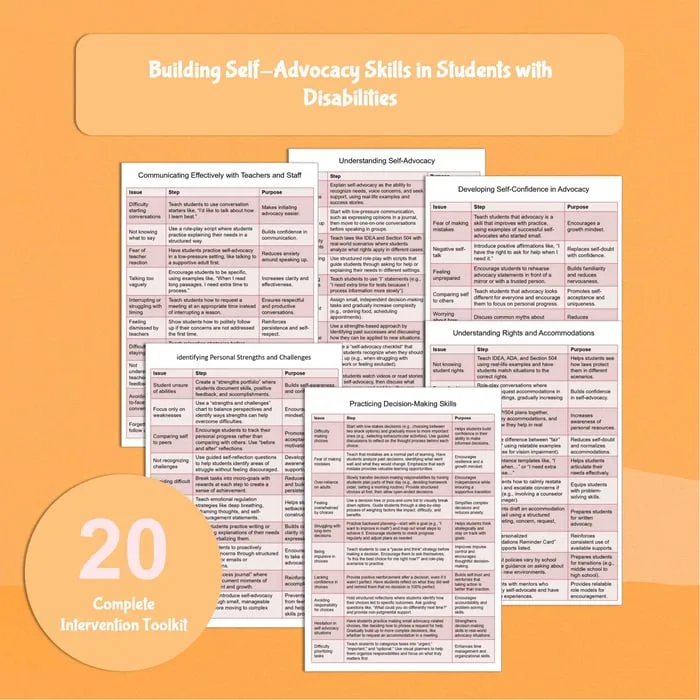
Self-Advocacy Skills for Students with Disabilities: SPED Intervention Toolkit: twenty intervention guides covering topics such as understanding rights and accommodations under IDEA, ADA and Section 504, communicating with teachers, asking for help without embarrassment, managing anxiety in advocacy situations, decision making and setting personal goals, each written in the same Issue, Step, Purpose format for quick use in an IEP meeting, transition session or one-on-one conversation.
Sources and scope
- Center for Parent Information and Resources: family guidance on IEPs, student involvement and transition planning.
- Understood.org: plain-language articles on helping children speak up for their learning needs.
- National Center for Learning Disabilities: resources for families on learning disabilities, rights and student self-advocacy.
- PACER Center: parent center resources on self-advocacy and special education for families.
This list covers everyday signs and next steps for parents of middle schoolers with IEPs or 504 plans. It does not replace advice from the school team, and every child develops self-advocacy skills at their own pace.
Key takeaways
- A child ready to self-advocate shows small signs first.
- Build awareness, then asking, then planning.
- Practice at home before school requests.
- Step back gradually and keep the school informed.
- Include your child in the IEP or 504 process when possible.





Leave a Comment