

Selective mutism vs shyness is a question many teachers face in the first weeks of school. A first grader chats happily with her mom at the classroom door, then freezes the moment she steps inside. Weeks later, she still has not said a word to you or to her classmates. Is she simply shy, or is something else going on?
This guide gives you a five-step process for that situation: observe the pattern, compare the signs, lower the pressure to speak, respond to silence in a calm way, and share what you see with the family and school team. By the end, you will know what to watch for, what to say, and when to ask for more help.
Examples are fictional. Adapt to the student’s goals and agreed supports. This is guidance, not a diagnosis. Only qualified professionals can diagnose selective mutism.
At a glance
- Shy children usually warm up over time; children with selective mutism often stay silent in certain settings for a long time.
- Watch where, when, and with whom the child speaks, not only whether they speak.
- Lower the pressure: offer nonverbal ways to take part and stop asking direct questions in front of the group.
- Respond to silence calmly, without coaxing, bribing, or praising speech loudly.
- Share clear notes with the family and school team early.
1. Observe the pattern behind selective mutism vs shyness
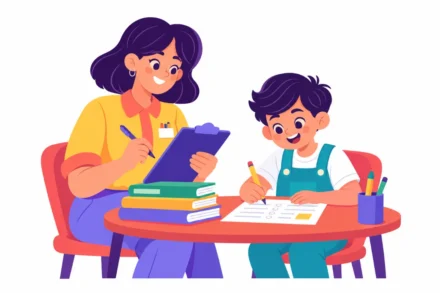
The first step is careful watching. Before you decide anything about selective mutism vs shyness, gather a picture of where the child speaks and where they do not. A short, simple record is enough.
Notice the setting, the people, and the type of demand. Does the child talk to one friend at recess but not in the classroom? Do they whisper to a parent at pickup but go silent when you walk up? Does their body change, with frozen posture, a blank face, or avoided eye contact, when someone expects speech?
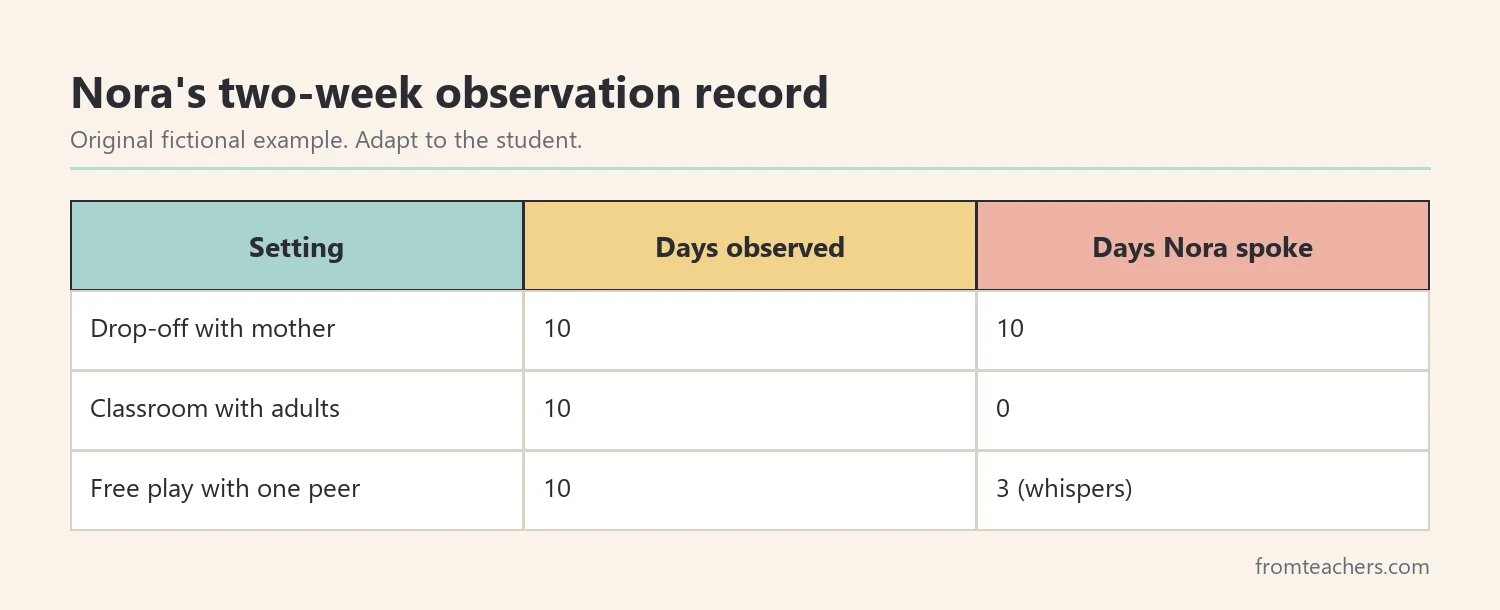
For example, Nora is a fictional first grader. Over two weeks, her teacher, Ms. Hall, notes 10 school days. On all 10 days, Nora speaks to her mother at drop-off. She does not speak to an adult in the classroom on any of them. On 3 of the 10 days, she whispers to one classmate during free play.
| Setting | Days observed | Days Nora spoke |
|---|---|---|
| Drop-off with mother | 10 | 10 |
| Classroom with adults | 10 | 0 |
| Free play with one peer | 10 | 3 (whispers) |
Also, record what happens just before a freeze. A sudden question, a crowded group, or a new adult may be a trigger. These details matter far more than a general note that says “very quiet.”
In addition, note any way the child does communicate. Pointing, nodding, drawing, or writing all count. When you think about selective mutism vs shyness later, these channels show you what the child can already do, and they become the starting point for support.
Finally, keep your notes neutral. Write what you see and hear, not what you think it means. This keeps the record fair and useful for the family and any professional who reads it later.
Moreover, keep observing for at least a couple of weeks. A single hard morning tells you little. A steady pattern across many days, settings, and people is what makes the selective mutism vs shyness picture clearer.
2. Compare the signs: selective mutism vs shyness
In selective mutism vs shyness, the two can look similar on a busy morning. However, they usually differ in how long the silence lasts, how consistent it is, and how much distress it causes.
A shy child often warms up after a few days or weeks. They may speak quietly at first, answer with a word or two, and become more comfortable as they get to know you. In contrast, a child with selective mutism often speaks freely in some settings, such as at home, but consistently does not speak in others, such as school, over a long period. Many also show signs of anxiety, such as freezing or stiff body language, when speech is expected.
Therefore, the key question in selective mutism vs shyness is not “Does the child talk?” It is “Does the child talk in some places and not in others, consistently, and does that silence get in the way of learning or friendships?”
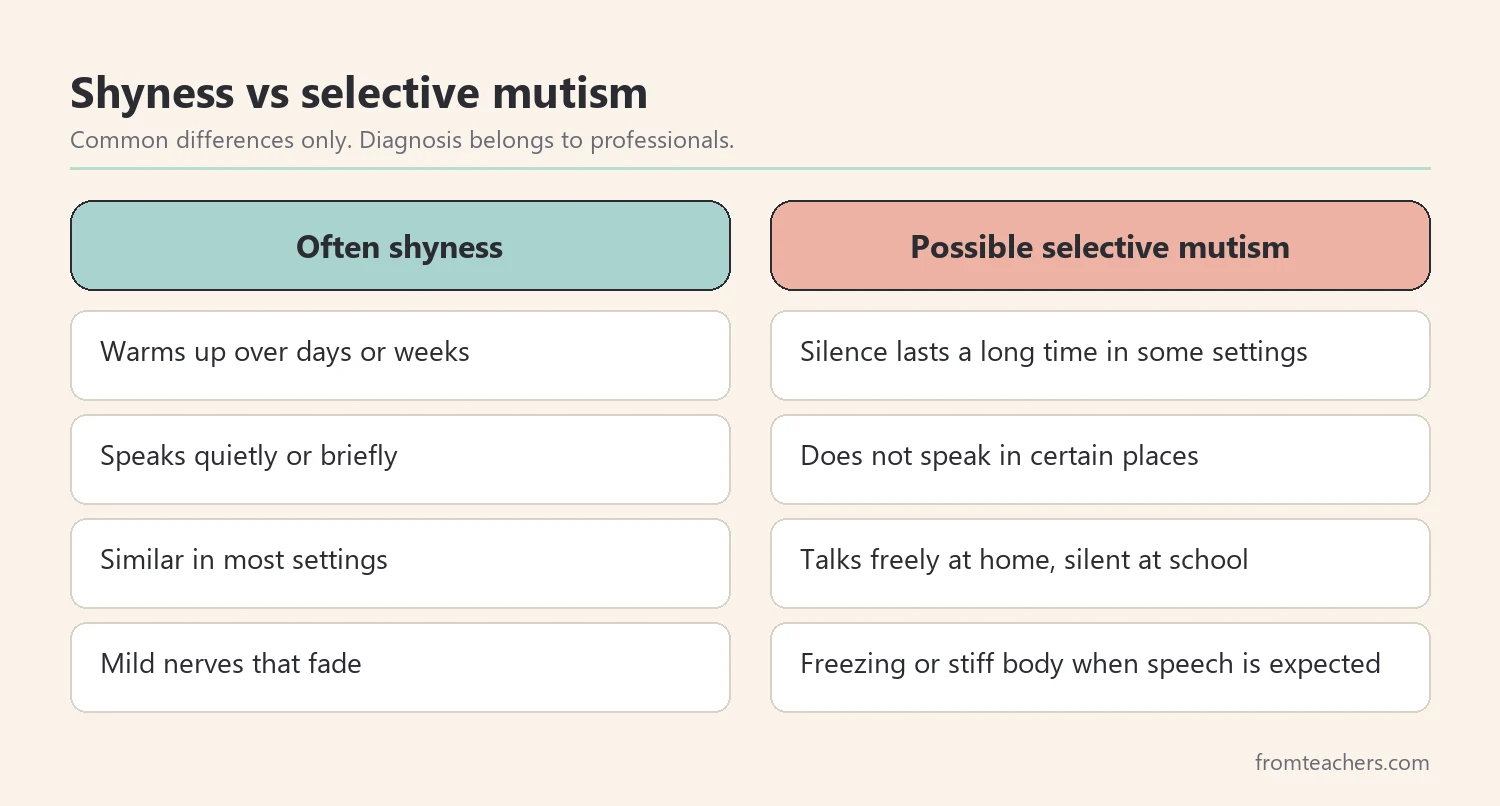
For instance, after six weeks Nora still does not speak to any adult at school, even though she talks easily at home. That pattern is worth sharing with the family and the school team. On the other hand, a classmate who whispered on day one and now answers in short sentences is more likely showing ordinary shyness.
Remember that you do not need to decide. Your role is to notice, support, and share. Diagnosis belongs to qualified professionals.
Also, keep in mind that the two can overlap. A child may be naturally shy and also anxious about speaking. That is one more reason to think of selective mutism vs shyness as a question for careful observation and team discussion rather than a quick label.
3. Lower the pressure to speak
Whatever the answer to selective mutism vs shyness, lowering pressure helps. A child who feels safe is more likely to communicate in any way, and that is the foundation for speech later.
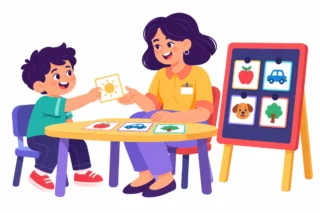
First, reduce direct verbal demands in front of the group. For example, avoid calling on the child to answer aloud during whole-class time. Then, offer other ways to take part: pointing, nodding, holding up a card, writing, drawing, or using a whiteboard. These choices let the child join the lesson without the weight of speaking.
Next, look at the environment and your own pacing and tone. A calm voice, a slower pace, and fewer rapid-fire questions all help. In addition, seat the child near a friendly peer they already whisper to, if they have one.
A ready resource can support this step. The selective mutism classroom guide uses Need, Strategy, and Why tables, including low-pressure strategies such as reducing verbal demands and allowing nonverbal participation.
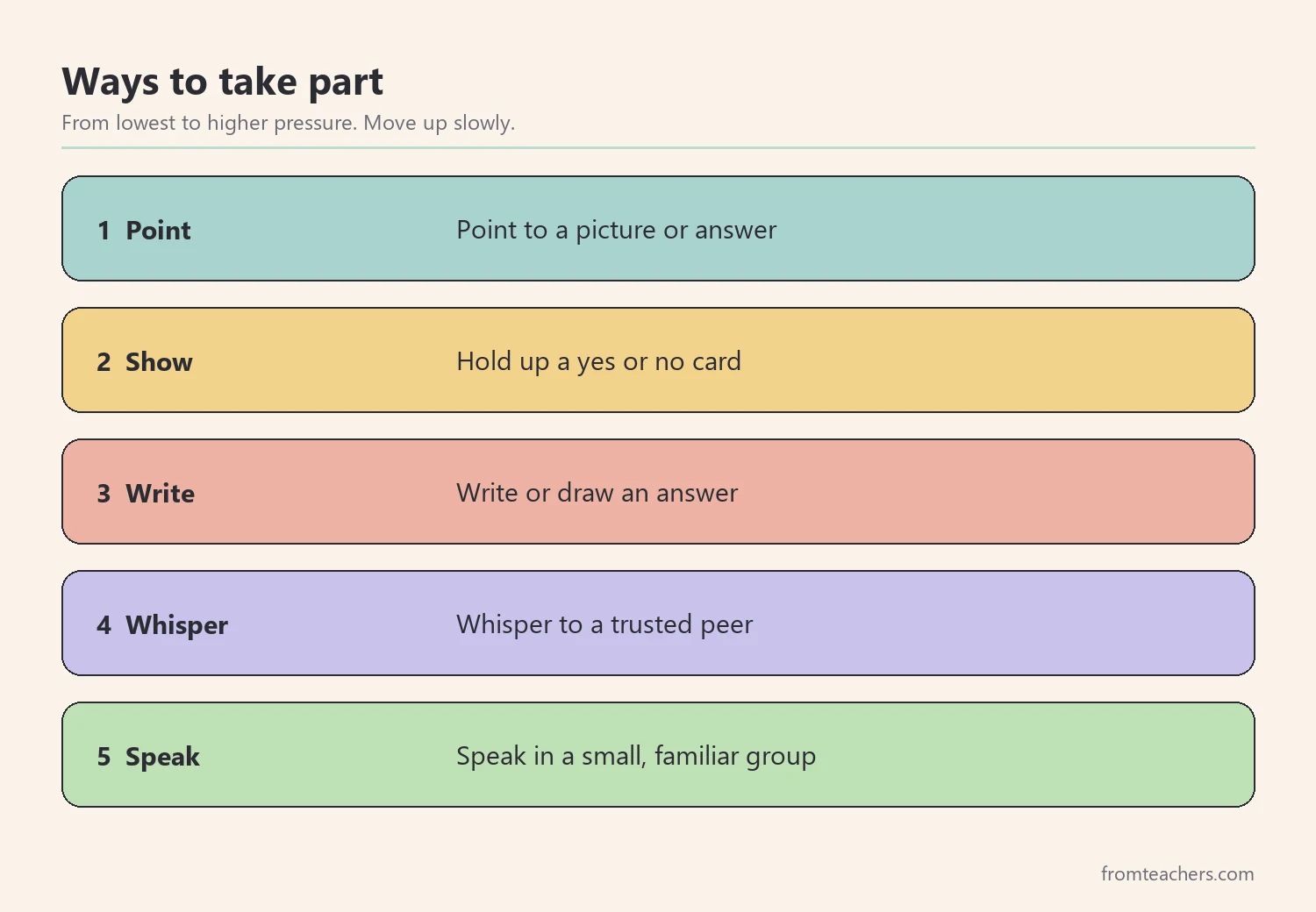
For example, Ms. Hall gives Nora a set of yes and no cards for morning meeting. Within a week, Nora holds up a card each day. She is not speaking yet, but she is participating, and that is real progress.
Next, consider small, private moments. Some children find it easier to communicate one to one, away from the group, with a trusted adult who does not ask questions. A shared drawing or a quiet game can build comfort without any demand to talk.
Over time, the team may decide to move gradually up the participation steps. Each move should be small and planned, and the child should feel successful at one level before trying the next. Whether the answer to selective mutism vs shyness turns out to be anxiety or simple caution, this patient approach respects the child.
4. Respond to silence in a calm, steady way
How adults react to silence can raise or lower anxiety. Many common reactions, though well meant, add pressure. Therefore, plan your response ahead of time.
First, avoid coaxing, repeated questions, or long pauses that wait for an answer. If the child does not respond, move on warmly. For example, you might say, “You can show me later,” and continue. Second, avoid bribes or big public praise for speaking. A loud “She talked!” can make the next time harder.
Instead, give choices that do not need words, accept nonverbal answers fully, and keep your expression relaxed. Also, prepare peers. Children often ask, “Why doesn’t she talk?” A simple answer such as “She talks when she feels ready. She can share in other ways now” protects the child and guides the class.
In addition, take responsibility for communication barriers you may control. Reflect on whether your pacing, tone, or classroom routines add pressure, and adjust one thing at a time.
Furthermore, write your calm response plan down and share it with every adult who works with the child, including specials teachers, lunch staff, and paraprofessionals. Consistency across adults matters a great deal, whatever the answer to selective mutism vs shyness turns out to be.
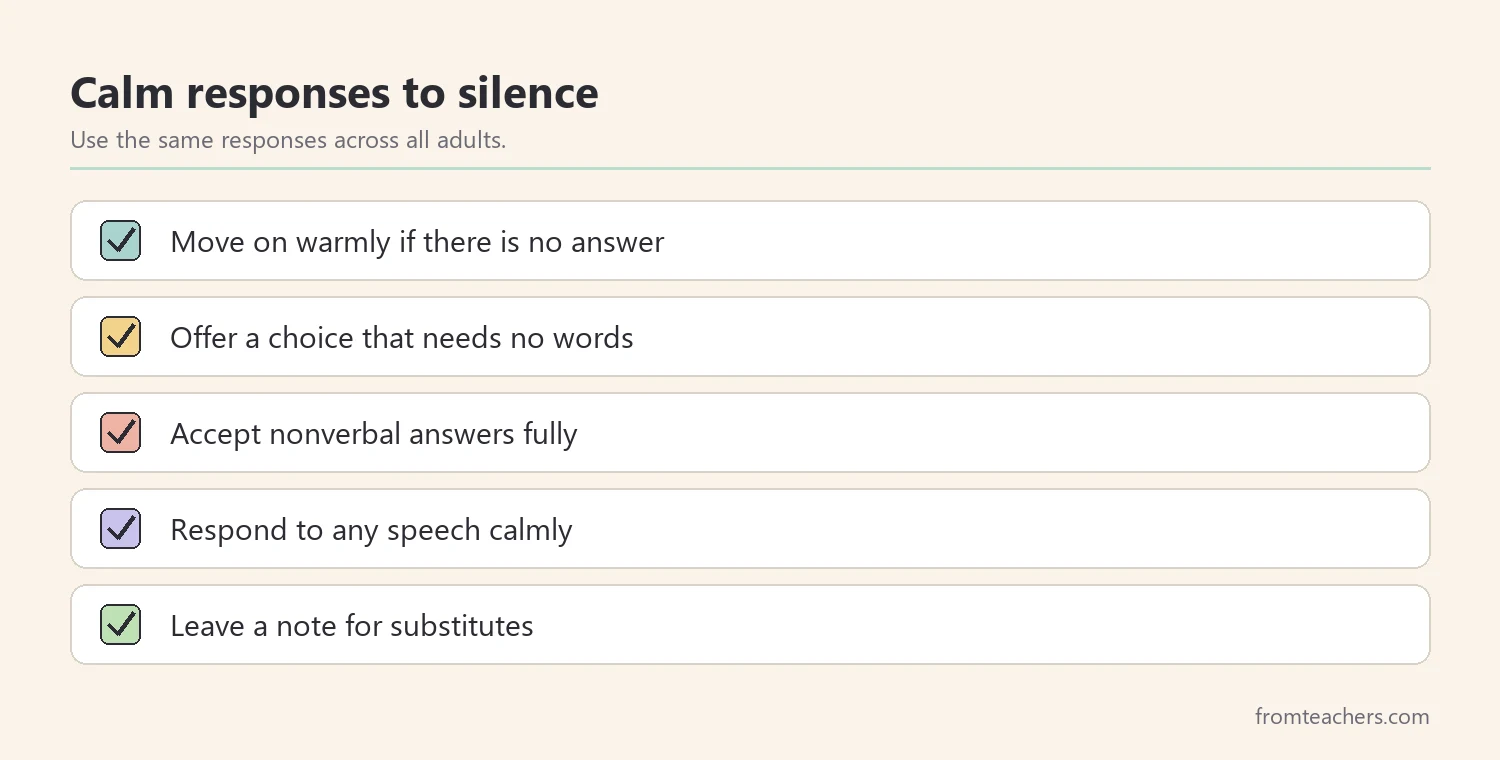
For instance, when a new substitute asks Nora a direct question, she freezes. Ms. Hall had left a note: “Nora answers with cards. Please do not ask her to speak.” As a result, the next substitute day goes smoothly.
5. Share what you see about selective mutism vs shyness with the team
If a child’s silence continues across settings and weeks, share your observations early. Waiting rarely helps, and early support can make a difference.
Start with the family. Ask how the child talks at home, with relatives, and in other places. Families often confirm a clear pattern: lots of talking at home, very little at school. Then, with the family’s knowledge, bring your notes to the school team, which may include a school psychologist, counselor, or speech-language pathologist. Follow your school’s process for raising a concern.
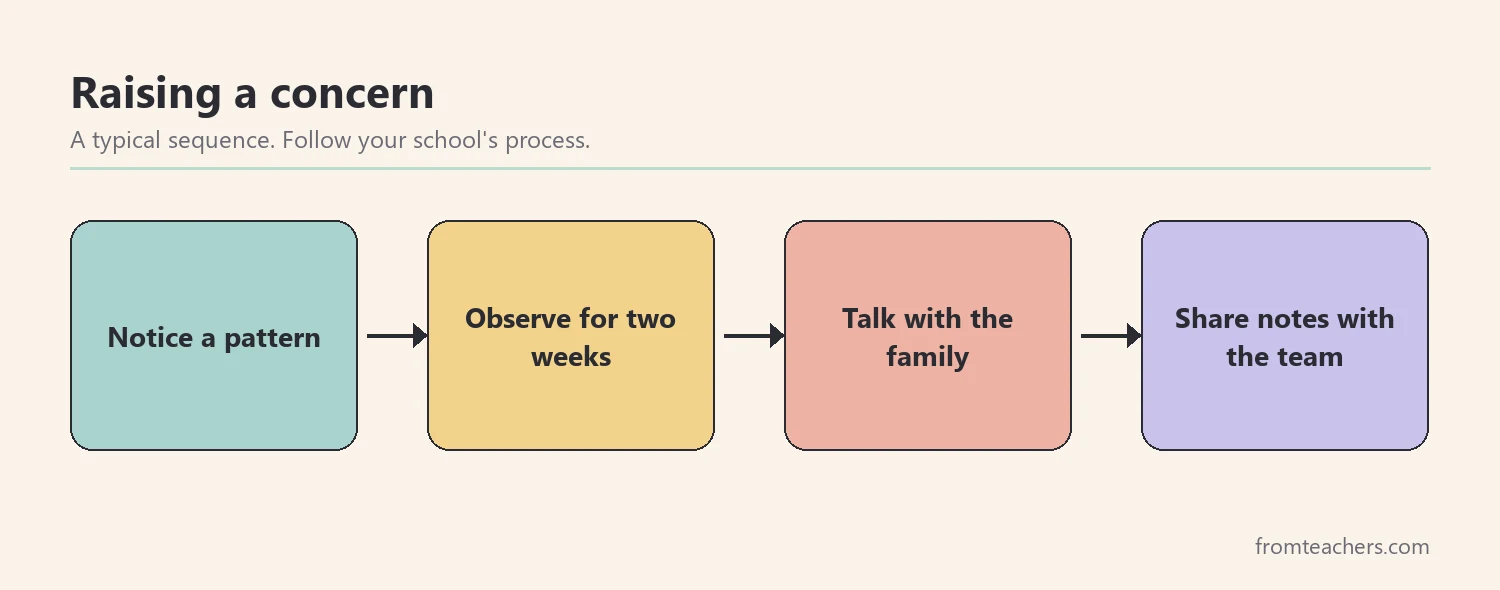
For example, Ms. Hall meets with Nora’s mother and shares her 10-day record. Her mother says Nora talks nonstop at home. Together, they agree to ask the school team for input. Meanwhile, Ms. Hall keeps using cards and calm responses in class.
When you share, bring facts rather than conclusions. Your observation record, examples of how the child participates, and notes on what seems to help or hurt are the most useful things you can offer. The team, not the classroom teacher alone, decides on next steps for selective mutism vs shyness questions.
Finally, keep notes going after the meeting. A simple weekly record of how Nora takes part shows whether supports are working and gives the team clear information.
Common mistakes and how to avoid them
- Assuming the child is being stubborn. Fix: remember that anxiety, not defiance, often sits behind persistent silence.
- Pressuring the child to say one word. Fix: accept nonverbal participation fully and move on warmly.
- Praising speech loudly. Fix: respond to any speech calmly, as if it were ordinary.
- Waiting months to share concerns. Fix: share neutral observations with the family and team early.
- Letting each adult react differently. Fix: write a short plan so substitutes and staff respond the same way.
Questions teachers and parents ask about selective mutism vs shyness
How long should I wait before raising a concern?
Many children are quiet in the first days of school. If a child still does not speak at school after several weeks while speaking freely at home, share your notes with the family and school team. Your school’s process will guide the next step.
Can a shy child become more comfortable without special help?
Often, yes. Shy children frequently warm up as routines and relationships grow. Even so, low-pressure strategies help every quiet child, so they are worth using either way.
Is selective mutism the same as being rude or defiant?
No. Children with selective mutism are not choosing to be rude. Their silence is usually linked to anxiety in certain settings, which is why pressure tends to make it worse.
Should I tell the class about the child’s silence?
Keep it simple and private. A short, kind explanation, such as “She shares in other ways right now,” helps peers without labeling the child. Avoid discussing diagnoses with the class.
What can parents do at home?
Parents can share how and where the child talks, help the teacher understand comfort settings, and avoid pressuring the child to speak at school. Working together on one consistent plan makes selective mutism vs shyness easier to understand for everyone.
Related reading: How Teachers Communicate With Parents in Special Education, Essential Trauma-Informed Teaching Strategies for Modern Classrooms, and Building Stronger School Counseling Programs.
A companion resource for selective mutism vs shyness:
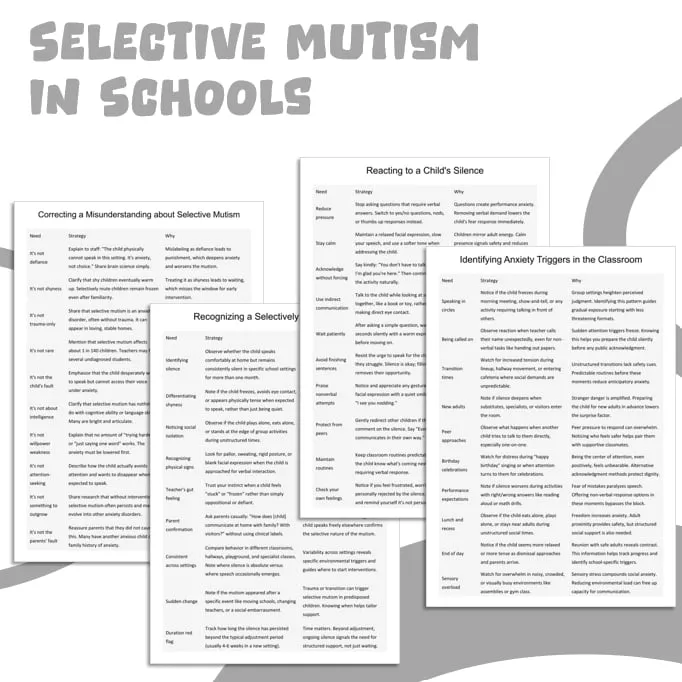
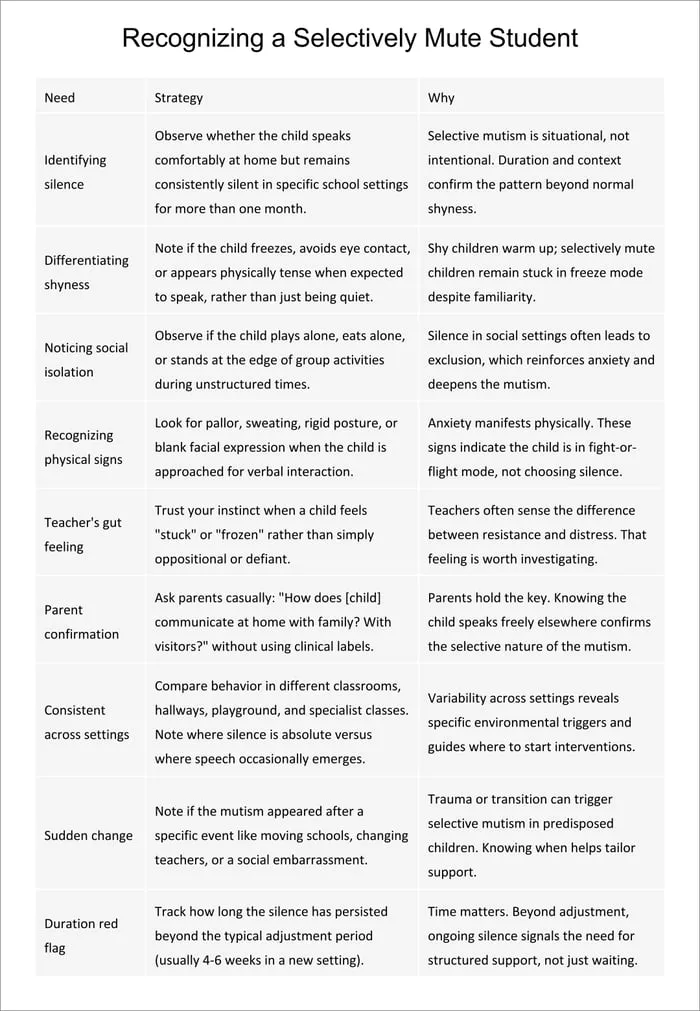
Selective Mutism in Schools: 12 pages of Need, Strategy, and Why tables on recognizing a selectively mute student, identifying anxiety triggers, reacting to a child’s silence, and low-pressure strategies such as nonverbal participation.
Sources and scope
- American Speech-Language-Hearing Association (ASHA): professional information on communication, including selective mutism.
- Selective Mutism Association: resources for families and educators.
- Child Mind Institute: articles for parents and teachers on childhood anxiety.
- IRIS Center, Vanderbilt University: free modules on classroom supports and collaboration.
This guide covers classroom observation and low-pressure supports for quiet children. It does not cover diagnosis or treatment, which belong to qualified professionals working with the family.
Key takeaways
- Selective mutism vs shyness comes down to pattern, consistency, and distress over time.
- Observe where, when, and with whom the child speaks.
- Lower pressure with nonverbal ways to take part.
- Respond to silence calmly, without coaxing or loud praise.
- Share neutral notes about selective mutism vs shyness with the family and school team early.





Leave a Comment