

Overcoming career fear often starts with a job posting you keep reopening but never apply for. Picture a teacher who has wanted to become an instructional coach for two years. She reads the posting, imagines the interview, and closes the tab. Nothing about her skills has changed. However, the fear has quietly made the decision for her.
This guide walks you through five practical steps to move forward without waiting for the fear to disappear. By the end, you will know how to name your fears, calm the body when anxiety spikes, find the real skill gaps, build a support network, and test a new direction in small, safe phases.
Examples are fictional. Adapt them to your own situation and goals. This is general guidance, not therapy or financial advice.
At a glance
- Fear is a normal part of growth, and it does not mean you are not ready.
- Separate anxious thoughts from real concerns, then plan for the real ones.
- Simple grounding methods can calm the body before a big moment.
- A clear gap analysis turns “I’m not good enough” into a skill plan.
- Small, phased tests let you try a new path before fully committing.
1. Start overcoming career fear by naming it clearly
First, write the fear down. Vague fear feels huge, while a named fear becomes something you can work with. Overcoming career fear begins with a plain list of what you are actually afraid of.
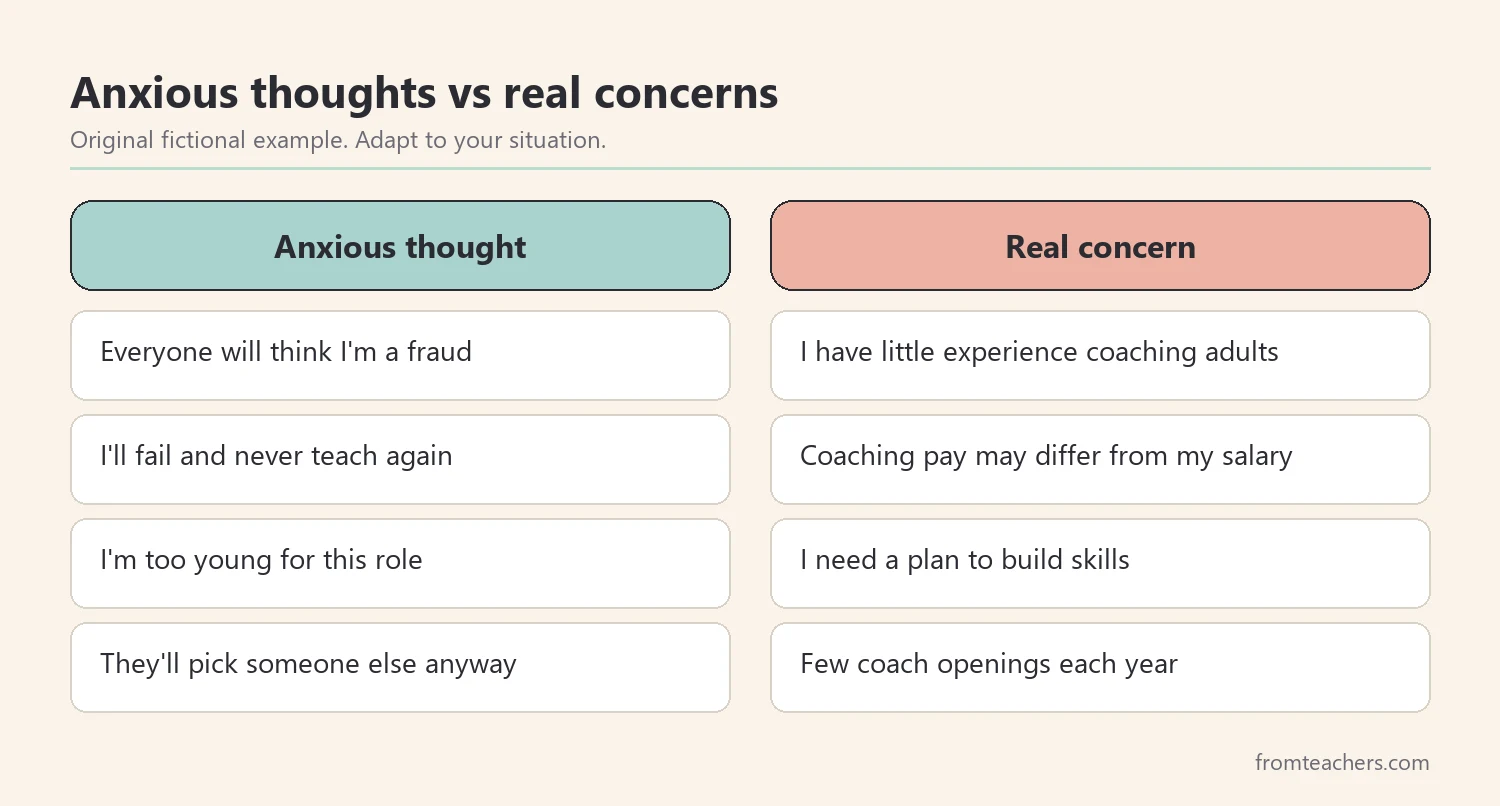
Next, sort each item into one of two groups. Some fears are anxious thoughts: worst-case stories that are possible but unlikely. Others are legitimate concerns: real risks that deserve a plan. Both are valid. However, they need different responses.
For anxious thoughts, ask what evidence supports them and what evidence does not. For real concerns, write one practical step that would reduce the risk. This simple split is the heart of overcoming career fear, because it stops you from treating every worry as a stop sign.
In our fictional example, Dana is a fifth-year elementary teacher. She wants to become an instructional coach but keeps putting it off. Her list looked like this:
Then, normalize what you feel. Many people feel fear before a career change, a promotion, or a new role. Feeling nervous does not mean you are making the wrong choice. Often, it simply means the choice matters to you.
Also, notice the cost of standing still. Ask yourself, “What happens if I do nothing for another year?” For Dana, the honest answer was that she would feel the same frustration next spring. That question turned overcoming career fear from a vague wish into a real priority.
Finally, keep the list somewhere you will see it. A simple log, updated every week or two, shows how fears shrink or change once you start taking action.
2. Calm the body when anxiety rises
Fear is not only a thought. It also shows up in the body: a fast heartbeat, tight shoulders, shallow breathing, or a racing mind before an interview or a hard conversation. Because of that, overcoming career fear includes simple ways to settle the body.
Grounding methods bring your attention back to the present moment, which makes them a useful tool for overcoming career fear in real time. They are quick, quiet, and can be done almost anywhere, including a hallway before a meeting.
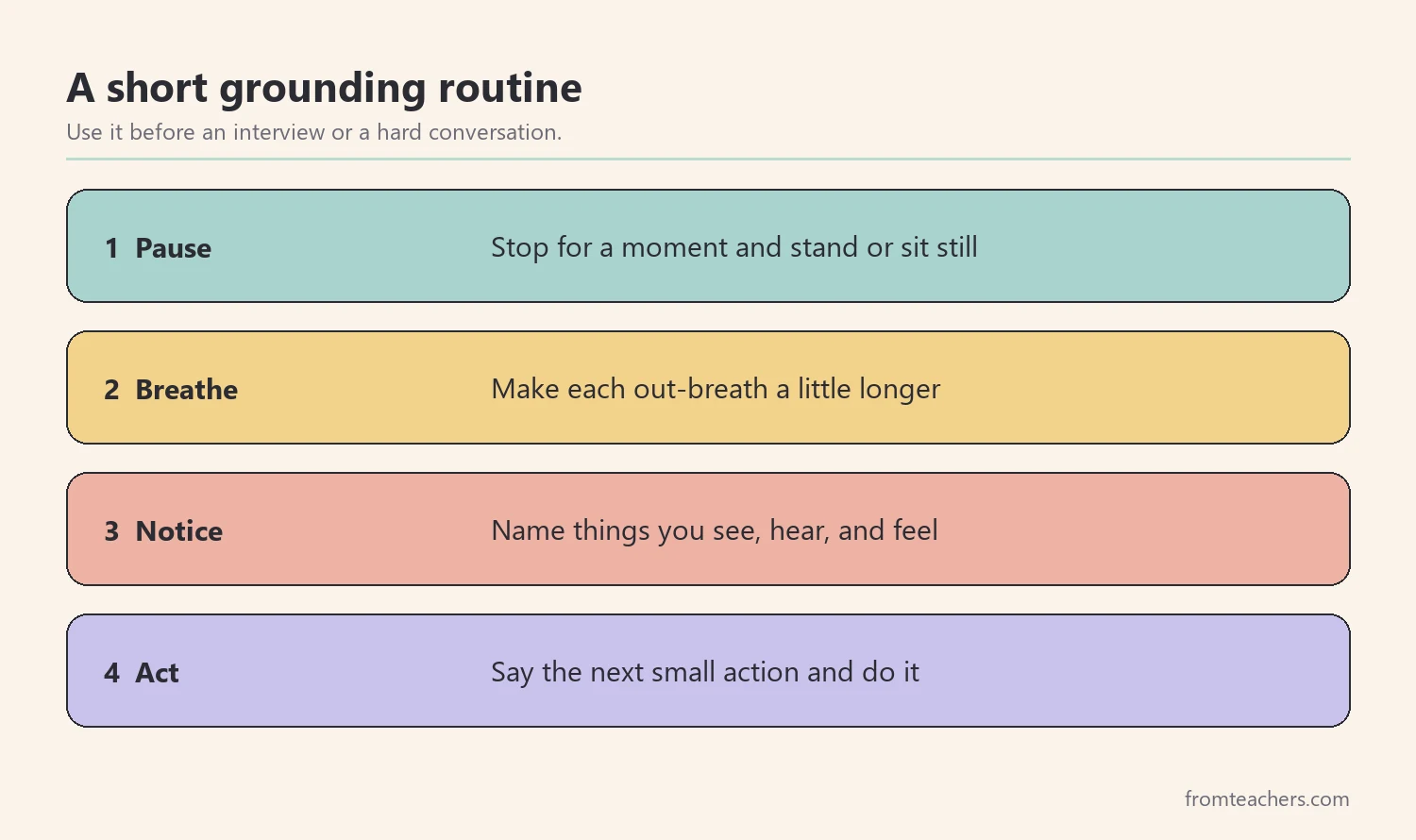
For example, slow your breathing so the out-breath is a little longer than the in-breath. Then, notice a few things you can see, hear, and feel, such as your feet on the floor. Finally, name the next small action: “Walk in and say hello.”
Dana used this routine before she asked her principal for a meeting about coaching. Her nerves did not vanish. However, she felt steady enough to speak clearly, and that was enough.
Also, look after the basics. Sleep, movement, and regular meals affect how strongly we feel stress. These habits will not remove fear, but they can lower the volume. If anxiety feels constant or overwhelming, talk with a doctor or a licensed mental health professional.
In addition, practice grounding on ordinary days. A routine you have rehearsed is far easier to use when the pressure is real.
For instance, try the routine before a staff meeting or a parent call this week. Notice how your body feels before and after. Small, low-stakes practice builds trust in the tool, so it is ready when the moment that matters arrives.
3. Run a gap analysis instead of trusting self-doubt
Self-doubt often says, “You’re not ready.” Unfortunately, it rarely says what “ready” means. A gap analysis answers that question with facts, which makes overcoming career fear much more practical.
Start by listing the main skills the new role needs. Use real job postings, conversations with people in the role, or a professional organization’s guidance. Next, rate yourself honestly on each one. Finally, write one action for each skill that needs work.
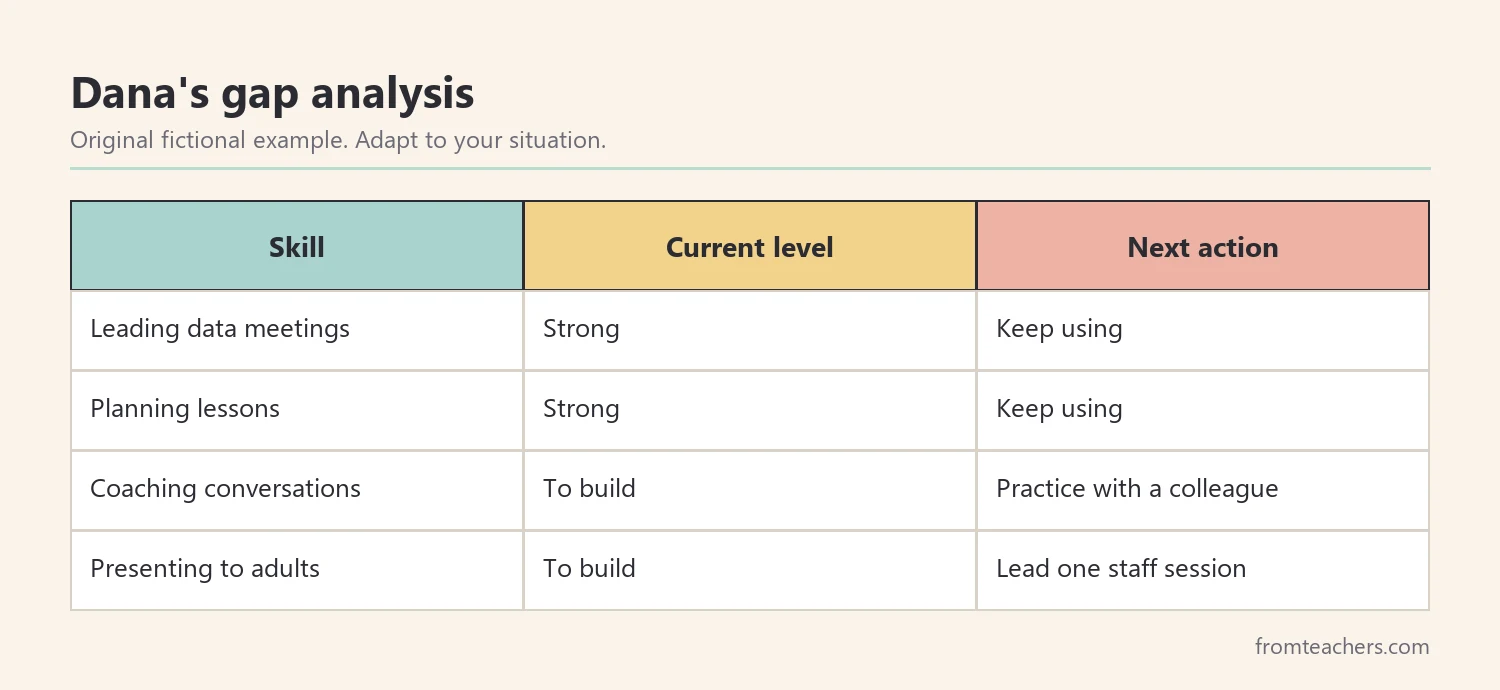
Dana listed four core skills. She was already strong in two of them: leading data meetings and planning lessons. The other two, coaching conversations and presenting to adults, needed work. That result surprised her. Instead of “I’m not good enough,” she now had two specific skills to build.
Then, choose small ways to build each skill. Overcoming career fear gets easier when each skill has a next action you can finish within a few weeks. Dana offered to lead one short session at a staff meeting. She also asked a colleague if she could practice a coaching conversation after an observation. Both were low-risk ways to grow.
Also, revisit the gap analysis after each small step. Move a skill from “to build” to “strong” only when you have a real example to point to, such as a session you led or feedback you received. Over time, this record becomes evidence you can share in an interview, and it quietly answers the voice that says you are not ready.
If you want a structured set of tables for this work, the Balancing Fear and Ambition career toolkit pairs common needs with action steps and the reasoning behind them, including guidance on gap analysis and testing new directions.
4. Build a support network for overcoming career fear
Fear grows in isolation, so overcoming career fear is rarely a solo project. By contrast, it often shrinks when you talk with people who have walked a similar path. A support network gives you advice, encouragement, and sometimes real opportunities.
Think about three kinds of support. A mentor shares experience and helps you think through choices. A sponsor is someone with influence who can recommend you or open doors. Peers are people at your level who understand the day-to-day reality and can cheer you on.
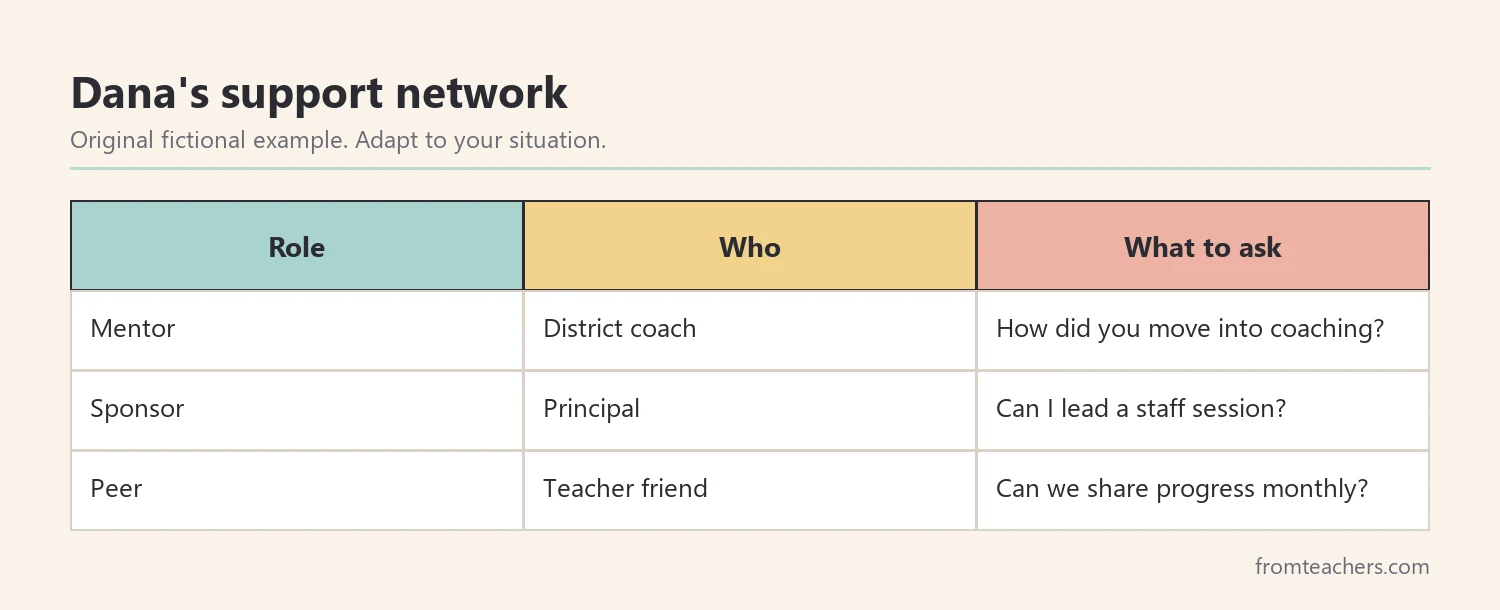
Next, make specific requests. Overcoming career fear is easier when the people around you know exactly how to help. People are more likely to help when they know exactly what you need. Instead of “Can you help me with my career?”, try “Could we meet for 20 minutes so I can ask how you moved into coaching?”
Dana reached out to a district coach she had met at a training, her principal, and a teacher friend who was also exploring new roles. Each conversation gave her something different: practical advice, a possible opening, and steady encouragement.
Also, handle fear of others’ opinions with care. Some colleagues may question your move. Listen for useful feedback, but remember that their comfort is not the same as your goal. Overcoming career fear sometimes means accepting that not everyone will understand your choice right away.
Finally, give back. Support networks work best in both directions. Share what you learn with peers who are on a similar path.
5. Test the new direction in small, phased steps
Big leaps feel risky because they are, and overcoming career fear does not require one. So, break the change into phases that let you learn before you fully commit. This approach is especially helpful when financial stability is a real concern.
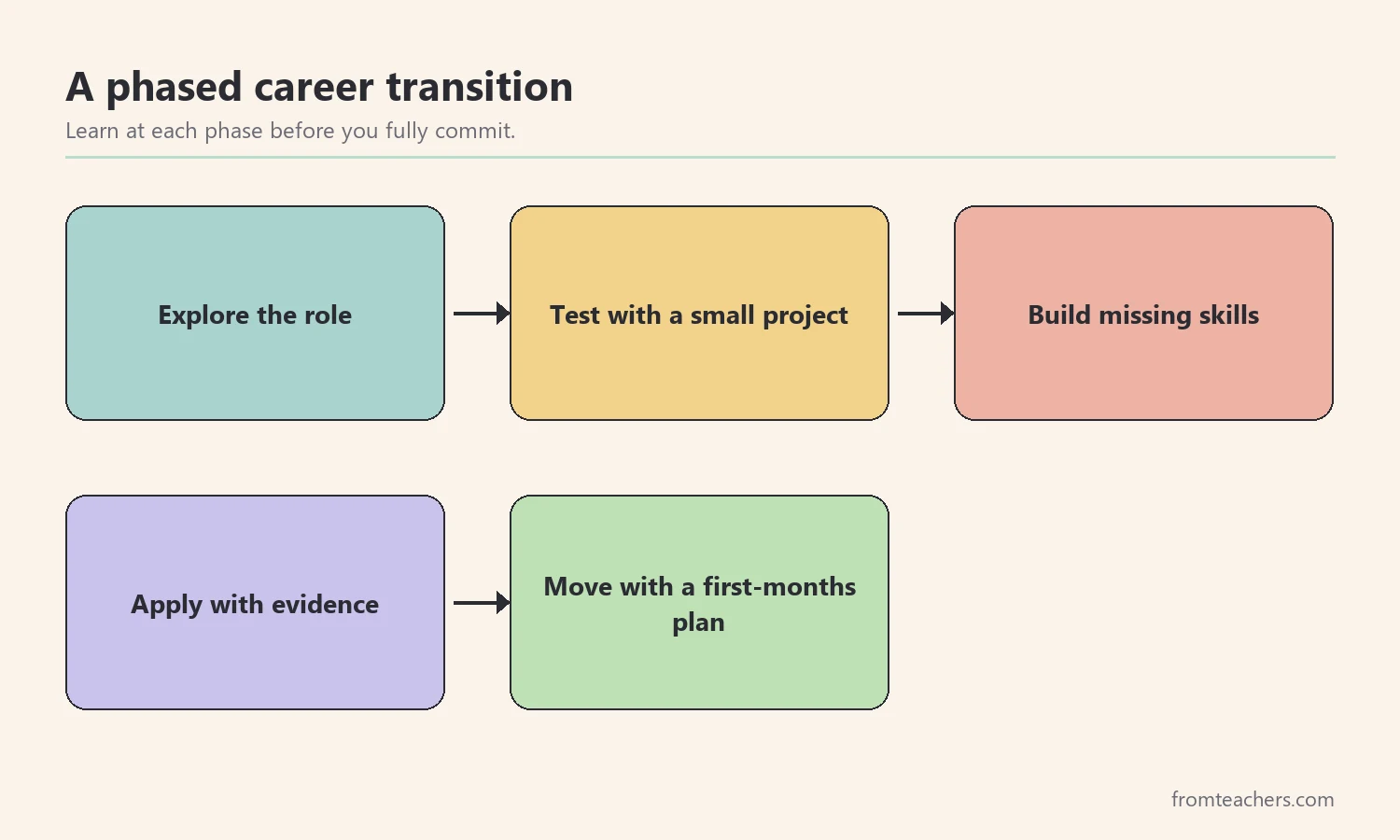
First, explore. Read, ask questions, and talk with people in the role. Second, test with a small project, such as leading a workshop or shadowing someone for a day. Third, build the skills your gap analysis showed. Fourth, apply when you have evidence that you can do the work. Finally, make the move with a plan for the first few months.
For Dana, the test phase was the turning point. After leading two staff sessions and practicing coaching conversations with a colleague, she had real examples to share in an interview. Her fear did not disappear. Still, it was now balanced by proof.
Also, plan for setbacks. You might not get the first role you apply for. That is information, not failure. Ask for feedback, update your gap analysis, and try again.
In addition, protect your finances during the change. If money is a concern, consider timing, savings, and whether a part-time or hybrid step is possible. A careful plan makes overcoming career fear less about courage alone and more about preparation.
Lastly, review your fear log every few weeks. Overcoming career fear is a process you can see on paper. Many people find that the fears they wrote down at the start have shrunk, changed, or been replaced by new, smaller ones. That is what progress looks like.
Common mistakes and how to avoid them
- Waiting until the fear is gone. Overcoming career fear rarely means feeling no fear. It often stays until after you act. Take a small step while still nervous.
- Treating every fear the same. Anxious thoughts and real concerns need different responses. Sort them before you plan.
- Trusting self-doubt over evidence. A gap analysis shows what you already do well. Use facts, not feelings, to judge readiness.
- Going it alone. Isolation makes fear louder. Reach out to a mentor, a sponsor, or a peer with a specific request.
- Making one giant leap. All-or-nothing moves raise the stakes. Test the new path in small phases first.
- Reading a setback as proof. A rejection is feedback. Ask what to improve and adjust your plan.
Questions people ask about overcoming career fear
Is it normal to feel afraid before a career change?
Yes. Many people feel nervous before a new role, a promotion, or a change of field. Fear often signals that the decision matters to you, not that it is wrong.
How do I know if a fear is a real warning?
Ask whether the fear points to a specific, likely risk you can plan for, such as a pay cut or a missing skill. If it does, treat it as a concern and make a plan. If it is a vague worst-case story, use grounding and evidence to put it in perspective.
How long does overcoming career fear take?
There is no set timeline. Some people feel more confident after a few small actions, while others need months of gradual steps. Progress usually comes from action, not from waiting.
What if I try and it doesn’t work out?
Then you will have learned something useful about the role, your skills, or your preferences. Ask for feedback, update your plan, and decide on your next step. Phased testing keeps the cost of a setback small.
Should I talk to a professional?
If fear or anxiety feels constant, affects your sleep, or makes daily life hard, talking with a doctor or licensed mental health professional is a good idea. A career counselor can also help with planning and skill building.
Related reading: Reflect and Plan: A Teacher’s New Year Guide, Building Workplace Readiness: Essential Skills for Career Success, and School Counseling Strategies: Empowering Students to Dream Big.
A companion resource for overcoming career fear:
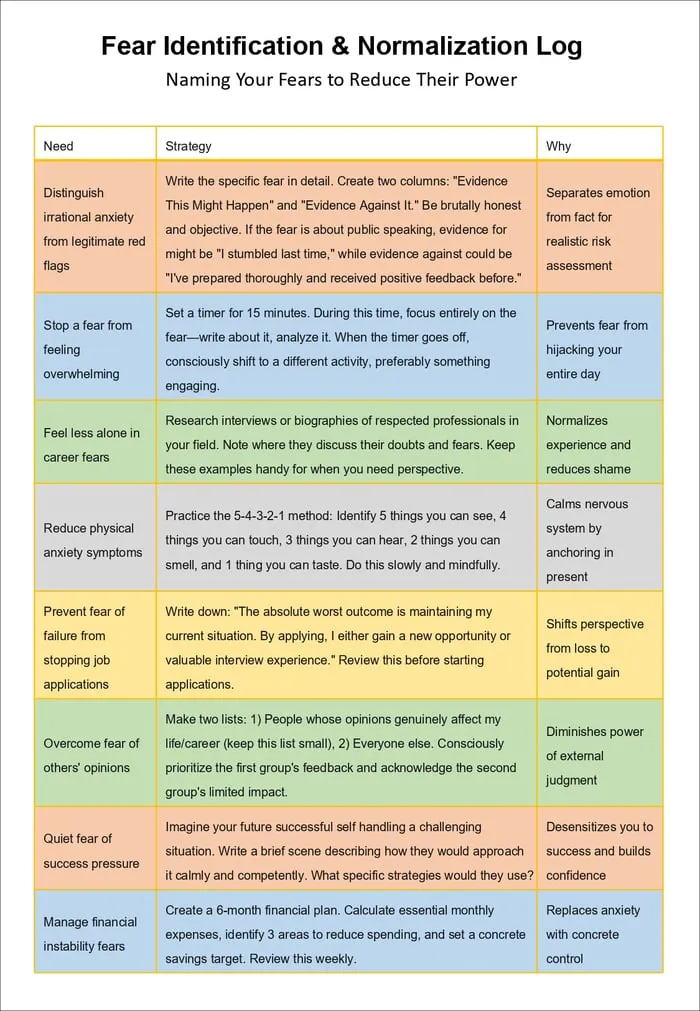
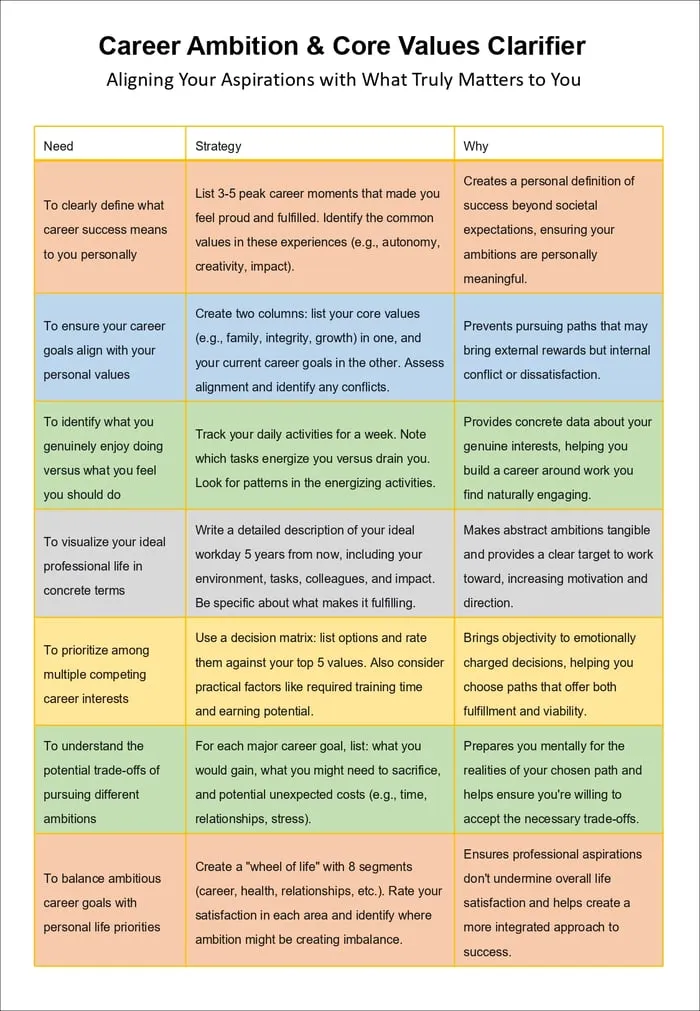
Balancing Fear and Ambition in Your Career Path: a 12-page Need, Strategy, Why toolkit with a fear identification log, a mentorship and support network inventory, a career transition phasing plan, grounding techniques, and guidance on gap analysis and testing new directions.
Sources and scope
- American Psychological Association: general information on stress, anxiety, and coping.
- National Institute of Mental Health: background on anxiety and when to seek professional help.
- CareerOneStop, U.S. Department of Labor: tools for exploring careers, skills, and training.
- National Career Development Association: resources on career development and finding career professionals.
This guide covers practical planning steps for managing fear during career growth and change. It does not replace therapy, medical care, or personal financial advice, which should come from qualified professionals.
Key takeaways
- Overcoming career fear starts with naming fears and sorting real concerns from anxious thoughts.
- Simple grounding methods help the body settle before big moments.
- A gap analysis replaces self-doubt with a clear skill plan.
- Mentors, sponsors, and peers make fear smaller and opportunities closer.
- Test a new direction in small phases before fully committing.










Leave a Comment