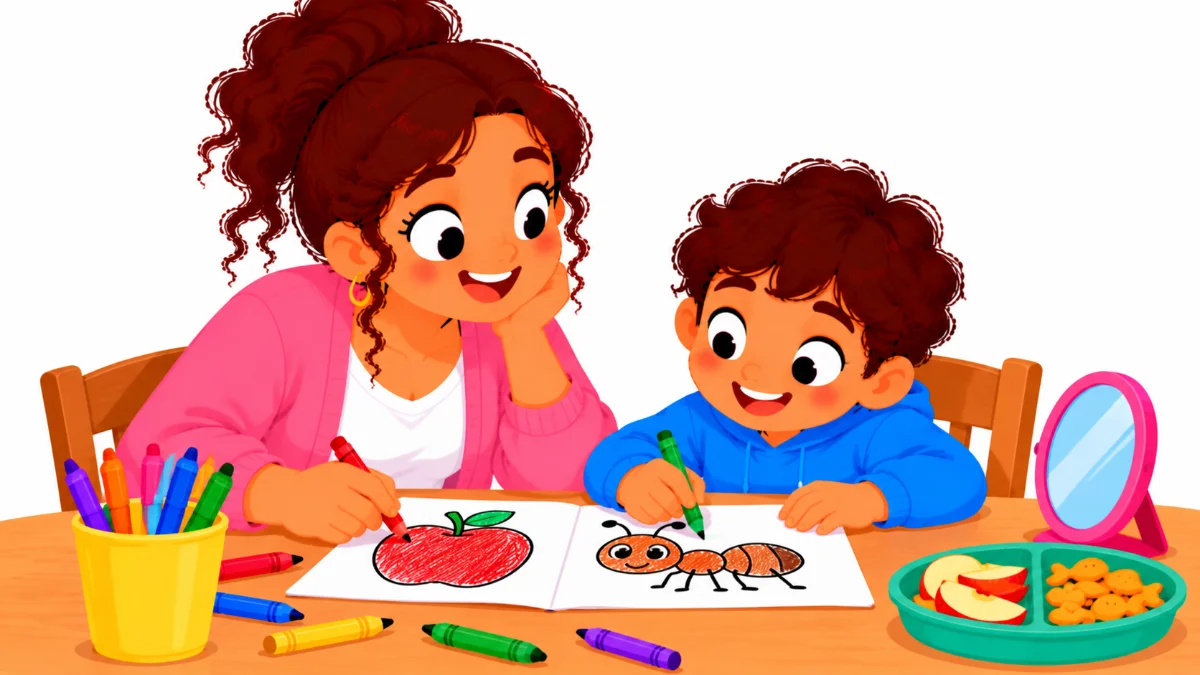

Letter sounds practice at home works best when it feels like play, takes ten minutes, and happens on most days. Picture a Tuesday evening: dinner is on the stove, your five-year-old is restless, and the school folder asks you to “review beginning sounds.” You want to help, yet you are not sure where to start, how long to go, or how to tell whether it is working.
This guide is written for parents and caregivers of children aged about four to six. By the end, you will have a simple weekly plan, a set of short games that use coloring pages and worksheets, and an easy way to notice progress without turning your kitchen into a classroom.
Examples are fictional. Adapt to your child’s needs and the advice of their teacher. This is guidance, not a diagnosis.
At a glance
- Short, frequent sessions beat one long session on the weekend.
- Say the sound of a letter, not only its name.
- Coloring gives small hands something to do while ears do the learning.
- Track a few letters at a time with a simple tick sheet.
- Stop while your child still wants more.
1. Set up a ten-minute letter sounds practice at home
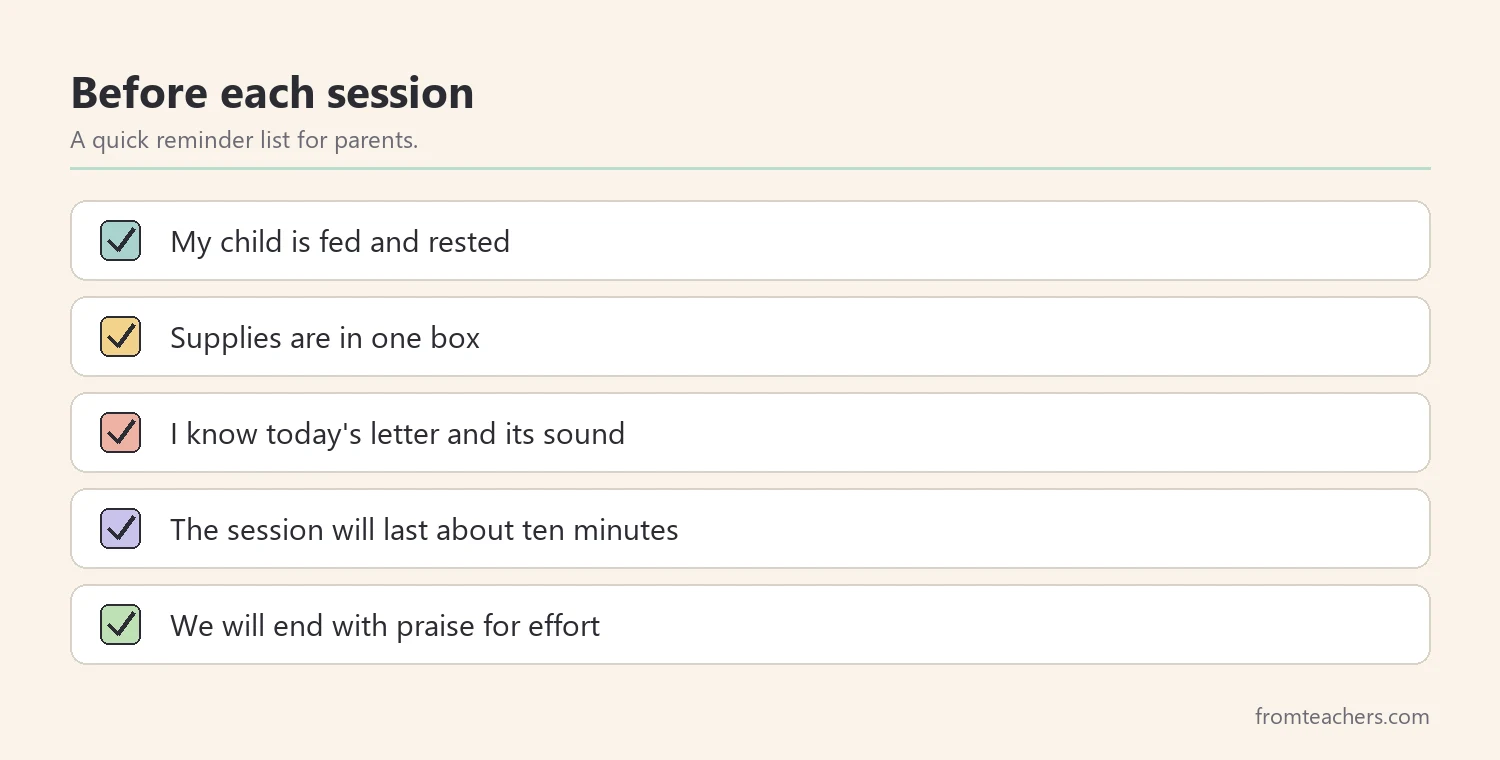
First, choose a time that already exists in your day. Right after a snack, before bath time, or during the wait for dinner all work well. Because the slot is tied to a routine, you will not need to remember it, and your child will start to expect it.
Next, prepare a small box or folder. Inside, keep a few crayons, one or two printed letter pages, and a pencil. When everything is ready in one place, you can start in under a minute. That matters, since young children lose interest quickly when an adult is still searching for supplies.
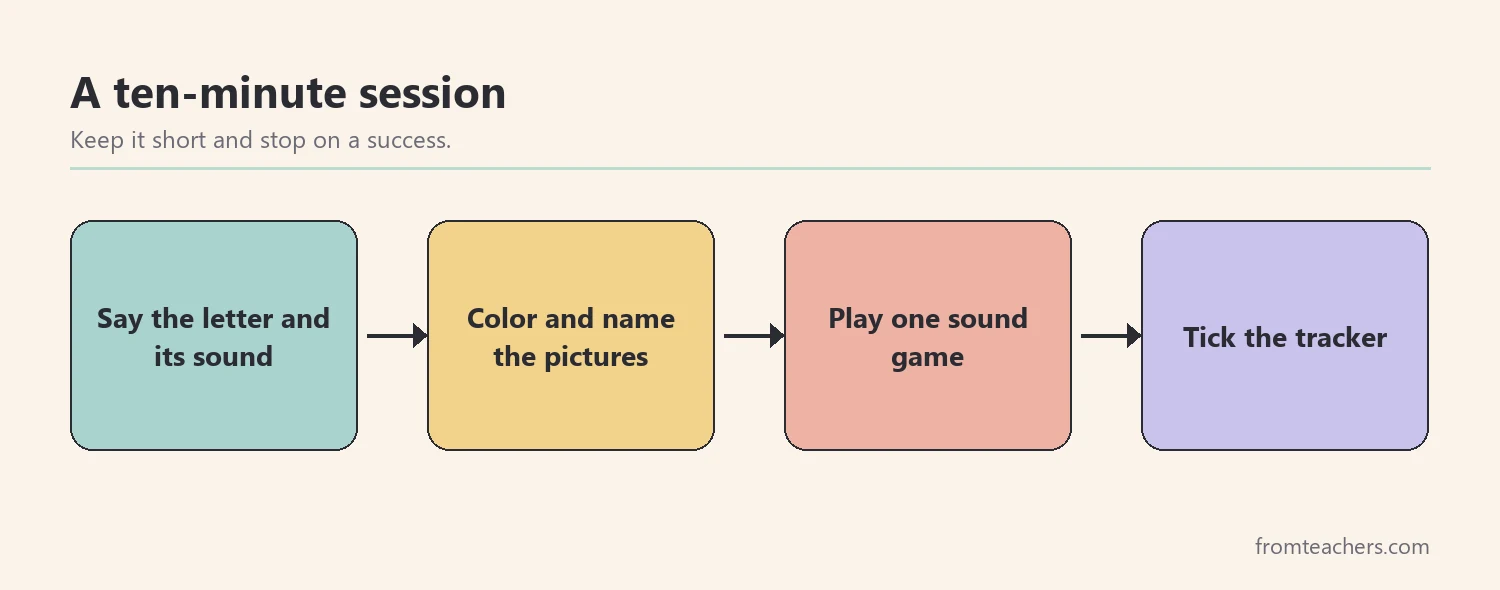
Then, decide on a rough plan for the session. A ten-minute block can look like this:
| Minutes | What you do | Why it helps |
|---|---|---|
| 0 to 2 | Say today’s letter and its sound together | Warms up listening |
| 2 to 6 | Color the pictures, naming each one | Links sound to real words |
| 6 to 9 | Play one quick sound game | Practice without paper |
| 9 to 10 | Tick the tracker and praise effort | Ends on a good note |
For example, meet Leo (fictional, age 5). His mother, Sara, picked the ten minutes after his afternoon snack. She kept a small basket on the kitchen shelf with crayons and that week’s pages. After two weeks, Leo began asking, “Is it letter time?” before she did.
Finally, keep the mood light. This practice is not a test. If your child is tired, sick, or upset, skip the day without guilt and return tomorrow.
2. Teach the sound, not just the letter name
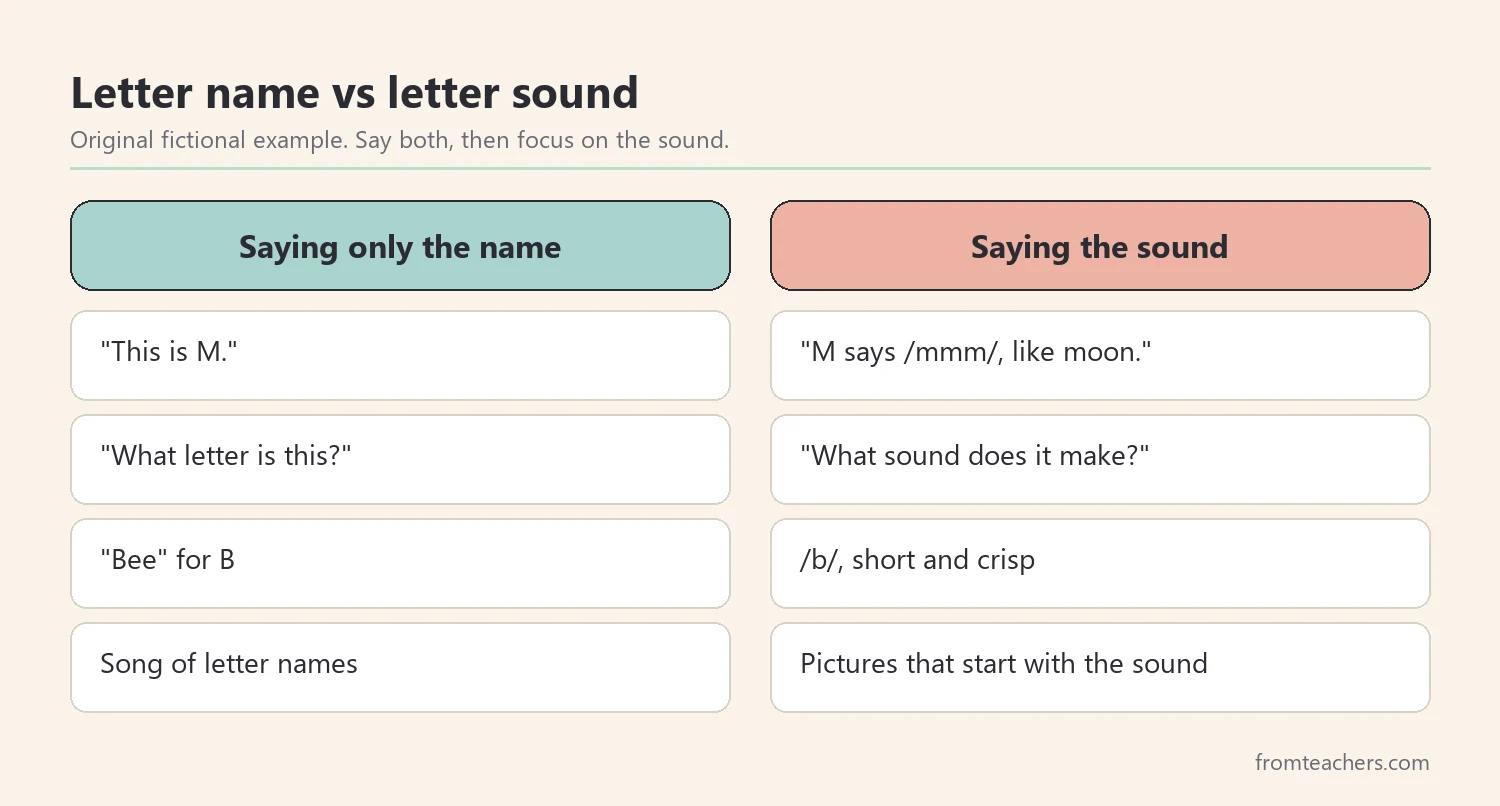
Many children learn letter names from songs long before they connect letters to sounds. However, reading depends on sounds. When a child knows that the letter M says /m/, they can begin to hear it at the start of “moon,” “milk,” and “monkey.”
So, when you introduce a letter, say both. “This is M. M says /mmm/.” Keep the sound short and clean. For example, say /b/, not “buh.” Adding an extra vowel sound can make blending harder later. If you are unsure how a sound should be said, ask your child’s teacher for a quick demonstration, since schools often use a specific phonics program.
In addition, show your mouth. Children learn a lot by watching. Point out that your lips press together for /m/ and /p/, and that your teeth touch your lip for /f/. Leo loved checking his own mouth in a small hand mirror while he practiced.
Also, start with sounds that can be stretched. Sounds like /m/, /s/, /f/, and /l/ are easier to hear than quick sounds like /t/ or /k/. Many parents find that early success with these letters builds confidence for the rest of the alphabet.
Then, connect the sound to pictures right away. The free alphabet coloring posters and beginning sounds worksheets show four labeled pictures for each letter, such as Airplane, Apple, Alligator, and Ant for A. While your child colors, say each word slowly and stress the first sound: “/a/ /a/ apple.”
Moreover, keep the number of new letters small. One or two new letters per week is plenty for most children at this age. Review older letters often, because forgetting is normal and does not mean your child is behind.
3. Turn coloring pages into listening games
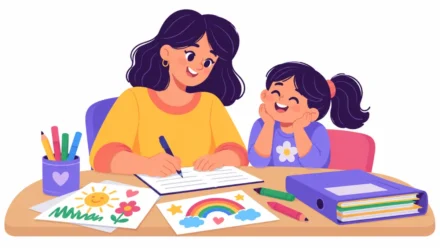
Coloring is calming, and that is useful. While small hands are busy, ears are free to listen. As a result, a coloring page becomes a natural stage for sound practice.
Try these short games while your child colors:
- Sound detective: Say three words. Your child colors only the picture that starts with today’s sound.
- Silly swap: Change the first sound of a picture word. “Is this a pirplane?” Children love correcting you.
- Color by sound: “Color the picture that starts with /b/ in blue.”
- Your turn to teach: Your child names a picture and you guess the first sound, sometimes on purpose wrongly.
For instance, Sara used the letter B page with Leo. She said, “Ball, cat, bear. Which ones start with /b/?” Leo colored the ball and the bear and proudly left the cat blank. Then he asked to color the cat anyway, which was fine, because the game had already done its job.
After that, move to the worksheet for the same letter. Each beginning sounds worksheet asks the child to look at a picture and circle the letter it starts with. Read the picture name aloud together. If your child is not yet ready to circle independently, let them point and you circle. The listening is the important part.
Also, display finished pages. A small strip of tape on the fridge turns a coloring page into a trophy. Over time, the row of letters becomes a visible record of effort that your child can be proud of.
4. Bring letter sounds into everyday routines
Paper is only one part of the plan. In fact, the most powerful practice often happens away from the table. Kitchens, cars, and grocery aisles are full of words.
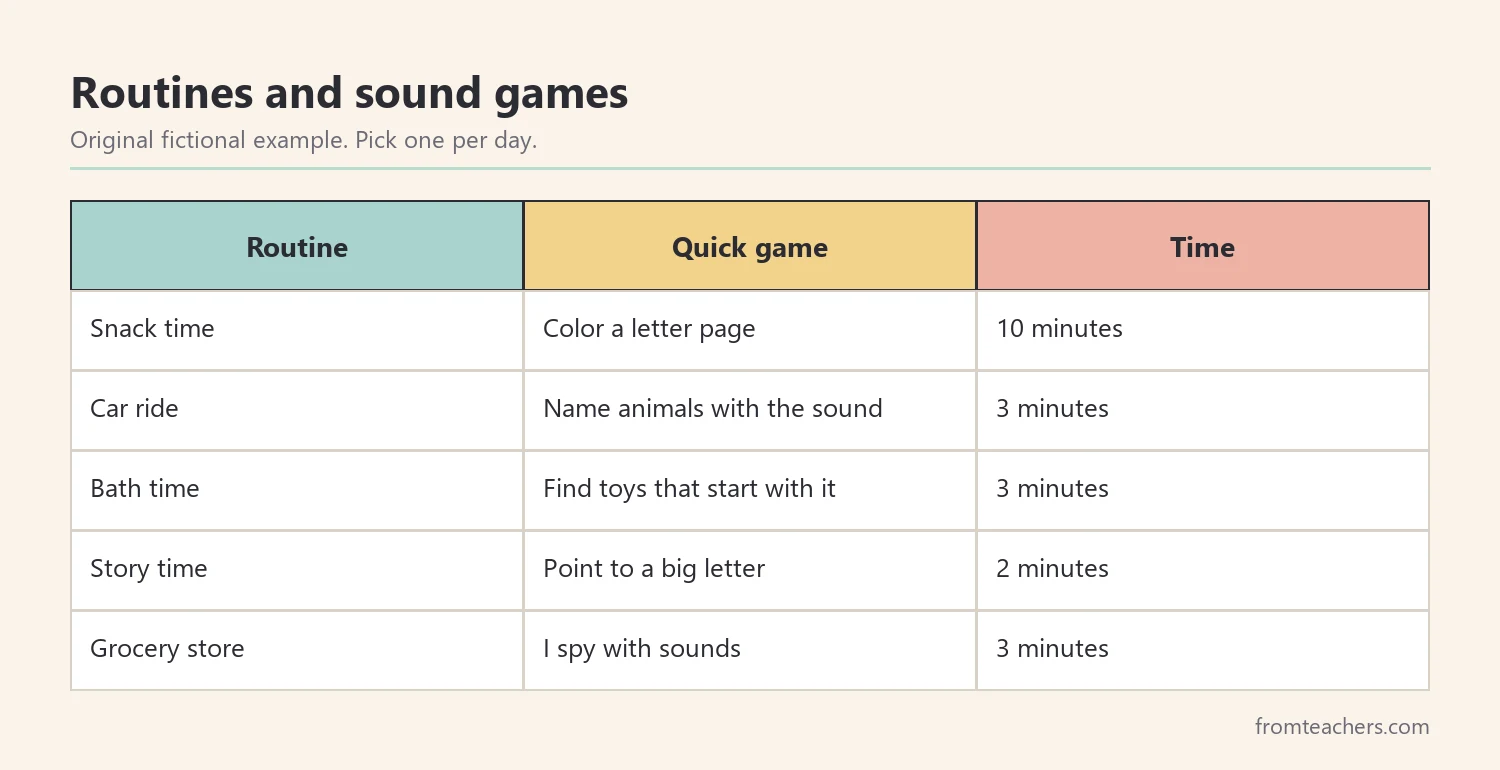
For example, play “I spy” with sounds instead of colors. “I spy something that starts with /s/.” In the car, you can take turns naming animals that start with the letter of the week. At bath time, ask your child to find toys that start with /d/ or /f/.
Similarly, use names. Children are fascinated by their own name and the names of family members and pets. “Leo starts with /l/. What else starts with /l/?” Sara noticed that Leo’s name gave him a strong anchor for the letter L, which he then recognized on signs and cereal boxes.
In addition, read aloud every day. Picture books with rhymes and repeated sounds help children hear the parts of words. Pause before a rhyming word and let your child fill it in. Point to a big letter on the page and ask for its sound now and then, but keep the story the main event.
Here is a simple map of where each kind of practice fits in a normal week:
Finally, follow your child’s interest. A child who loves trucks will happily search for /t/ words in a truck book. When the practice matches what they already enjoy, motivation takes care of itself.
5. Notice progress with a simple tracker
Parents often ask, “How do I know it is working?” A short tracker answers that question without pressure. Moreover, it helps you decide which letters to review and which ones are secure.
Use a simple sheet with the letters you have practiced down the side and the days of the week across the top. At the end of each session, show your child the letter and ask, “What sound does it make?” Then mark a tick if they say it on their own, a dot if they needed a hint, and leave it blank if they were unsure.
For example, here is part of Leo’s tracker after four weeks of practice:
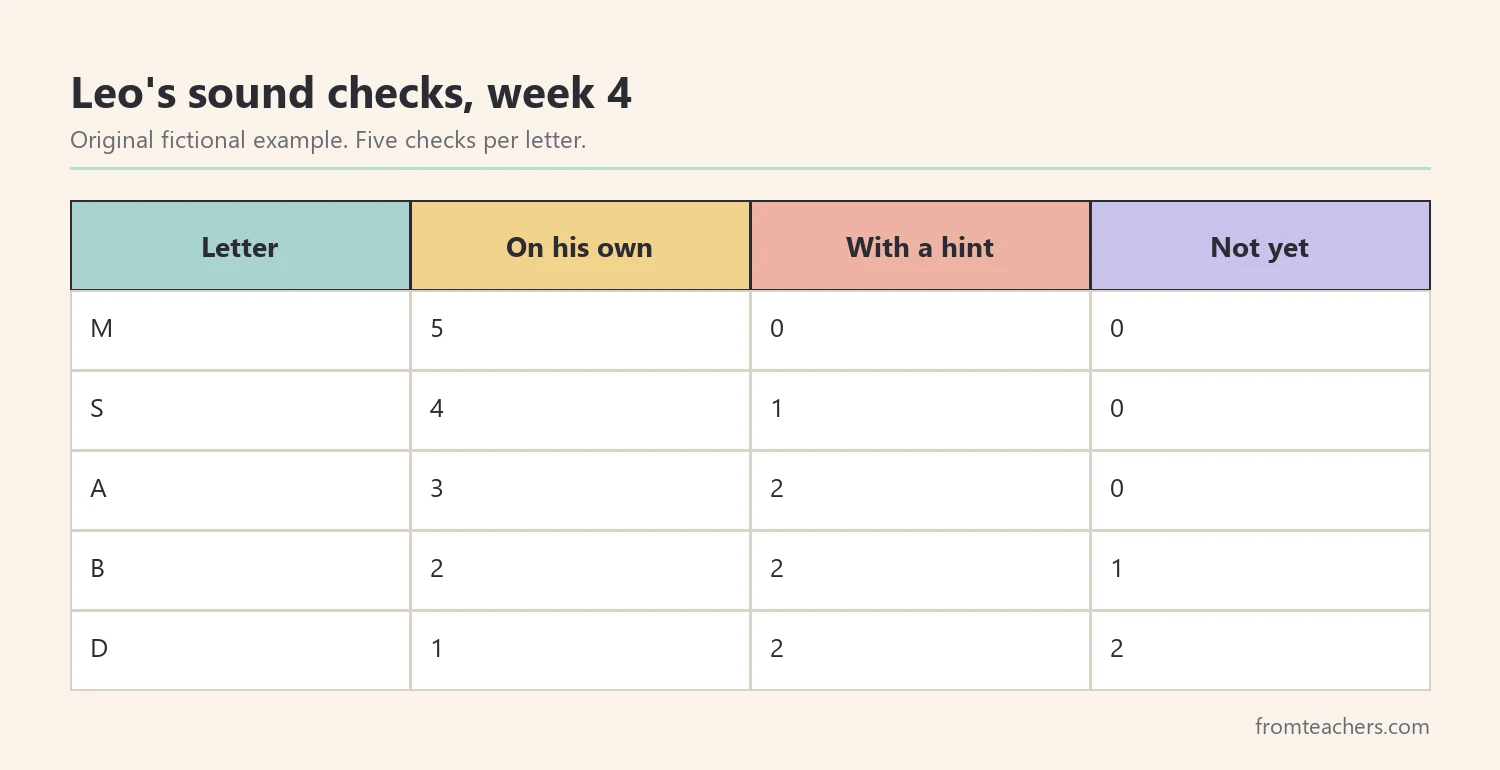
The pattern is clear even without a long report. M and S became secure first, while B and D were still mixed up some days. That is very common, because b and d look alike and their sounds are close. So, Sara added a little extra review for those two letters and kept moving on with new ones.
Also, share the tracker with your child’s teacher. A quick photo or a note in the school folder tells the teacher what you have been working on. In return, the teacher can tell you which letters the class is studying, so home and school practice line up.
However, keep expectations realistic. Children develop at different speeds, and a short dip after a holiday is normal. If you have ongoing concerns about your child’s speech, hearing, or early reading, talk with the teacher or your pediatrician, who can suggest whether a check-up or screening makes sense.
Common mistakes and how to avoid them
- Making sessions too long. Twenty or thirty minutes can tire a young child and end in tears. Fix: keep letter sounds practice at home to about ten minutes and stop on a success.
- Teaching too many letters at once. Five new letters in a week often blur together. Fix: introduce one or two letters and review the old ones often.
- Adding “uh” to every sound. Saying “buh” or “tuh” makes blending harder later. Fix: keep sounds short and crisp, and ask the teacher for a model if unsure.
- Correcting every mistake. Constant correction can make a child stop trying. Fix: model the right sound calmly, then move on to a game.
- Only using paper. Worksheets alone can feel like homework. Fix: mix coloring, spoken games, and everyday routines.
Questions parents ask about letter sounds practice at home
At what age should my child start practicing letter sounds?
Many children show interest in letters during the preschool years, and kindergarten programs usually teach letter sounds directly. Follow your child’s interest and your school’s plan. If your child enjoys it, short and playful practice at four or five is usually welcome.
Should I teach uppercase or lowercase letters first?
Schools differ, so ask your child’s teacher which they use. Most books and signs use lowercase letters for most words, which is why many programs give them early attention. Whichever you choose, the sound stays the same.
My child knows the sounds but cannot hear them in words. Is that normal?
Yes, it is a common stage. Knowing that M says /m/ is one skill, while hearing /m/ at the start of “moon” is another. Picture games where your child listens for a first sound help bridge the two.
How many letters should my child know by the end of kindergarten?
Expectations vary by state and school, so the clearest answer comes from your child’s teacher. They can share the goals for the year and how your child is doing against them. A quick conversation is more useful than comparing with other children.
What if my child refuses to practice?
Take a short break and try a different format, such as a car game or a picture book. Give a small choice, like which letter page to color first. When practice feels like play, resistance usually fades.
Related reading: How Teachers Communicate With Parents in Special Education, Learning Styles Student Success Guide, and Dyslexia in Education: Understanding, Innovating, and Empowering.
You may also need: Learning Letters – Alphabet and Phonics for Preschool.
A companion resource for letter sounds practice at home:
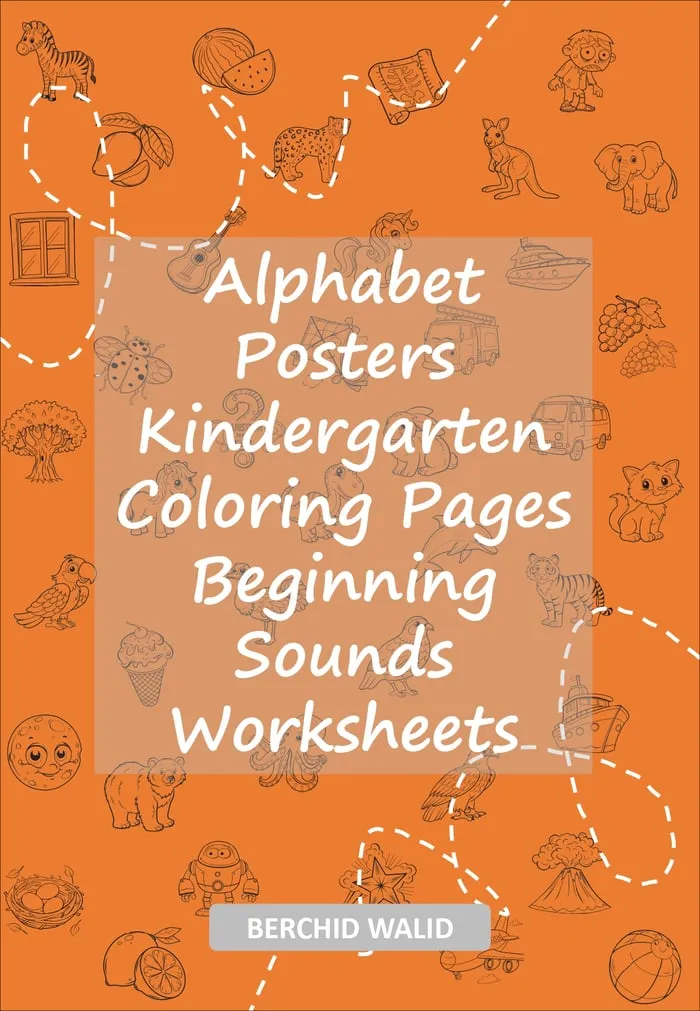
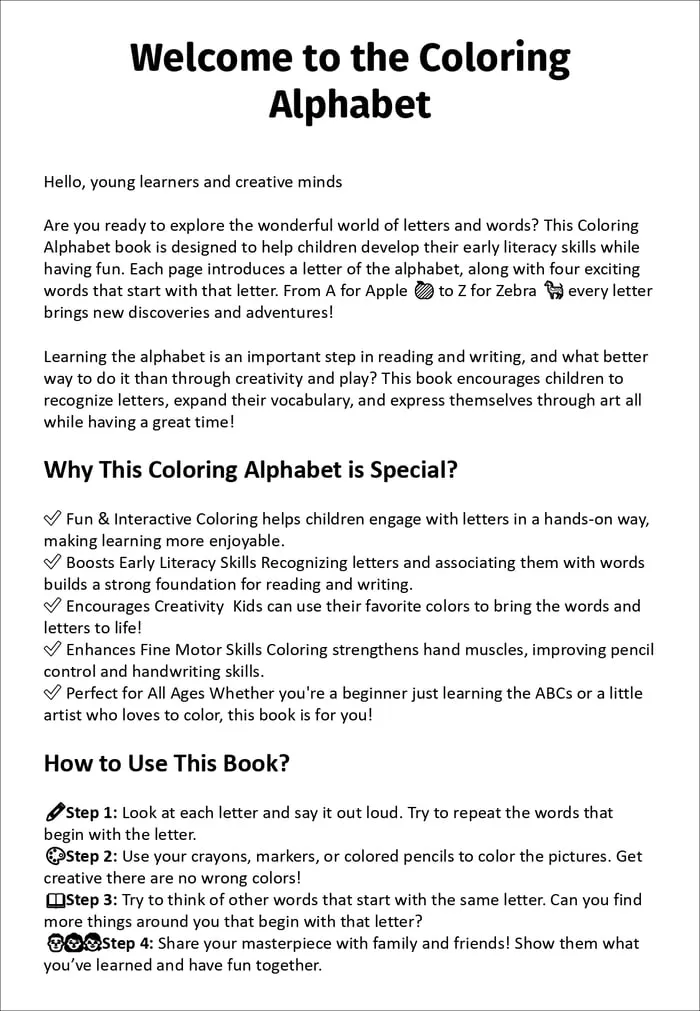
Alphabet Coloring Posters and Beginning Sounds Worksheets: A to Z: a free set with four labeled coloring pictures for every letter, a matching “what is the beginning sound?” worksheet, and a welcome page with simple instructions for children, all in clear black-and-white line art.
Sources and scope
- Reading Rockets: family-friendly articles on phonics, phonemic awareness, and reading with young children.
- CDC Learn the Signs. Act Early.: information for parents on child development and when to talk with a doctor.
- American Speech-Language-Hearing Association (ASHA): guidance for families on speech, language, and early literacy.
- What Works Clearinghouse: reviews of education research, including practice guides on early reading.
This guide covers playful home practice of beginning sounds for young children. It does not cover reading assessment, speech therapy, or diagnosis, which belong to teachers and qualified professionals.
Key takeaways
- Letter sounds practice at home works best in short, regular, playful sessions.
- Say the sound of each letter clearly and link it to pictures right away.
- Coloring pages and spoken games keep practice fun and low pressure.
- Everyday routines like car rides and bath time offer free practice.
- A simple tracker shows progress and helps you talk with the teacher.
Leave a Comment