

An executive function homework routine can turn the nightly battle over schoolwork into a calmer, more predictable hour. Picture a bright eleven-year-old at the kitchen table at 7 p.m. The math sheet is easy for her, yet the page is still blank, the backpack is half unpacked, and everyone at home is getting louder.
This guide is for parents and caregivers of upper elementary and middle school students who are capable but keep getting stuck at home. By the end, you will be able to set up a homework space, build a routine that supports starting, planning, and finishing, and check whether it is helping, all without becoming your child’s full-time manager.
Examples are fictional. Adapt to your child’s needs and any supports agreed with the school. This is guidance, not a diagnosis.
At a glance
- Getting stuck on homework is often a skill gap, not a lack of effort.
- The same time, place, and order every day removes many small decisions.
- A tiny first step makes starting much easier.
- Break the work into short blocks with planned breaks.
- Fade your help gradually as your child takes over each part.
1. See homework struggles through an executive function lens
First, it helps to name what is going on. Executive function describes the brain skills that help us start tasks, plan steps, hold information in mind, manage time, and shift between activities. A child can understand fractions well and still struggle to begin a fraction worksheet at home.
For many families, homework is where these skills are tested hardest. At school, a teacher sets the timing, the order, and the reminders. At home, the child must do all of that alone, often when tired after a long day. As a result, a child who looks lazy may actually be frozen by the jump from “I have homework” to “I am doing homework.”
Next, watch for patterns before you change anything. For one week, jot down simple notes: when homework started, how long it took to begin, where your child got stuck, and how the evening ended. Do not try to fix anything yet. You are gathering clues.
For example, meet Nora (fictional, grade 6). Her father, Daniel, kept notes for five evenings. He noticed three things. Nora took between 15 and 25 minutes to start. She often forgot which assignments were due. And long assignments led to tears, while short ones went fine.
Those notes changed the conversation at home. Instead of “Why won’t you just do it?”, Daniel could say, “Starting seems hard. Let’s make starting easier.” That shift in language is the heart of a good homework routine. It treats the problem as a skill to support, which keeps your relationship with your child intact.
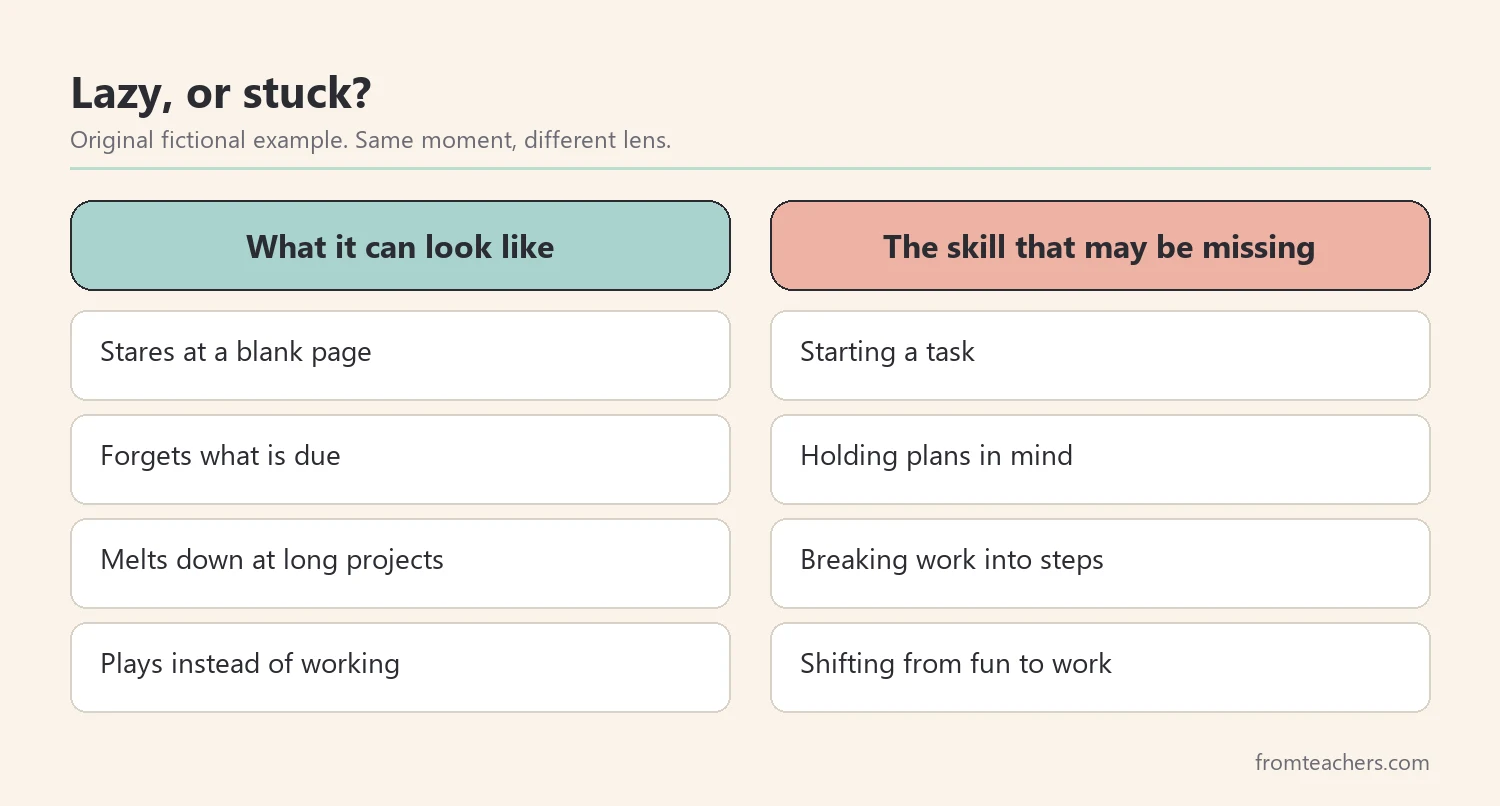
If you would like a deeper explanation of why capable students freeze, the Executive Function Guide: Why Smart Students Get Stuck walks through task initiation, why it looks like laziness, and strategies that help, in a clear comic style that many parents find easy to read.
2. Set up a homework space that does part of the work
A good space reduces the number of choices your child has to make. Because every decision uses up a little mental energy, fewer decisions leave more energy for the work itself. Therefore, the goal is a spot that is ready, predictable, and calm.
Start with these basics:
- One regular place, such as the same end of the kitchen table or a small desk.
- A caddy with pencils, eraser, ruler, calculator, and sticky notes.
- A visible clock or timer, so time is easier to see.
- A clear spot for the planner or assignment list.
- Phones and tablets in another room unless needed for the task.
In addition, think about noise and movement. Some children focus best with quiet. Others work better with soft background sound or near a parent who is cooking. There is no single right answer, so test a few options and keep what works.
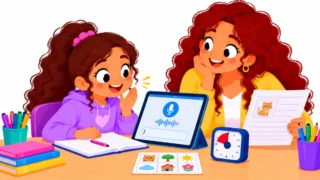
Nora’s family tried two setups. In week one, she worked alone in her bedroom. In week two, she worked at the kitchen table while Daniel prepared dinner nearby. Starting times dropped in the kitchen, probably because a calm adult presence made it easier to begin. So the kitchen became her homework spot.
Also, keep the space tidy at the end of each session. A simple reset, putting supplies back in the caddy and the planner on top, means tomorrow starts smoothly. Over time, your child can take over the reset as their own job.
3. Build an executive function homework routine with clear steps
Now, turn the space into a routine. A routine is simply the same steps in the same order every day. Because the order does not change, your child does not have to plan the session from scratch each evening.
A simple four-part routine looks like this:
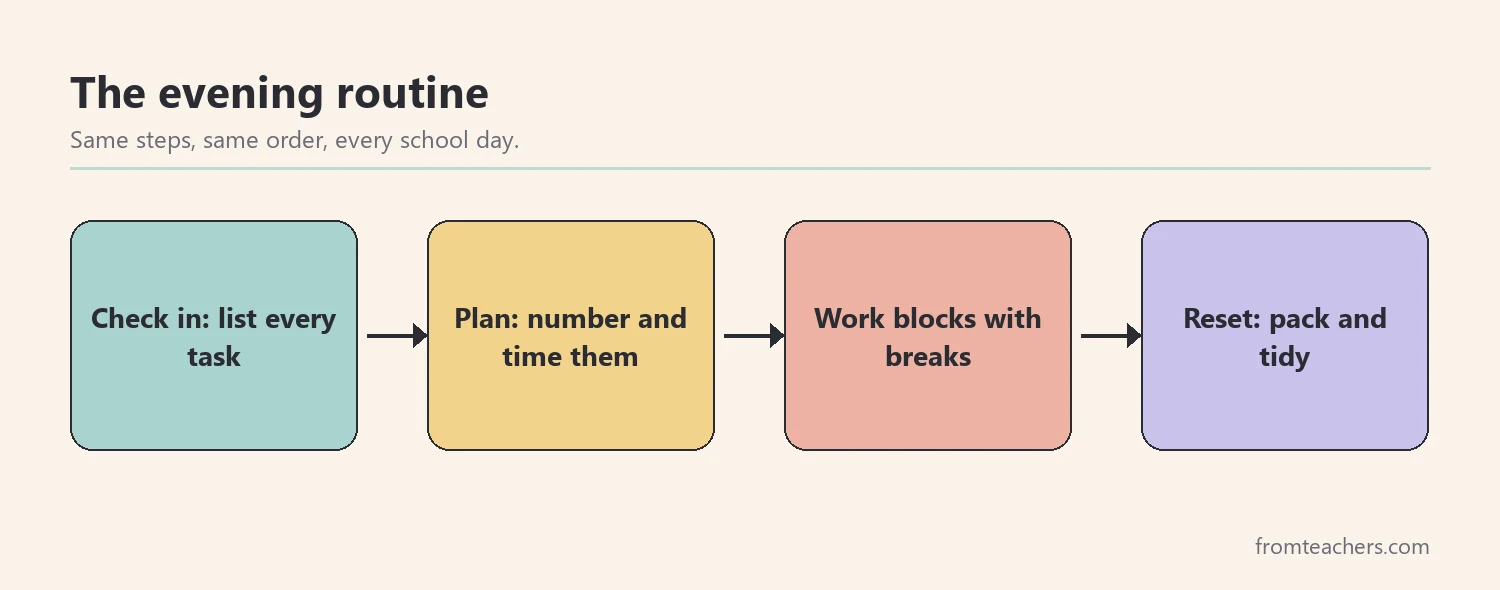
First, the check-in. Your child opens the planner and lists every task on a sticky note or whiteboard. Next, the plan: number the tasks in order and guess how long each will take. Many children are surprised by how short a task is once it is written down.
Then, work blocks. Set a timer for a short block, such as 15 or 20 minutes, followed by a five-minute break. Younger or more easily tired children may need shorter blocks. During breaks, encourage movement rather than screens, since it is hard to return from a game or video.
Finally, the reset: check off completed tasks, pack the bag, and tidy the space. This last step closes the loop and helps your child see what they achieved.
Post the routine where your child can see it. A short list on the wall or the inside cover of the planner is enough. For example, Nora’s list read: “1. Write tasks. 2. Number them. 3. Timer on. 4. Pack and tidy.” After about two weeks, she followed it with only a quick reminder from Daniel.
Moreover, keep the start time steady. An executive function homework routine works best when it begins at roughly the same time each day, after a snack and a short break from school. A predictable start reduces arguments about “when.”
4. Make starting easier with a tiny first step
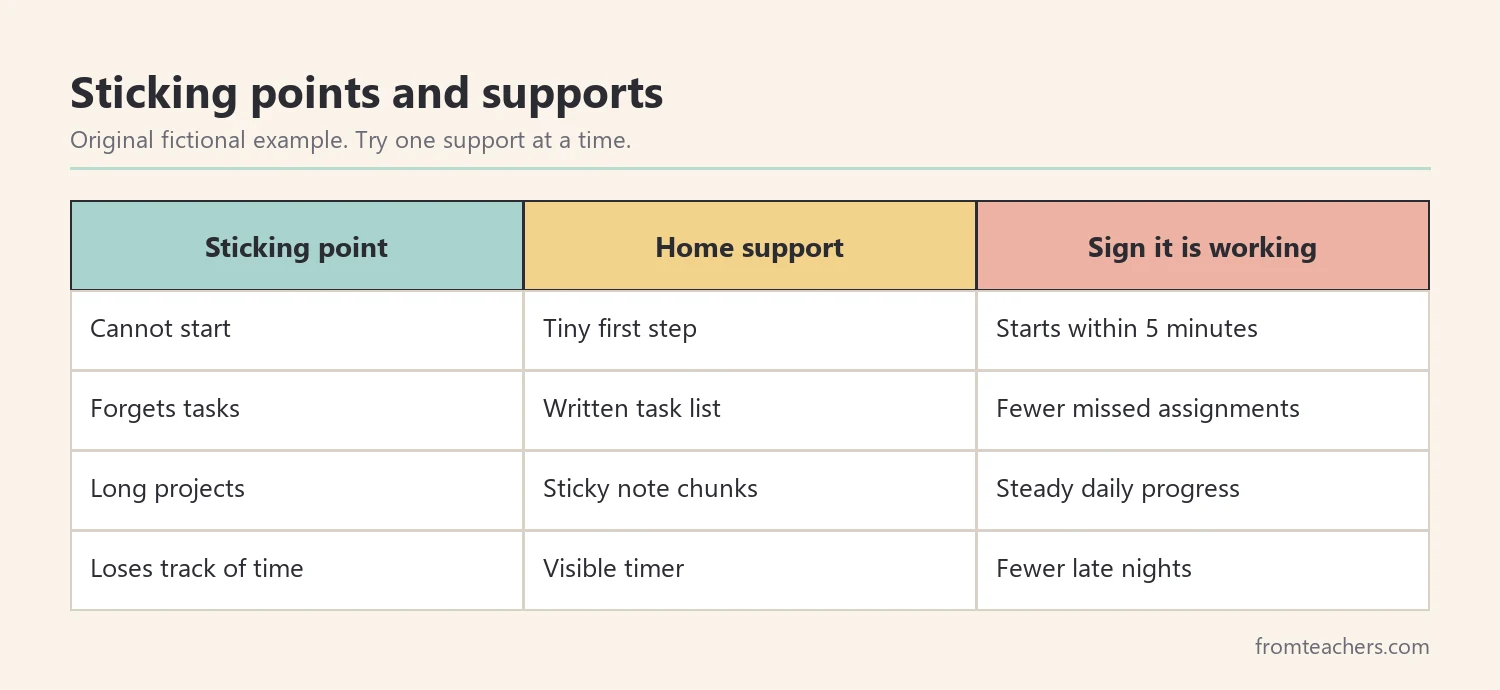
For many students, starting is the hardest part. Once they are moving, they can often keep going. So, put most of your energy into the first two minutes.
One useful tool is the tiny first step. Instead of “Do your math,” the first step becomes “Write your name and the date on the math sheet.” Then, “Read question one out loud.” These steps feel almost too small to refuse, and that is the point. Small actions build momentum.
Here are other ways to make starting easier:
- Start with the easiest task. A quick win builds confidence for harder work.
- Use a “just five minutes” deal. Agree to work for five minutes, then decide whether to continue.
- Say the plan aloud. “First I will read the question, then I will underline the numbers.”
- Body doubling. Sit nearby with your own quiet task, like paying bills or reading.
Also, look at long assignments with fresh eyes. A book report can feel like a mountain. Broken into “choose a book,” “read chapters 1 to 3,” and “write three sentences about the main character,” it becomes a set of small hills. Write the pieces on sticky notes and move each one to a “done” area when finished.
Daniel tried the tiny first step for two weeks. On most nights, Nora started within five minutes once her first step was simply writing the date. On the hardest night, she needed a “just five minutes” deal, and then kept going on her own.
5. Measure progress and fade your support
A routine should make life easier, so it is worth checking whether it does. Fortunately, you do not need complicated data. A few simple counts each week are enough to see a trend.
Track two or three things:
- Minutes from sitting down to starting the first task.
- Number of tasks finished out of tasks planned.
- Number of reminders your child needed.
For example, here is how Nora’s first five weeks with her executive function homework routine looked:
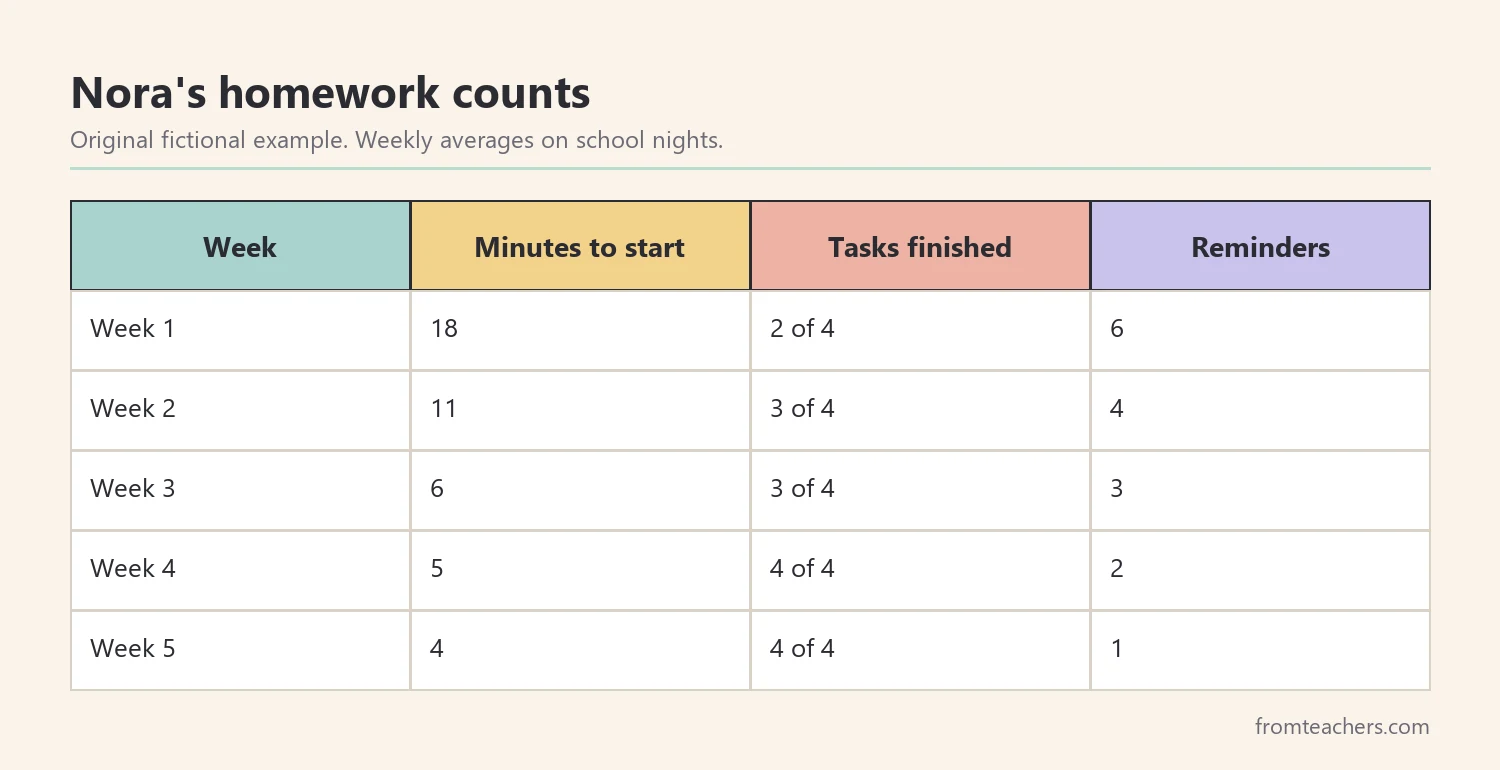
The numbers told a hopeful story. Start times fell, more tasks were finished, and Daniel’s reminders dropped. Because the routine was working, it was time to hand over more of it.
Fading support means removing your help one piece at a time. For instance, Daniel stopped writing the task list for Nora in week four. In week five, he moved from sitting beside her to working in the next room. Each change was small, and he watched the counts to make sure they stayed steady.
However, if things slip, step back in. Busy weeks, tests, and holidays can disrupt any routine. Return to the last level of support that worked, then fade again when things settle. Progress is rarely a straight line.
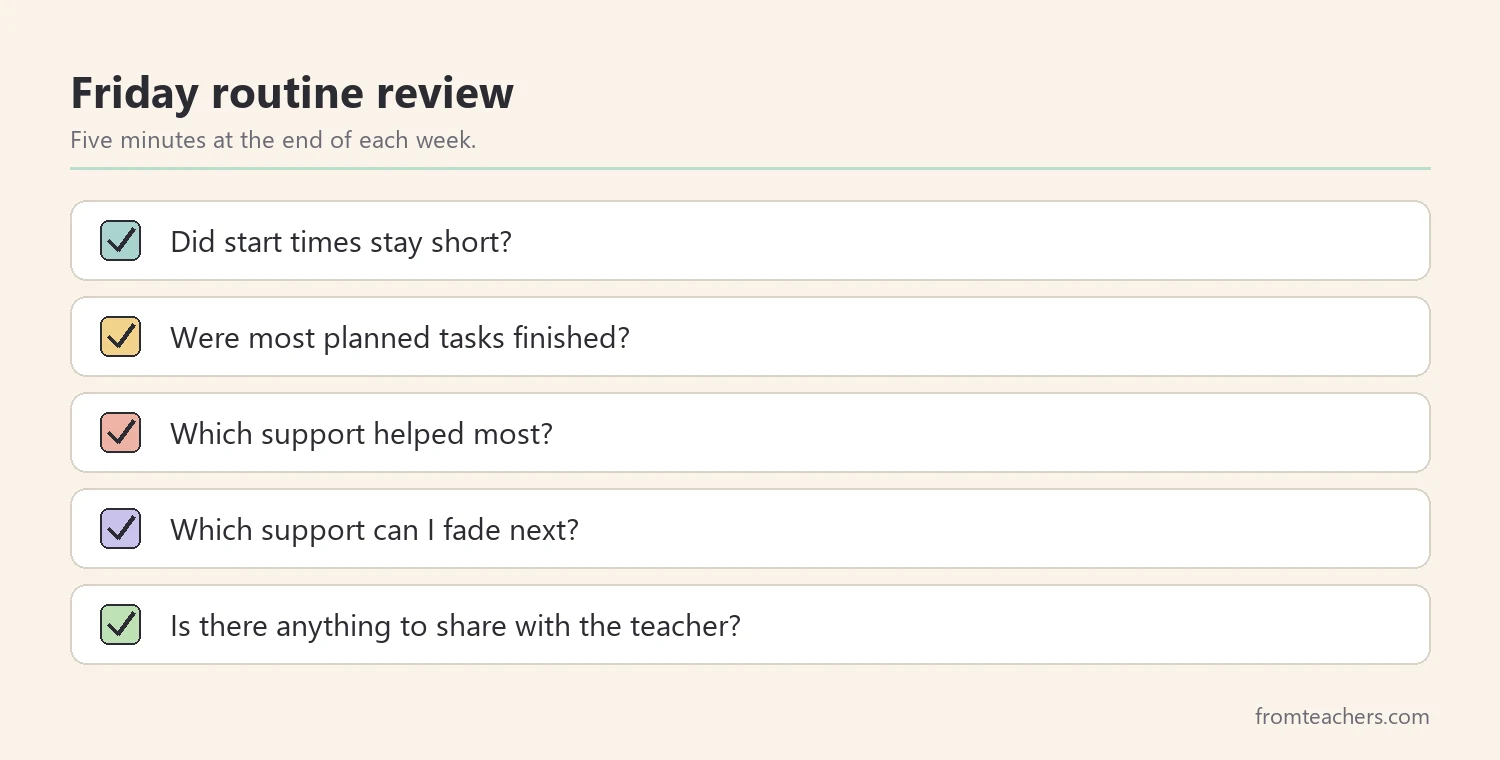
Finally, share what you learn with the school. A short note to the teacher, such as “Nora works best in 20-minute blocks with a written task list,” can help them support her in class too. If struggles continue despite a steady routine, ask the school whether a conversation about supports or an evaluation would be useful.
Common mistakes and how to avoid them
- Treating stuck moments as defiance. Punishment rarely fixes a skill gap. Fix: name the skill, such as starting or planning, and support it.
- Changing the routine every few days. New rules every week add more decisions. Fix: keep the executive function homework routine steady for at least two weeks before judging it.
- Doing the work for your child. It feels kind but removes the practice. Fix: help with the process, such as listing and timing, not the content.
- Using screens as breaks. Returning from a game is hard. Fix: use movement, a snack, or a short walk instead.
- Never fading help. Children need room to own the routine. Fix: remove one support at a time while watching your counts.
Questions parents ask about an executive function homework routine
How long should homework blocks be?
There is no single right length. Many families start with 15 to 20 minute blocks and a short break, then adjust. If your child is drifting long before the timer, shorten the block; if they are rolling, let them continue.
Should I sit with my child the whole time?
At first, sitting nearby can help a lot, especially for starting. Over time, aim to move further away while your child stays on track. Your presence is a support to fade, not a permanent rule.
What if homework takes far longer than the teacher expects?
Talk with the teacher and share your simple counts. Teachers often adjust the amount or format when they see clear information. For students with an IEP or 504 plan, homework supports can also be discussed with the team.
Is this only for children with ADHD?
No. Many children without any diagnosis have trouble starting or planning, especially during busy seasons. The strategies here are general supports. If you have ongoing concerns, ask the school or your pediatrician about next steps.
How do I keep the routine going over holidays?
Keep a light version, such as a short daily reading block at the usual time. Then, a few days before school restarts, return to the full routine. That makes the first week back much easier.
Related reading: ADHD in Children: A Guide to Effective Classroom and Home Support, 5 Practical Teaching Tips to Boost Classroom Focus and Learning, and How Teachers Communicate With Parents in Special Education.
You may also need: My Homework Routine: 12-Step Visual Cards.
A companion resource for an executive function homework routine:
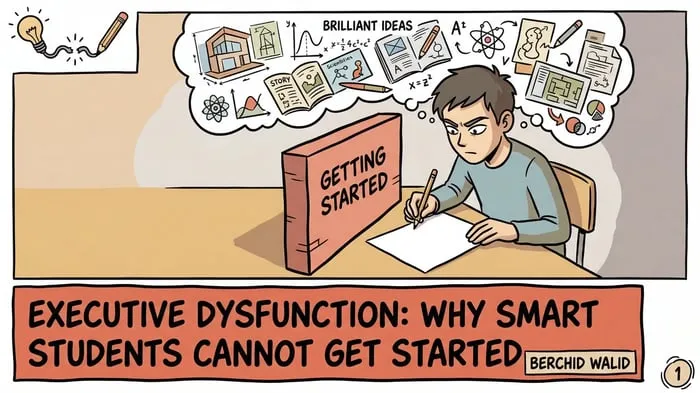
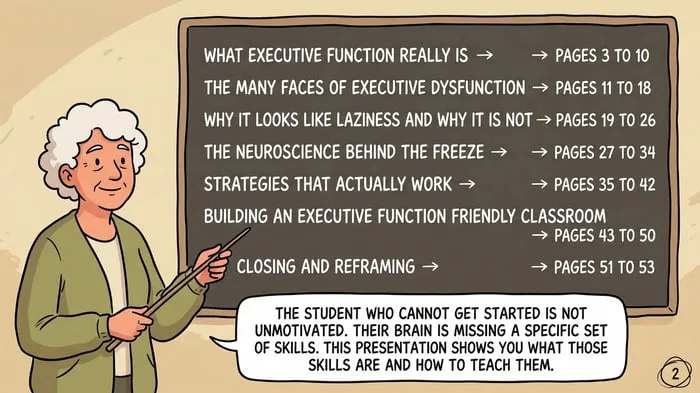
Executive Function Guide: Why Smart Students Get Stuck: a 53-page comic-style guide on what executive function is, why dysfunction looks like laziness, the neuroscience behind the freeze, strategies that work, and building an executive function friendly classroom.
Sources and scope
- Center on the Developing Child, Harvard University: plain-language resources on executive function and how these skills develop.
- Understood.org: family guidance on executive function, homework, and learning and thinking differences.
- CDC: ADHD: general information for families, including behavior and school support.
- IRIS Center, Vanderbilt University: free modules on self-regulation and classroom supports.
This guide covers practical home routines for school-age children who struggle with homework. It does not cover diagnosis, medication, or formal evaluation, which belong to qualified professionals and school teams.
Key takeaways
- An executive function homework routine treats getting stuck as a skill gap.
- A ready space and a fixed order remove many small decisions.
- Tiny first steps and short work blocks make starting easier.
- Simple weekly counts show whether the routine is helping.
- Fade your support gradually so your child owns the routine.





Leave a Comment