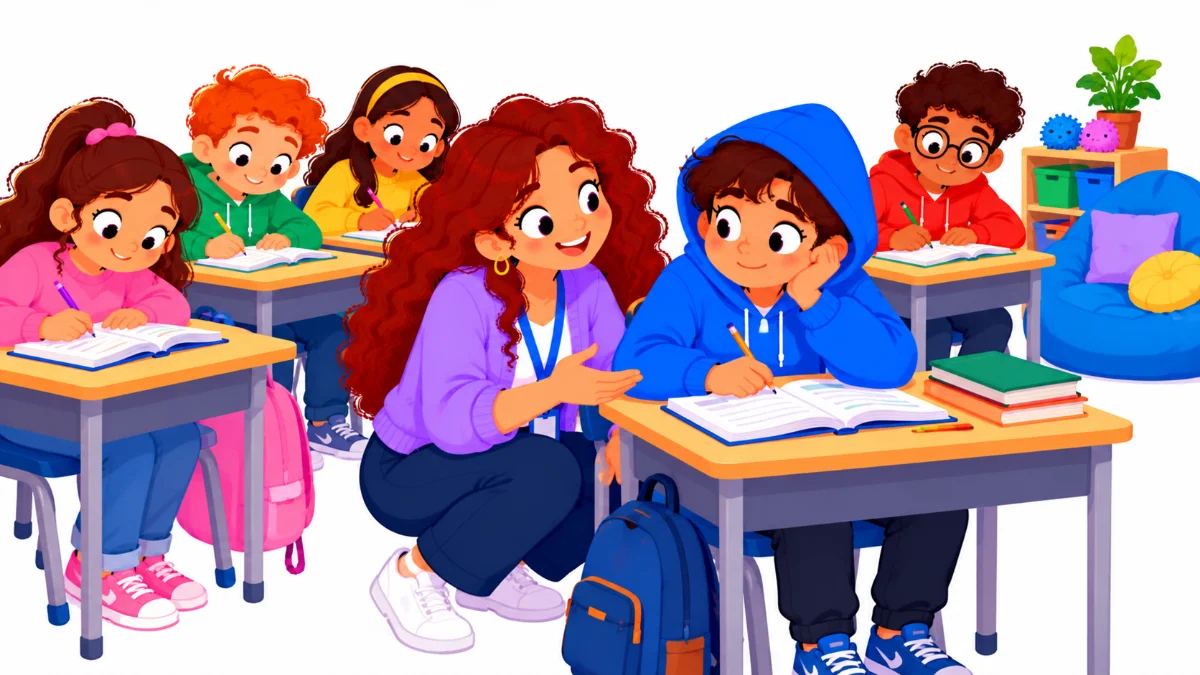

De-escalation strategies for middle school need to fit a very particular age: students who are bigger, louder, and far more aware of their peers than younger children. Picture a grade 7 classroom after lunch. A student slams his book shut, mutters something under his breath, and the whole room turns to watch. What the teacher does in the next thirty seconds will shape the rest of the period.
This guide is for middle school teachers, special education staff, and paraprofessionals who support students with emotional and behavioral needs, including students identified with emotional disturbance. By the end, you will be able to spot early warning signs, respond calmly in the moment, protect the student’s dignity in front of peers, and repair the relationship afterward.
Examples are fictional. Follow your school’s crisis and safety procedures and the student’s IEP or behavior plan. This is guidance, not a clinical recommendation.
At a glance
- Most escalations build in stages, so early signs matter most.
- Your calm voice and body are the first strategy.
- With teens, saving face in front of peers is a powerful need.
- Offer choices and space instead of public demands.
- Repair and reflect after every incident, once everyone is calm.
1. Learn the stages and the early signs
First, it helps to see escalation as a cycle rather than a sudden explosion. Many behavior frameworks describe stages such as calm, trigger, agitation, acceleration, peak, de-escalation, and recovery. The names vary, but the idea is the same: behavior usually builds, peaks, and then settles.
The earlier you respond, the easier it is to help. Once a student reaches the peak, the main goal is safety. Before that, during agitation, small adjustments can often prevent the peak entirely.
So, learn each student’s early signs. These might include a change in voice, putting a hood up, tapping a pencil faster, refusing to make eye contact, or muttering. Every student is different, and the signs are often subtle.
Meet Tyler (fictional, grade 7). His team noticed a pattern: after lunch, he often pulled his hood up, put his head down, and answered with one word. If an adult pushed him to start work at that point, he would argue loudly and sometimes leave the room. His early signs were clear once the team looked for them.
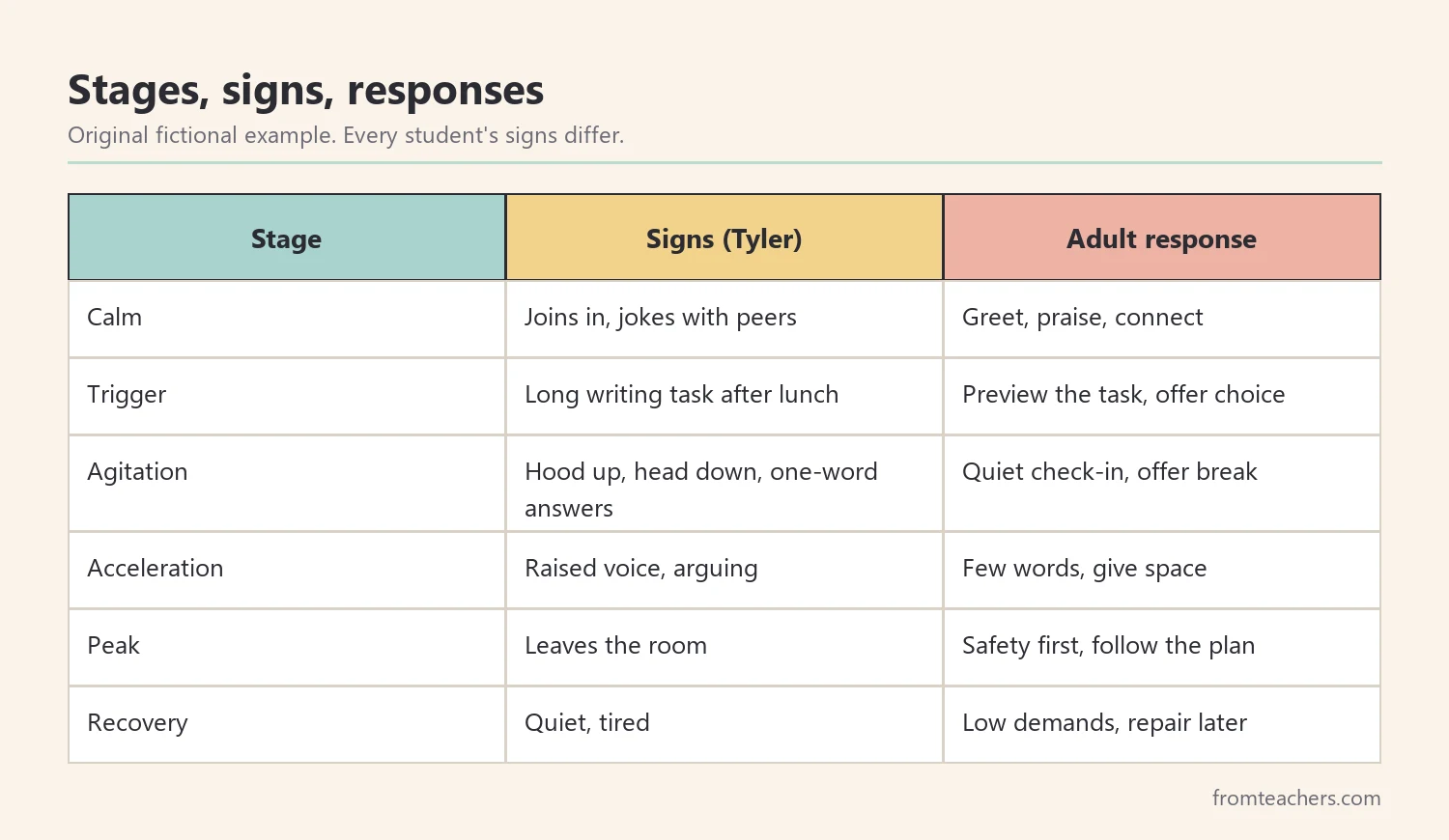
Finally, share the signs with every adult who works with the student. A short note in the student’s plan, such as “Hood up and head down after lunch = check in quietly,” helps everyone respond in the same way.
2. Use de-escalation strategies for middle school students in the moment
When a student is agitated, your own behavior is the most important tool you have. Teens are highly sensitive to tone and body language, and a raised voice or a towering stance can push them toward the peak.
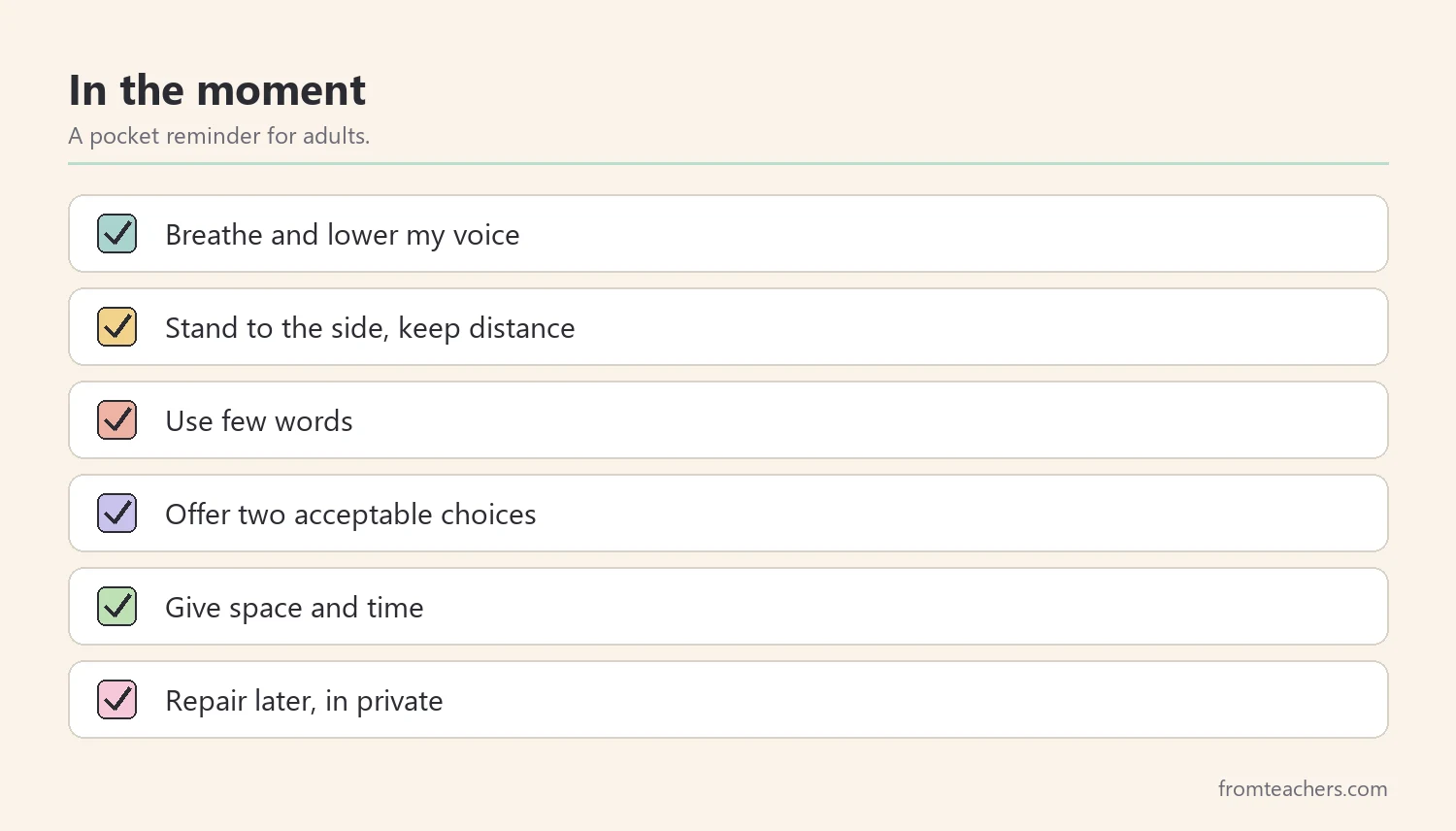
Start with your body. Lower your voice, slow your speech, and stand slightly to the side rather than face to face. Keep your hands relaxed and visible. If possible, get down to the student’s eye level or stand at a respectful distance.
Next, keep words few and calm. Long lectures increase stress. Short, clear statements work better: “I see you’re frustrated. Take a minute. I’ll check back.” Avoid sarcasm, threats, or “Why are you doing this?” questions, which can feel like accusations.
In addition, offer choices. Choices give a sense of control, which many agitated students badly need. “Do you want to start with question one or question three?” or “Would you like to work here or at the side table?” Both options should be fine with you.
Then, offer space. A quiet place to take a short break, such as a corner of the room or a planned calm area, can help. For Tyler, the team agreed that he could take five minutes at a side table with a stress ball before starting work.
Also, remember that de-escalation is not giving in. You can hold expectations and still be calm. Work can wait five minutes. A relationship damaged by a public power struggle often takes much longer to repair.
Practice short scripts in advance
In a tense moment, it is hard to think of the right words. Therefore, many teachers prepare a few short scripts and practice them until they feel natural. When the moment comes, the words are already there.
Useful scripts are short, calm, and non-judgmental. For example:
- “I can see this is frustrating. Let’s take a minute.”
- “You can start with number one or number three. Your choice.”
- “Take a break at the side table. I’ll come back in five minutes.”
- “I’m not going anywhere. When you’re ready, we’ll figure it out.”
In addition, agree on scripts as a team. When the classroom teacher, the paraprofessional, and the special education teacher all use similar words, the student hears a consistent message. That consistency builds trust, because the student knows what to expect from every adult.
Also, practice with a colleague. Saying a script aloud, even once, makes it far easier to use under stress. Tyler’s team spent ten minutes at a staff meeting practicing their after-lunch check-in, and the paraprofessional said it was the most useful part of the meeting.
Finally, watch your follow-through. If you say “I’ll check back in five minutes,” make sure you do. Keeping small promises shows the student that adults can be relied on, which is the foundation of every calm response.
3. Protect dignity in front of peers
For middle school students, how they look to classmates can matter more than almost anything else. Therefore, a correction delivered in front of the class can feel like a public challenge, and many students will escalate rather than back down.
So, move conversations out of the spotlight. Walk over quietly, crouch beside the desk, and speak in a low voice. If you need a longer conversation, ask the student to step into the hallway with you, phrased as an invitation rather than a demand.
In addition, redirect the audience. If the class is watching, give them something else to focus on: “Everyone, turn to page 42 and try the first two problems.” This removes the “stage” and gives the student room to calm down.
Moreover, avoid public consequences in the moment. Announcing “You just lost your free time” in front of the class raises the stakes. If a consequence is needed, discuss it privately later, when the student is calm.
Here is how common responses compare:
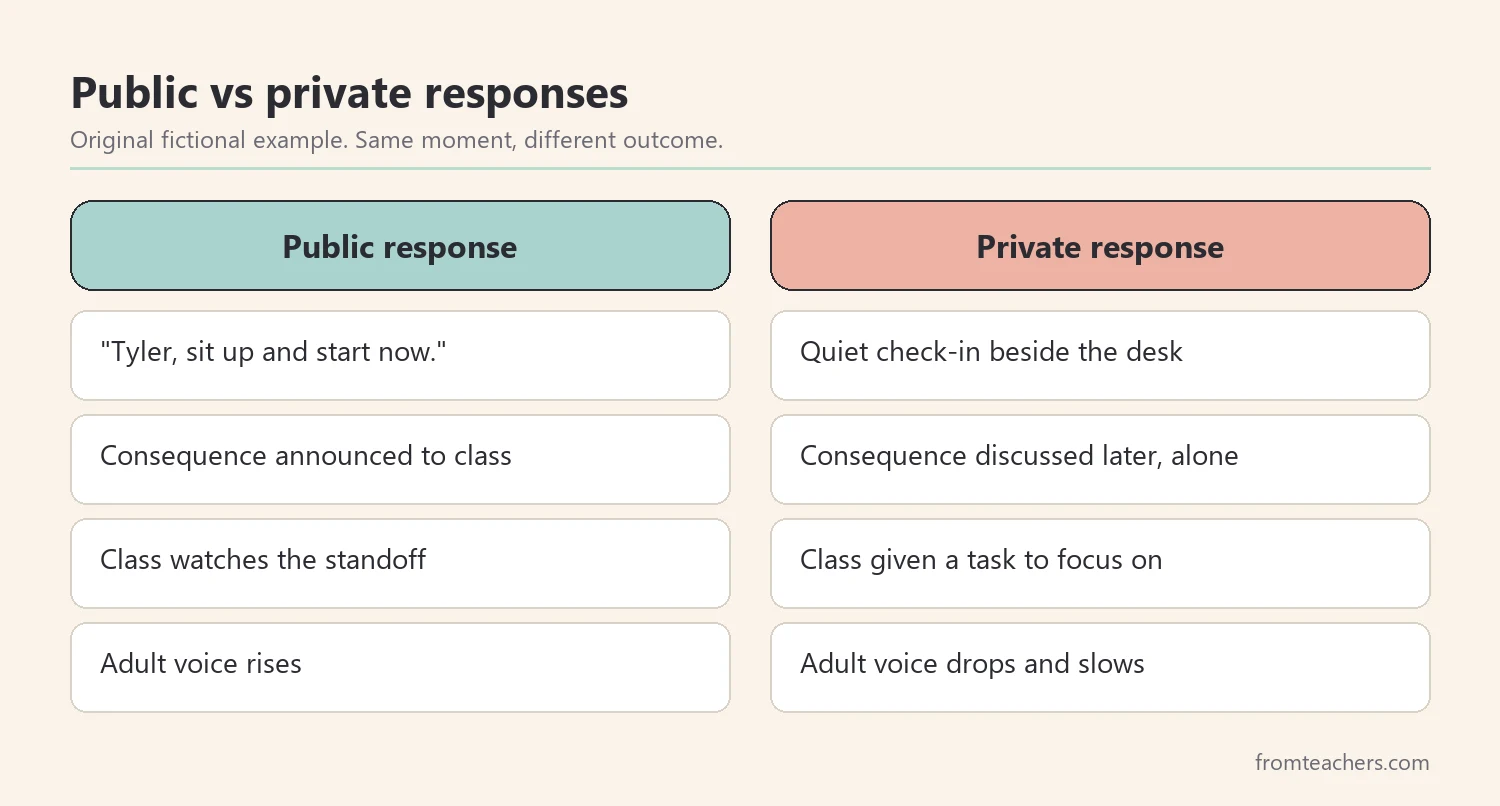
When Tyler’s teacher began checking in privately after lunch, the shift was visible. Instead of arguing in front of classmates, Tyler usually accepted the side-table break. The class barely noticed, which was exactly the point.
Finally, model respect. Middle schoolers watch how adults treat their peers. Calm, respectful de-escalation strategies for middle school show the whole class how to handle frustration, which is a lesson in itself.
4. Build a calm classroom that prevents escalation
The best de-escalation is the escalation that never happens. Many triggers can be reduced through classroom design, routines, and relationships.
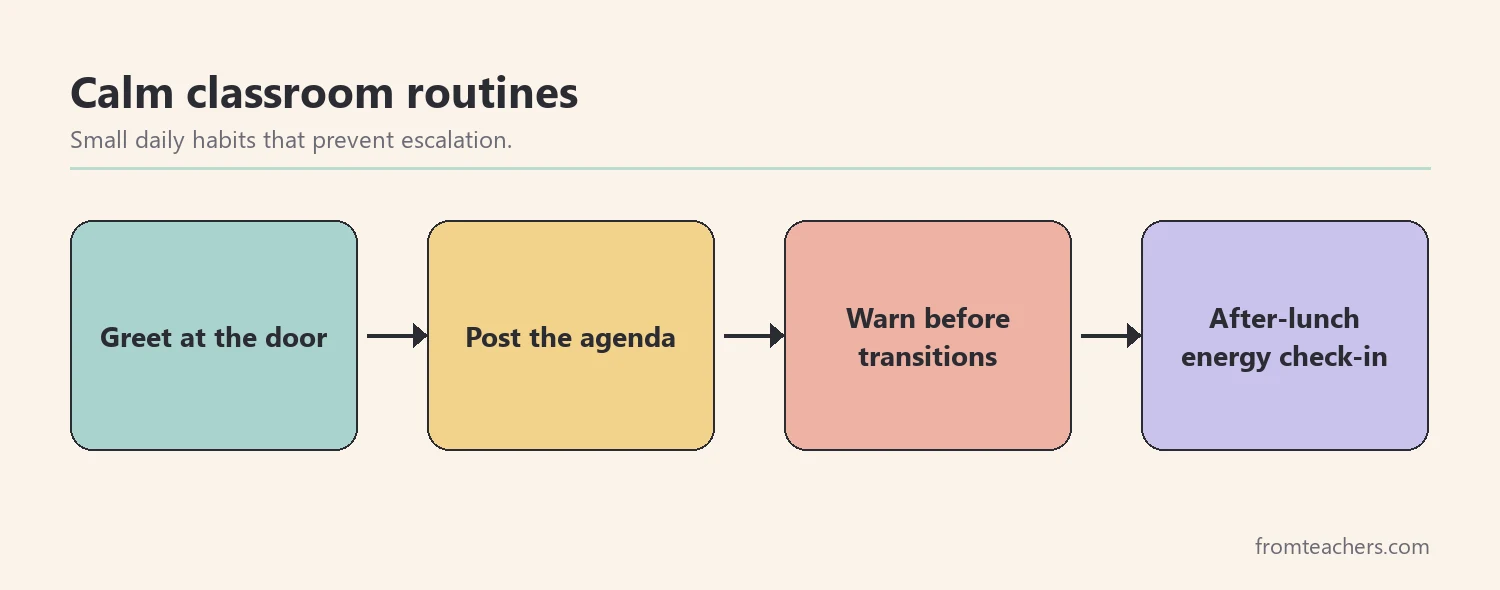
First, make routines predictable. Post the agenda for each lesson, warn students before transitions, and keep start-of-class routines the same each day. Predictability reduces anxiety, which is often at the root of agitation.
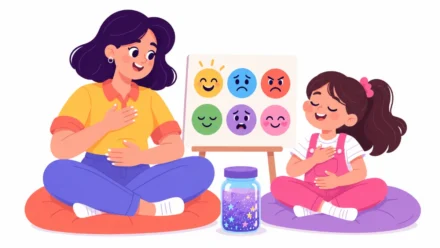
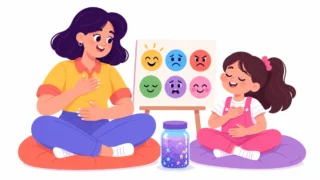
Next, set up a calm space. This might be a corner with a chair, some fidget tools, and a feelings chart. Teach all students how and when to use it, so it becomes a normal option, not a punishment. The ED Support Toolkit: Calm Classroom and SEL Strategies includes a section on creating a calm classroom, covering environment setup, sensory tools, emotion regulation, and understanding behavior as function.
In addition, invest in relationships. Short, positive interactions throughout the week, such as greeting the student at the door or asking about their weekend, build trust. When a hard moment comes, that trust makes calm responses more effective.
Also, teach regulation skills directly. Middle schoolers can learn to name feelings, notice body signals, and choose strategies like breathing, movement, or a short walk. Practice these when everyone is calm, not only during crises.
Tyler’s teacher added a two-minute “check-in” routine after lunch, where every student rated their energy on a scale from 1 to 5. Tyler used it to signal when he needed a break, often before any early signs appeared.
5. Repair, reflect, and track progress
After an incident, there is still important work to do. Once the student is fully calm, often later in the day or the next morning, have a short private conversation. The goal is to reconnect, understand what happened, and plan for next time.
Keep the conversation simple. Ask: “What was going on for you?”, “What helped?”, and “What could we try next time?” Listen more than you talk. Many students are surprised that an adult wants to hear their side.
Moreover, repair the relationship. A simple “I’m glad you’re here today” or “We had a rough moment yesterday, but I’m still on your side” goes a long way. Middle schoolers often expect adults to hold a grudge; showing that you do not can change the relationship.
Then, track patterns. Note the date, time, setting, early signs, what helped, and how long the student took to recover. Over a few weeks, patterns appear. Here is Tyler’s record:
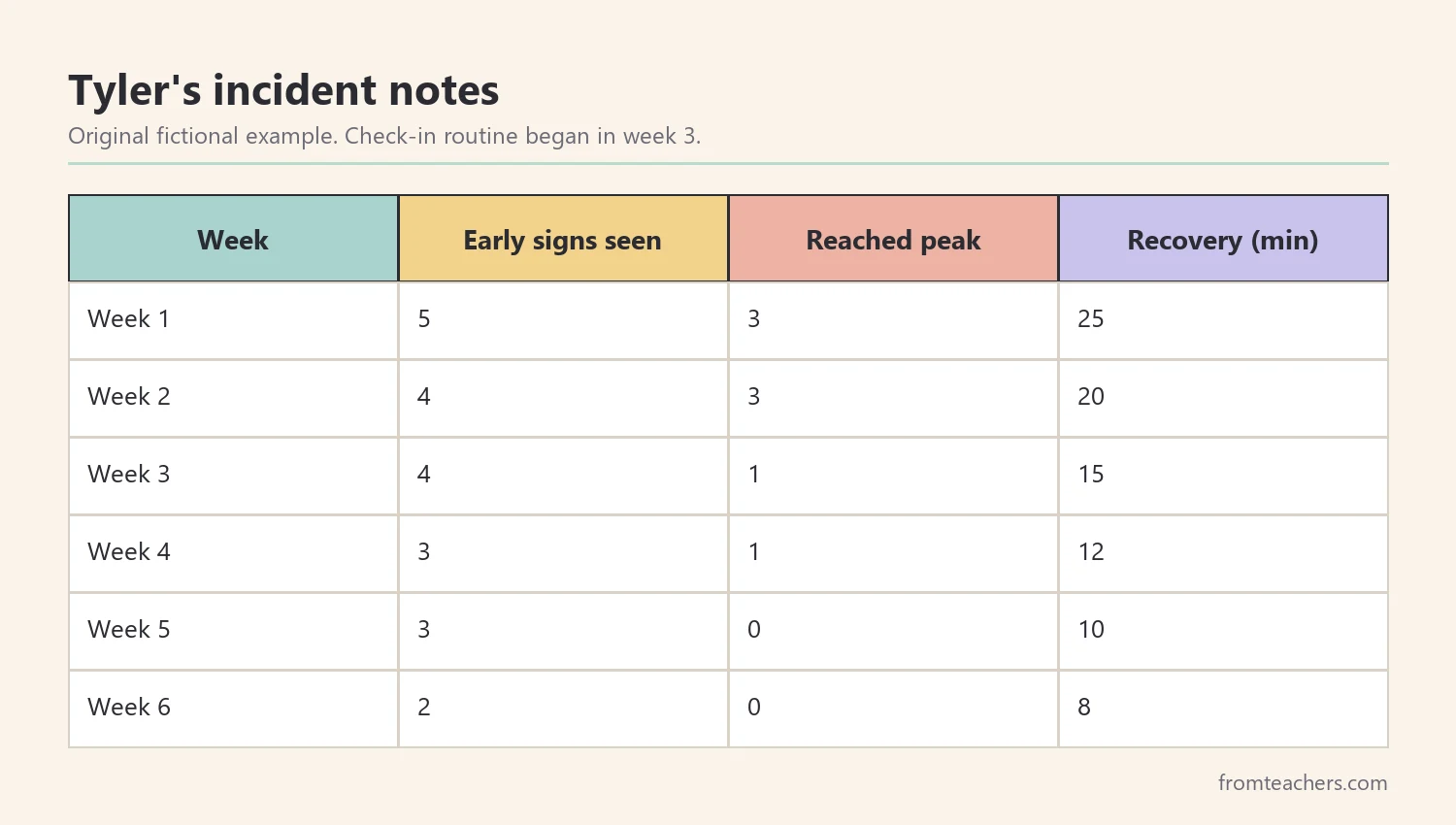
The data showed fewer peaks and shorter recovery times after the after-lunch check-in started in week three. That gave the team evidence to keep the routine and share it with other teachers.
Finally, share information with the team and family. If a student has a behavior plan, update it with what works. Regular communication with families, focused on progress as well as challenges, builds a stronger support network around the student.
Common mistakes and how to avoid them
- Waiting until the peak. Late responses are harder and riskier. Fix: learn each student’s early signs and act then.
- Correcting in public. Teens often escalate to save face. Fix: move conversations to a private space or a quiet voice.
- Talking too much. Long explanations add stress. Fix: use short, calm statements and offer choices.
- Skipping repair. Unresolved incidents damage trust. Fix: reconnect privately once the student is calm.
- Not tracking patterns. Memory misses trends. Fix: keep simple notes and review them every few weeks.
Questions teachers ask about de-escalation strategies for middle school
What if a student becomes unsafe?
Safety comes first. Follow your school’s crisis procedures, call for support, and keep other students safe. De-escalation strategies are for the stages before and after the peak, not a replacement for safety plans.
Isn’t offering a break rewarding bad behavior?
Not if it is planned and paired with a return to work. A short, structured break helps the student regulate, so they can then complete the task. Over time, the goal is for the student to ask for breaks before escalation.
How do I stay calm myself?
Take a slow breath before you respond, remind yourself that the behavior is communication, and use a script you have practiced. After the incident, take a moment for yourself and talk with a colleague if needed.
Should I talk to the class after an incident?
Usually, keep it brief and protect the student’s privacy. Return the class to normal routines quickly. If students are upset, a short, general check-in can help.
How can families help?
Families can share early signs they see at home and strategies that help. Using similar language and routines at home and school helps the student feel supported in both places.
Related reading: Essential Trauma-Informed Teaching Strategies for Modern Classrooms, Moving Beyond Shame and Behavior Charts, and Meltdowns vs Tantrums: A Guide to Understanding and Responding.
You may also need: Emotional Regulation Strategies for Special Education: Calm Down Corner & SEL.
A companion resource for de-escalation strategies for middle school:
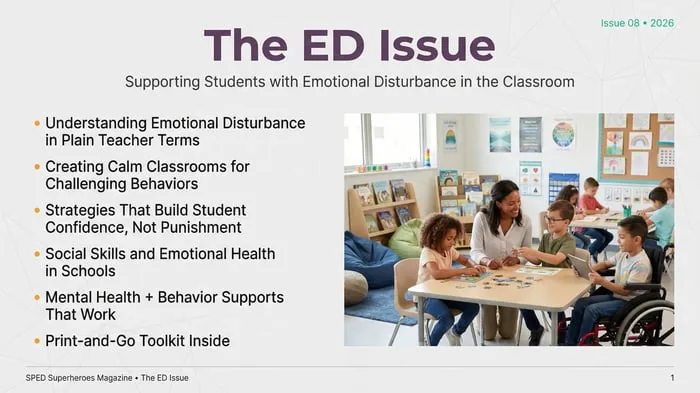
ED Support Toolkit: Calm Classroom and SEL Strategies: a 49-page guide with a plain-language explanation of ED, calm classroom setup, routines, de-escalation strategies, SEL support, family teamwork with communication logs and behavior contracts, and printable data trackers.
Sources and scope
- Center on PBIS: resources on positive behavior support, including classroom practices and individual supports.
- IRIS Center, Vanderbilt University: free modules on addressing disruptive and noncompliant behavior, including the acting-out cycle.
- CASEL: the social and emotional learning framework and guidance for schools.
- Individuals with Disabilities Education Act (IDEA), U.S. Department of Education: federal guidance on emotional disturbance and behavior supports in the IEP.
This guide covers everyday de-escalation and prevention in middle school classrooms. It does not cover crisis intervention, physical restraint, mental health treatment, or diagnosis, which follow school procedures and qualified professionals.
Key takeaways
- De-escalation strategies for middle school start with spotting early signs.
- A calm voice, few words, choices, and space help most in the moment.
- Private responses protect teens’ dignity in front of peers.
- Predictable routines and relationships prevent many escalations.
- Repair, reflection, and simple tracking turn incidents into progress.





Leave a Comment