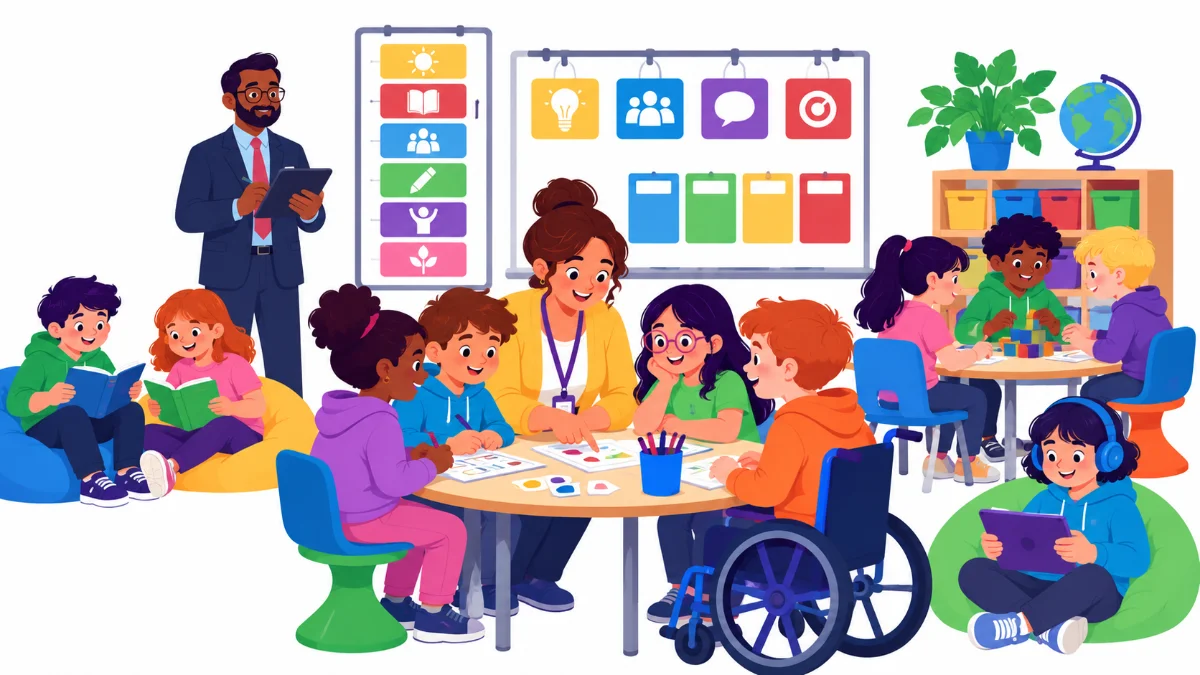

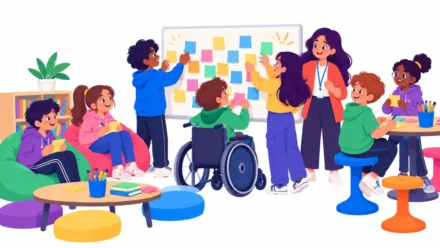
Inclusion signs for school leaders are the small, visible details that show whether every student can learn in a classroom, not just most of them. Principals and coaches often have only ten minutes per room, so knowing what to look for matters. Picture Dr. Evans, an elementary principal, walking into a fourth grade class. Desks are in neat rows, the walls are covered from floor to ceiling, and Marcus, age 9, who uses a wheelchair, sits by the door because it is the only space wide enough.
This list is for principals, assistant principals and instructional coaches. It ranks eight signs from those you can see in seconds to those that take a full lesson to judge. Marcus and his classmates appear as the fictional example, so you can picture each sign in a real room and think about the feedback you might give.
Examples are fictional. Adapt to the student’s goals and agreed supports. This is guidance, not a diagnosis.
At a glance
- Look at the room before you look at the lesson.
- Check whether every student can reach and move freely.
- Look for more than one way to learn and show learning.
- Listen for student voice and belonging.
- Give specific, supportive feedback after visits.
How we ranked these signs
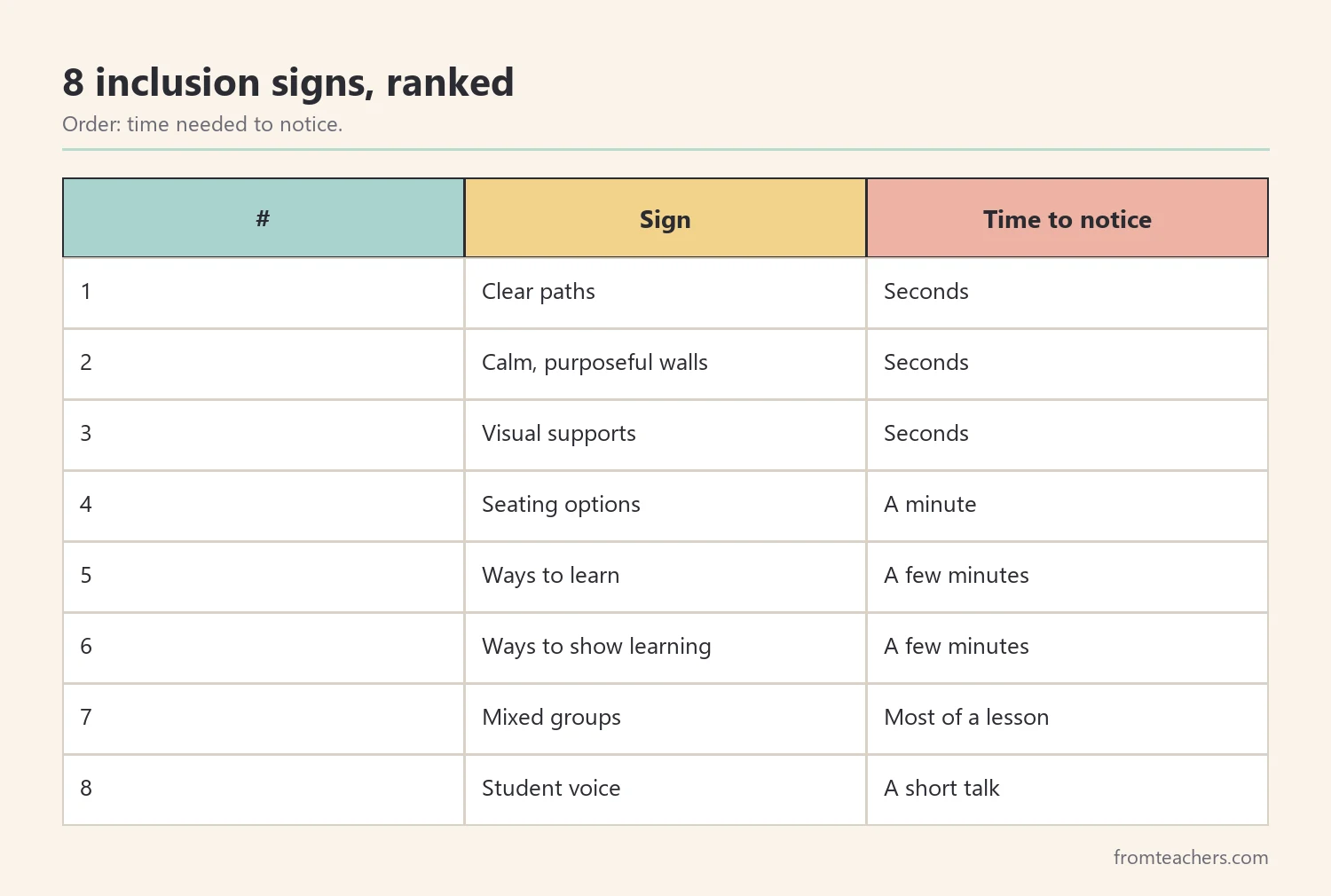
We ranked the eight signs by how quickly a visitor can notice them. The first three are about the physical room and can be seen in under a minute. The last ones, such as student voice and flexible options, need more time and attention. Also, the order is about observation time, not importance.
These signs draw on Universal Design for Learning and inclusive classroom design. They are informal look-fors to start conversations, not a checklist for evaluation. Figure 1 shows the ranking.
1. Clear paths for every student
What to look for: wide, clear paths where every student, including those using wheelchairs or walkers, can reach their seat, the board and materials.
Why it matters: inclusion starts with physical access. A student who cannot reach the group is left out before the lesson begins.
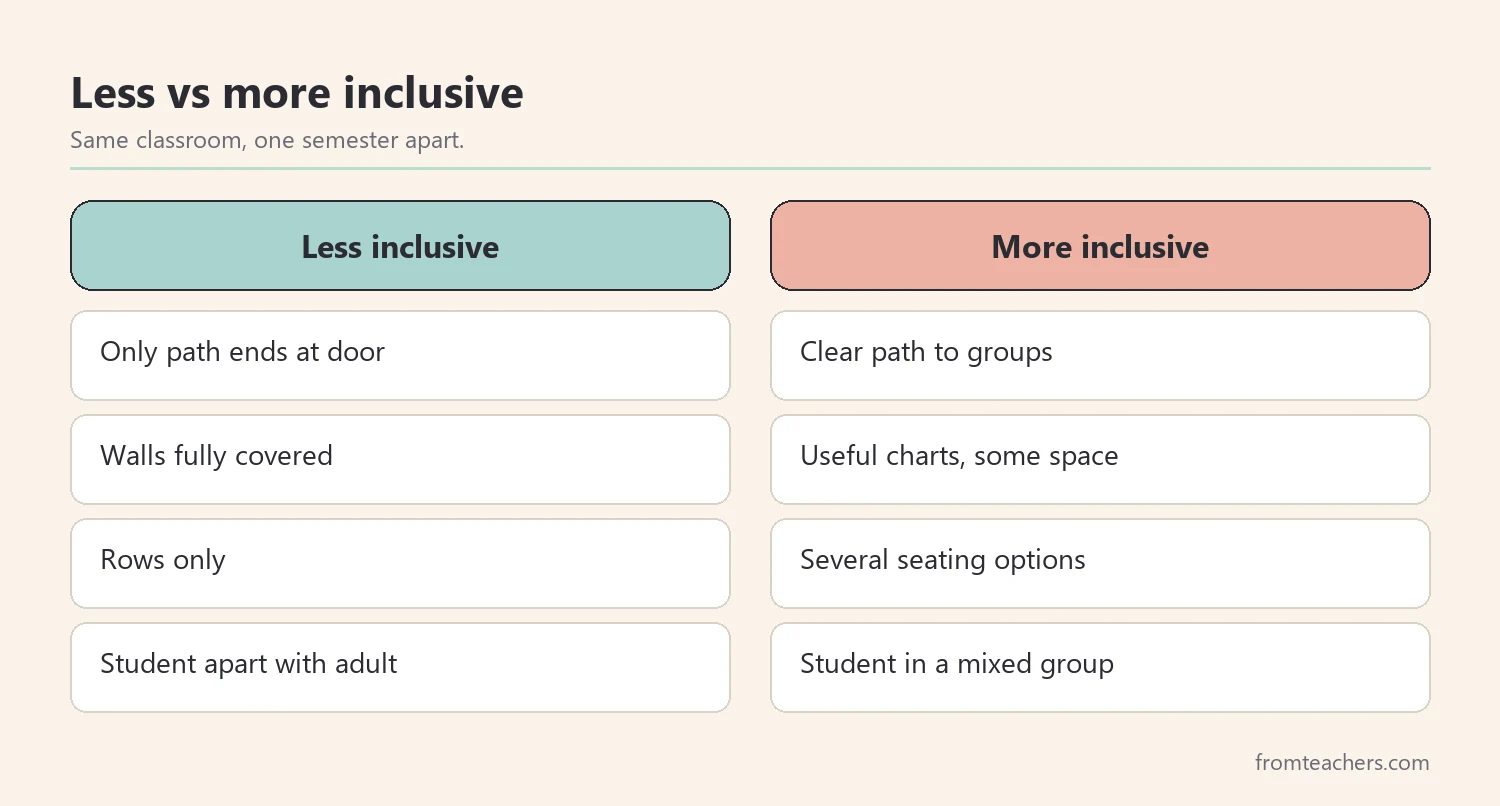
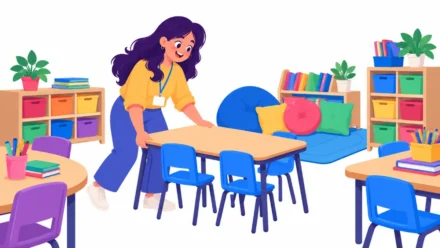
Example: in Marcus’s room, the only wide path ended at the door. After the visit, the teacher moved two tables to create a path to a group table near the front.
2. Calm, purposeful walls
What to look for: walls with useful displays and some empty space, rather than every surface covered.
Why it matters: busy walls can distract many students, especially those with attention or sensory needs. Purposeful displays support learning.
Example: Dr. Evans noticed that the anchor charts were hidden among decorations. The teacher kept the useful charts and removed half of the rest.
3. Visual supports anyone can use
What to look for: a visible schedule, posted directions and labeled materials.
Why it matters: visual supports help students with disabilities, English learners and anyone who missed spoken directions.
Example: a simple daily schedule with times and pictures was added near the door, at a height Marcus could read from his chair.
4. Seating options
What to look for: more than one way to sit or stand, such as standing spots, wobble seats or floor space, with clear routines for choosing.
Why it matters: flexible seating can support attention, comfort and independence when it is planned and taught.
Example: the class added a standing table and a quiet corner, with a short rule chart for using them.
5. More than one way to learn
What to look for: information presented in several ways, such as text, visuals, audio and hands-on materials.
Why it matters: this is a core idea of Universal Design for Learning. When content is accessible from the start, fewer students need separate adaptations.
Example: during a science lesson, students could read the text, watch a short video or look at a labeled diagram.
6. More than one way to show learning
What to look for: choices in how students respond, such as writing, drawing, speaking or building.
Why it matters: students can show what they know without being blocked by a single format.
Example: Marcus recorded his answer on a tablet while classmates wrote, and the teacher graded both on the same science criteria.
7. Every student part of the group
What to look for: students with disabilities working with peers in mixed groups, not always at a separate table or with an adult only.
Why it matters: belonging is a central goal of inclusion. Constant separation, even in the same room, sends a message.
Example: on a later visit, Marcus was working in a group of four, and the paraprofessional was supporting the whole group rather than sitting only beside him.
8. Student voice and belonging
What to look for: students sharing ideas, making choices and speaking about their own learning. Ask a student, “What helps you learn in this room?”
Why it matters: students’ answers show whether supports are real and whether they feel part of the class.
Example: when Dr. Evans asked, Marcus said, “I like the new table because I can sit with my friends.” That answer said more than any checklist.
A simple visit record
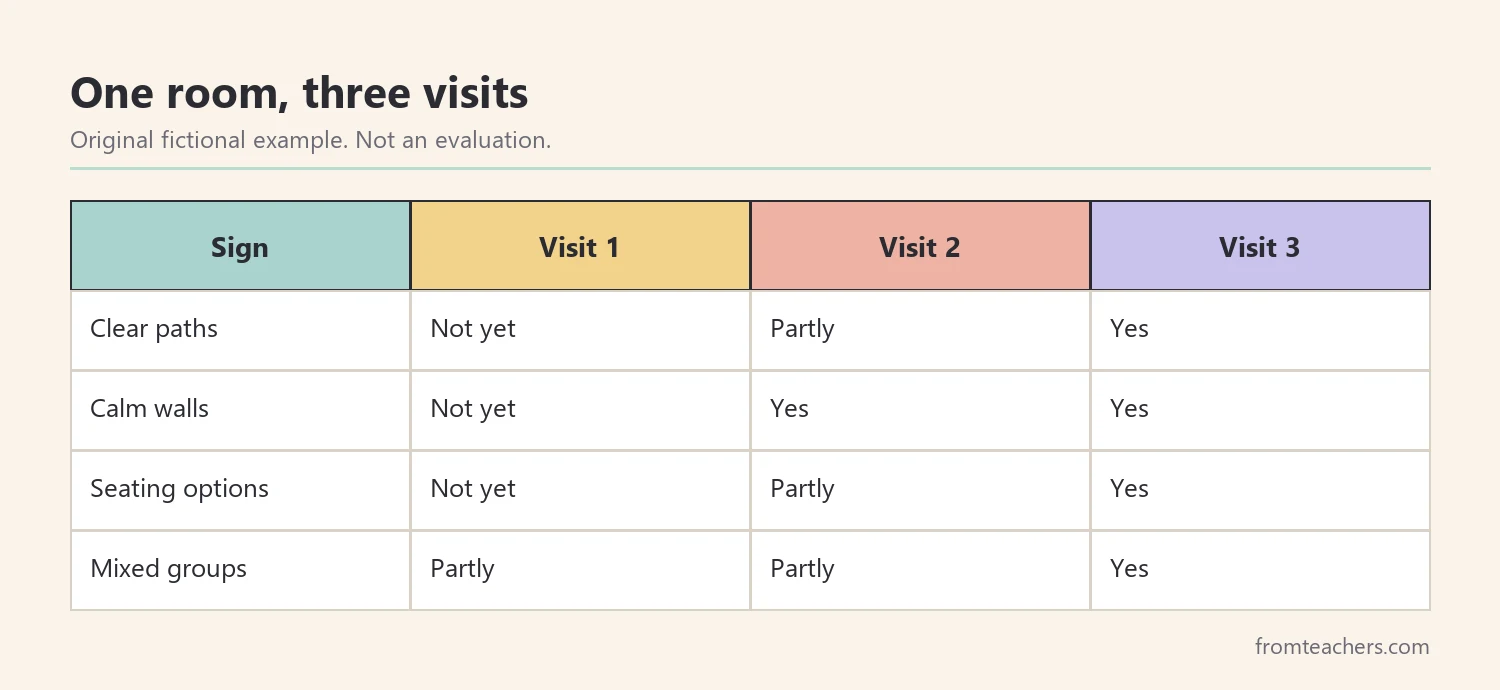
Some leaders track these signs across several visits to see growth. The table below shows a fictional record for one classroom over a semester. It shows the format only.
| Sign | Visit 1 | Visit 2 | Visit 3 |
|---|---|---|---|
| Clear paths | Not yet | Partly | Yes |
| Calm walls | Not yet | Yes | Yes |
| Seating options | Not yet | Partly | Yes |
| Mixed groups | Partly | Partly | Yes |
Giving feedback that helps
Inclusion signs for school leaders are only useful if the feedback that follows is supportive. Figure 4 shows a simple four-step feedback cycle.
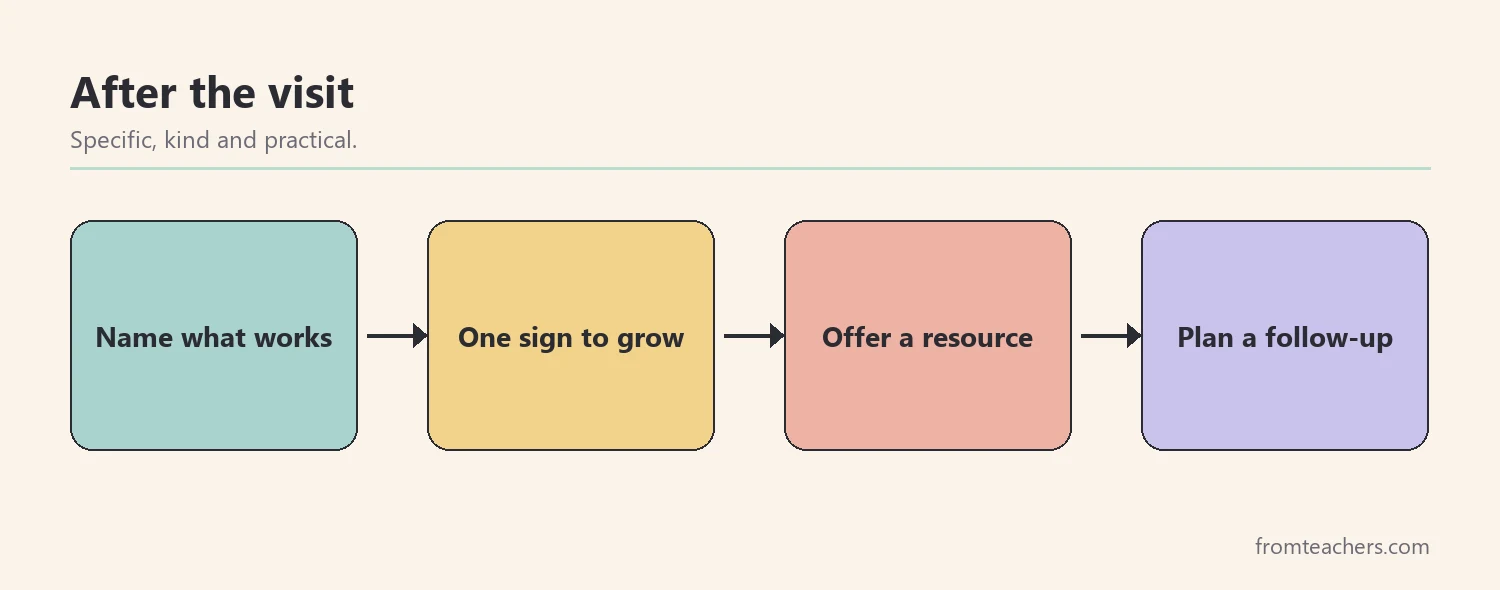
Start with something specific that is working. Then name one sign to strengthen, offer a resource and plan a short follow-up. A visual resource, such as the inclusive classroom design guide on UDL and flexible seating, can help teachers see before and after examples of layout, displays and seating instead of only reading suggestions.
Also, remember that teachers may face real limits, such as small rooms, old furniture or large classes. Ask what support they need, and look for school-level solutions, such as new furniture or help from the special education team.
Questions to ask the teacher after a visit
A short conversation often reveals more than the visit itself. Instead of telling the teacher what you saw, start with curious questions. For example: “How did you decide on this seating arrangement?” or “Which students use the quiet corner, and how is it working?”
Ask about the students you noticed. “What helps Marcus join group work?” invites the teacher to share what they know and what they still need. Also ask, “What would make inclusion easier in this room?” Teachers often name practical barriers, such as missing furniture, limited planning time with the special education teacher or a room that is simply too small.
These conversations build trust. When teachers see that visits lead to support rather than judgment, they are more likely to try new ideas and invite leaders back.
Visiting different settings
The same signs apply in every setting, but they look different. In a science lab, clear paths and accessible workstations matter most. In a music room, look for visual cues and options for students who are sensitive to noise. Also, in a high school math class, look for multiple ways to show work, such as calculators, graphic organizers or oral explanations. Adjust your expectations to the space and the subject, while keeping the same core question: can every student take part?
Building inclusion across the school
One classroom can change quickly, but lasting inclusion comes from school-wide habits. Share examples of strong rooms at staff meetings, invite teachers to visit each other and set aside time for special and general educators to plan together.
Leaders can also model inclusion in their own spaces. Accessible front offices, visual signs in hallways and family meetings with interpreters all send the same message: everyone belongs here. Over time, these inclusion signs for school leaders become the normal look of every room, not a special project.
Common mistakes and how to avoid them
- Judging only the lesson. Fix: look at the room, access and grouping too.
- Using the signs as a scoring tool. Fix: use them to start supportive conversations.
- Feedback without resources. Fix: offer an example, a colleague or materials.
- Ignoring student voice. Fix: ask one student what helps them learn.
- One visit only. Fix: return and notice progress.
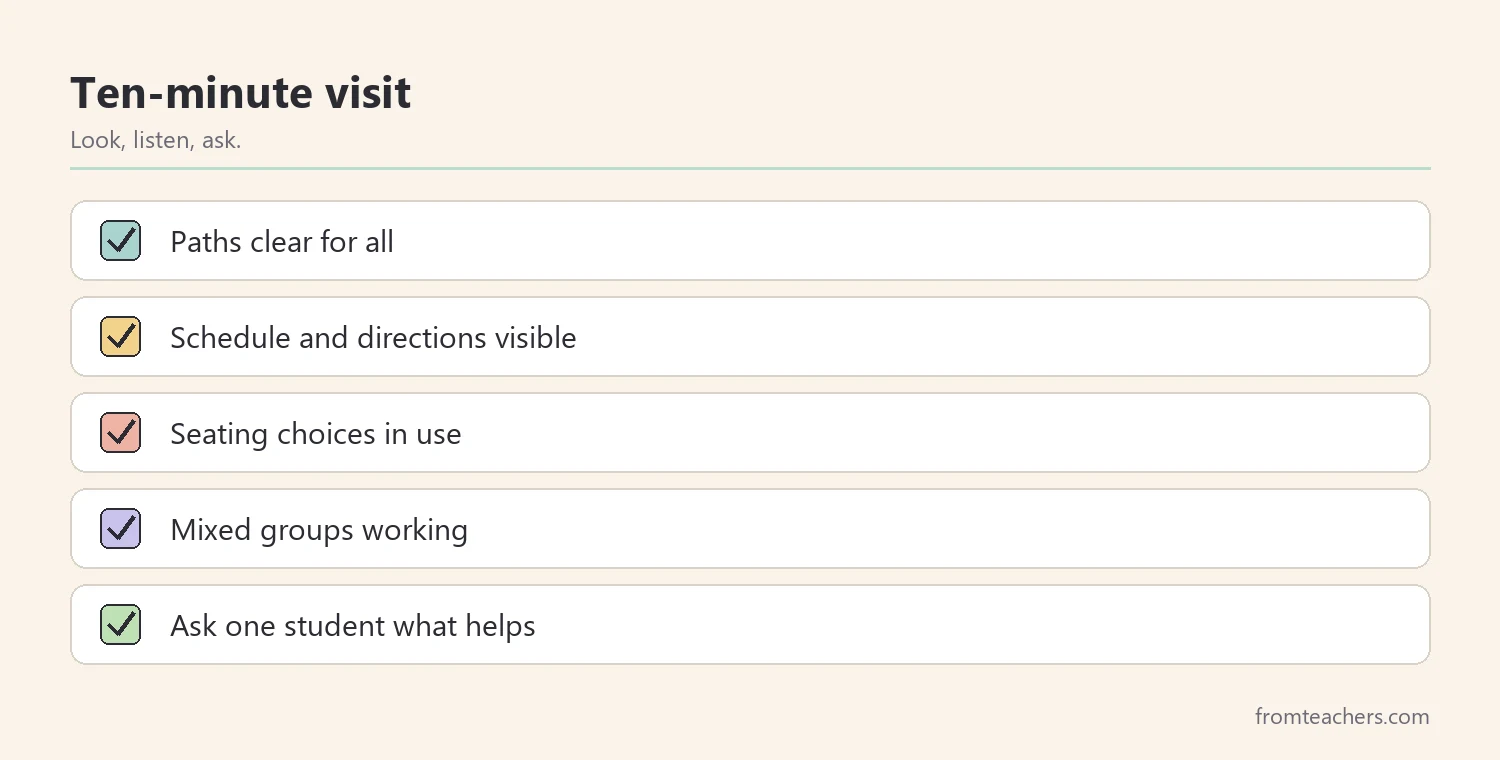
Figure 5 is a pocket checklist for short visits.
Questions leaders ask about inclusion signs for school leaders
How long should a visit be?
Ten to fifteen minutes is enough to notice the room signs. Student voice and flexible options may need longer or repeated visits.
Should teachers see the list before visits?
Yes. Sharing the signs in advance makes visits feel supportive and gives teachers a clear picture of what inclusion looks like.
Is flexible seating required for inclusion?
Not always. The key is that students have what they need to learn. Seating options are one helpful tool among many.
What if a student is always with a paraprofessional?
Ask how the adult support is planned. Many teams aim for support that helps the student join peers, not stay apart.
Can these signs apply to secondary schools?
Yes. The details change, but access, visual supports, options and belonging matter at every level.
Related reading: Special Education Strategies Guide, Trauma-Informed Teaching Strategies, and Autism Social Skills Development.
You may also need: Behavior Contracts and Individual Behavior Plans Toolkit.
A companion resource for principals and instructional coaches:
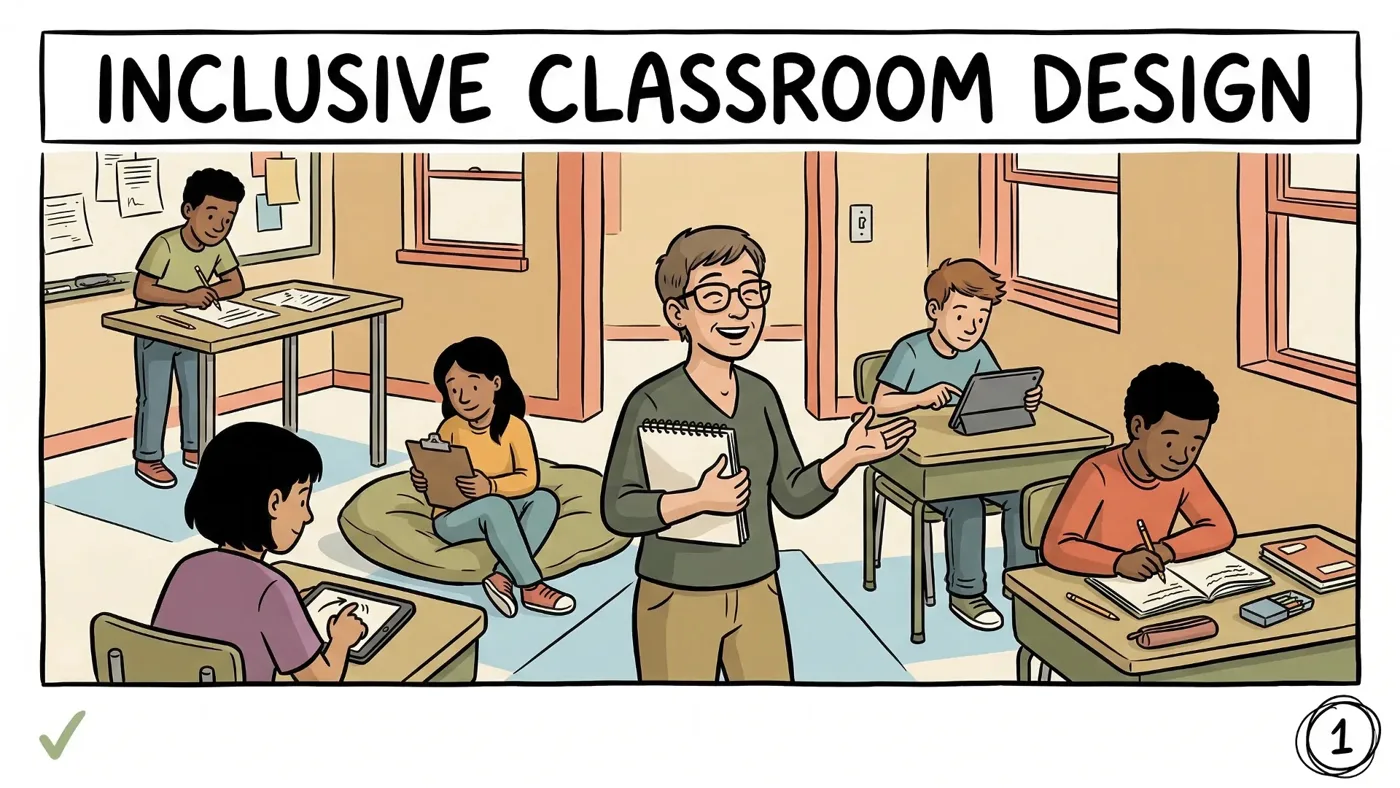
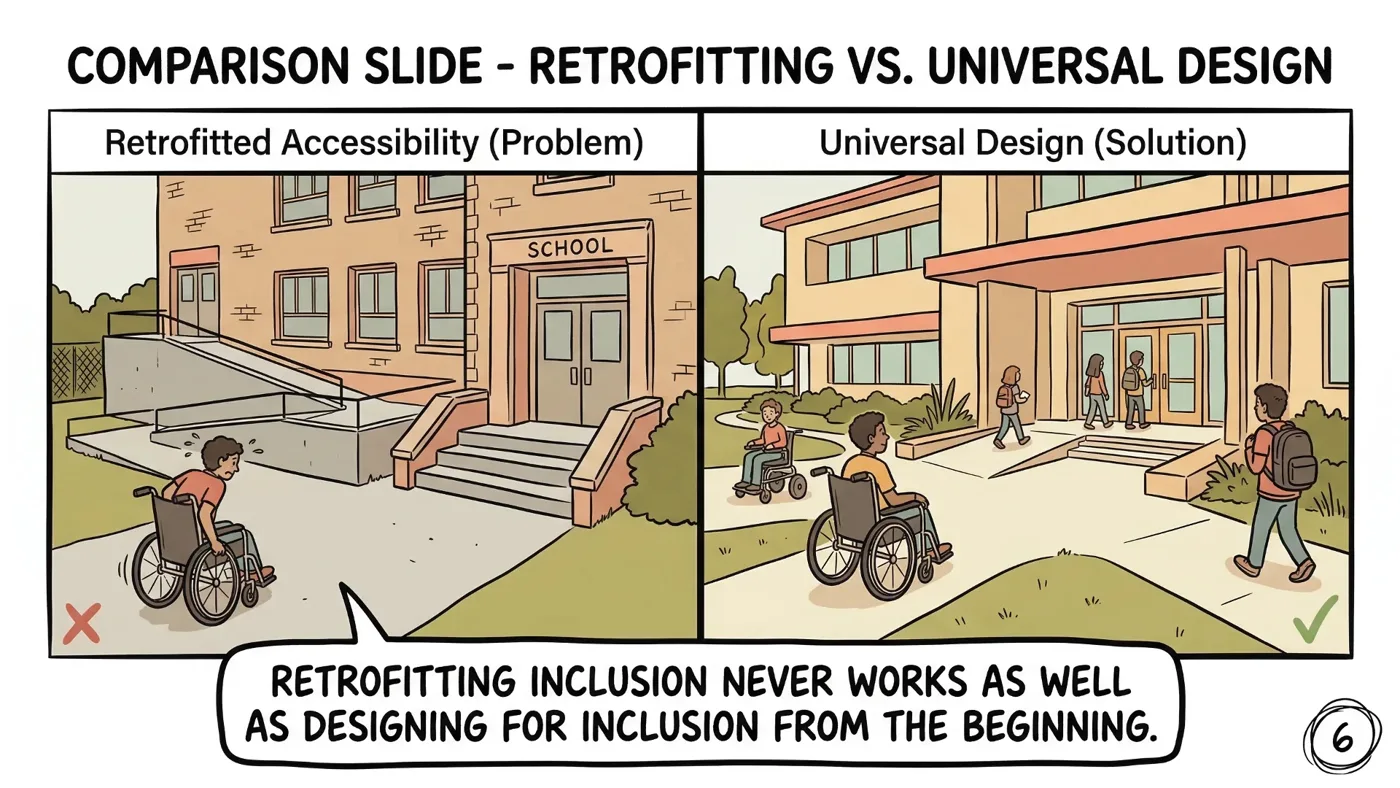
Inclusive Classroom Design Guide: UDL & Flexible Seating: a 53 page comic style guide covering what inclusion really means, physical space and layout, visual environment and displays, flexible seating and movement, Universal Design for Learning and building belonging through classroom culture, with before and after comparisons for elementary through high school classrooms.
Sources and scope
- CAST: information on Universal Design for Learning and inclusive design.
- UDL Guidelines: the framework for multiple means of engagement, representation and action and expression.
- Center on PBIS: resources on school-wide systems, classroom practices and positive climate.
- Council for Exceptional Children: professional resources on inclusive education and special education.
This guide lists informal signs for supportive classroom visits. It is not an evaluation tool, and it does not replace district evaluation systems or the IEP process.
Key takeaways
- Inclusion signs for school leaders start with the physical room.
- Look for clear paths, calm walls and visual supports.
- Check for more than one way to learn and to show learning.
- Notice grouping, belonging and student voice.
- Give specific, supportive feedback and return to see progress.






Leave a Comment