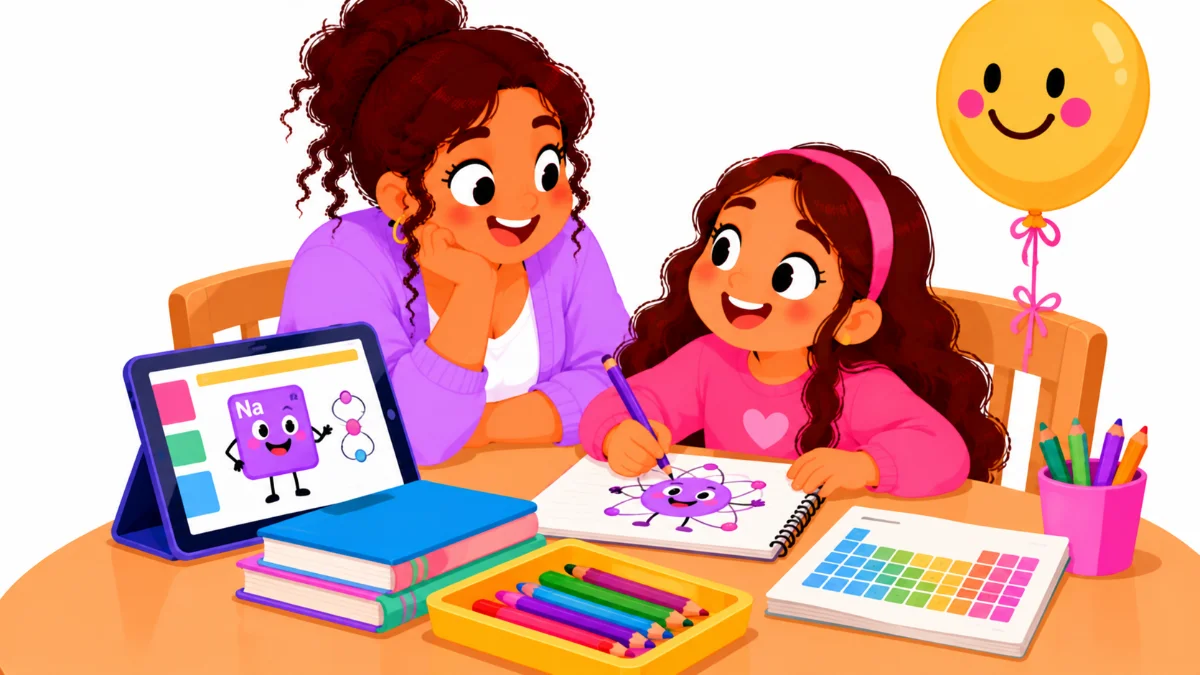

Homeschool chemistry for kids can feel intimidating when you remember your own school chemistry as a wall of formulas. Picture a homeschool morning: your nine-year-old asks why balloons float, and you realize you are not sure where to start. The good news is that young learners do not need formulas yet. They need curiosity, a few clear ideas, and a routine that makes the elements feel like characters they want to meet.
This guide is written for homeschooling parents and co-op leaders. You will learn how to plan a calm weekly rhythm, introduce elements one at a time, connect them to everyday objects, run simple kitchen-safe activities, and check what your child remembers without turning lessons into tests.
Examples are fictional. Adapt to the student’s goals and agreed supports. This is guidance, not a diagnosis.
At a glance
- Short, regular sessions work better than long, rare ones.
- Meet a few elements at a time and give each one a story.
- Connect every element to something your child can see or touch.
- Keep hands-on activities simple, supervised, and kitchen-safe.
- Check memory with games and drawings, not quizzes.
1. Plan a weekly rhythm for homeschool chemistry for kids
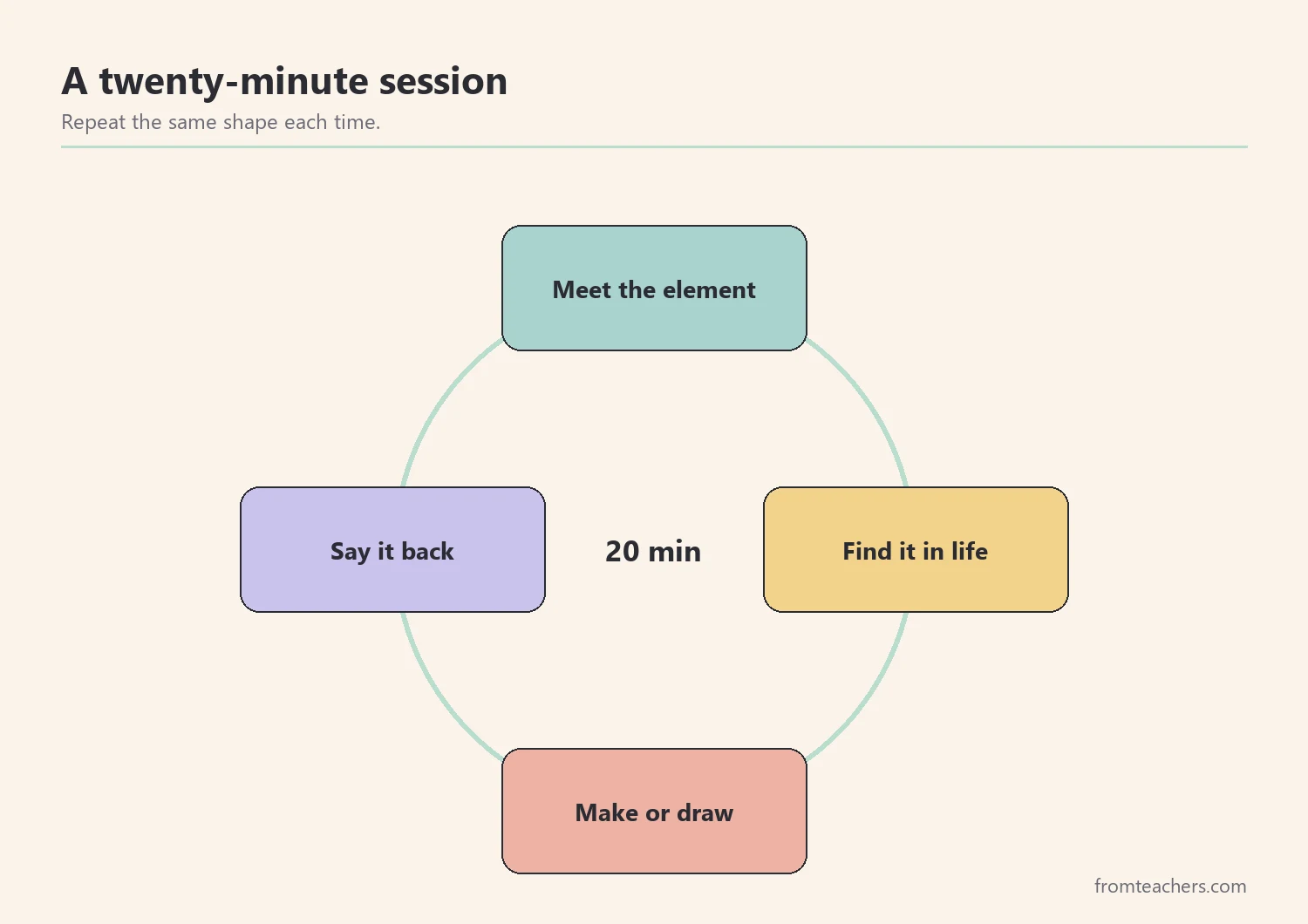
First, decide how often chemistry will happen. Two or three short sessions a week, about twenty minutes each, is a realistic start for many families. Short sessions keep interest high and fit around reading, math, and outdoor time.
Next, give each session the same shape. A predictable pattern helps children know what to expect and helps you prepare quickly. For example, start with a story about one or two elements, then talk about where they appear in daily life, then do a small activity or drawing.
Also, choose a place for chemistry. A corner of the kitchen table with a tray, a notebook, and colored pencils is enough. When the tray comes out, your child knows that science time has begun.
Sofia (fictional, age 9) does homeschool chemistry for kids with her mother on Monday and Thursday mornings. Each session lasts about twenty minutes, and Sofia keeps an “element notebook” where she draws each new element as a character. After a month, the notebook had become her favorite book on the shelf.
| Part of the session | Time | What happens |
|---|---|---|
| Meet the element | 5 minutes | Read its card or slide together |
| Find it in life | 5 minutes | Look for it around the house |
| Make or draw | 8 minutes | Notebook drawing or small activity |
| Say it back | 2 minutes | Child tells one fact in their own words |
2. Introduce elements a few at a time
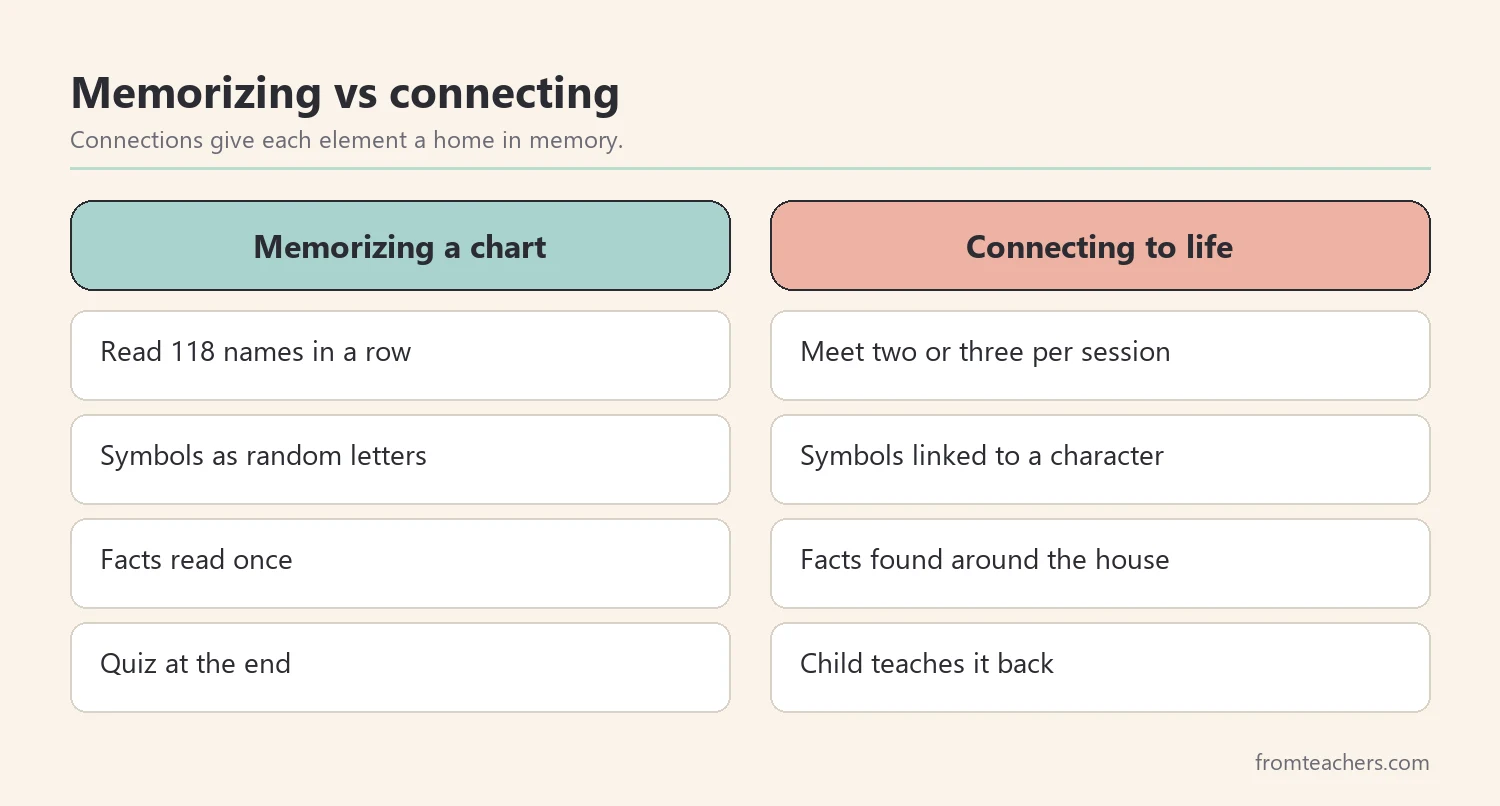
The periodic table has 118 elements, and that number can overwhelm a child. Therefore, introduce two or three at a time and revisit old friends often. Depth matters more than speed at this age.
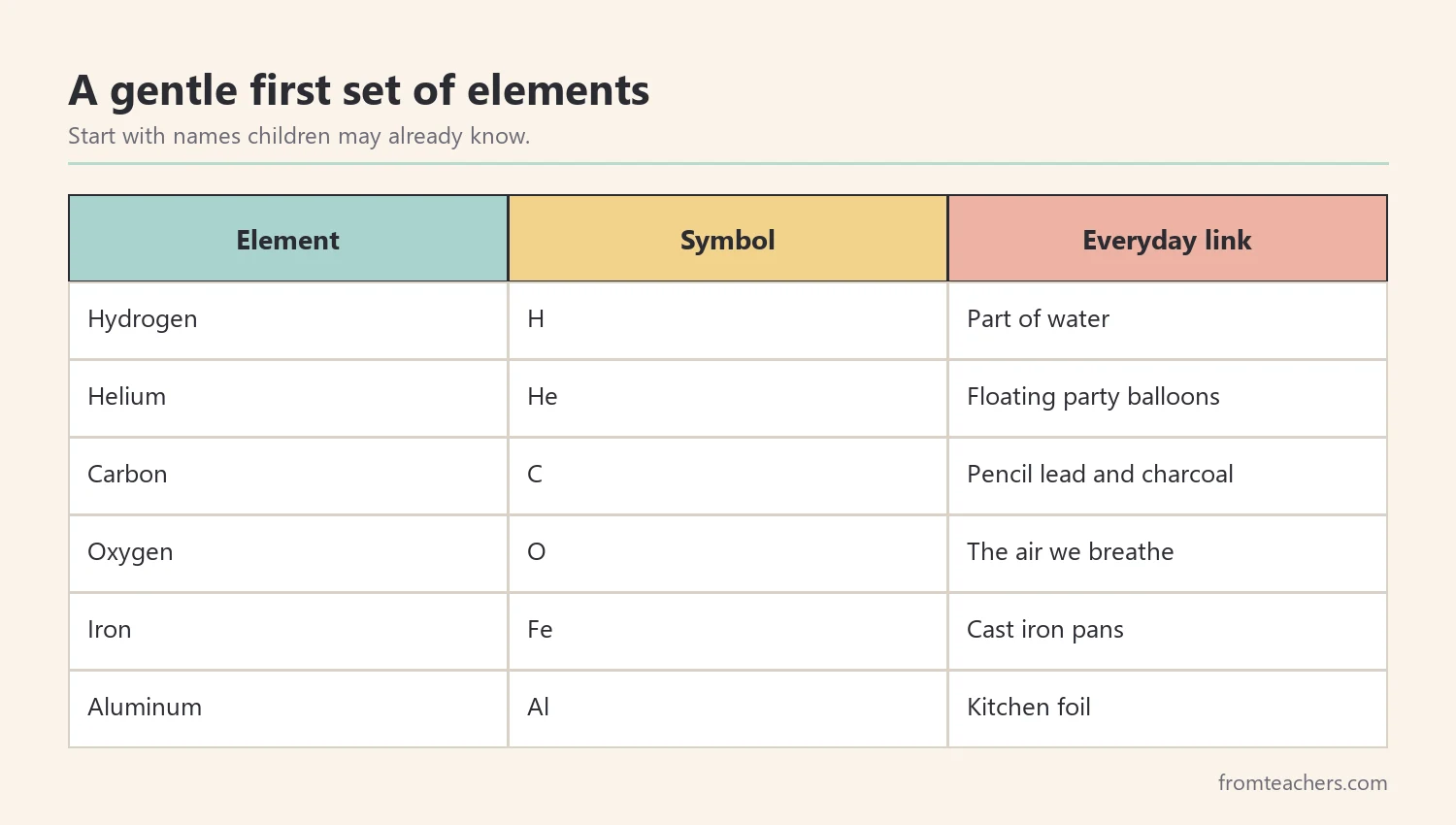
Start with elements children already know by name or by use. Hydrogen and helium are natural openers, followed by carbon, oxygen, and nitrogen. Then, move to metals they can see in the home, such as iron, copper, and aluminum.
A visual resource helps a lot here. The 118 Elements chemistry for kids slides give each element its own slide with the symbol, atomic number, category, a short kid-friendly fact, and a cartoon character. Showing one slide at a time keeps the focus on a single element and its story.
In addition, give each element a personality. Helium might be the light, floaty one. Iron might be the strong, sturdy one. Children remember characters far better than lists, and the personality often matches a real property.
Moreover, revisit earlier elements at the start of each session. A quick “Who do we remember?” round of two minutes keeps old characters fresh. Spaced review like this is a simple habit that makes homeschool chemistry for kids feel like meeting friends again rather than starting over.
Sofia’s mother started with hydrogen, helium, and oxygen in week one. In week two, they added carbon and nitrogen. By week four, Sofia could name ten elements and match each to its symbol, mostly by remembering the characters she had drawn.
3. Connect each element to everyday life
Abstract ideas click when children can link them to something real. For example, oxygen connects to breathing, carbon to pencil lead and charcoal, and aluminum to kitchen foil. Each link gives a new element a home in your child’s memory.
Next, try an “element hunt.” Give your child a short list and walk around the house looking for things that contain those elements. A copper-colored coin, a cast iron pan, or a roll of foil can all spark conversation. Be careful to keep this as a looking activity, with no handling of anything unsafe.
Also, use questions that invite thinking. “Why do you think balloons with helium float?” or “What do you think is inside a pencil?” There is no need for perfect answers. Instead, the goal is to build the habit of wondering, which is the heart of homeschool chemistry for kids.
In addition, use books, nature walks, and cooking. Salt in a recipe opens a talk about sodium and chlorine. A rusty gate on a walk leads to a chat about iron and oxygen. These small moments make chemistry part of ordinary life, not a separate subject.
Sofia found her favorite connection by accident. Looking at the foil while baking, she asked if aluminum was “the shiny one” from her notebook. Her mother said yes, and Sofia added a drawing of foil next to her aluminum character.
4. Add simple, safe hands-on activities
Hands-on work turns ideas into experiences. However, safety comes first. Keep activities simple, use household materials, supervise closely, and skip anything involving heat, flames, or chemicals not meant for children.
Here are a few gentle activity ideas for homeschool chemistry for kids:
- Element characters: draw or build each element as a character from paper, clay, or blocks.
- Sorting game: sort element cards into groups, such as metals and nonmetals, using the category on each card.
- Element bingo: call out a fact and let your child find the matching element.
- Balloon talk: compare a helium balloon from a party store and a balloon blown up by mouth, and talk about why one floats.
- Mini timeline: place the elements you have met in order of atomic number on a paper strip.
Also, let your child lead sometimes. If they want to spend a whole session on one element they love, follow that interest. Enthusiasm is a strong teacher, and it often brings them back to other elements later.
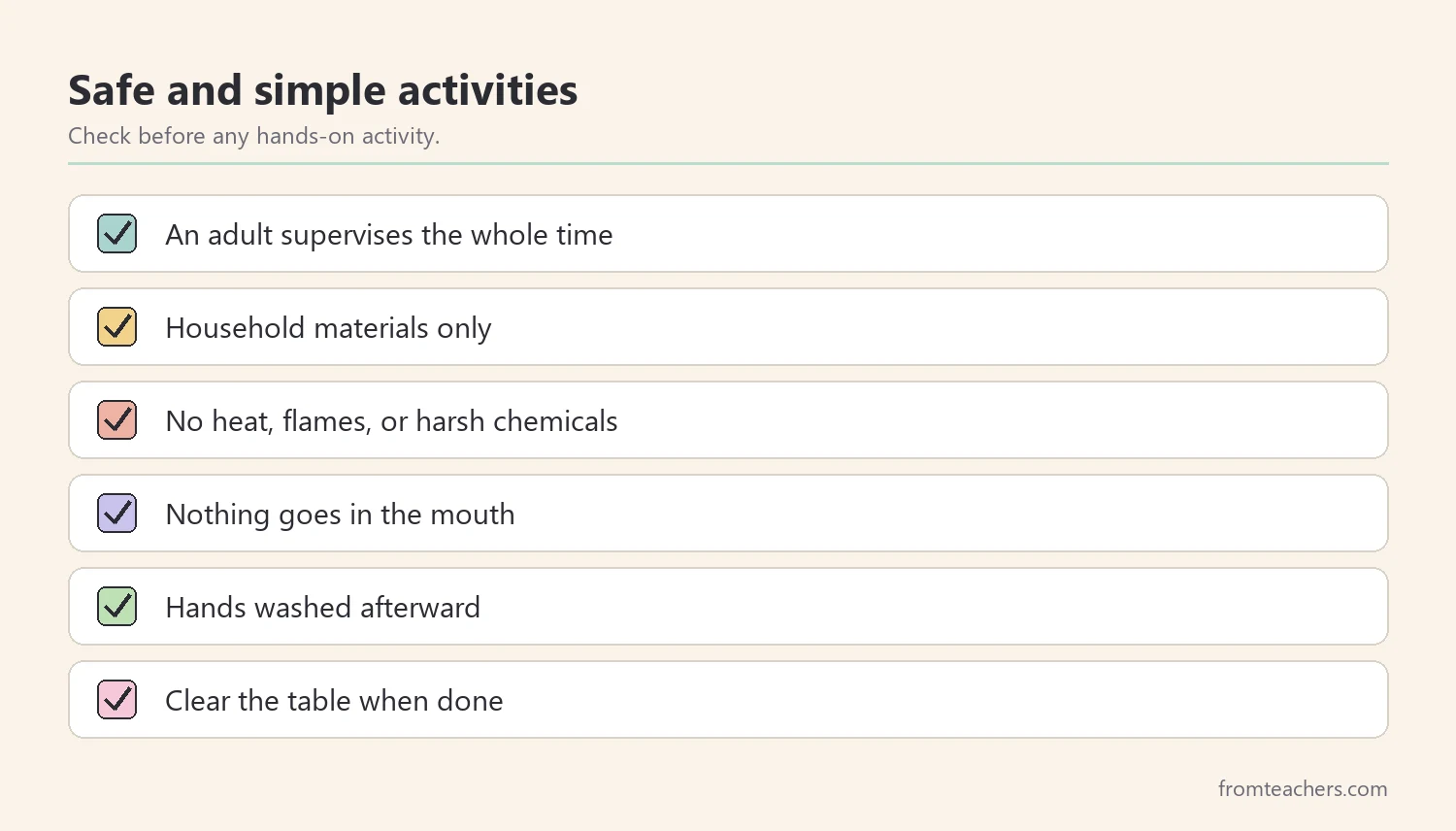
In addition, end every activity with a short sentence from your child: “Today I learned that…” Writing or saying that one line links the hands-on fun back to the element, so the activity becomes a memory and not just a game. Over a term, those sentences make a lovely record of the year.
For co-ops, activities can become small group games. Each child “becomes” an element for the session and introduces themselves to the group with their symbol, number, and one fact. Children often enjoy dressing up as their element with a simple paper badge.
5. Check what your child remembers
You do not need tests to know whether your child is learning. Instead, use playful checks that feel like part of the session. For instance, ask your child to teach you an element, as if you were the student.
Next, use the element notebook. Every few weeks, flip back through it together. Ask your child to tell you about each character. You will quickly see which elements are solid and which need another visit.
Also, keep a light record. A simple table with the elements met, the date, and whether your child could explain them in their own words is enough. This helps you plan reviews and gives you something to show if your homeschool program asks for a portfolio.
Similarly, notice how your child talks about chemistry outside lessons. If they point at foil in a shop and say “aluminum,” or tell a grandparent about helium, that is real learning. Jot these moments down too, because spontaneous use is one of the clearest signs that homeschool chemistry for kids is working.
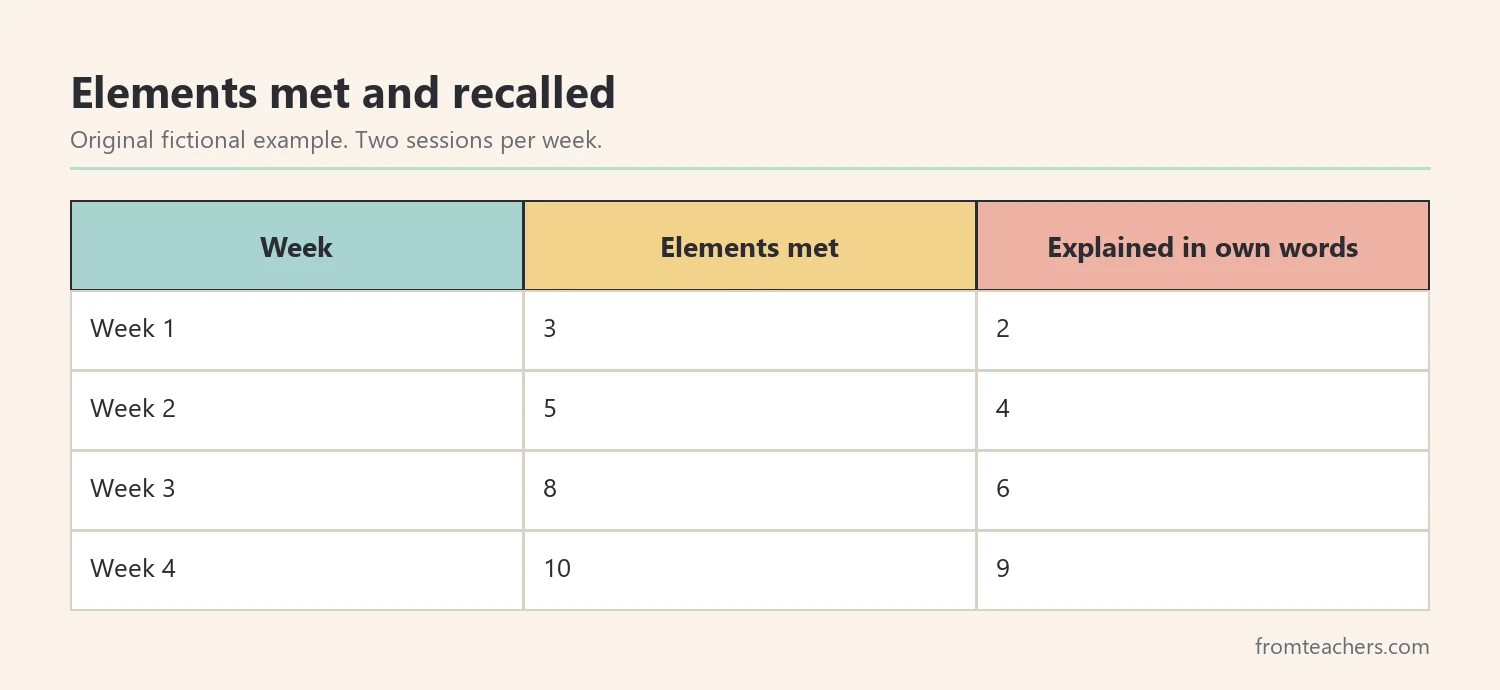
In Sofia’s case, the record showed that she recalled most of the elements with strong characters and struggled with the ones she had only read about. As a result, her mother added a drawing step for every new element, and recall improved.
6. Grow homeschool chemistry for kids across the year
Once your child knows a handful of elements, widen the view. Show the full periodic table and find the ones you have met. Talk about why elements in the same group often behave in similar ways, using simple words like “family.”
Then, plan the year in seasons. For example, autumn could focus on the first twenty elements, winter on everyday metals, and spring on noble gases and the heaviest elements. A loose plan keeps progress steady without pressure.
In addition, connect chemistry to other subjects. Reading about famous scientists, writing a short story starring an element, or drawing a comic about two elements meeting all build literacy and creativity alongside science. Homeschool chemistry for kids works best when it spills into the rest of the day.
Also, adjust for siblings of different ages. An older child can read the facts aloud and explain the category, while a younger sibling colors the character. Shared sessions save time and let older children practice teaching, which deepens their own understanding.
Finally, celebrate milestones. When your child has met twenty elements, hold a small “element party” with drawings on the wall. These moments remind children how much they have learned and keep motivation high.
| Season | Focus | Project idea |
|---|---|---|
| Autumn | First 20 elements | Element notebook |
| Winter | Everyday metals | Home element hunt |
| Spring | Noble gases and heavy elements | Element comic |
| Summer | Free choice review | Element party |
Common mistakes and how to avoid them
- Starting with the full chart. 118 boxes at once can overwhelm. Fix: introduce two or three elements per session.
- Long lessons. Attention fades fast. Fix: keep sessions around twenty minutes.
- Only reading, never doing. Facts slip away. Fix: add a drawing, game, or safe activity every time.
- Unsafe experiments. Online videos can show activities that are not child-safe. Fix: stick to household, supervised, no-heat activities.
- Testing too often. Quizzes can turn joy into stress. Fix: check memory through teaching back and notebook reviews.
Questions teachers and parents ask about homeschool chemistry for kids
What age is right to start?
Many families begin introducing elements in the elementary years, with simple stories and pictures. The right age depends on your child’s interest and reading level. Younger children can enjoy the characters even before they read the facts on their own.
Do I need a science background?
No. You can learn alongside your child. Reading each element’s card or slide together and wondering aloud models curiosity, which matters more than having every answer.
How do I handle questions I cannot answer?
Say, “Great question, let’s find out.” Then look it up together in a trusted children’s science book or encyclopedia. Showing how to find answers is a valuable skill in itself.
Can this work for a co-op or small group?
Yes. Each child can adopt an element, present it, and add it to a shared wall chart. Group games like element bingo work well with several children.
How do I record chemistry for a homeschool portfolio?
Keep the element notebook, a simple record of elements met, and photos of projects. Check your local homeschool requirements to see what kind of records are expected.
Related reading: Homeschooling vs Public Schooling: Choosing a Path, Learning Styles and Student Success, and 5 Teaching Tips for Focus and Learning.
You may also need: Dinosaurs: The Complete Student Field Guide.
A companion resource for homeschool chemistry for kids:
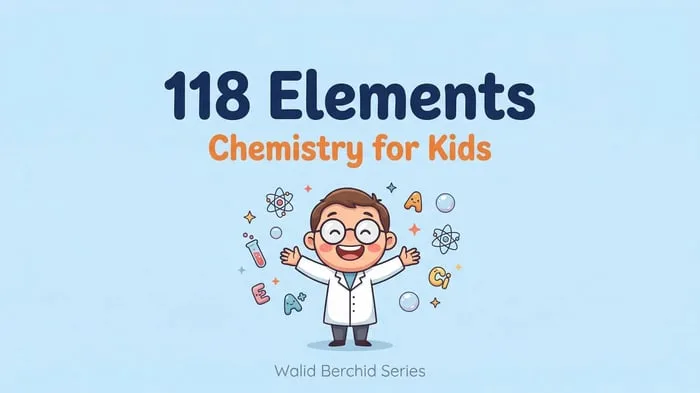
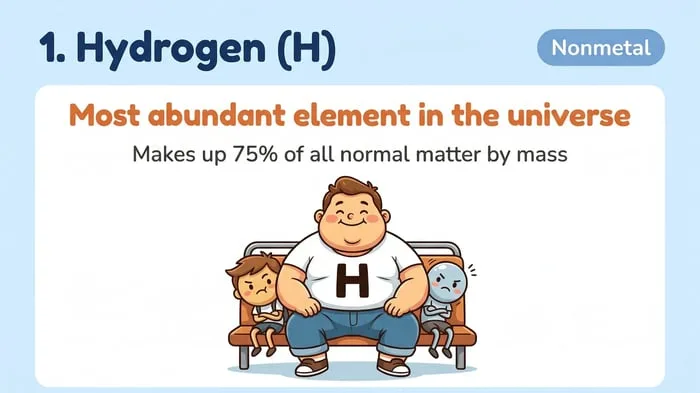
118 Elements: Chemistry for Kids: 118 illustrated slides, one for every element, each with its symbol, atomic number, category, a short kid-friendly fact, and a playful character that makes the facts stick.
Sources and scope
- IUPAC: the International Union of Pure and Applied Chemistry, which maintains the official periodic table and element names.
- Next Generation Science Standards: a U.S. framework describing science learning expectations by grade band.
- American Chemical Society: education resources and safety guidance for chemistry learning.
- CAST UDL Guidelines: ideas for offering multiple ways to learn and show understanding.
This guide covers gentle, introductory chemistry for elementary-age homeschoolers. It does not cover laboratory experiments, chemical handling, or high school chemistry content.
Key takeaways
- Homeschool chemistry for kids works best in short, regular, predictable sessions.
- Meet two or three elements at a time and give each a character.
- Link every element to something real in your home or neighborhood.
- Keep activities simple, supervised, and free of heat or harsh chemicals.
- Check memory through teaching back, notebooks, and light records.




Leave a Comment