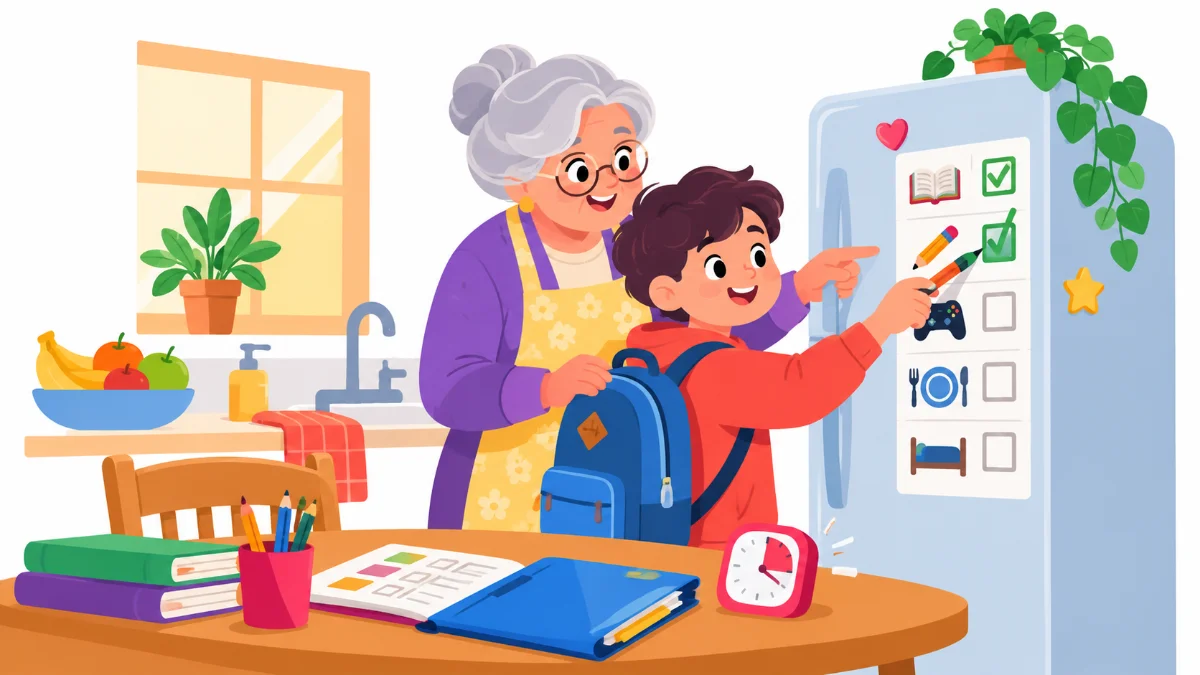

Grandparents of kids with ADHD often play a big role: after-school care, weekend visits, summer weeks and sleepovers. Picture Rosa, who picks up her grandson Sam, age 9, three afternoons a week. She loves him deeply, but the afternoons feel chaotic. Homework turns into an argument, he bounces between rooms, and she worries that her house rules clash with what his parents and teachers do.
This list is for grandparents and other relatives who care for a child with ADHD. It ranks ten practical tips, starting with the ones you can use today and ending with the ones that need a conversation with the child’s parents. Each tip explains what to do, why it helps and how it worked for Rosa and Sam. By the end, you will have a calmer afternoon plan and a simple way to stay on the same page as the family and school.
Examples are fictional. Follow the parents’ lead and the child’s agreed supports. This is guidance, not medical advice or a diagnosis.
At a glance
- Grandparents of kids with ADHD can be a steady, calm anchor in the child’s week.
- Predictable routines and short, clear directions help more than long explanations.
- Movement and breaks are part of the plan, not a reward to earn.
- Using the same words and rules as parents and school reduces conflict.
- Questions about medication or diagnosis belong with parents and professionals.
How this list is ranked
We ranked these tips by how quickly a grandparent can start them. Tips 1 to 5 need nothing but your attention. Tips 6 to 8 need a little setup at home. Finally, tips 9 and 10 need agreement with the child’s parents, because they involve shared plans.
However, this order is not a ranking of importance. ADHD looks different in every child, and the best tip for your grandchild depends on age, needs and family routines. Organizations such as CHADD offer helpful information for families, including extended family. Figure 1 shows all ten tips.

1. Learn what ADHD is, and what it is not
First, understanding changes everything. ADHD is not laziness, bad parenting or a lack of discipline. It affects attention, activity level and impulse control, and it often affects executive function skills such as planning and starting tasks.
Why it helps: when you see the behavior as a skill gap rather than defiance, you respond with more patience. Many grandparents of kids with ADHD grew up when the condition was less understood, so a quick update helps.
Example: Rosa read a few family pages on CHADD and Understood.org. She said, “I stopped thinking he was just ignoring me.”
2. Give one direction at a time
Next, keep directions short. This is one of the easiest changes for grandparents of kids with ADHD. “Go upstairs, wash your hands, change your shirt and come back for snack” is four directions. Many children with ADHD will remember only one.
What to do: get the child’s attention, give one direction and wait until it is done. Then give the next one.
Example: Rosa changed to “Wash your hands, please.” When Sam came back, she said, “Now snack.” Arguments about forgotten steps went down quickly.
3. Build in movement
Sitting still for long periods is hard for many children with ADHD. Therefore, plan movement instead of fighting it.
What to do: start the afternoon with 15 minutes outside, a walk with the dog or a quick game. During homework, allow short movement breaks.
Example: Sam and Rosa walk around the block after pickup. He sits down for homework much calmer than before.
4. Praise what goes well
Children with ADHD often hear many corrections in a day. As a result, praise from grandparents of kids with ADHD can mean a lot.
What to do: name specific good moments: “You started your math right away.” Aim to notice more good moments than problems.
Example: Rosa wrote one “proud of you” note each visit. Sam’s mom said he kept them all on his bedroom wall.
5. Stay calm in hard moments
When a child melts down or argues, a calm adult helps the child calm down too. Raising your voice usually makes it worse.
What to do: lower your voice, use few words and give space. Talk about what happened later, when everyone is calm.
Example: When Sam threw his pencil, Rosa said quietly, “Let’s take a break and try again in five minutes.” Later, they talked about it over a snack.

6. Create a simple visit routine
Predictability lowers stress, and routines are where grandparents of kids with ADHD can make a quick difference. Children with ADHD often do better when they know what comes next.
What to do: make a short picture or word schedule for your visits: snack, outside time, homework, free play, dinner. Keep it on the fridge.
Example: Rosa and Sam made the schedule together. He liked checking off each part, and fewer afternoons started with “What are we doing?”
7. Set up a homework spot
For many grandparents of kids with ADHD, homework is the hardest part of the afternoon. A quiet, clear space helps focus.
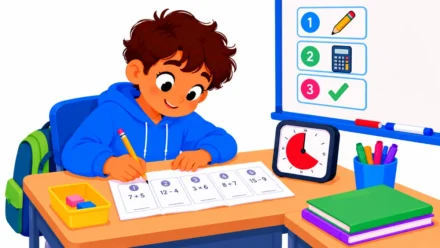
What to do: choose a spot away from the TV, with supplies ready. Break homework into small chunks with a timer, and sit nearby.
Example: Rosa cleared the end of her dining table and set a timer for ten-minute work blocks. Sam finished his math in three short blocks.
8. Limit screens before homework and bed
Screens can make transitions harder for many children. Ending a game to start homework often leads to arguments.
What to do: plan screen time after homework, give a five-minute warning and use a timer. Follow the parents’ screen rules.
Example: Sam now earns tablet time after homework at Rosa’s, just like at home. The timer ends it, not Rosa.
9. Use the same words and rules as parents
Children with ADHD do better with consistency. Different rules in different houses can cause confusion and conflict. That is why grandparents of kids with ADHD benefit from a short talk with the parents about the key routines.
What to do: ask the parents which two or three rules and phrases matter most. Use the same words at your home. The ADHD Support Toolkit for classroom and home strategies includes home routines and scripts that parents and grandparents can share.
Example: Sam’s parents used “first, then” language: “First homework, then tablet.” Rosa started using it too, and Sam pushed back much less.
10. Share notes with parents
Finally, grandparents of kids with ADHD often see things parents may miss. A quick note about what went well and what was hard helps the family spot patterns.
What to do: keep a simple weekly note: homework done, mood, a good moment and a hard moment. Share it by text or on paper.
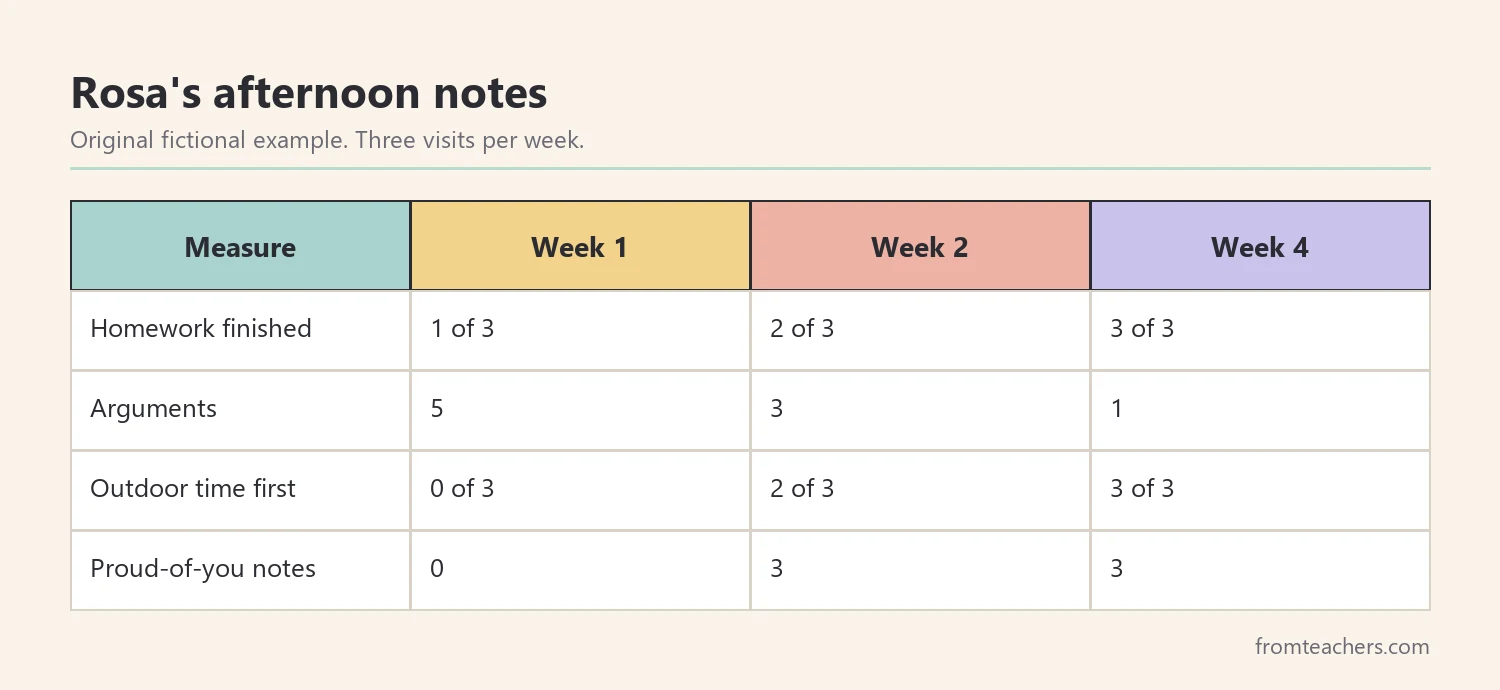
Example: Rosa noticed that homework went better on days with outdoor time first. She shared it, and Sam’s parents tried the same at home. Figure 3 shows her notes.
Topics to leave to parents
Grandparents of kids with ADHD care deeply, and it is natural to have opinions. However, some topics belong with parents and professionals, such as diagnosis, medication and treatment choices. If you have concerns, ask questions privately and kindly, not in front of the child.
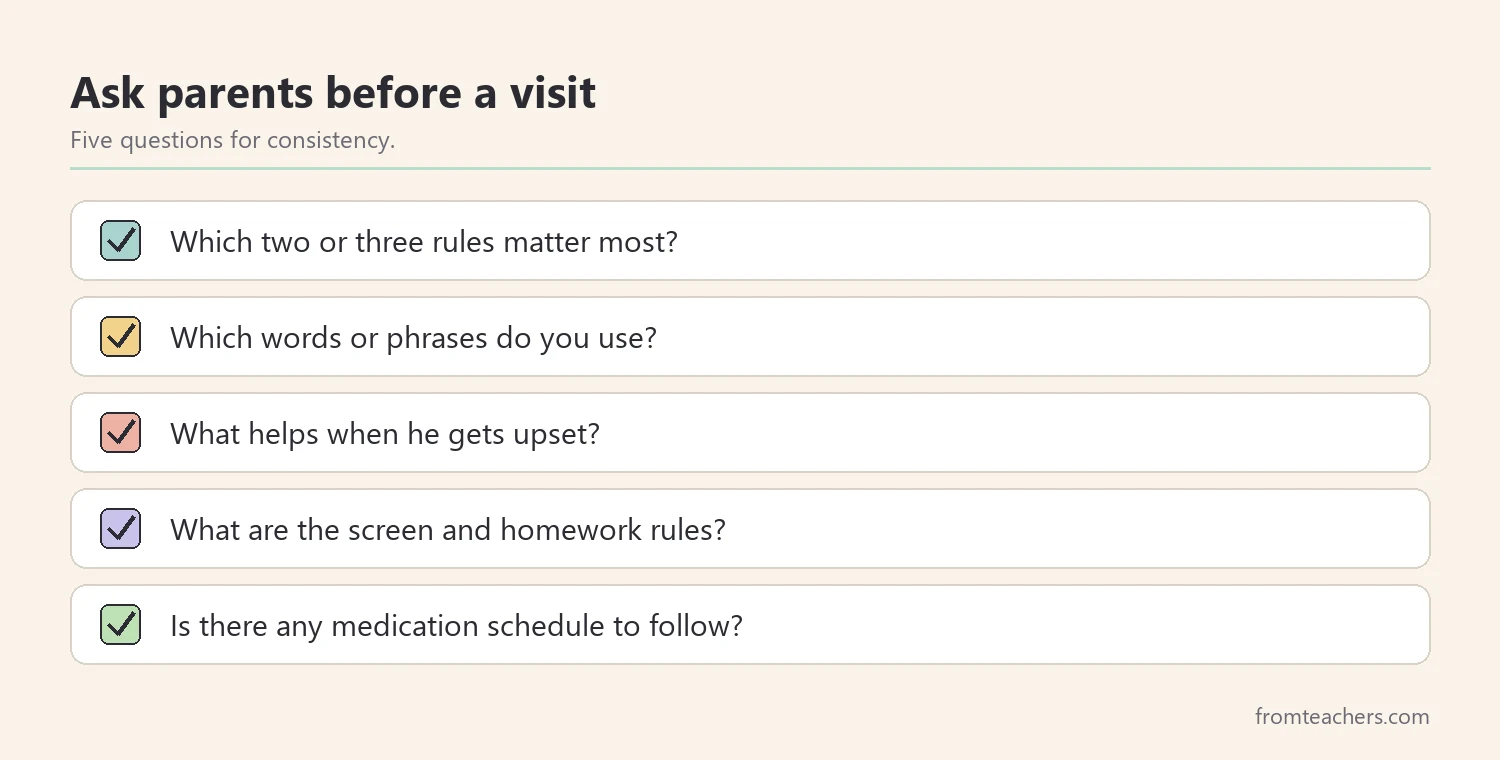
Also, avoid comparing your grandchild with siblings or cousins. Every child is different. Figure 4 lists five questions to ask the parents before a longer visit.
Taking care of yourself
Caring for an energetic child takes energy. Grandparents of kids with ADHD sometimes feel guilty when they are tired or frustrated, yet these feelings are normal. In fact, a rested, calm adult is the best support a child can have.
First, be honest with the parents about what you can manage. Three afternoons may work well, while five may be too many. Second, plan quiet time for yourself after a visit, even a short walk or a cup of tea. Third, connect with others. Some communities and organizations such as AARP share resources for grandparents who help raise grandchildren, and CHADD offers family support.
| Sign you need a break | Small step |
|---|---|
| Dreading the next visit | Talk with parents about the schedule |
| Raising your voice often | Add a quiet break for both of you |
| Feeling alone with worries | Join a family support group |
Above all, remember that you do not need to be perfect. Grandparents of kids with ADHD offer something special: time, patience and unconditional love. Those gifts matter far more than a perfectly finished homework page.
Planning longer visits and sleepovers
Longer stays, such as a summer week, need more planning. Keep the child’s normal wake-up and bedtime as much as possible. Plan active mornings and quieter afternoons, because grandparents of kids with ADHD often find that the hardest moments come when children are tired. Moreover, ask about any medication schedule and write it down clearly, following the parents’ instructions exactly.
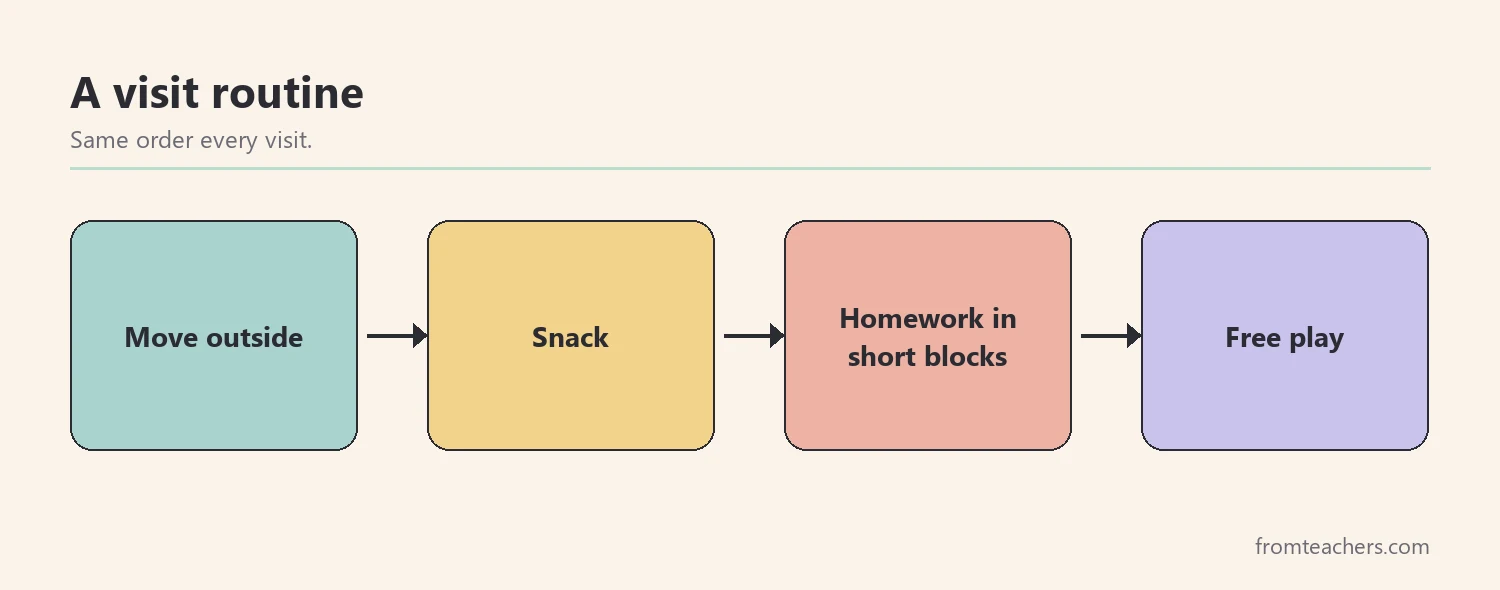
Many grandparents of kids with ADHD find that a daily plan on paper helps everyone. Figure 5 shows a simple four-part visit cycle that works for afternoons and longer stays.
Common mistakes and how to avoid them
- Thinking the child just needs more discipline. Fix: learn about ADHD and focus on teaching skills.
- Giving long lists of directions. Fix: one direction at a time.
- Taking away outdoor time as punishment. Fix: keep movement in the plan every day.
- Using different rules from parents. Fix: agree on a few shared rules and phrases.
- Discussing the child’s challenges in front of them. Fix: talk with parents privately.
Questions grandparents of kids with ADHD ask
Am I too strict or too soft?
Most children with ADHD need warmth and clear structure at the same time. Keep a few firm rules, explain them simply and stay kind.
Should I help with homework?
Sit nearby, break it into small parts and encourage. Ask parents and teachers how much help is appropriate.
What if the parents and I disagree?
Talk privately and listen first. In the end, parents make the decisions, and consistency helps the child most.
How do I handle a meltdown at my house?
Stay calm, keep the child safe, use few words and give space. Talk about it afterward, and tell the parents what happened.
Where can grandparents learn more?
CHADD and Understood.org have family information. Also, ask the parents what has helped, because they know the child best.
Related reading: ADHD Children Support Strategies, Understanding Autism and ADHD Meltdowns, and Meltdowns vs Tantrums.
You may also need: Classroom Management Strategies: Dos and Don’ts for SPED Teachers.
A companion resource for grandparents of kids with ADHD:

ADHD Support Toolkit: Classroom And Home Strategies: a 49-page guide for teachers and parents with the “Big 5” classroom supports, routines for transitions, directions and movement breaks, executive function and regulation strategies, scripts for hard moments, home routines and a printable toolkit with data trackers.
Sources and scope
- CHADD: information and support for families of children with ADHD.
- Understood.org: practical guidance for families on ADHD, routines and homework.
- HealthyChildren.org (American Academy of Pediatrics): parent information on ADHD and child health.
- AARP: resources for grandparents, including grandparents who care for grandchildren.
This list covers everyday tips for grandparents and relatives caring for a child with ADHD. It does not cover diagnosis, medication or treatment, which belong with parents and health professionals.
Key takeaways
- Grandparents of kids with ADHD help most with calm, predictable routines.
- Give one direction at a time and plan movement every day.
- Praise specific good moments often.
- Use the same rules and words as the parents.
- Share short notes and leave medical decisions to parents and professionals.




Leave a Comment