

A functional assessment checklist gives your team a clear path before you write any behavior plan. Instead of guessing why a student acts out, you gather facts in a simple, shared order.
Many teams skip this step because they feel rushed. However, a plan built on a hunch often fails within weeks. This guide explains how a FACTS-style checklist works and how to use it well.
What Is a Functional Assessment Checklist?
A functional assessment checklist is a structured interview tool. Teachers and staff answer guided questions about a student’s day, the problem behavior, and what happens around it.
FACTS stands for Functional Assessment Checklist for Teachers and Staff. It usually has two parts. First, the team looks at daily routines. Next, they dig into the routine where behavior is most likely.
As a result, the team ends with a short summary. That summary names the trigger, the behavior, and what the student gets or avoids.
Why a Functional Assessment Checklist Matters
Behavior always serves a purpose. A student may want attention, escape a task, or get a preferred item. So the same behavior can need very different supports.
For example, two students may both rip their worksheets. One wants out of hard writing. The other wants a peer to laugh. Because the reasons differ, the plans must differ too.
In addition, the checklist keeps everyone on the same page. When the whole team answers the same questions, opinions turn into shared data.
Step One: Analyze the Daily Routines
Start with the student’s schedule. List each routine, such as arrival, reading, lunch, recess, and dismissal.
Then rate each routine. How likely is problem behavior there? Low, medium, or high? Also note the activity, the people present, and the type of task.
After that, look for patterns. For instance, behavior may spike only during independent writing. Or it may appear only when a substitute is in the room. These patterns guide the next step.
Step Two: The Functional Assessment Checklist Interview
Next, pick the one or two highest-risk routines. Then interview the staff who see the student there most.
A good functional assessment checklist asks questions like these:
- What does the behavior look like, exactly?
- How often does it happen, and for how long?
- What happens right before the behavior starts?
- What happens right after it ends?
- Are there setting events, such as poor sleep or missed meals?
Also, ask for examples. “Tell me about last Tuesday” gives better answers than “What usually happens?” Concrete stories reveal details that general answers hide.
Step Three: Write the Behavior Summary
Once you finish the interview, pull the answers into one summary statement. A simple format works best.
For example: “During independent writing, when given a page of sentences, Sam tears his paper. As a result, he is sent to the hallway and avoids writing.”
Then rate your confidence. If the team feels unsure, collect direct observation data before you build the plan. The functional assessment checklist is a strong start, but it does not replace watching the behavior.
Using a Functional Assessment Checklist in Team Meetings
The checklist shines in team meetings. First, share the routine ratings so everyone sees the hot spots. Next, read the summary aloud.
Then ask each person, “Does this match what you see?” Often a para or lunch aide adds a missing piece. For instance, they may notice the behavior always follows a crowded hallway.
Finally, agree on next steps. Who will observe? Who will draft the plan? When will you meet again? Writing these down keeps the process moving.
If you want a ready format, this fillable FACTS functional assessment tool walks your team through routines, the staff interview, and the summary in one place. For more background on positive behavior support, the Center on PBIS offers free guidance for schools.
Tips for Getting Honest, Useful Answers
Staff sometimes worry that the interview is a test of their teaching. So set a calm tone from the start. Explain that the goal is to understand the student, not to judge anyone.
Next, keep questions short and specific. Then give people time to think before they answer. Silence often brings out the most useful details.
Also, record answers in the staff member’s own words. Later, those exact words help the team spot patterns. Finally, thank each person and share the summary with them afterward.
Common Mistakes to Avoid
Some errors weaken even a careful assessment. Luckily, each one has a simple fix.
- **Vague behavior descriptions.** “Disrespectful” means different things to different people. Instead, describe what you can see and hear.
- **Interviewing only one person.** One view may miss key details. So include at least two staff members.
- **Skipping setting events.** Hunger, illness, or a rough morning can change everything. Always ask.
- **Treating the summary as final.** It is a hypothesis. Test it with observation and data.
Also, keep the student’s dignity in mind. Use neutral, respectful language in every note.
Frequently Asked Questions About the Functional Assessment Checklist
Who should complete a functional assessment checklist?
Teachers and staff who know the student best should answer it. Usually a behavior specialist or case manager leads the interview.
How long does the FACTS interview take?
Most teams finish it in about 20 to 40 minutes. Complex cases may need a second short session.
Is a FACTS checklist the same as a full FBA?
No. It is often one part of a functional behavior assessment. A full FBA usually adds direct observation and data.
Ready-to-use resource:
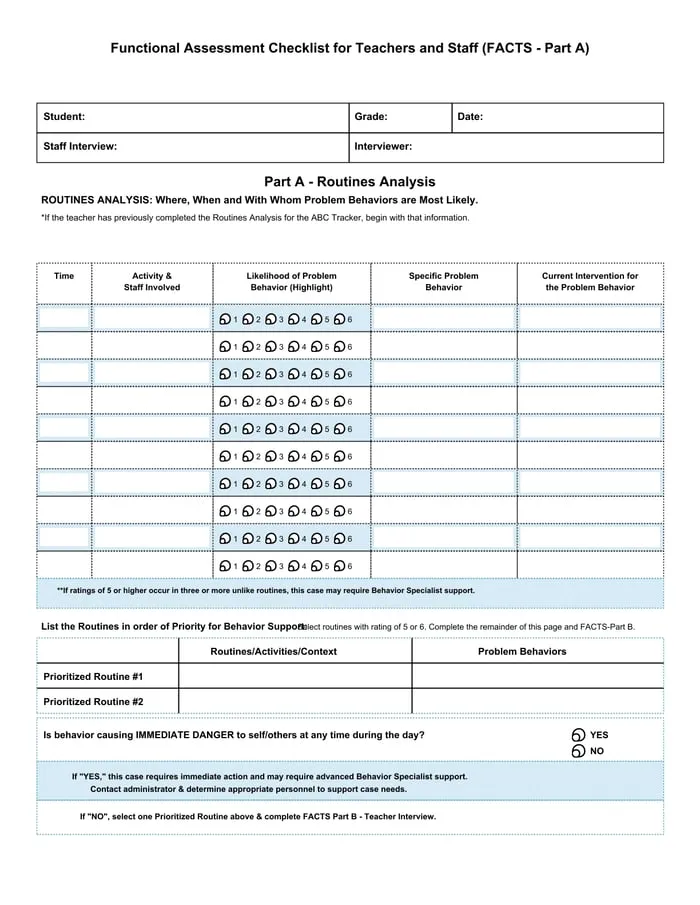
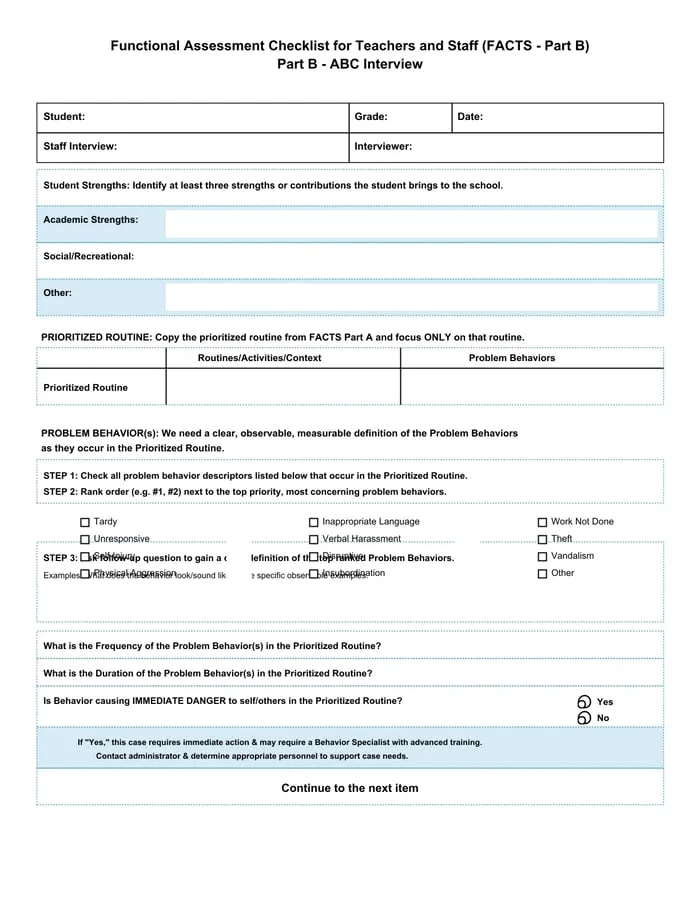
Functional Assessment Checklist for Teachers and Staff (FACTS): A fillable FACTS tool that guides your team through routines analysis, a structured staff interview, and a clear behavior summary before you write a plan.
Related reading: Positive Alternatives for Effective Classroom Management and The Power of Data Tracking in Special Education.
Also on FromTeachers:
Key Takeaways
- A functional assessment checklist turns team opinions into shared, structured information.
- Start with routine ratings, then interview staff about the highest-risk routine.
- Write a clear summary of trigger, behavior, and outcome, then test it.
- Use neutral language and confirm the summary with direct observation.









Leave a Comment