

Mentoring new special education teachers is one of the most valuable things a veteran educator can do, and one of the hardest to fit into a full week. Picture Ms. Grant, a special education teacher with fifteen years of experience, assigned to mentor Mr. Patel, a first-year teacher in a K to 2 resource room. By October, Mr. Patel is exhausted. Transitions take forever, two students run from the room and he spends lunch writing incident notes.
This list is for mentor teachers, instructional coaches and team leads. It ranks ten tips for mentoring new special education teachers in classroom management, from the easiest to start this week to the ones that need more planning. Each tip covers what to do, why it helps and how Ms. Grant used it with Mr. Patel.
Examples are fictional. Adapt to the student’s goals and agreed supports. This is guidance, not a diagnosis.
At a glance
- New special educators need practical help with routines first, theory later.
- Short, frequent check-ins beat long, rare meetings.
- Model one strategy at a time, then let the mentee try it.
- Focus observations on one question, not everything at once.
- Protect the mentee’s confidence: name strengths before next steps.
How we ranked these tips
We ranked the ten tips by how quickly a mentor can start them. Tips 1 to 4 need no extra time beyond a few minutes a week. Tips 5 to 7 need a planned visit or meeting. Also, tips 8 to 10 need coordination with administrators or the wider team.
The ranking is about ease of starting, not importance. In practice, the simplest tips often have the biggest effect on a struggling first-year teacher. Figure 1 shows the list.
Before you begin, ask your mentee what support they want and how they prefer to receive feedback. Some new teachers like quick notes in their mailbox; others prefer a short conversation. Agreeing on this early builds trust. Also, remember that new special educators face a wide range of tasks at once: instruction, behavior, IEP paperwork, family communication and supervising adults. Classroom management is often the first area to address, because calmer routines free up time and energy for everything else.
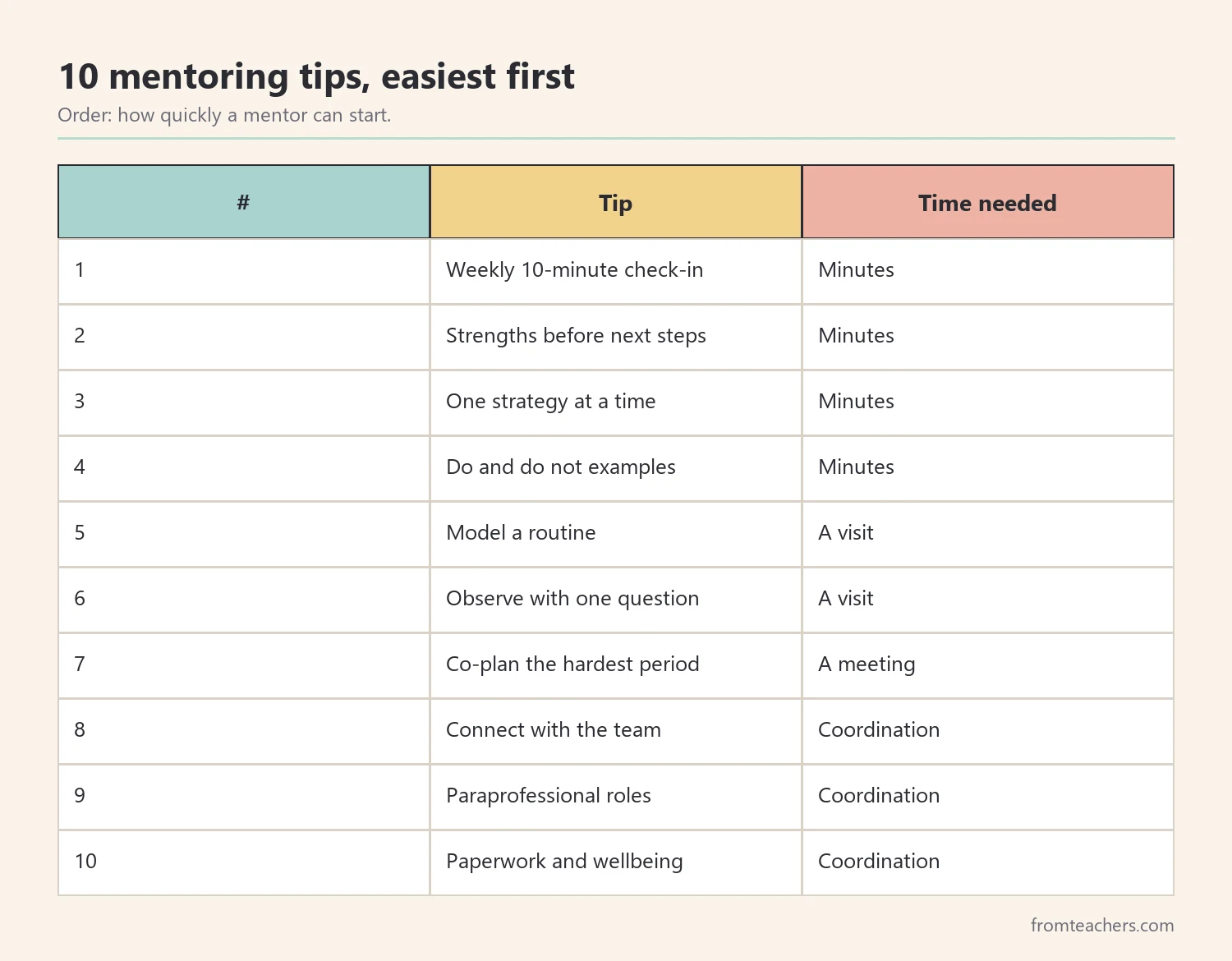
1. Start with a weekly ten-minute check-in
What to do: set a fixed, short check-in time each week. Ask three questions: What went well? What was hardest? What one thing do you want help with?
Why it helps: new teachers often wait until problems are big before asking for help. A predictable check-in catches problems early.
Example: Ms. Grant and Mr. Patel meet every Tuesday at 3:15 for ten minutes. In week one, his “one thing” was transitions from carpet to tables.
2. Name strengths before next steps
What to do: begin every conversation with one specific strength you have seen.
Why it helps: first-year special educators often feel they are failing. Specific praise builds the confidence needed to try new strategies.
Example: Ms. Grant told Mr. Patel, “Your morning greeting at the door is warm and consistent. The kids walk in smiling.” Then she moved to transitions.
3. Share one strategy at a time
What to do: pick one strategy that addresses the mentee’s top problem. Avoid long lists of ideas.
Why it helps: overloaded new teachers cannot use ten ideas at once. One strategy, practiced well, makes a visible difference.
Example: For transitions, Ms. Grant suggested a visual timer with a two-minute warning and a consistent transition song. Mr. Patel tried only that for two weeks.
4. Use visual examples of “don’t” and “do”
What to do: show contrasting examples of a common habit and a more effective alternative, such as giving long verbal directions versus one direction with a visual.
Why it helps: seeing two versions side by side makes the difference concrete and easy to remember.
Example: Ms. Grant shared a page from a classroom management dos and don’ts guide for SPED teachers that showed a chaotic transition next to a structured one. Mr. Patel kept it on his desk for a week.
5. Model a routine in the mentee’s room
What to do: teach a short routine in the mentee’s classroom while they watch, then switch roles the next day.
Why it helps: new teachers learn faster by seeing a strategy work with their own students.
Example: Ms. Grant led the carpet-to-table transition once, using the timer and song. The next day, Mr. Patel led it while she watched. Transitions dropped from about seven minutes to three over two weeks.
6. Observe with one focus question
What to do: before an observation, agree on one question, such as “How often do students get specific praise?” Collect simple data on only that question.
Why it helps: broad observations produce long lists of feedback that overwhelm. A single focus gives clear, usable data.
Example: Ms. Grant counted specific praise statements and corrections in a 20-minute reading group. Mr. Patel saw that corrections outnumbered praise about three to one and set a goal to reverse it.
7. Co-plan for the hardest part of the day
What to do: sit together and plan the most difficult period, step by step, including what to do when a student refuses or leaves the area.
Why it helps: planning ahead replaces panic with a script. It also helps the mentee think through student needs from IEPs and behavior plans.
Example: Mr. Patel’s hardest time was after lunch. Together they planned a calm-down activity, a quiet start task and a clear plan for students who leave the room, aligned with each student’s behavior plan and school safety procedures.
8. Connect the mentee with the team
What to do: introduce the mentee to the school psychologist, behavior specialist, SLP and OT, and explain when to ask each for help.
Why it helps: new special educators often try to solve every problem alone. Knowing who to call reduces isolation and improves support for students.
Example: Ms. Grant arranged a short meeting with the behavior specialist, who helped Mr. Patel update a student’s behavior plan.
9. Help manage paraprofessionals
What to do: coach the mentee on giving clear roles and schedules to paraprofessionals, and on having respectful, direct conversations.
Why it helps: many new special education teachers supervise adults for the first time, often adults with more experience than they have.
Example: Ms. Grant helped Mr. Patel create a simple daily schedule showing where each paraprofessional works and what they do during each block. Confusion and duplicate efforts dropped.
10. Plan for paperwork and wellbeing
What to do: help the mentee create a calendar for IEP deadlines and progress reports, and talk openly about boundaries and rest.
Why it helps: paperwork overload and burnout are common reasons new special educators leave the field. Classroom management improves when the teacher is not exhausted.
Example: Ms. Grant and Mr. Patel mapped all IEP dates for the year on one calendar. He also agreed to leave school by 5 p.m. at least three days a week.
A sample mentoring log
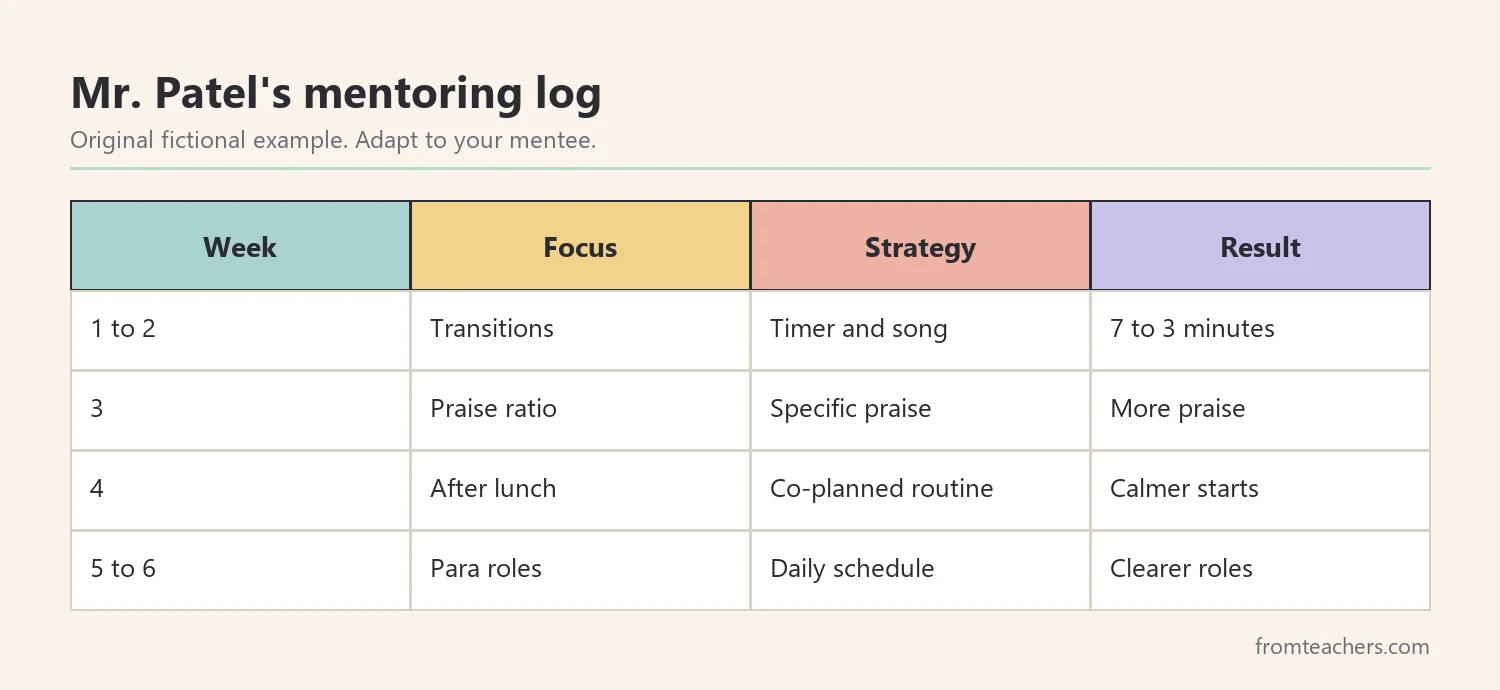
Keeping a short log helps track what was tried and what changed. The table below shows a fictional six-week log from Ms. Grant’s mentoring of Mr. Patel. The data only shows the format.
| Week | Focus | Strategy | Result |
|---|---|---|---|
| 1 to 2 | Transitions | Timer and song | About 7 to 3 minutes |
| 3 | Praise ratio | Specific praise goal | Praise up, corrections down |
| 4 | After lunch | Co-planned routine | Calmer starts |
| 5 to 6 | Paraprofessional roles | Daily schedule | Clearer roles |
Notice that each focus lasted one or two weeks. Mentoring new special education teachers works best in short cycles, one goal at a time.
A simple mentoring cycle
Figure 4 shows a four-part cycle many mentors use: choose a focus, model, observe and reflect. Then the cycle repeats with a new focus.
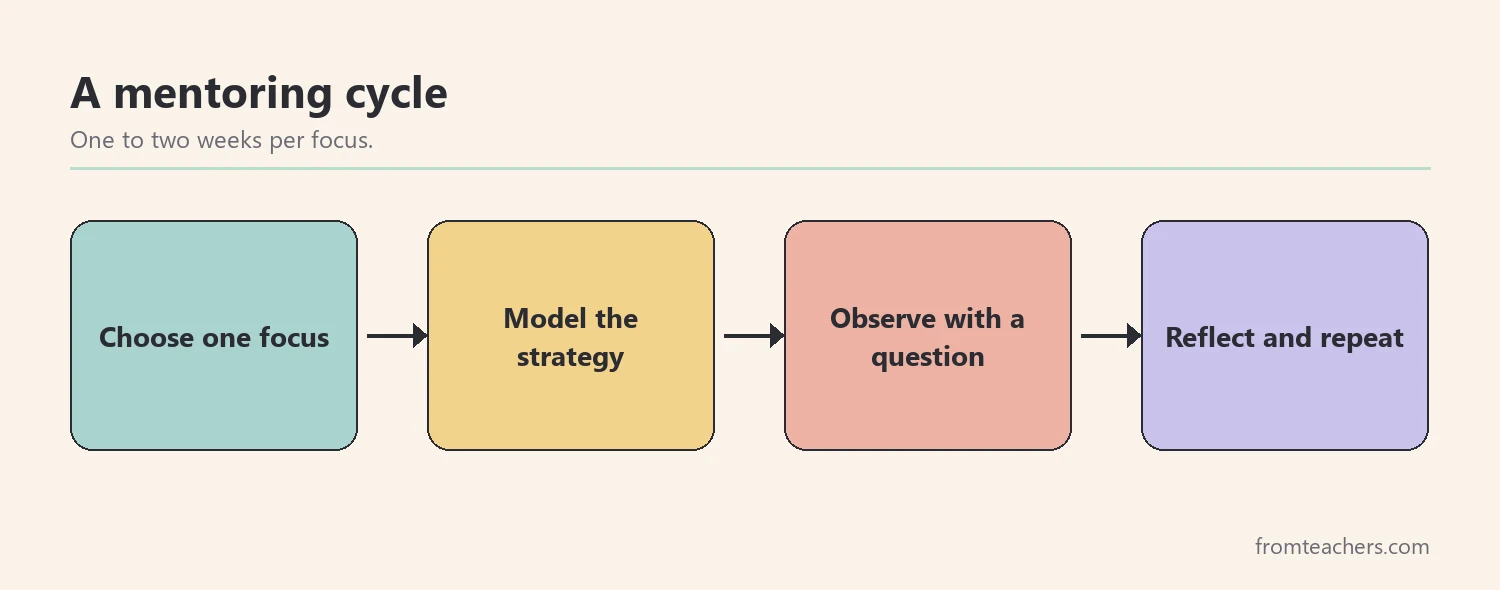
Keep each cycle short, usually one to two weeks. Also, let the mentee choose the focus whenever possible, since ownership increases follow-through. Finally, remember that your role is support, not evaluation. Keep mentoring conversations confidential unless there is a student safety concern, and follow your district’s rules about what mentors share.
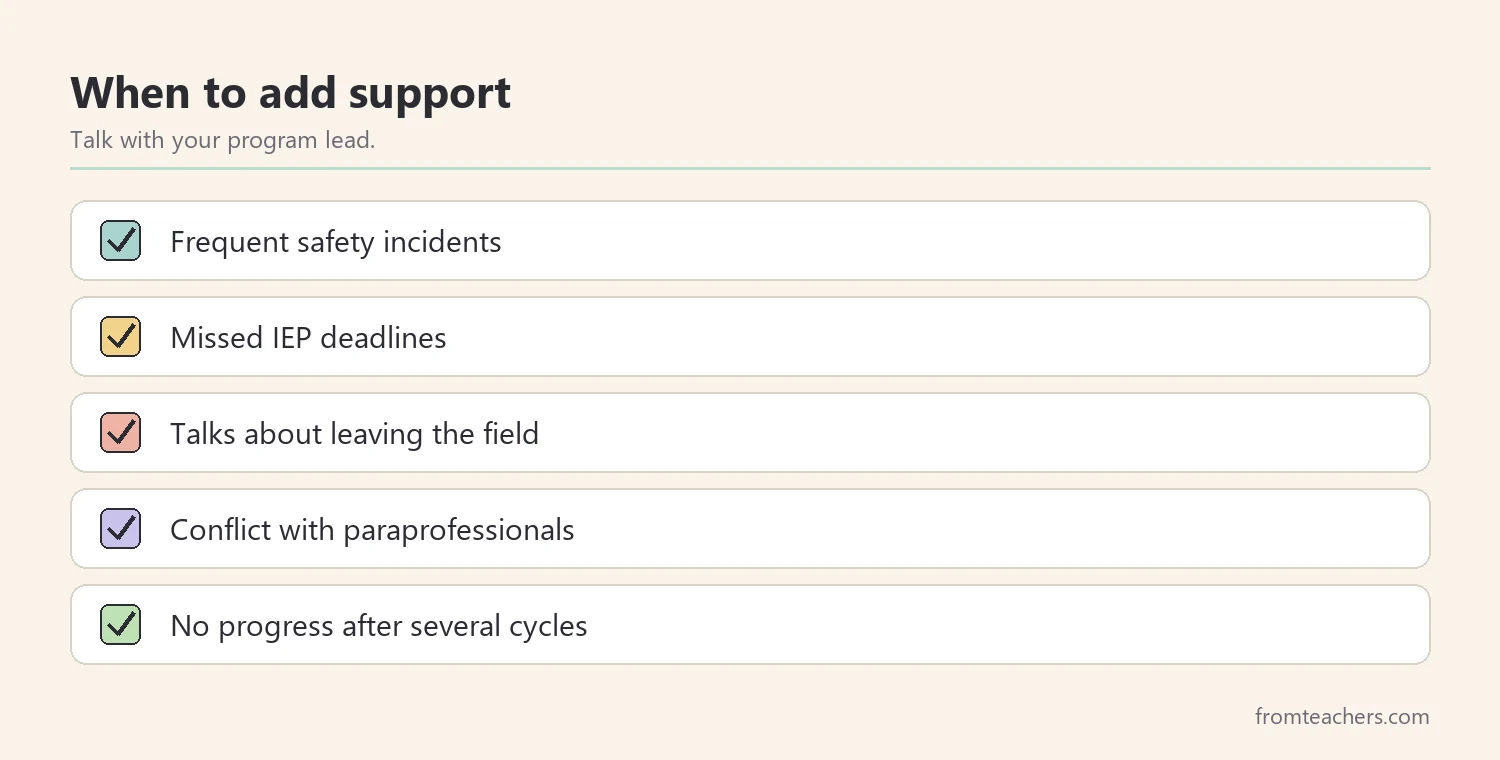
Figure 5 lists signs that a mentee may need extra support beyond regular mentoring.
Common mentoring mistakes
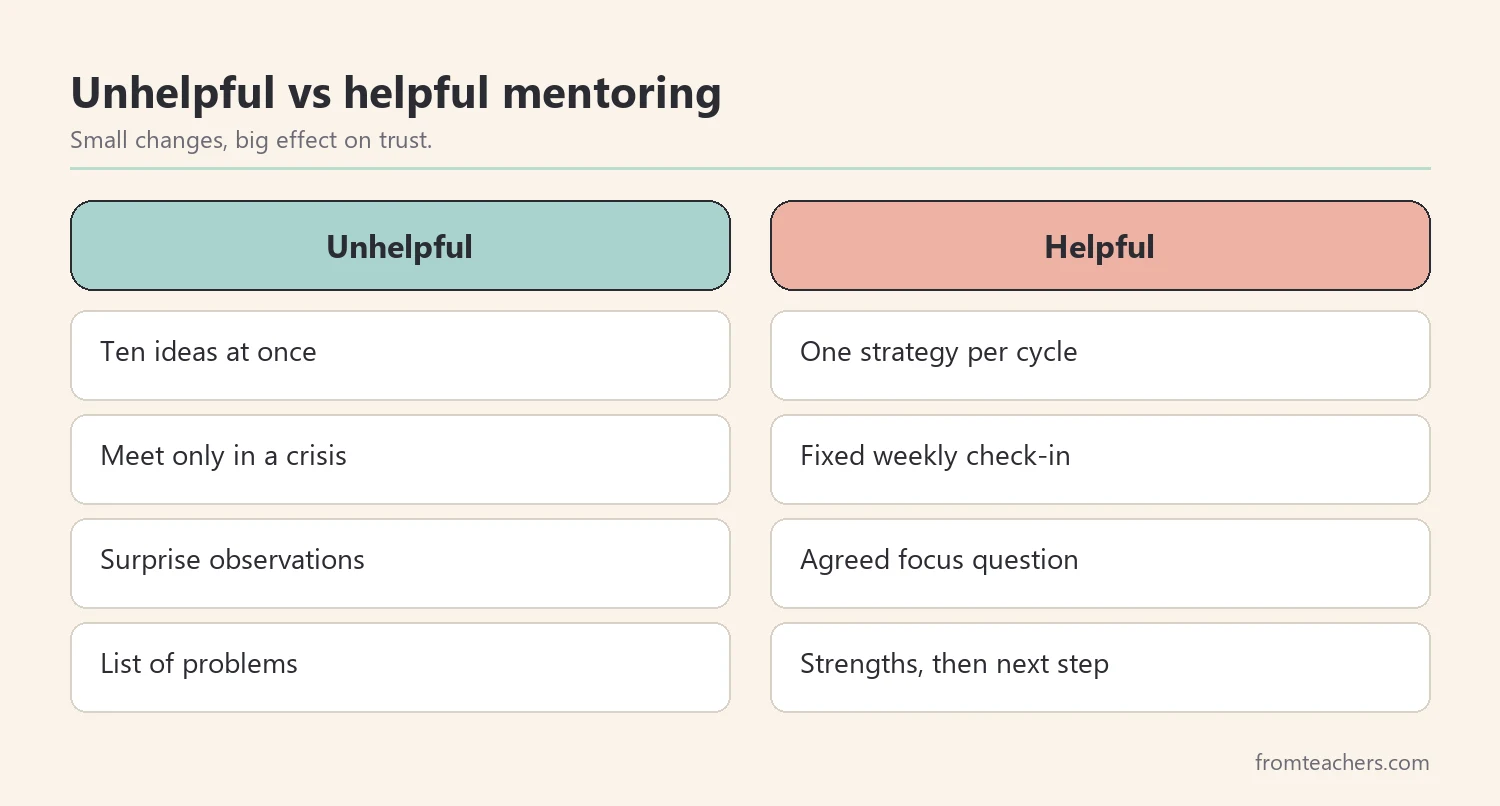
- Giving too much advice at once. Fix: one strategy per cycle.
- Only meeting when there is a crisis. Fix: a fixed weekly check-in.
- Doing it for them. Fix: model once, then hand over.
- Judging instead of coaching. Fix: ask questions and share data.
- Ignoring wellbeing. Fix: talk about workload and boundaries.
Questions mentors ask about mentoring new special education teachers
How much time does mentoring take?
A weekly ten-minute check-in plus one longer visit every few weeks is a realistic starting point. Your district program may set specific expectations.
What if my mentee does not ask for help?
Use the fixed check-in and specific questions. Also share your own early mistakes, which makes asking for help feel normal.
Should I observe without warning?
For mentoring, agree on observation times and focus questions in advance. Surprise visits feel like evaluation and reduce trust.
What if a strategy does not work?
Look at the data together, adjust and try again. Sometimes the strategy needs more time; sometimes it does not fit the students.
Can I mentor a teacher in a different grade band?
Yes. Classroom management principles transfer well. Pair your experience with the mentee’s knowledge of their students.
Related reading: Special Education Strategies, The Power of Data Tracking in Special Education, and Understanding Autism and ADHD Meltdowns.
You may also need: Teacher Observation Feedback Form: Classroom Walkthrough Rubric for Coaches.
A companion resource for mentoring new special education teachers:
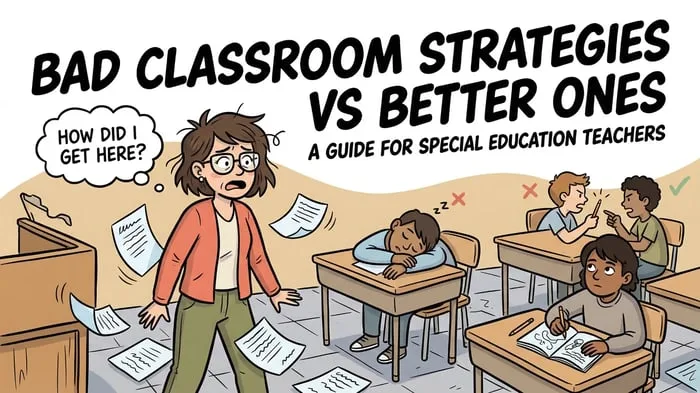
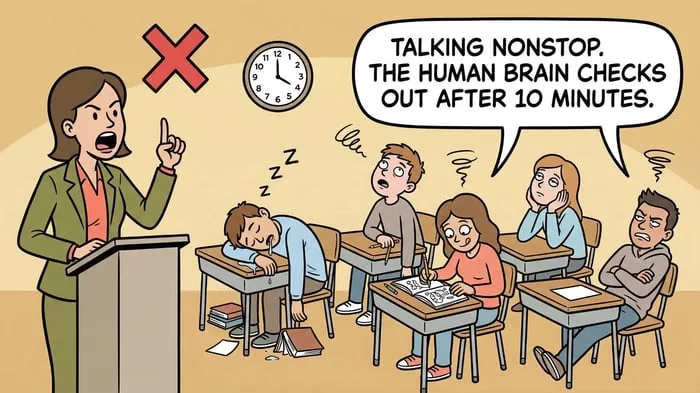
Classroom Management Strategies: Dos & Don’ts for SPED Teachers: a 51-page comic style digital guide that pairs common classroom habits with more effective alternatives, covering engagement, behavior, transitions, differentiation and communication, with each “what not to do” scene shown next to a “do this instead” scene, for K to 12 special and general education classrooms.
Sources and scope
- Council for Exceptional Children (CEC): professional standards and resources for special educators, including early career teachers.
- Center on PBIS: guidance on positive behavioral interventions and supports in classrooms and schools.
- Edutopia: practical articles on classroom management, coaching and new teacher support.
- Center for Parent Information and Resources: information on IEPs and working with families of students with disabilities.
These tips cover informal and formal mentoring focused on classroom management. They do not replace your district’s induction program, evaluation procedures or the guidance of administrators.
Key takeaways
- Mentoring new special education teachers works best with short, regular check-ins.
- Name strengths, then share one strategy at a time.
- Model in the mentee’s room, then observe with one focus question.
- Connect the mentee with the team and help with paraprofessional roles.
- Support paperwork planning and wellbeing to prevent burnout.









Leave a Comment