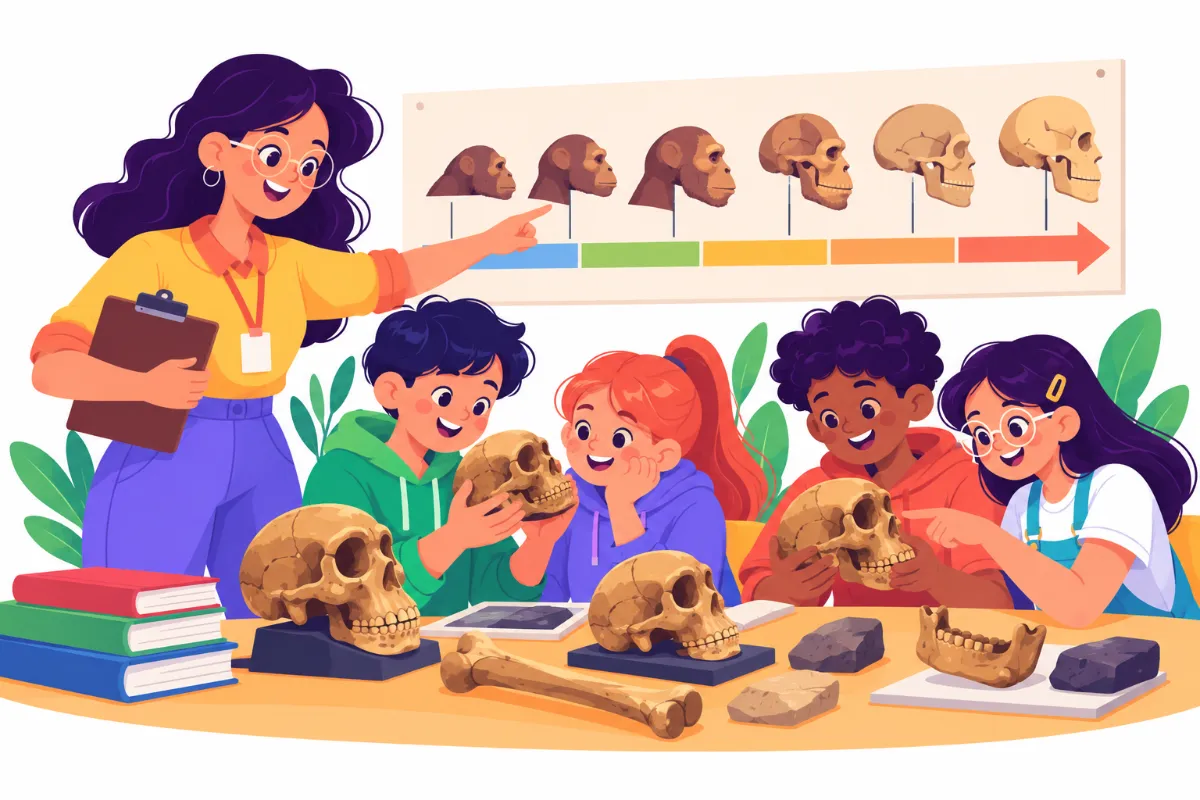

Teaching human evolution can feel tricky because the timescales are huge and the ideas feel abstract. Middle schoolers need to see the story laid out step by step before it clicks.
Fortunately, a clear structure makes this unit one of the most engaging of the year. This guide shares a practical sequence, hands-on activities, and supports for diverse learners, including students with IEPs.
Start With Natural Selection
Students cannot understand human evolution without the idea that drives it. Therefore, begin with natural selection using simple, concrete examples.
For example, run a quick “bird beak” simulation with clothespins, tweezers, and spoons. Students quickly see that some tools collect more “food” than others. As a result, they grasp variation, competition, and survival in a single class period.
Key vocabulary to preview
- Variation: differences between individuals
- Adaptation: a trait that helps survival in an environment
- Fossil: preserved remains or traces of past life
- Hominin: humans and our closest extinct relatives
Make Deep Time Visible
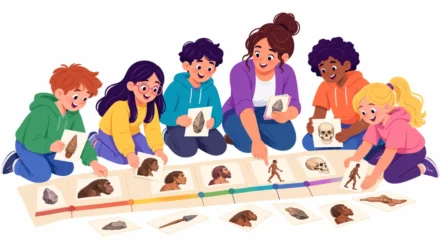
Millions of years mean little to a twelve-year-old. However, a physical timeline changes that. Stretch a long strip of paper or rope across the room and mark key events to scale.
Next, have students place cards for major milestones. They are often surprised by how recent humans appear on the line. This “aha” moment anchors everything that follows.
Teaching Human Evolution Through Hominin Species
Once the foundation is ready, introduce a handful of hominin species. Keep the focus on observable traits and evidence rather than memorizing long lists of names.
A clear set might include:
- Australopithecus afarensis and the famous “Lucy” fossil
- Homo habilis and early stone tools
- Homo erectus and long-distance travel
- Homo neanderthalensis and cold-climate life
- Homo sapiens and the spread across continents
Also, use comparison charts so students can track brain size, posture, tools, and location side by side. Visual organizers help everyone, especially students who struggle with heavy reading.
Use Evidence, Not Just Stories
Science is about evidence. Because of that, show students how scientists know what they know. Fossils, stone tools, footprints, and DNA all add pieces to the puzzle.
For instance, give small groups photos of different skulls and ask them to sort by features. Then reveal the scientific order and discuss what clues they used. Finally, connect their reasoning to how real researchers work. The Smithsonian Human Origins Program offers excellent images and interactive resources for this.
Hands-On Activities That Bring the Unit to Life
Middle schoolers remember what they do far better than what they read. Because of that, build at least one hands-on task into every lesson.
- Footprint lab: students measure their own stride and compare it with fossil footprint data.
- Tool station: groups examine pictures of stone tools and guess how each one was used.
- Migration map: students trace the spread of early humans across continents with colored string.
- Gallery walk: species posters around the room with short evidence questions at each stop.
Also, keep each activity short and focused on one question. That way, students stay engaged and the science stays clear.
Teaching Human Evolution Without Common Misconceptions
Several misunderstandings show up in almost every class. Addressing them directly saves confusion later.
- “Humans came from chimpanzees.” Instead, humans and chimpanzees share a common ancestor.
- “Evolution is a straight ladder.” In fact, it is more like a branching bush.
- “Individuals evolve.” Populations change over many generations, not individuals.
In addition, keep the classroom respectful. Some families have strong views on this topic. A calm focus on scientific evidence and questions keeps discussion productive.
Support Diverse Learners in This Unit
Teaching human evolution to a mixed-ability class means planning access from the start. Students with learning disabilities, ADHD, or language needs can all succeed with the right supports.
- Provide illustrated vocabulary cards with simple definitions.
- Chunk reading into short sections with guiding questions.
- Offer partially completed timelines and charts.
- Allow oral, drawn, or typed responses for assessments.
- Use movement-based activities like the room-sized timeline.
As a result, the unit stays rigorous while every student can reach the content.
Wrap Up With a Meaningful Project
End the unit with a project that pulls ideas together. For example, students can create a “museum exhibit” for one hominin species, with a fact card, a drawing, and an evidence label.
Alternatively, they can write a short field journal from the point of view of a scientist discovering a fossil. Both options let students show understanding in creative ways. You can find a ready-made path in the complete human evolution guide for middle school science, which lays out the full story with visuals.
Frequently Asked Questions
What grade is best for teaching human evolution?
Many schools introduce it in middle school life science. Then they revisit it in more depth in high school biology.
How long should a human evolution unit last?
Two to three weeks is common. That gives time for natural selection, the timeline, hominin species, and a final project.
How do I keep the topic respectful?
Focus on evidence and scientific questions. Also, set clear discussion norms so every student feels safe to participate.
Ready-to-use resource:

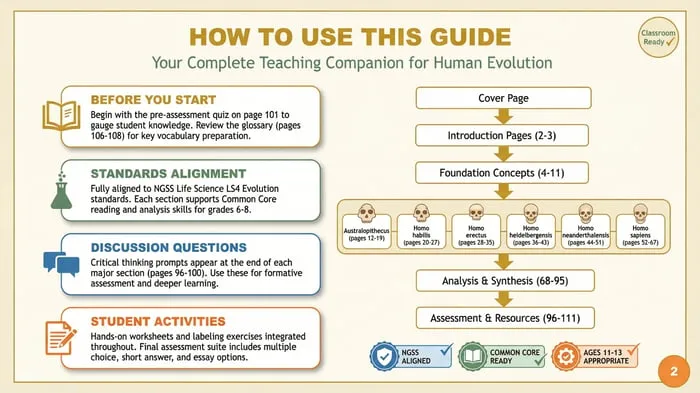
Human Evolution: The Complete Scientific Guide: A complete, visual walkthrough of natural selection and six major hominin species that helps middle schoolers finally see the human story step by step.
Related reading: Learning Styles Student Success Guide and 5 Practical Teaching Tips to Boost Classroom Focus and Learning.
Key Takeaways
- Start teaching human evolution with natural selection and simple simulations.
- Make deep time visible with a physical classroom timeline.
- Focus on evidence and comparison charts rather than memorizing names.
- Plan visuals and chunked reading so every learner can access the unit.





Leave a Comment