

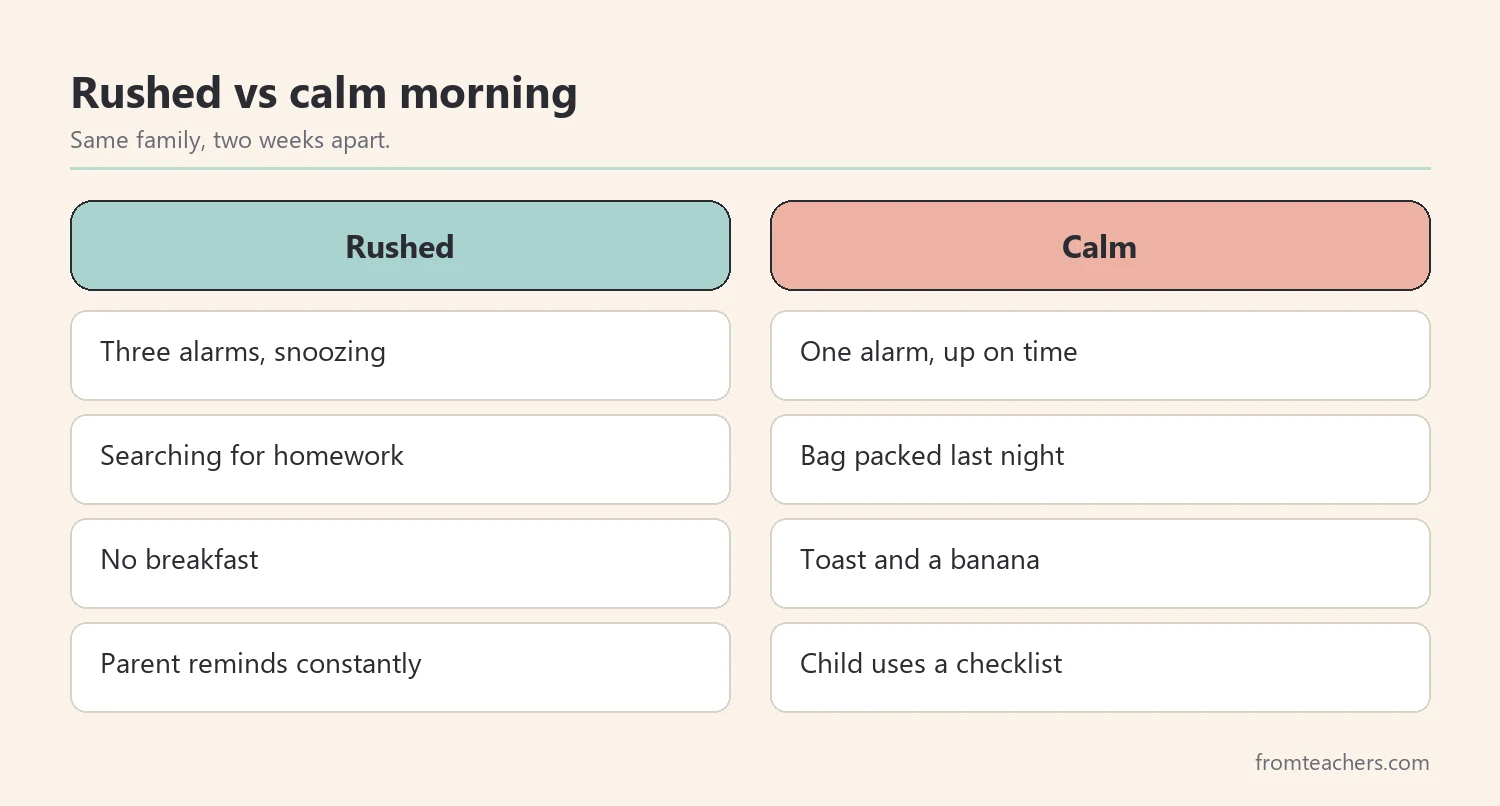
Middle school morning routine mistakes often start the night before, and their effects show up by second period. Many families notice that their 11 to 14 year olds are harder to wake, rushed out the door and tired in class. Picture the Haddad family. Omar, age 12, sets three alarms, skips breakfast and runs for the bus with his shoes untied. By ten o’clock, his teacher says he looks “half asleep.”
This list is for parents and caregivers of middle schoolers. It names seven common morning routine mistakes, ranked from the most common to the less obvious, with a simple fix for each. Omar appears as the fictional example, and you will see how one week of tracking his energy helped his family find the changes that mattered most.
Examples are fictional. Adapt to the student’s goals and agreed supports. This is guidance, not a diagnosis.
At a glance
- Most morning problems start the night before.
- Middle schoolers still need a lot of sleep.
- Prepare bags and clothes in the evening.
- A simple breakfast and water help many kids.
- Track energy for a week to see what works.
How we ranked these mistakes
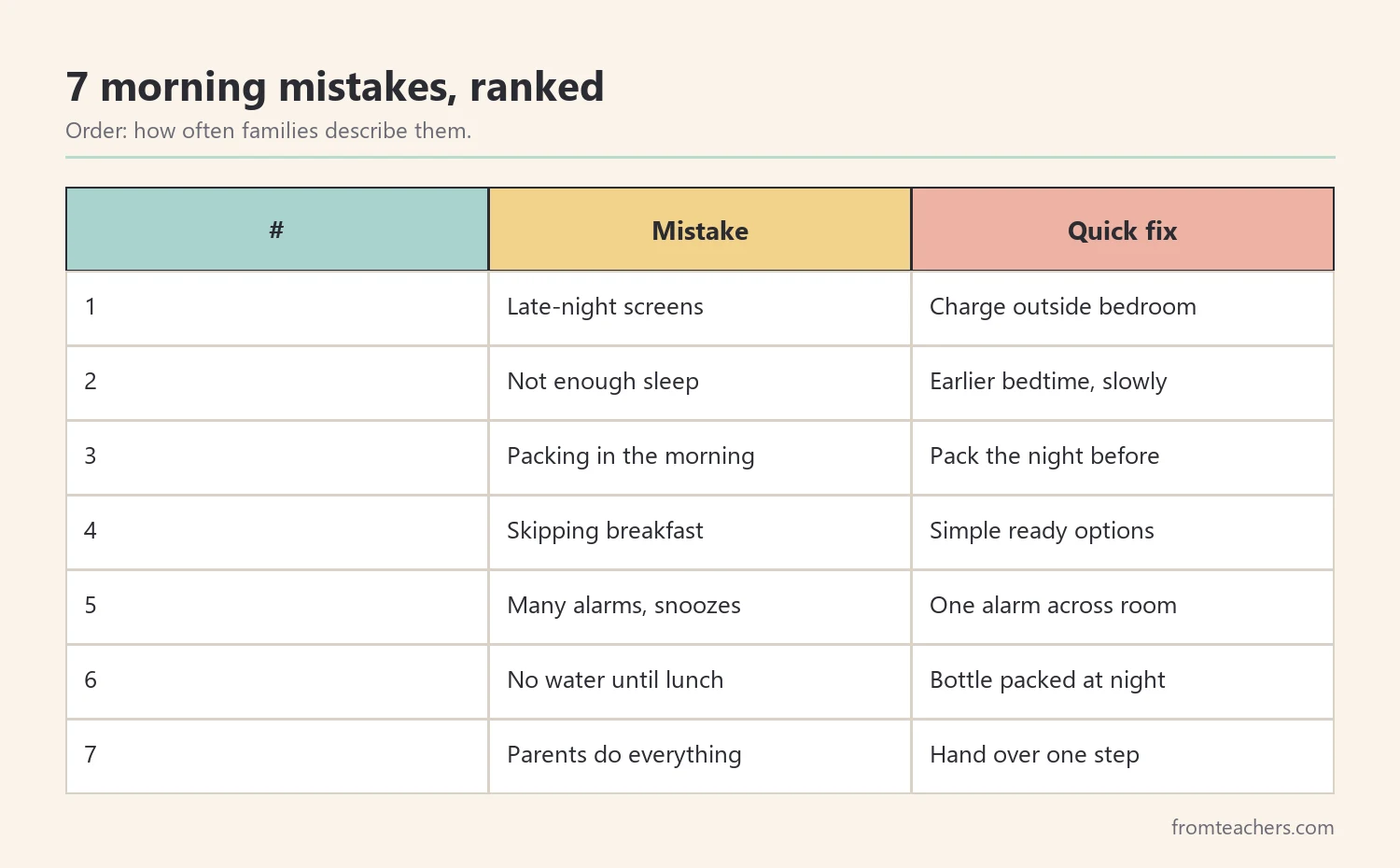
We ranked the seven mistakes by how often families describe them, starting with the most common. The ranking comes from everyday parenting experience, not research data, so your family may have different weak spots.
Each mistake includes why it matters, a simple fix and how Omar’s family tested it. To test changes, Omar used a one-page energy log, rating his energy from 1 to 5 at several points during the day. Figure 1 shows the full ranking.
1. Late-night screens
The mistake: phones, games or videos in the bedroom late at night.
Why it matters: screens can delay sleep and keep kids alert at bedtime. Many families find that late screen time is the biggest reason mornings are hard.
The fix: set a screens-off time, such as an hour before bed, and charge devices outside the bedroom.
Example: Omar’s phone moved to the kitchen charger at 9 p.m. By the end of the week, he was falling asleep earlier.
2. Not enough sleep
The mistake: bedtimes that leave too few hours before the alarm.
Why it matters: health organizations generally recommend about 9 to 12 hours of sleep for children ages 6 to 12 and 8 to 10 hours for teens. Many middle schoolers get less.
The fix: count back from the wake-up time and move bedtime earlier in small steps, such as fifteen minutes every few nights.
Example: Omar needed to wake at 6:30. His family moved bedtime from 11:00 toward 9:45 over two weeks.
3. Packing in the morning
The mistake: searching for homework, gym clothes and chargers right before the bus.
Why it matters: morning rush creates stress, arguments and forgotten items, which drain energy before school starts.
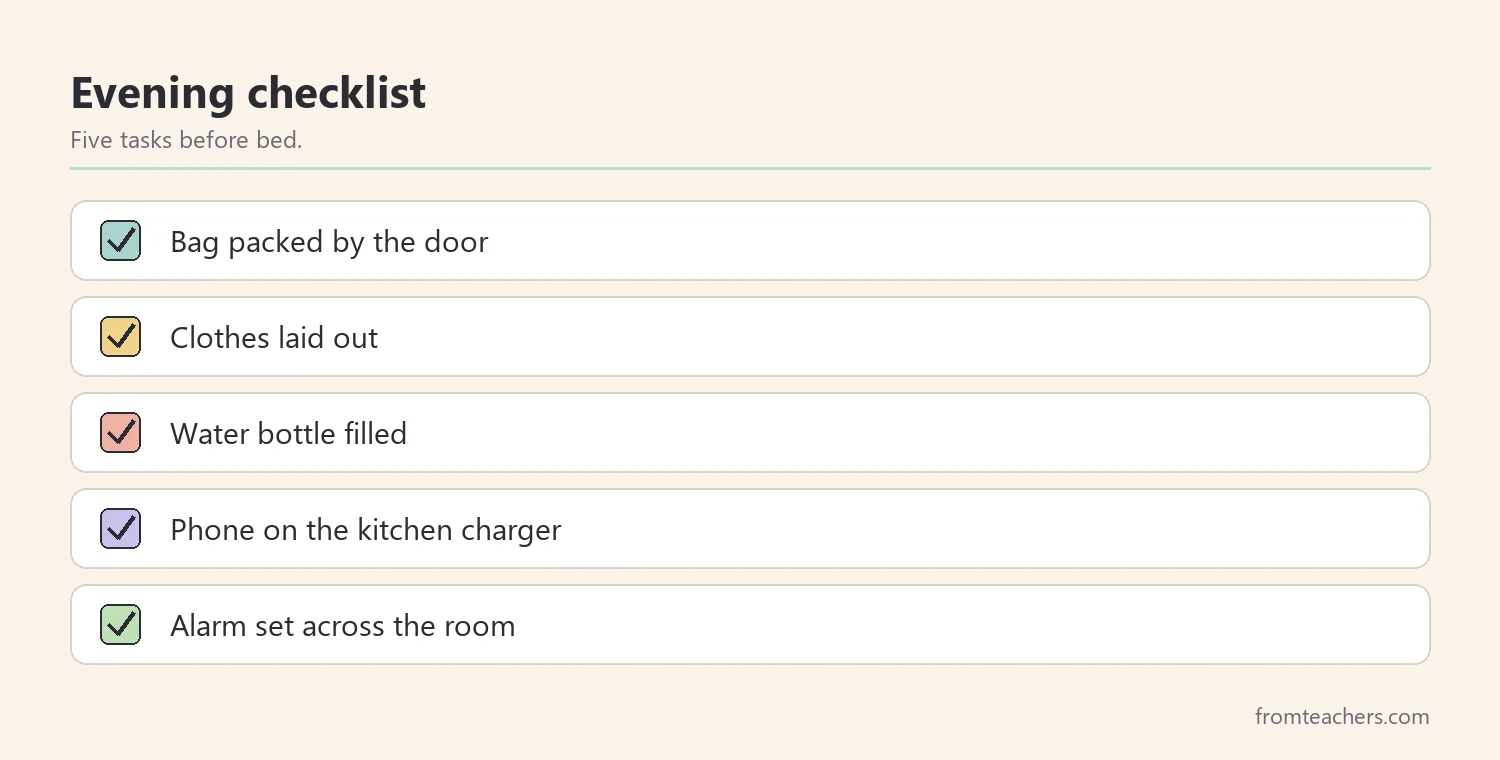
The fix: pack the bag and lay out clothes the night before. Use a short checklist by the door.
Example: Omar’s checklist had five items. Mornings became calmer, and he stopped calling home for forgotten homework.
4. Skipping breakfast
The mistake: leaving with no food because there is no time or no appetite.
Why it matters: many children report feeling more focused and less irritable when they eat something in the morning.
The fix: keep simple options ready, such as fruit, yogurt, toast or a granola bar that can be eaten on the way. Respect appetite differences and avoid pressure.
Example: Omar rated his late morning energy higher on days he ate toast and a banana before the bus.
5. Too many alarms and snoozes
The mistake: setting several alarms and hitting snooze again and again.
Why it matters: broken last minutes of sleep can leave kids groggy. Snoozing also eats into time for breakfast and packing.
The fix: one alarm, placed across the room, at a realistic time. Open the curtains or turn on the light right away.
Example: with one alarm on his desk, Omar got up on the first ring four of five days.
6. No water until lunch
The mistake: no drink in the morning and no water bottle in the bag.
Why it matters: many kids simply forget to drink at school. Some notice they feel more tired or get headaches when they drink very little.
The fix: a glass of water with breakfast and a filled water bottle packed the night before.
Example: Omar added a water bottle to his checklist and noticed fewer afternoon headaches.
7. Parents doing everything
The mistake: parents wake, remind, pack and rush their child through every step.
Why it matters: middle school is a time to build independence. When parents do everything, kids do not learn to manage their own mornings.
The fix: hand over one step at a time, such as the alarm, then packing, then breakfast. Use a checklist the child owns.
Example: after three weeks, Omar ran his own morning with just one reminder from his dad.
Testing changes with an energy log
The best way to know which changes help is to track them. A one-page daily energy level tracker for sleep, mood and habits includes a morning check-in for wake-up time, energy, sleep quality, breakfast and mood, plus an energy table through the day.
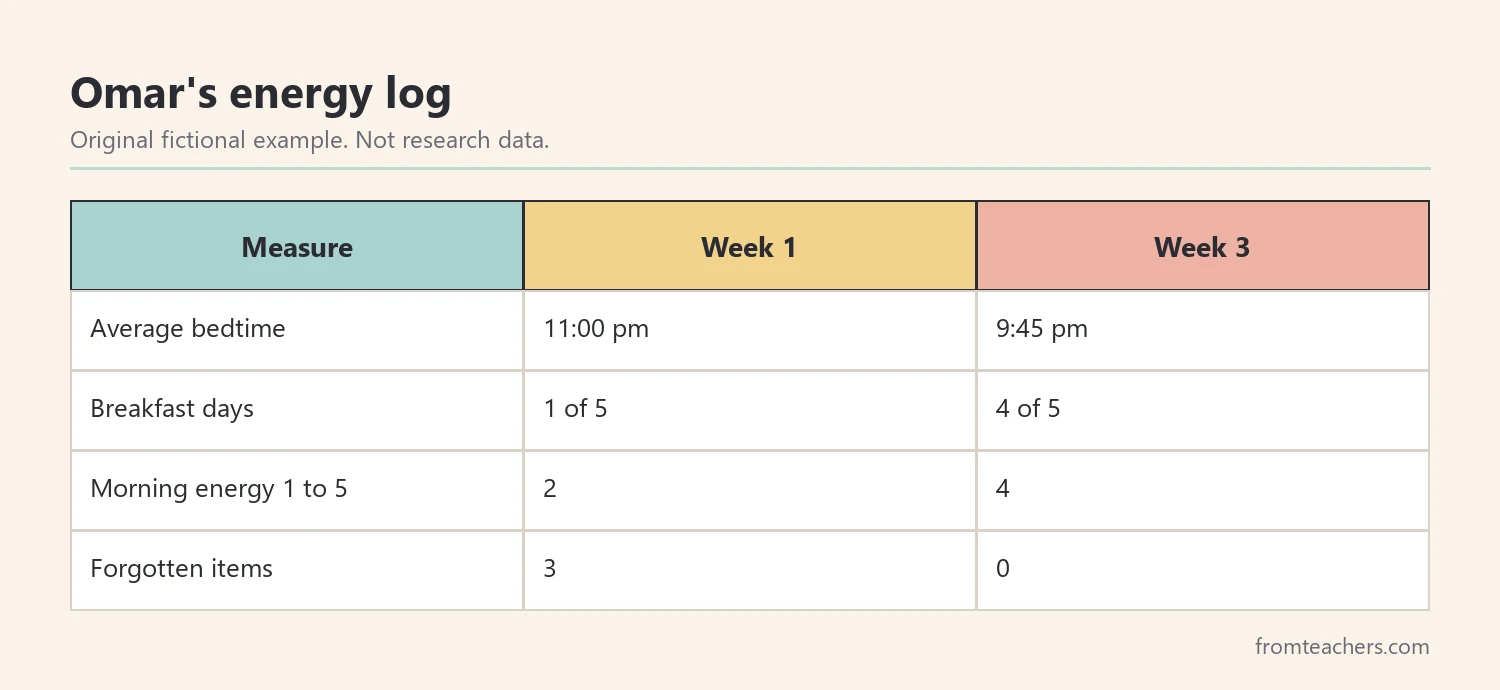
The table below shows Omar’s fictional log before and after his family fixed three of these middle school morning routine mistakes. It shows the format, not research results.
| Measure | Week 1 | Week 3 |
|---|---|---|
| Average bedtime | 11:00 pm | 9:45 pm |
| Breakfast days | 1 of 5 | 4 of 5 |
| Morning energy (1 to 5) | 2 | 4 |
| Forgotten items | 3 | 0 |
A calmer morning, step by step
Most families do not need to fix all seven middle school morning routine mistakes at once. Pick one or two, test them for a week and add more later. Figure 4 shows a simple evening-to-morning flow.
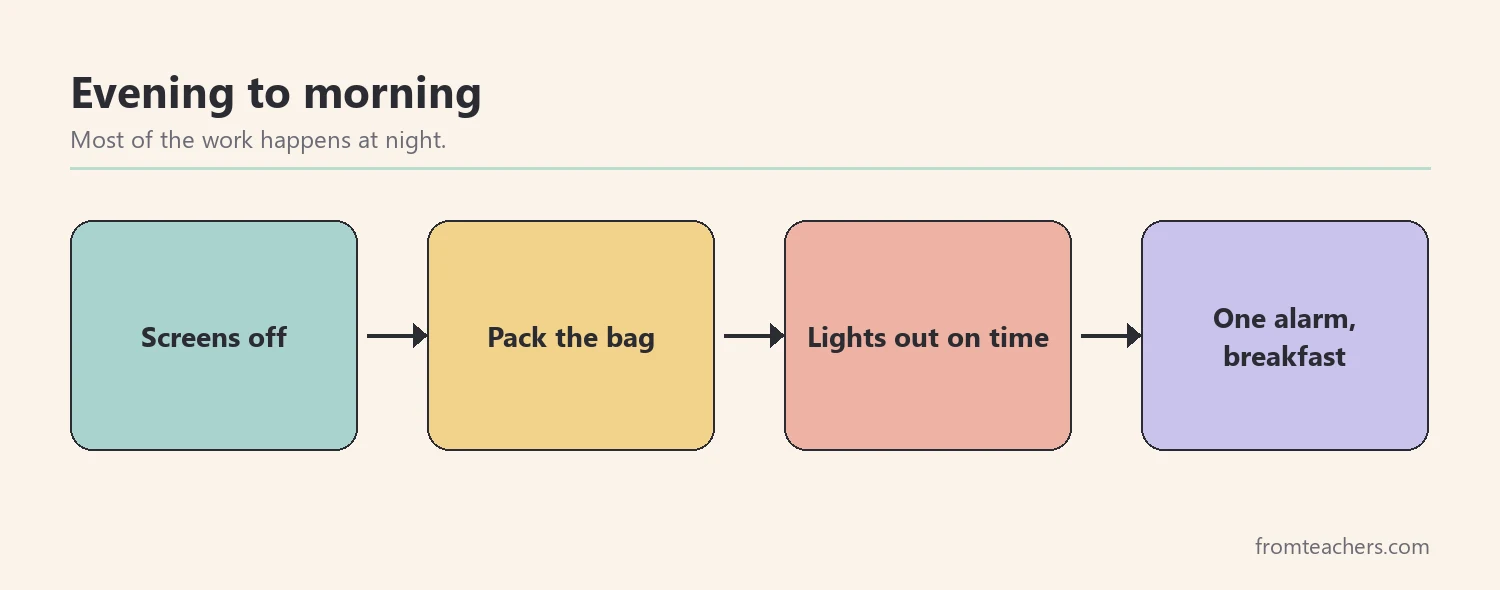
Small changes add up. In Omar’s case, an earlier phone curfew made bedtime easier, which made waking easier, which left time for breakfast.
Talking with your middle schooler
Middle schoolers often resist rules they did not help make. Instead of announcing a new routine, share what you have noticed and ask for ideas. For example, “You seem really tired on school mornings. What do you think would help?”
Then, use the energy log as a shared experiment rather than a test. Let your child choose one change to try first and decide together how to measure it. When kids see their own numbers improve, they are more likely to keep the habit.
Also, expect some ups and downs. Weekends, late events and growth spurts can shift sleep. Look at the overall pattern across a few weeks instead of judging one hard morning.
When siblings share the morning
Mornings get harder when several children need the bathroom, the kitchen and a parent at the same time. A simple schedule helps. For example, the child who leaves first gets the bathroom first, and breakfast happens in two short shifts. Post the order on the fridge so nobody has to argue about it.
Older siblings can also help younger ones, but avoid making them responsible for the whole routine. Each child should own a checklist that fits their age.
Extra support for kids who find mornings very hard
Some middle schoolers, including many with ADHD, anxiety or sensory needs, find transitions and time pressure especially hard. For these kids, visual checklists, a timer for each step and a calm, predictable order can make a big difference. Keep the routine the same every school day, and practice it on a weekend morning when nothing is rushed.
If your child has an IEP or 504 plan, it can help to share what you notice at home with the school team. Patterns in energy and mood often look the same in both places, and teachers may have useful ideas too.
Common questions answered quickly
- Should weekends follow the same schedule? Keeping weekend wake times fairly close to weekday times often makes Monday easier.
- What about kids who are not hungry in the morning? Try a small snack to eat later, such as on the bus or at the first break.
- Is a phone alarm okay? It can be, if the phone charges away from the bed.
Figure 5 is an evening checklist many families post on the fridge.
Questions parents ask about middle school morning routine mistakes
Why is my middle schooler so hard to wake up?
Sleep patterns often shift later during the teen years, while school start times stay early. Earlier screens-off times and steady bedtimes can help.
How long should we test a change?
About a week gives a clearer picture than one day. Track energy before and after the change.
Should I wake my child up or let them use an alarm?
Many middle schoolers can learn to use one alarm on their own. Start with support and hand over the task gradually.
What if my child is tired even with good sleep?
Talk with your pediatrician if tiredness continues despite good routines.
Can teachers help?
Yes. Some teachers share observations about energy in class, which can help families see patterns.
Related reading: School Counseling Programs, The Power of Data Tracking in Special Education, and Building Essential Life Skills for Adulthood.
You may also need: Healthy Habits for Kids: Sleep, Nutrition and Routines.
A companion resource for families of middle schoolers:

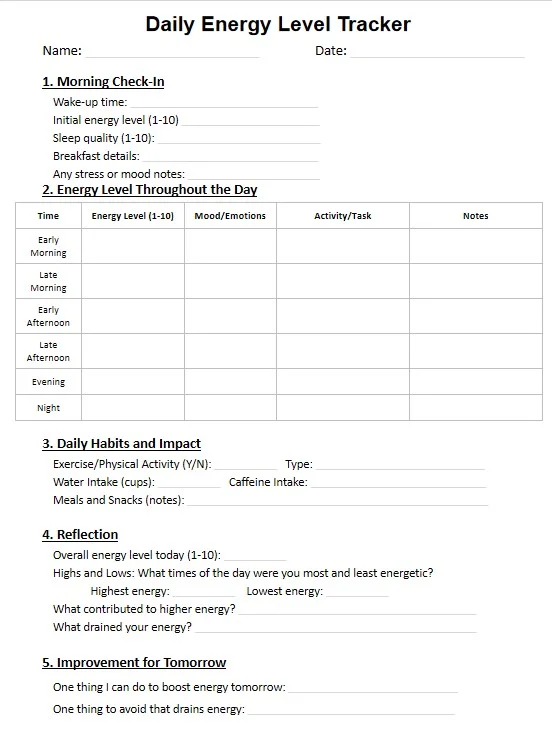
Daily Energy Level Tracker Sleep Mood and Habit Reflection Worksheet: a one-page tracker with name and date, a morning check-in for wake-up time, energy, sleep quality, breakfast and mood, an energy, mood and activity table from early morning to night, daily habits for exercise, water, caffeine and meals, a reflection on highs, lows and drains, and one improvement for tomorrow.
Sources and scope
- HealthyChildren.org (American Academy of Pediatrics): parenting information on sleep, nutrition and routines for school-age children and teens.
- Sleep Foundation: plain-language articles on sleep needs and sleep habits for children and teens.
- KidsHealth for Parents (Nemours): articles on breakfast, sleep and healthy routines for children.
- National Heart, Lung, and Blood Institute: Sleep Deprivation and Deficiency: information on how much sleep people need and how sleep affects health.
This guide shares general family routine ideas. It is not medical advice. If your child is very tired most days despite good routines, talk with your pediatrician.
Key takeaways
- Most middle school morning routine mistakes start the night before.
- Late screens and short sleep are the most common energy drains.
- Pack in the evening and keep breakfast simple.
- Use one alarm and add water to the routine.
- Hand over steps gradually and track energy to test changes.










Leave a Comment