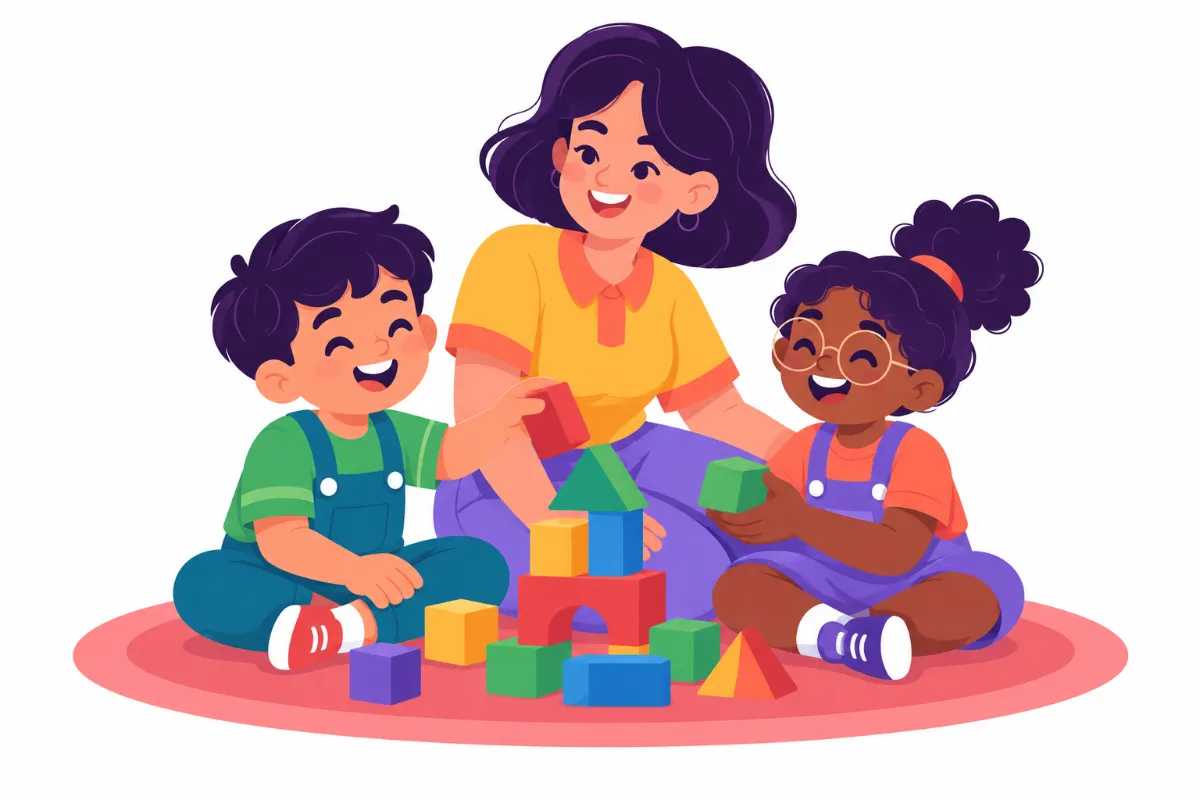

Friendship skills for kids often show up in small moments: a child hovers at the edge of a block corner, wants to join, and has no idea what to say. A minute later the child grabs a block, the group protests, and recess ends with tears instead of a new friend.
This guide to friendship skills for kids turns that moment into a teachable routine. After reading, you will be able to pick one friendship skill, teach it in plain steps, practice it in real play, and track progress without turning friendship into a chore.
Examples are fictional. Adapt to the student’s goals and agreed supports. This is guidance, not a diagnosis.
At a glance
- Friendship skills for kids are learnable, not a personality trait.
- Pick one skill at a time and describe it in words a child can see and hear.
- Teach with a short story, model it, then practice in low-stakes play.
- Coach in the moment with quiet, brief prompts, then fade them.
- Track a few simple observations each week and celebrate progress over perfection.
1. Define the friendship skill you want to teach
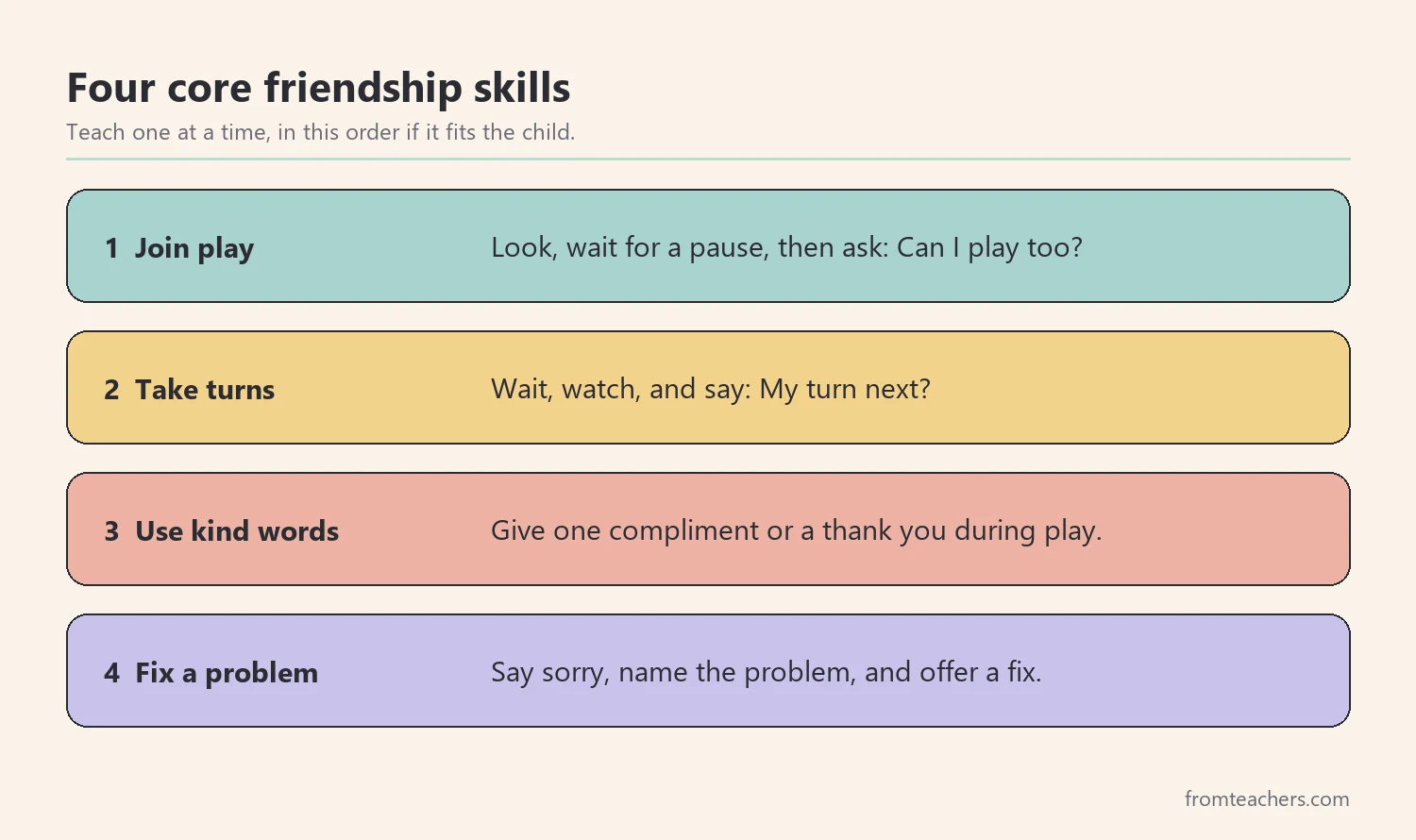
Children cannot practice “be nice.” They can practice “ask, ‘Can I play too?'” So the first step is to name one specific behavior. Good friendship skills for kids are observable: you can see the child do them, and the child can tell you when they did.
Start by watching for a few days. Notice where things go wrong. Is it joining play, sharing materials, reading a friend’s face, or repairing after a conflict? Next, among all the friendship skills for kids you could teach, choose the one that would make the biggest difference this month.
For example, meet Maya, a fictional second grader. Maya wants friends and often stands near groups at recess. When nobody invites her, she grabs a toy to get attention. Her teacher, Ms. Lane, decides the first target is joining play with words.
| Vague goal | Clear skill | What you see |
|---|---|---|
| Be friendly | Join play with words | Says “Can I play?” before touching toys |
| Share more | Take turns | Waits, then says “My turn next?” |
| Be kind | Use kind words | Gives one compliment during play |
| Get along | Fix a problem | Says sorry and offers a fix |
Also, write the skill as a short “I can” sentence. Maya’s reads: “I can walk up, wait for a pause, and ask to join.” That sentence becomes the anchor for every lesson that follows.
2. Teach friendship skills for kids with a short story
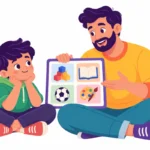
Once the skill is named, teach it before the child needs it. A calm lesson works far better than a lecture right after a playground problem. Short illustrated stories are a natural fit, because they show the skill in a familiar setting without putting the child on the spot.
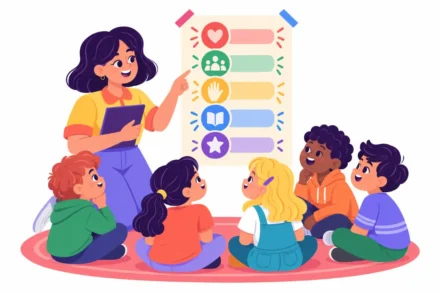
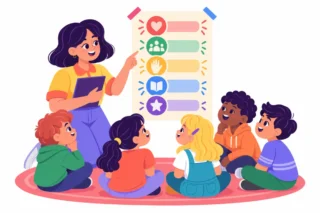
Keep the lesson to about ten minutes. First, read a short story where a character uses the skill. Then pause and ask questions: “What did she notice? What did she say? How did her friend feel?” Finally, connect it back to the child’s own day.
In practice, Ms. Lane reads Maya’s small group a story about a child who wants to join a game of tag. The character looks, waits for a pause, and asks. Afterward, the group acts out the scene with puppets. Maya volunteers to be the child who asks.
When you want a ready-made lesson, a printable story such as the Being a Good Friend social skills story covers sharing, listening, kind words, and asking for help in child-friendly language. It saves planning time and gives every adult the same words to use.
In addition, keep the language identical across settings. If the story says “Can I play too?”, the classroom poster, the recess aide, and parents at home should all use that exact phrase. Consistent scripts help children recall the skill under pressure.
3. Model, role-play, and practice in real play
Next, move from the story to rehearsal. Children learn friendship skills for kids best through a simple sequence: I do, we do, you do. You model the skill, practice it together, and then the child tries it with a peer while you watch.
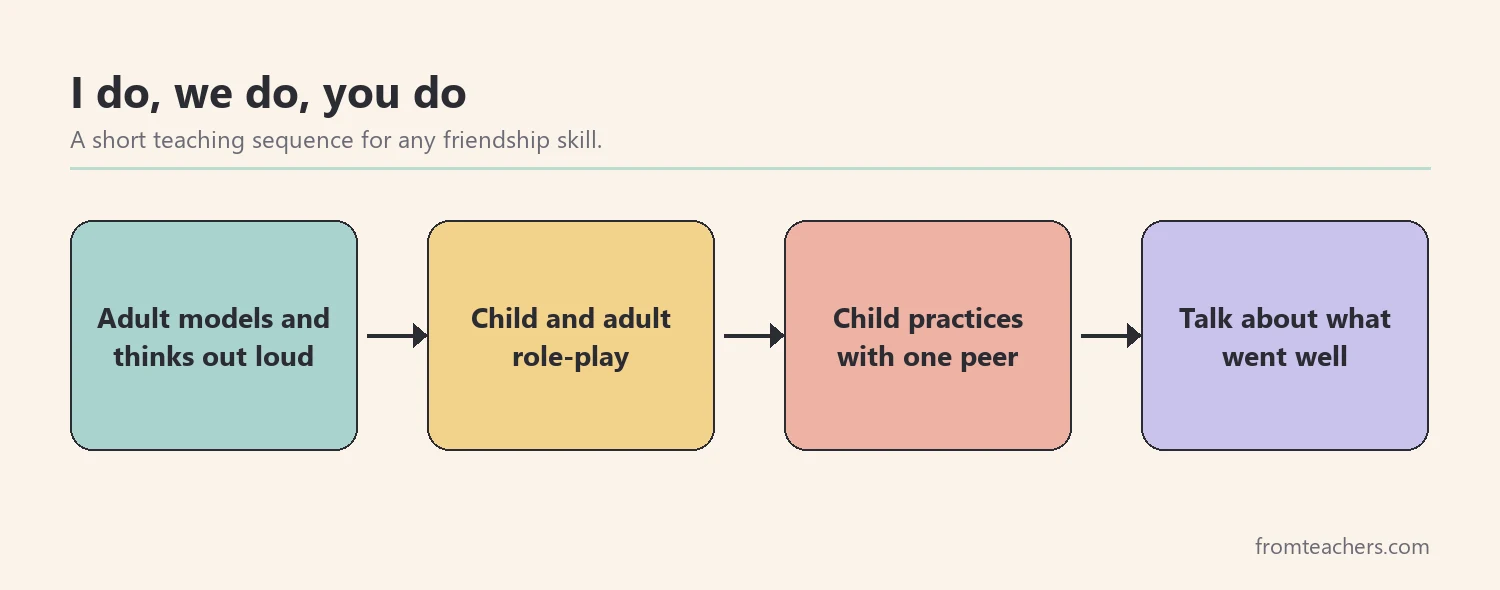
Model first, and think out loud: “I want to play blocks. I look. They are building a tower. I wait until they stop talking. Now I ask, ‘Can I add a block?'” Then switch roles so the child asks and you respond.
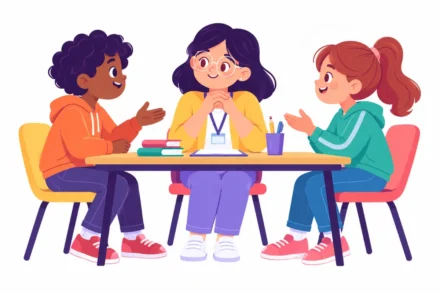
After that, plan a structured practice with one friendly peer. Choose an activity with natural turns, such as a board game or a shared drawing. Keep it short, around ten minutes, so the child ends on success.
For Maya, Ms. Lane sets up a block-building station with one classmate. Maya practices asking to join three times. Twice she uses the words without a prompt, and once she needs a quiet reminder. That is a solid start.
- Keep it low stakes: practice with one peer before a whole group.
- Script the first words: give the exact sentence the child will say.
- Plan for “no”: rehearse what to do if peers say not now.
- End on success: stop while the child is still doing well.
That last point matters. Sometimes peers say no, and that is normal. Teach a calm backup: “Okay, maybe later,” then find another game. Children who have a plan for rejection try again more readily.
4. Add feelings detective work to friendship skills for kids
Joining play is only half of friendship. Children also need to notice how others feel, so they know when to keep playing, when to give space, and when to help. This is where many friendship skills for kids break down: the child says the right words but misses the friend’s face.
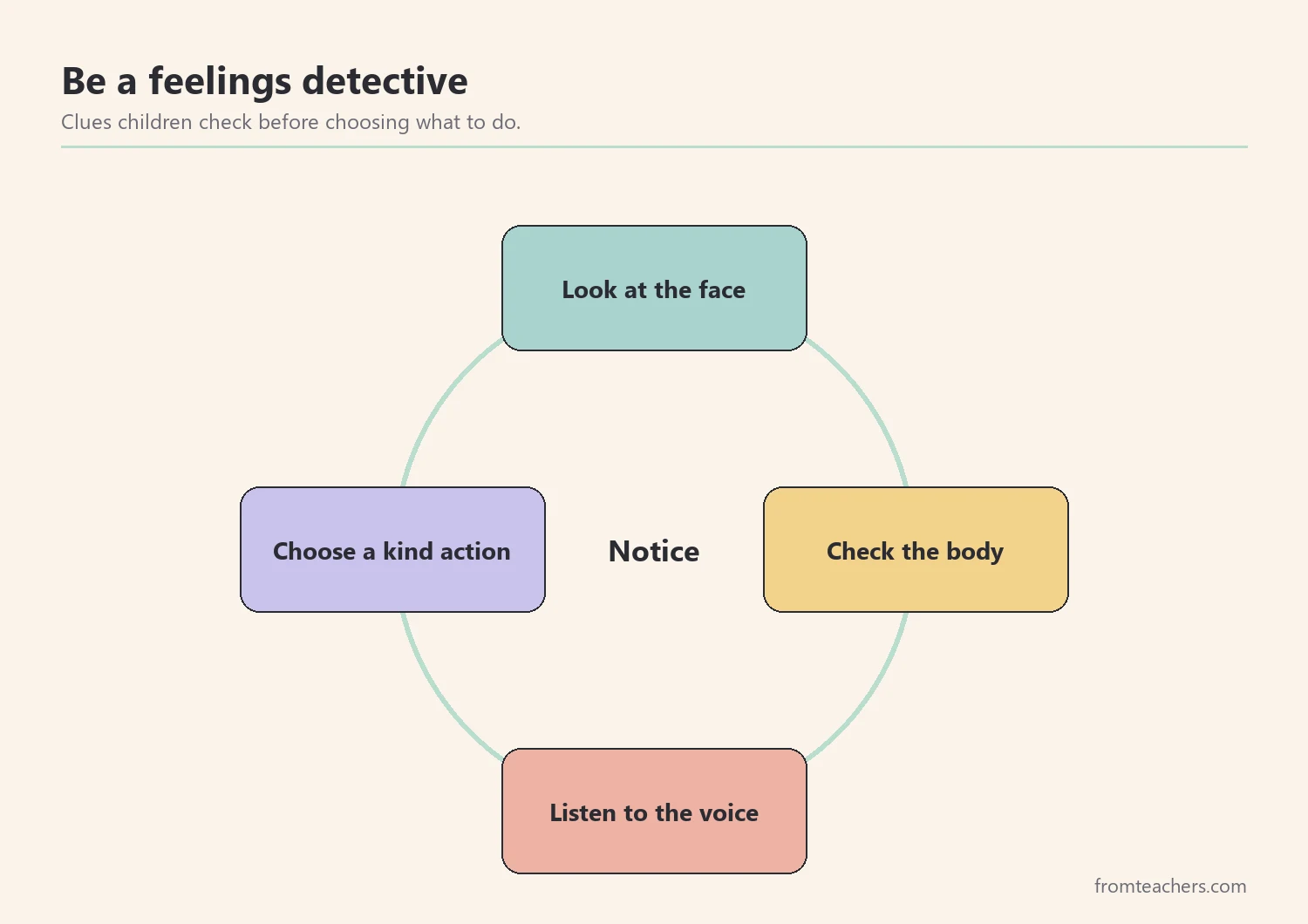
A “feelings detective” approach makes this concrete. Teach three clues: look at the face, look at the body, and listen to the voice. Then ask, “What clue tells you how your friend feels?”
Practice with photos, picture books, or short videos before trying it in live play. Name one feeling at a time and keep the list small at first: happy, sad, mad, and worried. Afterward, add trickier ones like frustrated or left out.
For instance, during a card game Maya’s partner crosses his arms and looks down after losing. Ms. Lane whispers, “Detective check. What do you see?” Maya says, “Arms crossed. He looks sad.” Then she says, “Good game. Want to play again?” That small repair keeps the game going.
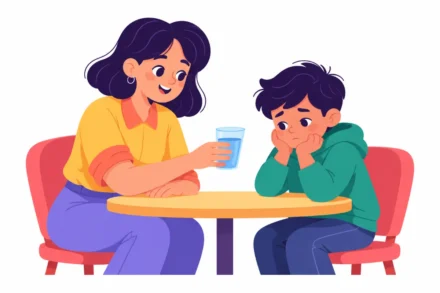
Finally, connect noticing with responding. A good friend does not only spot a feeling; they choose a kind action. Offer three simple options: ask “Are you okay?”, invite the friend to join, or get a grown-up if someone is hurt. Teaching when to get an adult is part of being a safe and helpful friend.
5. Coach friendship skills for kids in the moment
Lessons and role-play build friendship skills for kids. Real playgrounds test it. Therefore, plan how adults will coach during recess, centers, or family playdates, without hovering or embarrassing the child.
Use the lightest prompt that works. Start with a gesture or a single word, and only add more if needed. The goal is for the child to use the skill independently, so every prompt should get smaller over time.
| Prompt level | Example | When to use |
|---|---|---|
| Visual | Point to a picture cue card | Child knows the skill well |
| One word | “Ask?” | Child hesitates |
| Partial script | “Can I…” | Child forgets the words |
| Full model | Say the whole sentence | New or stressful situation |
Also praise the specific behavior right away. “You asked before taking a block. That is what friends do.” Specific praise tells the child exactly what to repeat, which general praise like “good job” does not.
At home, parents can coach the same way. Before a playdate, preview one skill: “Today let’s practice taking turns. When it is your friend’s turn, you can say, ‘Your turn.'” Afterward, talk about one thing that went well. Short previews and debriefs make friendship skills for kids feel normal rather than corrective.
For Maya, recess coaching starts with a one-word prompt from the recess aide. Within two weeks, the aide mostly uses a quick thumbs-up after Maya asks to join, which shows the prompts are fading.
6. Track friendship skills for kids and celebrate practice
Growth in friendship skills for kids is gradual, so tracking helps you see it. Keep the data simple. Pick one skill, a short observation window, and a tally of what happened. For example, count how many times the child tried to join play during recess and how many of those times used words.
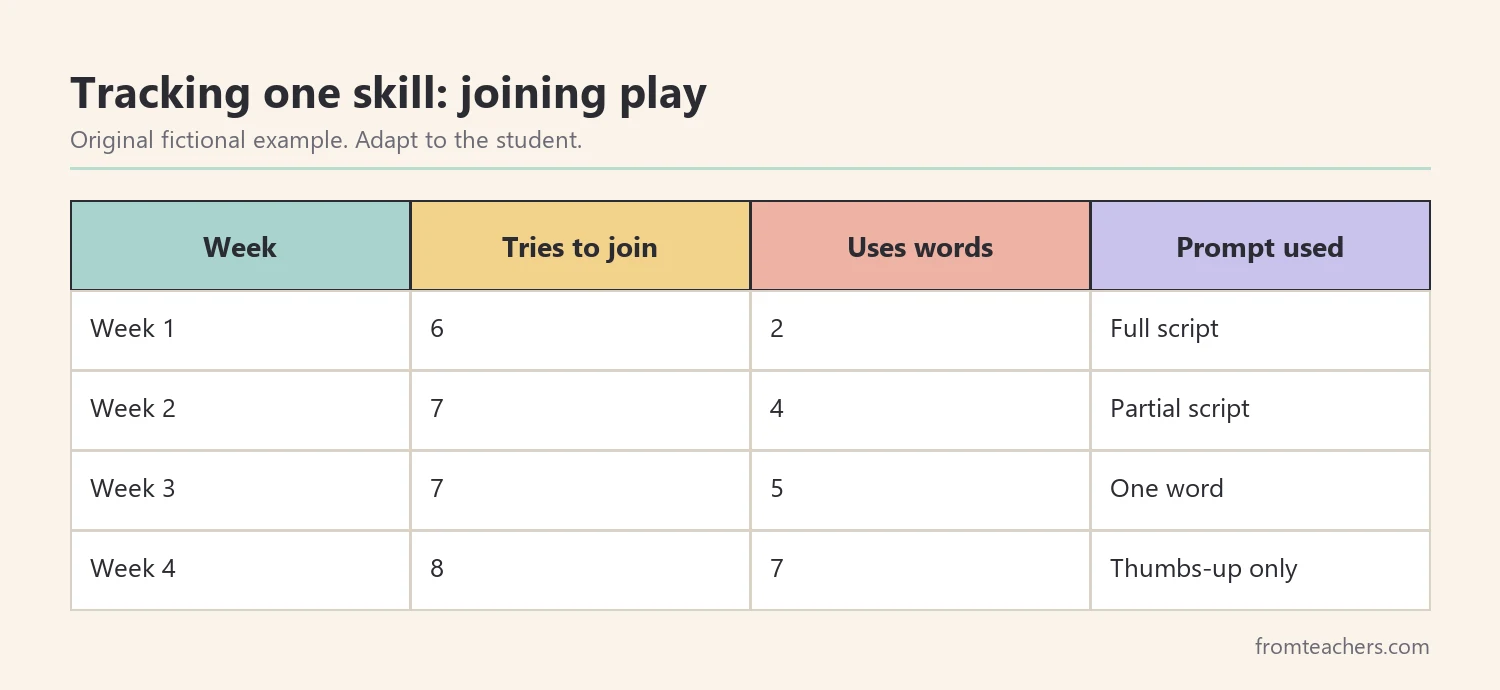
In Maya’s case, Ms. Lane watches 15 minutes of recess on three days each week. In week one, Maya tries to join play 6 times and uses words 2 times. By week four, she tries 8 times and uses words 7 times. The numbers are fictional, but the pattern shows what you are looking for: more words, fewer grabs.
Review the tally every week. If progress stalls, check three things: Is the skill still clear? Is practice frequent enough? Are prompts fading too fast or too slowly? Adjust one thing at a time.
Above all, celebrate effort. A friendship wrap-up, such as a small certificate or a class shout-out, tells children that practicing is what matters. Progress over perfection keeps motivation high, and it models the patience friends show each other.
Once one skill is steady, pick the next one from your list. Many teachers move from joining play to taking turns, then to reading feelings, then to fixing problems. Over a school year, that adds up to a strong set of friendship skills for kids.
Common mistakes and how to avoid them
- Teaching too many skills at once: Focus on one skill for two to four weeks before adding another.
- Teaching only after a conflict: Lessons stick better when the child is calm, so teach ahead of time and coach in the moment.
- Using different words across adults: Share one script with teachers, aides, and parents so the child hears the same phrase everywhere.
- Forcing friendships: Create chances to practice with willing peers instead of assigning a “best friend.”
- Never fading prompts: Plan from day one how prompts will get smaller, so the child does not rely on an adult to play.
- Ignoring the peer side: Teach the whole group to welcome others, not only the child who struggles.
Questions teachers and parents ask about friendship skills for kids
At what age should children start learning friendship skills for kids?
Young children start building these skills in preschool through shared play. However, any age is a good time to teach a missing skill. Older children may need more private practice and age-appropriate scripts, but the same steps apply.
What if my child prefers to play alone?
Some children enjoy solo play, and that is fine. The goal is choice, not constant socializing. Teach the skills so the child can join others when they want to, and respect quiet time too.
How long does it take to see progress?
It varies with the child and the skill. Many families and teachers notice small changes within a few weeks of regular practice. Track one skill so you can see gradual gains that are easy to miss day to day.
Do friendship skills for kids work the same in special education?
Yes, with adjustments. Children with autism, ADHD, or language delays may benefit from visual supports, more repetition, and smaller steps. Coordinate with the child’s team so goals match the agreed supports.
Should I intervene in every conflict between friends?
No. Step in if someone is unsafe or very upset. Otherwise, give children a moment to try the problem-solving script themselves, then coach only if they get stuck. Small, solvable conflicts are valuable practice.
Related reading: Autism social skills development, positive alternatives to behavior charts, and how parents and teachers can team up.
A companion resource for teaching friendship:
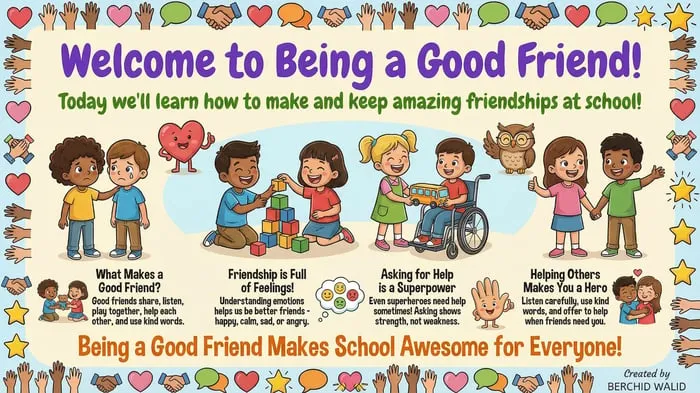
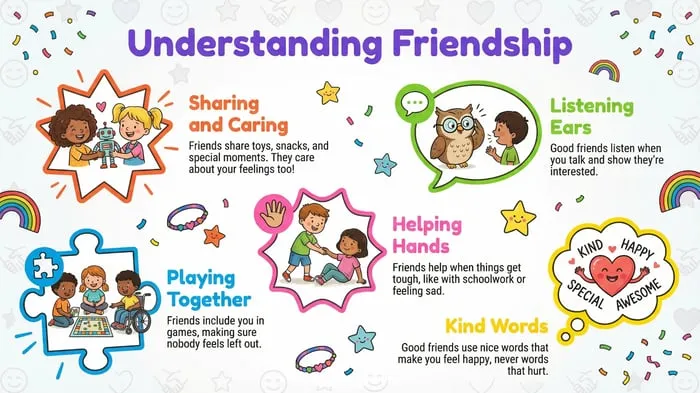
Being a Good Friend: Social Skills Story for Kids: an illustrated story that teaches sharing, kind words, reading feelings as a “feelings detective,” and asking for help. Use it as a classroom SEL lesson, a small group activity, or a conversation starter at home.
Sources and scope
- CASEL, the Collaborative for Academic, Social, and Emotional Learning, describes the core social and emotional competencies, including relationship skills.
- HealthyChildren.org from the American Academy of Pediatrics offers parent guidance on child development and social growth.
- CDC Learn the Signs. Act Early. shares developmental milestones, including social and emotional ones.
- Understood.org provides practical articles for families of children who learn and think differently, including social skills.
- The IRIS Center offers free modules on evidence-based classroom and behavior practices.
This guide covers everyday teaching of friendship skills for kids at school and home. It does not replace an evaluation or support from a counselor, psychologist, or the child’s education team.
Key takeaways
- Strong friendship skills for kids start small: name one observable skill and write it as an “I can” sentence.
- Teach with a short story, then model, role-play, and practice with one peer.
- Teach children to read faces, bodies, and voices, then choose a kind action.
- Coach with the lightest prompt and fade it on purpose.
- Track one skill weekly and celebrate practice over perfection.
Leave a Comment