
A toilet training social story can turn one of the most stressful parts of a young child’s day into a calm, predictable routine. Picture a kindergartner who stands frozen at the bathroom door, unsure what comes first, worried about the loud flush, and upset after a recent accident. Adults may repeat directions again and again, yet the child still looks lost.
This guide shows how to use a short, positive story to teach the full bathroom routine, step by step. After reading, you will know how to break the routine into small parts, write or choose a story that fits the child, introduce it at calm times, use it during real bathroom moments, and track progress kindly.
Examples are fictional. Adapt to the student’s goals and agreed supports. This is guidance, not a diagnosis.
At a glance
- Break the bathroom routine into small, visible steps before you teach it.
- Use a short story with clear pictures, calm words, and reassurance about accidents.
- Read the story first at calm times, not only when the child needs the toilet.
- Use the same words and pictures at home and at school.
- Track which steps the child does alone, and celebrate small wins.
1. Understand why the bathroom routine feels hard
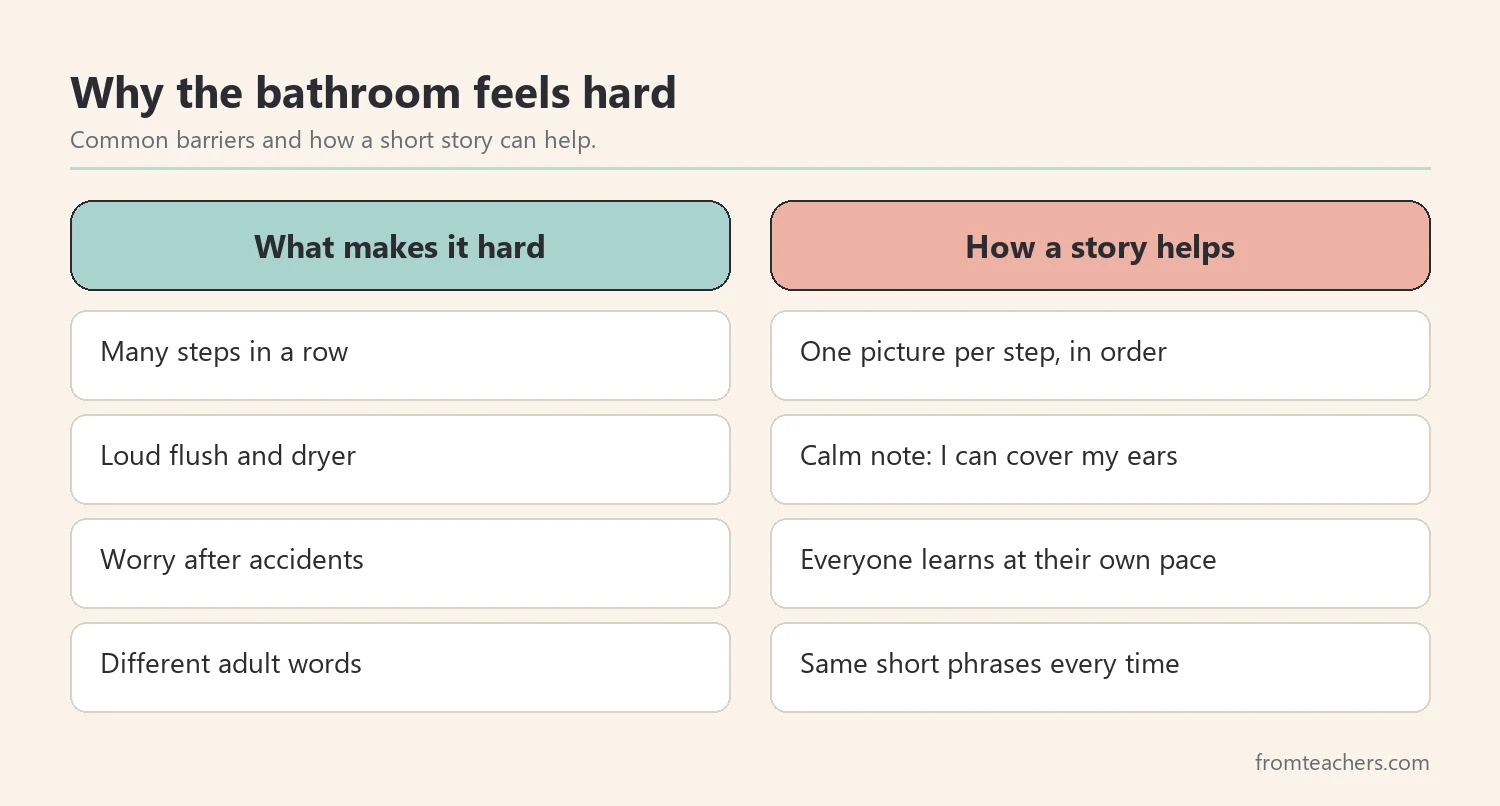
Using the bathroom independently involves many small steps happening in a row. A child must notice the body signal, stop playing, walk to the bathroom, manage clothing, sit, wait, wipe, flush, dress, and wash hands. For many young learners, especially autistic children or children with developmental delays, that chain is long and hard to remember.
In addition, the bathroom can be a sensory challenge. Flushing is loud, hand dryers roar, floors may feel cold, and soap can smell strong. Some children also feel anxious after accidents and start to avoid the bathroom altogether.
A social story helps because it shows the routine in a predictable order, using simple words and pictures. It explains what will happen and what the child can do. Moreover, it gives adults calm, consistent language to use, which matters as much as the story itself.
Worked example: Sami, age 5
Sami is in a kindergarten class with special education support. At home, he uses the toilet when an adult walks him through each step. At school, he often waits too long, then cries when the toilet flushes. His teacher and parent agree to try a short story and a picture sequence in both places.
2. Break the routine into small steps
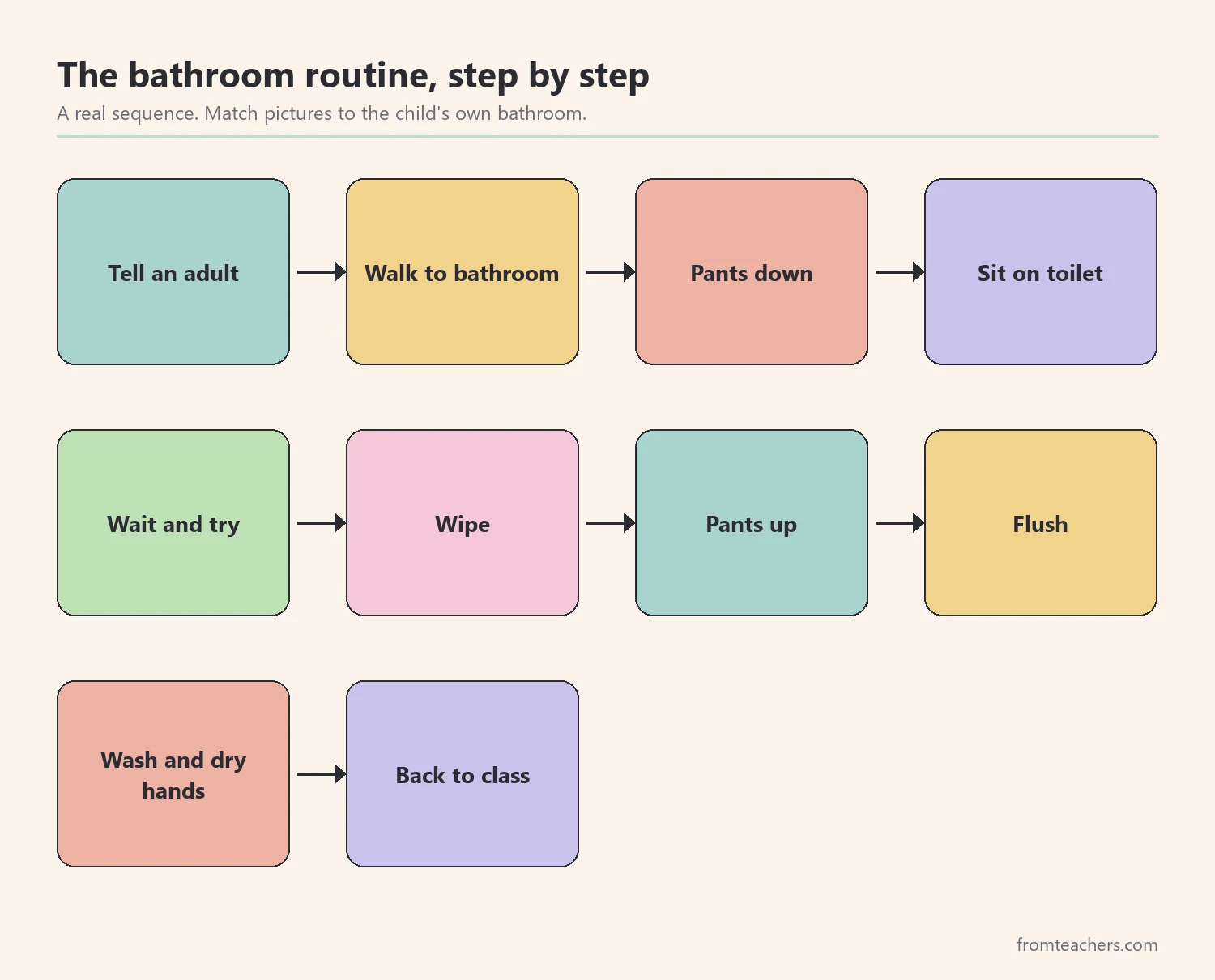
Before you write or choose a story, list the exact steps the child needs. This is called a task analysis. Keep each step short enough that the child can do it in one action, and match the steps to the real bathroom the child will use.
A typical sequence looks like this:
- Notice “I need to go” and tell an adult or show a card.
- Walk to the bathroom.
- Pull down pants.
- Sit on the toilet.
- Wait and try.
- Wipe.
- Pull up pants.
- Flush.
- Wash and dry hands.
- Go back to class or play.
Next, look at the child’s current skills. Which steps can they already do alone? Which ones need help? This tells you where to focus the story and where to add extra pictures or practice.
Furthermore, think about the setting. If the school bathroom has a different flush or sink than home, include both in the pictures, or make a short version for each place.
Worked example: Sami’s starting point
| Step | Home | School |
|---|---|---|
| Tell an adult | With reminder | Rarely |
| Clothing down and up | Alone | Alone |
| Sit and try | Alone | With adult nearby |
| Flush | With help | Avoids |
| Wash hands | With reminder | With reminder |
As a result, the team decides to focus on telling an adult and on flushing, the two steps that break down most at school.
Teaching the first step: telling an adult
The first step is often the hardest, because it depends on noticing a body signal and then communicating it. Some children cannot yet say “I need to go” in the moment. Therefore, give them a simple way to ask, such as a toilet picture card on a lanyard, a sign, or a spot on their communication board. Practice handing over the card during calm play, then respond quickly every time it is used. Quick responses teach the child that asking works.
3. Write or choose a toilet training social story
A helpful story is short, positive, and specific. It describes what happens, how the child might feel, and what they can do. It avoids blame and never focuses on accidents as something bad.
Use these guidelines when you write or choose a toilet training social story:
- First person and present tense: “When my body tells me I need to go, I go to the bathroom.”
- One step per page: each page shows one picture and one or two short sentences.
- Calm sensory notes: “The toilet makes a loud sound when it flushes. I can cover my ears.”
- Reassurance: “Everyone learns at their own pace. If I have an accident, that is okay. I can try again.”
- A success moment: “I did it. I feel proud.”
If you do not have time to write your own, a ready-made story can save hours. For example, the Using the Bathroom Independently social story walks children through the full bathroom routine, normalizes accidents, and celebrates progress with gentle “big kid” milestone language.
Finally, match the pictures to the child. Real photos of the actual bathroom work well for some children. Others prefer simple drawings. Either way, keep the background clear so the child sees the action, not the clutter.
4. Introduce the story at calm times
The first readings should happen when the child is relaxed, not when they urgently need the bathroom. A calm child can listen, look at the pictures, and ask questions. In contrast, a child who is already uncomfortable is unlikely to take in new information.
Try this routine for the first week:
- Read the story once a day at a quiet time, such as after snack or before bed.
- Point to each picture and let the child turn the pages.
- Pause at the flush page and practice the “cover my ears” action together.
- Praise listening, not performance: “You looked at every page.”
Moreover, invite the child to act out the routine with a toy or doll. Play makes the steps familiar and lowers worry. Some children enjoy “teaching” a stuffed animal how to wash hands.
After a few days, ask simple questions: “What comes after we sit?” or “What can we do when the flush is loud?” If the child answers or points, the story is starting to stick.
Also, keep the story where the child can reach it. Children often return to a book on their own when it is on a low shelf or in a reading basket. That extra, child-led reading adds practice without any demand.
Worked example: Sami’s first week
Sami’s parent reads the story at bedtime and his teacher reads it after morning circle. By day four, Sami points to the “cover my ears” picture before the teacher reaches that page. He also starts saying “my turn to flush” when playing with a toy bathroom set.
5. Use the toilet training social story in real bathroom moments
Once the child knows the story, bring it into the routine. A small picture strip on the bathroom wall, at the child’s eye level, can remind them of each step. Some families also keep a pocket-size version for outings.
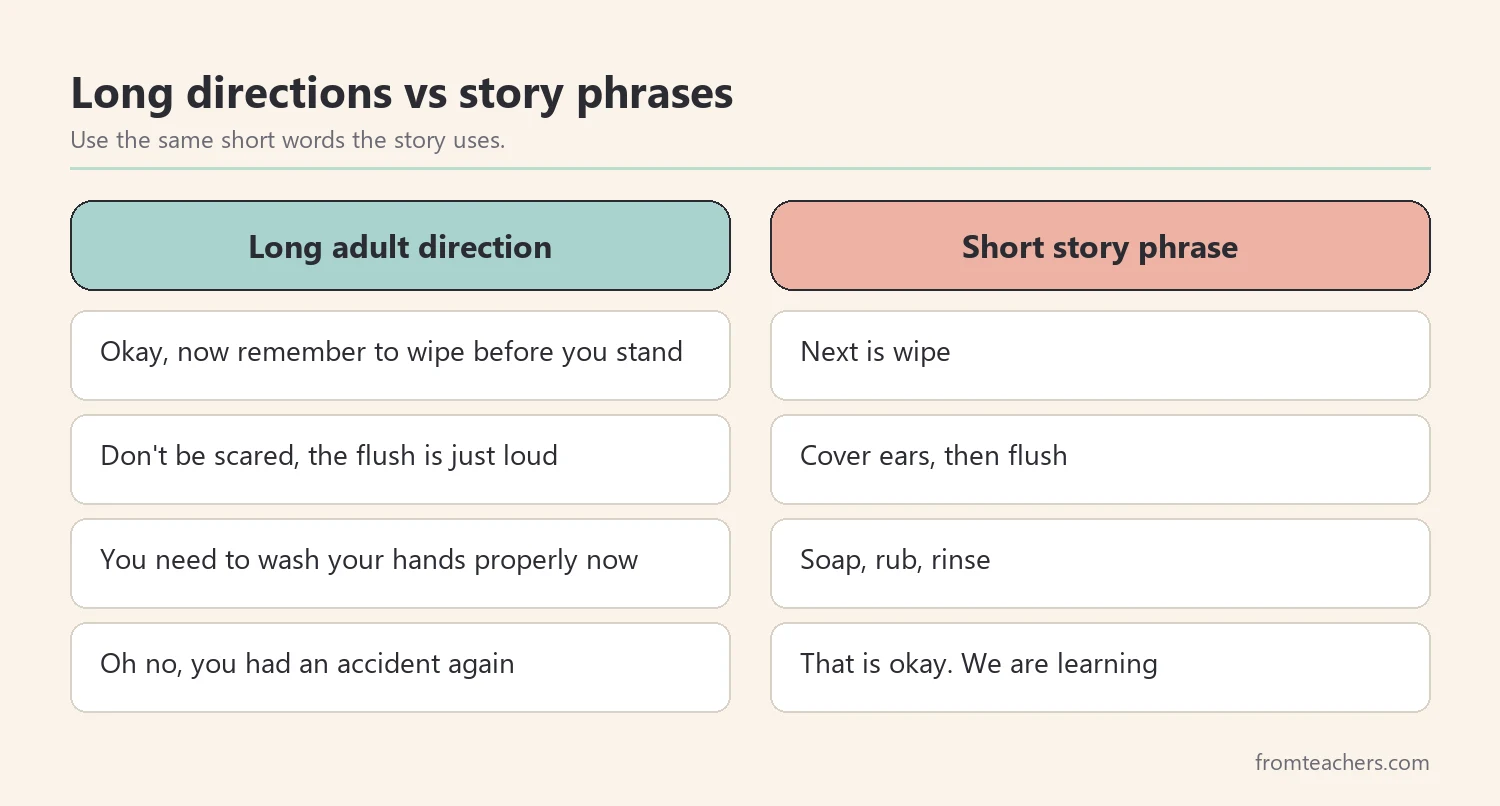
During bathroom visits, use short phrases from the toilet training social story rather than long directions. For instance, say “Next is wipe” instead of “Okay, now you need to remember to wipe before you stand up.” Fewer words are easier to process, and familiar phrases help the child connect the moment to the story.
In addition, plan for sensory needs. Offer ear defenders for the flush, warm water at the sink, or paper towels instead of a hand dryer, if possible. These small changes can remove reasons to avoid the bathroom.
If an accident happens, respond calmly. Use the story’s language: “That is okay. We are still learning. Let’s get clean clothes.” Avoid showing disappointment, because shame can increase avoidance.
6. Track progress and celebrate small wins
Tracking shows whether the routine is getting easier. Keep it simple: for each step, note whether the child did it alone, with a reminder, or with help. Check a few times a week, not every visit, so tracking does not become a burden.
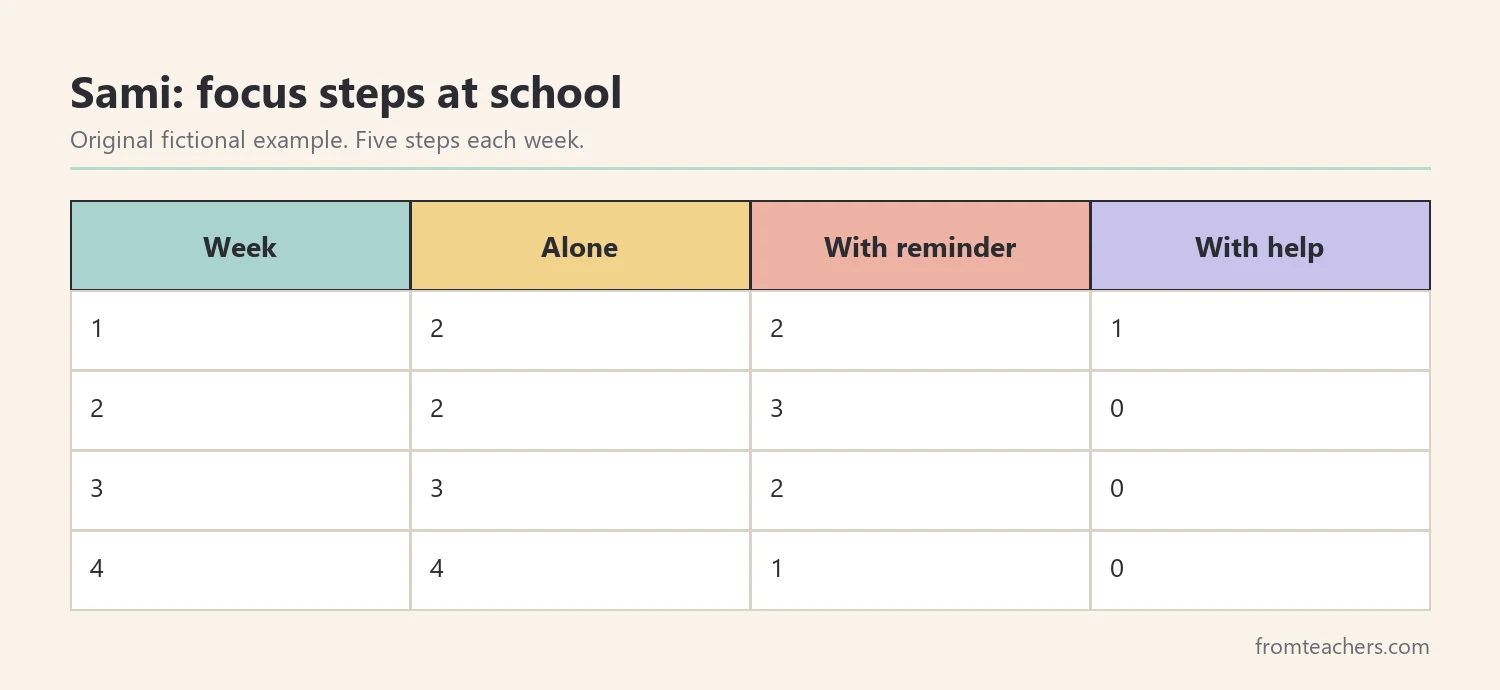
Worked example: Sami’s four-week record at school
The team tracked the five focus steps from Sami’s starting point. Each week, they counted how many of the five steps he did alone on most days.
| Week | Steps done alone (of 5) | Steps with reminder | Steps with help |
|---|---|---|---|
| 1 | 2 | 2 | 1 |
| 2 | 2 | 3 | 0 |
| 3 | 3 | 2 | 0 |
| 4 | 4 | 1 | 0 |
By week 4, Sami flushed with ear defenders on and told his aide “I need to go” most days. Only handwashing still needed a reminder.
Celebrate progress in ways the child enjoys. Some children like a sticker on the story page they mastered. Others prefer a high five or a special phrase, such as “Big kid moment.” Keep the celebration about effort and progress, not perfection.
As skills grow, fade prompts slowly. Move from a full reminder to a gesture, such as pointing at the picture strip, and then to waiting quietly for a few seconds. Fading too fast can bring back worry, while fading too slowly can make the child wait for an adult. Watch the child’s confidence and adjust one step at a time.
Finally, share the record with the family each week. When home and school see the same progress, they can adjust together, for example by fading the picture strip at school once the child no longer looks at it.
Common mistakes and how to avoid them
- Reading the story only during accidents. Fix: read it at calm times first, then use it during routines.
- Too many words per page. Fix: one picture and one or two short sentences per step.
- Different language at home and school. Fix: share the story and agree on the same key phrases.
- Ignoring sensory triggers. Fix: plan for the flush, the dryer, and water temperature.
- Focusing on accidents. Fix: respond calmly and celebrate each step the child does alone.
Questions teachers and parents ask about a toilet training social story
At what age can a child use a toilet training social story?
There is no single age. The story works best when the child can look at pictures and follow a short sequence. Talk with the child’s team or pediatrician if you have questions about readiness.
How long should the story be?
Short enough to read in a few minutes. Most bathroom stories have one page per step, plus a few pages for reassurance and celebration.
What if my child refuses to listen to the story?
Try reading it during a favorite activity, letting the child hold the book, or acting it out with toys. Some children prefer real photos of their own bathroom.
Should the story mention accidents?
Yes, gently. A line such as “Accidents happen while I learn” helps normalize them. Avoid describing accidents as bad or naughty.
When can we stop using the story?
Fade it when the child completes the routine with little or no prompting for several weeks. Keep it available in case new places or changes cause worry.
Related reading: Dignity in Daily Care: Respectful Approaches to Toileting and Personal Hygiene, Managing Sensory Overload in Autism and ADHD, and Parent-Teacher Collaboration in Special Education.
A companion resource for your toilet training social story:
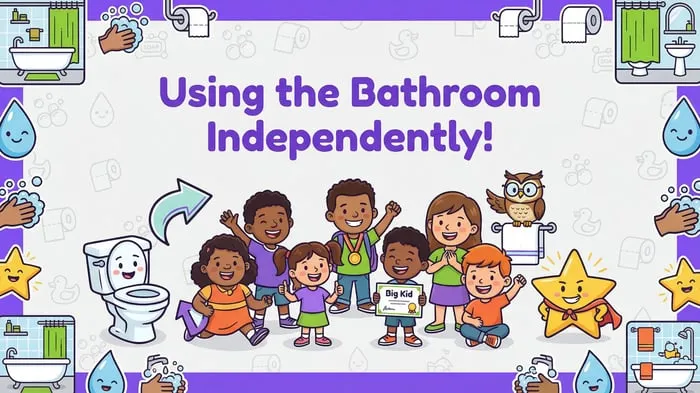
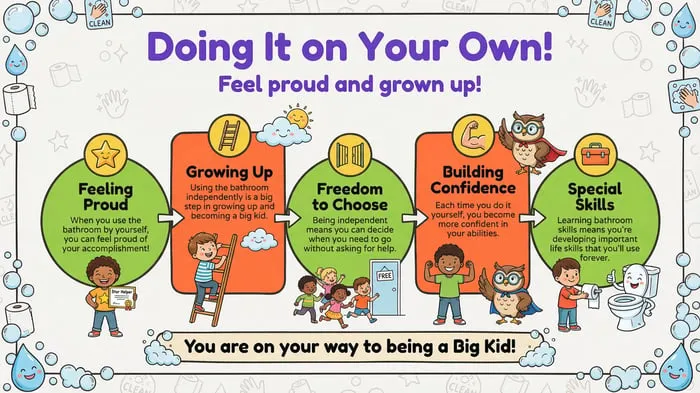
Using the Bathroom Independently: Social Story: a gentle, encouraging story that walks children through the full bathroom routine, reassures them that everyone learns at their own pace, normalizes accidents, and celebrates progress with a “big kid” milestone.
Sources and scope
- CDC Learn the Signs. Act Early.: information on child development milestones.
- IRIS Center, Vanderbilt University: modules on autism and evidence-based practices for young learners.
- HealthyChildren.org (American Academy of Pediatrics): parent information on toilet training.
- Individuals with Disabilities Education Act (IDEA): the federal framework for early childhood special education.
Scope: this guide covers using a social story and picture supports to teach the bathroom routine. It does not address medical causes of toileting difficulties, which should be discussed with a pediatrician.
Key takeaways
- Break the bathroom routine into small, visible steps.
- Use a short, positive story with calm sensory notes and reassurance.
- Read it at calm times first, then use its phrases in real moments.
- Keep home and school language the same.
- Track steps done alone and celebrate effort.





Leave a Comment