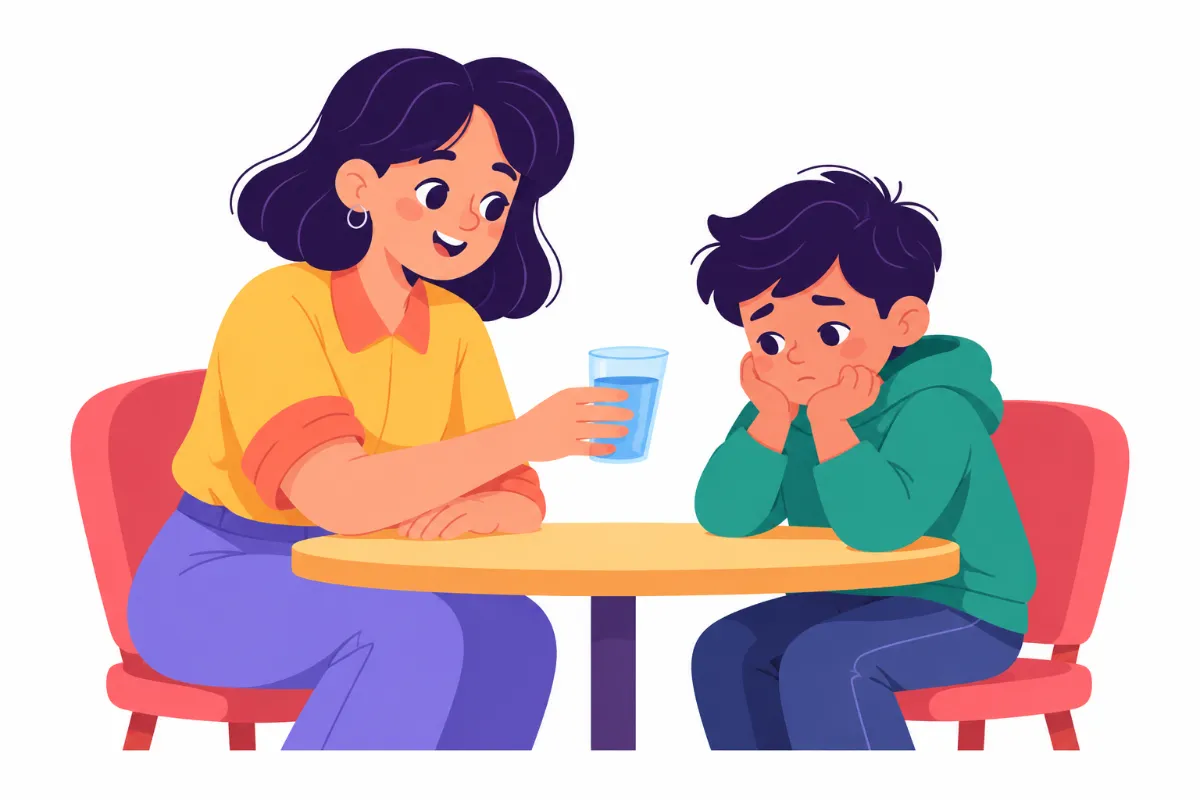

Understanding ACEs in special education helps teachers see the stress that can sit behind behavior that looks defiant, withdrawn, or out of proportion. Picture a sixth grader who slams his book shut and walks out when the teacher corrects him in front of the class. A quick reading says “disrespect.” A closer reading may reveal a student whose body reacts to public correction as a threat.
This guide offers a five-step approach. You will learn what adverse childhood experiences are, notice triggers and patterns, reinterpret behavior with care, respond calmly in the moment, and repair after hard moments. Each step follows the same fictional student, so you can see how the approach works in a real classroom.
Examples are fictional. Adapt to the student’s goals and agreed supports. This is guidance, not a diagnosis.
At a glance
- Adverse childhood experiences can shape how a student’s body reacts to stress at school.
- You do not need to know a student’s history to respond in a trauma-informed way.
- Look for patterns in what comes before hard moments.
- Calm the body first, then talk, then problem-solve.
- Repair openly when adults get it wrong; it rebuilds trust.
1. Understand ACEs in special education
First, a quick definition. Adverse childhood experiences, often called ACEs, are potentially traumatic events or conditions in childhood, such as abuse, neglect, violence in the home, or a parent’s serious struggles. The CDC describes ACEs as common and notes that they can affect health and well-being. ACEs in special education matter because students with disabilities may also face added stress, and the two can interact.
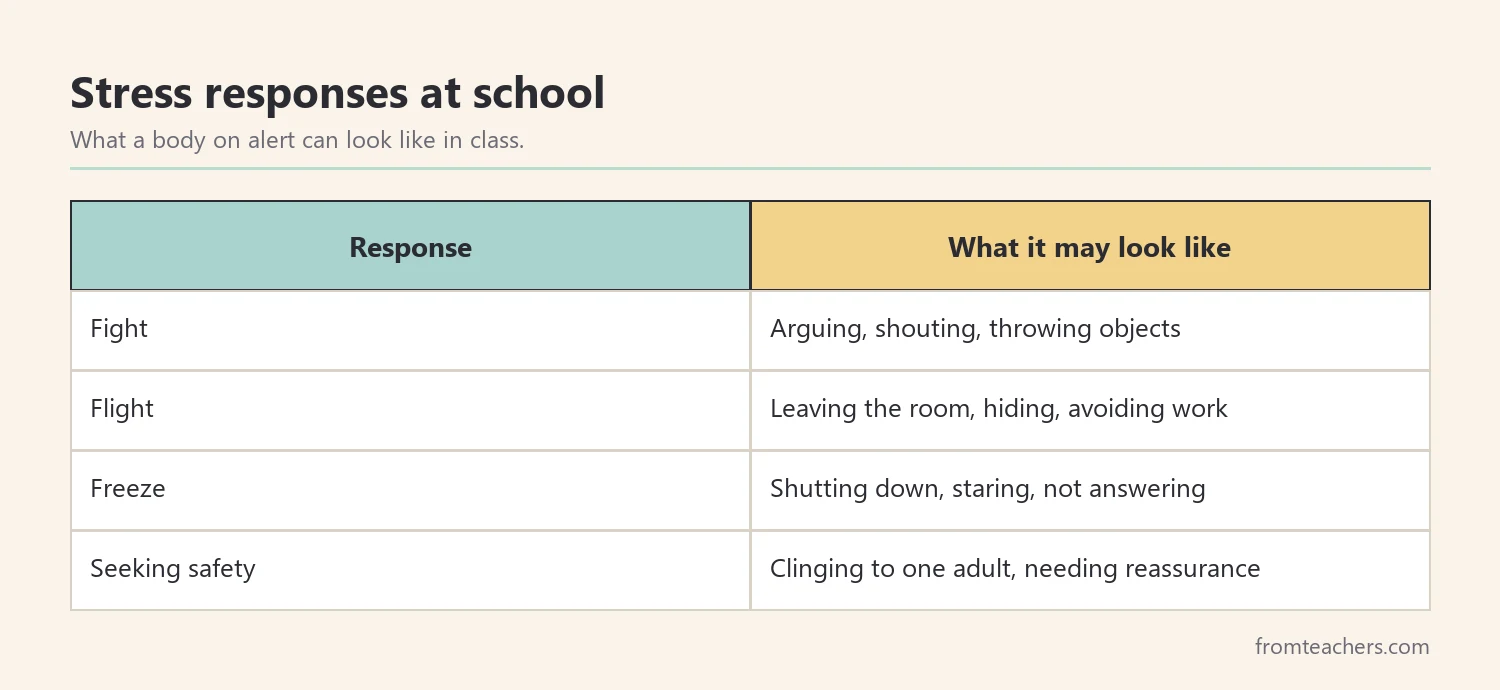
Next, think about stress responses. When the brain senses danger, the body may prepare to fight, flee, or freeze. For a student who has lived with ongoing stress, everyday school moments, such as a raised voice or a sudden change, can set off these responses even when there is no real danger.
| Stress response | What it may look like in class |
|---|---|
| Fight | Arguing, shouting, throwing objects |
| Flight | Leaving the room, hiding, avoiding work |
| Freeze | Shutting down, staring, not answering |
| Seeking safety | Clinging to one adult, needing constant reassurance |
Importantly, you do not need to know a student’s history. Trauma-informed practice means responding in ways that are safe for everyone, whether or not you know what a student has lived through. It is not the teacher’s role to ask students about past events or to diagnose trauma.
For example, meet Jalen, a fictional sixth grader with an IEP for a specific learning disability. He is funny, loves drawing, and is protective of younger students. However, he often leaves class after being corrected, and staff have started to see him as defiant.
Looking at ACEs in special education through a stress lens changes the question. Instead of asking “Why won’t he listen?”, the team asks “What might his body be reacting to?”
In addition, remember that many students with disabilities already work harder than peers to get through the day. Communication differences, sensory needs, or learning barriers can add stress on top of any past adversity. Thinking about ACEs in special education means seeing that whole load, not a single cause.
2. Notice triggers linked to ACEs in special education
Next, look for patterns before choosing a response. A short log of hard moments shows what tends to come right before them. These are often called triggers.
Keep the log brief. Record the time, the activity, what happened just before, what the student did, and what happened after. Avoid guessing at reasons in the log itself. Just write what you saw and heard.
Here is a two-week summary for Jalen.
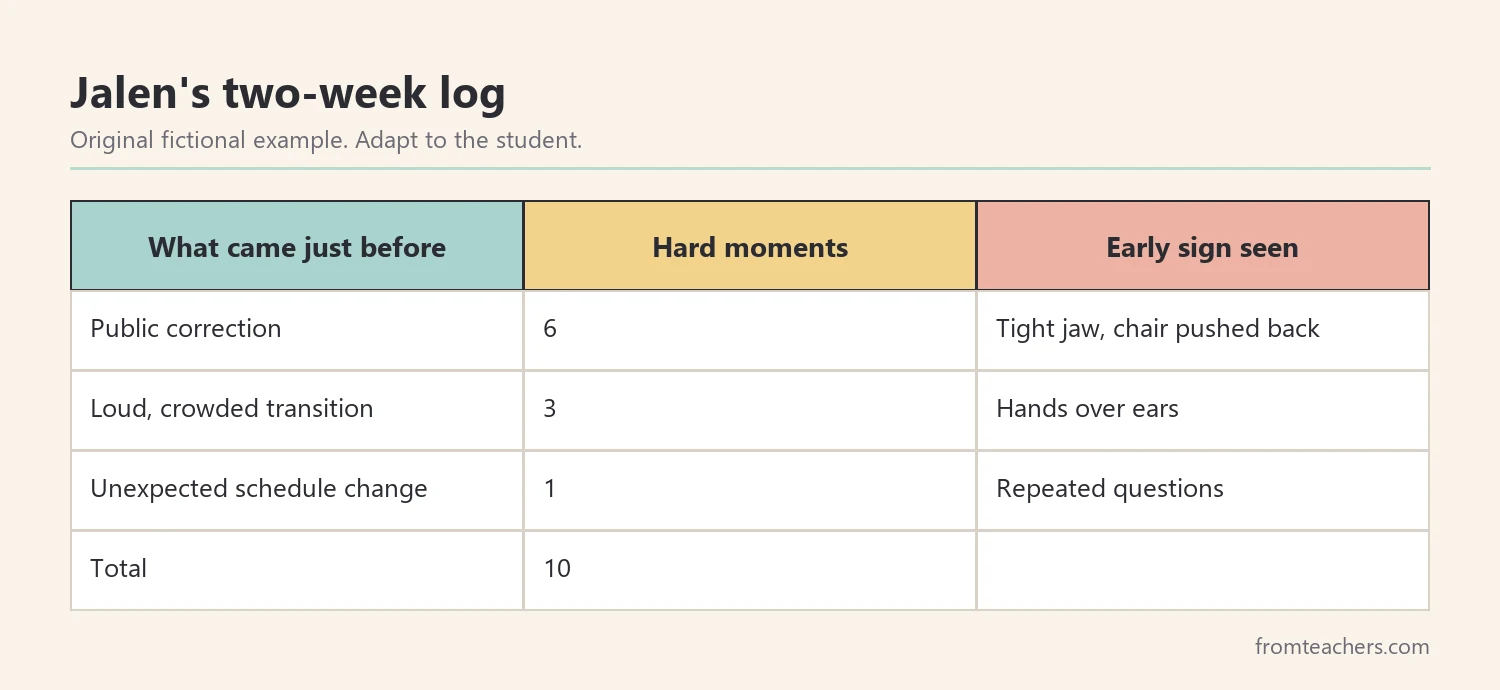
Over two weeks, Jalen had 10 hard moments. Six came right after public correction, 3 came during loud, crowded transitions, and 1 came after an unexpected schedule change. That adds up to 10, and the pattern is clear: public correction is the biggest trigger.
Also, notice early signs. Staff realize that before leaving, Jalen tightens his jaw and pushes his chair back slightly. These early signals give adults a few seconds to respond differently.
In addition, think about sensory triggers. Loud noises, crowded spaces, certain smells, or being touched unexpectedly can all be triggers. Work with the school counselor and the student’s team to understand what helps. Recognizing triggers is a key skill for working with ACEs in special education.
Then share the pattern with the team, not the speculation. A note such as “Six of ten hard moments followed public correction” is useful and respectful. It focuses on what adults can change in the classroom, which is the most practical part of responding to ACEs in special education.
3. Reinterpret behavior with care
When a student’s stress response looks like misbehavior, it is easy to respond with consequences that make things worse. Therefore, pause and reinterpret before reacting.
A helpful habit is to name two possible readings of the same behavior. One reading sees a choice. The other sees a stress response. You do not have to be certain which is true. Simply holding both readings slows you down and makes a calmer response more likely.
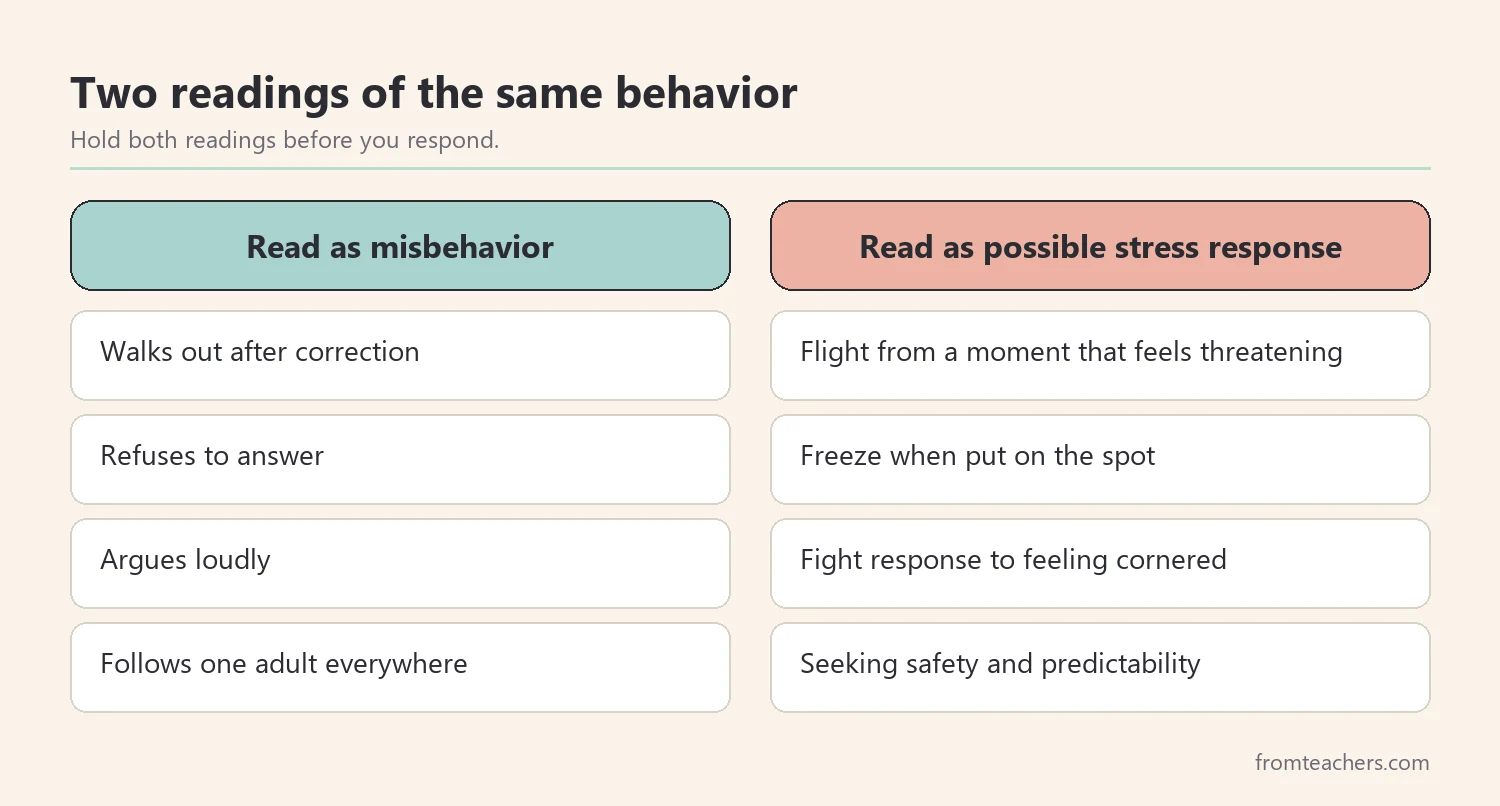
For Jalen, walking out after correction may look like disrespect. However, it may also be a flight response, his body leaving a moment that feels threatening. With that reading, the goal shifts from punishing the exit to making correction feel safer.
So his teacher changes how she corrects him. Instead of naming the problem in front of the class, she walks over, kneels to his level, and says quietly, “Let’s check this step together.” The expectation stays the same. The delivery changes.
If you want ready language for these moments, the trauma and ACEs in SPED resource includes struggle, tool, and gain tables for trauma triggers, misinterpreted behavior, and calm responses to outbursts.
Meanwhile, keep clear boundaries. Reinterpreting behavior does not mean removing expectations. It means teaching and supporting the expectation in a way the student can meet. Thoughtful work with ACEs in special education balances warmth with structure.
Similarly, look at the classroom environment. Predictable routines, a visible schedule, warnings before transitions, and a calm corner all reduce the number of surprises a student faces. These whole-class supports help every learner, and they are especially protective for students affected by ACEs in special education settings.
4. Respond calmly to ACEs in special education moments
In the moment, a student in a stress response cannot easily think through a lecture. The thinking part of the brain is less available when the body is on alert. So calm the body first, connect second, and solve problems last.
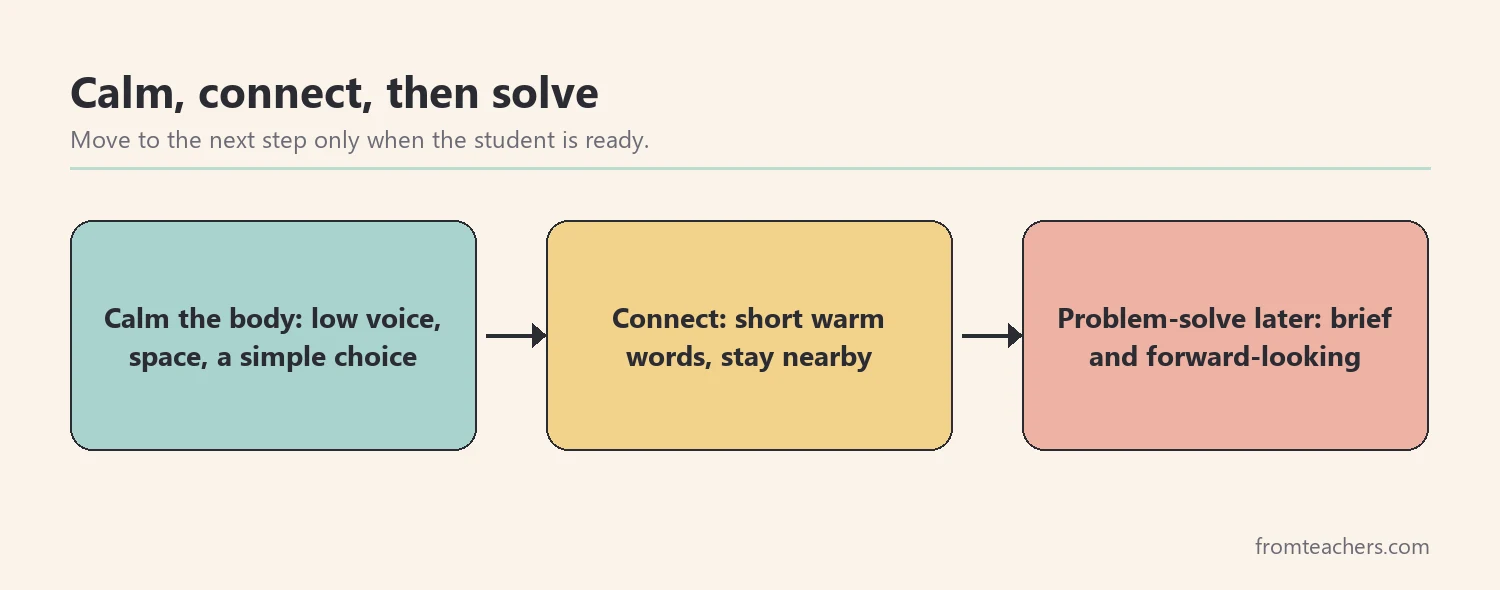
First, calm. Lower your voice, slow your speech, and give space. Offer a simple choice, such as water, a quiet seat, or a short walk with an adult. Avoid demanding eye contact, which can feel threatening to some students.
Second, connect. Use short, warm statements, such as “I’m here” or “You’re safe. We’ll figure it out.” Stay nearby without crowding. For a student who shuts down, sitting quietly alongside them can be more helpful than words.
Third, problem-solve later. When the student is calm, talk briefly about what happened and what could help next time. Keep it short and forward-looking.
| Moment | Calm response |
|---|---|
| Sudden shutdown | Sit nearby quietly, offer water, wait |
| Aggressive response | Lower voice, give space, keep others safe |
| Clinging behavior | Brief reassurance and a clear next step |
| Walking out | Follow your safety plan, avoid chasing |
For Jalen, the team agrees on a plan. When he tightens up, his teacher offers a “reset pass” to a nearby quiet table. He can take three minutes, then return. Because the pass is planned, leaving becomes a skill rather than an escape.
Also, follow your school’s safety procedures for any situation involving risk to the student or others. Calm responses to ACEs in special education always sit inside the school’s safety plan.
Afterward, take a moment to reset yourself as well. Adults have stress responses too. A slow breath, a sip of water, or a quick word with a colleague helps you return to the student calm and ready. Steady adults are at the heart of supporting ACEs in special education.
5. Repair and review your ACEs in special education plan
Adults make mistakes, especially under pressure. A raised voice, forced eye contact, or a public correction can all feel harmful to a student with a history of stress. What matters next is repair.
Repair means owning your part honestly and briefly. For example, “I raised my voice earlier. That wasn’t fair to you. I’m working on staying calm.” This kind of statement models responsibility and rebuilds trust quickly. It does not mean dropping expectations.
Then review progress. Here are Jalen’s hard moments over four weeks after the plan began.
| Week | Hard moments | Reset passes used | Change made |
|---|---|---|---|
| 1 | 4 | 2 | Private correction started |
| 2 | 3 | 3 | Reset pass taught |
| 3 | 2 | 4 | Quieter transition route |
| 4 | 1 | 4 | Repair talk after a hard day |
Across four weeks, Jalen had 10 hard moments, the same number as in the two weeks before the plan. That means the rate has been cut in half. At the same time, he used reset passes 13 times, which shows he is choosing a safer way to manage stress.
Next, share what works with the family and the IEP team. Families often know triggers and calming strategies the school does not. Consistent responses across settings strengthen the student’s sense of safety.
Finally, care for yourself and your colleagues. Supporting students with ACEs in special education can be emotionally demanding. Talk with your team, use school support resources, and remember that steady, calm adults are one of the most protective factors a student can have.
Over time, the goal is for the student to recognize early signs and choose a calming strategy on their own. Jalen’s growing use of the reset pass is a sign of that shift. Building this kind of self-awareness is one of the most hopeful outcomes of thoughtful work with ACEs in special education.
Common mistakes and how to avoid them
- Treating every outburst as defiance. This can escalate stress. Fix: consider a stress response before choosing a consequence.
- Asking students about their trauma. This is outside the teacher’s role. Fix: respond to behavior safely and refer concerns as school policy requires.
- Lecturing during a meltdown. The student cannot process it. Fix: calm first, talk later.
- Dropping all expectations. Students lose structure. Fix: keep expectations and change how you support them.
- Skipping repair after mistakes. Trust erodes. Fix: name your part briefly and move forward.
Questions teachers and parents ask about ACEs in special education
Do teachers need to know a student’s ACEs history?
No. Trauma-informed practices are designed to help every student, whether or not adults know their history. If you have concerns about a student’s safety, follow your school’s reporting procedures.
Are ACEs in special education a disability category?
No. ACEs are experiences, not a disability category under IDEA. However, students with disabilities can also have ACEs, and stress can affect learning and behavior.
What is the first thing to do when a student shuts down?
Lower demands and stay calmly nearby. Offer a simple choice, like water or a quiet seat. Talk about the moment only when the student is calm.
Does trauma-informed teaching mean no consequences?
No. It means expectations stay clear, and responses are designed to teach and restore safety rather than to shame. Many schools use restorative approaches alongside agreed consequences.
How can parents support this approach?
Share known triggers and calming strategies with the school team. Use similar calm language at home. Regular communication helps everyone respond consistently.
Related reading: Trauma-Informed Teaching Strategies, Moving Beyond Shame and Behavior Charts, and Meltdowns vs Tantrums: Understanding the Difference.
A companion resource for ACEs in special education:
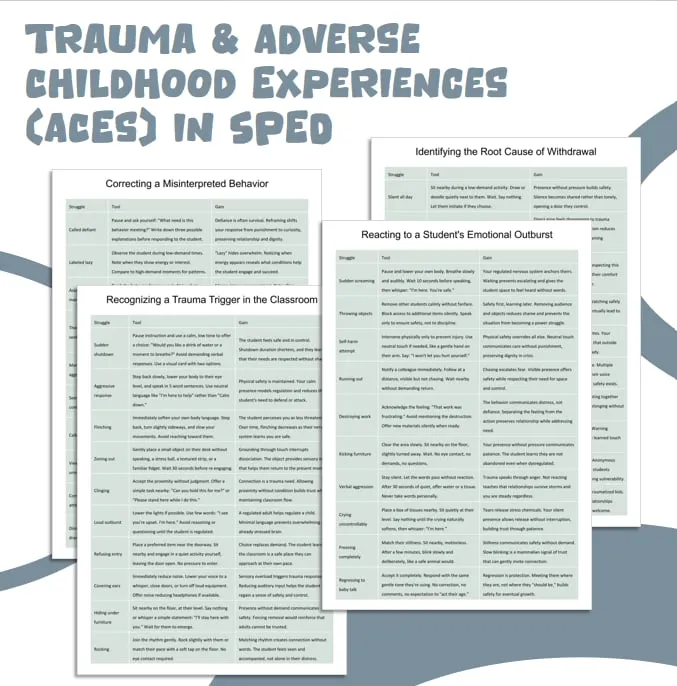
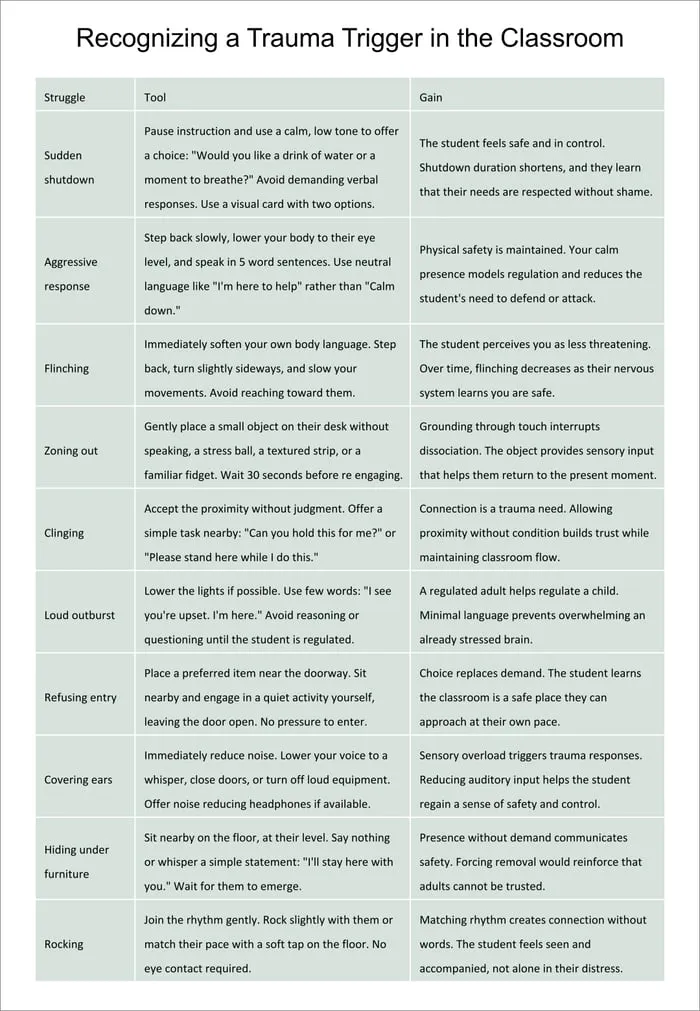
Trauma and Adverse Childhood Experiences (ACEs) in SPED: 12 pages of struggle, tool, and gain tables covering trauma triggers, misinterpreted behavior, calm body-based responses to shutdown, aggression, and clinging, and honest repair language after hard moments.
Sources and scope
- CDC information on adverse childhood experiences: background on ACEs and prevention.
- National Child Traumatic Stress Network: resources for educators on child trauma.
- IRIS Center, Vanderbilt University: free modules on behavior support and classroom environments.
- IDEA, U.S. Department of Education: the law behind IEPs and special education services.
This guide covers everyday classroom responses that support students who may have experienced adversity. It does not cover trauma assessment, therapy, or reporting procedures, which belong to qualified professionals and your school’s policies.
Key takeaways
- ACEs in special education can shape how students react to everyday stress.
- Respond in safe ways without needing to know a student’s history.
- Log patterns to find triggers.
- Calm first, connect second, problem-solve last.
- Repair openly after adult mistakes and review with the team.








Leave a Comment