

A good classroom behavior observation gives you facts instead of feelings. It shows what a student actually does, when it happens, and what seems to help.
Busy teachers rarely have time for long reports. However, a short, structured observation can be done in minutes. This guide explains how to observe objectively and turn notes into real support for IEPs, RTI, and daily teaching.
What Is a Classroom Behavior Observation?
It is a planned look at a student’s behavior during a specific activity or time. Instead of general impressions, you record what you see and hear.
Observations can focus on many skills:
- Handling feedback and correction
- Moving between activities
- Working in a group
- Following multi-step directions
- Staying on task during independent work
- Asking for help appropriately
As a result, you can compare one student’s skills across settings and over time.
Why Classroom Behavior Observation Matters
Memory is selective. For example, a single hard moment can color how we remember an entire week. Written observations protect against that bias.
Also, observations support legal and team decisions. IEP present levels, RTI tiers, and behavior plans all depend on solid data. In addition, clear notes help families understand exactly what is happening at school.
The IDEA website explains why evaluations must use a variety of data sources. Observation is one of the most important.
How to Plan a Classroom Behavior Observation
First, decide on your question. For instance, “How does Maya handle transitions from recess to math?” A clear question keeps the observation focused.
Next, choose the time and setting. Then pick a method that fits the question.
Common recording methods
- Checklist: mark whether specific skills were shown.
- Frequency count: tally how often a behavior happens.
- Duration: time how long a behavior lasts.
- Anecdotal notes: write short, factual descriptions.
Because each method answers a different question, you may combine two of them.
Writing Objective Notes
Objective notes describe actions, not opinions. For example, “Sam put his head down and did not start the worksheet for six minutes” is objective. “Sam was lazy” is not.
- Use observable verbs, such as said, walked, wrote, or pushed.
- Note what happened right before and right after.
- Record times and durations when possible.
- Include positive behaviors, not only problems.
Also, avoid guessing at feelings in the notes. However, you can add a separate line for your hypothesis.
Classroom Behavior Observation for IEP and RTI
For IEPs, observations help write present levels and measurable goals. For example, “Jalen joins group work for an average of four minutes” gives a clear baseline.
For RTI, a regular classroom behavior observation shows whether a tier 2 support is working. Therefore, observe before you start a support and again every few weeks.
In addition, observations support functional behavior assessments. They help teams spot triggers and the purpose a behavior serves.
Making Classroom Behavior Observation Quick and Easy
Observation does not have to take a whole period. So, use short windows of five to ten minutes. Several short observations often beat one long one.
- Keep printed forms on a clipboard by your desk.
- Use a simple code for frequent behaviors.
- Ask a paraprofessional or co-teacher to observe while you teach.
- Schedule observations on your weekly plan.
If you want ready forms, these classroom management observation checklist tables cover twenty skills, from handling feedback to activity transitions. As a result, you can grab the right form in seconds.
Using Classroom Behavior Observation Data Well
Data only helps when someone reviews it. Therefore, set a regular time, such as every other Friday, to look at your notes.
First, look for patterns by time, subject, and setting. Next, compare notes with other adults who work with the student. Then choose one change to try, such as a seating move or a visual timer.
Finally, observe again after two weeks. If the behavior improves, keep the support. If not, adjust and try again.
Avoiding Common Observation Pitfalls
Even experienced teachers fall into a few traps. First, some observe only when a student is struggling. As a result, the data looks worse than reality. Instead, include calm, successful moments as well.
Next, avoid observing a new behavior once and drawing big conclusions. One data point is a snapshot, not a pattern. Also, keep the same definitions over time. If “off task” means one thing on Monday and another on Friday, the data becomes confusing.
Finally, watch your own bias. If you expect a hard day, you may notice only problems. So, write exactly what you see, and let the numbers tell the story.
Sharing Observations With Families
Families appreciate specific, balanced information. So, share a strength first, then the skill you are working on. For example, say “Leo helped a classmate today. We are practicing waiting for a turn during group games.”
Also, invite parents to share what they see at home. Their observations can explain patterns you notice at school. Meanwhile, keep notes private and share them only with people involved in the student’s education.
Frequently Asked Questions
How long should a classroom behavior observation last?
Five to fifteen minutes is often enough. Repeat short observations across several days for reliable data.
Who can complete observations?
Teachers, specialists, paraprofessionals, and counselors can all observe. Using the same form keeps notes consistent.
Should students know they are being observed?
Usually, it is best to observe quietly during normal routines. That way, you see typical behavior rather than a performance.
Ready-to-use resource:
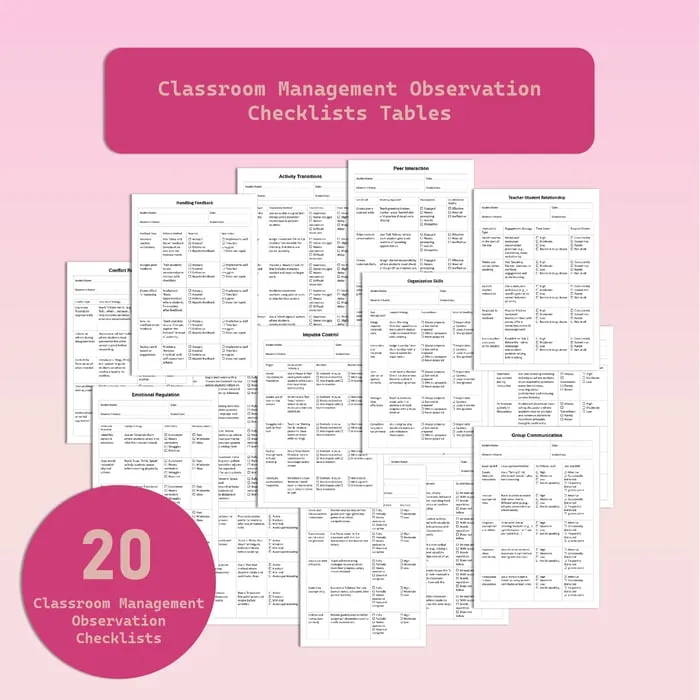
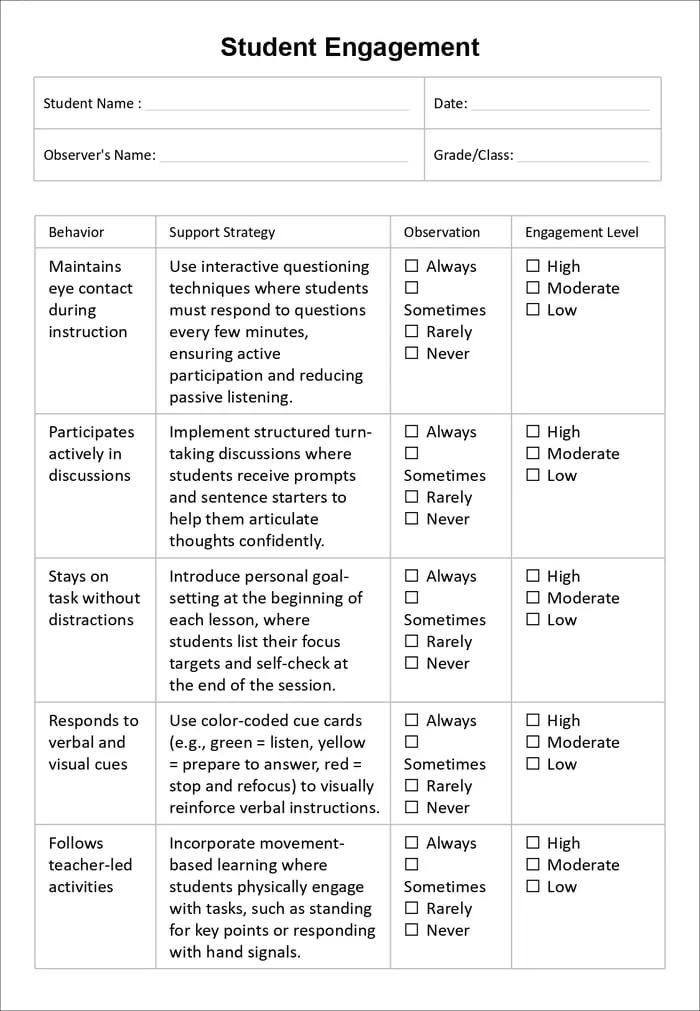
Classroom Management Observation Checklists Tables: twenty fillable observation tables for skills like handling feedback, transitions, and group work, ready for IEP or RTI notes.
Related reading: The Power of Data Tracking in Special Education and Positive Alternatives for Effective Classroom Management.
Also on FromTeachers:
Key Takeaways
- Start every observation with one clear question.
- Write objective notes using observable actions.
- Short, repeated observations give the most reliable data.
- Review data regularly and use it to adjust supports.
Leave a Comment