

An academic intervention checklist turns vague concerns like “she’s behind in reading” into clear, measurable skills. Instead of guessing, you can see exactly what a student can do and what they still need to learn. That clarity makes intervention groups, IEP goals, and parent conversations much easier.
This guide explains how to use checklists for progress monitoring in reading, phonics, math, and writing. It is designed for special educators, interventionists, classroom teachers, and parents.
What Is an Academic Intervention Checklist?
A checklist lists specific skills in a logical order. For example, a phonics checklist might move from letter sounds to blends to vowel teams. You mark each skill as mastered, emerging, or not yet observed.
Because the skills are small and concrete, gaps become obvious. As a result, you can plan instruction that targets the exact next step.
Why Checklists Help With Progress Monitoring
Progress monitoring is about tracking growth over time. However, many teachers create a new tracking sheet for every student. Checklists save that time and keep data consistent.
In addition, checklists support multi-tiered systems of support (MTSS or RTI). They help teams decide whether a student is responding to intervention. If you want a deeper look at data habits, read about data tracking in special education.
Using an Academic Intervention Checklist for Reading
Reading Fluency
Fluency includes accuracy, rate, and expression. For example, note whether a student reads smoothly, self-corrects, and pauses at punctuation.
Phonics and Decoding
Phonics checklists track sound-symbol skills. First, check letter sounds. Next, check short vowels, digraphs, and blends. Finally, check multi-syllable words.
Comprehension
Also, track skills like retelling, identifying main idea, and making inferences. These show whether the student understands what they read.
Math Skills to Track
Math checklists can follow a clear progression. For example:
- Number sense and counting
- Addition and subtraction facts
- Place value
- Multiplication and division
- Word problem strategies
Because math skills build on each other, a gap early in the list often explains struggles later. Therefore, start checking at the earliest skill you are unsure about.
Writing Skills to Track
Writing is complex, so break it down. Track handwriting or typing, sentence structure, capitalization and punctuation, and organization of ideas.
In addition, note whether the student can plan before writing. Many struggling writers have ideas but need help organizing them.
Turning Checklist Data Into Action
Data is only useful when it changes teaching. First, group students who share the same missing skill. Next, plan short, focused lessons for that skill. Then, recheck after two to four weeks.
Also, share checklists with families. A clear list shows parents exactly what their child is working on. A ready set like this bundle of reading, phonics, math, and writing intervention checklists keeps everything in one place. For federal guidance on special education services, the IDEA website is a reliable reference.
Setting Up Your Academic Intervention Checklist System
Organization keeps checklists useful. First, create one folder or binder section per student. Next, store checklists by subject so you can find them quickly during meetings.
In addition, choose a simple marking code and use it consistently. For example, a check for mastered, a dash for emerging, and a blank for not yet observed. Also, date every entry so you can see growth over time.
Tips for Quick Data Collection
- Check one or two skills per session rather than the whole list
- Keep checklists on a clipboard during small-group instruction
- Use short, informal probes like reading a word list aloud
- Note error patterns, not just right or wrong
Because data collection is built into teaching, it does not steal extra time.
Using an Academic Intervention Checklist in Team Meetings
Checklists make meetings more focused. Instead of general concerns, teams discuss specific skills. For example, “He has mastered short vowels but not blends” leads directly to a plan.
Also, bring checklists to IEP and MTSS meetings. As a result, an academic intervention checklist becomes shared evidence that guides decisions for the whole team.
Getting Started This Week
First, choose one subject and one small group to begin with. Next, check two or three skills during your regular lessons. Then, look for shared gaps and plan one targeted mini-lesson. In addition, set a reminder to recheck in two weeks. Finally, share one positive update with each family. Starting small makes the system sustainable, and you can expand to other subjects once the routine feels easy.
Frequently Asked Questions
How often should I update an intervention checklist?
Many teachers update every two to four weeks. More frequent checks help for students in intensive intervention.
Can checklists help write IEP goals?
Yes. The first unmastered skill often becomes a strong, measurable goal. Checklists also show progress toward that goal.
Are checklists a replacement for formal assessments?
No. They complement assessments by showing day-to-day skill growth that standardized tests may miss.
Ready-to-use resource:
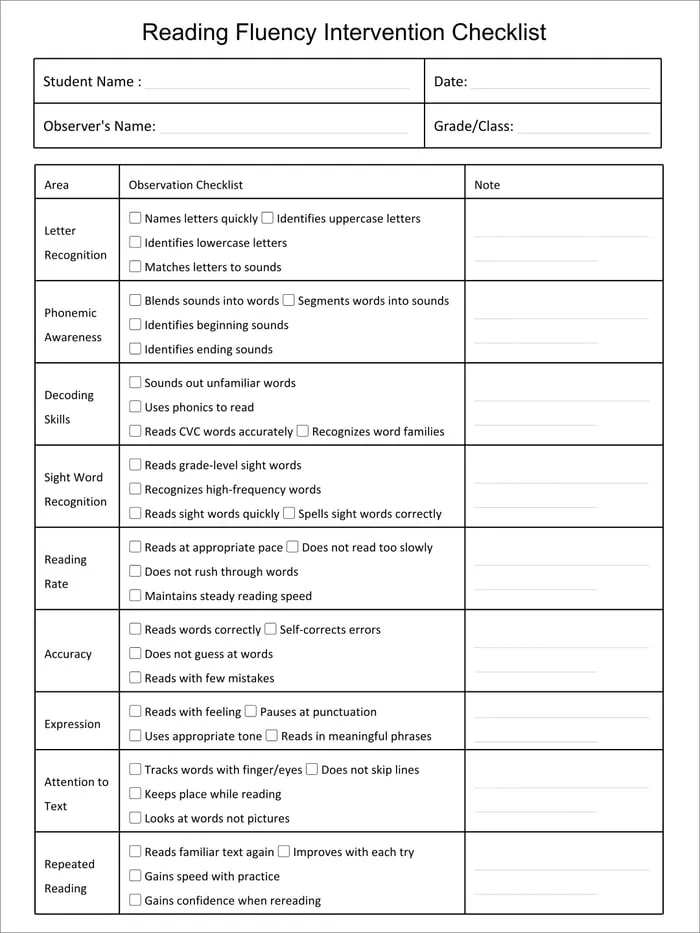
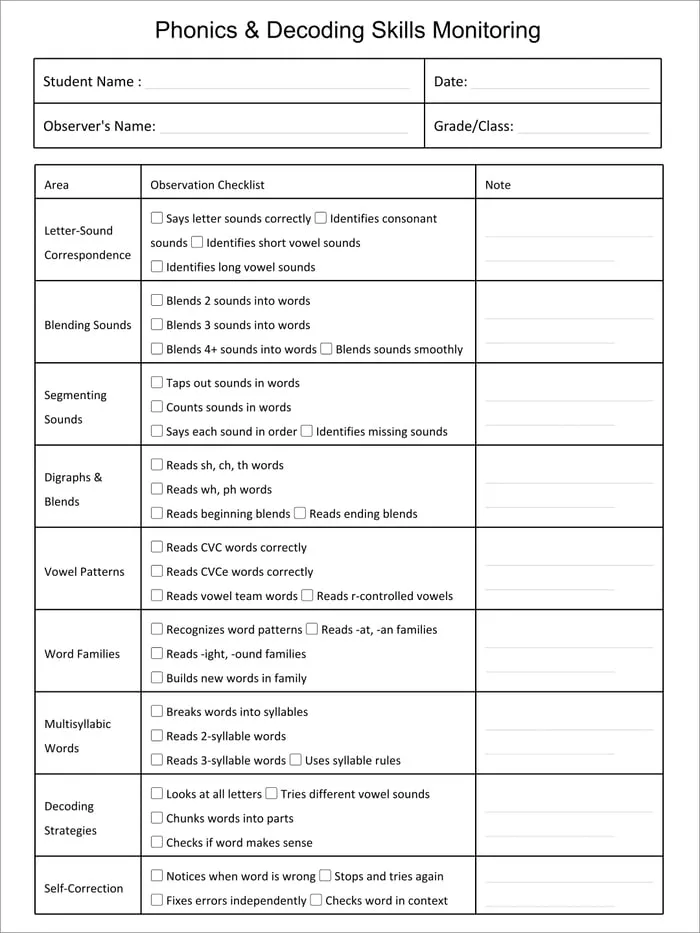
Academic Interventions Checklist Bundle: Observation checklists for reading fluency, phonics, math, and writing that pinpoint exactly what each student needs next.
Related reading: special education accommodation and modification tracker and dyslexia solutions in the classroom.
Also on FromTeachers:
Key Takeaways
- An academic intervention checklist breaks big subjects into small, trackable skills.
- Checklists make progress monitoring faster and more consistent.
- Group students by shared skill gaps and recheck regularly.
- Share checklist results with families to build partnership.










Leave a Comment