

Autism emotional regulation often looks calm right up until it does not. Picture a second grader who sits quietly through a loud assembly, then falls apart when asked to line up for lunch. To the adults, the reaction seems sudden. To the child, it was the end of a long build-up that nobody could see.
This guide walks you through five steps to support regulation in a way that respects how autistic students experience the world. By the end, you will know how to understand a student’s emotional profile, spot early signals, build a calm toolkit, teach with visual supports, and plan for meltdowns and recovery together with the family.
Examples are fictional. Adapt to the student’s goals and agreed supports. This is guidance, not a diagnosis.
At a glance
- Regulation is a skill built with support, not a test of willpower.
- A calm, regulated adult is the most important tool in the room.
- Early signals are easier to support than a full meltdown.
- Sensory tools, visual supports, and adapted breathing give students real choices.
- Meltdowns need safety and recovery, not consequences.
1. Understand the inner world behind autism emotional regulation
First, shift the question from “How do I stop this behavior?” to “What is this student experiencing?” A neurodiversity-affirming approach to autism emotional regulation treats autistic ways of feeling and reacting as valid. Our job is not to make a student look less autistic. Instead, it is to help the student feel safe and regulated enough to learn.
Many autistic students process sensory input differently. Sounds, lights, textures, and crowds may feel much stronger, or sometimes weaker, than they do for peers. In addition, some students find it hard to notice body signals such as hunger, tiredness, or a racing heart. This inner sense is often called interoception. When those signals are hard to read, emotions can seem to arrive all at once. Understanding this helps adults see autism emotional regulation as a matter of input and awareness, not effort.
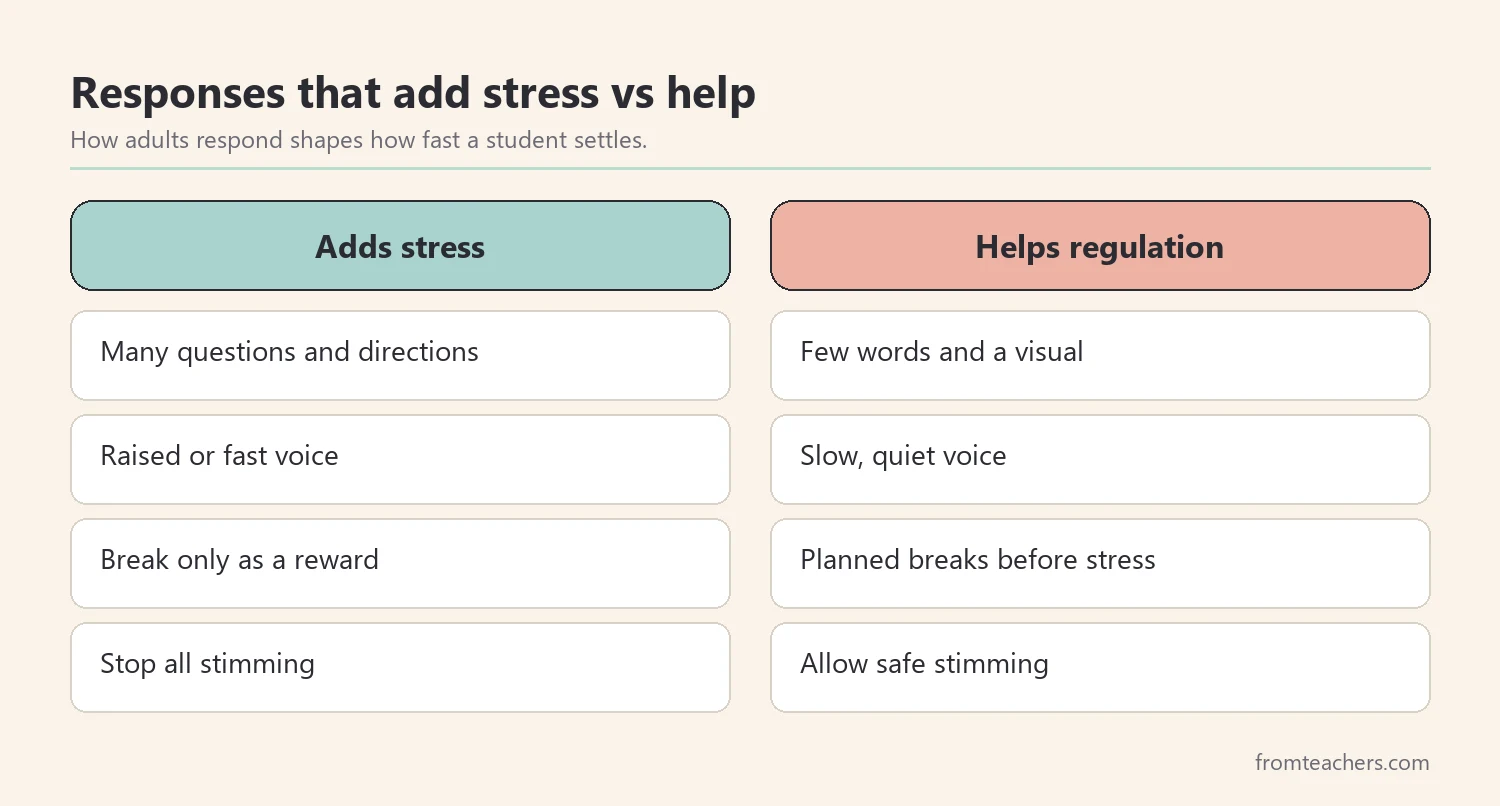
Next, remember the role of the regulated adult. Students borrow calm from the people around them. If an adult raises their voice or adds more words during a hard moment, stress usually goes up. By contrast, a slow voice, few words, and a calm body help a student settle. This shared calming is often called co-regulation, and in autism emotional regulation it comes before self-regulation.
In our fictional example, Sami is in grade 2. He loves trains and drawing maps. He often holds it together through the morning, then struggles after lunch and during transitions. His team started by writing a short profile together with his family:
| Area | What helps Sami | What is hard |
|---|---|---|
| Sound | Headphones, quiet corner | Assemblies, loud lunchroom |
| Movement | Carrying books, wall pushes | Long carpet time |
| Transitions | Visual timer, first-then card | Sudden changes |
| Communication | Picture choices, few words | Many questions when upset |
Finally, keep the profile short and update it. Autism emotional regulation looks different for every child, and needs can change across the year. A one-page profile helps every adult respond the same way.
2. Notice early signals before stress builds
Most big reactions have early signs, and catching them is one of the most useful parts of autism emotional regulation. However, these signs can be quiet and easy to miss. A student may start rocking, humming, covering ears, pacing, talking faster, or going very still. Each child has a different set of signals.
So, watch and write down what you see before hard moments. Over a week or two, patterns appear. For Sami, the team noticed that he started tapping the table and asking “What’s next?” again and again before most difficult transitions.
Next, give the student a simple way to show how they feel. A feelings thermometer is a common tool. It uses a scale from calm at the bottom to very upset at the top, with the student’s own signals written next to each level. Keep the words simple and add pictures if they help.
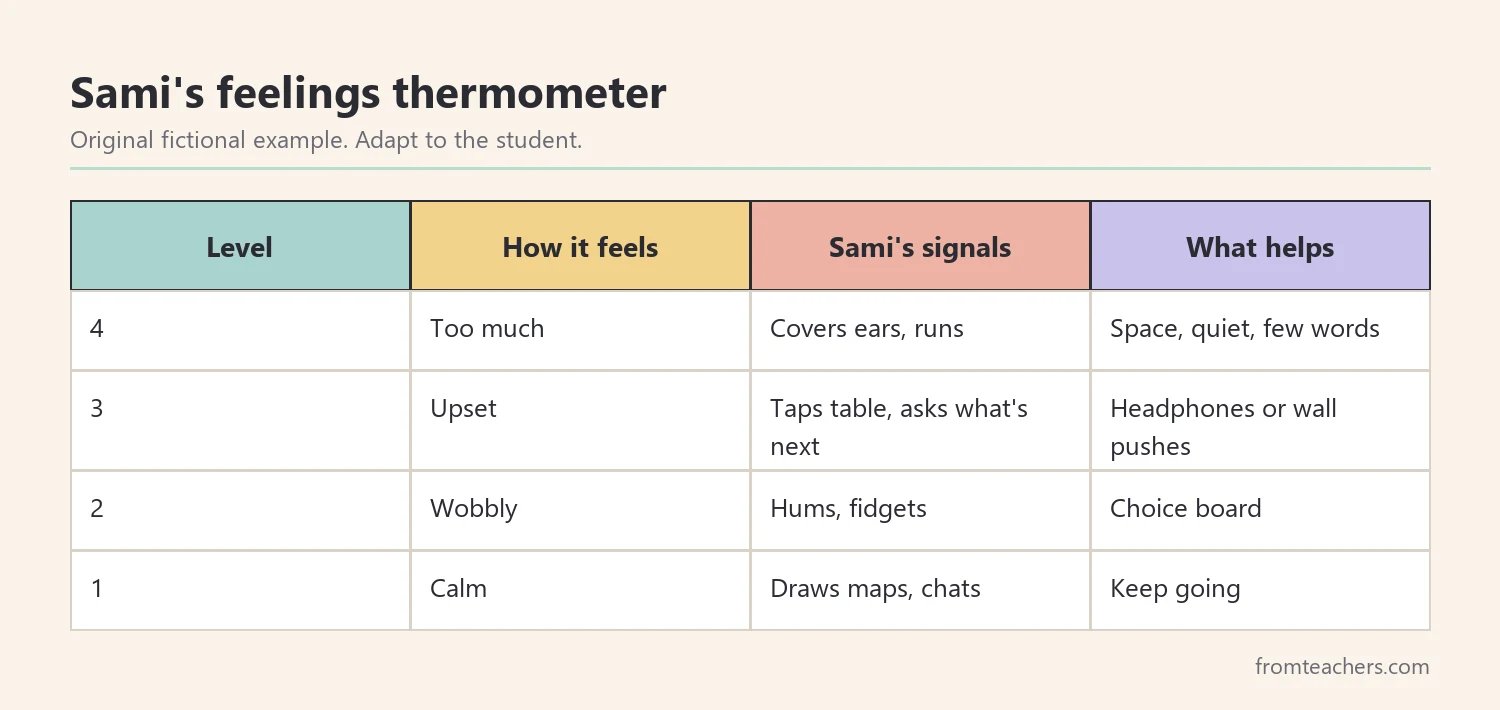
Then, practice using the thermometer when the student is calm. Point to a level during a happy moment, a tired moment, and a mildly frustrating one. A tool learned in calm times is much easier to use in hard times. Importantly, never demand a rating during a meltdown.
Also, teach interoception gently. Ask questions like, “Where do you feel it in your body?” or “Is your heart fast or slow right now?” Over time, these small check-ins help a student connect body signals with feelings. That connection sits at the core of autism emotional regulation.
3. Build a calm toolkit for autism emotional regulation
Once you know the signals, offer tools that match them. A calm toolkit turns autism emotional regulation from something adults manage into something the student can start. Good tools give the student real choices, rather than one fixed response chosen by an adult.
Start with sensory regulation. Many autistic students find heavy work calming. These are activities that push, pull, or carry weight, such as carrying a stack of books, pushing against a wall, or moving chairs. Other students prefer quiet: headphones, a dim corner, or a soft object to hold. An occupational therapist can help plan a sensory diet, which is a set of sensory activities spread across the day.
Next, put the options on a choice board. A choice board shows four to six pictures of calming activities. The student points to one, uses it, and then returns. Because the choices are visible, the student does not have to find words while upset.
For Sami, the team built a small calm toolkit card with four choices: headphones, wall pushes, a map to draw, and a short walk to deliver a note. His teacher placed the card on his desk and practiced each option twice a day for a week. A ready-made set of tools, including a regulation choice board and a calm toolkit card, is part of the Emotional Regulation Activities for Autism guidebook.
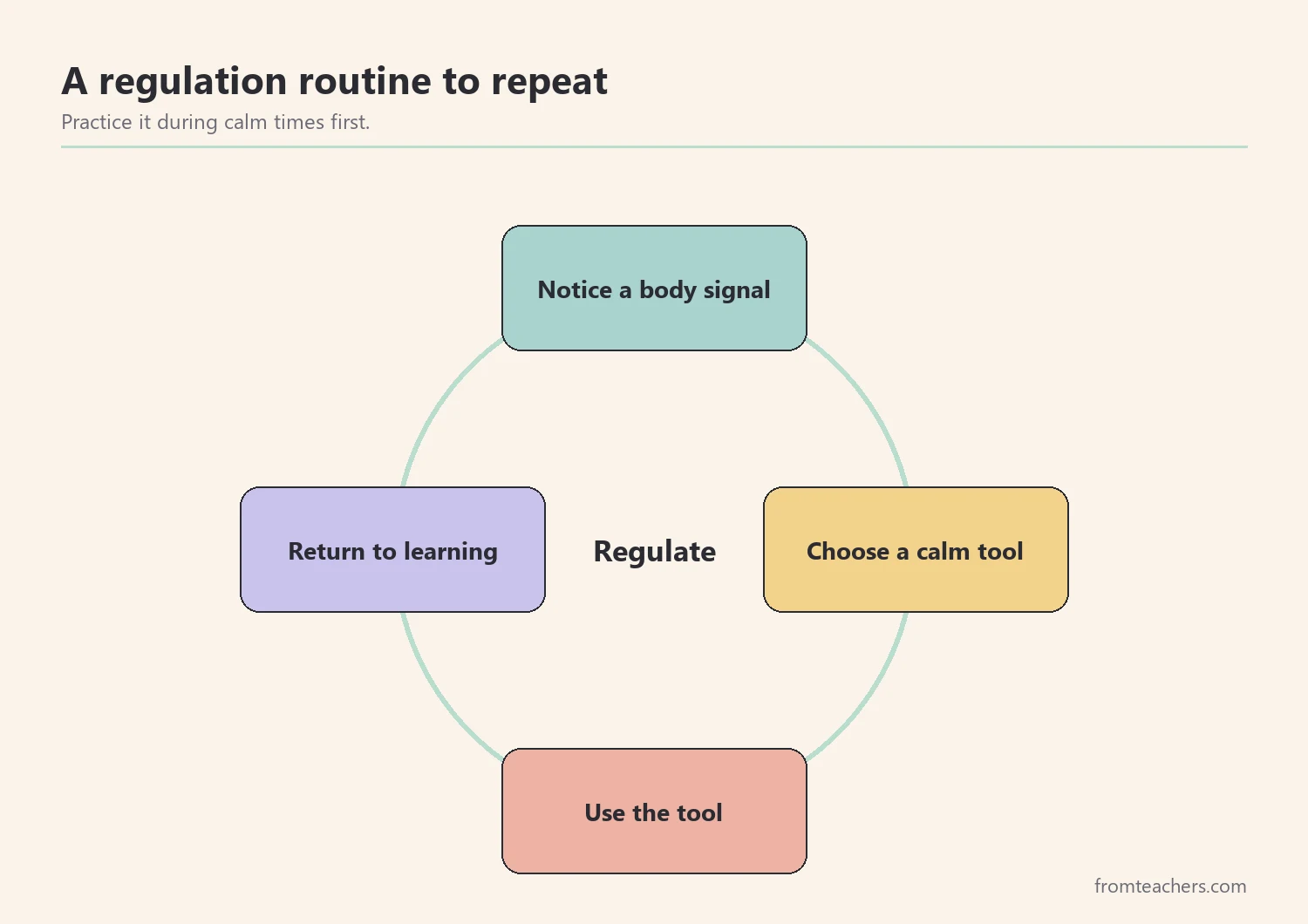
Finally, plan regulation breaks before stress builds. If transitions are hard, offer heavy work right before a transition, not only after things go wrong. Planned breaks are a support, not a reward to be earned.
4. Teach with visual supports and adapted calming strategies
Visual supports reduce the need to process spoken language when stress is high, which makes them a natural fit for autism emotional regulation. Many autistic students understand pictures and written words more easily than fast speech. Therefore, make important information visible.
Use emotion scales, first-then cards, visual schedules, and short social stories. A social story is a brief, personal text that explains a situation and what usually happens. For example, Sami’s team wrote a five-sentence story about fire drills, with a photo of the hallway and the meeting spot. He read it with his teacher before each drill.
Next, adapt calming strategies to the student. Typical mindfulness lessons may not work for every autistic learner. Some students dislike closing their eyes or sitting still. Instead, try breathing with a visual, such as tracing a square with a finger while breathing in and out. Others prefer counting objects or pressing palms together.
Also, keep practice short and frequent. Two minutes of practice twice a day works better than a long weekly lesson. Practice when the student is calm, so the strategy feels familiar when it matters.
Then, respect the student’s preferences. Stimming, such as rocking or hand movements, often helps autistic students regulate. Unless it causes harm, it does not need to be stopped. Supporting autism emotional regulation means adding tools, not removing the ones that already work for the child.
5. Plan for meltdowns, recovery, and family partnership
Even with strong autism emotional regulation supports, meltdowns can still happen. A meltdown is a response to overwhelm, not a choice. So, the goal in the moment is safety and calm, not teaching or consequences.
During a meltdown, reduce input. Lower your voice, use very few words, and give space. Move other students if needed, rather than moving the child. Then, wait. After the peak, the student needs time to recover, which can take longer than adults expect.
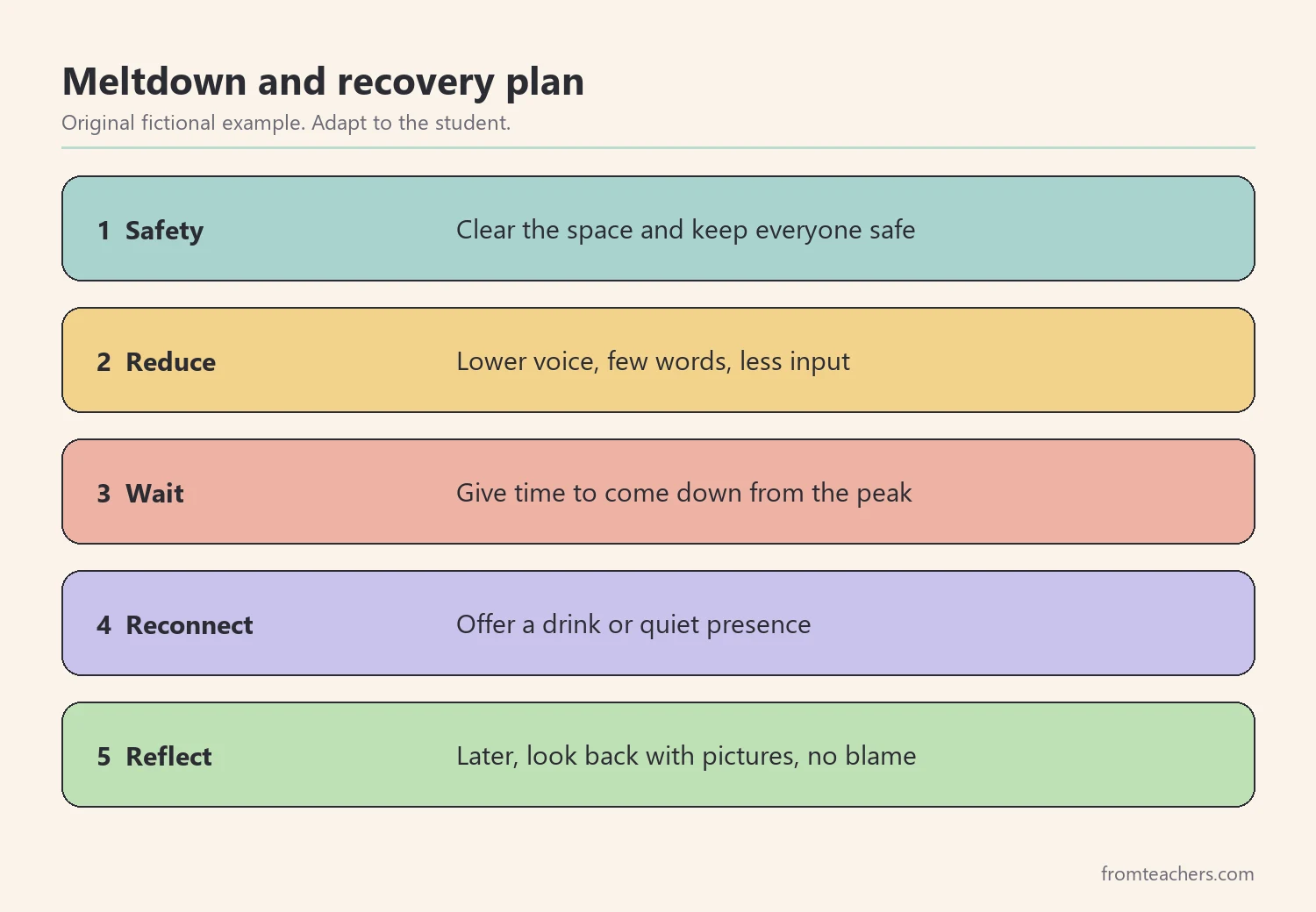
Next, reconnect. Once the student is calm, offer a drink, a quiet activity, or simply your presence. Later, if the student is ready, look back together at what happened, using pictures or a simple drawing. Keep it about learning, not blame.
Also, partner closely with the family. Many autistic students mask stress at school, then release it at home. This is sometimes called after-school restraint collapse. Families can share what they see, and a calm space at home, such as a home regulation station, can help after a hard day. Share the same feelings thermometer and choice board so tools match at school and home. When both settings use the same words and pictures, autism emotional regulation becomes easier to practice every day.
Finally, track progress gently. Sami’s team counted his calm breaks each week and noted whether he started them himself or with a prompt:
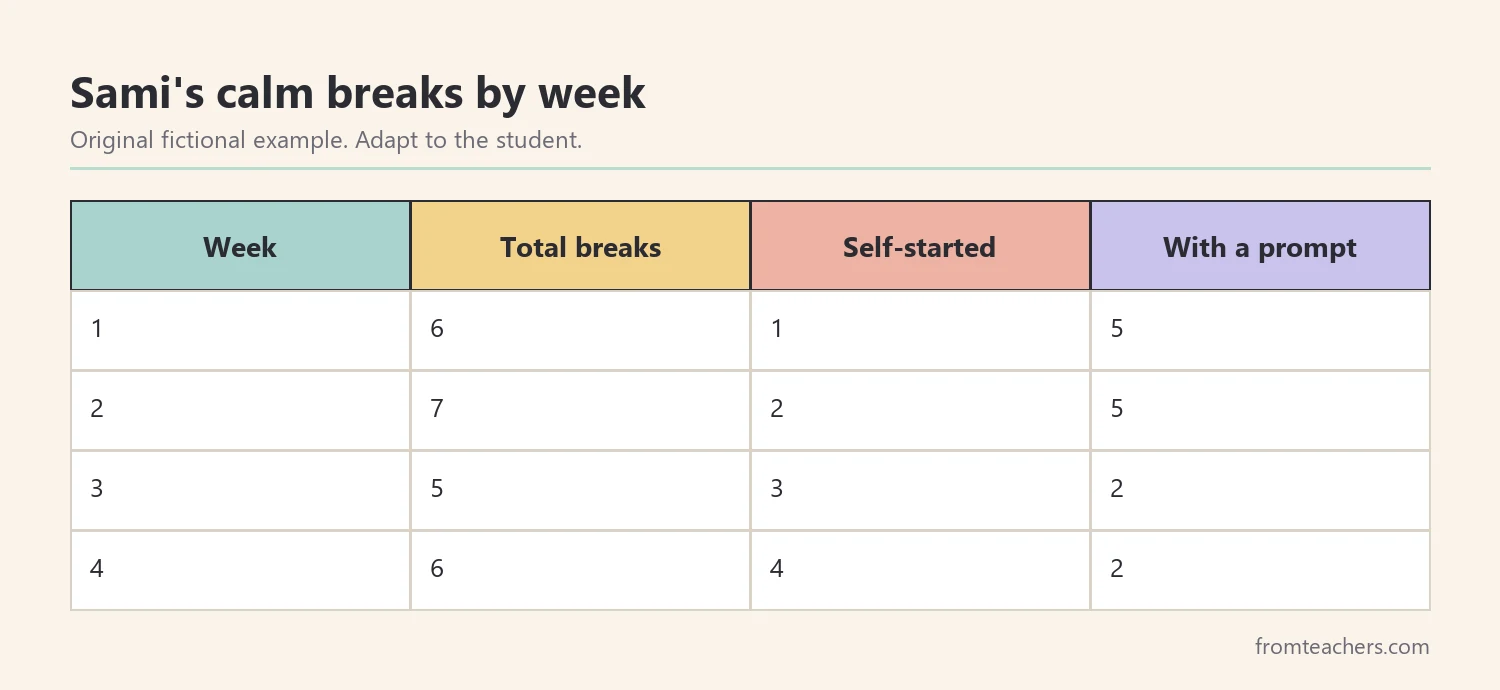
In week 1, Sami took 6 calm breaks, and he started only 1 of them himself. By week 4, he took 6 breaks and started 4 himself. The total stayed about the same, which is fine. The real change was that Sami was noticing his own signals and asking for help earlier. That shift is what progress in autism emotional regulation often looks like.
Common mistakes and how to avoid them
- Talking too much in hard moments. More words add more load. Use a calm voice, few words, and visuals.
- Teaching tools only during a crisis. Autism emotional regulation skills are hard to use when upset. Practice every tool when the student is calm.
- Treating calm breaks as rewards. Breaks are supports. Offer them before stress builds, not only after good behavior.
- Stopping harmless stimming. Stimming often helps regulation. Focus only on behavior that causes harm.
- Using consequences for meltdowns. A meltdown is overwhelm, not defiance. Focus on safety, recovery, and changing what led to it.
- Leaving the family out. Autism emotional regulation does not stop at the school door. Stress can show up at home after school. Share tools and observations with the family regularly.
Questions teachers and parents ask about autism emotional regulation
What is the difference between a meltdown and a tantrum?
A tantrum is usually goal-directed and can stop when the goal is met. A meltdown is a response to overwhelm, and the student often cannot stop it at will. Meltdowns need safety, space, and calm, not negotiation.
How long does it take to see progress in autism emotional regulation?
It varies widely. Some students start using a tool within weeks, while others need months of calm practice. Track small signs, such as noticing signals earlier or asking for a break, rather than only counting meltdowns.
Should a student be allowed to leave the room to calm down?
Often, yes, if it is planned and safe. Agree in advance on where the student goes, who checks in, and how they return. A planned calm space is very different from being sent out of the room.
What can parents do at home?
Use the same tools as school, such as the feelings thermometer and choice board. Offer a quiet, low-demand time after school. Also, share what you see with the teacher so both settings can adjust.
Who else should be involved in supporting autism emotional regulation?
Depending on the student, an occupational therapist, a speech-language pathologist, a school psychologist, or a counselor may help. Most importantly, include the student. Ask what helps and what feels hard, using pictures if needed.
Related reading: Meltdowns vs Tantrums: A Guide to Understanding and Responding, Managing Sensory Overload: Practical Strategies for Autism and ADHD, and Understanding Autistic Burnout and School Exhaustion.
A companion resource for autism emotional regulation:
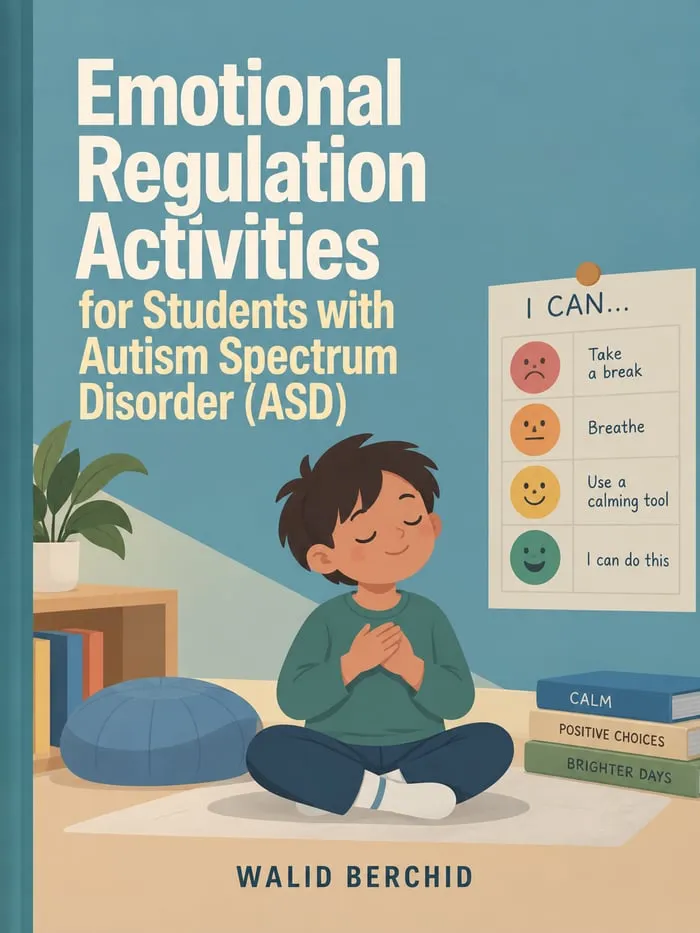
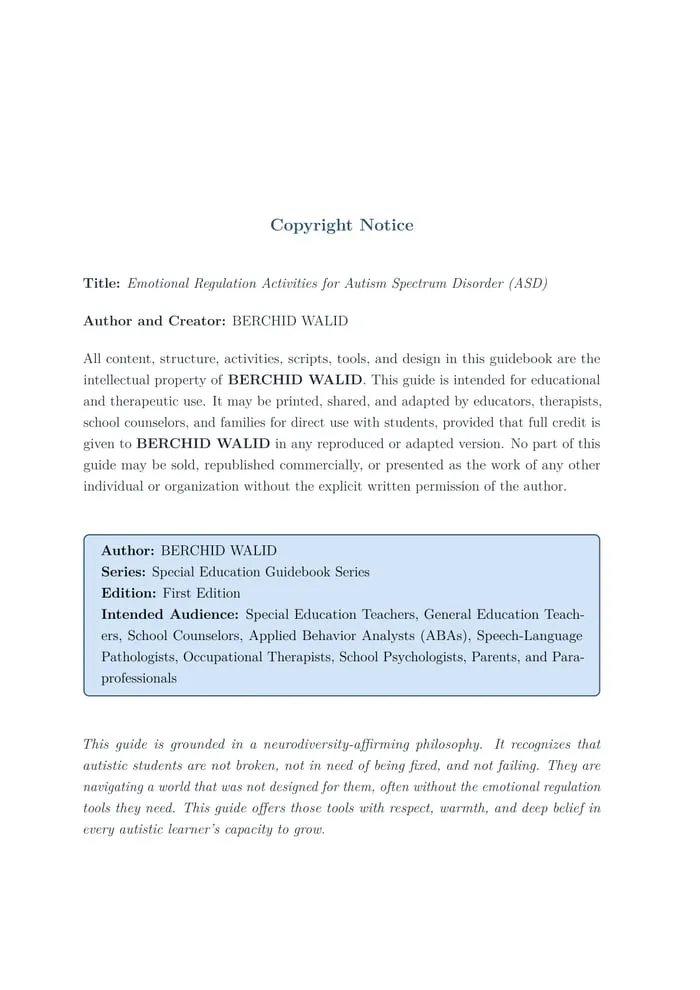
Emotional Regulation Activities for Autism Spectrum Disorder: a neurodiversity-affirming guidebook covering emotional regulation foundations, sensory regulation, visual supports, adapted mindfulness, meltdown prevention and recovery, and family partnership, with six reproducible tools including a feelings thermometer, choice board, calm toolkit card, and progress tracker.
Sources and scope
- CDC autism information: general background on autism spectrum disorder and support for families.
- IRIS Center, Vanderbilt University: free learning modules on autism, behavior, and evidence-based practices.
- American Occupational Therapy Association: information on occupational therapy, including sensory and self-regulation support.
- Understood.org: practical articles for families and teachers on learning and thinking differences.
- IDEA, U.S. Department of Education: the law behind special education services and IEPs.
This guide covers everyday classroom and home strategies for supporting emotional regulation in autistic students. It does not cover diagnosis, therapy, or medical treatment, which belong to qualified professionals and the student’s team.
Key takeaways
- Autism emotional regulation starts with understanding the student’s sensory and emotional profile.
- A calm, regulated adult supports the student before self-regulation is possible.
- Teach early signals and tools during calm times, using visuals and choices.
- Respond to meltdowns with safety and recovery, not consequences.
- Partner with the family and track small signs of progress.









Leave a Comment