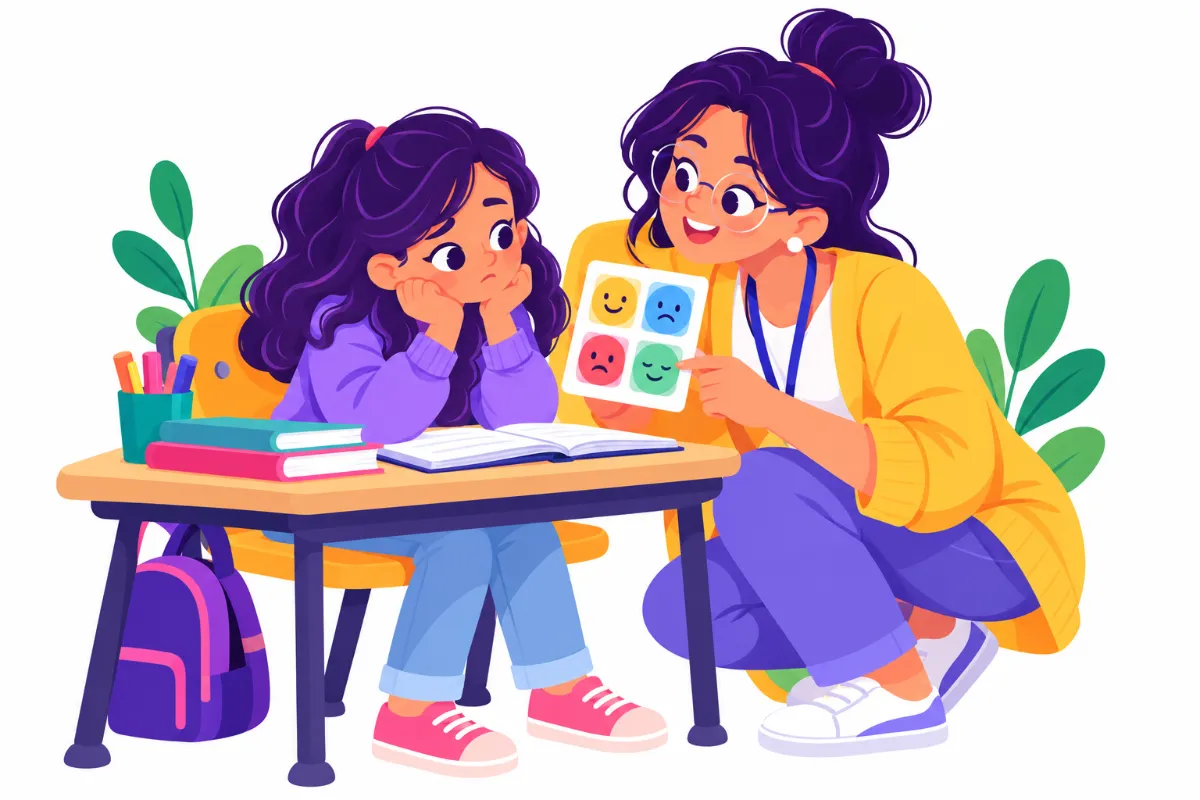

Autistic masking in school happens when a student hides their natural ways of being to fit in. They may copy peers, force eye contact, or hold in the need to move. From the outside, they look fine. However, inside, they may be exhausted, anxious, or overwhelmed.
These students are often called “quiet strugglers.” Because they rarely cause problems, their needs can go unnoticed for years. This guide helps teachers and parents spot masking and respond with real support.
What Is Autistic Masking in School?
Masking, sometimes called camouflaging, means hiding or changing autistic traits. It can be a conscious choice or an automatic habit. Often, it starts as a way to avoid teasing, punishment, or standing out.
At school, masking might look like:
- Copying how classmates talk, dress, or laugh.
- Suppressing stims, like hand-flapping or rocking.
- Forcing eye contact even when it feels painful.
- Rehearsing scripts for social situations.
- Saying “I’m fine” when they are not.
Masking takes huge energy. As a result, many students hold it together all day and then fall apart at home. This pattern is a common sign that something is wrong.
Signs of Autistic Masking in School
Autistic masking in school is hard to see, by design. Still, there are clues adults can watch for.
People-pleasing behaviors
- Over-apologizing, even for small things.
- Agreeing with everyone to avoid conflict.
- Never asking for help or saying no.
- Extreme worry about rules or getting in trouble.
Hidden stress signals
- Tired, flat, or withdrawn after school.
- Frequent headaches or stomachaches.
- Meltdowns or shutdowns at home but not at school.
- Avoiding school or begging to stay home.
Also, listen to families. When parents say, “School says she’s fine, but she falls apart at home,” take it seriously. That gap often points to masking.
Why Masking Hurts Students
Some adults see masking as a good thing, since the student “fits in.” However, research and autistic voices describe a high cost. Long-term masking is linked with anxiety, low self-esteem, and burnout.
In addition, masking can hide real learning needs. A student who copies peers may seem to understand a lesson when they do not. Because of this, they may miss out on support they truly need.
Finally, masking can affect identity. When a student hides who they are every day, they may start to believe their true self is wrong. So reducing the need to mask is an important goal.
How to Support Autistic Masking in School
The goal is not to force students to unmask. Instead, we create a space where masking feels less necessary. Safety and trust come first.
- Normalize differences: teach the whole class that brains work in many ways.
- Allow stims: make fidgets, movement, and quiet breaks normal for everyone.
- Drop eye contact demands: listening does not require looking.
- Offer private check-ins: a feelings card or note can be easier than talking.
- Give non-verbal help signals: a card on the desk can ask for help quietly.
Next, build a trusting relationship. Check in often, in low-pressure ways. Then praise honesty, such as “Thank you for telling me that was hard.”
A structured plan keeps support consistent. For example, this toolkit on masking and people-pleasing in autistic students uses a Barrier/Plan/Reason format for common classroom moments.
Reducing Autistic Masking in School Through the Environment
Many students mask to cope with a stressful environment. So changing the environment can reduce the need to mask.
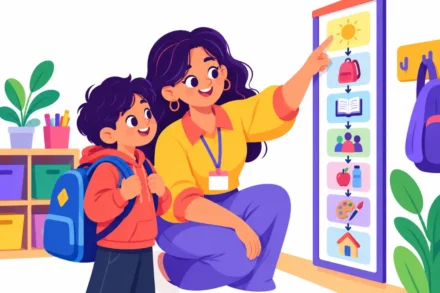
For example, offer a quiet corner for breaks. Also, lower noise and harsh lighting where possible. Similarly, give clear written instructions so students do not need to guess or copy others.
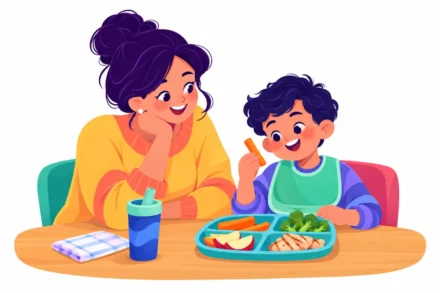
In addition, plan for lunch and recess, which are often the hardest times. A lunch club or a quiet space can give students a break from constant social demands. The CDC autism resources offer further background on autism in children.
Small daily changes
You do not need a big program to make a difference. For example, greet each student by name and give a simple choice at the door. Also, build short movement breaks into every lesson. These small habits lower stress for the whole class. As a result, autistic masking in school becomes less necessary, because students can meet their needs openly.
Working With Families
Families see the after-school crash that teachers may never see. Therefore, open, regular communication is key. Ask families what their child is like at home and what drains them most.
Then share what you see at school. Together, you can find patterns and plan support. Also, involve the student when possible. Many older students can explain what they hide and why, once they feel safe.
Watching for burnout
Long periods of masking can lead to autistic burnout. Signs include deep tiredness, loss of skills, and pulling away from people. If you notice these, lower demands and talk with the family and team right away. Early action can prevent a much longer recovery.
Frequently Asked Questions
Is masking more common in girls?
Masking is often discussed in autistic girls, but students of any gender can mask. Watch every student for the signs, not just one group.
Should I tell a student to stop masking?
No. Instead, make the classroom safe enough that masking feels less needed. Let the student decide what to share.
Can a student mask without an autism diagnosis?
Yes. Some students mask so well that they are never identified. If you notice signs, share your observations with the family and school team.
Ready-to-use resource:
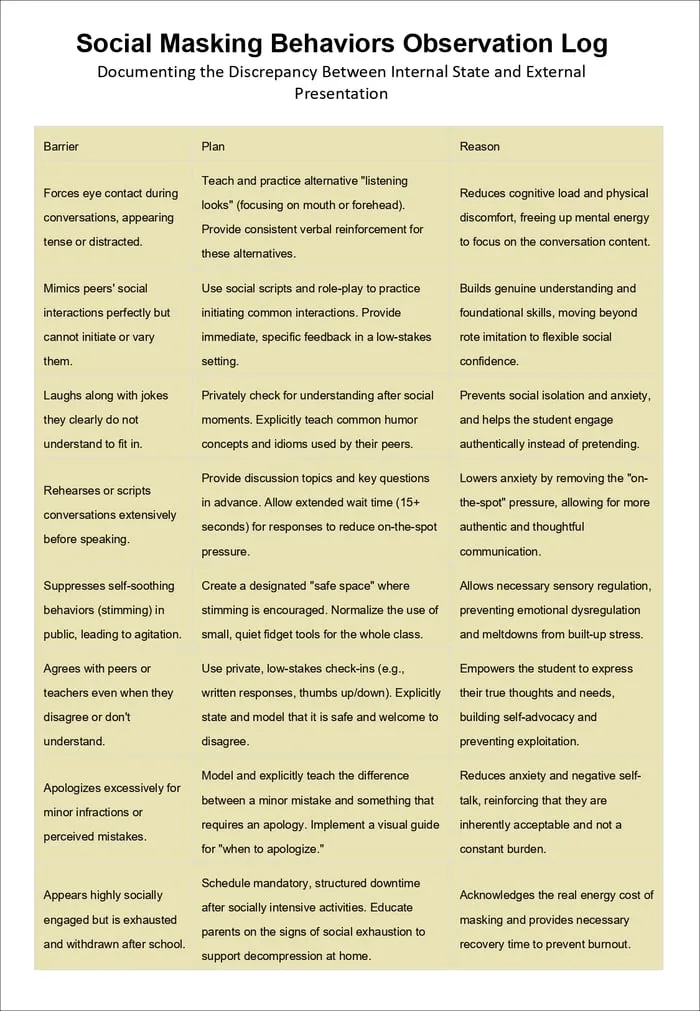
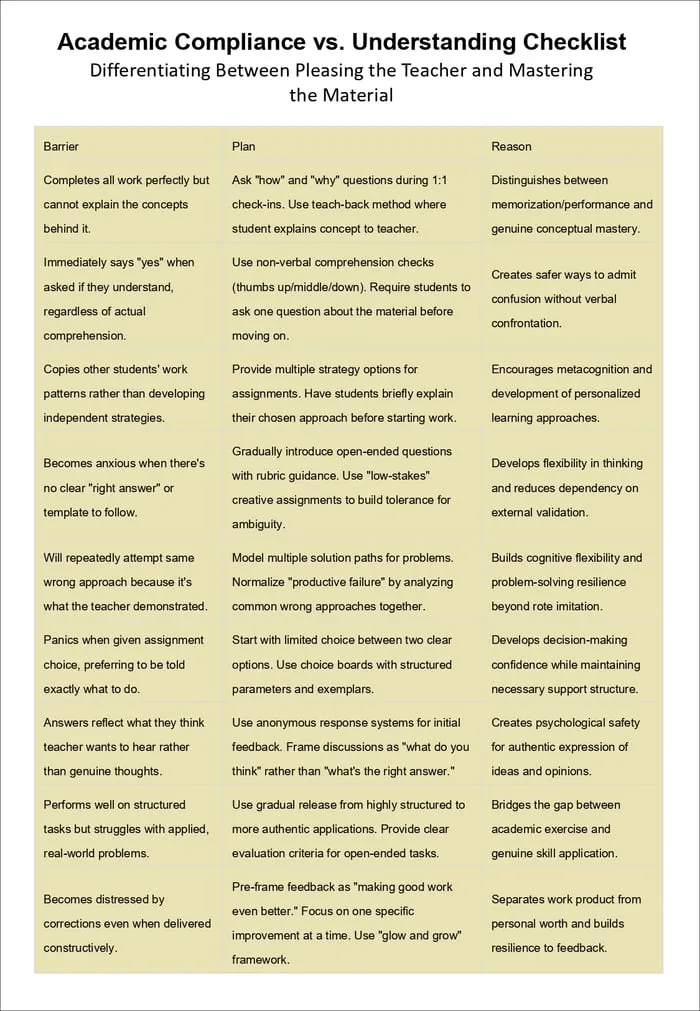
The Quiet Strugglers: Understanding Masking and People-Pleasing in Autistic Students: A 12-page Barrier/Plan/Reason toolkit to recognize masking and people-pleasing and respond with real support.
Related reading: Understanding Autistic Burnout and School Exhaustion: Prevention and Support Strategies and Spectrum Voices: Essential Strategies for Navigating High-Functioning Autism.
Key Takeaways: Autistic Masking in School
- Autistic masking in school hides real needs behind a calm surface.
- Watch for people-pleasing, after-school crashes, and hidden stress.
- Build safety so students feel less need to mask.
- Work closely with families to see the full picture.


Leave a Comment