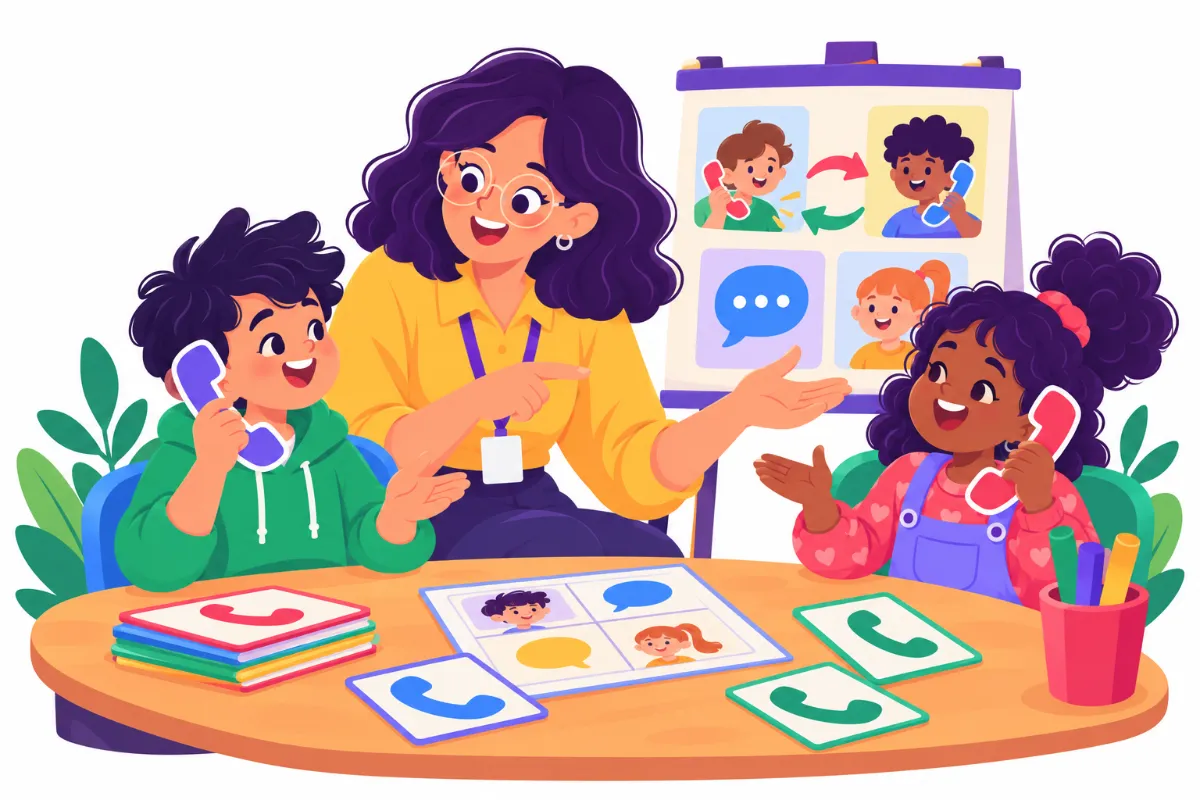

A cyberbullying lesson for kids gives children a plan before they ever need it. Many children get their first phone, game account, or group chat in elementary school. However, very few are taught what to do when someone online is unkind.
Without a plan, kids often freeze, fight back, or hide what happened. This guide shares a simple four-step framework, role-play ideas, and tips for teachers and parents.
Starting a Cyberbullying Lesson for Kids With the Basics
Cyberbullying is bullying that happens through phones, computers, or games. For example, it can include mean messages, embarrassing photos, rumors, or being left out of group chats on purpose.
It can feel especially hard because it follows kids home. Also, hurtful posts can be shared quickly and seen by many people. Because of this, children need clear, calm steps they can follow.
First, help kids understand the difference between a one-time disagreement and repeated, hurtful behavior. Then, reassure them that cyberbullying is never their fault.
Cyberbullying Lesson for Kids: Stop, Save, Block, Tell
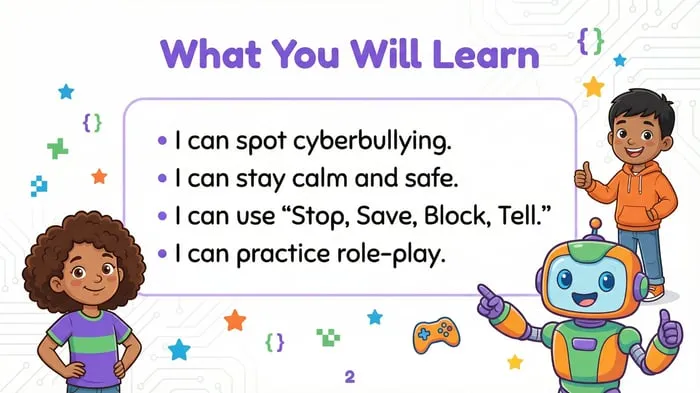
A short, memorable plan helps kids act instead of panic. Here are four steps that are easy to remember:
- Stop: do not reply or fight back. Responding often makes things worse.
- Save: take screenshots or keep messages as evidence.
- Block: block the person and use reporting tools on the app or game.
- Tell: tell a trusted adult, such as a parent, teacher, or counselor.
Next, practice the steps out loud. Repetition helps kids recall the plan when they feel upset. The StopBullying.gov cyberbullying page offers more guidance for families and schools.
Teaching a Cyberbullying Lesson for Kids Step by Step
A strong lesson moves from understanding to practice. So, plan it in short parts:
- Warm-up: ask, “How would you feel if someone posted a mean comment about you?”
- Teach: introduce the four steps with visuals.
- Model: show a scenario and think aloud through each step.
- Practice: use role-play cards in pairs or small groups.
- Check: finish with a quick quiz or exit ticket.
Also, keep the tone empowering, not scary. The goal is confidence, not fear of technology.
In addition, adapt the lesson for different learners. For younger kids or students with special needs, use picture cards for each step. Then, keep scenarios short and concrete. For older kids, add discussion about group chats, gaming, and screenshots shared without permission.
Next, revisit the plan during the year. A quick review before holidays or after a new app trend keeps it fresh. Because online life changes fast, short refreshers matter more than one big lesson.
Finally, post the four steps on a classroom poster. Visual reminders help kids recall the plan in the moment.
Role-Play Ideas for a Cyberbullying Lesson for Kids
Role-play lets kids rehearse in a safe space. As a result, the right response feels familiar when a real moment comes. Try scenarios like these:
- A classmate posts an embarrassing photo in a group chat.
- A player in an online game keeps sending mean messages.
- A friend is being teased online, and your child sees it happen.
- Someone spreads a rumor through messages.
For each card, students act out Stop, Save, Block, and Tell. Then, discuss how it felt. In addition, swap roles so everyone practices being the helper and the person who tells.
The cyberbullying lesson with role-play cards includes ready-made scenarios and quizzes, so you can teach the full plan without extra prep.
Being an Upstander, Not a Bystander
Many kids see cyberbullying happen to others. However, they often do nothing because they are unsure what to do. Teach them that small actions matter.
For example, they can refuse to share hurtful posts. They can send a kind private message to the person targeted. Also, they can report the content and tell an adult. These steps are safer than confronting the bully directly.
Finally, praise upstanders. When kids see kindness recognized, they are more likely to repeat it.
A Cyberbullying Lesson for Kids at Home
Parents play a key role, too. So, talk about online life often, not only when problems happen. Ask open questions like, “What’s the funniest thing you saw online today?”
Next, agree on family rules for devices, apps, and privacy settings. Also, promise your child that telling you will not mean losing their device. Fear of punishment is a big reason kids stay silent.
Similarly, teach kids to be kind online themselves. A simple rule helps: if you would not say it face to face, do not post it.
How Adults Should Respond When Kids Tell
The first response matters most. First, stay calm and thank the child for telling you. Then, listen without blame.
Next, review the saved evidence together. Help block and report the account. In addition, contact the school if classmates are involved. Schools often have clear policies for cyberbullying.
Finally, check in over the following days. Watch for changes in mood, sleep, or school avoidance. If a child seems very distressed, involve a school counselor.
Frequently Asked Questions
What age is right for a cyberbullying lesson?
Many schools start around ages 7 to 9, when kids begin using games and messaging. Earlier is fine with simpler language.
Should kids reply to a cyberbully?
No. Replying often makes things worse. Instead, kids should save evidence, block, and tell an adult.
What if the bully is a friend?
The same steps apply. Adults can then help with the friendship side through calm, guided conversations.
Ready-to-use resource:
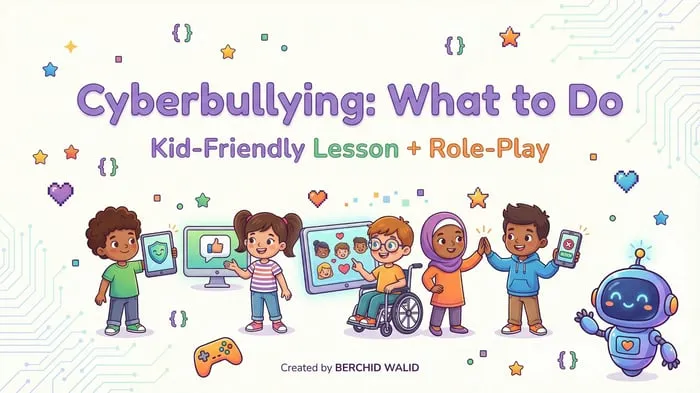
Cyberbullying: What to Do Kid-Friendly Lesson + Role-Play: A complete 55-page lesson with role-play cards and quizzes built around a memorable Stop-Save-Block-Tell plan.
Related reading: Autism Social Skills Development: Practical Strategies for Growth and School Counseling Strategies: Empowering Students to Dream Big and Achieve Success.
Also on FromTeachers:
Key Takeaways
- Kids need a simple plan before cyberbullying happens.
- Stop, Save, Block, and Tell is easy to remember and use.
- Role-play builds confidence and turns knowledge into action.
- Adults should respond calmly and never punish kids for telling.


Leave a Comment