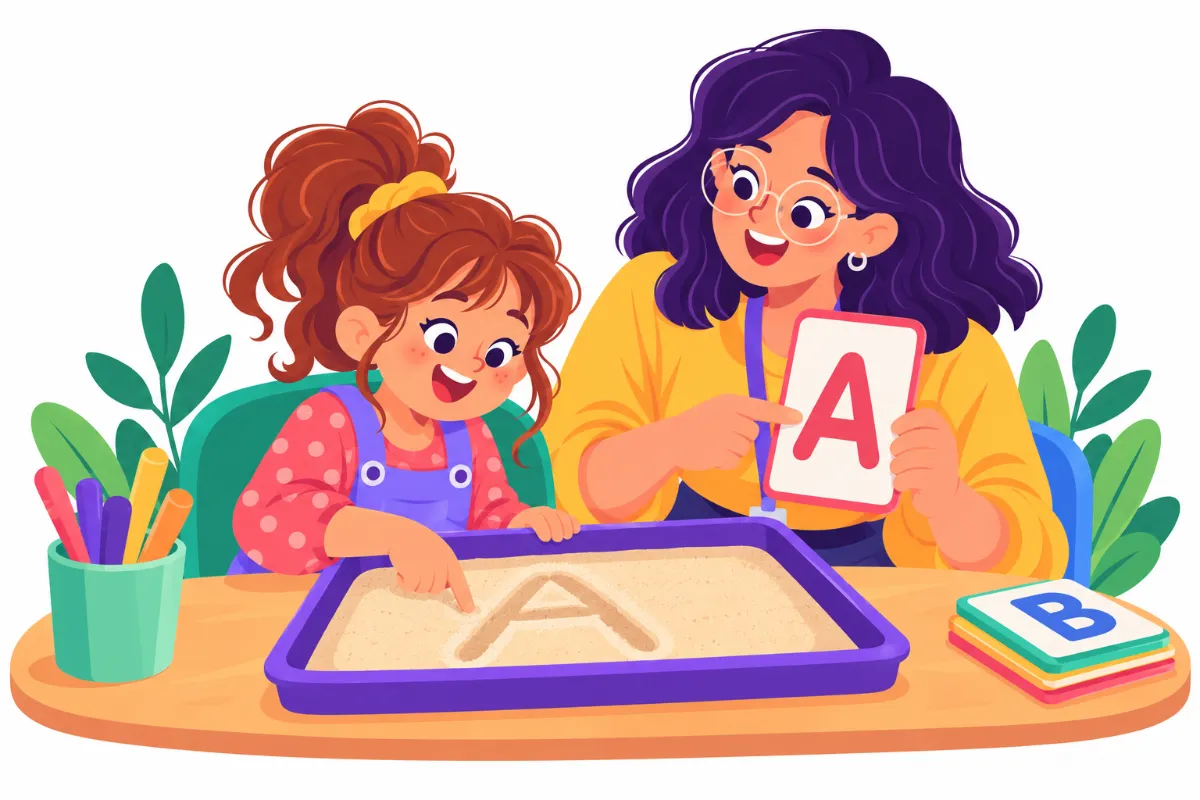

Multisensory reading strategies help students with dyslexia learn by seeing, hearing, saying, touching, and moving all at once. When several senses work together, letters and words have more paths into memory.
This approach is a core part of structured literacy, and it extends naturally into spelling, writing, and even math. In this guide, you will find practical, low-cost activities matched to the most common struggles students with dyslexia face.
What Are Multisensory Reading Strategies?
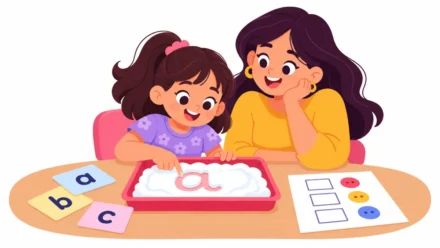
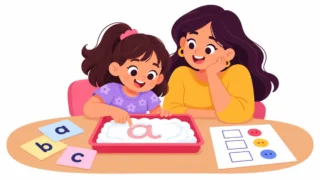
Multisensory teaching combines visual, auditory, kinesthetic, and tactile input in the same lesson. For example, a student might see the letter “b,” say its sound, and trace it in sand at the same time.
The senses involved are:
- Visual: seeing letters, color-coding, and pictures.
- Auditory: hearing and saying sounds aloud.
- Tactile: touching textured letters or tiles.
- Kinesthetic: moving the body, such as tapping or skywriting.
Because students with dyslexia often struggle to connect sounds and symbols, linking those senses gives them extra support. As a result, learning becomes more memorable.
Multisensory Reading Strategies for Letter Sounds
Many students with dyslexia struggle to remember which sound goes with which letter. Therefore, practice should be frequent, active, and consistent.
- Sand or salt trays: trace letters while saying the sound.
- Textured letters: use sandpaper or felt letters for tactile feedback.
- Keyword pictures: pair each letter with an image, like “a” with apple.
- Mirror work: watch mouth shapes while saying sounds.
Consistency matters as much as the activity itself. Use the same keyword picture and the same motion for each sound every time. When routines stay stable, multisensory reading strategies build automatic links instead of confusion. Also, review previously learned sounds before adding new ones so older skills stay strong.
Next, practice in short sessions daily. Five focused minutes every day usually beats one long weekly lesson.
Word Recognition and Reading Fluency
Once sounds are secure, students move to blending and reading whole words. Multisensory routines keep that process concrete.
Blending and decoding
- Tap each sound on a finger, then sweep to blend.
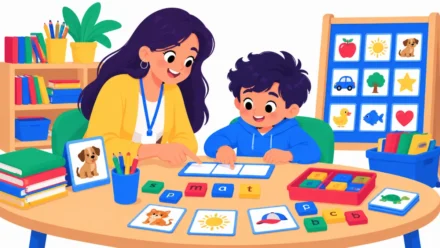
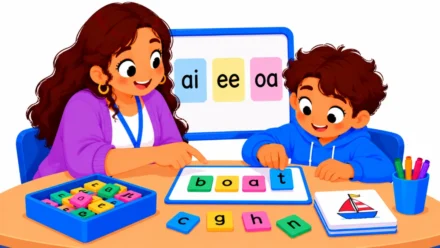
- Use letter tiles to build, read, and change words.
- Color-code vowels so students notice them quickly.
Fluency
- Use a reading guide strip to track lines.
- Practice echo reading and choral reading.
- Reread short passages several times for smoothness.
- Pair text with audiobooks so students hear fluent reading.
Fluency work should feel successful. Choose text the student can read with high accuracy, then build speed gradually. Multisensory reading strategies like finger tracking and choral reading keep students engaged instead of anxious. Record a short reading each week so students can hear their own progress.
In addition, word maps help students connect a new word to its meaning, picture, and use in a sentence.
Spelling, Handwriting, and Dictation
Spelling is often the most stubborn challenge for students with dyslexia. However, multisensory practice makes patterns more visible.
- Spelling tiles: move a tile for each sound.
- Arm tapping: tap sounds down the arm, then write.
- Skywriting: write letters in the air with big arm movements.
- Sentence strips: build sentences from word cards before writing.
- Raised-line paper: gives tactile feedback for letter size.
For dictation, say the sentence, have the student repeat it, then tap or count words before writing. Consequently, memory load drops and accuracy improves.
Comprehension and Retelling
Reading is about meaning, not just decoding. Multisensory tools help students understand and remember stories, too.
- Story dice: roll and answer who, where, or what happened.
- Sequence cards: put story events in order.
- Story maps: draw characters, setting, problem, and solution.
- Act it out: retell the story with movement or puppets.
Visual organizers are especially helpful for longer texts. A simple beginning, middle, and end chart lets students sort events with pictures or short phrases. Then they use the chart to retell the story aloud, which strengthens both memory and spoken language.
Also, discuss text before, during, and after reading. Talking out loud gives students another channel to process ideas.
Beyond Multisensory Reading Strategies: Math and Directions
Dyslexia can affect math word problems and following written directions as well. Fortunately, the same multisensory ideas carry over.
- Use manipulatives like blocks and counters for math concepts.
- Draw pictures of word problems before solving them.
- Read word problems aloud or use text-to-speech.
- Provide visual checklists and step-by-step cards for directions.
To find activities for each struggle quickly, this multisensory learning strategies pack for dyslexia links twenty pages of classroom triggers to hands-on actions and the reasons they work.
Tips for Using Multisensory Reading Strategies Well
Activities work best inside a clear, structured plan. First, teach skills in a logical sequence from simple to complex. Next, review often, since students with dyslexia may need many repetitions. Finally, keep lessons upbeat and celebrate progress.
Finally, watch the student closely and adjust. If an activity feels confusing or overwhelming, simplify it or try a different sense. The best multisensory reading strategies are the ones a particular student enjoys and uses with growing confidence. Keep notes on what works so the whole team can use the same tools.
Parents can join in at home with short games like sand tracing or letter-tile word building. For more on evidence-based reading support, visit the International Dyslexia Association.
Frequently Asked Questions About Multisensory Reading Strategies
Are multisensory activities only for students with dyslexia?
No. Many young readers benefit, but students with dyslexia often need them most.
How long should a multisensory session last?
Short, daily sessions of ten to twenty minutes work well for most students.
Can parents use these at home?
Yes. Simple tools like sand trays, letter tiles, and story cards are easy to use with children.
Ready-to-use resource:
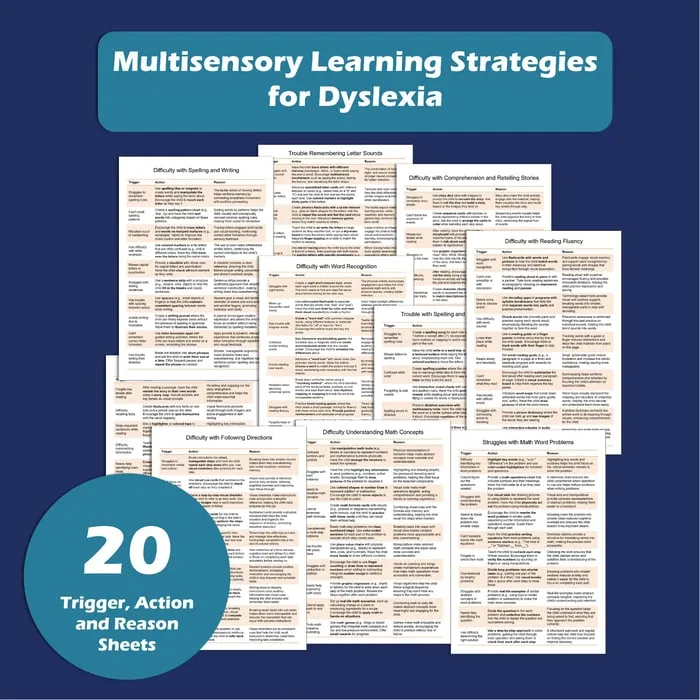
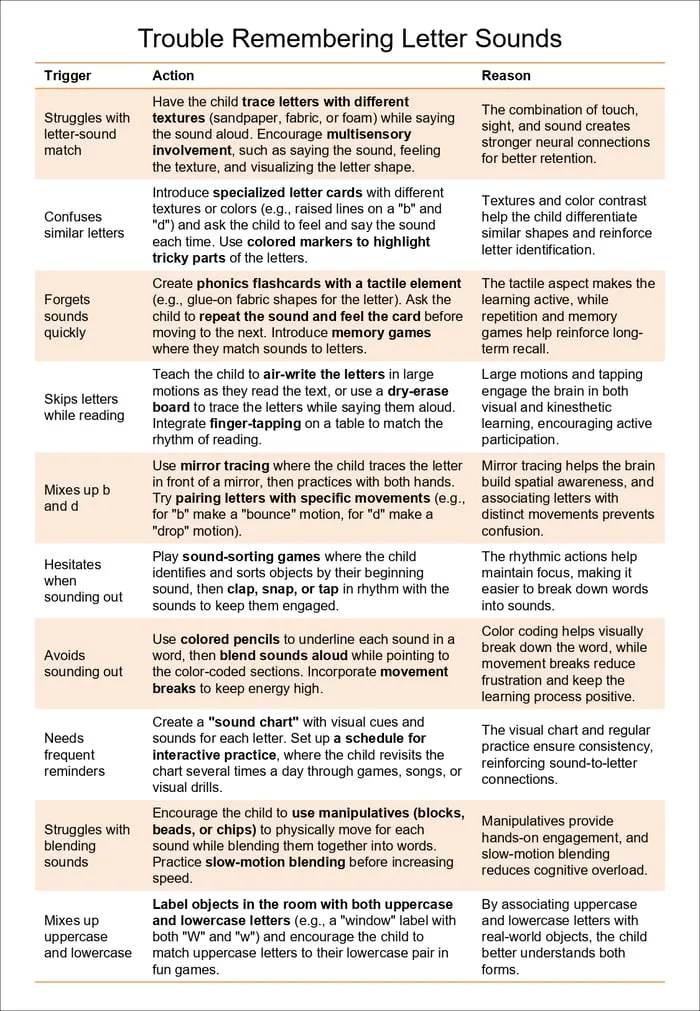
Multisensory Learning Strategies for Children with Dyslexia: Twenty pages linking common dyslexia struggles to hands-on multisensory actions and the reasons they work across reading, writing, and math.
Related reading: Dyslexia in Education: Understanding, Innovating, and Empowering and Learning Styles Student Success Guide.
Also on FromTeachers:
Key Takeaways
- Multisensory teaching links sight, sound, touch, and movement.
- Short, daily, structured practice builds strong sound-symbol links.
- Tiles, tapping, and tracing support spelling and writing.
- The same approach helps with comprehension, math, and directions.




Leave a Comment