

Dinosaur reading activities can open a door for students who have decided reading is not for them. Picture Tyler, a sixth grader who reads below grade level and avoids books whenever he can. Yet if you mention a Spinosaurus, he will talk for ten minutes about its sail, its size and whether it could swim. The interest is already there. The job is to connect it to reading.
This list is for reading teachers, interventionists and librarians who work with reluctant readers around ages 11 to 13. It shares twelve easy dinosaur reading activities, sorted from least reading required to most, so you can start where your student feels safe and build from there. Each idea includes what to do and how it worked with Tyler.
Examples are fictional. Adapt to the student’s reading level, goals and agreed supports.
At a glance
- Interest is a powerful reason to read, especially for reluctant readers.
- Start with short, visual text such as captions, labels and fact boxes.
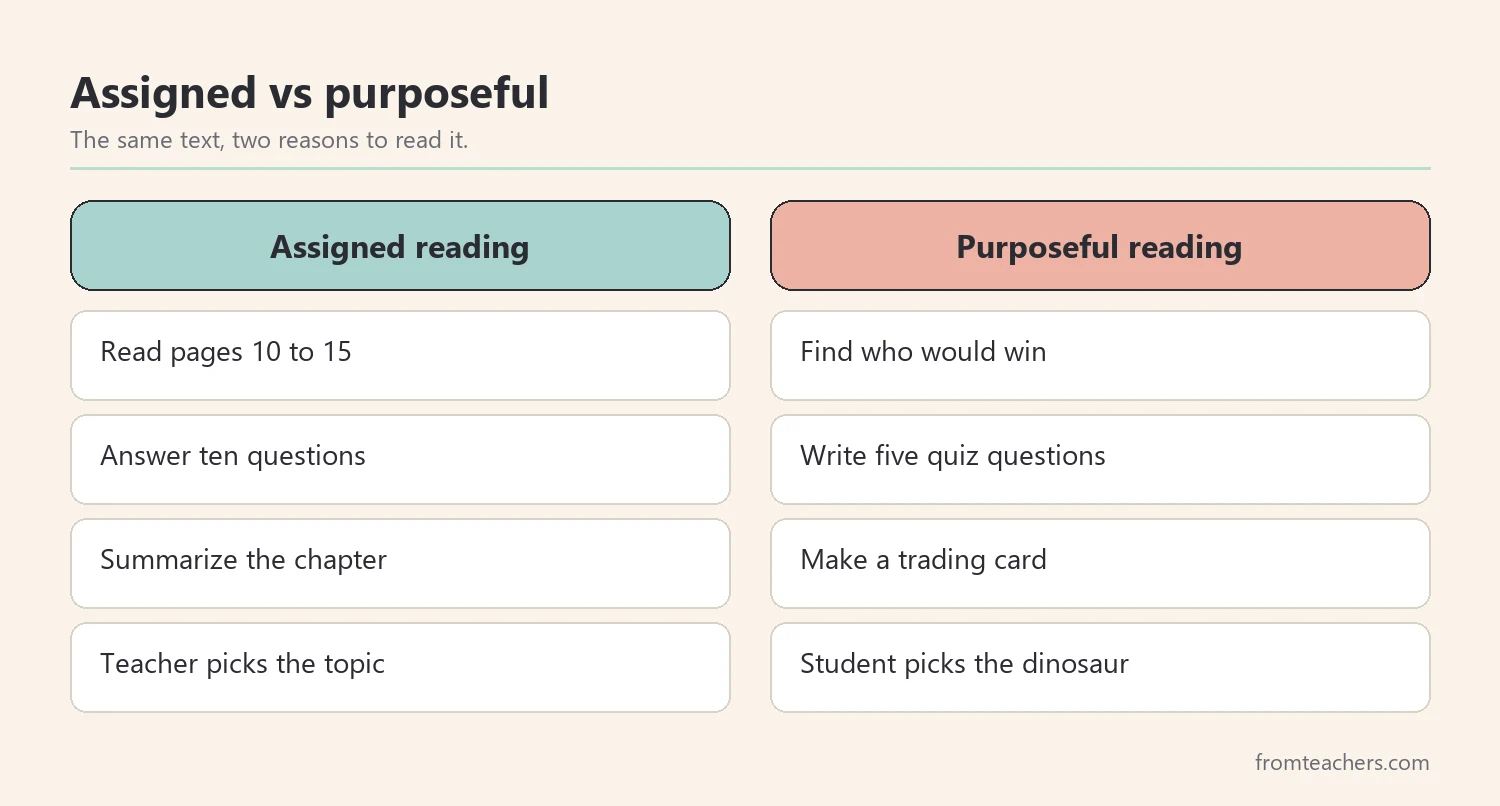
- Give students real reasons to read: to win, to settle a debate, to teach someone.
- Mix reading with talking, drawing and building.
- Track simple measures, such as pages read and time on task, to see growth.
How this list is sorted
We sorted these twelve dinosaur reading activities from the least reading to the most. The first ideas use captions and short facts. Later ideas involve full pages, research and writing. We did not rank them by value, because the best starting point depends on the student.
Also, choose texts at the right level. Reluctant readers often avoid books that feel too hard or too childish. Illustrated nonfiction for their age, with short sections and strong visuals, is often a good fit. Figure 1 shows the full list.

1. Caption hunt
First, the lightest option: give the student a dinosaur book and ask them to find three captions that surprise them. Captions are short, and the picture gives context.
Example: Tyler found a size comparison showing a dinosaur next to a school bus and read the caption out loud twice, grinning.
2. Size comparison challenge
Next, use size comparisons. Ask the student to read the length or height of two dinosaurs and compare them to real objects in the room.
Why it works: numbers and comparisons are easy entry points for students who prefer facts to stories.
3. Fact or fake?
Then read three short statements aloud, one of them invented. The student reads a page to decide which is fake. Among dinosaur reading activities, this one gives a clear reason to read: proving something.
4. Glossary bingo
Next, make a bingo card with words from a dinosaur glossary, such as fossil, herbivore, carnivore and extinction. The student reads definitions to mark squares.
Example: Tyler won his first round and asked for a harder card.
5. Dinosaur trading cards
Then the student reads one species profile and makes a trading card with the name, period, diet, size and one cool fact. Cards can be traded or used in a game.
| Card field | What the student reads for |
|---|---|
| Name and period | Profile heading |
| Diet | Teeth and food facts |
| Size | Size comparison |
| Cool fact | Any surprising detail |
6. Who would win? Debate
Next, a favorite with middle schoolers. The student reads profiles of two dinosaurs and argues who would win in a contest of speed, size or defense, using facts from the text.
Why it works: a debate needs evidence, so the student rereads and quotes the text naturally. Debate-style dinosaur reading activities also build speaking skills.
7. Timeline sort
Then give cards with dinosaurs and events. The student reads to place each one in the Triassic, Jurassic or Cretaceous period.
Example: Tyler was shocked to read that Stegosaurus and T-Rex never lived at the same time. He double-checked the page, then told everyone in the room.
A rich, illustrated source makes these dinosaur reading activities easier to run. Dinosaurs: The Complete Student Field Guide has profiles of major species, size comparisons, sections on each time period, a knowledge quiz and a glossary for ages 11 to 13.
8. Food chain map
Next, the student reads about habitats and food chains, then draws a simple map of who ate what. The drawing shows understanding without long writing.
9. Quiz master
Then flip roles. The student reads a section and writes five quiz questions for the teacher or classmates. Writing questions requires careful reading and main-idea thinking.
Example: Tyler wrote a quiz on extinction and was delighted when his teacher got one wrong.
10. Fossil detective
Next, read about how fossils form and how paleontologists study them. Give the student a picture of a fossil and ask what clues it gives, using facts from the text.

11. Dinosaurs to birds
Then explore a surprising idea: scientists consider birds to be living descendants of dinosaurs. The student reads the section and lists evidence in their own words. This is one of the deeper dinosaur reading activities, because it involves explaining a scientific idea.
12. Mini field guide project
Finally, the most reading-heavy idea: the student creates a short field guide on three dinosaurs, with headings, facts, a size comparison and a glossary. They can present it to younger students.
Example: Tyler made a four-page guide on dinosaurs of the Cretaceous and read it aloud to a fourth grade class. His teacher said it was the most he had read aloud all year.

Why dinosaur reading activities work for reluctant readers
Reluctant readers are often not unable to read; many have simply had too many hard, boring or embarrassing experiences with reading. Interest-based reading can change the emotional side of reading first.
In addition, dinosaur texts often have strong visuals, short sections and lots of facts. These features lower the barrier for students who find long paragraphs tiring. Also, the topic gives older students a respectable reason to read illustrated books without feeling babyish.
However, interest alone does not fix gaps in decoding or fluency. If a student struggles with basic word reading, pair dinosaur reading activities with structured instruction from your intervention program.
Adapting the activities to different readers
First, adjust the text. Read difficult sections aloud while the student follows along, or use audio support. Next, shorten tasks: one profile instead of three, or three quiz questions instead of five.
Then offer choice. Let the student pick the dinosaur, the activity or the way to show learning. Choice is a strong motivator for students who feel little control over reading.
Also, build success early. Start with activities the student can finish in one session, and celebrate each finished card, quiz or map.
Tracking reading growth
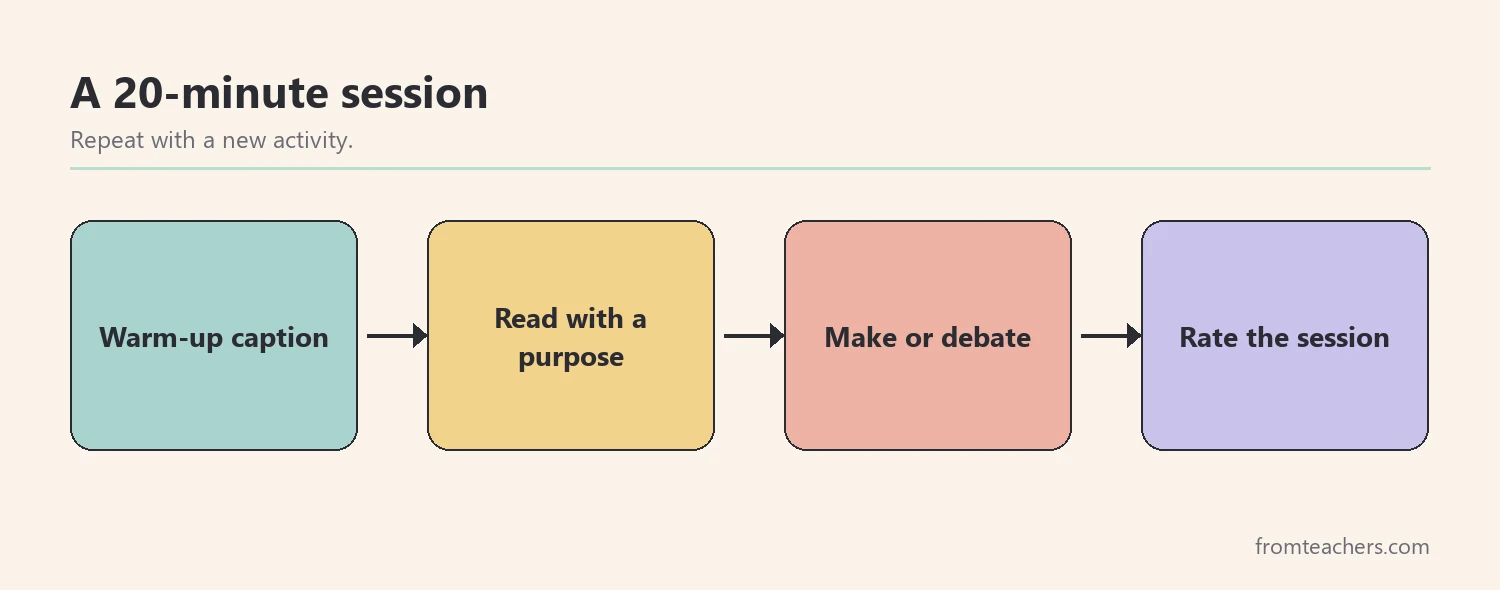
Simple data shows whether dinosaur reading activities are helping. For example, Tyler’s teacher tracked four things over six weeks: minutes of reading per session, pages read, times he chose to read and quiz scores. Figure 3 shows the change. His reading time doubled, and he started borrowing books on his own.
Also, ask the student. A short question, such as “How did reading feel today, from 1 to 5?”, shows changes in attitude that numbers may miss. Figure 5 shows a simple session plan.
Building a dinosaur reading corner
A small, inviting space can make dinosaur reading activities part of the routine. Gather illustrated nonfiction, a few graphic novels, fossil replicas or pictures, and a box of trading card templates. Keep it in a quiet part of the room or library.
Next, rotate materials every few weeks so there is always something new. Then add student work to the corner, such as trading cards, debate notes and mini field guides. Seeing their own work on display tells reluctant readers that their reading counts.
Also, invite peers. A short “dinosaur club” during lunch or advisory lets students read together, argue about facts and recommend pages to each other. For Tyler, the club became the first place he read for fun with friends.
Involving families in dinosaur reading activities
Families can keep the momentum going at home. First, send home the student’s trading cards or quiz and ask them to quiz a parent or sibling. Next, suggest a weekend visit to a library or a natural history museum, if one is nearby, with one question to answer from a sign or display.
Also, share simple dinosaur reading activities families can do in ten minutes, such as reading one profile together or comparing a dinosaur’s size to the family car. Parents of reluctant readers are often relieved to find reading that does not end in an argument. Tyler’s mom said it was the first time he had asked her to listen to him read.
Moving from dinosaurs to other topics
Interest-based reading is a starting point, not the destination. Once a student reads with confidence about dinosaurs, connect the same skills to other topics. A student who loves dinosaur profiles may enjoy books on sharks, volcanoes or space exploration, which use similar features: facts, comparisons and strong pictures.
Therefore, keep the activity formats and change the content. Trading cards work for planets. Who would win debates work for storms or animals. Quiz master works for any chapter. Students recognize the routine and feel ready for the new topic.
Common mistakes and how to avoid them
- Choosing texts that are too hard. Fix: start with captions and short profiles.
- Turning every activity into a worksheet. Fix: use games, debates and making.
- Ignoring reading skills gaps. Fix: pair interest-based reading with structured instruction.
- Choosing the dinosaur for the student. Fix: let them pick.
- Checking facts from unreliable websites. Fix: use trusted museum or science sources.
Questions teachers ask about dinosaur reading activities
Are dinosaur books too young for middle schoolers?
Not if you choose texts written for their age. Detailed profiles, science vocabulary and real debates feel grown-up to most 11 to 13 year olds.
How long should each session be?
Many interventionists use 15 to 30 minute blocks. Start short and lengthen as stamina grows.
Can dinosaur reading activities help students with dyslexia?
They can support motivation and comprehension. Students with dyslexia also need explicit, structured teaching of decoding skills.
What if the student loses interest in dinosaurs?
Use the same activity formats with a new topic the student loves, such as sports, space or animals.
How do I check facts students find?
Use trusted sources such as natural history museum websites, and teach students to compare more than one source.
Related reading: Learning Styles Student Success Guide, Dyslexia Solutions in the Classroom: Evidence-Based Strategies, and 5 Practical Teaching Tips to Boost Classroom Focus and Learning.
You may also need: Guided Reading Lessons: Level L.
A companion resource for dinosaur reading activities:
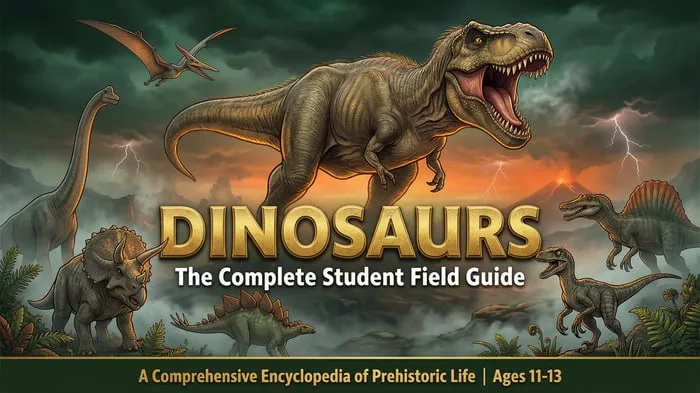
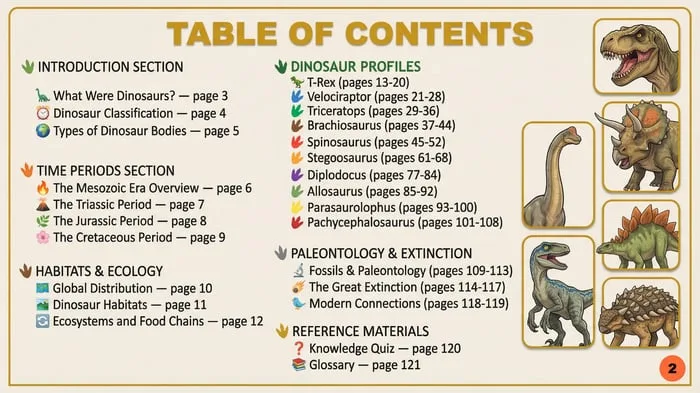
Dinosaurs: The Complete Student Field Guide: 122 richly illustrated pages for ages 11 to 13, with species profiles, size comparisons, the Triassic, Jurassic and Cretaceous periods, habitats and food chains, fossils and extinction, the link to birds, a knowledge quiz and a glossary.
Sources and scope
- Natural History Museum, London: Dinosaurs: articles on dinosaur science for checking facts with students.
- American Library Association: resources on reading engagement and school libraries.
- IRIS Center at Vanderbilt University: free modules on reading comprehension and intervention.
- Understood: articles on reading challenges and motivation.
This list offers motivating reading activities built around dinosaurs. It is not a full reading intervention program and does not replace assessment or structured instruction for students with reading disabilities.
Key takeaways
- Dinosaur reading activities turn a strong interest into a reason to read.
- Start with captions and short facts, then build to full pages and projects.
- Give real purposes: debates, quizzes, trading cards and teaching others.
- Adapt the text, shorten tasks and offer choice.
- Track reading time and attitude to see growth.


Leave a Comment