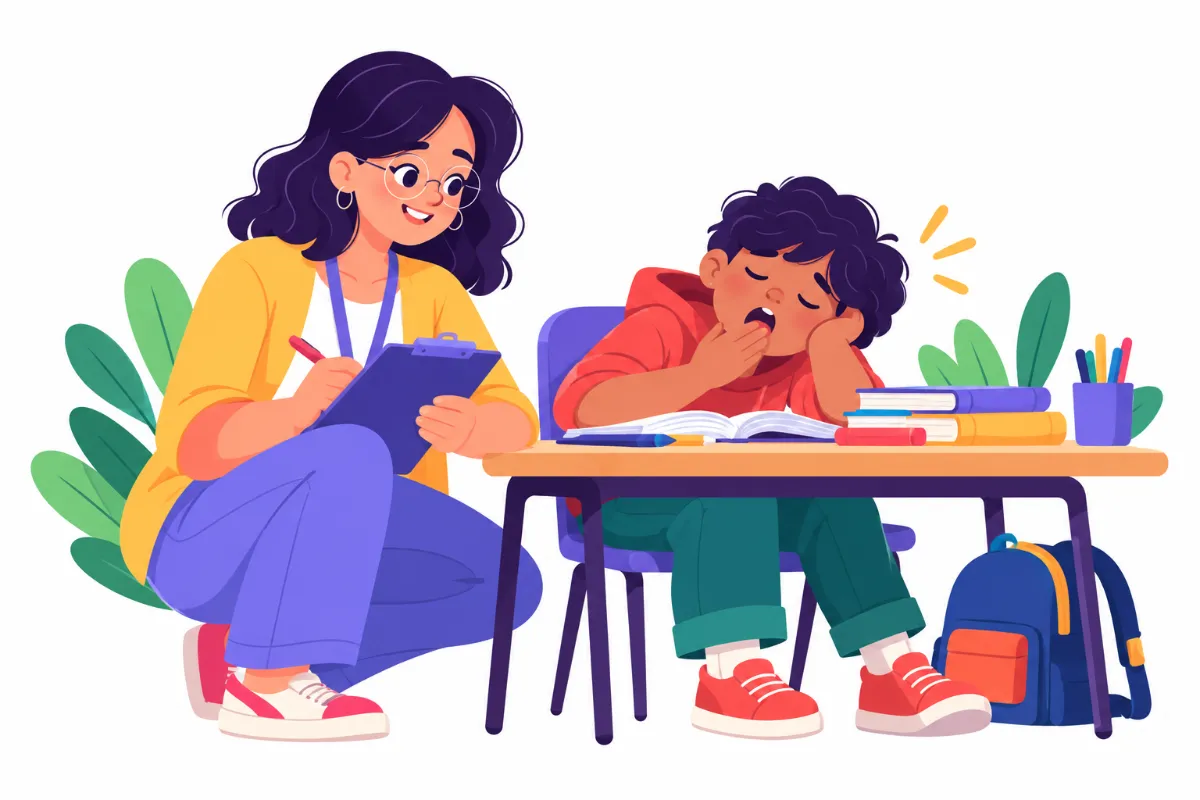

Sleep and student learning are closely linked, yet sleep is rarely discussed in teacher training. When a student arrives tired, focus, memory, and mood all suffer before the first lesson even starts. Understanding this connection helps teachers respond with empathy instead of frustration.
This guide explains what happens in the brain during sleep, how tiredness shows up in the classroom, and what teachers and parents can do together. It is practical, calm, and based on widely accepted guidance rather than hype.
Why Sleep and Student Learning Go Together
Sleep is not downtime for the brain. During sleep, the brain sorts and stores what was learned during the day. As a result, a good night of rest helps new facts and skills stick.
However, when sleep is short or broken, that storage process is weaker. Students may seem to “forget everything” from yesterday’s lesson. In addition, attention and self-control are harder to maintain, which affects behavior as well as grades.
What Happens in the Brain During Sleep
Sleep moves through cycles of lighter and deeper stages. Each stage plays a role in recovery and memory.
- Deep sleep: supports physical recovery and helps lock in facts.
- REM sleep: is linked to emotional processing and creative connections.
- Full cycles: matter, because cutting sleep short often removes later REM periods.
Because children and teens are still developing, they generally need more sleep than adults. The CDC sleep guidance lists recommended hours by age group, which can be a helpful reference for families.
Signs of Sleep Deprivation in the Classroom
Tired students do not always yawn. In fact, many look restless, irritable, or unfocused. For example, a student may:
- Put their head down during independent work
- Struggle to start tasks or follow multi-step directions
- Have short fuses with peers or quick emotional reactions
- Seem hyperactive, especially younger children
- Forget routines they usually know well
Because these signs overlap with attention or behavior challenges, it is worth asking about sleep before drawing conclusions. Also, share observations with families gently and without blame.
Which Students Are Most Affected by Poor Sleep?
Some students are more vulnerable to sleep problems. For example, many autistic children and children with ADHD have trouble falling or staying asleep. Teenagers also experience a natural shift toward later bedtimes.
In addition, students facing stress at home, caring for siblings, or using screens late at night may lose sleep. As a result, they arrive at school already running on empty. Teachers cannot fix every cause, but awareness changes how we respond.
Classroom Strategies That Support Sleep and Student Learning
Teachers can lessen the impact of tiredness with small adjustments. First, schedule demanding new content when students are most alert, often mid-morning. Next, build movement breaks into longer lessons.
Structure the Day for Tired Brains
Short, clear directions help. Also, visual reminders reduce how much students must hold in working memory. Finally, review key points briefly at the start of each lesson.
Teach Students About Sleep
Older students benefit from learning how sleep affects their own brain. For example, a short lesson on screens and bedtime routines can spark real change. A comic-style resource like the illustrated teacher guide to sleep and learning makes this topic easy to share.
Partnering With Families on Healthy Sleep
Parents are key partners, but sleep conversations can feel personal. Therefore, lead with curiosity: “I noticed she seems tired in the mornings. How has sleep been at home?”
In addition, offer simple ideas rather than rules. A consistent bedtime, a wind-down routine, and screens off before bed are good starting points. If concerns continue, families can talk with their pediatrician, since ongoing sleep difficulties deserve medical advice.
A Simple Morning Check-In for Tired Students
A short check-in at the start of the day helps you spot tired students early. For example, ask students to rate their energy on a scale from one to five. Because it takes only a minute, it fits into any morning routine.
Next, use the results to adjust your plan. If many students report low energy, start with a movement activity before seated work. In addition, quietly follow up with any student who reports low energy several days in a row.
Ideas for Low-Energy Mornings
- Begin with a quick stretch or brain break song
- Open a window or step outside for fresh air when possible
- Offer water and a small, approved snack if your school allows it
- Start with review before introducing new material
Over time, this routine shows you how sleep and student learning interact in your own classroom. As a result, you can plan lessons that match your students’ real energy levels.
Sleep and Student Learning in Teens
Teenagers face a special challenge. Their body clocks naturally shift later, so falling asleep early is genuinely hard. However, school still starts early, which can leave many teens short on sleep.
Therefore, teach older students simple habits they can control. For example, keeping phones out of the bedroom and getting morning sunlight can help. Also, avoid scheduling major tests in the first period when you have a choice.
Frequently Asked Questions
How much sleep do school-age children need?
Recommendations vary by age, and school-age children generally need more sleep than adults. Check the CDC age chart for current guidance.
Can lack of sleep look like ADHD?
Tiredness can cause inattention and restlessness that resemble ADHD. That is why sleep should be part of the conversation before any evaluation.
Should teachers let tired students nap?
Policies differ by school. Usually it is better to offer movement, water, or a short break and then contact the family.
Ready-to-use resource:
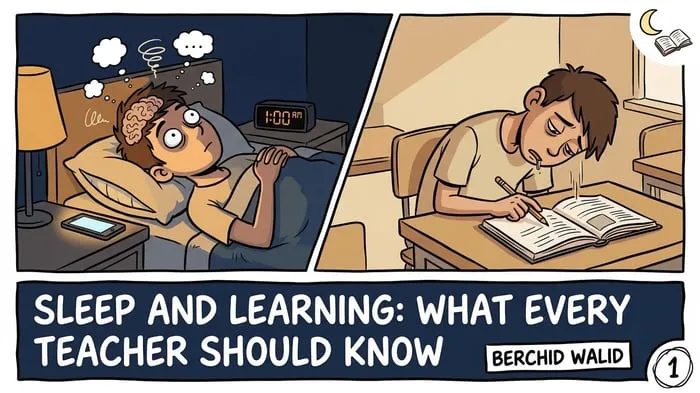
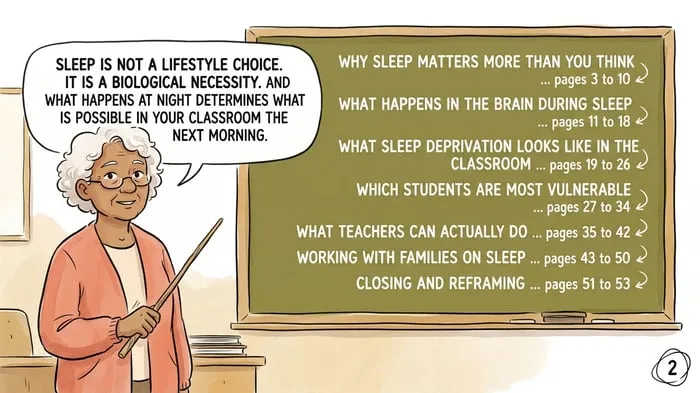
Sleep and Learning: What Every Teacher Should Know: A 53-page comic-style guide explaining how sleep shapes memory, focus, and behavior, with practical classroom ideas.
Related reading: 5 teaching tips to boost classroom focus and understanding autistic burnout and school exhaustion.
Also on FromTeachers:
Key Takeaways
- Sleep and student learning are linked because the brain stores new learning during sleep.
- Tired students may look restless or irritable, not only sleepy.
- Simple classroom changes reduce the impact of poor sleep.
- Warm, non-judgmental conversations help families build better routines.






Leave a Comment