

Sensory seeking behavior is easy to spot and easy to misread. A student rocks on two chair legs, crashes into the carpet at every transition, chews the collar of his shirt, and taps a pencil until the whole table is distracted. Adults may see defiance or a lack of self-control. Often, though, the student’s body is looking for more input so it can feel settled and ready to learn.
This guide explains how to recognize sensory seeking, observe it with purpose, plan safe ways to meet the need, and track whether those supports help. After reading, you will be able to build a simple, scheduled plan with the student’s team instead of reacting to each moment.
Examples are fictional. Adapt to the student’s goals and agreed supports. This is guidance, not a diagnosis.
At a glance
- Sensory seeking is often a search for input that helps the body feel organized.
- Observe what the student seeks, when, and what happens afterward before you plan.
- Offer safe, scheduled input, sometimes called a sensory diet, before the need peaks.
- Shape the classroom so useful input is built into normal routines.
- Track a few simple measures and review with the occupational therapist and family.
1. Understand sensory seeking behavior
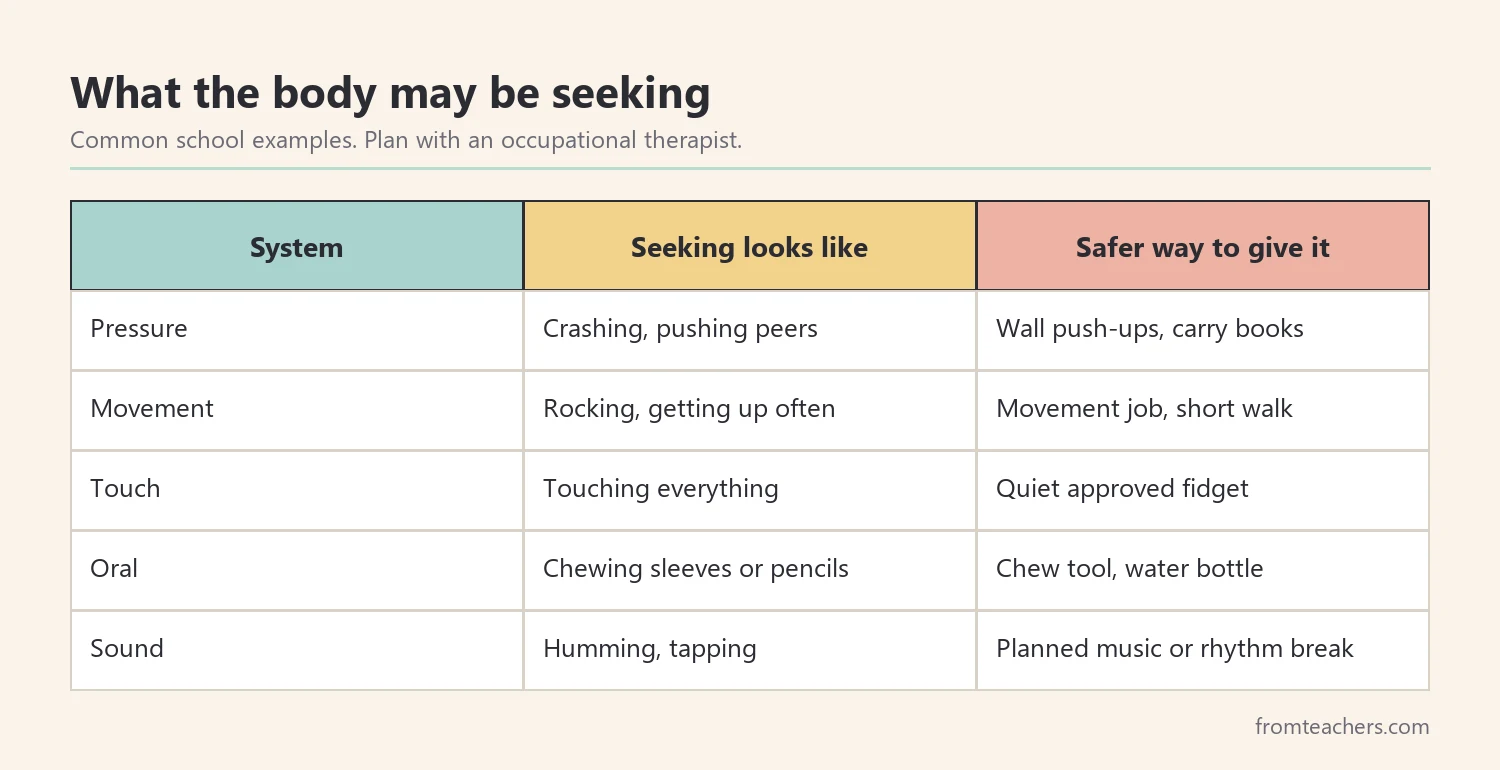
Everyone processes sensory information differently. Some people notice small sounds and want quiet. Others need more movement, pressure, or touch to feel alert and calm. Sensory seekers belong to the second group: they look for extra input, sometimes in ways that are not safe or not suited to the classroom.
Seeking can involve any sensory system, but some are especially common in school:
- Proprioceptive (body position and pressure): crashing, pushing, leaning on others, stomping, chewing.
- Vestibular (movement and balance): spinning, rocking, tipping the chair, frequent getting up.
- Tactile (touch): touching everything, rubbing textures, fidgeting with objects.
- Oral: chewing pencils, sleeves, or hair.
- Auditory: humming, tapping, or making noises.
Importantly, sensory differences are common in autistic students and in students with ADHD, but they also appear in students without any diagnosis. Moreover, a single student can seek some kinds of input and avoid others. For example, a child might crave deep pressure but hate loud noise.
It also helps to compare seeking with avoiding. A student who avoids input may cover their ears, refuse messy activities, or hide from busy spaces. A seeker moves toward input instead. Knowing the difference matters, because the supports point in opposite directions: an avoider may need less input, while a seeker usually needs more, delivered safely.
Worked example: Theo, grade 2
Theo is bright and friendly. During morning work, he rocks his chair, gets up often, and pushes against classmates in line. In the afternoon, he chews his sleeve and hums during reading. His teacher wonders whether these behaviors are a way to get attention or a sign that Theo’s body needs something.
2. Observe sensory seeking behavior with purpose
Before you plan, watch carefully. Good observation tells you what kind of input the student seeks, when the need peaks, and what happens after the student gets it. As a result, you can plan supports that fit, rather than guessing.
A simple observation record includes:
- Time and activity: what was happening when the behavior started.
- Behavior: exactly what the student did, in plain words.
- Likely input: movement, pressure, touch, oral, or sound.
- After: did the student settle, stay the same, or escalate?
Observe across several days and settings. One busy morning can give a misleading picture. In addition, ask the family what they see at home, and involve the school occupational therapist if one is available. An OT can assess sensory processing and help design a safe plan.
Worked example: Theo’s observation week
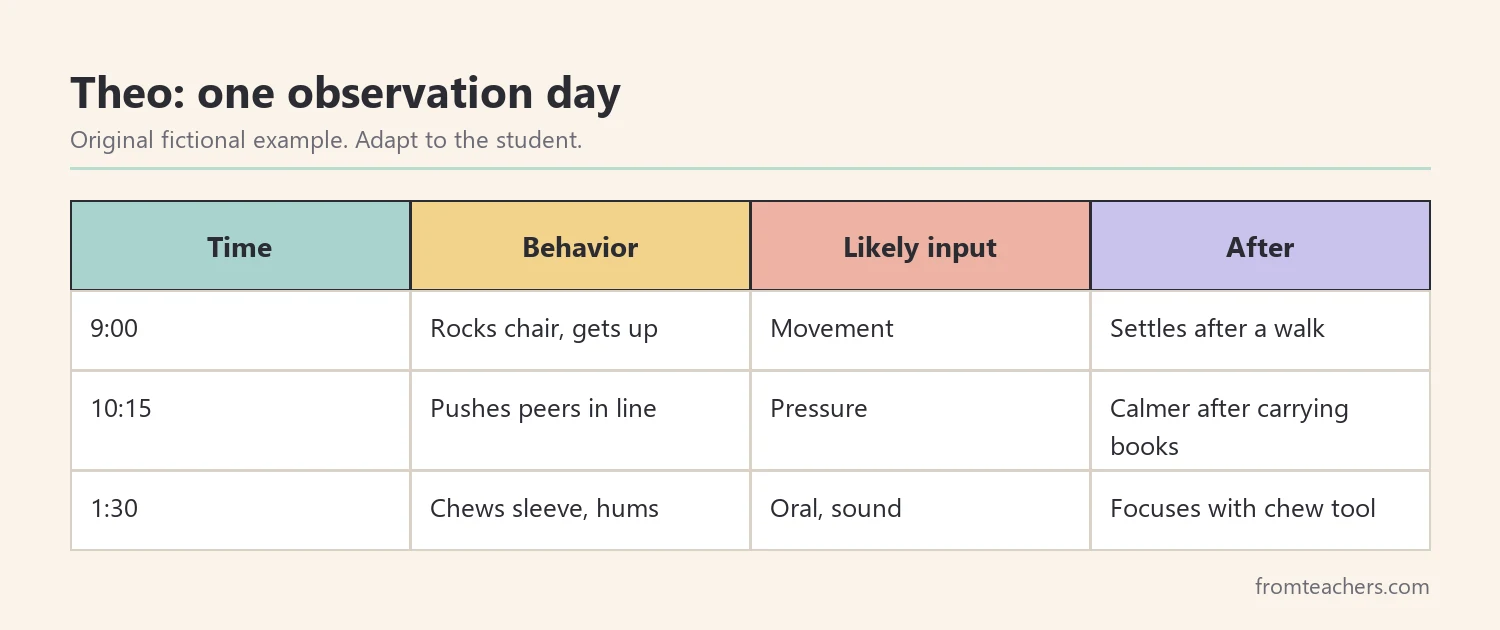
| Time | Behavior | Likely input | After |
|---|---|---|---|
| 9:00 morning work | Rocks chair, gets up | Movement | Settles after a walk |
| 10:15 line-up | Pushes peers | Pressure | Calmer after carrying books |
| 1:30 reading | Chews sleeve, hums | Oral, sound | Focuses with chew tool |
The pattern is clear. Theo seeks movement and pressure in the morning and oral input after lunch. Notably, he settles quickly when he gets the input in a safe way.
Before moving on, check for other explanations. Hunger, poor sleep, an uncomfortable seat, or work that is too hard can all look like restlessness. For example, a student who gets up every time writing starts may be avoiding a hard task rather than seeking movement. Ruling these out keeps the plan focused on the real need.
3. Plan a sensory diet that meets the need
A sensory diet is a planned schedule of sensory activities across the day. The idea is simple: give the body the input it needs before the need becomes urgent. Just as people eat regular meals instead of waiting until they are starving, a student can get regular sensory input instead of seeking it in disruptive ways.
Plan the sensory diet with the OT and the family when possible. Then choose activities that match the student’s needs:
- Heavy work for pressure: carrying books, pushing a cart, wall push-ups, stacking chairs.
- Movement: short walks, a stretch break, animal walks, or a job that involves moving around the room.
- Oral input: a chew tool, crunchy snack at snack time, or drinking water through a straw.
- Tactile input: a fidget that is quiet and approved for class.
Schedule the activities at the times your observations showed the need peaks. For Theo, that means heavy work before morning work and before line-up, plus a chew tool during afternoon reading. A useful resource for building this kind of plan is a sensory processing support guide with sensory diet planning pages, which also includes observation checklists and classroom environment checklists.
Worked example: Theo’s sensory diet
| Time | Activity | Minutes |
|---|---|---|
| 8:50 | Carry the book bin to the library | 4 |
| 10:10 | Wall push-ups before line-up | 2 |
| 11:30 | Animal walks on the way to lunch | 3 |
| 1:25 | Chew tool and water bottle | During reading |
| 2:15 | Stack chairs at the end of the day | 3 |
In total, Theo gets 12 minutes of planned heavy work and movement, plus oral input during reading. These short blocks fit into normal routines.
4. Shape the classroom environment
A sensory diet works best when the room supports it. Therefore, look for ways to build input into normal routines so the student does not have to leave or stand out.
Practical changes include:
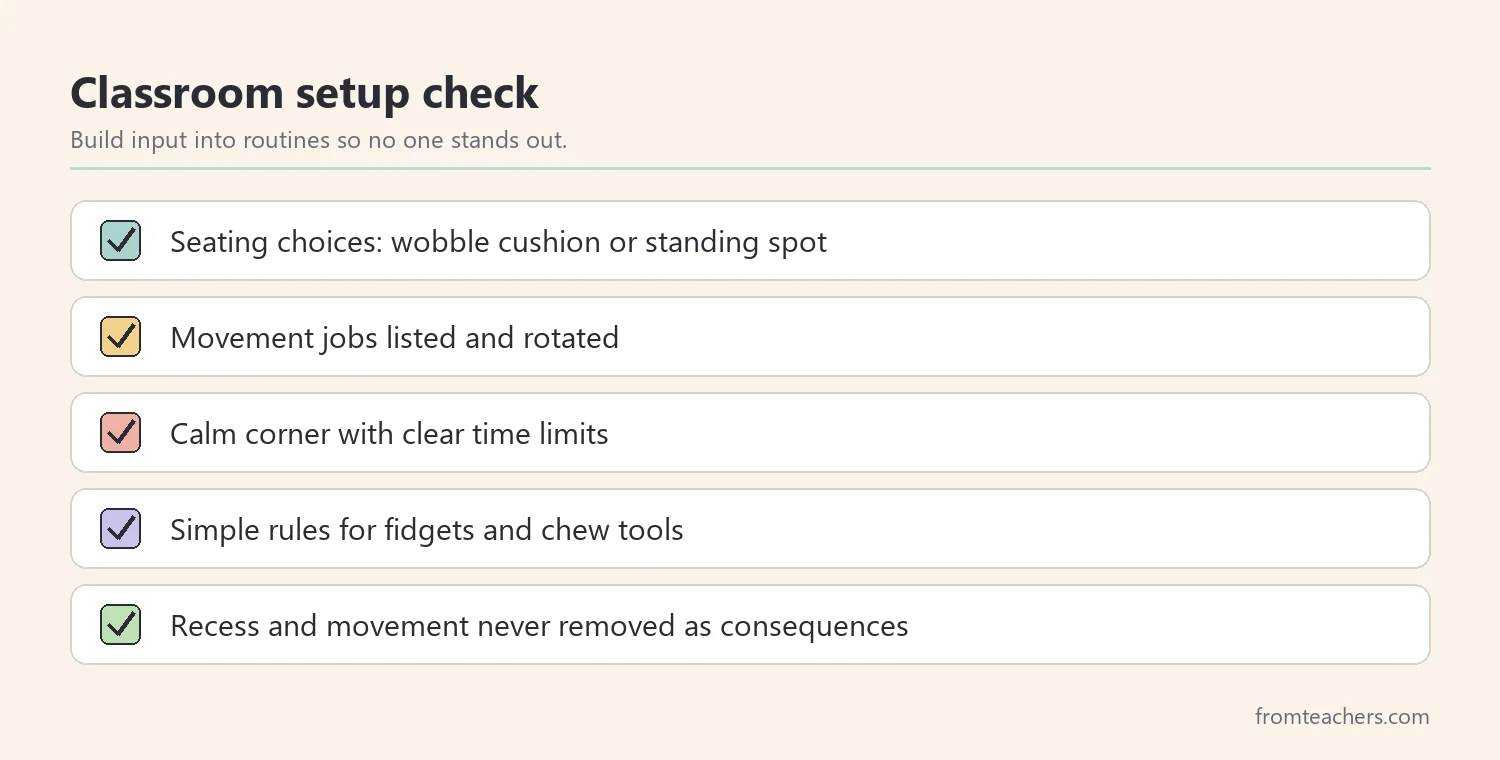
- Seating options: a wobble cushion, a standing spot, or a chair with a resistance band on the legs.
- Movement jobs: passing out papers, delivering notes, or watering plants.
- A calm corner: a small space with a weighted lap pad or cushions, used for short, planned breaks.
- Clear rules for tools: fidgets and chew tools are for helping the body, with simple rules about where and how to use them.
Moreover, many of these options help the whole class. Movement breaks and standing options can support attention for many students. When everyone has choices, the sensory seeker does not feel singled out.
In contrast, avoid removing recess or movement as a consequence. For a sensory seeker, losing movement often makes the next hour harder, not easier.
Worked example: Theo’s room changes
Theo’s teacher added a resistance band to the legs of his chair, so he can push his feet against it during morning work. She also made him the class “book carrier,” a job that gives heavy work twice a day. Two other students asked for bands too, so she added them at the same table. As a result, Theo’s tools look like normal classroom options rather than special equipment.
5. Teach the student to notice and ask
Over time, the goal is for the student to recognize their own needs and ask for input appropriately. This is a long-term skill, but even young students can start.
Begin with simple language about the body. For example, “Your body feels wiggly. What would help, push-ups or a walk?” Offer two choices so the student practices deciding. Next, teach a signal the student can use to ask for a break, such as a card or a hand sign.
In addition, connect sensory needs to feelings. Some students recognize “I feel like crashing” before they recognize “I feel restless.” Accept the student’s words and help them link the feeling to a safe action.
Finally, practice when the student is calm. Role-play a wiggly moment, then model choosing a tool and returning to work. Rehearsal makes the routine easier to use when the real need arrives, and it shows the student that asking is welcome, not a sign of trouble.
Worked example: Theo’s choice board
Theo’s teacher made a small choice board with three pictures: push-ups, carry books, and chew tool. When Theo starts rocking, the teacher points to the board. After a few weeks, Theo begins pointing to it himself before he starts rocking. That shift shows he is starting to notice his body’s signals.
6. Track sensory seeking behavior and review the plan
Tracking shows whether the plan is working. Keep it short so it fits a busy day. For example, count how many times per morning Theo leaves his seat without permission, and note how many planned activities he completed.
Worked example: Theo’s four-week data
| Week | Times out of seat (morning average) | Planned activities done (of 5 daily) |
|---|---|---|
| Baseline | 9 | 0 |
| 1 | 7 | 3 |
| 2 | 5 | 4 |
| 3 | 4 | 4 |
| 4 | 3 | 5 |
As the planned activities became consistent, unplanned seeking dropped. However, the team noticed that Mondays were still harder. They added one extra heavy-work job on Monday mornings.
Also, record what you see on hard days. Notes such as “fire drill at 10:00” or “new seat partner” explain spikes in sensory seeking behavior and help the team plan for similar days in the future.
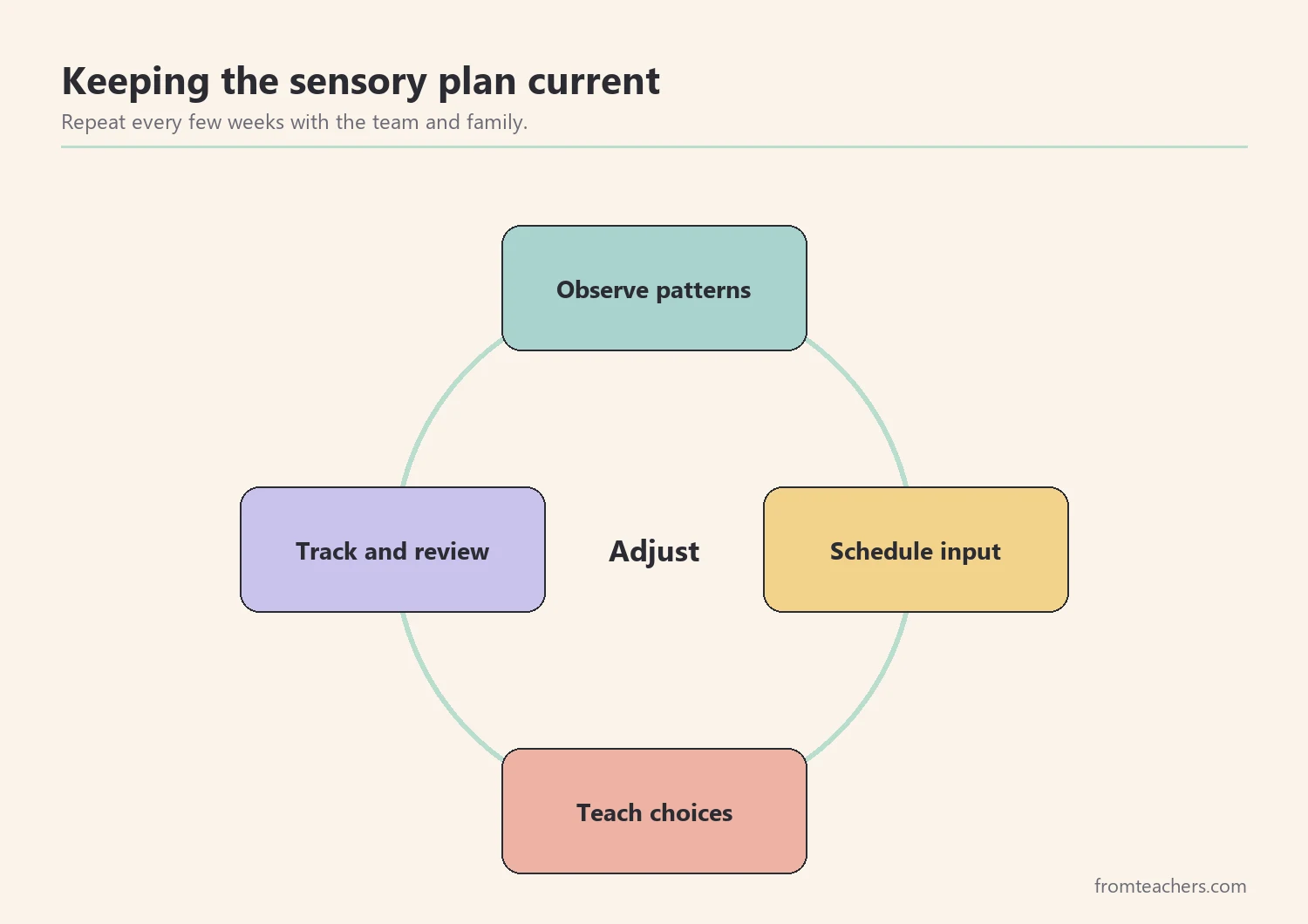
Review the plan every few weeks with the OT, teacher, and family. Keep activities that help, change those that do not, and remember that needs can shift with growth, seasons, and stress.
Common mistakes and how to avoid them
- Treating seeking as defiance. Fix: observe first and ask what input the behavior provides.
- Waiting until the student is dysregulated. Fix: schedule input before the times the need usually peaks.
- Taking away movement as a consequence. Fix: protect recess and planned movement.
- Using sensory breaks as rewards. Fix: give planned input whether or not the student has earned something.
- Planning without the OT or family. Fix: share observations and build the plan together.
Questions teachers and parents ask about sensory seeking behavior
Is sensory seeking behavior the same as ADHD?
No. They can overlap, and some students have both, but sensory seeking describes how a person responds to sensory input. Only qualified professionals can evaluate or diagnose a condition.
What is a sensory diet?
A sensory diet is a planned schedule of sensory activities across the day. It is usually designed with an occupational therapist to match the student’s specific needs.
Will giving input make the student want more?
Planned input usually helps the student feel more settled, so unplanned seeking often decreases. Track the data to see what happens for your student. If seeking increases, review the timing and type of input with the occupational therapist before adding more.
Can the whole class use sensory tools?
Often, yes. Movement breaks and seating options can benefit many students. Set clear, simple rules so tools stay useful and not distracting.
What can parents do at home?
Families can offer heavy work such as carrying groceries, pushing a laundry basket, or playing outdoors before homework. Sharing what helps at home also guides the school plan. Likewise, teachers can share which activities work in class so families can try them on weekends.
Related reading: Managing Sensory Overload in Autism and ADHD, Understanding Autism and ADHD Meltdowns, and Effective ADHD Classroom Strategies.
A companion resource for sensory seeking behavior:

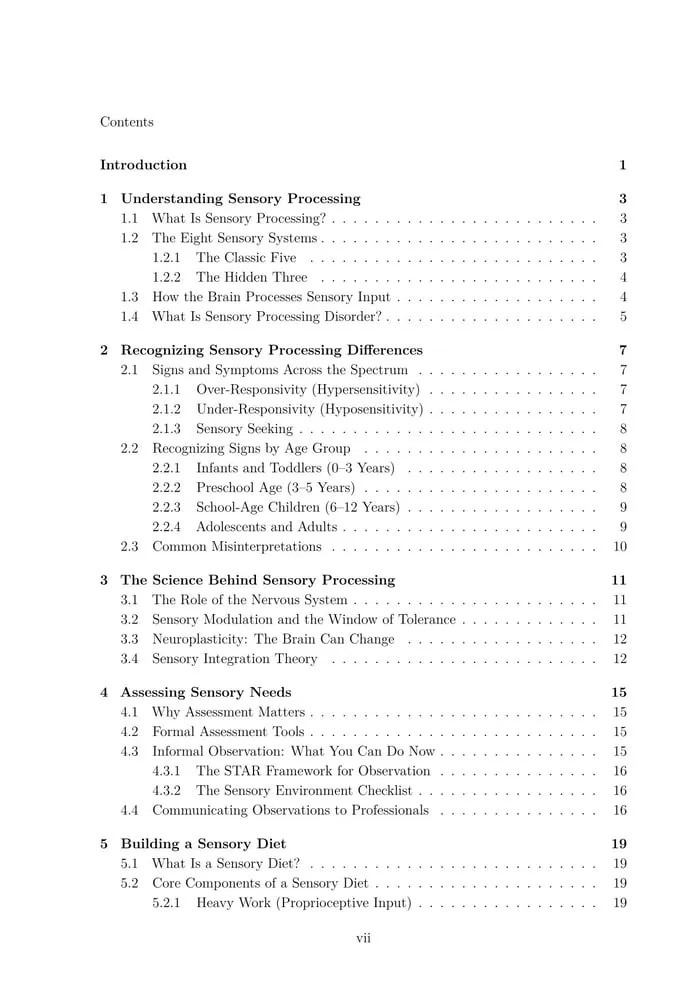
Sensory Processing Support Guide for Special Education Classrooms: a 70-page guide on recognizing seekers, avoiders, and mixed profiles, assessing sensory needs, building a sensory diet, and creating sensory-supportive environments, with printable observation checklists and planning pages.
Sources and scope
- American Occupational Therapy Association (AOTA): information on occupational therapy and sensory integration.
- IRIS Center, Vanderbilt University: free modules on classroom behavior and autism supports.
- Understood.org: resources on sensory processing and learning differences for families and teachers.
- Centers for Disease Control and Prevention: Autism: general information about autism, including sensory differences.
Scope: this guide offers classroom strategies for students who seek sensory input. It does not diagnose sensory processing differences or replace an evaluation by an occupational therapist.
Key takeaways
- Sensory seeking is often a search for input, not misbehavior.
- Observe what, when, and what happens after before you plan.
- Schedule safe input before the need peaks.
- Build movement and heavy work into normal routines.
- Teach the student to notice and ask, and review the plan regularly.










Leave a Comment