
Dinosaur writing prompts are one of the easiest ways to get reluctant middle school writers to pick up a pencil, because almost every student has a favorite dinosaur or a question about them. Picture Ethan, a seventh grader who writes two lines and stops. His ELA teacher, Ms. Brooks, noticed that he spent a whole lunch break explaining why Triceratops had horns.
This list is for ELA and science teachers working with students ages 11 to 13. It ranks ten prompts from quick warm-ups to full projects, based on class time. Each prompt explains what students write, why it works, how to run it and how Ethan responded. You will also find a sample rubric and tips to keep the writing grounded in real science instead of movie myths.
Examples are fictional. Adapt to the student’s goals and agreed supports. This is guidance, not a diagnosis.
At a glance
- High-interest topics can lower the barrier for reluctant writers.
- Mix creative prompts with evidence-based ones.
- Students should check facts against reliable sources.
- Short warm-ups build fluency before longer projects.
- A simple rubric keeps feedback focused.
How we ranked these prompts
We ranked the ten dinosaur writing prompts by the class time they need. Prompts 1 to 3 take five to ten minutes. Prompts 4 to 7 fit a single lesson. Then, prompts 8 to 10 are multi-day projects that need research. Figure 1 shows the full ranking with writing type and time.
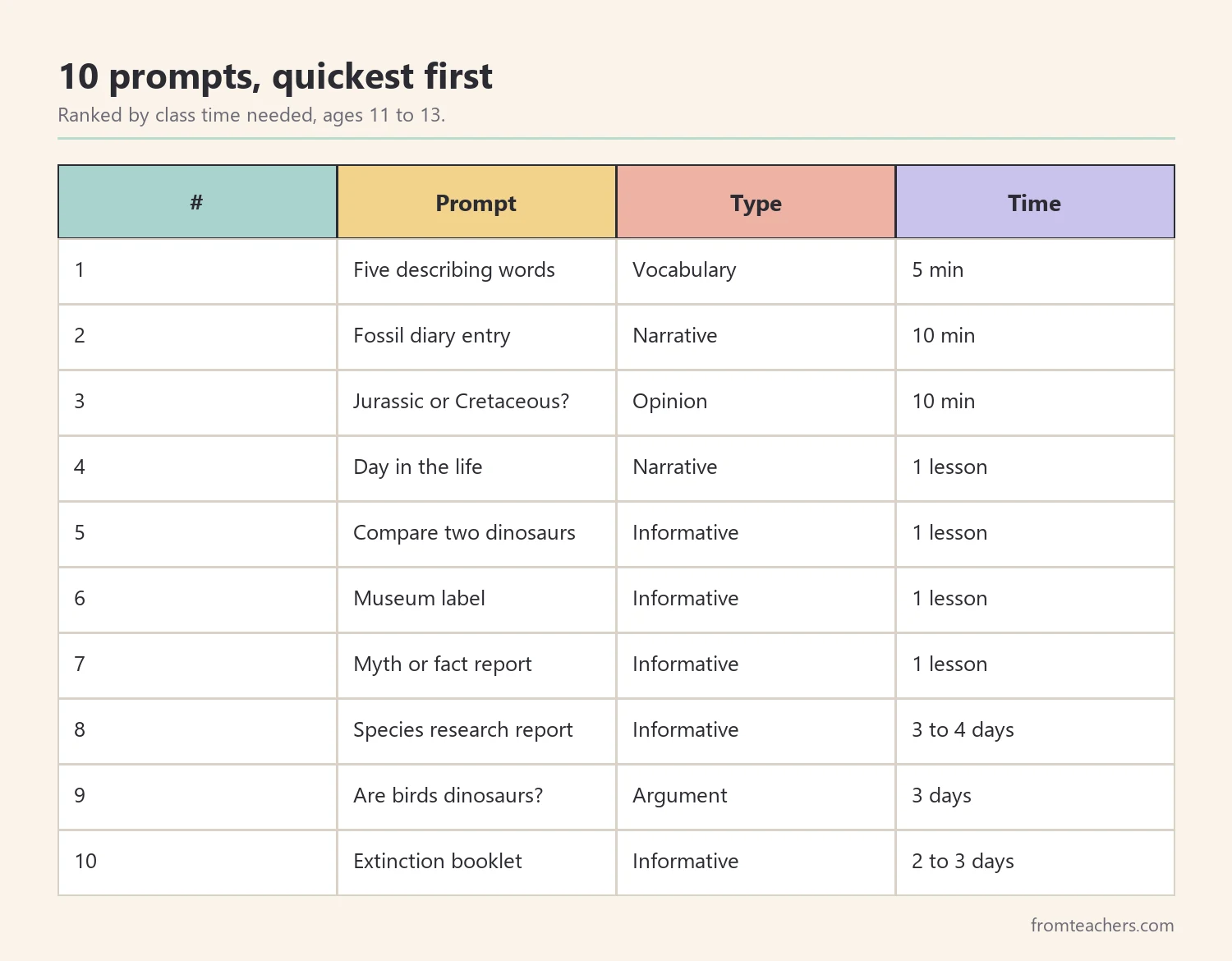
We also balanced writing types. Some prompts are narrative, some are informative and some are argumentative. Therefore, you can use dinosaurs across a whole writing unit without repeating the same task.
1. Five words to describe your favorite dinosaur
What students write: five precise adjectives for one dinosaur, then one sentence using three of them.
Why it works: it is short, low risk and builds vocabulary. Even reluctant writers can finish it.
How to run it: show an image, set a three minute timer and ban weak words like “big” and “cool.”
Example: Ethan wrote “armored, horned, frilled, stocky, plant-eating” for Triceratops, then built a full sentence. It was more than he usually wrote in a warm-up.
2. A fossil’s diary entry
What students write: a short diary entry from the point of view of a fossil being discovered.
Why it works: point of view writing stretches imagination, while the setting teaches how fossils are found.
How to run it: briefly explain how paleontologists dig and clean fossils first. Then give eight minutes to write.
Example: Ethan’s fossil complained about the brush tickling its ribs. The class laughed, and he read it aloud.
3. Would you rather live in the Jurassic or the Cretaceous?
What students write: a quick opinion paragraph with two reasons.
Why it works: it introduces argument writing with a fun choice and pushes students to use facts about each period.
How to run it: share a short overview of each period, then ask for a claim and two reasons.
Example: Ethan chose the Cretaceous because “that is when Triceratops lived.” Ms. Brooks asked him to add a second reason, which sent him to the field guide.
4. A day in the life of a young Stegosaurus
What students write: a narrative that includes at least three real facts about habitat, diet or predators.
Why it works: it blends story with science. Students must research to make the story accurate.
How to run it: students highlight their three facts so the teacher can check them quickly.
Example: Ethan wrote about a Triceratops instead, with facts about its diet and horns. His highlighted facts were all correct.
5. Compare two dinosaurs
What students write: an informative paragraph comparing two dinosaurs, such as T-Rex and Brachiosaurus.
Why it works: comparison writing builds organization. It also teaches transition words like “however” and “similarly.”
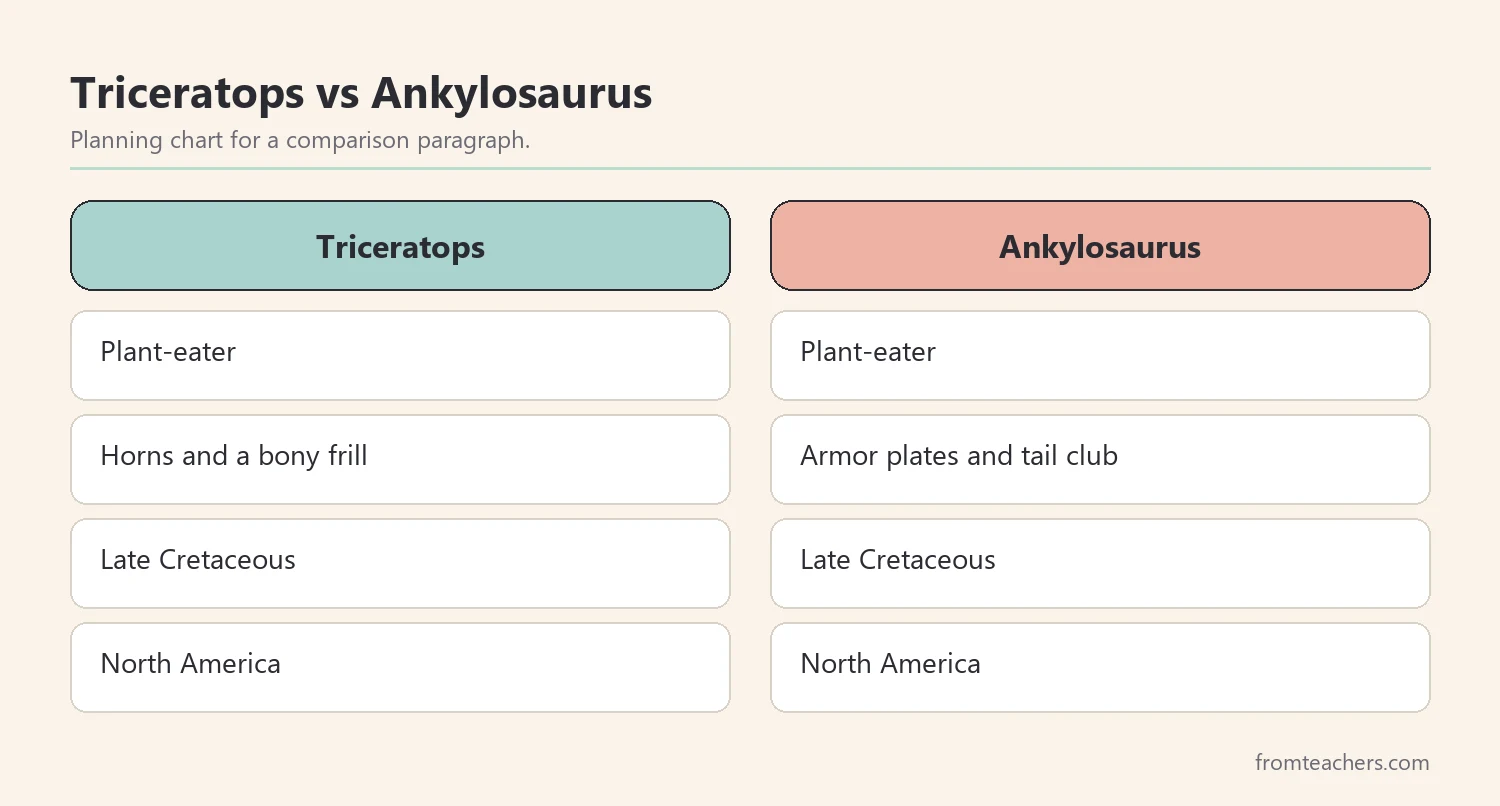
How to run it: students fill a quick two column chart first, then write. Figure 2 shows a sample chart.
Example: Ethan compared Triceratops and Ankylosaurus as “two plant-eaters with different armor.” His paragraph used three transition words.
6. Write a museum label
What students write: a 60 to 80 word museum label for one dinosaur skeleton.
Why it works: word limits teach concise writing. In addition, students learn to choose the most important facts.
How to run it: show a real museum label from a natural history museum website first, then let students draft and trim.
Example: Ethan’s first draft had 140 words. Cutting it to 80 made him choose the facts that mattered most.
7. Myth or fact news report
What students write: a short news report that corrects a common dinosaur myth, such as humans living alongside dinosaurs.
Why it works: it teaches students to check sources and explain evidence.
How to run it: list a few common movie myths, then students research one and write a “breaking news” correction.
Example: Ethan learned that people and non-avian dinosaurs never lived at the same time, separated by tens of millions of years, and wrote it as a headline story.
8. Research report on one species
What students write: a multi-paragraph report with an introduction, three body paragraphs and a conclusion.
Why it works: it is a classic informative project, and dinosaurs keep motivation high across several days.
How to run it: give a reliable source set so students do not get lost online. A ready-made dinosaurs student field guide for ages 11 to 13 offers species profiles with size comparisons, time periods and regions, along with sections on ecosystems and extinction, so students have accurate facts in one place.
Example: Ethan wrote four paragraphs on Triceratops, the longest piece he had written all year.
9. Argument: are birds living dinosaurs?
What students write: an argumentative essay using evidence about the link between dinosaurs and birds.
Why it works: it challenges students to use evidence and address a counterclaim. Many students are surprised by the topic.
How to run it: provide short readings from museum websites, then teach the claim, evidence and reasoning structure.
Example: Ethan argued yes and used feathers and skeleton features as evidence. He even added a counterclaim paragraph.
10. Extinction explainer for younger students
What students write: a short illustrated booklet explaining the asteroid impact and extinction for second graders.
Why it works: writing for a younger audience forces clear, simple explanations, which shows real understanding.
How to run it: plan over two or three lessons. If possible, have students read their booklets to a younger class.
Example: Ethan’s booklet used a simple drawing of the impact. The second graders asked him questions, and he answered confidently.
Creative versus evidence-based prompts
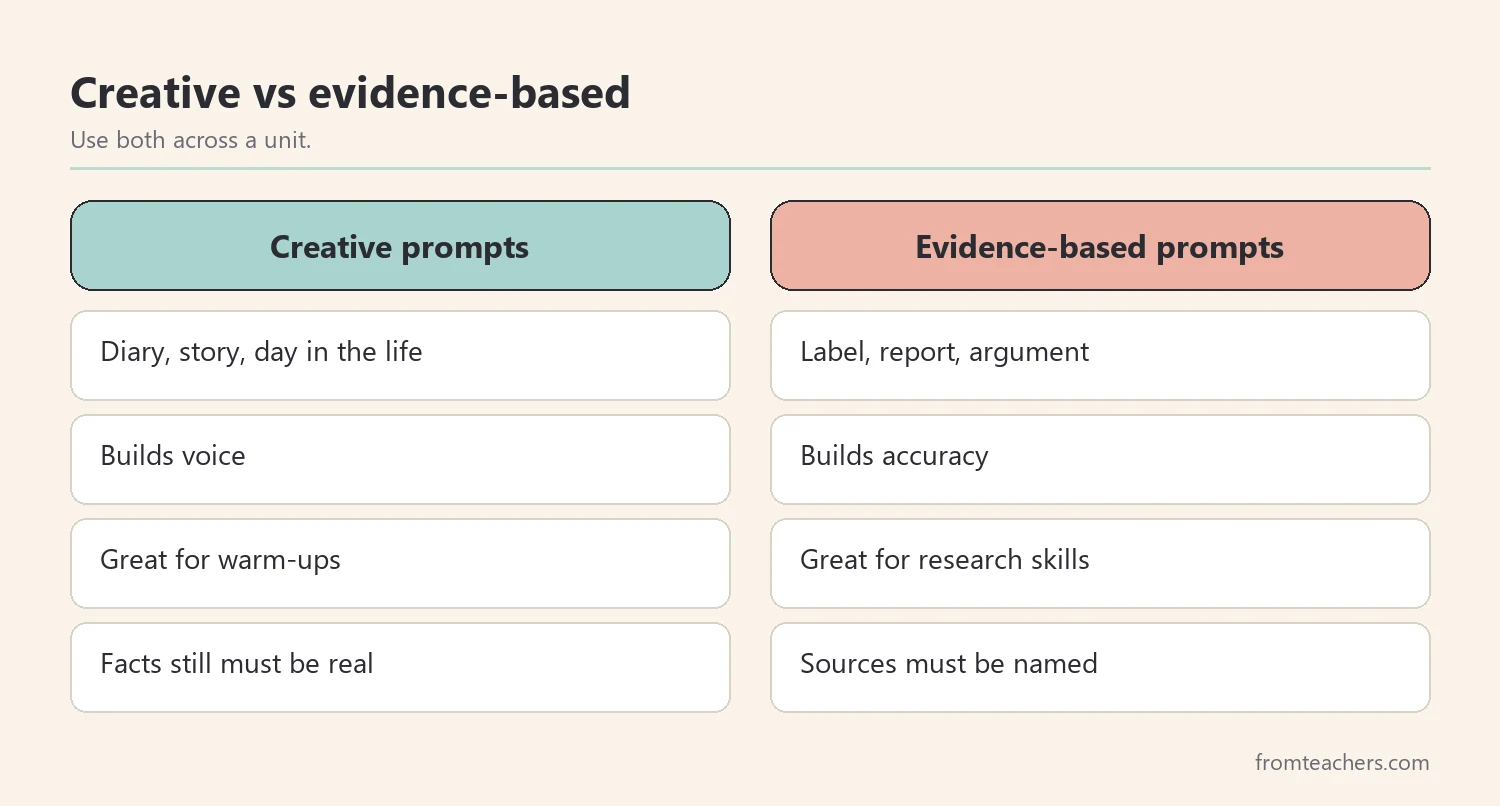
Both types of dinosaur writing prompts are useful, but they build different skills. Figure 3 compares them, so you can balance your unit.
| Prompt type | Main skill | Good for |
|---|---|---|
| Creative (diary, story) | Voice, imagination | Warm-ups, reluctant writers |
| Informative (label, report) | Organization, accuracy | Research skills |
| Argument (period, birds) | Claims, evidence | Critical thinking |
A simple rubric for dinosaur writing prompts
Keep feedback focused on a few criteria. Figure 4 shows a four row rubric Ms. Brooks used for Ethan’s report, with scores from 1 to 4.
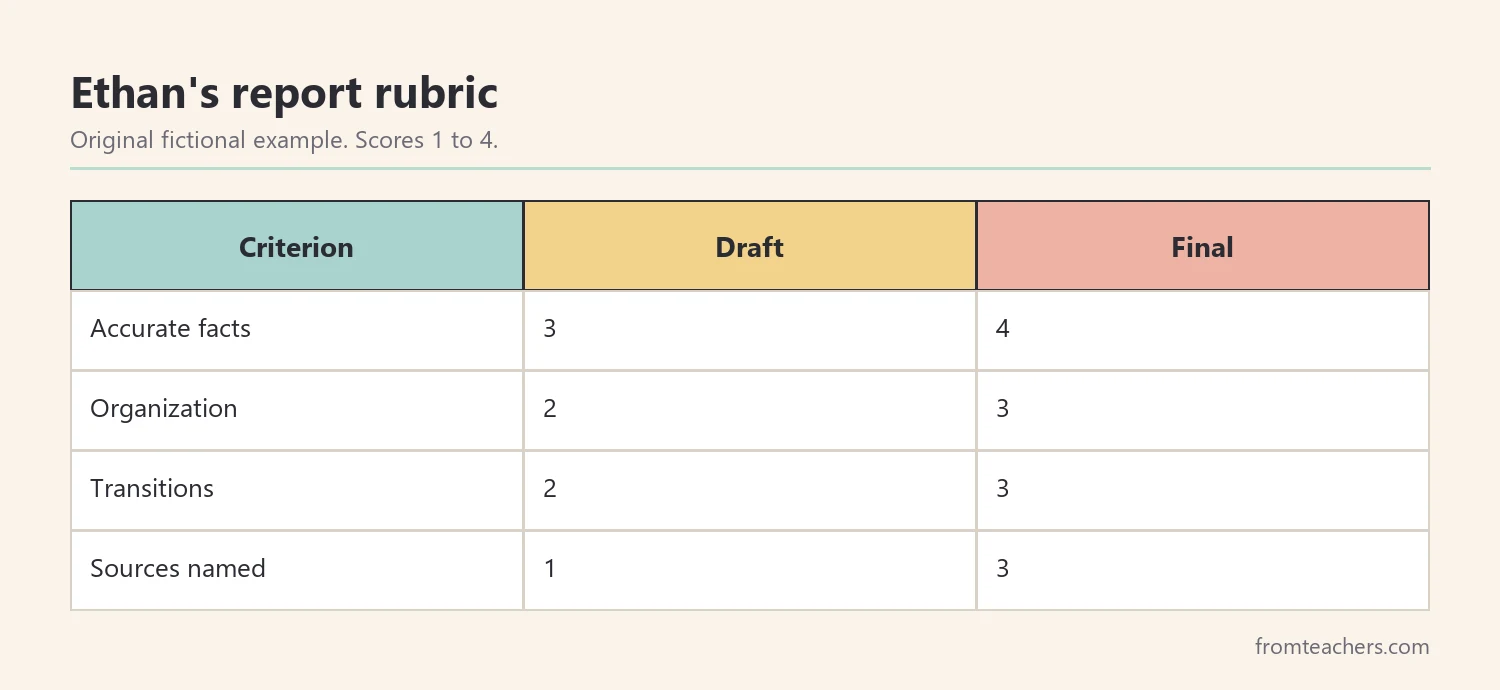
Share the rubric before students write. When students know the criteria, they tend to check their own work more carefully.
A writing routine that keeps science accurate
Students often mix movie scenes with real science. Figure 5 shows a four step routine that keeps writing creative but accurate.
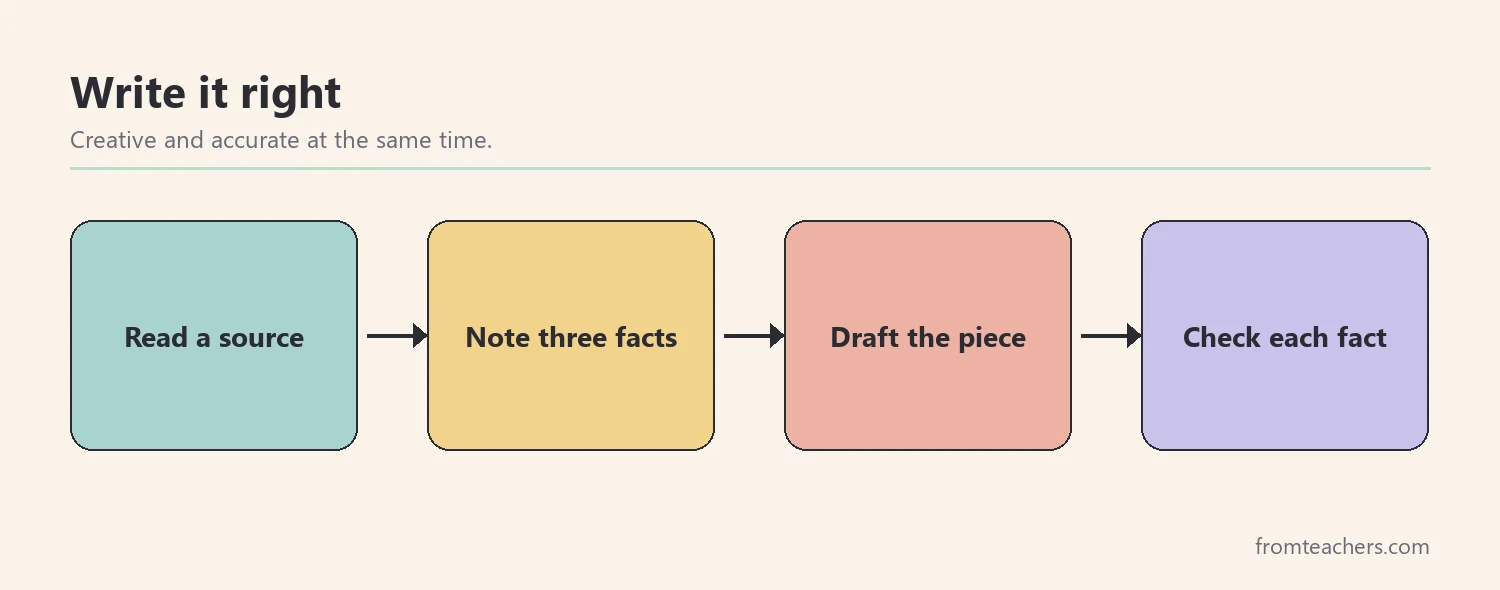
The fact check step is short but important. Ask students to name the source of each fact they use. For creative pieces, they can still invent characters and events, as long as the science details are real.
Adapting prompts for different writers
Middle school classes include confident writers and students who struggle to get started. Fortunately, every prompt on this list can be adjusted. For students who need more support, give sentence starters such as “Triceratops used its horns to…” and allow a shorter word count. A word bank with key terms like herbivore, predator and fossil also helps.
For advanced writers, add a twist. For example, ask them to include a counterclaim, write from two points of view or cite two different sources. Similarly, students who prefer speaking can record a short audio draft first and then write from it.
Ms. Brooks gave Ethan sentence starters for the research report but not for the warm-ups. As a result, he gained independence on short tasks while still getting support on the longest piece.
Common mistakes and how to avoid them
- Letting movies replace research. Fix: require at least one reliable source.
- Using only creative prompts. Fix: mix narrative, informative and argument tasks.
- Starting with a long project. Fix: build fluency with warm-ups first.
- Grading everything at once. Fix: focus feedback on two or three rubric rows.
- Ignoring reluctant writers’ interests. Fix: let them choose the dinosaur.
Questions teachers ask about dinosaur writing prompts
Are dinosaur topics too young for middle school?
Not when the tasks are rigorous. Research reports, argument essays and evidence about birds and extinction suit ages 11 to 13 well.
How do I stop students from copying facts?
Ask for facts in their own words with the source named. Short note-taking charts help students paraphrase.
Can these prompts work in science class?
Yes. Prompts such as the myth or fact report and the birds argument fit science writing standards in many schools.
How long should a warm-up prompt take?
Five to ten minutes is enough. The goal is fluency, not a finished piece.
What if a student does not like dinosaurs?
Offer a related topic, such as fossils, extinction or modern birds, so they still practice the same skill.
Related reading: Learning Styles Student Success Guide and 5 Practical Teaching Tips to Boost Classroom Focus.
You may also need: Our Solar System: A Complete Student Guide.
A companion resource for teachers using dinosaur writing prompts:
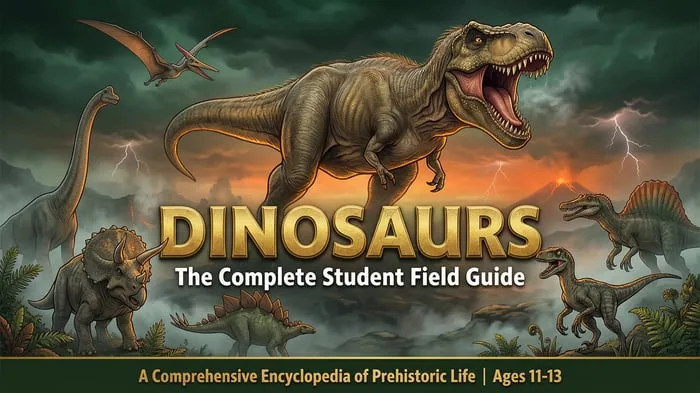
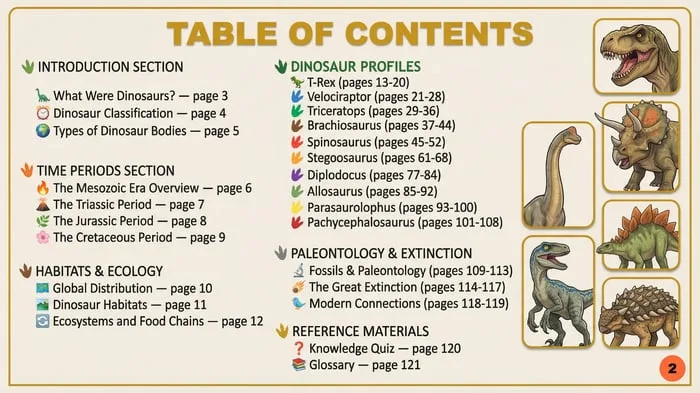
Dinosaurs: The Complete Student Field Guide: 122 richly illustrated pages for ages 11 to 13, covering what dinosaurs were, the Triassic, Jurassic and Cretaceous periods, in-depth profiles of species such as T-Rex, Velociraptor, Triceratops, Brachiosaurus, Stegosaurus and Ankylosaurus with size comparisons, habitats and food chains, fossils, the great extinction and the link to birds, plus a knowledge quiz and a glossary.
Sources and scope
- University of California Museum of Paleontology: educational pages on fossils, deep time and the history of life.
- National Park Service Fossils and Paleontology: information on fossils and paleontology in US national parks.
- Natural History Museum, London: articles and a dinosaur directory written for general readers.
- National Council of Teachers of English: professional resources on teaching writing across grade levels.
This list covers writing prompts for ages 11 to 13 that build on dinosaur science content. It does not cover a full science unit, and facts used in student writing should be checked against reliable museum or textbook sources.
Key takeaways
- Dinosaur writing prompts can motivate reluctant middle school writers.
- Rank tasks by time and start with short warm-ups.
- Balance creative, informative and argument writing.
- Ground every piece in reliable science sources.
- Use a simple shared rubric for focused feedback.



Leave a Comment