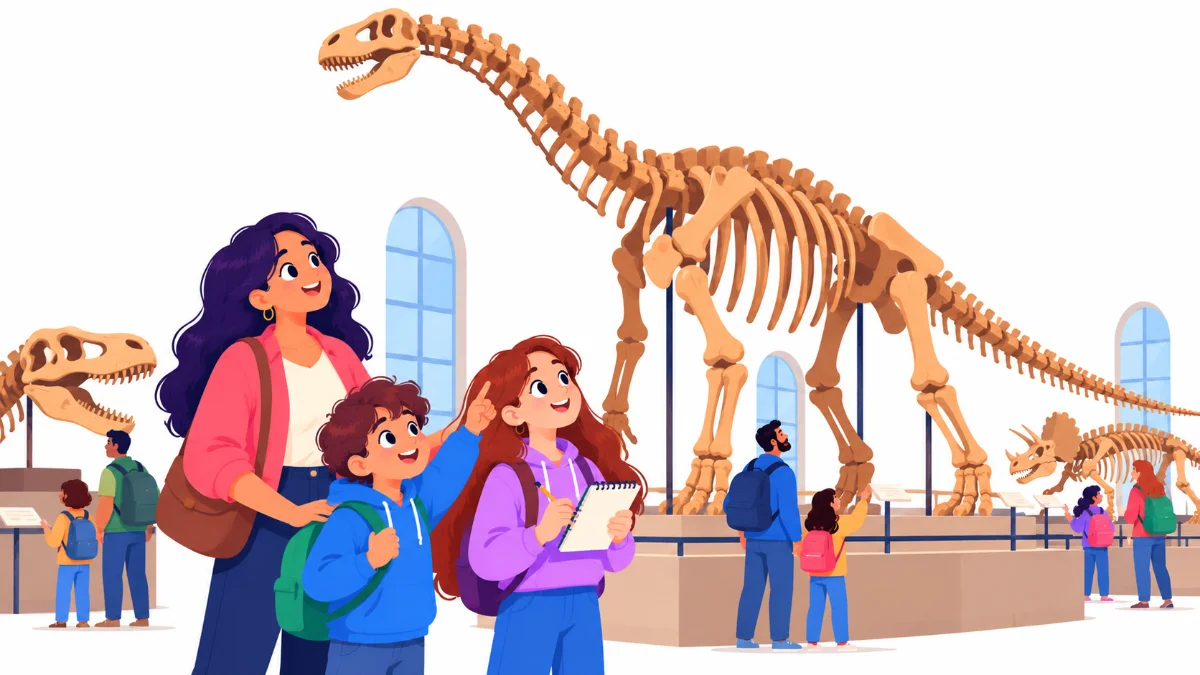

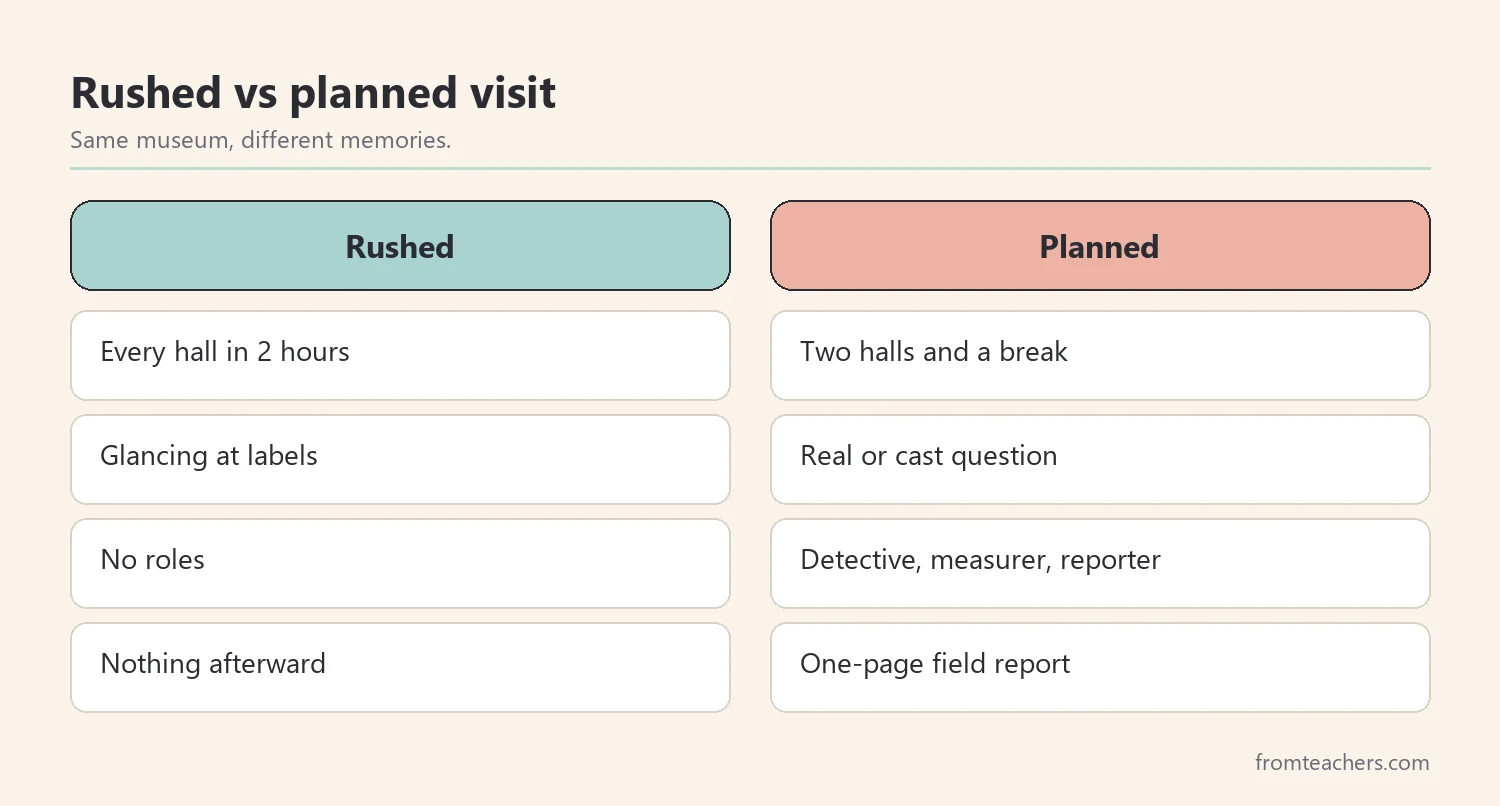
A dinosaur museum visit with kids can be the best day of the year or a blur of crowds, gift shops and tired legs. The difference is usually a little planning. Picture the Hassan family: Amira, age 12, who already knows a lot about dinosaurs, and her brother Yusuf, age 9, who mostly wants to see “the biggest one.” Last time, they rushed through every hall in two hours and remembered almost nothing.
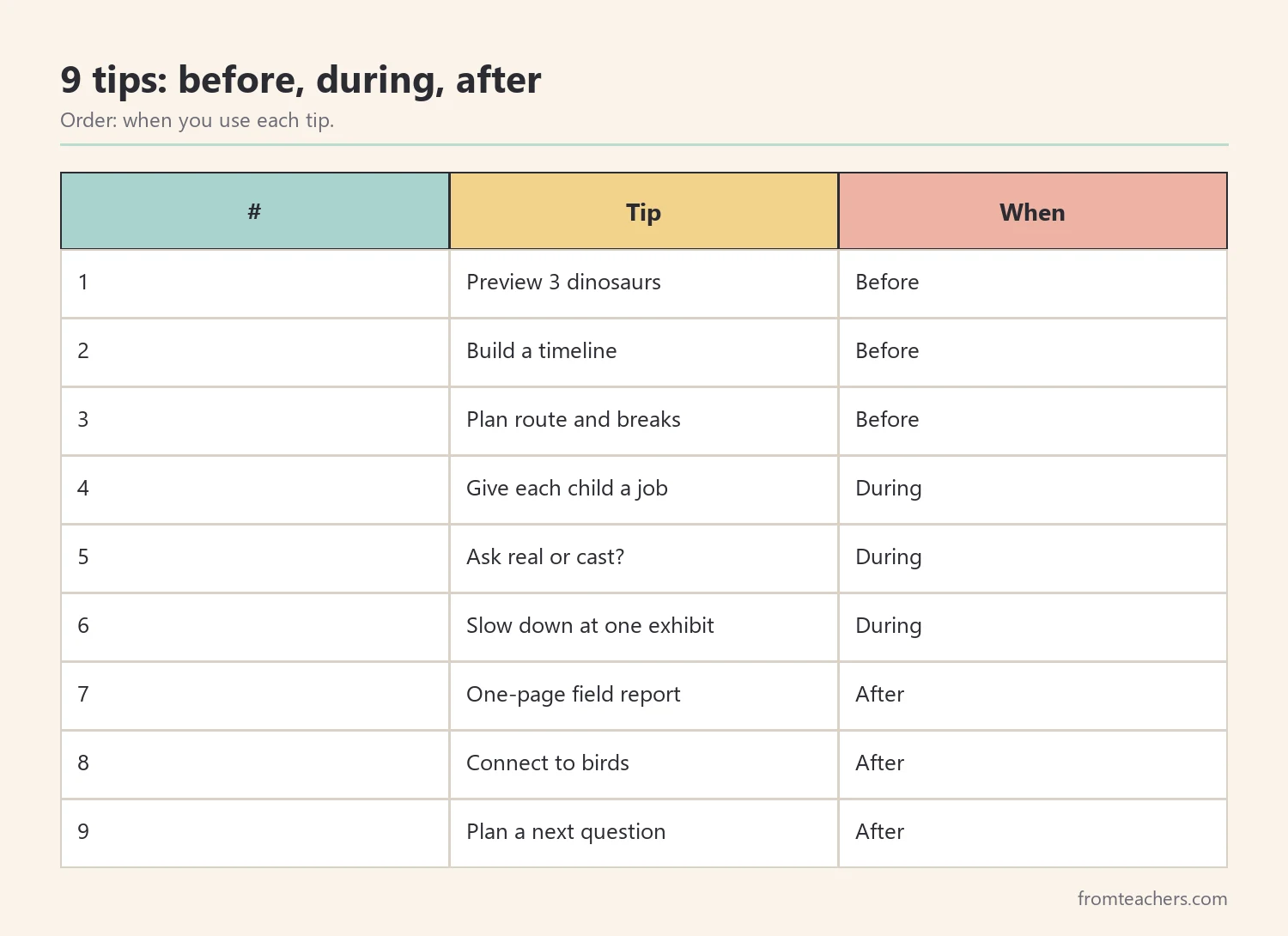
This list is for parents and caregivers of children roughly 9 to 13 years old. It gives nine tips for a dinosaur museum visit with kids, ordered in time: three before you go, three in the museum and three afterward. Each tip includes what to do, why it helps and how the Hassan family tried it. Ages and details are fictional, and you can adapt everything to your own museum.
Examples are fictional. Adapt to the student’s goals and agreed supports. This is guidance, not a diagnosis.
At a glance
- A short preview at home makes the museum far more meaningful.
- Pick a few dinosaurs or halls instead of trying to see everything.
- Give each child a simple job, such as fossil detective or measurer.
- Plan breaks and snacks before anyone gets tired.
- A small project afterward turns the visit into real learning.
How this list is organized
We ordered the nine tips by when you use them: before, during and after the trip. You do not need all nine. Even two or three, such as a quick preview and a short follow-up, can change how much your child remembers.
Also, the tips work for large natural history museums and for smaller local museums with a single fossil room. Figure 1 shows the full plan.
Before you go
The first three tips take about an hour in total, spread over a few evenings. They turn a day out into a learning trip.
1. Preview three dinosaurs at home
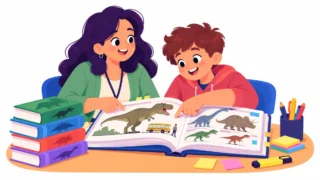
What to do: a few days before the trip, look up which dinosaurs your museum displays, then let your child choose three to read about.
Why it helps: children notice more when they recognize what they see. A preview turns a skeleton into “the one I read about.”
Example: Amira chose Triceratops, Stegosaurus and T. rex. Yusuf chose Brachiosaurus because it was the tallest in the book. They used the Dinosaurs Complete Student Field Guide for ages 11 to 13, which has a profile for each with size, time period and region.
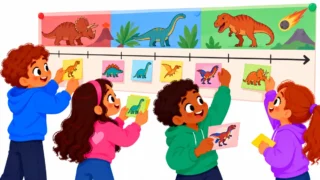
2. Build a simple timeline
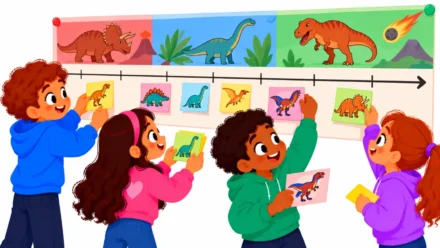
What to do: draw a line with three sections for the Triassic, Jurassic and Cretaceous periods, and place your chosen dinosaurs on it.
Why it helps: many children, and many adults, assume all dinosaurs lived at the same time. In fact, Stegosaurus lived in the Jurassic, long before T. rex appeared near the end of the Cretaceous. A timeline makes this visible.
Example: Yusuf was amazed that T. rex lived closer in time to humans than to Stegosaurus. He told the museum guide, who smiled and confirmed it.
3. Plan the route and the breaks
What to do: check the museum map online, choose two or three halls and plan a snack break in the middle. Check accessibility information if anyone needs quiet spaces, elevators or seating.
Why it helps: tired, hungry children stop learning. A plan prevents marathon walks.
Example: The Hassans chose the dinosaur hall and the fossil lab, with lunch in between. They skipped the rest of the museum for another day.
At the museum
Inside the museum, the goal is focus, not coverage. These three tips keep children curious and calm.
4. Give each child a job
What to do: assign simple roles: “fossil detective” finds one real fossil and one cast, “measurer” compares sizes to the family, “reporter” writes or records three facts.
Why it helps: jobs give children a purpose and reduce wandering.
Example: Amira was the reporter and filled half a notebook page. Yusuf was the measurer and announced how many of him would fit along Brachiosaurus’s neck.
5. Ask “real or cast?”
What to do: read labels together and find out whether a skeleton is made of real fossil bone or a cast, a copy made from molds.
Why it helps: many museum skeletons include casts, since real fossils are heavy, fragile and valuable for research. Asking this question teaches children to read labels and think like scientists.
Example: Amira found a sign explaining that part of a skeleton was a cast. She asked why, and a volunteer explained that the original bones were kept for study.
6. Slow down at one exhibit
What to do: choose one exhibit and spend ten minutes there. Ask open questions: What do you notice? What might this animal have eaten? How did it move?
Why it helps: slow looking leads to deeper thinking than rushing past fifty labels.
Example: At the Triceratops skull, Yusuf noticed the beak-like mouth and guessed it ate plants. Amira compared the horns to a rhino’s. Their conversation lasted longer than their entire previous visit to the hall.
After the visit
The learning does not end at the exit. A short follow-up in the next week helps facts stick.
7. Make a one-page “field report”
What to do: at home, ask each child to make a one-page report on their favorite dinosaur: drawing, size, time period, diet and one surprising fact.
Why it helps: retelling and organizing information strengthens memory.
Example: Amira wrote about Triceratops. Yusuf drew Brachiosaurus next to a school bus to show its size. Both reports went on the fridge.
8. Connect dinosaurs to birds
What to do: watch birds in the park or backyard, and talk about how scientists consider birds to be living dinosaurs.
Why it helps: the connection makes the past feel alive and gives children a reason to keep observing.
Example: The next weekend, Yusuf watched pigeons and said, “They walk like little raptors.” It was a great observation to build on.
9. Plan a next question
What to do: ask each child what they still want to know, and write the questions down for the next library trip or museum visit.
Why it helps: curiosity grows when questions are welcomed and followed up.
Example: Amira wanted to know how scientists date fossils. Yusuf wanted to know which dinosaur was the fastest. They read about both the following week.
A sample family plan
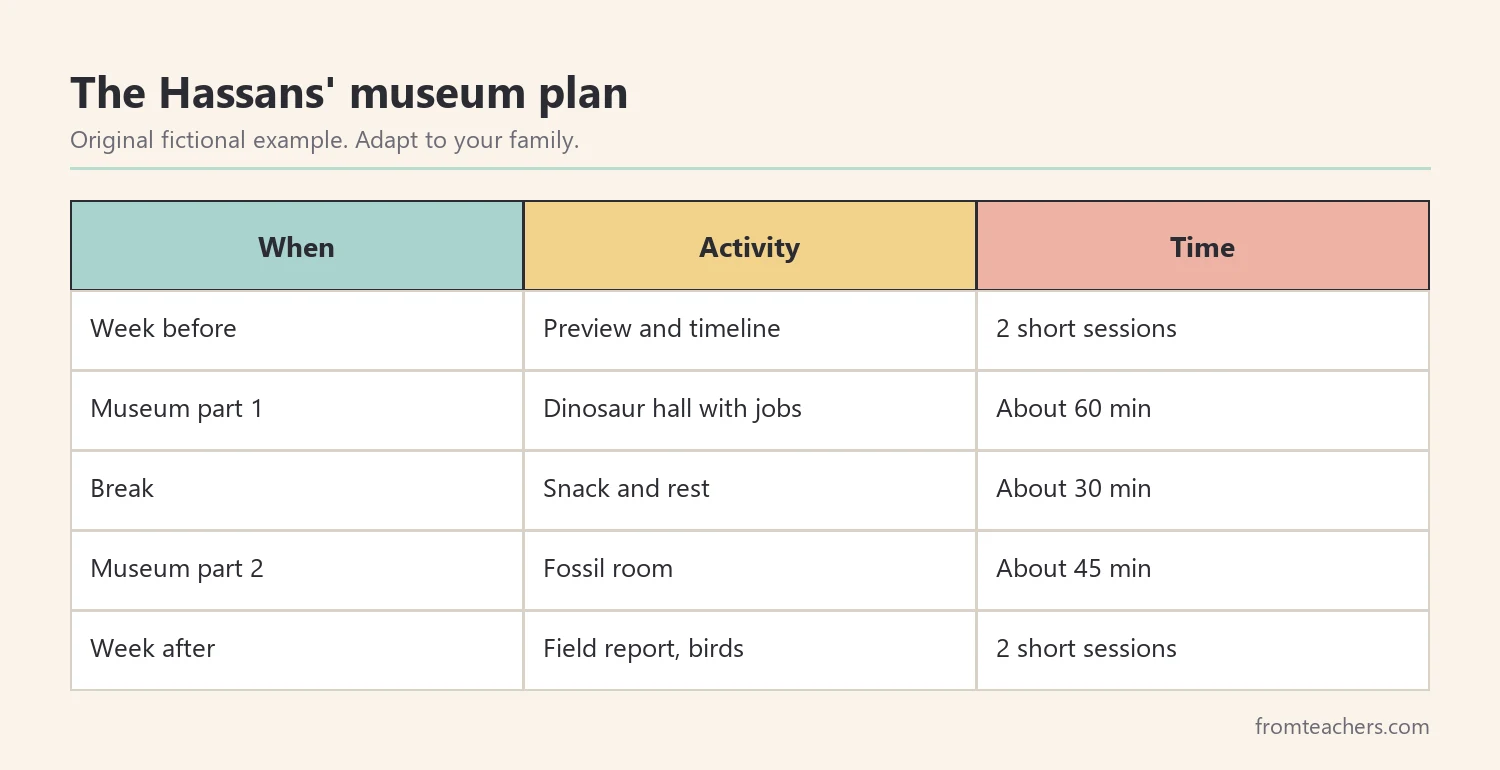
The table below shows how the Hassans planned their dinosaur museum visit with kids. Times are fictional and should match your museum and your children’s energy.
| When | Activity | Time |
|---|---|---|
| Week before | Preview 3 dinosaurs, timeline | 2 short sessions |
| Museum, part 1 | Dinosaur hall with jobs | About 60 min |
| Break | Snack and rest | About 30 min |
| Museum, part 2 | Fossil room, slow looking | About 45 min |
| Week after | Field report, bird watch | 2 short sessions |
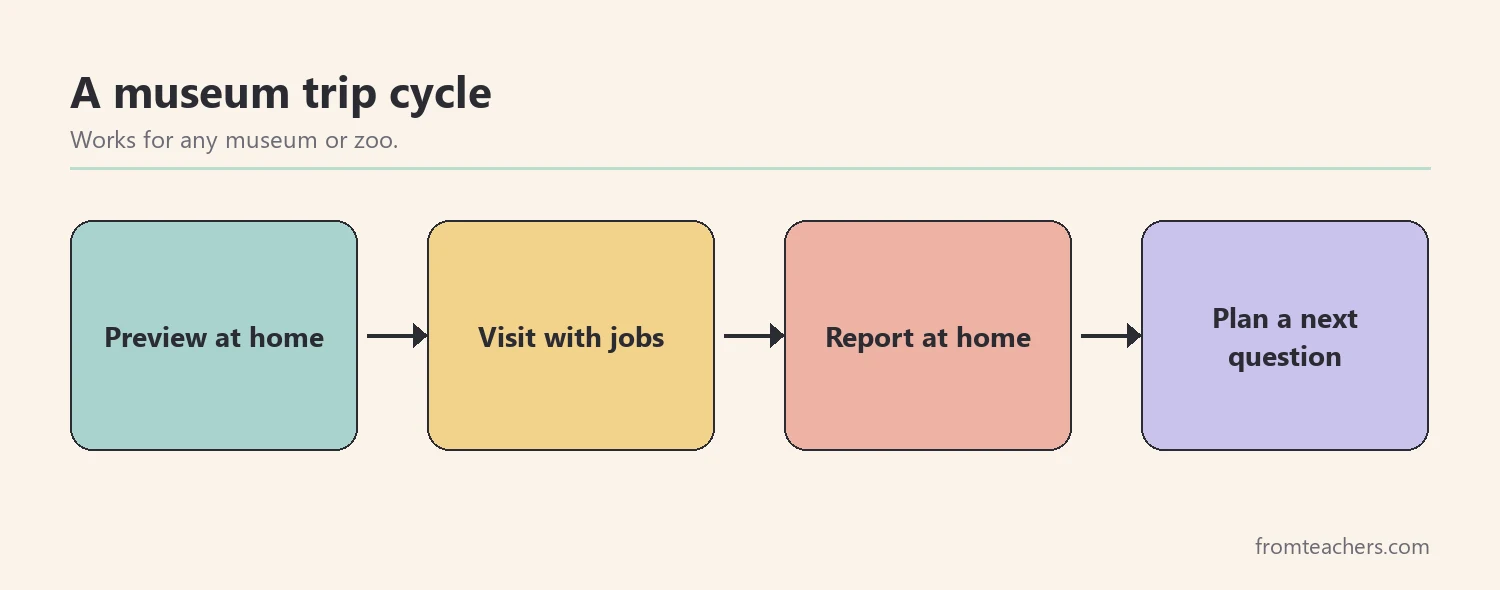
A simple before, during and after cycle
Figure 4 shows the cycle in four steps. The same cycle works for any museum, zoo or nature trip.
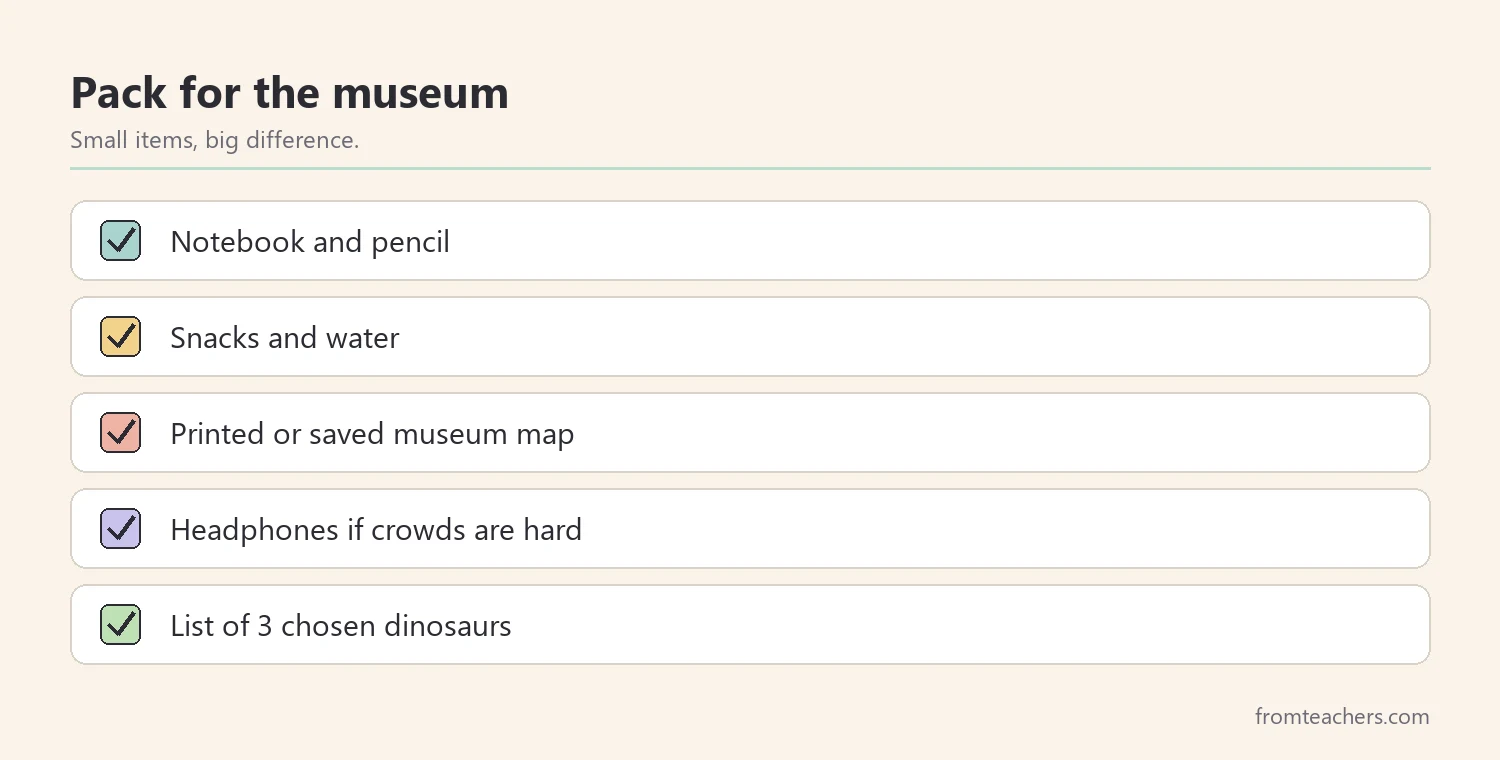
Keep expectations realistic. Younger children may need more breaks, and some children find busy halls loud or overwhelming. In that case, visit early or on quieter weekdays, and bring headphones if they help. Figure 5 lists what to pack.
Making the trip work for every child
Children differ in how they enjoy museums. Some read every label, while others want to move, touch and talk. Plan for both. Hands-on fossil tables, discovery rooms and drawing stations are great for active learners. Quiet corners or benches help children who tire quickly or find crowds hard.
Also, siblings of different ages may want different things. Let each child lead for part of the visit. Amira chose the order in the dinosaur hall, and Yusuf chose the order in the fossil room. As a result, neither felt dragged along.
Finally, keep your own expectations flexible. If a child spends twenty minutes at one skeleton and skips the rest, that is a success, not a failure. Deep interest in one thing often leads to more questions at home.
Common mistakes on museum trips
- Trying to see everything. Fix: two or three halls, then leave while everyone is happy.
- No preview. Fix: read about three dinosaurs at home first.
- Turning it into a test. Fix: ask open questions, not quiz questions.
- Skipping food breaks. Fix: plan a break in the middle.
- Forgetting the follow-up. Fix: one short project at home.
Questions parents ask about a dinosaur museum visit with kids
What age is best for a dinosaur museum trip?
Any age can enjoy it, but children around 9 to 13 can read labels, take notes and ask deeper questions, which makes planning especially worthwhile.
How long should we stay?
For many families, two to three hours with a break works well. Leave before everyone is exhausted.
What if we do not live near a big museum?
Many smaller museums, universities and parks have fossil displays. Some museums also offer free online collections and virtual tours.
Should we buy the audio guide?
It can help, but it can also make children rush. Try the job roles first and use the audio guide only at one or two exhibits.
How do I answer questions I cannot answer?
Write them down and look them up together afterward. Showing that you are curious too is a great model.
Related reading: Learning Styles and Student Success, Homeschooling vs. Public Schooling, and 5 Teaching Tips for Classroom Focus.
You may also need: Human Evolution: The Complete Scientific Guide.
A companion resource for a dinosaur museum visit with kids:
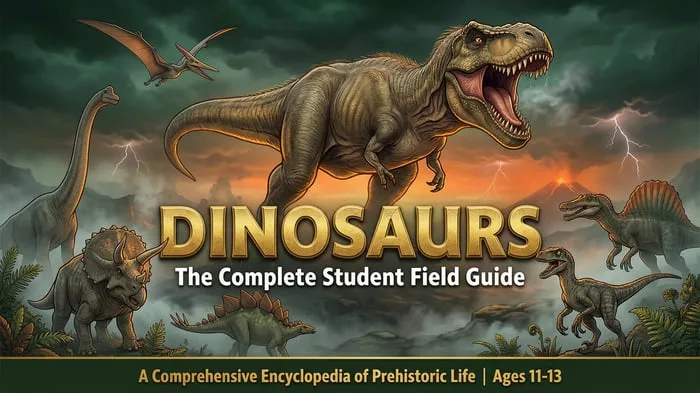
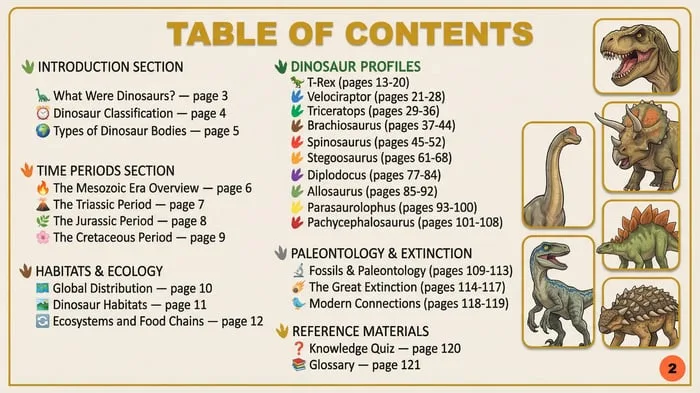
Dinosaurs: The Complete Student Field Guide: 122 illustrated pages for ages 11 to 13 covering what dinosaurs were, profiles of T. rex, Velociraptor, Triceratops, Brachiosaurus, Stegosaurus and Ankylosaurus with size comparisons, time period and region, the Triassic, Jurassic and Cretaceous periods, habitats and food chains, fossils, extinction, the link to birds, a quiz and a glossary.
Sources and scope
- Natural History Museum, London: articles and collections information on dinosaurs, fossils and extinction.
- University of California Museum of Paleontology: educational material on fossils, geologic time and the history of life.
- National Park Service: Fossils and Paleontology: information on fossil sites in U.S. national parks and how fossils form.
- Understanding Evolution: plain-language explanations of how scientists study the history of life, including the link between dinosaurs and birds.
These tips are general ideas for family museum visits. Check your museum’s own rules, accessibility information and opening hours before you go, since exhibits and policies vary.
Key takeaways
- A dinosaur museum visit with kids works best with a short preview at home.
- Use a timeline to show that dinosaurs lived across very different periods.
- Give children jobs and slow down at one exhibit.
- Plan breaks and keep the visit short enough to enjoy.
- Follow up with a field report and new questions.

Leave a Comment