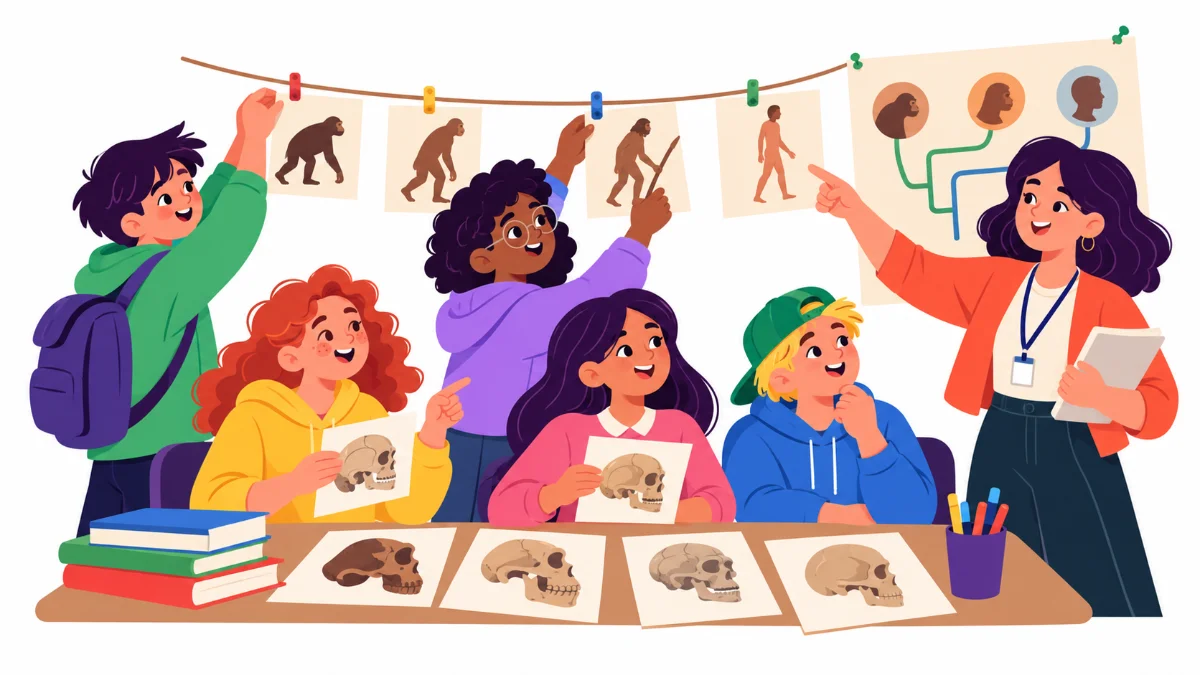

Human evolution activities can turn a dense unit into the part of biology students remember. Picture Mr. Okafor’s ninth grade biology class on the first day of the evolution unit. He shows a slide of hominin skulls, and half the class looks at their phones. One student, Priya, asks, “So did we come from chimpanzees?” It is a great question, and it shows the unit needs more than slides.
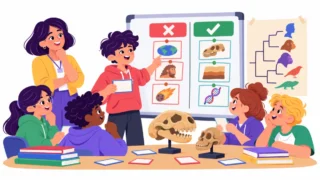
This list is for high school biology and life science teachers. It ranks ten human evolution activities by preparation time, from activities you can run tomorrow with paper to ones that need materials or a full lesson of setup. Each activity explains what students do, why it works, how to run it and how it went in Mr. Okafor’s class. You will also find a way to check understanding and support students who read below grade level.
Classroom examples are fictional. Adapt to your curriculum, your students and your school’s guidance.
At a glance
- Good human evolution activities use real evidence: fossils, anatomy, dating methods and DNA.
- Hands-on tasks help students tackle common misconceptions directly.
- Many strong activities need only paper, string or free online collections.
- Claim, evidence and reasoning tasks fit well with NGSS life science standards.
- Accessible readings help every student join the discussion.
How this list is ranked
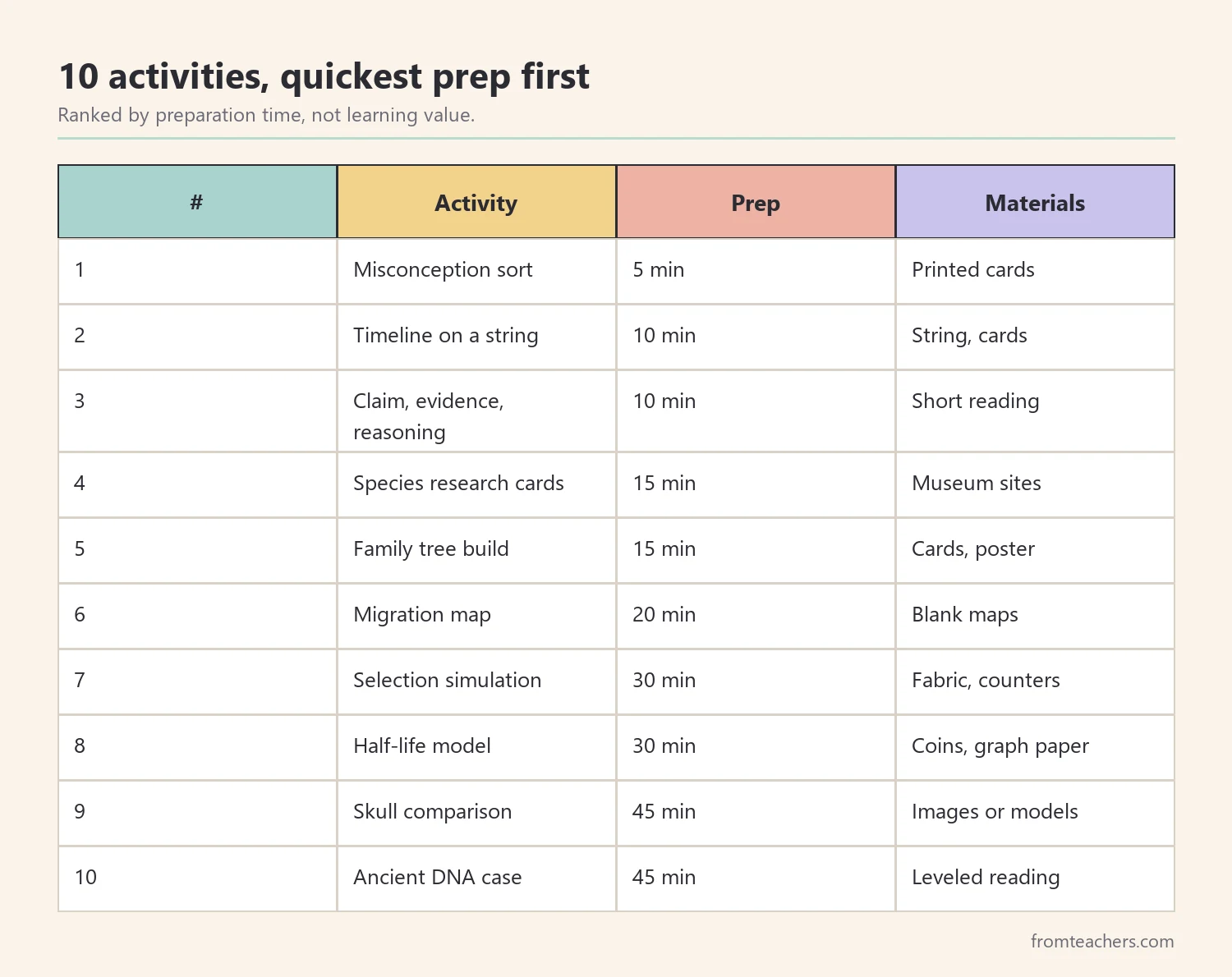
We ranked these human evolution activities by preparation time, starting with the quickest. The first activities need paper and a printer. The later ones need materials, such as coins or skull images, or a full class period of setup. We did not rank by learning value, because the best activity depends on your goals and your students.
All ten connect to ideas in the high school life science standards on evolution, including common ancestry and natural selection. Free collections such as the Smithsonian’s Human Origins program and the University of California Museum of Paleontology’s Understanding Evolution site offer images, timelines and teacher background. Figure 1 shows the full ranking.
1. Misconception sort
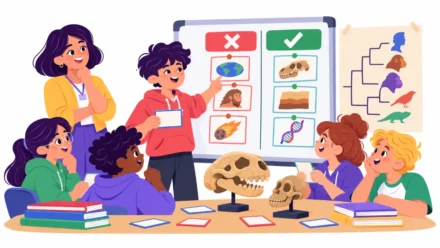
First, find out what students already believe. Give pairs a set of statements, such as “Humans evolved from chimpanzees” or “Evolution is just a guess,” and ask them to sort into “accurate,” “inaccurate” and “not sure.”
Why it works: it brings hidden ideas into the open. Students then revisit the cards at the end of the unit.
Example: Priya placed the chimpanzee card under “accurate.” By week three, she moved it and explained that humans and chimpanzees share a common ancestor.
2. Paper timeline on a string
Next, deep time is hard to imagine. Stretch a string across the room and have students place cards for key events, such as the earliest known hominins, the first stone tools and the appearance of Homo sapiens, using dates from a reliable source.
Why it works: students see how long human evolution took and how recent our species is.
Example: Mr. Okafor’s students were surprised that Homo sapiens sat so close to the end of the string.
3. Claim, evidence, reasoning on one question
Pose a question, such as “What evidence shows that early hominins walked upright?” Students write a claim, cite evidence from a short reading or image and explain their reasoning.
Why it works: it trains scientific argument, a core practice in the standards. Among human evolution activities, this is one of the easiest to repeat with new questions.
Example: Priya used footprint evidence and pelvis shape to support her claim.
4. Hominin species research cards
Assign each group one hominin species. Students make a card with time range, region, brain size range, key features and one famous fossil, using museum sources.
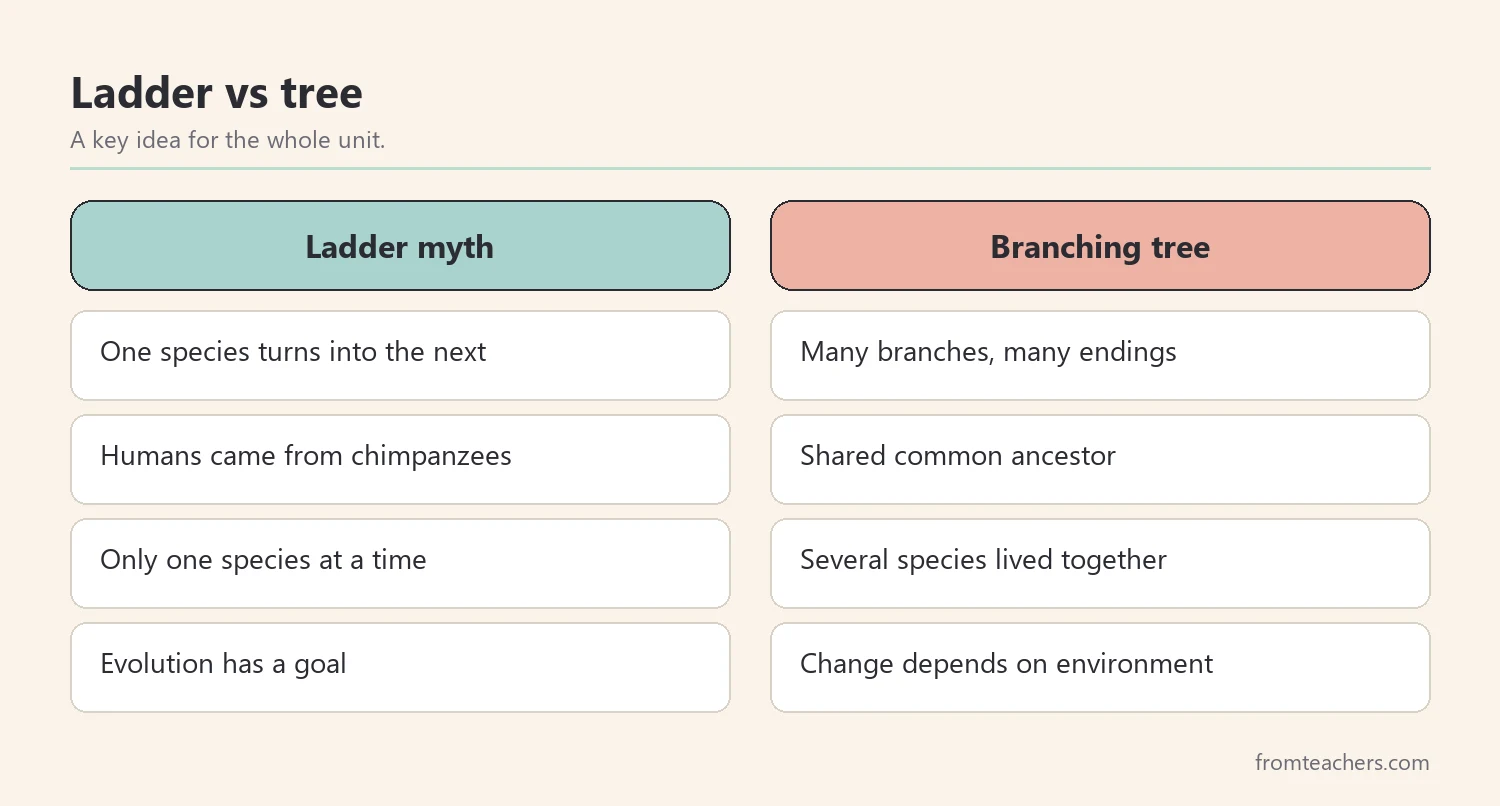
Why it works: groups become experts and teach the class. Comparing cards shows that human evolution is a branching tree, not a straight line.
Example: Priya’s group researched Homo neanderthalensis and was surprised to learn that some modern humans carry a small amount of Neanderthal DNA.
5. Build a simple family tree
Using the research cards, students arrange species on a large branching diagram. They mark which lines continue and which end.
Why it works: it directly addresses the “march of progress” image many students hold. Moreover, it shows that several hominin species lived at the same time.
Example: The class tree had several branches overlapping in time, which led to a lively discussion.
6. Out of Africa migration map
Give students a blank world map and a short reading on early human migrations. They draw arrows and approximate dates based on the evidence in the reading.
Why it works: it connects fossils and genetics to geography. Students also see how scientists revise ideas as new evidence appears.
Example: Priya’s map sparked a question about how people reached Australia, which became an extension task.
7. Natural selection simulation
Before human-specific content, many teachers use a simulation, such as “birds” picking up “prey” of different colors on patterned fabric, to model selection over generations.
Why it works: students see the mechanism, not just the result. As a result, later human evolution activities make more sense.
Example: After three rounds, the camouflaged color dominated. Students then applied the idea to traits such as upright walking.
8. Half-life model for fossil dating
Students model radioactive decay with coins or counters. Each round, they remove the “decayed” pieces and graph what remains.
Why it works: it explains how scientists date rocks and fossils. Students see why dating methods give ranges with uncertainty.
Example: The class graphs showed the classic decay curve. Priya asked why different methods are used for different ages, a good extension question.
9. Comparing skulls
Use images or 3D models from museum collections to compare skulls of chimpanzees, early hominins and modern humans. Students measure or describe features such as brow ridges, face shape and braincase size.
Why it works: anatomy becomes evidence students can see. It needs more preparation, because you must choose comparable images and a clear recording sheet.
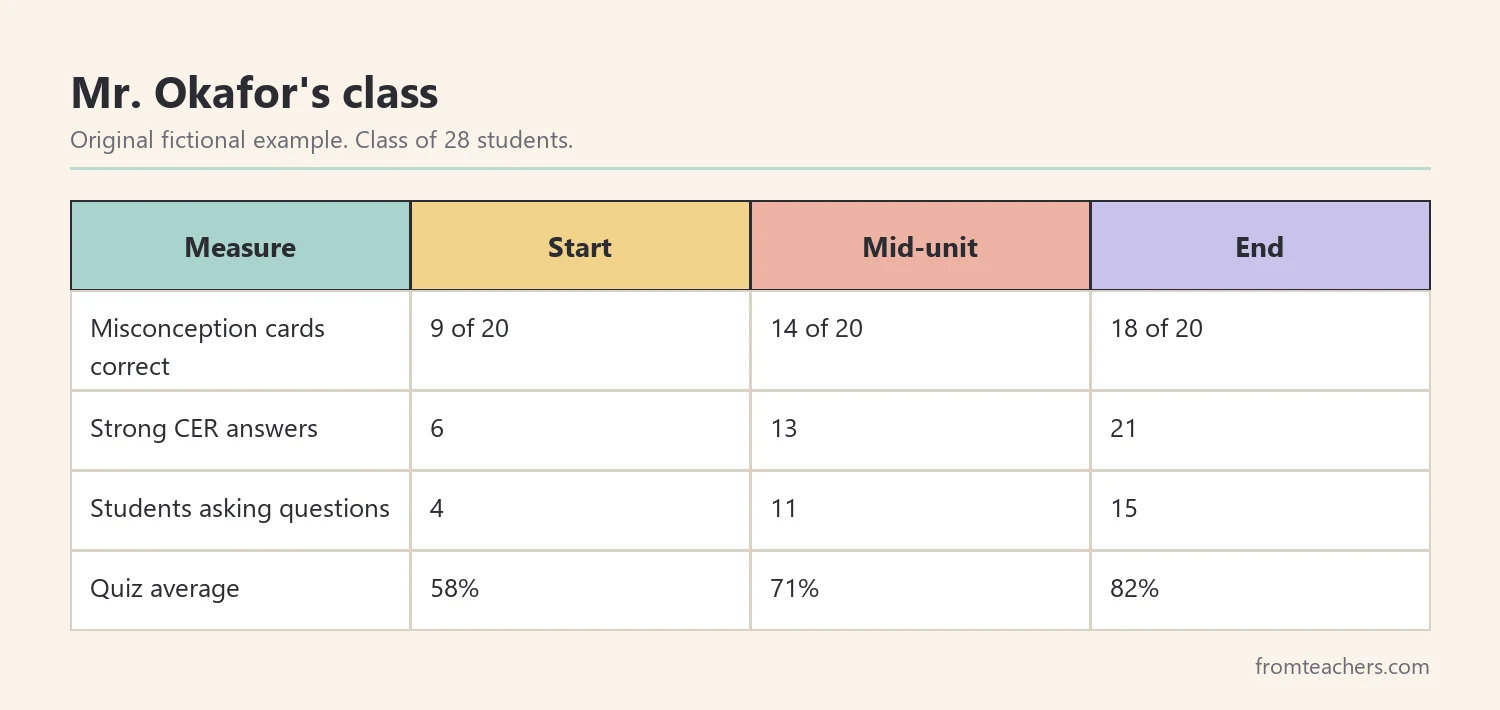
Example: Students recorded observations in a table, which became the evidence for a final claim. Figure 3 shows how the class improved across activities.
10. Ancient DNA case study
Finally, the most demanding activity is a case study on ancient DNA. Students read about how scientists recover DNA from fossils and what it shows about relationships between groups, such as Neanderthals and modern humans.
Why it works: it connects evolution to genetics, another big high school topic. It also shows science as an ongoing process.
How to run it: provide a short, leveled reading, a vocabulary list and guiding questions. The illustrated human evolution guide with ancient DNA and fossil dating chapters is written for ages 11 to 13, which makes it a useful accessible reading for ninth graders or students who need support.
Example: Priya’s group presented what Neanderthal DNA in some modern populations suggests about past interactions.
Supporting all readers
Human evolution activities often depend on reading. However, many high school classes include students who read below grade level, English learners and students with IEPs. Therefore, plan support from the start.
| Need | Support |
|---|---|
| Below-level reading | Shorter leveled texts, audio |
| English learners | Vocabulary with images |
| Attention needs | Shorter tasks, clear roles |
| Advanced students | Extension research questions |
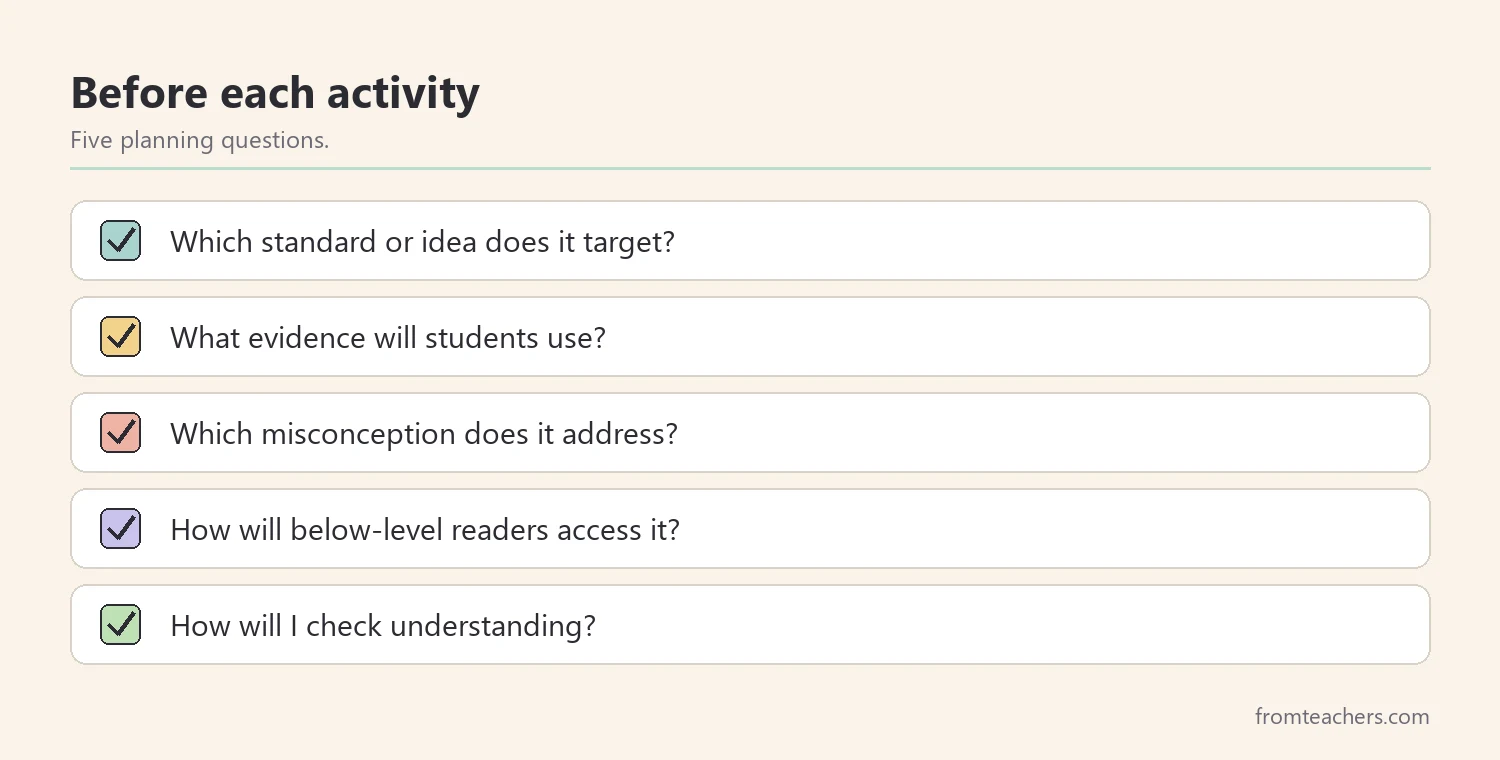
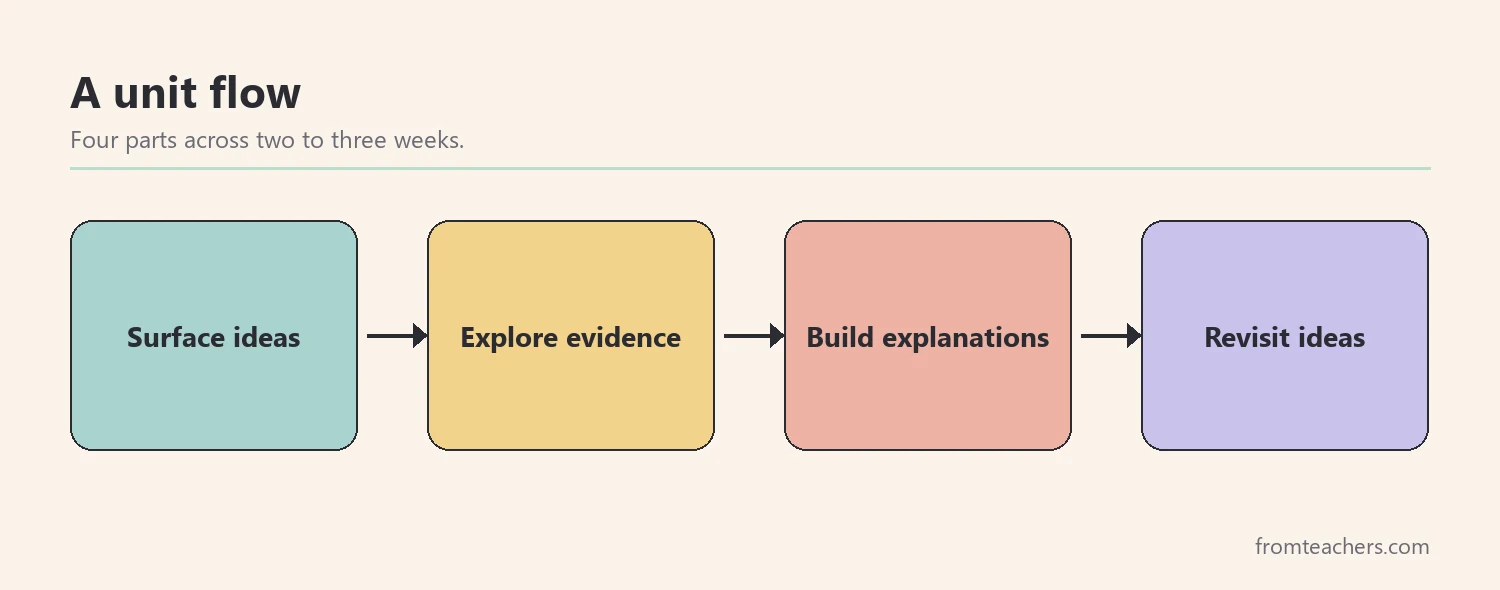
Figure 4 lists five questions to check before each activity, and Figure 5 shows a simple unit flow.
A sample two-week plan
Ten human evolution activities are more than most units can hold. Therefore, it helps to pick a sequence that builds from ideas to evidence to explanation. The plan below shows how Mr. Okafor combined six of them over two weeks of daily 50-minute classes.
| Day | Activity | Goal |
|---|---|---|
| 1 | Misconception sort | Surface ideas |
| 2 | Selection simulation | Understand the mechanism |
| 3 | Timeline on a string | Grasp deep time |
| 4 to 5 | Species cards and family tree | See branching |
| 6 to 7 | Skull comparison | Use anatomy as evidence |
| 8 to 9 | Ancient DNA case | Link to genetics |
| 10 | CER task and sort revisit | Check learning |
Notice the balance. Quick human evolution activities open the unit, while longer evidence tasks sit in the middle, when students have enough background. Finally, the unit closes where it began, with the misconception sort, so students can see how their thinking changed.
Of course, your plan will look different. For example, a block schedule may combine days, and an honors class may move faster through the early human evolution activities. The key is to keep evidence at the center of every lesson and to give students a reason to come back to their first ideas.
Handling sensitive conversations
Evolution can be a sensitive topic for some students and families. Focus on scientific evidence and methods, and keep a respectful tone. Explain that science classes teach the scientific explanation supported by evidence. Follow your school and district guidance, and invite questions in a calm, curious way.
In addition, it can help to explain the difference between a scientific theory and an everyday guess early in the unit. Many students hear “theory” as “hunch.” A short discussion of how scientists use the word, with examples from other fields, makes later human evolution activities easier to discuss calmly.
Common mistakes and how to avoid them
- Teaching a straight-line “ladder.” Fix: use branching trees throughout.
- Presenting dates without uncertainty. Fix: discuss ranges and how dating works.
- Too much lecture. Fix: mix short input with hands-on human evolution activities.
- Skipping misconceptions. Fix: start and end with a misconception sort.
- Using outdated sources. Fix: check museum and university sites for current information.
Questions teachers ask about human evolution activities
How many activities should I use in one unit?
Many teachers use four to six, mixing quick tasks with one or two longer ones. Choose based on your standards and time.
Where can I find reliable fossil images?
The Smithsonian Human Origins site and university museum sites offer images and background information for educators.
Do these human evolution activities work for middle school?
Many do, with simpler readings and more guidance. The timeline, misconception sort and family tree adapt well.
How do I assess learning?
Use a claim, evidence and reasoning task at the end, plus a revisit of the misconception sort.
What if students ask questions I cannot answer?
That is normal. Model scientific thinking by looking it up together in a reliable source.
Related reading: Learning Styles and Student Success, Special Education Strategies, and 5 Teaching Tips for Classroom Focus.
You may also need: Dinosaurs: The Complete Student Field Guide.
A companion resource for human evolution activities:
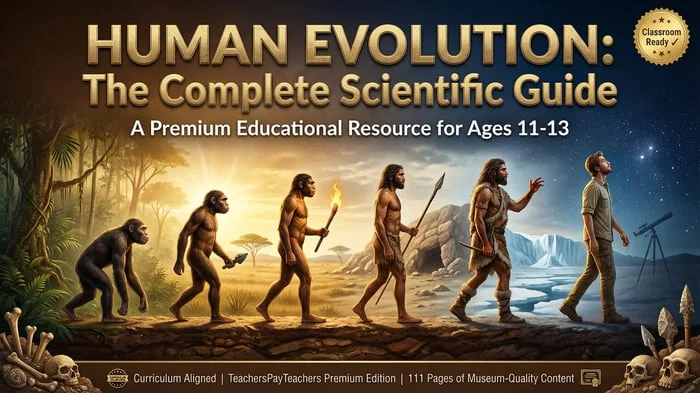
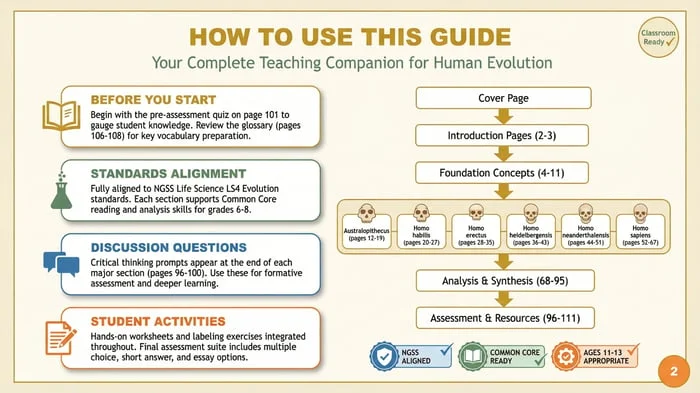
Human Evolution: The Complete Scientific Guide: a 111-page guide for ages 11 to 13 covering natural selection, the human family tree, six hominin species, the Out of Africa migration, fossil dating, ancient DNA and what makes us human, with discussion questions, a student quiz and a glossary.
Sources and scope
- Smithsonian Human Origins Program: fossil images, species profiles and educator resources.
- Understanding Evolution (UC Museum of Paleontology): teacher background and classroom resources on evolution.
- Next Generation Science Standards: the life science standards on evolution and common ancestry.
- CAST UDL Guidelines: a framework for making lessons accessible to all learners.
This list covers classroom activities for teaching human evolution in high school biology. It does not provide a full curriculum and does not cover every species or current research debate.
Key takeaways
- Strong human evolution activities center on real evidence.
- Start with quick tasks, such as a misconception sort and timeline.
- Use branching trees, never a straight ladder.
- Connect fossils, dating and DNA to show how science works.
- Support all readers with accessible texts and clear roles.





Leave a Comment