

504 implementation mistakes happen in good classrooms with caring teachers, usually because the plan arrived on a busy day and was filed instead of used. Picture Ms. Rivera-Cole, a third grade teacher with 26 students, and Eli, age 8, who has a 504 plan for ADHD. His plan lists preferential seating, directions repeated and checked, movement breaks and extended time on tests. In October, his mom asks how the breaks are going. Ms. Rivera-Cole realizes she is not sure.
This list is for elementary general education teachers who have one or more students with 504 plans. It covers eight common 504 implementation mistakes, ordered from the quickest to fix to the habits that need a system. Each item explains the mistake, why it matters and a simple fix, with Eli as the example throughout.
Examples are fictional. Adapt to the student’s goals and agreed supports. This is guidance, not a diagnosis.
At a glance
- A 504 plan only helps when it is used every day.
- Read the plan, then turn each accommodation into a classroom action.
- Tell every adult who works with the student, including specials and substitutes.
- Note whether each accommodation was used and whether it helped.
- Report back to the case manager or 504 coordinator regularly.
Why these mistakes are so common
Elementary teachers juggle many plans, many students and a full curriculum. Section 504 plans often arrive with less training than IEPs, and some teachers are unsure how much flexibility they have. As a result, accommodations can slip, not from lack of care but from lack of a simple system.
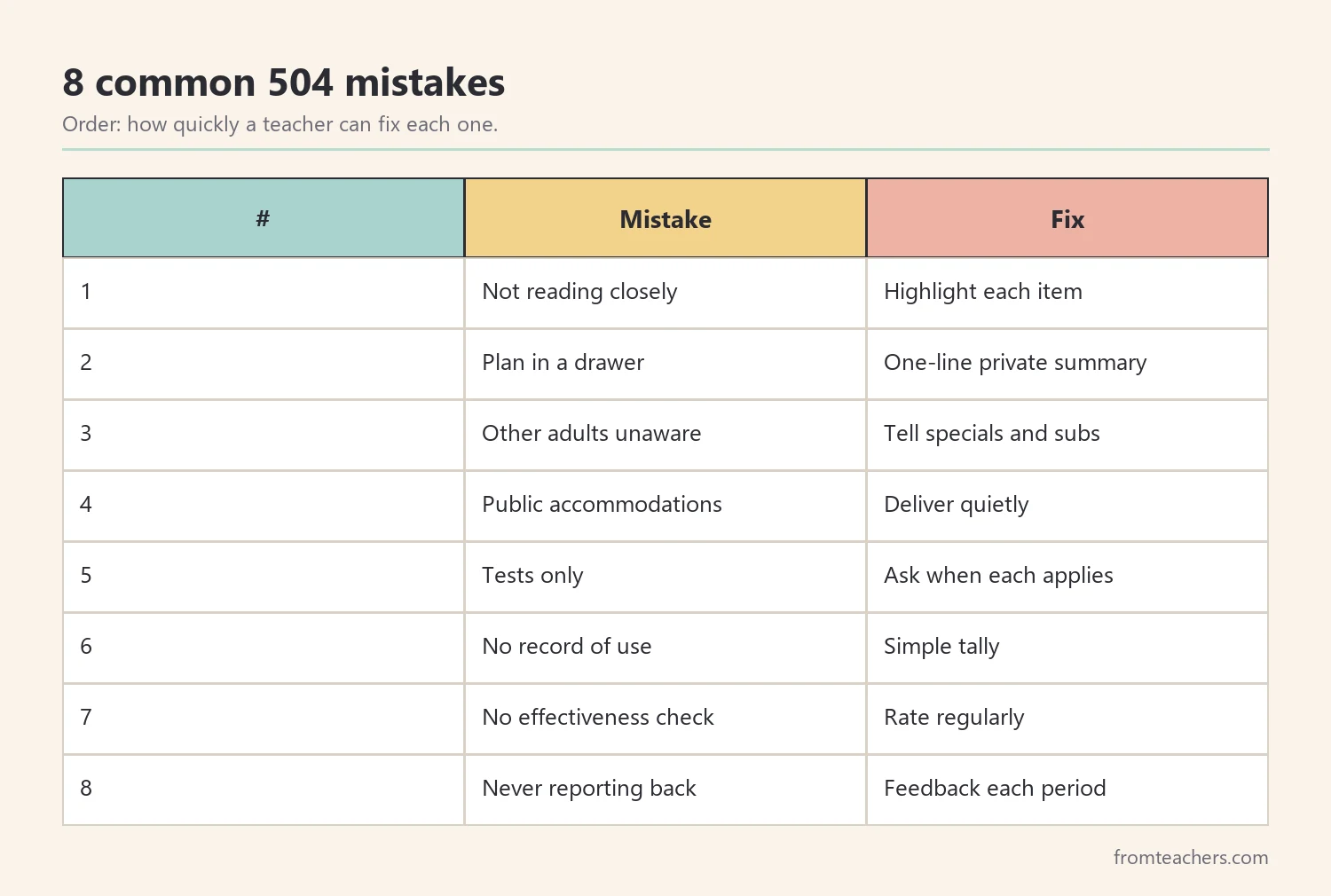
We ordered the eight 504 implementation mistakes by how quickly a teacher can fix them. The first three take minutes. The middle three need a short routine. Then, the last two need a feedback habit with the 504 coordinator. Figure 1 shows the list.
1. Not reading the plan closely
The mistake: skimming the plan once at the start of the year, or relying on a verbal summary.
Why it matters: details matter. “Extended time” may mean time and a half on tests only, not on all work. Misreading leads to under- or over-implementation.
The fix: read the full accommodation list, highlight each one and ask the coordinator about anything unclear.
Example: Ms. Rivera-Cole reread Eli’s plan and saw that directions should be “repeated and checked for understanding,” not only repeated. That small difference changed what she did.
2. Keeping the plan in a drawer
The mistake: the plan is filed away, so day-to-day decisions rely on memory.
Why it matters: on a busy day, accommodations you cannot see are easy to forget.
The fix: make a private one-line summary for each student and keep it in your planning book or lesson plans, following your school’s privacy rules.
Example: Ms. Rivera-Cole’s summary for Eli reads: “Front seat near me, check directions, 2 movement breaks, 1.5x test time.” She glances at it each morning.
3. Forgetting other adults
The mistake: the art, music and PE teachers, the substitute and the lunch staff do not know the plan exists.
Why it matters: 504 plans apply across the school day, not only in the homeroom.
The fix: with the coordinator, make sure specials teachers know relevant accommodations, and add a short note to your substitute folder.
Example: Eli’s music teacher did not know about his movement breaks. After a quick conversation, she let him hand out instruments, which gave him a natural chance to move.
4. Applying accommodations publicly
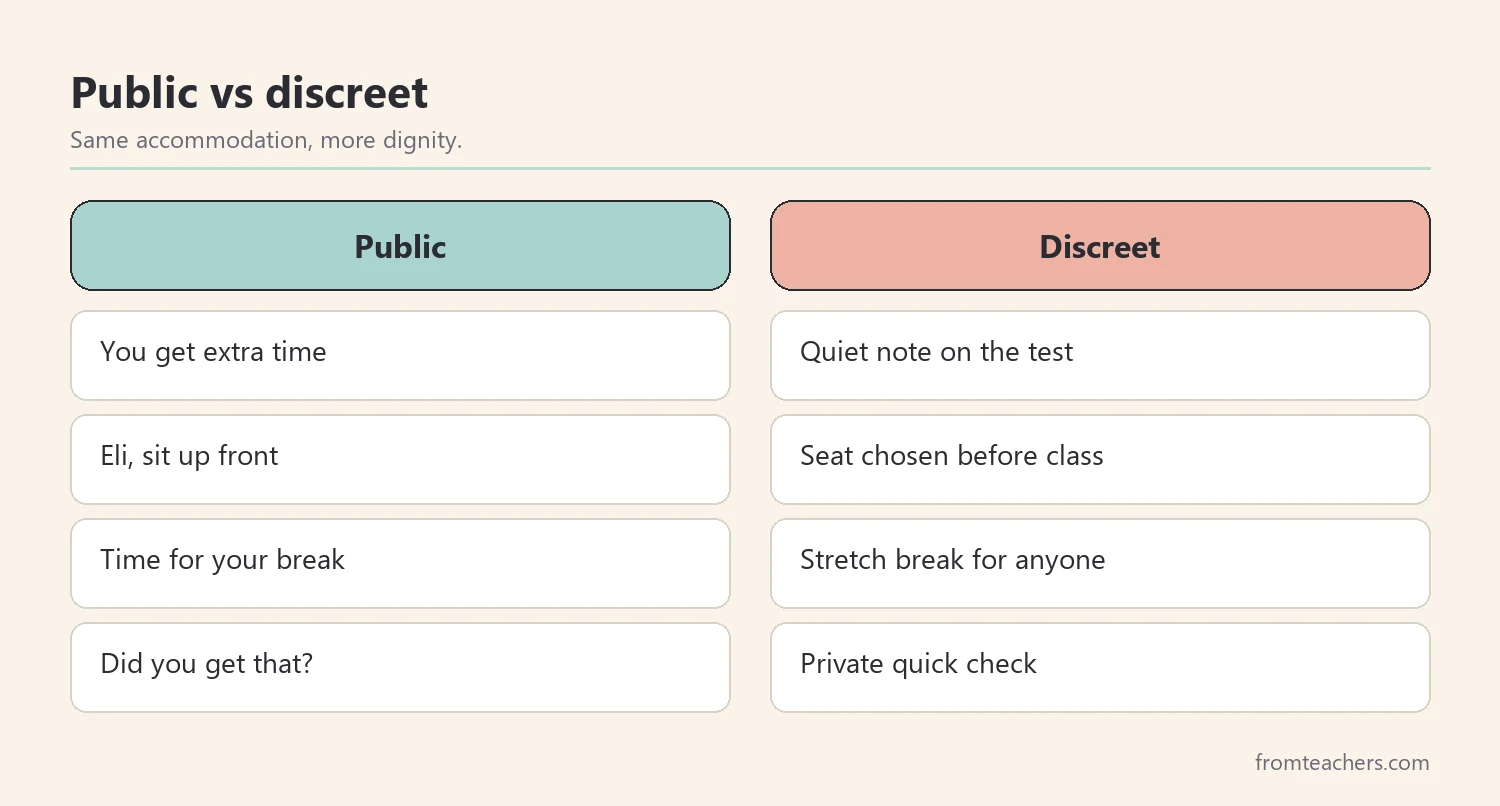
The mistake: saying “Eli, you get extra time because of your plan” in front of the class.
Why it matters: 504 information is private, and public comments can embarrass the student and affect peer relationships.
The fix: deliver accommodations quietly and, when possible, offer similar options to the whole class.
Example: Ms. Rivera-Cole offered a “stretch break” to anyone who finished a task early. Eli used it more often, but no one noticed a difference.
5. Using accommodations only on tests
The mistake: applying accommodations during tests but not during daily lessons, when the plan applies more broadly.
Why it matters: many accommodations, such as checking directions or preferential seating, matter most during everyday learning.
The fix: for each accommodation, ask “When does this apply?” and write the answer next to it in your summary.
Example: Eli’s direction check was happening on tests only. Once Ms. Rivera-Cole used it during math lessons too, he started independent work faster.
6. Not recording whether accommodations were used
The mistake: no record of when accommodations were provided or used.
Why it matters: when parents or the team ask “Is it working?”, there is no evidence either way.
The fix: keep a simple tally or weekly note: used, not used, and how it went.
Example: Ms. Rivera-Cole tracked Eli’s movement breaks with tally marks on a sticky note. In two weeks, he used about one break a day, not two, which was useful information.
7. Not judging effectiveness
The mistake: assuming that an accommodation helps because it is in the plan.
Why it matters: some accommodations work well; others do not fit the student or the classroom. Without honest judgment, plans stay unchanged for years.
The fix: rate each accommodation regularly, for example very effective, somewhat effective, not effective or not used, and note what you see in engagement and work.
Example: Eli’s front seat was very effective. Extended time was rarely used, because he usually finished on time once directions were checked. A structured accommodation feedback form for IEP and 504 plans makes these ratings quick to record.
8. Never reporting back
The mistake: keeping observations to yourself until the annual review, or never sharing them at all.
Why it matters: the 504 coordinator and family need your feedback to adjust supports. Teachers see the plan in action more than anyone.
The fix: send brief written feedback to the coordinator at agreed points, such as each grading period, and sooner if something is not working.
Example: Ms. Rivera-Cole sent her first feedback form in November. The team kept the front seat and direction check, reduced breaks to one scheduled break and asked to review extended time in spring.
A sample feedback log
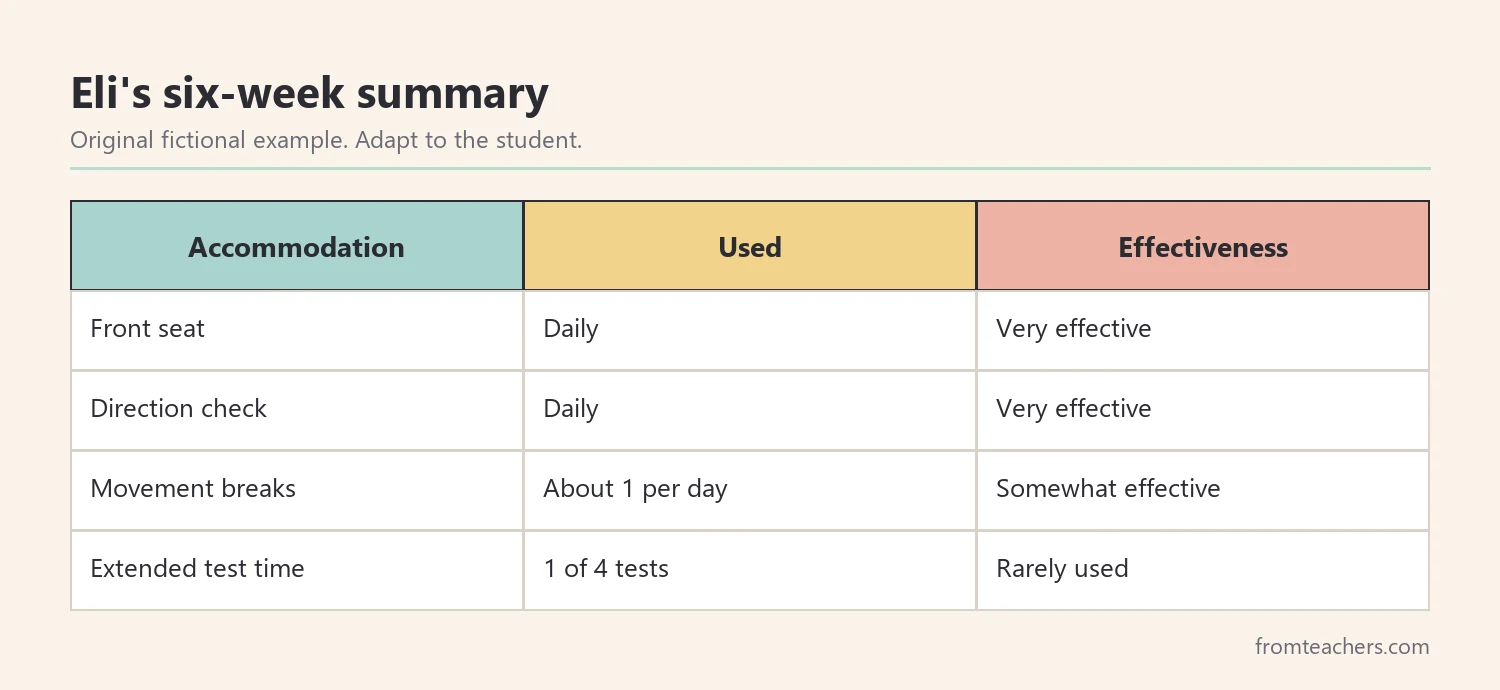
The table below shows a fictional six-week summary of Eli’s accommodations. It avoids most 504 implementation mistakes by recording use and effectiveness together.
| Accommodation | Used | Effectiveness | Note |
|---|---|---|---|
| Front seat | Daily | Very effective | Fewer reminders needed |
| Direction check | Daily | Very effective | Starts work faster |
| Movement breaks | About 1 per day | Somewhat effective | Prefers scheduled break |
| Extended test time | 1 of 4 tests | Rarely used | Review in spring |
A simple implementation routine
Figure 4 shows a four-part routine that prevents most 504 implementation mistakes: read, summarize, track and report.
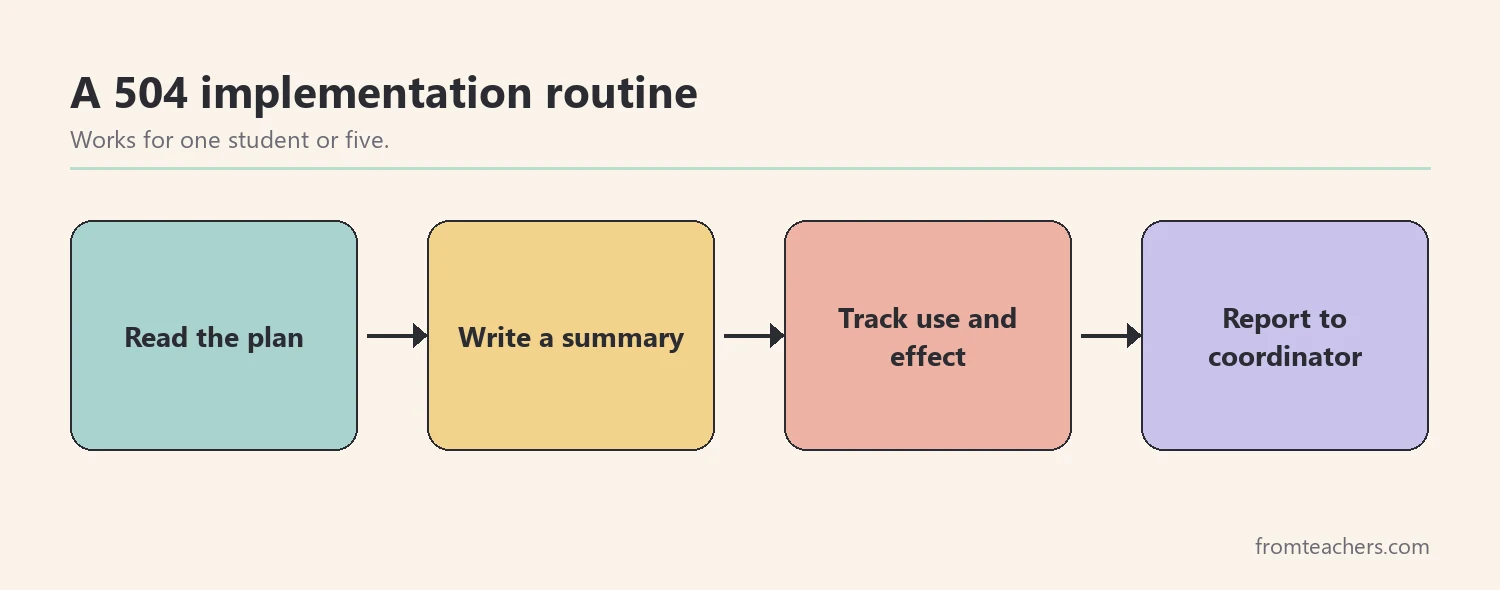
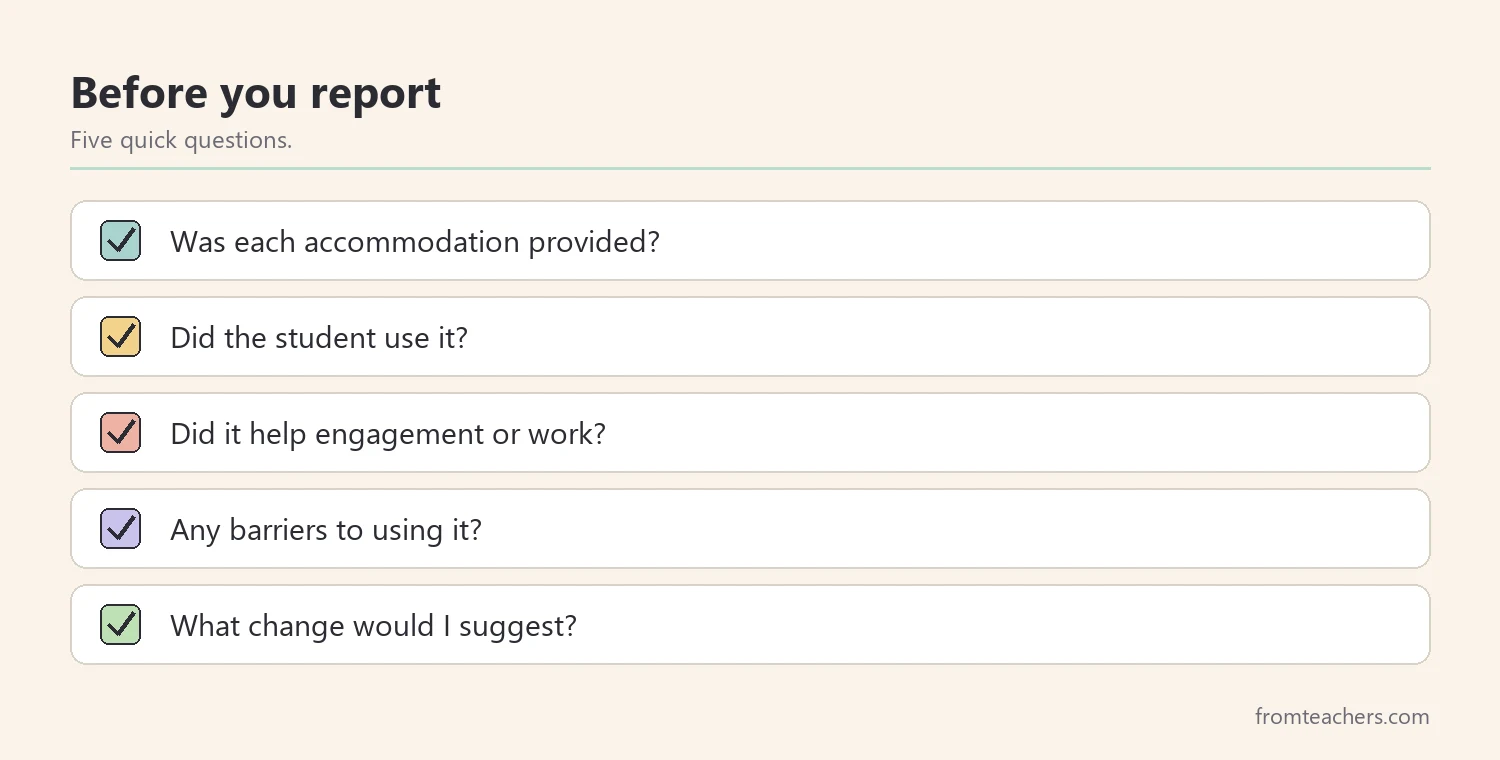
The routine takes a little time at the start and a few minutes each week. Also, it scales: the same routine works for one student or five. Figure 5 lists five questions to ask yourself before each report to the coordinator.
Planning for substitute days
Substitute days are when accommodations most often disappear. A substitute may not know which students have plans, or may not have time to read long documents. Prepare a short, private note in your substitute folder that lists only what the substitute needs to do, such as “Eli sits at table 1 near the board; check that he understands directions before independent work; allow one stretch break in the afternoon.”
Also, ask your coordinator how your school shares this information safely. Some schools keep a confidential binder in the office. After the substitute day, ask how it went and note any problems for your next feedback report.
Talking with families about the plan
Families often feel anxious about whether the plan is followed. A short, positive update builds trust. Share what is working first, then mention one adjustment you are trying. Avoid technical language, and invite the family to share what they see at home, such as homework patterns or how the child talks about school.
In Eli’s case, his mom said he talked about “the stretch break” every evening. That told Ms. Rivera-Cole that the break mattered to him, even if he used it only once a day. Also, families can share helpful details, such as sleep changes or new medication schedules, that affect what you see in class. Follow your district’s rules about what to share and how.
Common questions teachers ask about 504 implementation mistakes
Am I allowed to change an accommodation if it is not working?
No, not on your own. Share your observations with the 504 coordinator, who can bring them to the team. You can try additional general supports that you would offer any student.
What if I cannot provide an accommodation on a given day?
Note what happened and why, and tell the coordinator if it becomes a pattern. Accommodations in the plan are expected to be provided.
Does a 504 plan apply during specials, lunch and field trips?
Generally, a 504 plan covers the school day and school activities. Check with your coordinator for specific situations.
How often should I give feedback?
Agree on a schedule with the coordinator, often once per grading period, and share concerns sooner when needed.
What is the difference between a 504 plan and an IEP?
Broadly, an IEP provides specialized instruction under IDEA, while a 504 plan provides accommodations so a student with a disability can access learning. Your coordinator can explain your district’s process.
Related reading: Accommodations vs Modifications in Special Education, Teacher-Parent Communication in Special Education, and Effective ADHD Classroom Strategies.
You may also need: Accommodations and Modifications Tracker: Editable IEP Forms.
A companion resource for avoiding 504 implementation mistakes:
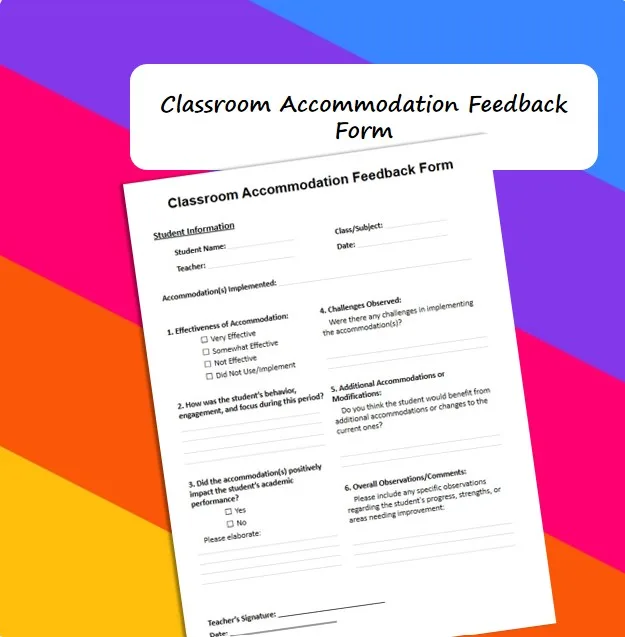
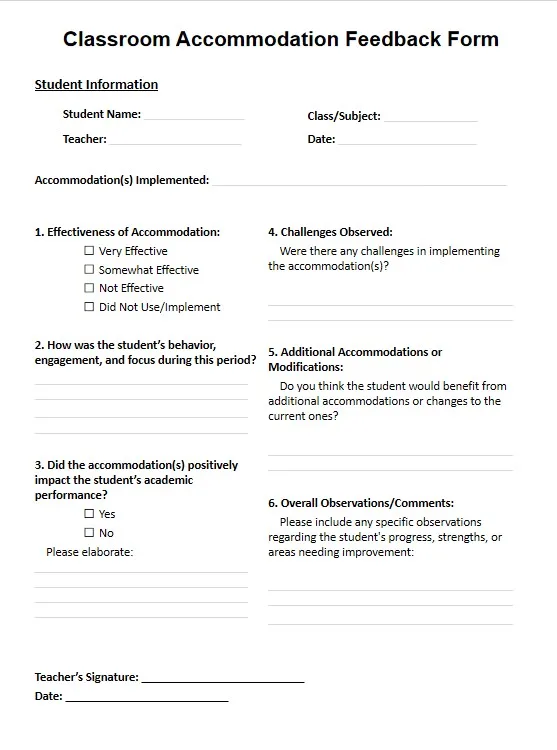
Classroom Accommodation Feedback Form IEP 504 Effectiveness Tracker: a one-page form with student, teacher, date and class fields, accommodations implemented, an effectiveness rating from very effective to did not use, questions on behavior, engagement and academic impact, challenges observed, suggested additional accommodations or modifications, overall comments and a signature line.
Sources and scope
- Center for Parent Information and Resources: plain-language information on Section 504, IEPs and school supports.
- Understood.org: articles explaining 504 plans, accommodations and how teachers can implement them.
- CHADD: information on school accommodations for students with ADHD, a common reason for 504 plans.
- CAST: resources on Universal Design for Learning, which can reduce barriers for many students.
This list covers everyday classroom implementation of existing 504 plans in elementary schools. It is not legal advice and does not replace your district’s 504 procedures or the decisions of the 504 team.
Key takeaways
- Most 504 implementation mistakes come from a missing daily system.
- Read the plan closely and keep a private one-line summary.
- Tell specials teachers and substitutes, and deliver supports discreetly.
- Track use and effectiveness, not just presence in the plan.
- Report back regularly so the team can adjust supports.










Leave a Comment