

Signs of a well-run classroom in special education are not always the ones you expect. A quiet room is not automatically a good room, and a busy room is not automatically a chaotic one. Picture Ms. Grant, an instructional coach, stepping into Mr. Diaz’s K-5 resource room. Two students are rocking on stools, one is using a timer, and an aide is guiding a small group. Is this working?
This list is for principals, assistant principals and coaches who visit special education classrooms and want to know what to look for. It names ten signs of a well-run classroom, ordered from quickest to see in a short walkthrough to deeper patterns that need longer visits. Each sign includes what it looks like and a coaching question to ask.
Examples are fictional. Adapt to the classroom model, student needs and your district’s expectations.
At a glance
- In special education, calm and organized does not always mean quiet.
- Look for routines, visuals and clear adult roles first.
- Watch how adults respond to behavior, not only how students behave.
- Individual supports from IEPs should be visible in daily practice.
- Follow walkthroughs with curious questions, not quick judgments.
How this list is ordered
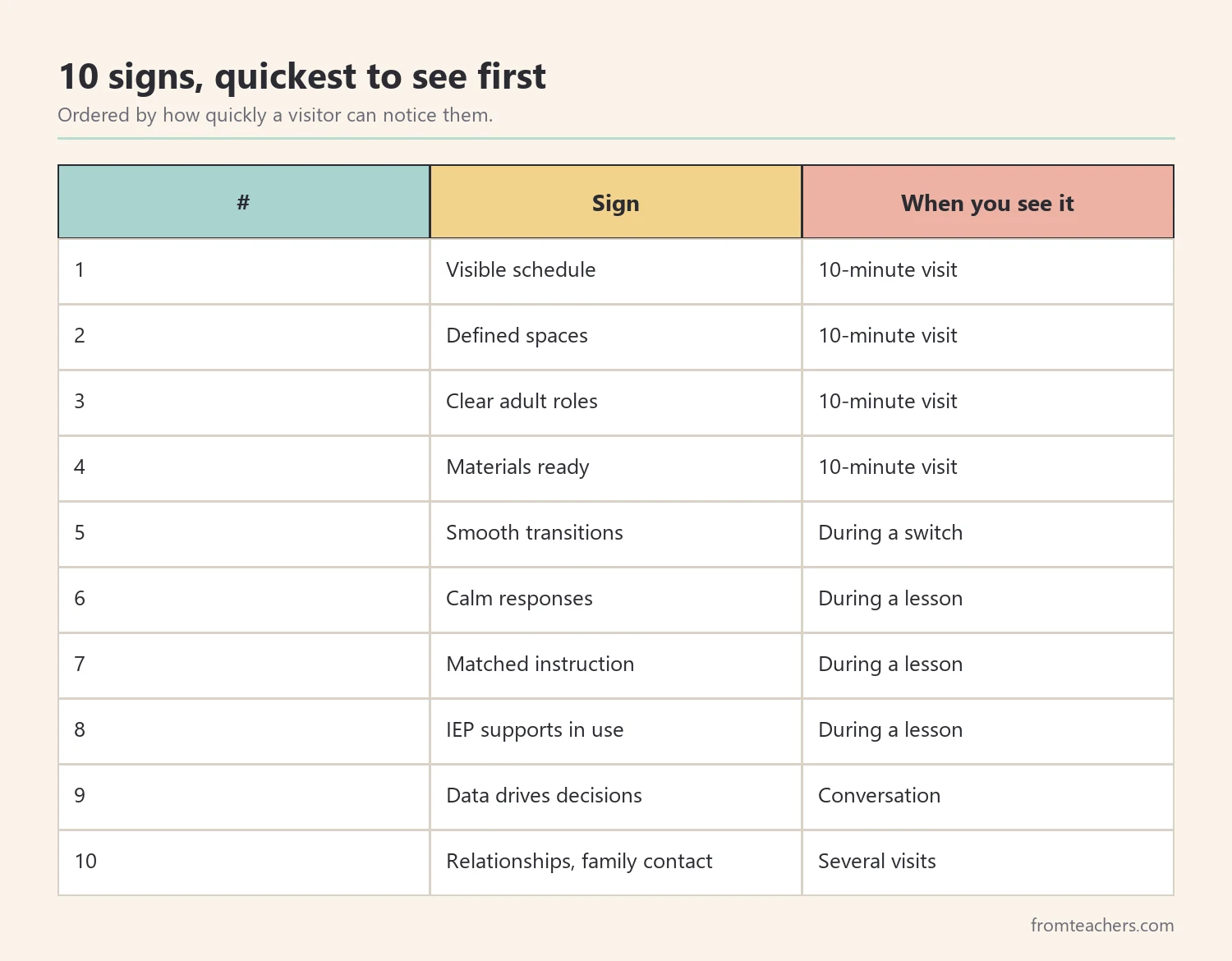
We ordered these ten signs of a well-run classroom by how quickly a visitor can see them. The first four are visible in a ten-minute walkthrough. The middle signs need a lesson or a transition. Then, the last ones need conversation with the teacher or several visits. We did not rank them by importance.
Also, every special education setting is different: resource rooms, self-contained classes, co-taught rooms and life skills programs have different goals. Use these signs as conversation starters, not as a checklist score. Figure 1 shows the full list.
1. A visible daily schedule
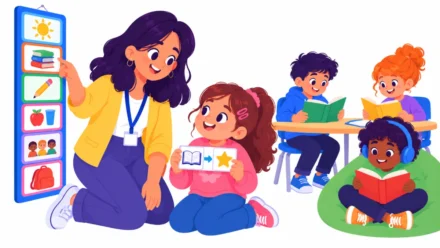
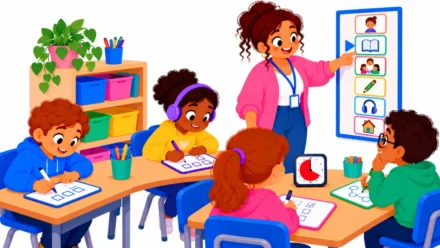
First, look at the walls. A clear schedule, often with pictures or icons, tells students what is happening now and next. In many special education rooms, students also have individual schedules at their desks.
Coaching question: “How do students use the schedule during the day?”
2. Defined spaces for different activities
Next, notice the layout. Areas for small-group teaching, independent work, calm-down time and materials help students know what each space is for.
Example: Mr. Diaz used colored tape to mark a reading table, a work station and a quiet corner. Students moved between them without asking where to go.
3. Adults with clear roles
Then watch the adults. In one of the clearest signs of a well-run classroom, aides and co-teachers know what they are doing and with whom, without waiting for instructions.
Coaching question: “How do you share the daily plan with your paraprofessionals?”
4. Materials ready and within reach
Next, look for prepared materials: work bins, labeled supplies and tools like timers, visual cards or fidgets where students can reach them. Ready materials reduce waiting, and waiting often leads to behavior.
5. Smooth transitions
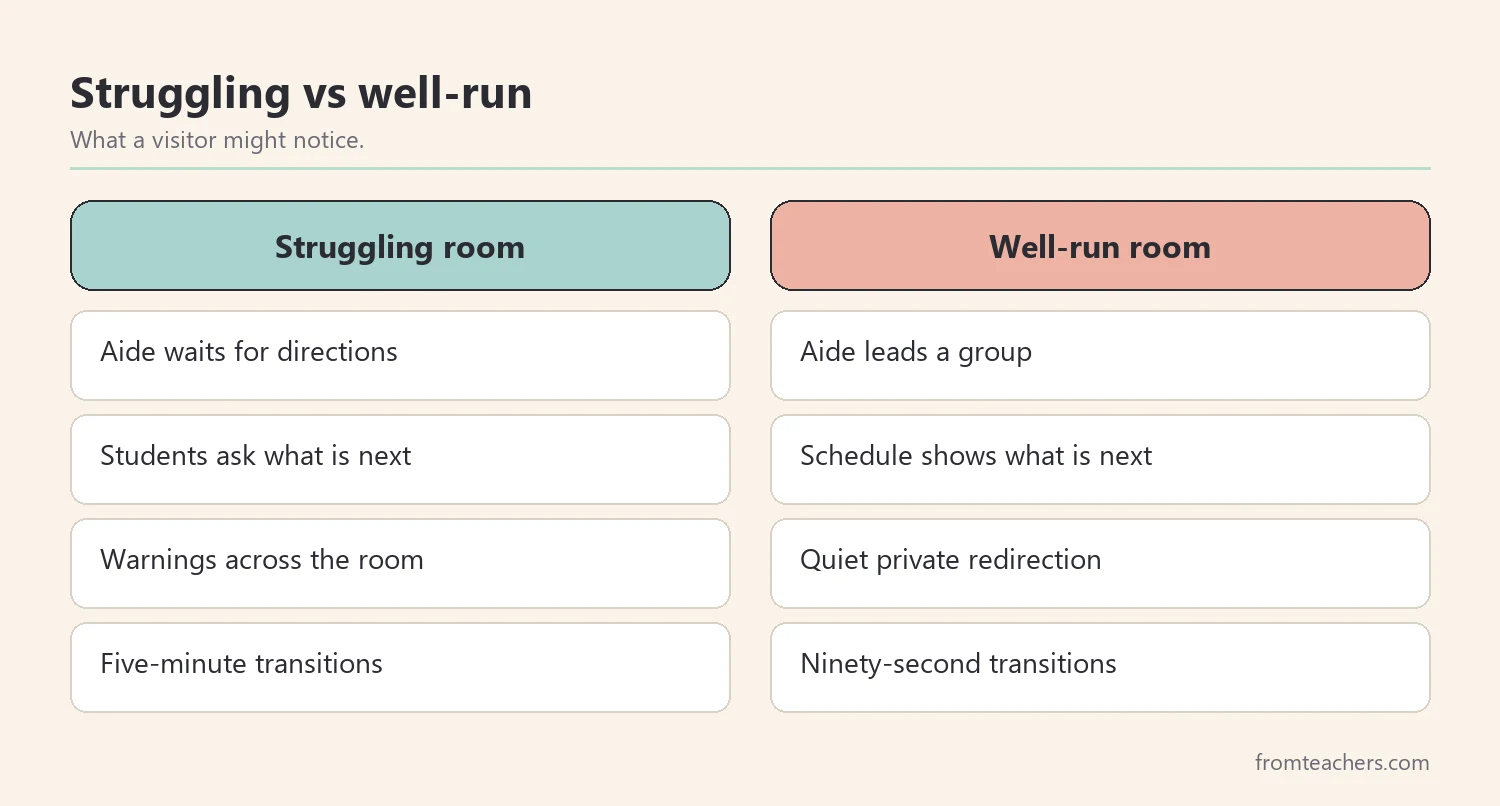
Then watch a transition. In well-run rooms, students know the signal, the steps and where to go. Warnings like “two more minutes” or a visual timer are common.
Example: Ms. Grant timed the switch from reading to math in Mr. Diaz’s room. It took ninety seconds, with a song and a picture card.
6. Calm, specific adult responses to behavior
Next, notice how adults respond. Signs of a well-run classroom include calm voices, specific praise and quick, private redirection. Shouting across the room or public warnings are rare.
Coaching question: “What do you say when a student refuses a task?”
For coaches who want a shared language for feedback, the dos and don’ts classroom management guide for SPED teachers pairs a what-not-to-do scene with a do-this-instead scene for engagement, behavior, transitions, differentiation and communication.
7. Instruction matched to different levels
Then look at the work. In a special education room, students often work on different goals at the same time. Differentiated tasks, small groups and varied materials are signs of a well-run classroom, not signs of disorder.
| What you might see | What it may mean |
|---|---|
| Three groups, three tasks | Planned differentiation |
| A student on a stool | A sensory support |
| Headphones on a student | Noise support from an IEP |
| A student working alone | Independent work goal |
8. IEP supports visible in daily practice
Next, ask how accommodations appear in real lessons. Visual supports, breaks, extended time and assistive technology should be part of the day, not only words in a document.
Coaching question: “Show me how one student’s accommodations look in this lesson.”
9. Data that drives decisions
Then look beyond the lesson. Well-run classrooms collect simple data on IEP goals and behavior, and the teacher can explain how the data changed what they teach. Data binders that are never opened do not count.
Example: Mr. Diaz showed weekly charts for reading fluency and on-task behavior, and explained why he moved one student to a new group.
10. Strong relationships and communication
Finally, the deepest of the signs of a well-run classroom: students trust the adults, and families hear from the teacher regularly. You see it in how students ask for help and in how the teacher talks about each child.
Coaching question: “How do families hear about progress and wins?”
Signs of a well-run classroom that are easy to misread
Some signs of a well-run classroom can look like problems to visitors used to general education. Movement, noise from a communication device, a student lying on a beanbag or a student working with headphones may all be planned supports.
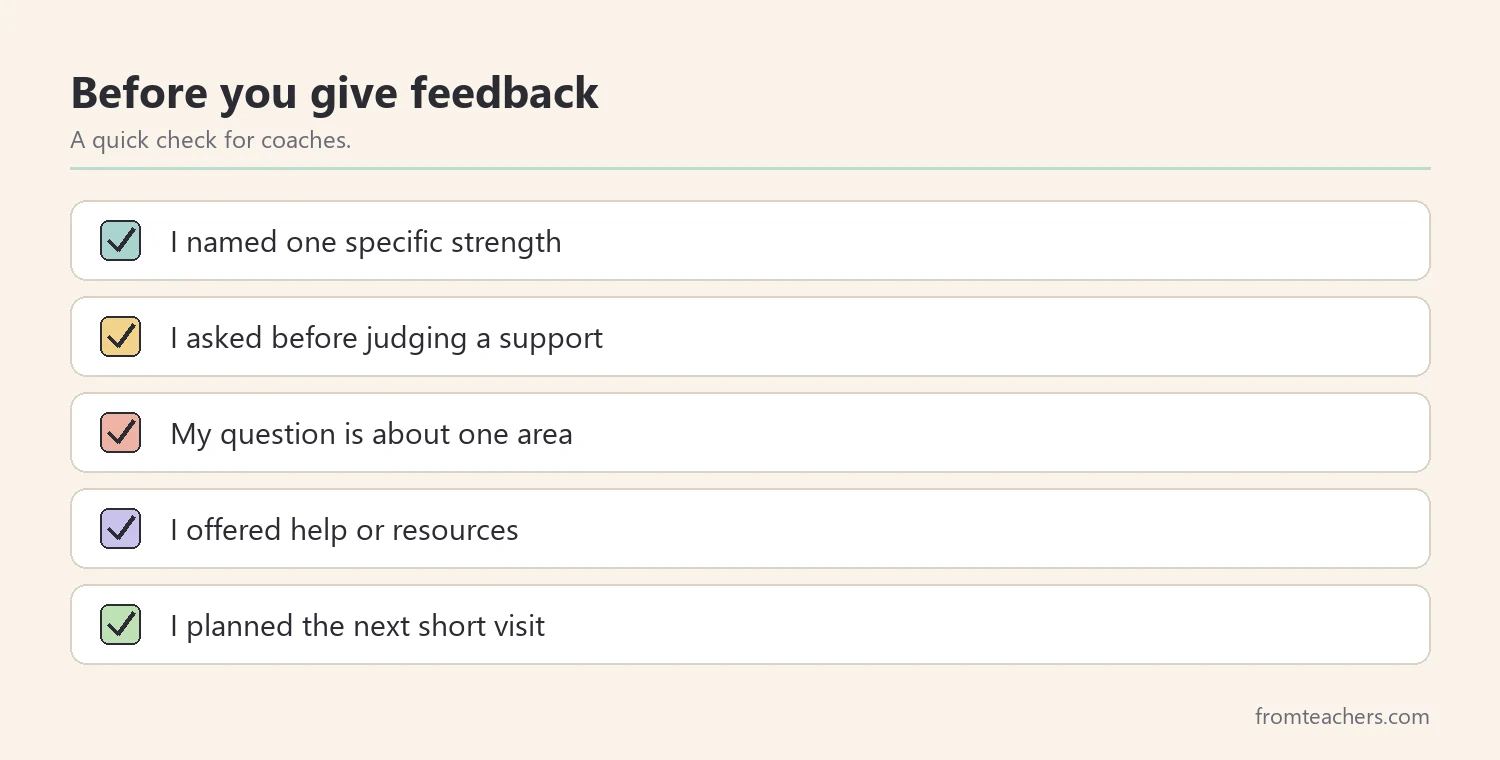
Therefore, ask before judging. “Tell me about the student on the beanbag” often leads to a thoughtful answer about sensory needs or a break plan from the IEP.
In contrast, some quiet rooms hide problems. Students may be compliant but not learning, or adults may be doing the work for students. Look at what students produce, not only how still they are.
Using walkthroughs to support teachers
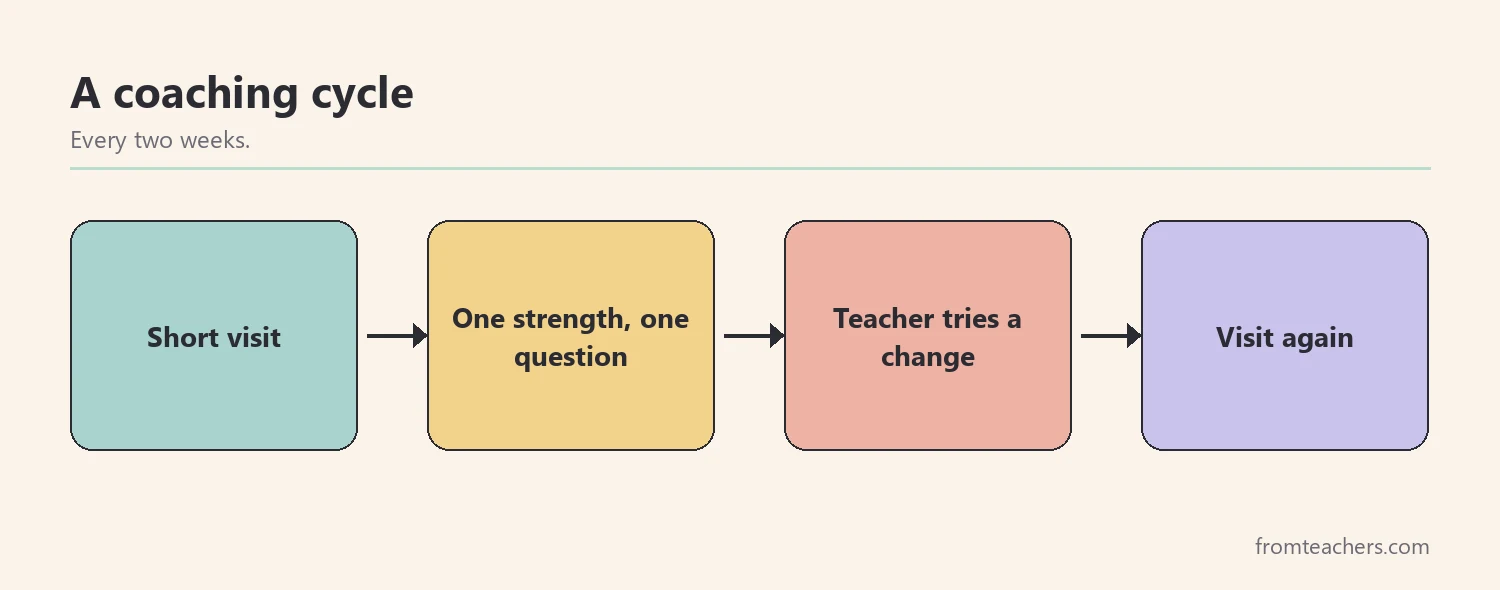
Walkthroughs work best when teachers feel supported, not watched. First, share the look-fors in advance so teachers know what you are noticing. Next, keep visits short and regular. Then follow up within a day with one strength and one question.
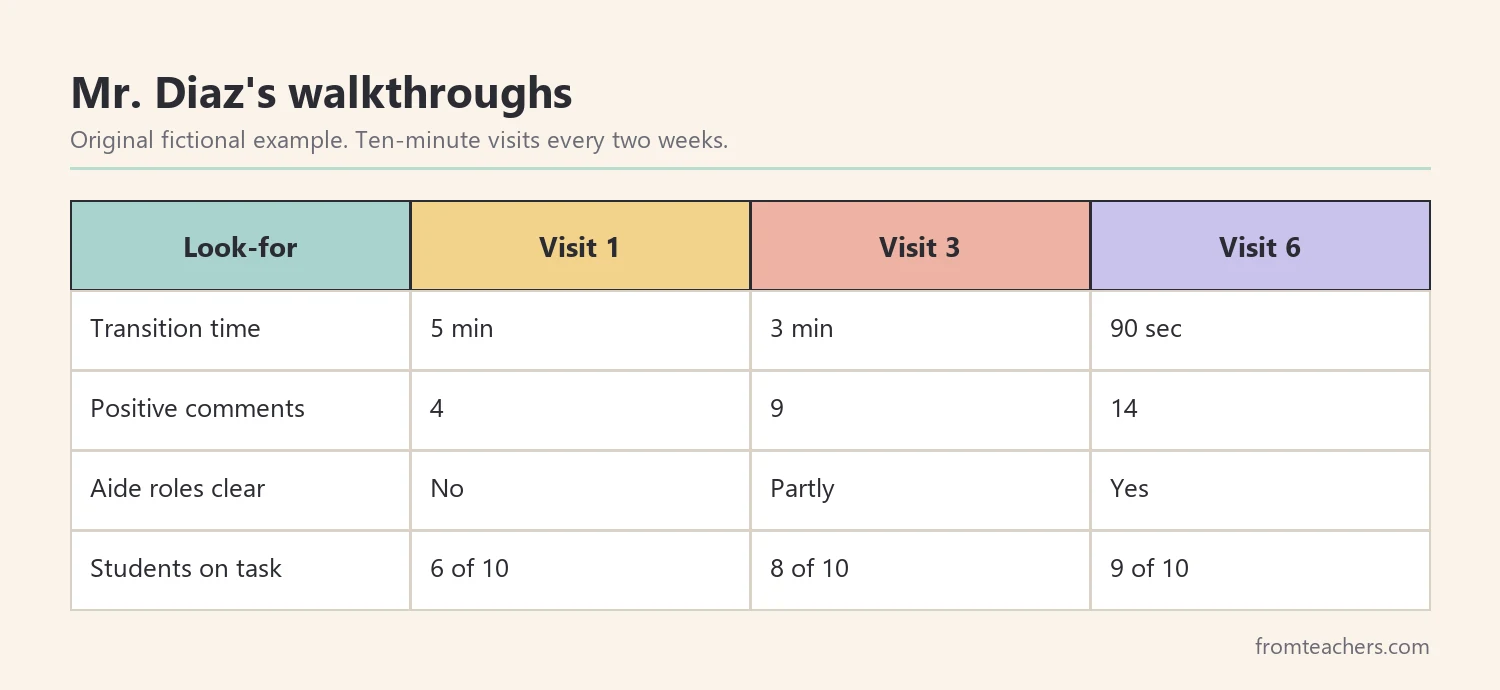
For example, Ms. Grant visited Mr. Diaz every two weeks for ten minutes. She tracked four signs across six visits. Figure 3 shows how transition time dropped and positive comments grew as he tried new strategies.
In addition, protect planning time. Many of the signs of a well-run classroom depend on preparation, such as materials, visuals and paraprofessional schedules. Leaders who protect planning time make these signs more likely. Figure 5 shows a simple coaching cycle.
Supporting new special education teachers
New teachers often struggle with the same few areas: transitions, paraprofessional roles and behavior responses. Signs of a well-run classroom in these areas can take a full year to develop, even for strong teachers.
First, pair new teachers with a mentor who teaches a similar program. Next, focus coaching on one area at a time. Then celebrate progress, even small changes like a faster transition or a clearer schedule.
Also, give concrete examples. Showing a picture of a calm transition, or a side-by-side example of what to say instead, is often more useful than a written list of expectations.
Signs of a well-run classroom across different programs
The ten signs look slightly different in each setting. In a co-taught general education room, you may see two teachers leading different groups and students with IEPs working alongside peers. In a self-contained program, you may see more individual schedules, more visuals and more adults. Inside a life skills or transition program, you may see students practicing real tasks, such as cooking, shopping lists or job routines.
Therefore, adjust your look-fors to the program’s purpose. A resource room that pulls students for thirty minutes needs fast, efficient routines. A full-day program needs routines for meals, personal care and longer breaks. Asking the teacher about the program’s goals before your first visit helps you judge fairly.
Talking with teachers after a visit
The conversation after a walkthrough matters as much as the visit. Teachers often know exactly why a room looks the way it does, and a short talk turns a visitor’s guess into shared understanding.
First, start with what you saw, not what you think. “I noticed the transition to math took about ninety seconds” is neutral and specific. Next, ask the teacher what they were trying in that moment. Then listen for what support would help: a schedule change, a training for aides or new materials.
Also, invite the teacher to name their own goals. Many teachers already know which of the signs of a well-run classroom they want to strengthen. When the goal is theirs, change tends to last longer.
For example, Mr. Diaz chose “clear roles for my two aides” as his goal. Ms. Grant arranged twenty minutes of shared planning each week, and by the fourth visit, both aides were leading small groups without prompts.
Finally, close the loop. Mention progress in the next visit, even if it is small. Teachers notice when leaders remember their goals, and that trust makes future feedback easier to hear.
Common mistakes and how to avoid them
- Judging by noise level. Fix: look at whether students are engaged and supported.
- Using a general education rubric unchanged. Fix: add special education look-fors.
- Visiting only during problems. Fix: plan regular short visits.
- Giving long written feedback. Fix: share one strength and one question.
- Ignoring paraprofessional training. Fix: include aides in coaching and planning.
Questions leaders ask about signs of a well-run classroom
How long should a walkthrough be?
Many leaders use visits of ten to fifteen minutes. Several short visits often show more than one long visit.
Should I visit during transitions?
Yes. Transitions show many signs of a well-run classroom, including routines, adult roles and student independence.
What if a student has a meltdown during my visit?
Watch how adults respond and how the room recovers. Calm, planned responses are a strong sign of a well-run room.
Can I use the same look-fors for every program?
Use a shared core, then adjust for the program, such as co-taught, resource or self-contained classes.
How do I give feedback without discouraging teachers?
Start with a specific strength, ask one curious question and offer support, such as resources or planning time.
Related reading: Special Education Strategies: 10 Powerful Ways Teachers Can Succeed, The Crucial Role of Special Educators in the USA, and Moving Beyond Shame and Behavior Charts: Positive Alternatives.
You may also need: Teacher Observation Feedback Form Classroom Walkthrough Rubric for Coaches.
A companion resource for signs of a well-run classroom:
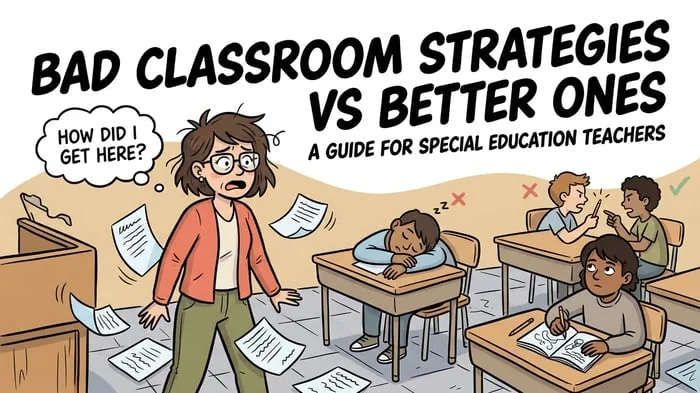
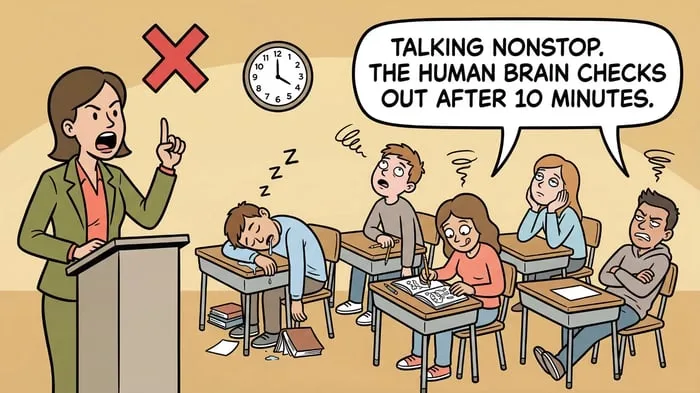
Classroom Management Strategies: Dos & Don’ts for SPED Teachers: a 51-page comic-style guide that pairs a what-not-to-do scene with a do-this-instead scene across engagement, behavior, transitions, differentiation and communication, useful for planning time and for sharing with a mentee or new team member.
Sources and scope
- Center on PBIS: resources on positive behavior support, including classroom practices.
- IRIS Center at Vanderbilt University: free modules on classroom behavior management and instruction.
- National Association of School Psychologists: resources on positive school climate and student support.
- CAST UDL Guidelines: a framework for designing flexible, accessible instruction.
This list offers look-fors for supportive walkthroughs in special education classrooms. It is not an evaluation rubric, and it does not replace your district’s evaluation system, IEP requirements or legal obligations.
Key takeaways
- Signs of a well-run classroom in special education include routines, visuals and clear adult roles.
- A calm room is not always a quiet room.
- Look for IEP supports in daily practice and data that drives decisions.
- Ask questions before judging what you see.
- Support teachers with short, regular visits and specific feedback.





Leave a Comment