

Knowing the main types of positive reinforcement in the classroom lets you match the reward to the student instead of reaching for stickers every time. Picture a grade 4 classroom during independent writing. Kai, who is working on staying on task, has a sticker chart that worked for two weeks. Now he shrugs at stickers, and his teacher wonders what to try next.
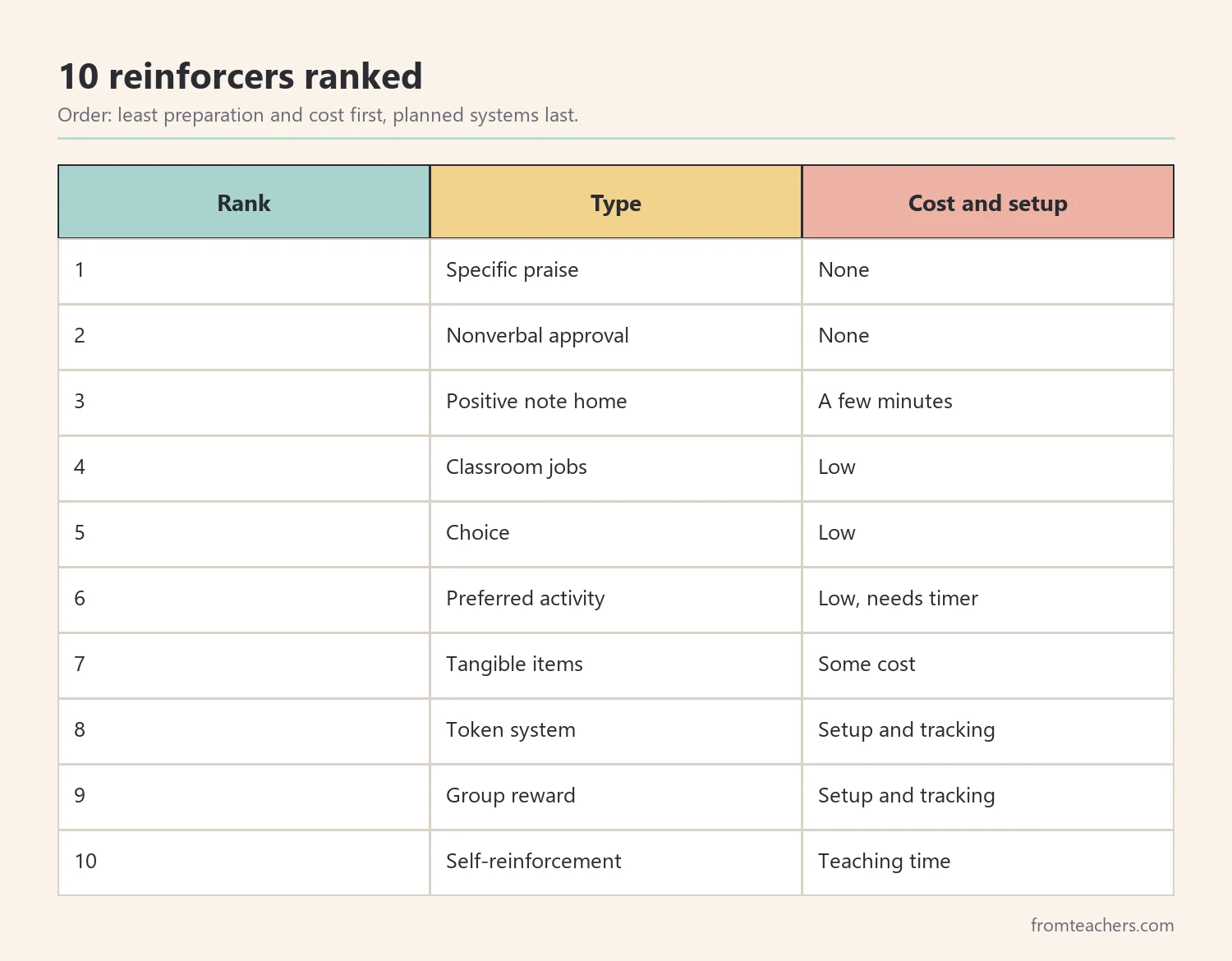
This list ranks ten reinforcement types from the easiest and cheapest to use, to the more planned systems. By the end, you will know what each type is, when it fits, how to pair it with specific praise, and how to record what actually works for one student.
Examples are fictional. Adapt to the student’s goals, preferences, and agreed supports, including any behavior plan. This is guidance, not a diagnosis.
At a glance
- A reinforcer is only a reinforcer if the behavior increases.
- Start with free, frequent options like specific praise.
- Match rewards to what each student values.
- Record the student’s response to see what works.
- Pair rewards with praise and fade them gradually.
How we ranked these reinforcers
We did not rank them by “power,” because what reinforces one student may mean nothing to another. Instead, the order follows two practical criteria: how little preparation and cost each type needs, and how easily it can be used many times a day. Social and activity-based reinforcers come first. Planned systems, such as token economies, come later because they need setup and consistent tracking.
Remember the core idea: positive reinforcement means something is added after a behavior, and the behavior then happens more often in the future. If the behavior does not increase, the item was not actually a reinforcer for that student.
The ready-made option: a positive reinforcement tracking sheet
Choosing a reinforcer is half the job. Knowing whether it works is the other half. The positive reinforcement tracking sheet for behavior data gives you space for the student’s name, the targeted behavior, and chosen reinforcements, plus a log with date, behavior rewarded, type of reward, frequency, the student’s response, notes and adjustments, and the staff member’s name.
It is quick enough to fill in during the day, yet detailed enough to show patterns when you review.
1. Specific verbal praise
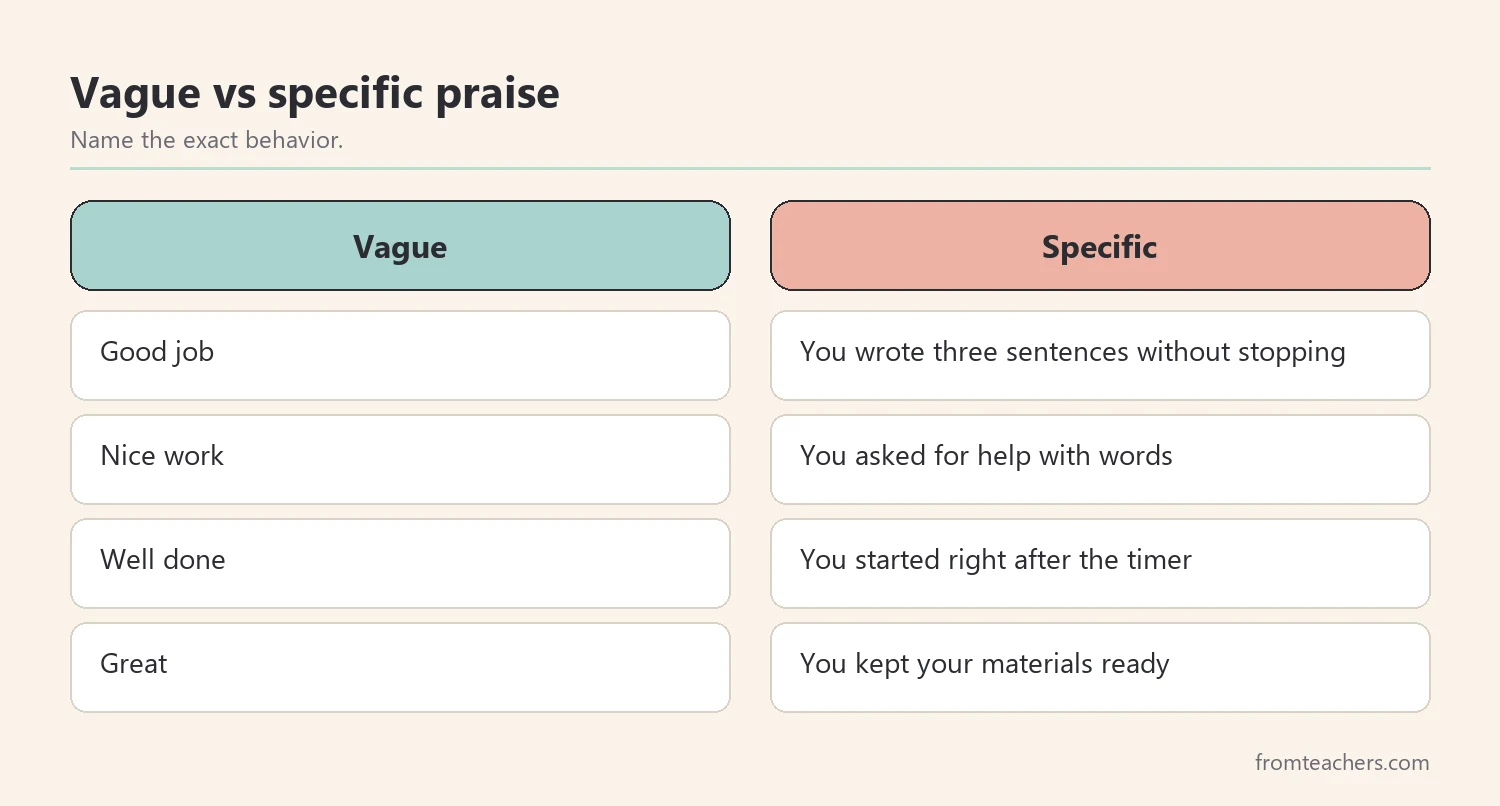
What it is: naming the exact behavior you liked, such as “You wrote three sentences without stopping.”
When it fits: almost always. It costs nothing and can be used many times a day.
Tip: be specific and sincere. “Good job” tells the student little. Some students prefer quiet praise rather than public praise.
Example: Ms. Ruiz said quietly to Kai, “You kept writing for ten minutes.” He looked up, surprised, and kept going.
2. Nonverbal approval
What it is: a thumbs up, a smile, a nod, or a quiet high five.
When it fits: during whole-class instruction, when you do not want to interrupt.
Tip: agree on a private signal with students who dislike attention.
Example: Ms. Ruiz and Kai agreed on a thumbs up from across the room. It kept him going without drawing classmates’ attention.
3. Positive notes or calls home
What it is: a short message to the family describing something the student did well.
When it fits: for students who value family approval, and for building trust with families.
Tip: keep it short and specific, and send it soon after the behavior.
Example: Kai’s mom received a note: “Kai finished his writing today without reminders.” Kai asked the next day if another note might go home. His mom also mentioned the note at dinner, which doubled the effect.
4. Classroom jobs and responsibilities
What it is: earning a role such as line leader, materials manager, or tech helper.
When it fits: for students who enjoy feeling useful or trusted.
Tip: rotate jobs and link them clearly to the behavior.
Example: Kai earned the job of handing out tablets after a week of on-task writing. He took it very seriously and reminded classmates to handle the tablets with care.
5. Choice
What it is: letting the student choose something, such as where to sit, which task to do first, or which book to read.
When it fits: for students who value control and independence.
Tip: offer two or three acceptable options, not unlimited choice.
Example: After finishing his writing, Kai chose between reading on the beanbag or drawing his story’s cover.
6. Preferred activities
What it is: a few minutes of an enjoyed activity, such as drawing, a puzzle, a game, or extra recess time.
When it fits: when “first, then” works well: first the task, then the activity.
Tip: keep the activity short and easy to end, and use a timer.
Example: Kai’s first-then card said, “First writing, then 5 minutes of drawing.” He began writing faster.
7. Tangible items
What it is: stickers, stamps, small prizes, or certificates.
When it fits: for younger students or when building a new behavior quickly.
Tip: always pair tangibles with specific praise, and plan to fade them over time.
Example: Kai’s stickers stopped working after two weeks. That was a sign to switch, not a failure.
8. Token systems
What it is: earning tokens, points, or checks that are exchanged later for a chosen reward.
When it fits: for students who can wait a little for a bigger reward.
Tip: make earning clear and frequent at the start, and never take away tokens already earned without a team plan.
Example: Kai earned a check for each 10-minute block on task. Five checks earned him a drawing break.
9. Group reinforcement
What it is: the whole class or a group earns a reward together, such as a class game.
When it fits: for building class cooperation.
Tip: make sure no single student can “lose it for everyone,” which can create peer pressure.
Example: The class earned marbles in a jar for quiet work time. Kai cheered when the jar filled.
10. Self-reinforcement
What it is: the student monitors their own behavior and recognizes their success, for example by checking a box or giving themselves a point.
When it fits: as a long-term goal, when students are ready to take more ownership.
Tip: teach it step by step, and check accuracy together at first.
Example: By week six, Kai checked his own writing blocks, and Ms. Ruiz checked his tally against hers once a day.
Finding the right types of positive reinforcement in the classroom for one student
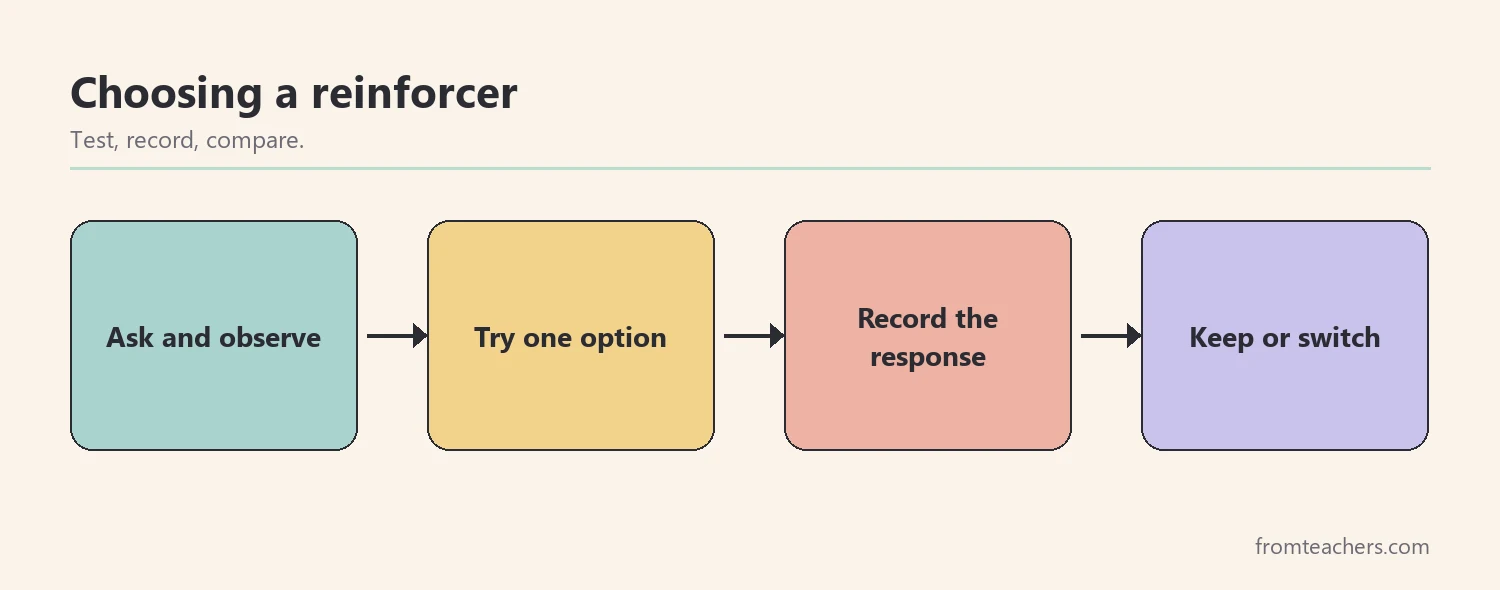
The best way to choose is to ask and observe. Ask the student what they enjoy. Watch what they choose during free time. Then test one option, record the response, and compare.
Here is how Ms. Ruiz tracked Kai’s reinforcers over six weeks.
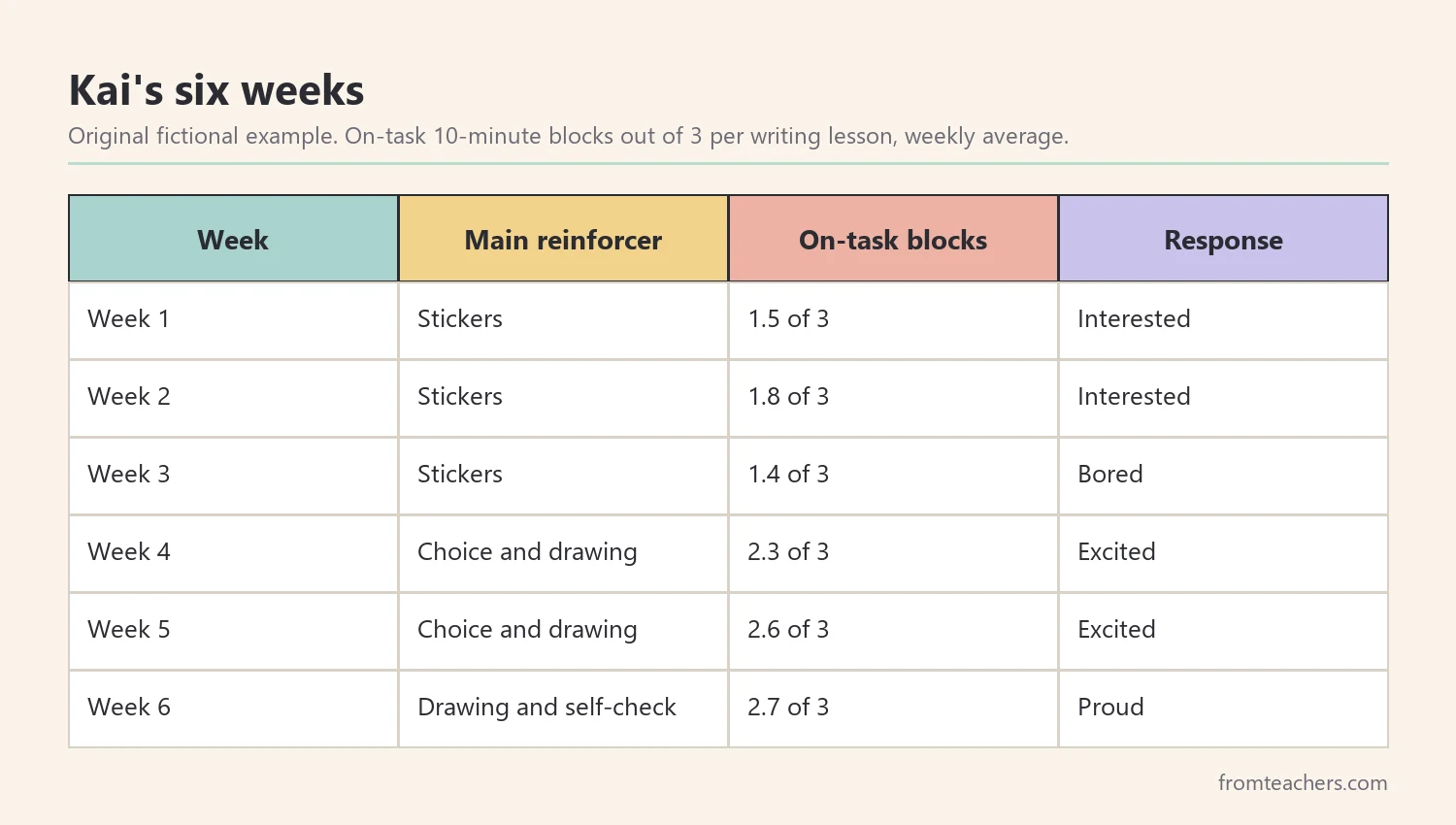
The data showed a clear pattern. Stickers worked briefly, then faded. Choice and drawing time kept Kai motivated much longer, and self-monitoring started to work once he was successful. As a result, Ms. Ruiz kept drawing time and began to fade her own checks.
Making reinforcement fair for the whole class
Teachers sometimes worry that individual rewards look unfair to other students. In practice, most classes accept differences when the message is simple: everyone gets what they need to succeed. Some students need glasses, some need a quiet corner, and some need more frequent feedback.
First, keep individual systems low-key. A small card on the desk or a private tally draws less attention than a public chart. Next, make sure the whole class also receives plenty of specific praise and occasional group celebrations. When everyone feels noticed, individual plans rarely cause conflict.
In addition, avoid public comparisons. Statements like “Why can’t you be more like Kai?” damage relationships and can turn a helpful system into a source of embarrassment.
Finally, explain the plan to support staff and substitutes. A short note about what the student is working on, how to reinforce it, and what to avoid keeps the system consistent when you are not in the room.
Pairing and fading
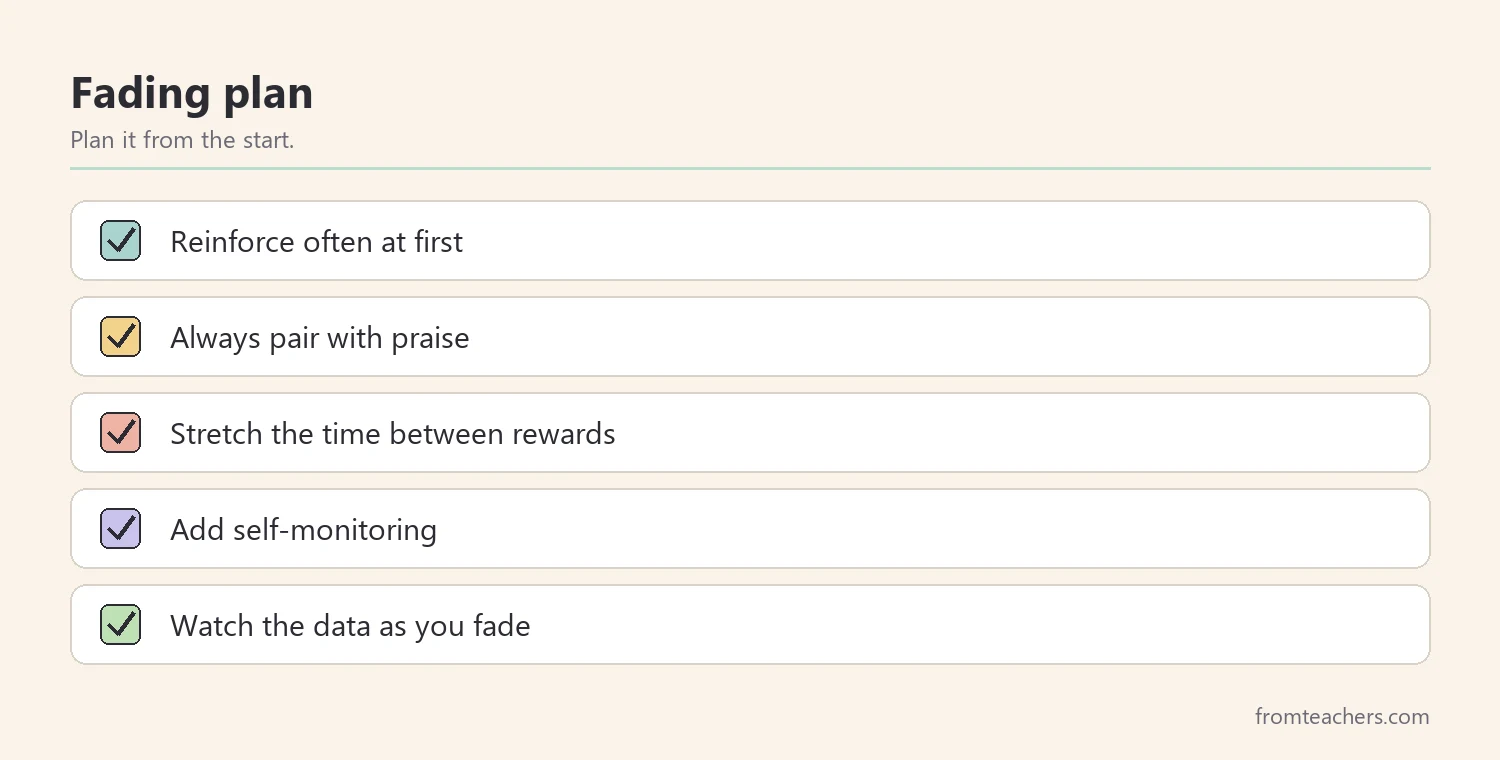
Most experts recommend pairing any reinforcer with specific praise. Over time, praise and the satisfaction of success can carry more of the load, so the bigger rewards can be faded.
First, reinforce often while the behavior is new. Next, gradually increase how much behavior is needed for the reward, such as moving from every 10 minutes to every 20. Then, shift toward praise, self-monitoring, and natural rewards like finishing early.
In addition, keep watching the data. If the behavior drops as you fade, slow down. Fading too fast is one of the most common reasons reinforcement stops working.
Moreover, plan for generalization. A student who stays on task in writing may not automatically do so in math. Use the same praise language and a similar reinforcer in a second setting, then a third. Sharing the plan with other teachers and support staff helps the behavior spread across the day.
Common mistakes and how to avoid them
- Using the same reward for everyone. Fix: ask and observe what each student values.
- Vague praise. Fix: name the exact behavior.
- Delaying reinforcement too long. Fix: reinforce soon after the behavior, especially at first.
- Taking away earned rewards. Fix: keep reinforcement and consequences separate unless the team plan says otherwise.
- Never fading. Fix: plan from the start how you will reduce rewards over time.
Questions teachers and parents ask about types of positive reinforcement in the classroom
Is positive reinforcement the same as bribery?
No. A bribe is offered during problem behavior to stop it. Reinforcement is planned in advance and given after the desired behavior, to make it more likely in the future.
What if nothing seems to work?
Check whether the reward is truly valued, whether it comes soon enough, and whether the expected behavior is realistic. If problems continue, talk with the team about a functional behavior assessment.
Will students only behave for rewards?
Not if you pair rewards with praise and fade them gradually. The goal is for the behavior to become a habit supported by natural rewards.
How often should I reinforce?
Often at first, especially for new behaviors. Then reduce gradually as the behavior becomes more consistent.
Can parents use the same approach at home?
Yes. Consistent praise language and similar rewards at home and school help students understand expectations across settings.
Related reading: Moving Beyond Shame and Behavior Charts, The Power of Data Tracking in Special Education, and How Teachers Communicate With Parents in Special Education.
You may also need: Weekly Behavior Chart for Kids Editable Printable Reward Chart for Home.
A companion resource for types of positive reinforcement in the classroom:
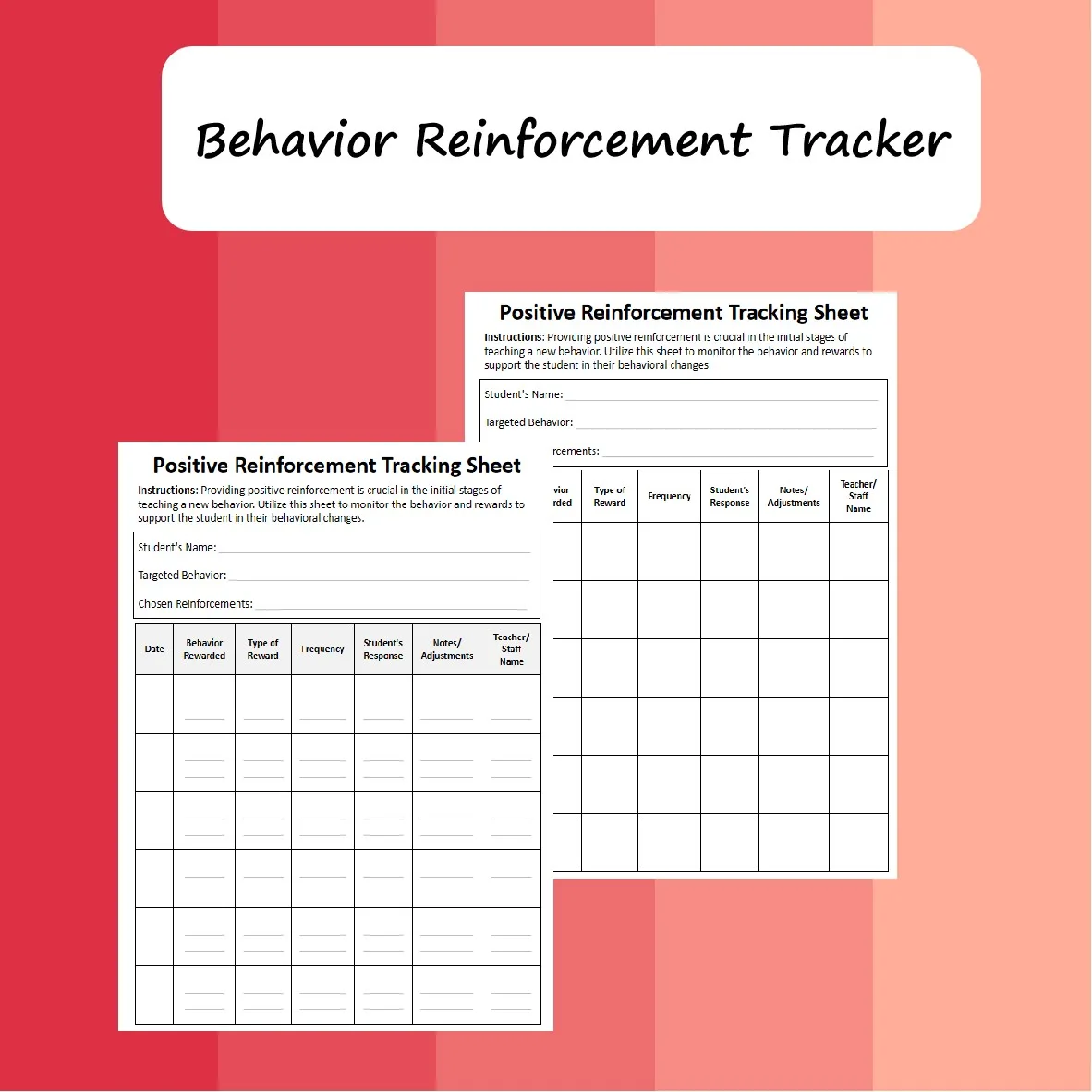
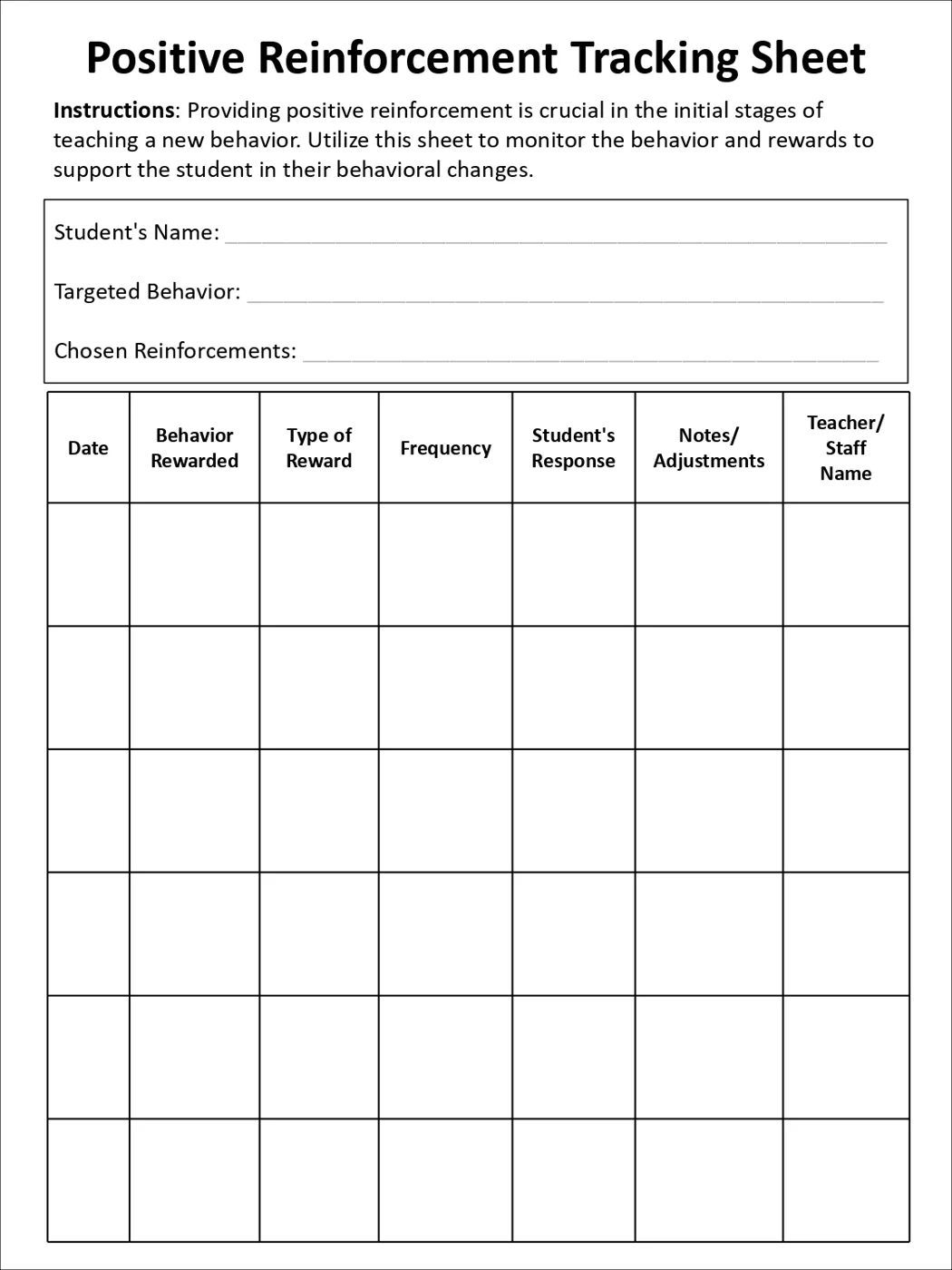
Positive Reinforcement Tracking Sheet Editable Behavior Data Collection Form: a two-page sheet with space for the student’s name, targeted behavior and chosen reinforcements, plus a log for date, behavior rewarded, type of reward, frequency, student response, notes and adjustments, and staff name.
Sources and scope
- Center on PBIS: resources on positive behavioral interventions and supports, including acknowledgment systems.
- Intervention Central: classroom behavior management tools and reinforcement ideas.
- AFIRM Modules: free modules on evidence-based practices, including reinforcement.
- Behavior Analyst Certification Board: information about the field of behavior analysis and certified professionals.
This list covers everyday positive reinforcement in classrooms. It does not replace an individual behavior intervention plan or functional behavior assessment, which are developed by the team with qualified professionals.
Key takeaways
- Start with free, frequent reinforcers like specific praise.
- Match each reinforcer to what the individual student values.
- Track the student’s response to see what truly works.
- Pair rewards with praise and fade them gradually.
- Aim for self-monitoring and natural rewards over time.





Leave a Comment