

Pragmatic language activities for middle school need to feel grown up, or students will roll their eyes before you finish explaining. Picture Jonah, a grade 7 student with an IEP for social communication, in a lunchtime group. He knows a great deal about trains, talks about them at length, and misses the moment when his classmates’ faces say, “We are ready for a new topic.”
This list is for speech-language pathologists, special education teachers and co-teachers working with students aged roughly 11 to 14. It ranks ten activities from the least preparation to the most. For each, you will see which pragmatic skill it targets, how to run it in a real middle school room and what it looked like with Jonah, so you can pick two or three to start next week.
Examples are fictional. Adapt to the student’s goals and agreed supports. This is guidance, not a diagnosis.
At a glance
- Pick activities that match the skills a student actually needs, not every activity.
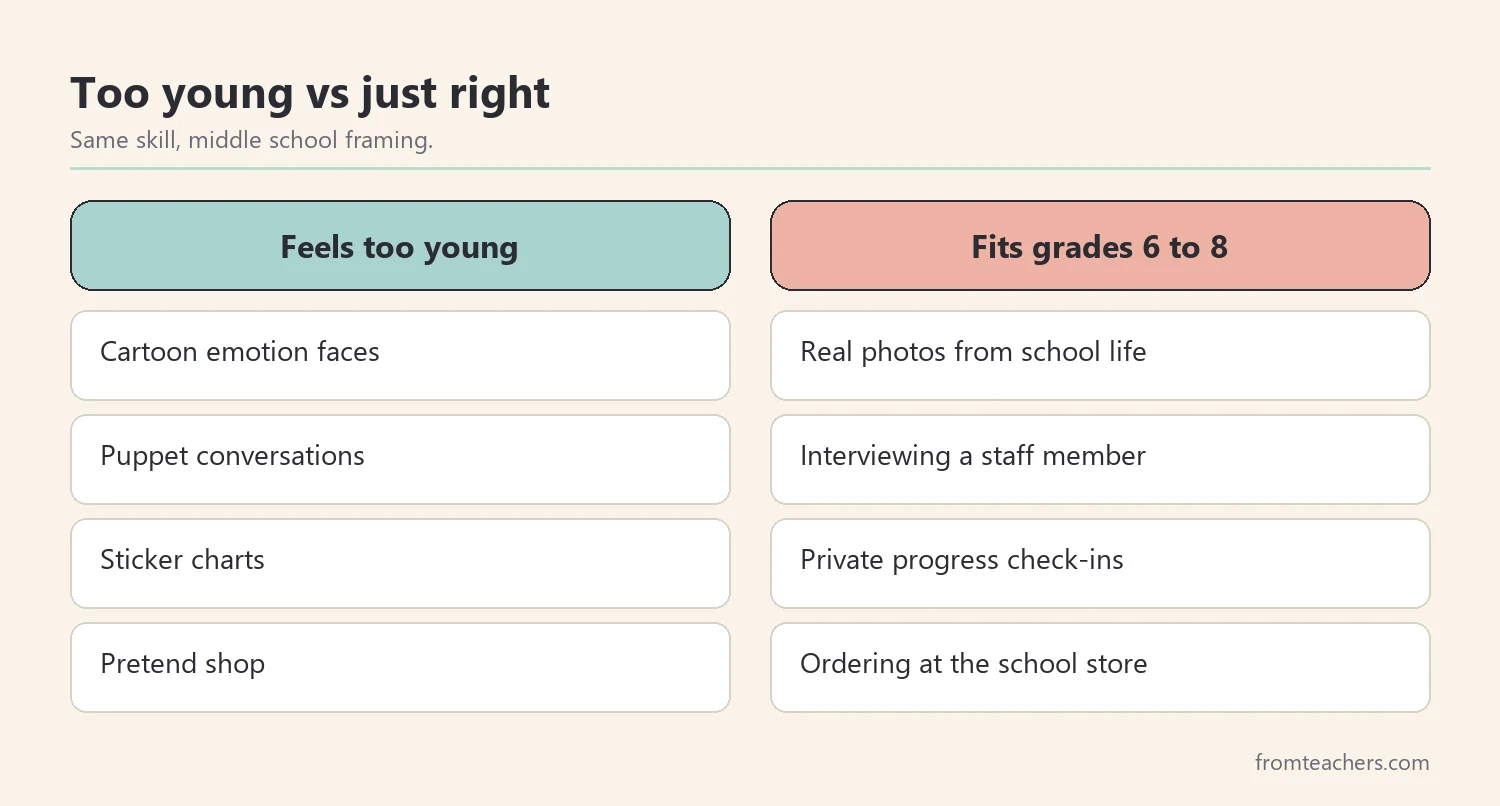
- Middle schoolers engage more with real topics and real social situations.
- Short, frequent practice beats one long social skills lesson.
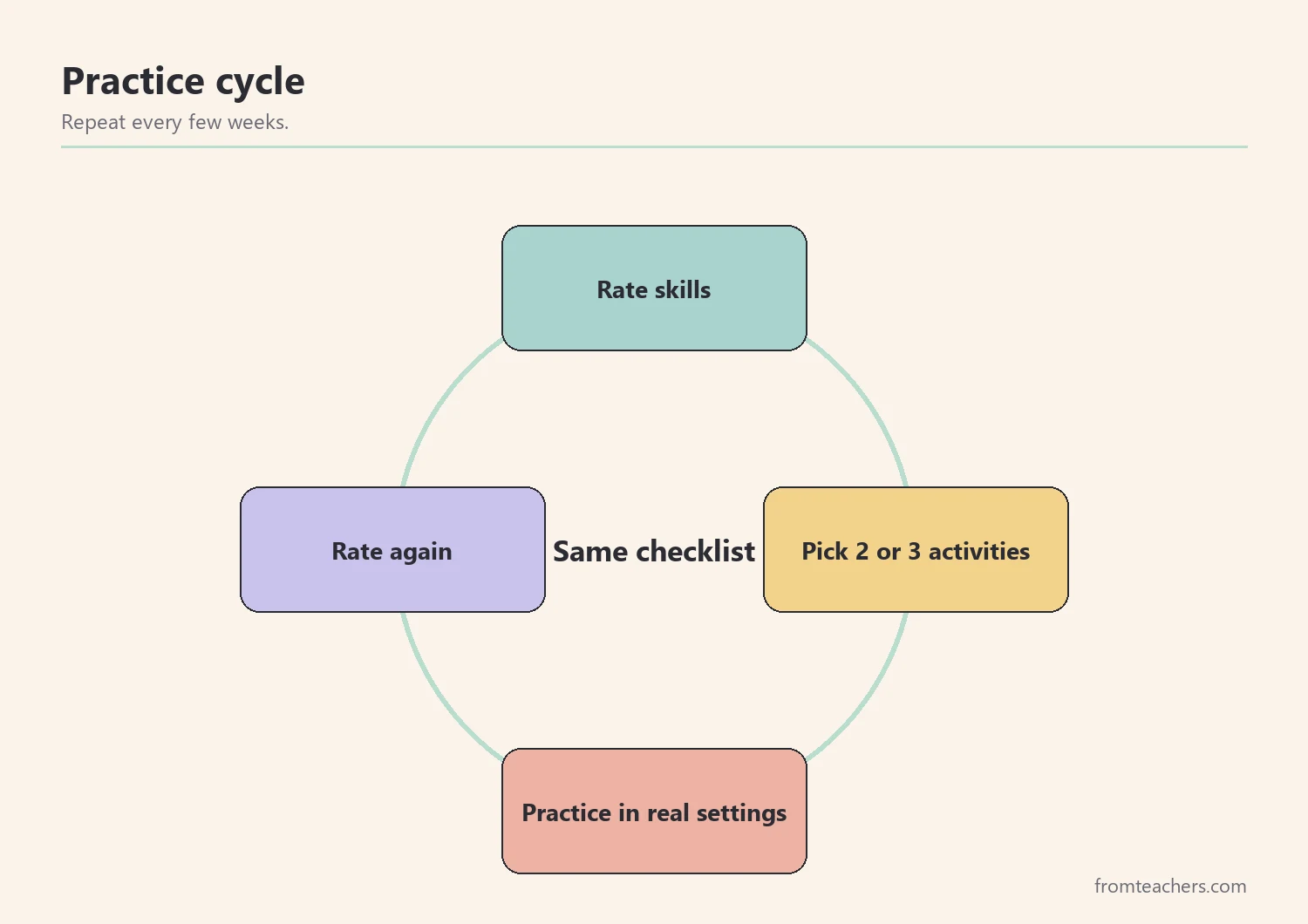
- Rate skills before and after with the same checklist.
- Practice in more than one setting so skills carry over.
How these activities are ranked
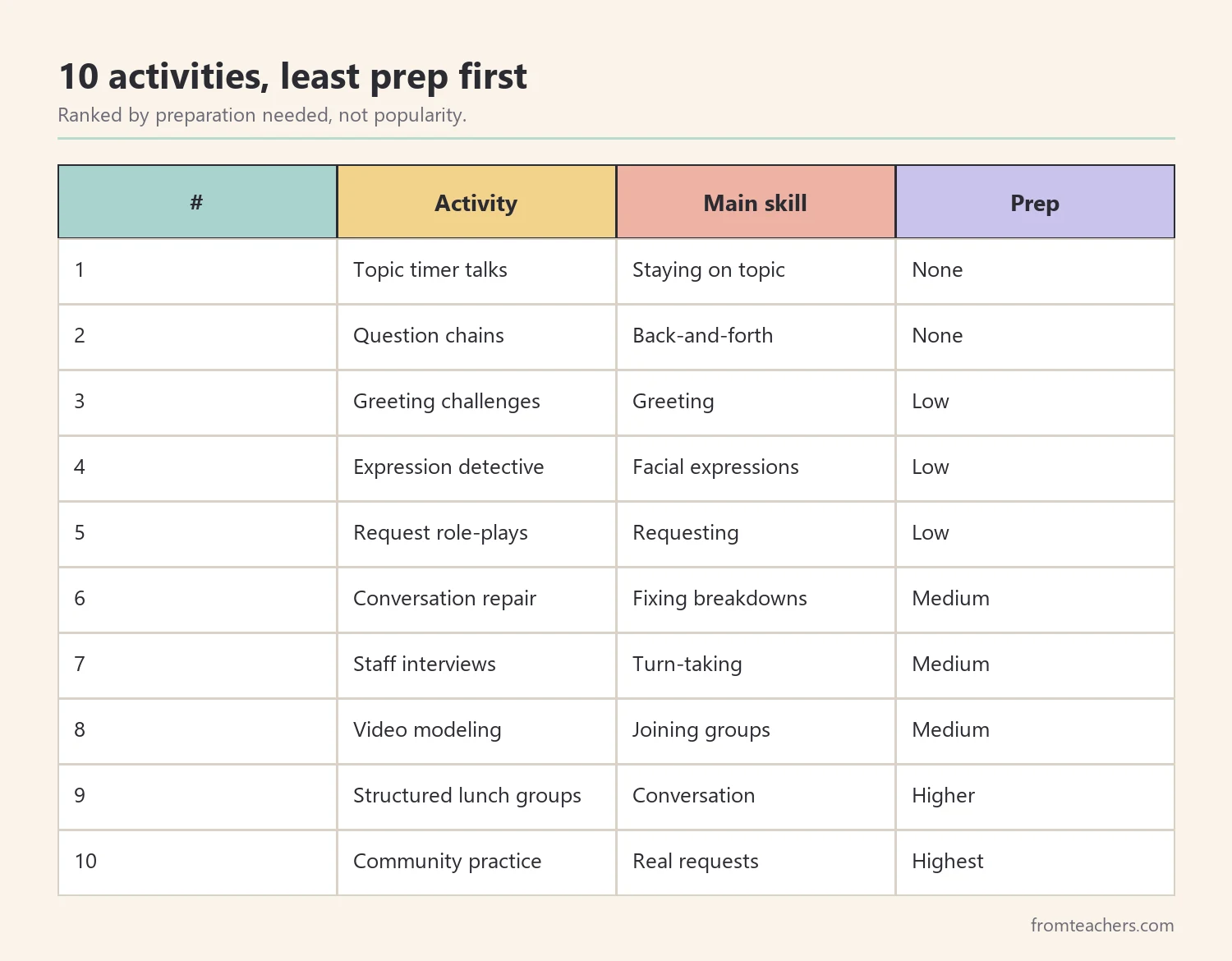
There is no single “best” activity for every student, so we did not invent a popularity score. Instead, the ten activities are ranked by one practical criterion: how much preparation they need. Activity 1 needs nothing but a timer. Activity 10 needs some planning with other staff.
In addition, each activity is matched to one or two specific pragmatic skills, such as turn-taking, staying on topic, or requesting. That way, you can choose based on the student’s needs rather than on what looks fun. Figure 1 shows the full ranking.
1. Topic timer talks (no prep)
The simplest of all pragmatic language activities for middle school is a timed conversation. Two students talk about a chosen topic for two minutes. When the timer beeps, one student must make a smooth switch to a related topic.
Skills targeted: staying on topic and transitioning topics.
How to run it: write three bridge phrases on the board, such as “That reminds me of…” or “Speaking of…”. Then let students practice using them when the timer sounds.
Example: Jonah started with trains. When the timer beeped, he tried “Speaking of travel, has anyone been on a plane?” His partner laughed and joined in, which Jonah noticed and enjoyed.
2. Question chains (no prep)
Next, a quick warm-up for back-and-forth conversation. One student makes a statement. The next asks a follow-up question. Then the first answers and asks a question back. The goal is to keep the chain going for five turns.
Skills targeted: back-and-forth conversation and turn-taking.
How to run it: model a chain with a colleague first. Afterward, give pairs a starter statement like “I went somewhere new this weekend.”
Example: Jonah’s first chains stopped after two turns, because he answered without asking back. A small card reading “Ask one back” helped him reach five turns by the third session.
3. Greeting challenges in the hallway (low prep)
Greetings look simple, yet many students with pragmatic difficulties skip them or use the same phrase for everyone. A weekly greeting challenge makes the skill concrete.
Skills targeted: greeting and understanding social norms.
How to run it: discuss how greetings change with the person: a friend, a teacher, the principal. Then set a challenge, such as greeting three different adults before Friday, and check in briefly.
Example: Jonah greeted the librarian, the PE teacher and the office secretary. He reported that the secretary “actually smiled,” which became a good discussion point.
4. Facial expression detective (low prep)
For this activity, students study photos or short muted video clips and guess what the people feel and what they might say next. Middle schoolers often enjoy the detective framing.
Skills targeted: facial expressions and understanding social cues.
How to run it: use age-appropriate images, such as scenes from school or sports. Ask “What clues did you use?” so students explain their thinking.
Example: Jonah spotted a bored expression in a photo of a student at a desk. The SLP then linked it back to topic timer talks: “What would you do if a friend looked like this?”
5. Request role-plays (low prep)
Many middle schoolers struggle to ask for help, a pencil or more time in a way that fits the setting. Short role-plays let them practice without real stakes.
Skills targeted: requesting and expressing needs and wants.
How to run it: write five real situations on cards, such as “You forgot your homework” or “You need the teacher to repeat a direction.” Students act them out, then the group suggests one improvement.
Example: Jonah’s first request was “I need more time.” After practice, he tried “Could I have five more minutes to finish this part?” His teachers noticed the change in class.
6. Conversation repair practice (medium prep)
Conversations break down all the time: someone misunderstands, interrupts or goes quiet. Practicing repair gives students tools for those moments.
Skills targeted: back-and-forth conversation and expressing needs.
How to run it: prepare short scripts where something goes wrong. Students pause the scene and choose a repair phrase, such as “Sorry, I meant…” or “Can you say that again?”
Example: Jonah practiced “Sorry, I talked a lot about trains. What do you like?” He later used it at lunch without a prompt.
7. Interview a staff member (medium prep)
Students prepare three questions, interview a staff member for five minutes and then report back. It turns pragmatic practice into a real task with a real audience.
Skills targeted: requesting, turn-taking and staying on topic.
How to run it: arrange willing staff in advance. Then help students plan an opening line, their questions and a closing “thank you.”
Example: Jonah interviewed the custodian about how the school heating works. He stayed on topic for the full five minutes and asked one follow-up question on his own.
8. Video modeling clips (medium prep)
Video modeling means showing a short clip of someone using a skill, then practicing it. Clips can feature peers, staff or the student himself, with consent.
Skills targeted: any skill that can be shown clearly, such as joining a group.
How to run it: record a 30-second example of the target skill. Watch it together, name what worked, then role-play the same situation. Always follow your school’s rules on recording students.
Example: Jonah watched two staff members model joining a lunch table conversation. He then practiced the same steps with a peer mentor.
9. Structured lunch groups (higher prep)
Lunch is where many pragmatic skills are needed most. A structured lunch group gives students a calm place to practice with a few peers and a light adult guide.
Skills targeted: back-and-forth conversation, topic changes and social norms.
How to run it: invite three to five students, including supportive peers. Start with a topic jar and gradually fade the adult’s role.
Example: At first, the SLP kept Jonah’s group on track with topic cards. By week six, the students picked their own topics and only checked in at the end.
10. Real-world community practice (highest prep)
Finally, the most planning-heavy option: practicing in real settings, such as ordering at the school store or asking for help in the library. Skills that are only practiced in the speech room often stay there.
Skills targeted: requesting, greeting and understanding social norms.
How to run it: plan the setting with staff, practice the script first and debrief afterward. Keep groups small.
Example: Jonah ordered a snack at the school store using a greeting, a request and a thank you. The cashier did not know it was practice, which made it real.
The ready-made option: rate skills before you choose
Start with the skills, not the activities. Rate each student on the same set of skills, then choose the two or three activities that target the lowest-rated areas. A ready-made pragmatic skills checklist with a five-point frequency scale makes this quick: it covers ten skill areas, from eye contact to understanding social norms, with a clear description for each.
Then repeat the rating every few weeks. Because the scale runs from “never” to “always,” small changes show up clearly. Figure 3 shows how Jonah’s ratings changed over one term.
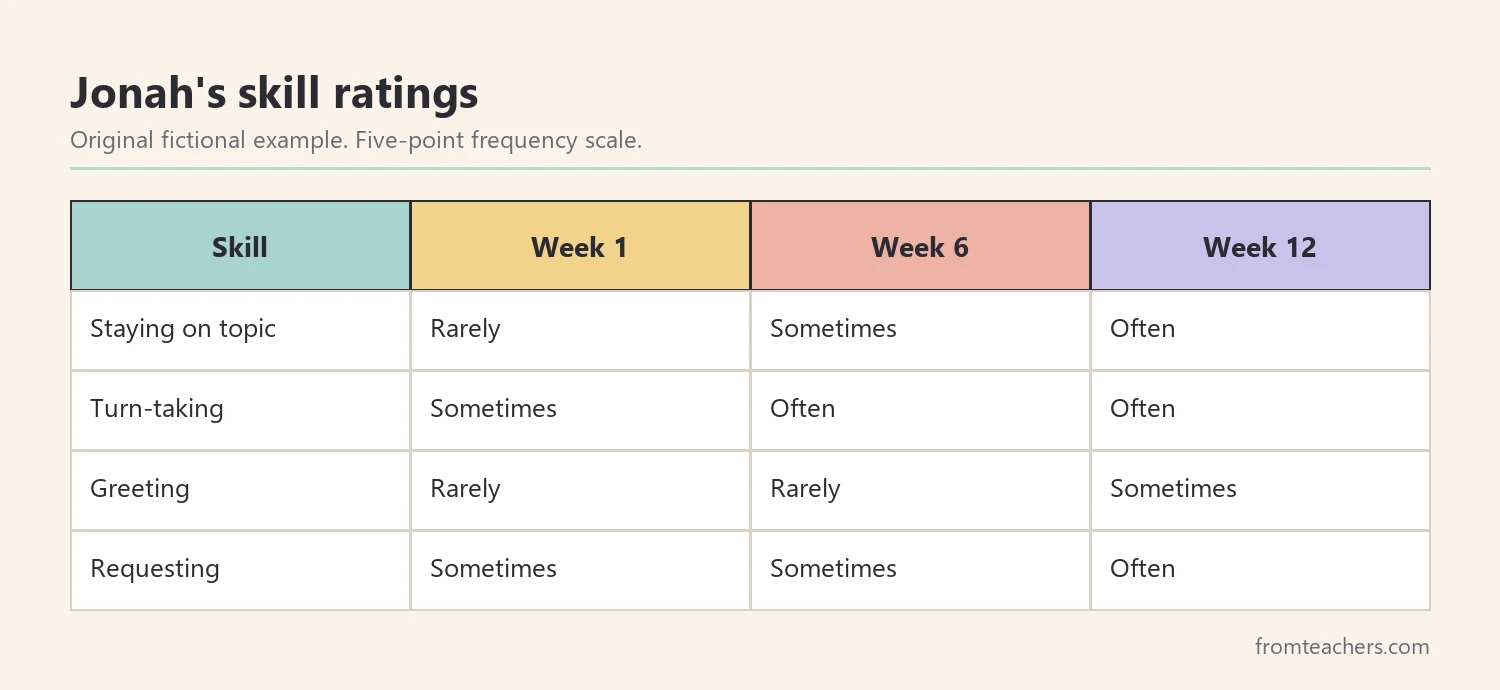
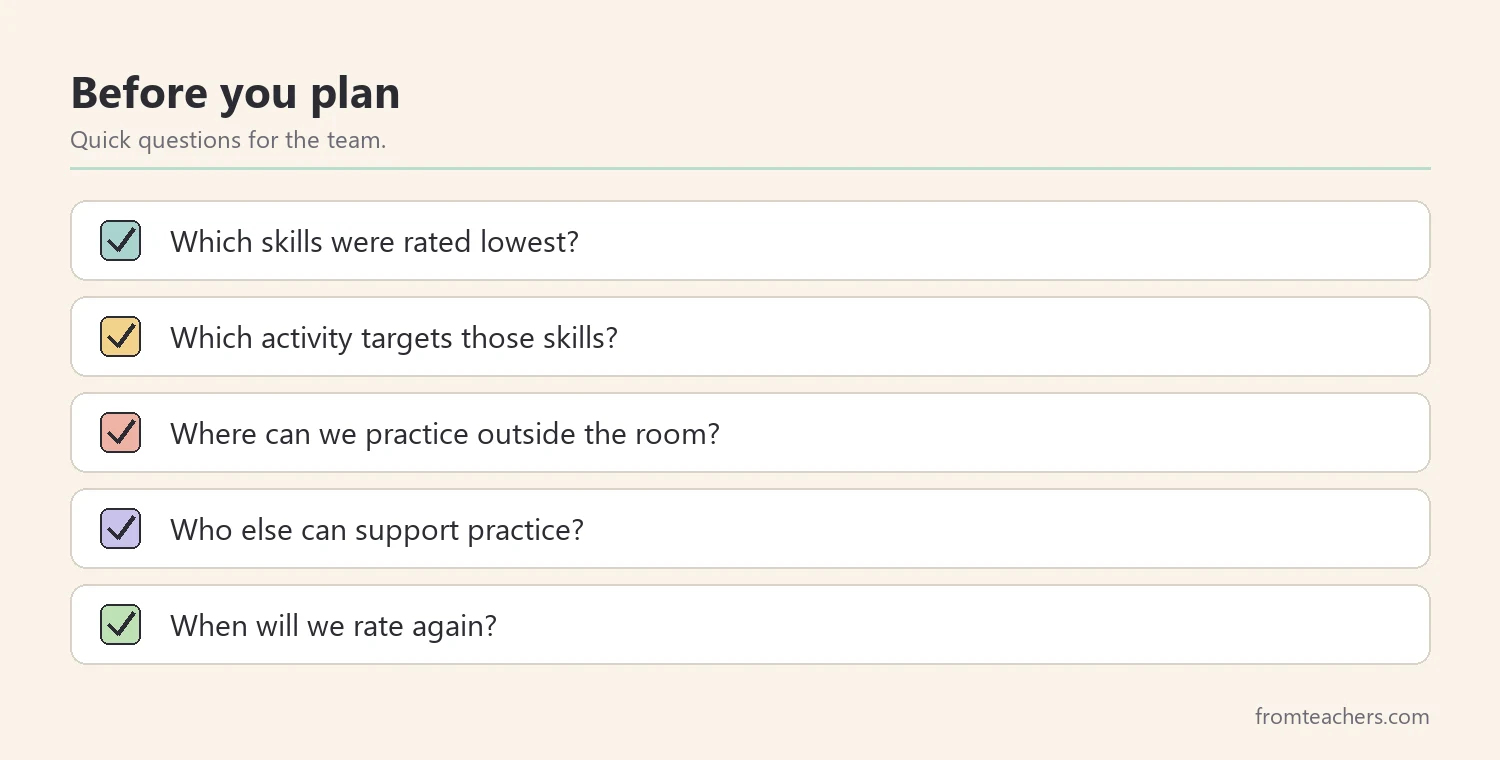
The pattern helped the team decide what came next. Staying on topic improved most, so the SLP shifted time toward greetings and requests. Figure 4 lists quick planning questions, and Figure 5 shows the cycle.
Common mistakes and how to avoid them
- Using childish materials. Fix: choose real topics, photos and situations from middle school life.
- Practicing only in the speech room. Fix: add at least one activity in the hallway, lunchroom or classroom.
- Running every activity at once. Fix: pick two or three linked to the lowest-rated skills.
- Correcting in front of peers. Fix: give feedback privately or through a shared code word.
- Skipping the before and after rating. Fix: rate with the same checklist every few weeks.
Questions teachers and parents ask about pragmatic language activities for middle school
How often should students practice?
Short, frequent practice usually works better than one long session. Many teams use two or three brief activities a week, plus real-life practice whenever a chance appears. Follow the student’s IEP and the SLP’s plan.
Can general education teachers run these activities?
Many of them, yes, especially the low-prep ones. Question chains and topic timer talks fit well into advisory or homeroom. The SLP can help adapt them for individual goals.
What if a student finds role-play embarrassing?
Start with low-pressure options like facial expression detective, or let the student direct the role-play instead of acting. Respect is essential at this age.
Do these activities work for autistic students?
Many autistic students enjoy structured practice, especially with clear rules and real topics. However, the goal is to support communication, not to make students act less autistic. Involve the student in choosing goals.
How can parents help at home?
Parents can try question chains at dinner or practice requests before an outing. Ask the school team which skills are the current focus so home and school stay aligned.
Related reading: Autism Social Skills Development: Practical Strategies for Growth, Spectrum Voices: Strategies for Navigating High-Functioning Autism, and How Teachers Communicate With Parents in Special Education.
You may also need: Individual Student Communication Plan for classrooms.
A companion resource for pragmatic language activities for middle school:
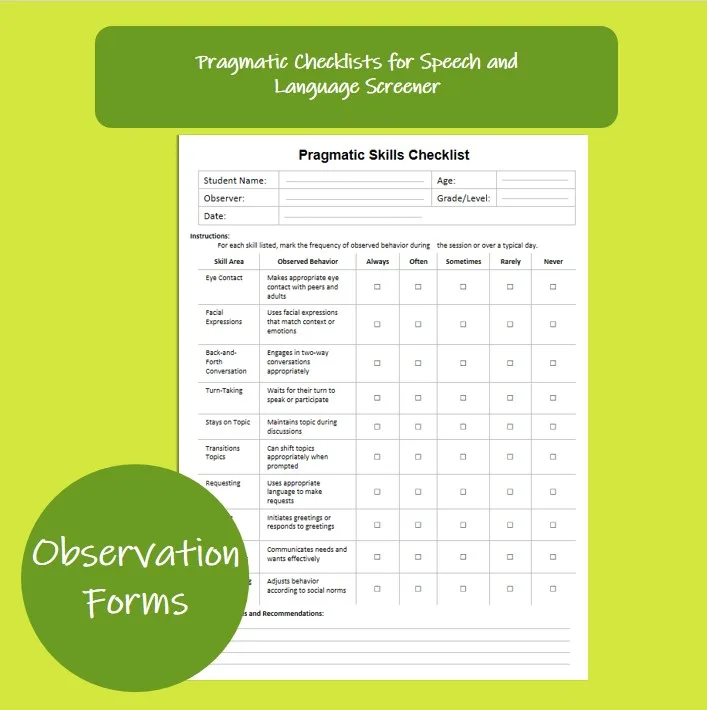
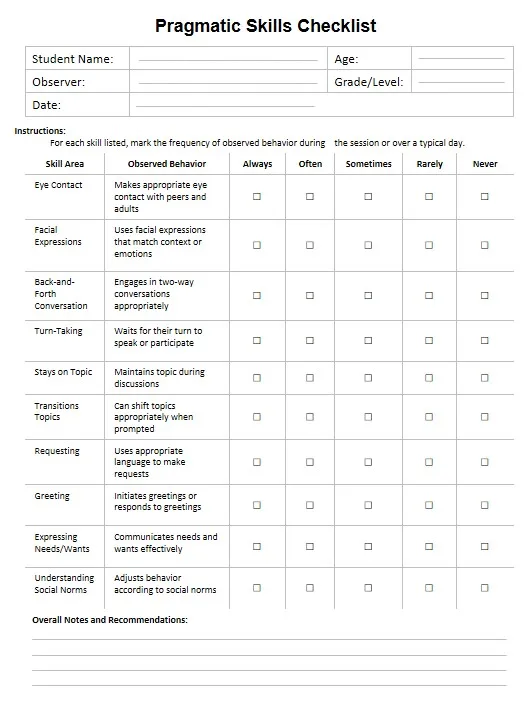
Pragmatic Skills Checklist Social Communication Screener for Speech Therapy: a one-page, typeable checklist that rates ten pragmatic skills, from eye contact and turn-taking to staying on topic and understanding social norms, on a five-point frequency scale, with space for notes and recommendations.
Sources and scope
- American Speech-Language-Hearing Association: Social Communication: a plain-language overview of pragmatics and social language use.
- ASHA Practice Portal: Social Communication Disorder: professional guidance on assessment and treatment of social communication difficulties.
- National Institute on Deafness and Other Communication Disorders: information on communication differences in autistic children.
- Understood.org: family and teacher friendly articles on social skills and learning differences.
This list covers classroom and small-group activities for practicing social communication with students in grades 6 to 8. It does not replace a speech-language evaluation or an individual treatment plan written by a qualified speech-language pathologist.
Key takeaways
- Pragmatic language activities for middle school work best when they feel age appropriate.
- Choose activities by the skills a student needs most.
- Low-prep activities, like question chains, can start tomorrow.
- Practice in real settings so skills carry over.
- Rate skills with the same checklist before and after.








Leave a Comment