
TOP 3
CLASSROOM HOLE PUNCHES
Binder preparation · Three fixed holes
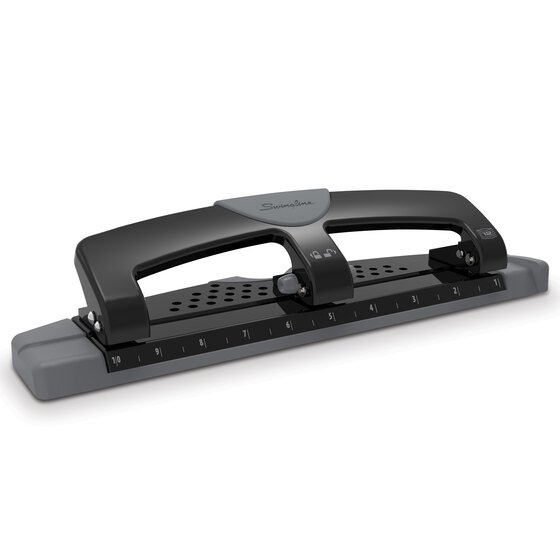
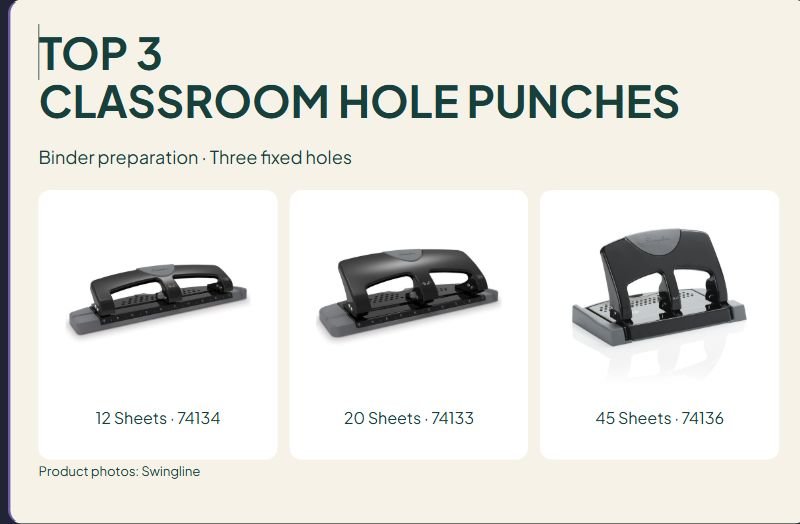
12 Sheets · 74134

20 Sheets · 74133
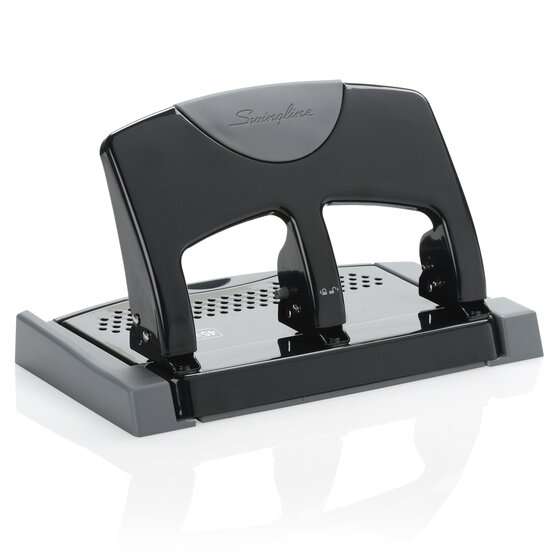
45 Sheets · 74136
Product photos: Swingline
Affiliate disclosure: As an Amazon Associate I earn from qualifying purchases. Purchases through our links may earn a commission at no additional cost to you.
Classroom hole punches should match the papers and binders you actually use. A higher sheet limit can reduce the number of separate batches, but it does not fix an incorrect hole pattern, a poorly aligned sheet or a packet made from unsuitable material. Check the binder before choosing the punch.
This guide compares three manual Swingline SmartTouch three-hole models: 74134 for up to 12 sheets, 74133 for up to 20 sheets and 74136 for up to 45 sheets. The comparison uses manufacturer specifications and identifiable model numbers. We have not tested punching force, alignment accuracy or long-term classroom durability.
Quick comparison for teacher binder preparation
| Detail | SmartTouch 74134 | SmartTouch 74133 | SmartTouch 74136 |
|---|---|---|---|
| Advertised sheet capacity | 12 | 20 | 45 |
| Number of holes | Three | Three | Three |
| Listed hole diameter | 9/32 inch | 9/32 inch | 9/32 inch |
| Punch centers | Fixed | Fixed | Fixed |
| Chip-tray design described | Flip-open | Flip-open | Pull-out |
| Alignment feature described | Ruler and paper guide | Built-in ruler and edge guide | Paper edge guide |
| Main buying question | Are small batches enough? | Do routine batches exceed twelve? | Is larger-batch preparation a recurring job? |
All three have a handle that locks closed for storage. They are manual punches, not powered machines. Swingline uses different reduced-effort marketing claims for the variants; we do not treat those percentages as measurements of the force any particular person will experience.
1. SmartTouch 12-sheet punch: small binder batches
The 74134 is the lowest-capacity option here. Swingline lists three fixed punch heads, 9/32-inch holes, a ruler and paper guide, a flip-open chip tray and metal construction. Its handle locks down for storage. These features describe a desktop paper tool rather than an adjustable multi-pattern punch.
Why consider it: If you routinely punch a few worksheets at a time, its stated capacity may already cover the job. Work out how many physical sheets you usually handle together before buying a larger model just for its headline number.
Limitation: A stack of twelve is its listed upper limit, not an instruction to force twelve sheets of any material into it. Do not extend the paper capacity to laminated cards, thick covers or mixed materials without checking the current instructions. Fixed centers also mean you cannot assume it matches a different binder format.
Choose it when: Your ordinary batches are small and the fixed three-hole arrangement matches your binder. Check the selected model rather than a listing that groups several capacities together.
2. SmartTouch 20-sheet punch: the middle capacity
The 74133 increases the advertised paper limit to 20 sheets while retaining three fixed 9/32-inch punch heads. The manufacturer describes a soft-grip handle, metal construction, a ruler and edge guide, a flip-open chip tray and a base pattern that helps reveal when the tray is full.
Why consider it: This is the option to compare when routine preparation often exceeds twelve sheets but does not call for the 45-sheet model. The guide and ruler are relevant to repeatable positioning, though we have not tested alignment accuracy.
Limitation: The hole pattern is still fixed. A higher paper capacity does not make the tool a two-hole punch, a disc-binding punch or an adjustable organizer punch. Check both the binder rings and the paper guide before preparing a full set of pages.
Choose it when: A middle-capacity manual punch fits your regular paper batches and you want to evaluate the described alignment and tray features.
3. SmartTouch 45-sheet punch: larger preparation batches
The 74136 is the largest-capacity model in this comparison. Swingline describes an oversized cushioned handle, three fixed 9/32-inch punch heads, a paper edge guide and a pull-out chip tray. The handle locks closed with a button for storage.
Why consider it: Larger paper batches may make this model worth investigating for repeated binder preparation. Think about the full task: sorting pages, lining up the stack, punching, emptying waste and loading the binder. The maximum capacity is only one part of that workflow.
Limitation: The manufacturer’s reduced-effort description does not make a full stack effortless or suitable for every user. We have not measured operating force, assessed individual accessibility or tested repeated use. It also does not offer an adjustable hole pattern simply because it handles more paper.
Choose it when: Larger batches are common enough to justify the higher-capacity format, and its paper and binder requirements fit your work.
A practical binder-preparation check
Test the hole pattern before the class set
Use a spare sheet of the same size as the papers you plan to punch. Check the paper guide, punch according to the instructions and put the result into the actual binder. Confirm that the page turns and that the holes sit where you want them. A successful test on a different binder is not enough to establish this one fits.
Count physical sheets rather than printed pages
A double-sided sheet can contain two printed pages but remains one physical sheet. Count the stack you will place into the punch. Separate covers, dividers and other materials whose thickness differs from the main paper. Follow the current model's capacity guidance rather than assuming every stack with the same sheet count has the same thickness.
Plan batches without losing page order
For a hypothetical 30-sheet set, a 12-sheet maximum requires at least three batches, a 20-sheet maximum at least two and a 45-sheet maximum at least one. That arithmetic illustrates batch planning only; it is not a performance test or permission to exceed the instructions. Keep numbered batches in order and use the same alignment reference throughout.
Make chip disposal part of the routine
The 12- and 20-sheet pages describe flip-open trays; the 45-sheet page describes a pull-out tray. Read the model's instructions before opening or emptying it. Plan a clear waste-disposal area so loose paper chips do not scatter across the preparation table or mix with finished materials.
Questions before ordering
Should every teacher buy the 45-sheet version?
No. The largest capacity is useful only when it addresses a real task. If you punch a few sheets at a time, a smaller model may meet that need. Compare the current price and available desk space yourself; this guide does not publish changing prices or claim one variant is universally the best value.
Can these punches make any binder pattern?
The manufacturer lists fixed centers and three holes for all three variants. Do not assume compatibility with two-ring, disc-bound, A5 organizer or another format. Verify the actual binder and paper arrangement before ordering.
Are there verified customer reviews here?
This comparison does not include customer excerpts because none has been verified and cleared for reuse for these exact models. No star ratings or hands-on testing are invented. The guide separates identifiable specifications from practical planning suggestions.
If some papers will be fastened into packets rather than filed in rings, see our classroom stapler comparison. Decide which pages belong in each format before preparing a class set.




Leave a Comment