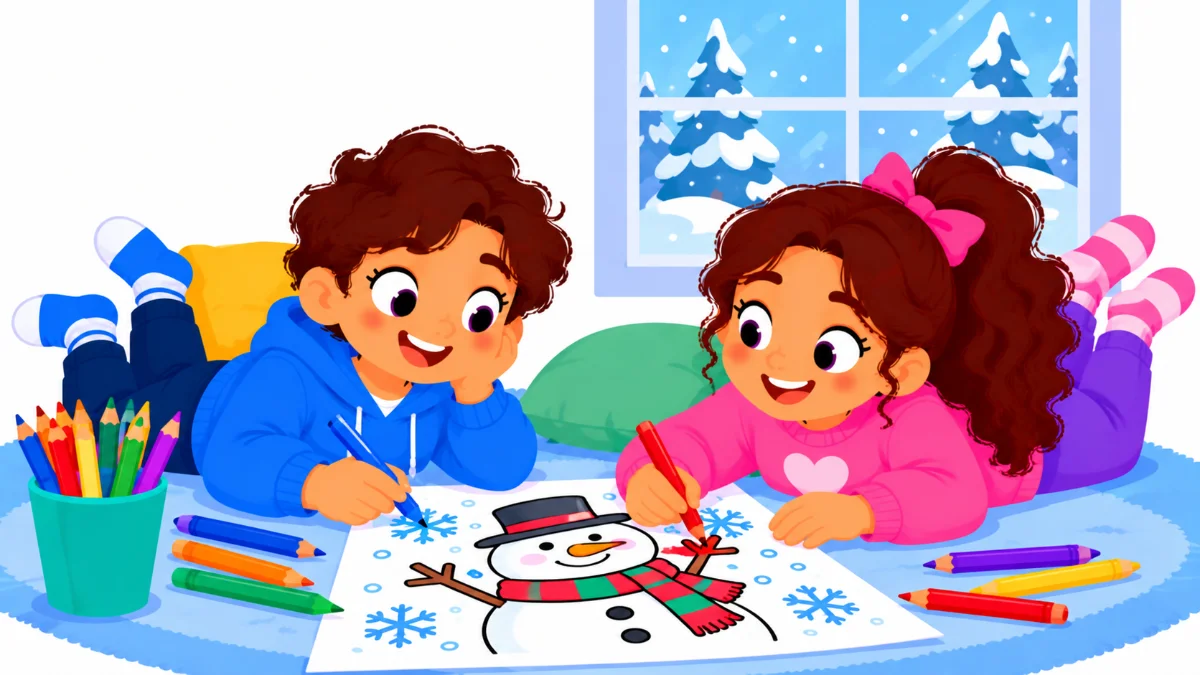

Winter coloring pages can turn a loud, restless indoor recess into twenty quiet minutes of focus, but only when they are planned with a purpose. Picture a gray January afternoon: the playground is icy, the class has been inside all day, and every child seems to need something different at once.
After reading this guide, you will be able to choose the right pages, set up a calm coloring routine, link coloring to fine motor and language goals, and track whether the activity is actually helping. The steps work in a classroom, a therapy room, or a kitchen table at home.
Examples are fictional. Adapt to the student’s goals and agreed supports. This is guidance, not a diagnosis.
At a glance
- Pick pages by detail level, not just by theme, so every child can finish with success.
- Teach a short coloring routine once, then reuse it all season.
- Use the scene on the page to spark talk, vocabulary, and simple writing.
- Watch grip, pressure, and staying power to see fine motor growth.
- Keep a light record so you know when to add challenge or change the setup.
1. Choose winter coloring pages that fit each child
Not every page suits every child. A dense scene with tiny windows and dozens of snowflakes can feel exciting to one student and overwhelming to another. So the first job is matching the page to the hand that will color it.
Start by sorting your winter coloring pages into three rough levels. Simple pages have large shapes and thick outlines. Medium pages add a few smaller details, such as a scarf pattern or a row of trees. Detailed pages include many small spaces that need careful control.
| Level | What the page looks like | Good for |
|---|---|---|
| Simple | Big snowman, thick lines | Younger children, new routines |
| Medium | Cottage with trees and sky | Most early elementary students |
| Detailed | Busy village, small windows | Children who enjoy precision |
Next, think about the tools. Crayons are forgiving and need some pressure. Colored pencils allow more control in small spaces. Markers are bright and quick but can bleed through thin paper.
A classroom example
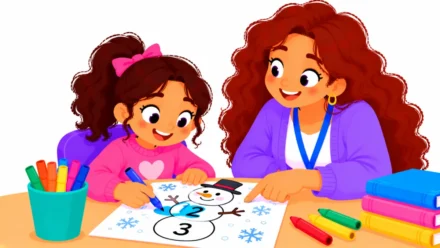
Here is our fictional example. Lena is in first grade. She loves snowmen but tends to give up when a page has too many small parts. Her teacher, Ms. Ortiz, starts Lena on a simple snowman page with chunky crayons. After two weeks of finishing pages with a smile, Lena chooses a medium cottage scene on her own.
It also helps to preview a new set of winter coloring pages yourself before class. Flip through the stack and pull out any page with spaces so small that they would frustrate your youngest artists. Keep those for children who ask for a challenge later in the season.
Finally, offer a small choice. Two or three pages at the right level give children ownership without the stress of a giant stack. Choice also tells you a lot about what each child finds appealing.
2. Set up a calm coloring routine
A routine is what turns coloring from a filler into a dependable calm-down tool. When children know exactly what happens, they spend less energy asking questions and more energy settling in.
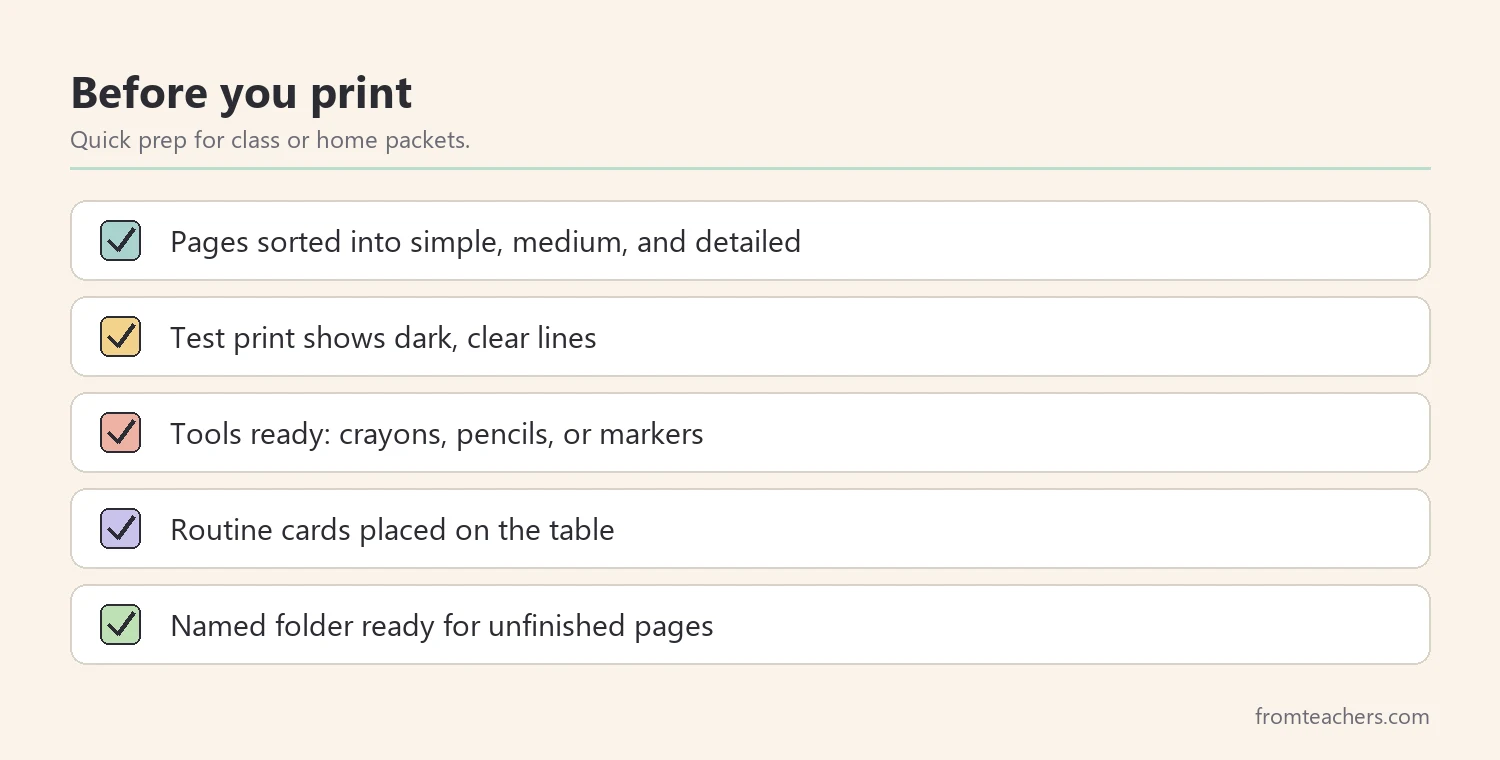
Keep the routine short and visible. For example, post four picture cards on the table: get a page, get tools, color, and put away. Then model each step once, slowly, while thinking aloud. After that, let one or two children demonstrate for the group.
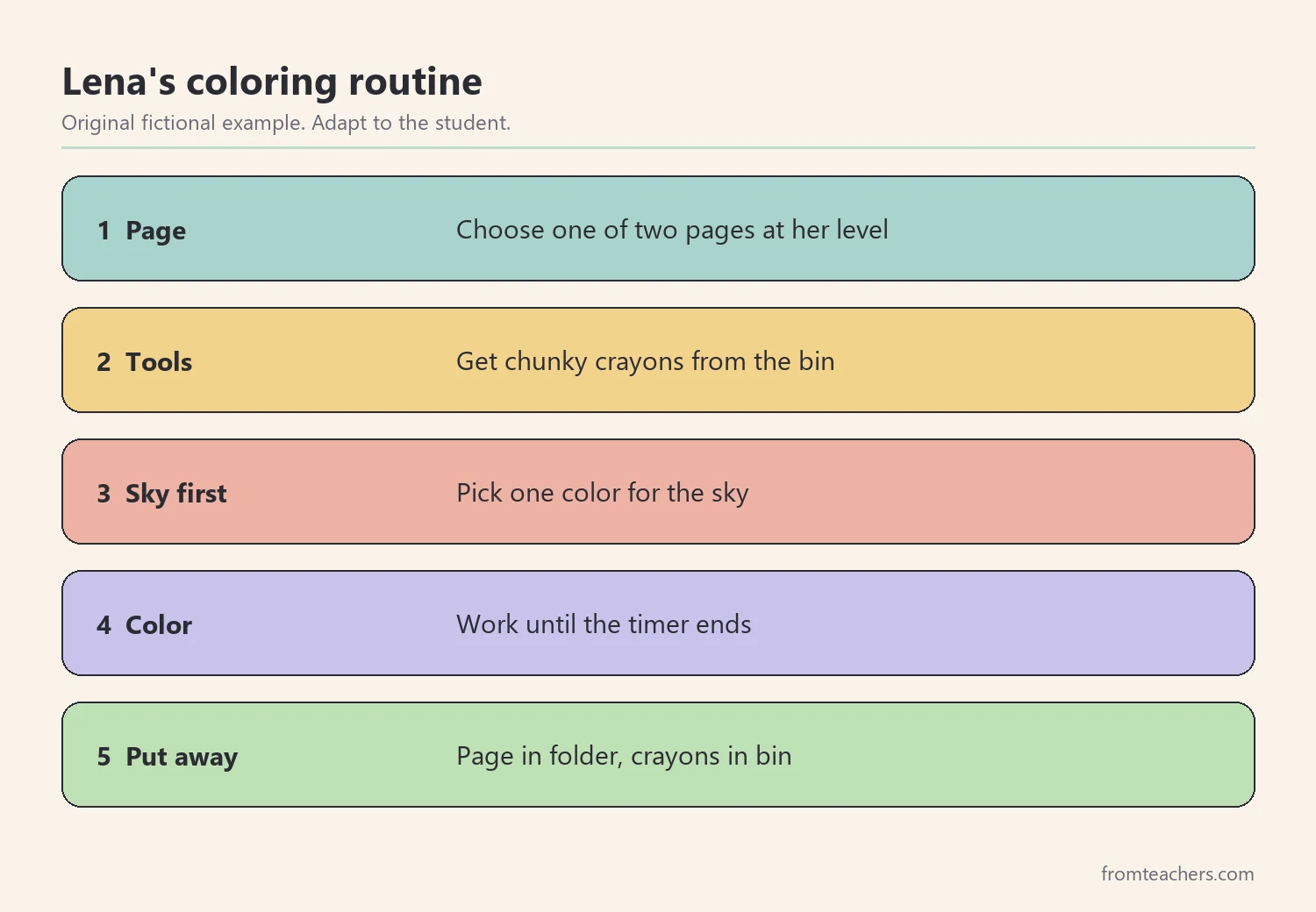
In addition, think about the setting. Soft background music, a dimmed overhead light, or a cozy corner rug can signal that this is a quiet time. A visual timer helps children who struggle with open-ended time, because they can see when the activity will end.
For Lena, Ms. Ortiz added one extra step: “choose one color for the sky first.” That small decision helped Lena get started instead of staring at the blank page. Within a week, Lena was following the routine with only a quick point to the cards.
Because the same steps repeat, winter coloring pages become a signal in themselves. Many teachers find that simply placing the folder on the table starts to settle the room within a few days.
Also, plan the ending. Give a two-minute warning, then a clear cleanup signal. Unfinished pages go in a named folder, so no child feels rushed or worried about losing their work.
3. Build fine motor skills with winter coloring pages
Coloring is real hand practice. Each page asks children to grip, press, steer, and stop at a line. Because the activity feels like play, many children practice far longer than they would with a worksheet.
To make winter coloring pages work for fine motor growth, watch for a few simple signs rather than judging the finished picture. Notice how the child holds the tool, how hard they press, whether they turn the paper, and how long they keep going.
Adjust one thing at a time
Then adjust one thing at a time. A child who grips very tightly may do better with short, broken crayons, which naturally encourage a finger grip. A child who scribbles past every line may benefit from a page with thicker borders. And if a child tires quickly, they can color one section, rest, and return.
For instance, Lena pressed so hard that her crayons kept snapping. Ms. Ortiz did not correct her directly. Instead, she offered colored pencils for the sky and challenged Lena to make it “light like morning snow.” Lena experimented with softer pressure and was proud of the pale blue result.
If a child is already working with an occupational therapist, ask what the therapist is targeting. Coloring time can then reinforce the same goal, such as a tripod grip or using the helper hand to hold the paper. Keep the tone light, though. The moment coloring feels like a test, children lose the calm that made it useful.
Remember that winter coloring pages with large, open shapes are ideal for practicing pressure, while pages with small windows and snowflakes are better for steering and stopping at lines. Mixing both kinds across the week gives hands a balanced workout.
In short, small changes in tools and pages often matter more than repeated reminders.
4. Turn coloring into talk and early writing
Snowy cottages, smoke from chimneys, friendly bears, and pine trees are full of words. A detailed winter scene is a natural prompt for conversation, and conversation builds vocabulary.
While children color, sit nearby and ask open questions. Who lives in this cottage? What is the snowman thinking? Where is the bear going? Then repeat and stretch their answers: “Yes, the smoke is curling up from the chimney.”
After coloring, invite a quick share. Each child holds up their page and says one sentence about it. Older children can write a caption, a short story, or a list of five winter words they see in their picture. Using winter coloring pages this way connects art with speaking, listening, and writing in one relaxed activity.
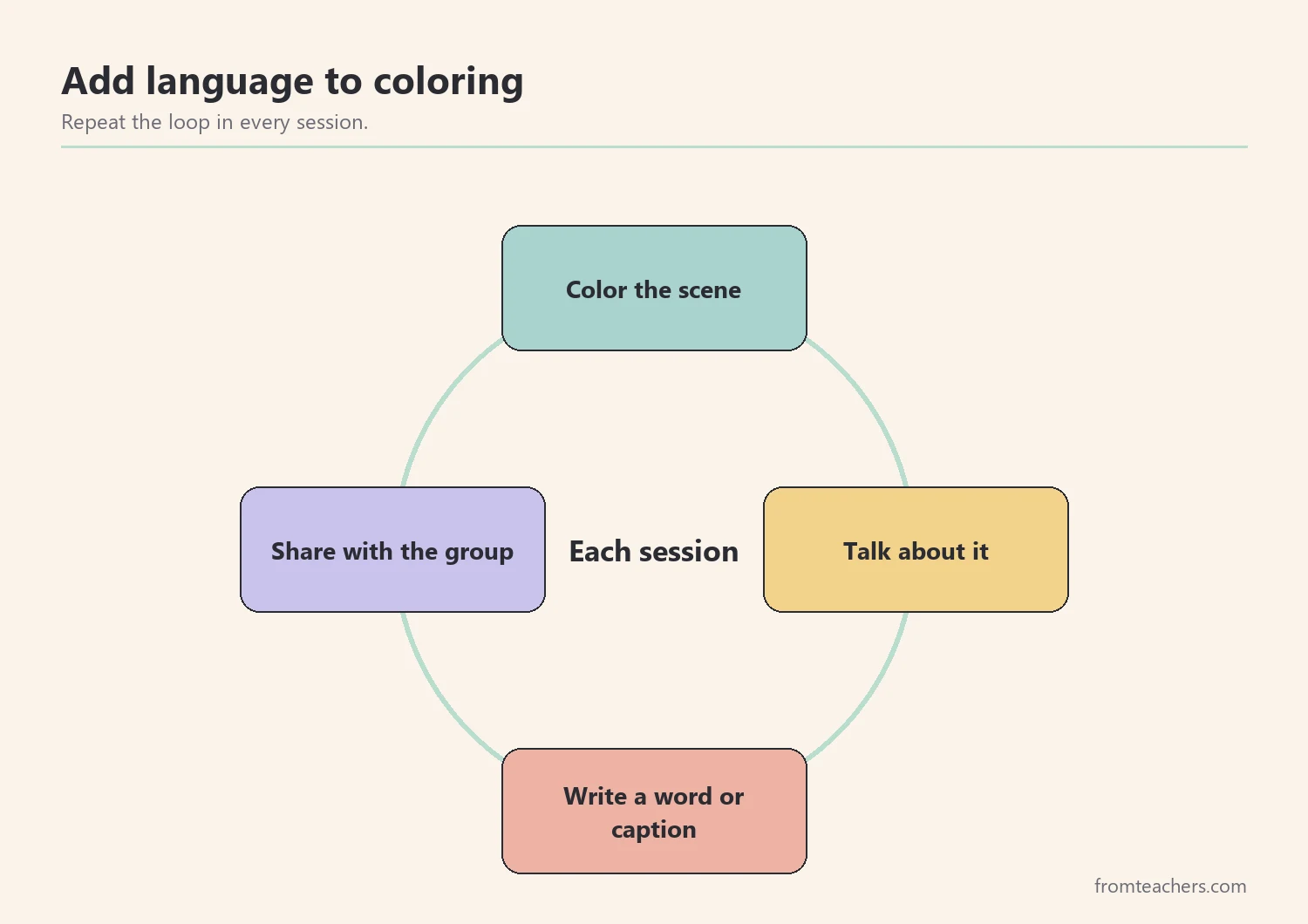
For Lena, Ms. Ortiz used sentence starters on a card: “I see a ___.” and “The ___ is ___.” Lena dictated her sentences at first. Later, she copied one word from the word wall, then wrote a whole short sentence about her snowman’s red scarf.
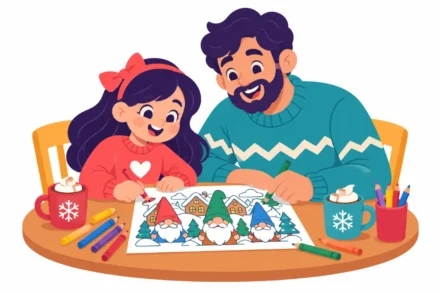
Similarly, families can use winter coloring pages at home for the same kind of talk. A parent who asks one question per page is building vocabulary without any extra materials.
Moreover, coloring talk is a gentle way to check in with quieter children. Many students find it easier to chat when their hands are busy and no one is staring at them. Teachers and parents often learn surprising things about a child’s day during these calm minutes.
5. Plan winter coloring pages for home and indoor days
Winter brings snow days, long breaks, and early sunsets. A small bundle of pages sent home can give families an easy, screen-free option that still feels connected to school.
When you prepare a home packet, keep it short and clear. Include five to eight pages, a simple note about why coloring helps, and one or two conversation questions. Families appreciate knowing the purpose, and children like recognizing the routine from class.
At school, winter coloring pages work well as a center, an indoor recess choice, an early finisher option, or a calm corner tool. In each case, the routine from step 2 stays the same, which saves you time. If you want a large variety ready to go, the Cozy Winter Wonderland coloring pages collection offers 40 different snowy scenes with cottages, snowmen, and forest details.
For example, Ms. Ortiz sent Lena home before winter break with six pages and a note that said, “Ask Lena to tell you about the snowman’s name.” Lena’s family later shared that she colored with her older brother on two snowy afternoons and named every snowman after a family member.
Before sending winter coloring pages home, check that each page prints clearly in black and white and that the lines are dark enough for younger children to see. A quick test print saves wasted paper and ink.
As a result, the activity built a small bridge between school and home, without adding work for anyone.
6. Track progress and adjust the challenge
A light record helps you see whether coloring time is doing what you hoped. You do not need a complex chart. A few notes each week are enough to spot patterns.
Choose one or two things to watch. For many children, that means minutes of focused coloring and whether they finished a section. For others, it might be how often they used the routine without reminders, or whether they shared a sentence afterward.
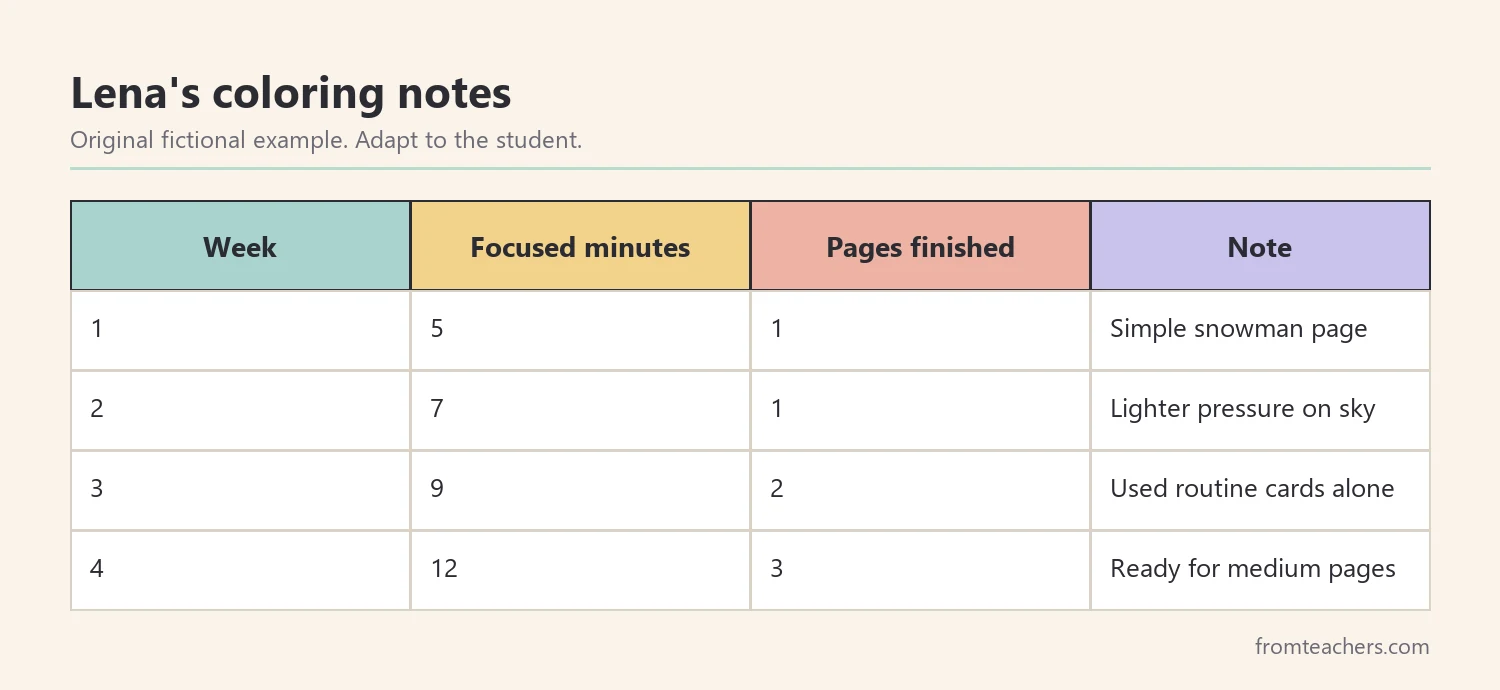
In Lena’s case, the record showed her focused minutes rising from 5 to 12 across four weeks. Over the same four weeks she finished 7 pages in total: 1, then 1, then 2, then 3. That steady rise told Ms. Ortiz it was time to offer a medium-level page and a short writing task.
Notes like these also make conversations with families easier. Instead of saying that a child “likes winter coloring pages,” you can share that focus grew from 5 to 12 minutes and that the child now writes a short caption.
When progress stalls, change one thing. Try a different page level, a new tool, a shorter time, or a seat away from the door. Then watch for another week before deciding what works. Small, patient adjustments usually beat big changes.
Common mistakes and how to avoid them
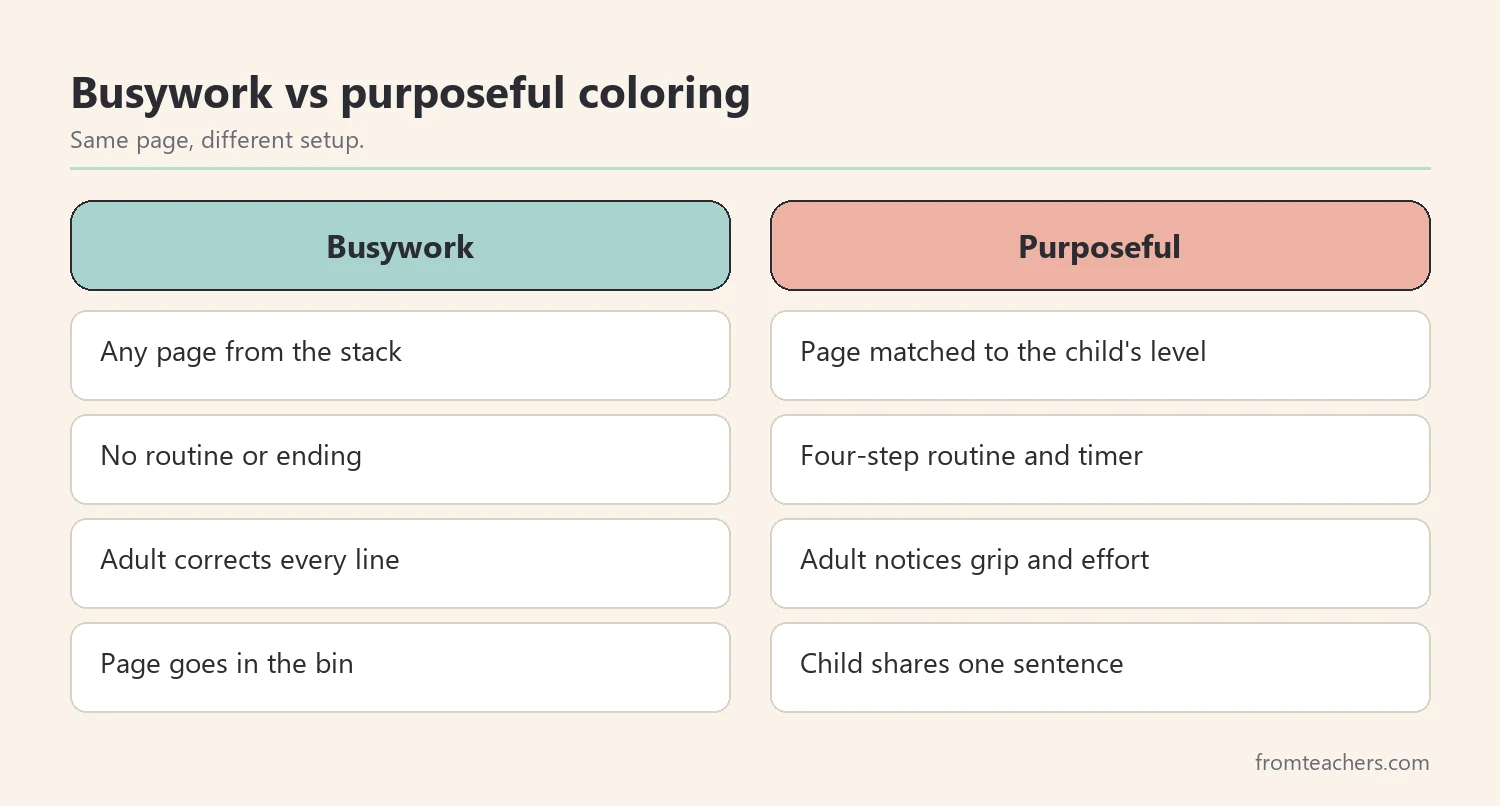
- Using pages only as a time filler. Fix: give each session one small purpose, such as calm, grip practice, or talk.
- Handing out pages that are too detailed. Fix: sort pages by level and let children move up when they are ready.
- Correcting every line. Fix: comment on effort and choices, and save technique tips for one skill at a time.
- Skipping the routine. Fix: teach the four steps once and keep the cards on the table all season.
- Ending abruptly. Fix: give a warning, then store unfinished work in a named folder.
Questions teachers and parents ask about winter coloring pages
What age are winter coloring pages best for?
Most children from preschool through upper elementary enjoy them. The key is the level of detail. Younger children need big shapes, while older children often prefer busy scenes with many small spaces.
How long should a coloring session last?
Ten to twenty minutes works well for most groups. Start shorter for younger children and extend the time as their focus grows. A visual timer makes the length predictable.
Can coloring really help with fine motor skills?
Coloring gives children repeated practice gripping, pressing, and controlling a tool. It is not a replacement for therapy, but it can reinforce goals a therapist or teacher is already working on.
What if a child refuses to color?
Offer a choice of page and tool, or a smaller section to start. Some children prefer to talk about the picture first. Others may simply need a different calm activity, and that is fine.
Are winter coloring pages only for holiday time?
No. Snowy scenes without holiday symbols fit the whole cold season, from December through February. That makes them useful for indoor recess long after the holidays are over.
Related reading: 5 Practical Teaching Tips to Boost Classroom Focus and Learning, Managing Sensory Overload: Practical Strategies for Autism and ADHD, and Learning Styles Student Success Guide.
A companion resource for winter coloring pages:
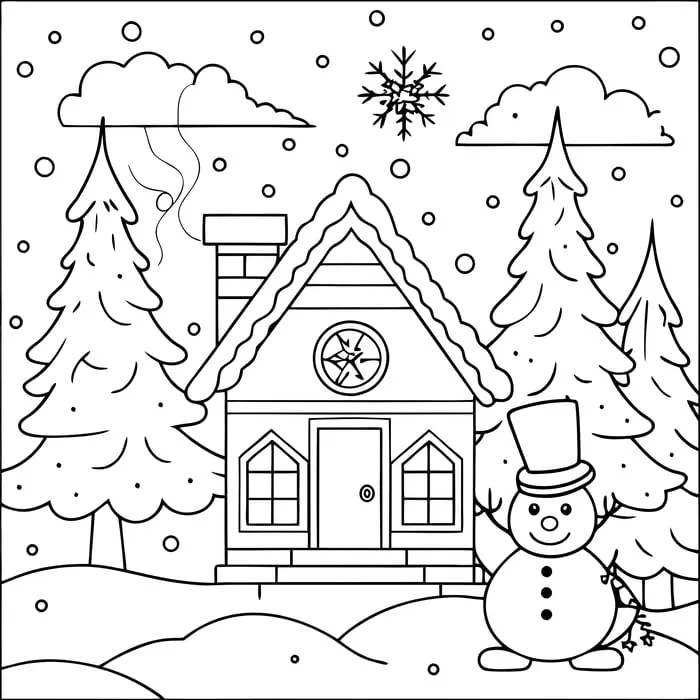
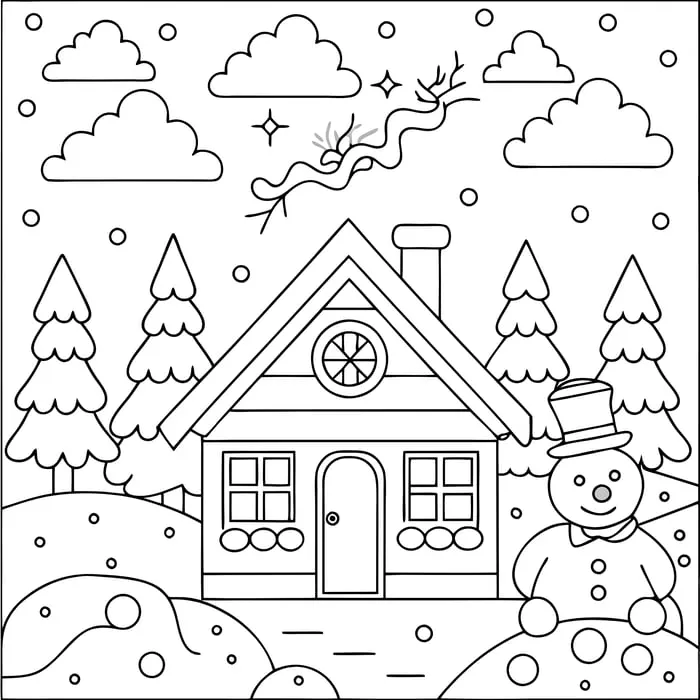
Cozy Winter Wonderland Coloring Pages: 40 unique black-and-white winter scenes with snowy cottages, cheerful snowmen, a friendly bear, pine trees, and whimsical skies, ready to print for crayons, markers, or colored pencils.
Sources and scope
- National Association for the Education of Young Children (NAEYC): guidance on play, creativity, and developmentally appropriate practice.
- American Occupational Therapy Association (AOTA): information on occupational therapy and children’s everyday skills, including fine motor development.
- HealthyChildren.org from the American Academy of Pediatrics: parent-friendly information on child development and play.
This guide covers practical ways to use coloring for calm, fine motor practice, and language in school and at home. It does not assess motor delays or replace advice from an occupational therapist or other qualified professional.
Key takeaways
- Winter coloring pages work best when matched to each child’s level of detail and control.
- A short, visible routine makes coloring a dependable calm-down activity.
- Watch grip, pressure, and staying power instead of judging the finished picture.
- Use the scenes to spark talk, vocabulary, and simple writing.
- Keep light weekly notes and change one thing at a time.

Leave a Comment