

Sensory classroom hacks are small, low-cost changes that can make a busy room feel calmer for students who are easily overwhelmed. Picture a first grader with his hands over his ears during independent work. The overhead lights hum, chairs scrape, and the walls are covered in bright posters. He is not ignoring the lesson. He is trying to cope with everything around him.
This guide walks you through five steps to put sensory classroom hacks into practice: audit the room, build a calm corner, add flexible seating, soften sound and light, and use visual schedules with a quick review. By the end, you will have a plan you can start with simple materials.
Examples are fictional. Adapt to the student’s goals and agreed supports. This is guidance, not a diagnosis.
At a glance
- Start by looking at the room through a student’s senses.
- A simple calm corner gives students a place to reset.
- Flexible seating lets students move in ways that help them focus.
- Softer sound and light help many students, not only a few.
- Visual schedules reduce worry about what comes next.
1. Audit the room before trying sensory classroom hacks
First, look at your classroom the way a sensitive student might experience it. Sit in a student’s seat for a few minutes during a normal lesson. Notice the lights, the noise, the walls, and the movement around you. Many sensory classroom hacks begin with this simple observation.
For example, ask four questions. Are the lights bright or buzzing? Which sounds repeat all day? How busy are the walls? Does every student sit in the same kind of chair for most of the day? Write short notes as you go.
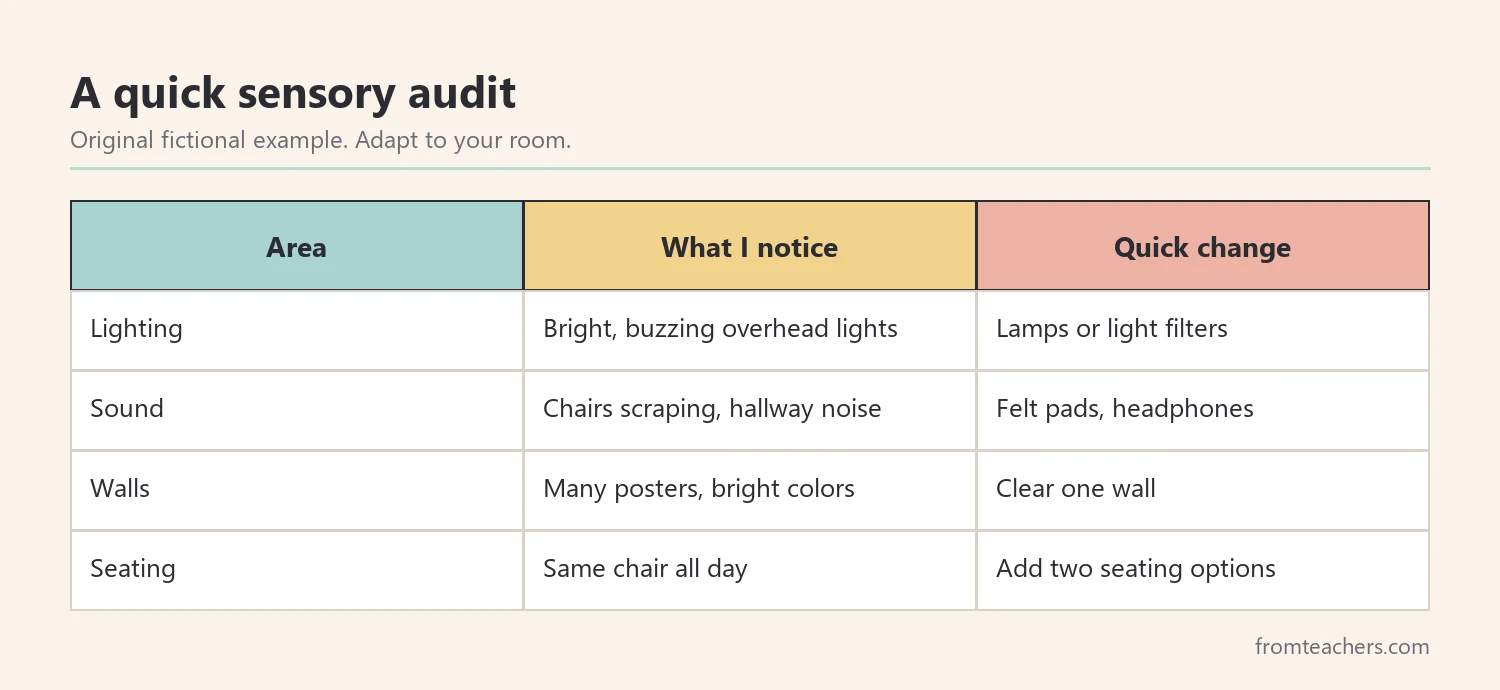
Next, watch the students. Notice when students cover their ears, leave their seats, put their heads down, or seem restless. Note the time and the activity. Patterns often appear within a few days, such as harder moments during noisy transitions or after lunch.
Also, ask the people who know. Families, occupational therapists, and the students themselves often know which sights, sounds, or textures are hard. A short conversation can save weeks of guessing.
In addition, remember that every student is different. Some students seek more sensory input, such as movement or pressure. Others avoid it. Good sensory classroom hacks make the room comfortable for both by offering options rather than one rule for all.
Worked example. Ms. Rivera teaches a fictional first-grade class. Her student Noah often covers his ears during independent work. She sits at his desk for ten minutes and notices the humming lights and scraping chairs. She writes four quick changes to try.
2. Create a calm sensory corner
Next, give students a place to reset. A sensory corner is a quiet, cozy spot where students can take a short break when they feel overwhelmed. It is one of the most common sensory classroom hacks because it helps students return to learning sooner.
First, choose a quiet spot away from doors and busy paths. Add soft seating, such as pillows or a small rug. Then add a few calming tools, such as fidget toys or stress balls. A weighted blanket may also be an option when it fits school policy and the support team agrees.
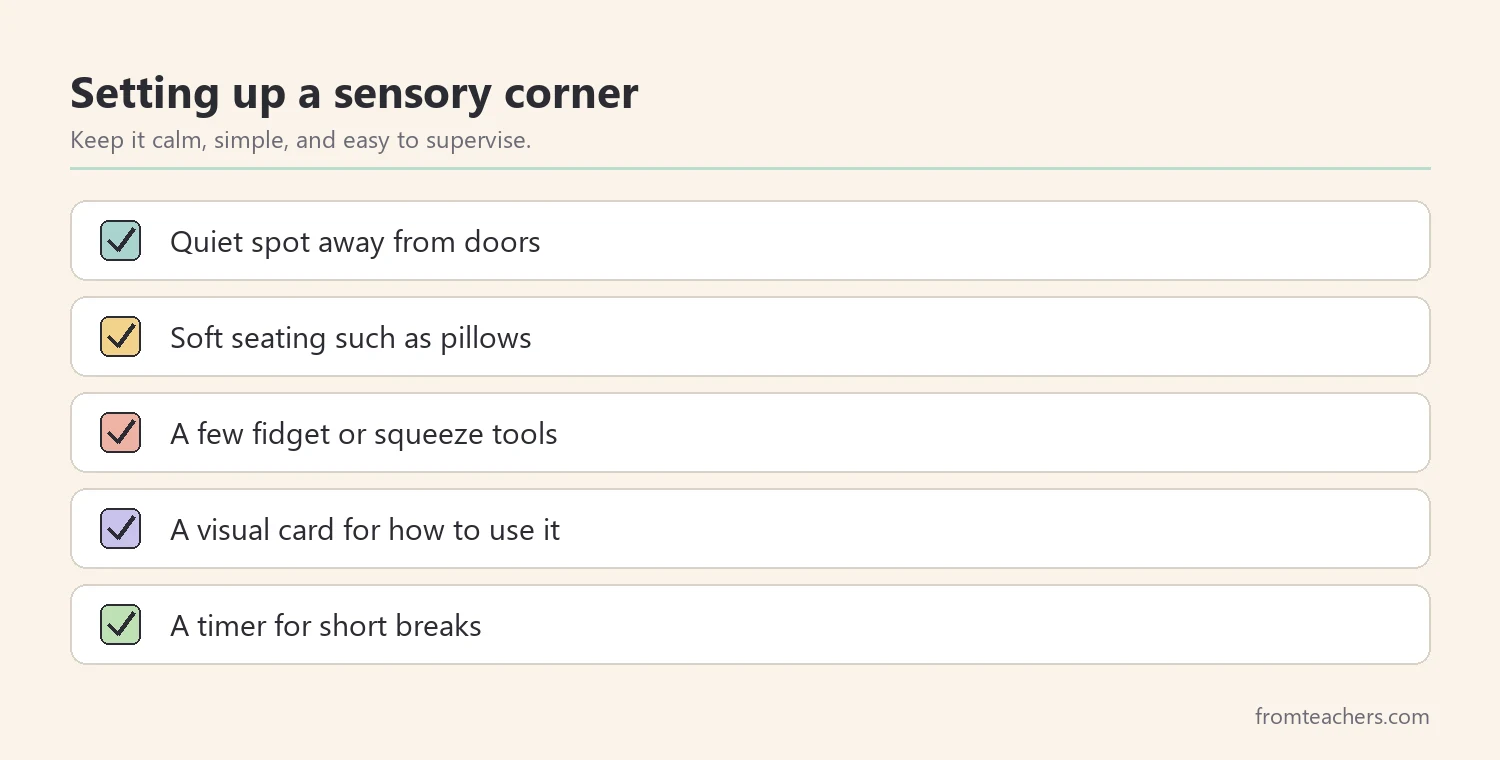
Then, teach how to use it. Show students when they can go, how long they stay, and how they come back. A simple visual card and a timer make the routine clear. Practice during calm times so students know the steps before they need them.
Also, keep the corner positive. It is a place to feel better, not a punishment. Use calm words, such as “Would a break in the cozy corner help?” rather than “Go sit in the corner.”
In addition, keep it simple. Too many items can make the corner busy and distracting. A few well-chosen tools usually work better than a full shelf.
Worked example. Ms. Rivera sets up a small corner with two pillows, three fidget tools, a visual card, and a sand timer. She teaches the routine to the whole class. Noah uses it for the first time on Wednesday, stays for four minutes, and returns to his desk.
3. Add flexible seating options
Next, give students ways to move while they work. Many students focus better when they can make small movements. Flexible seating is one of the sensory classroom hacks that gives students that movement without leaving their spot.
For example, you might offer bean bags, wobble chairs, or floor cushions. A standing spot at a counter can help students who work better on their feet. You do not need to replace every chair. Two or three options are a strong start.
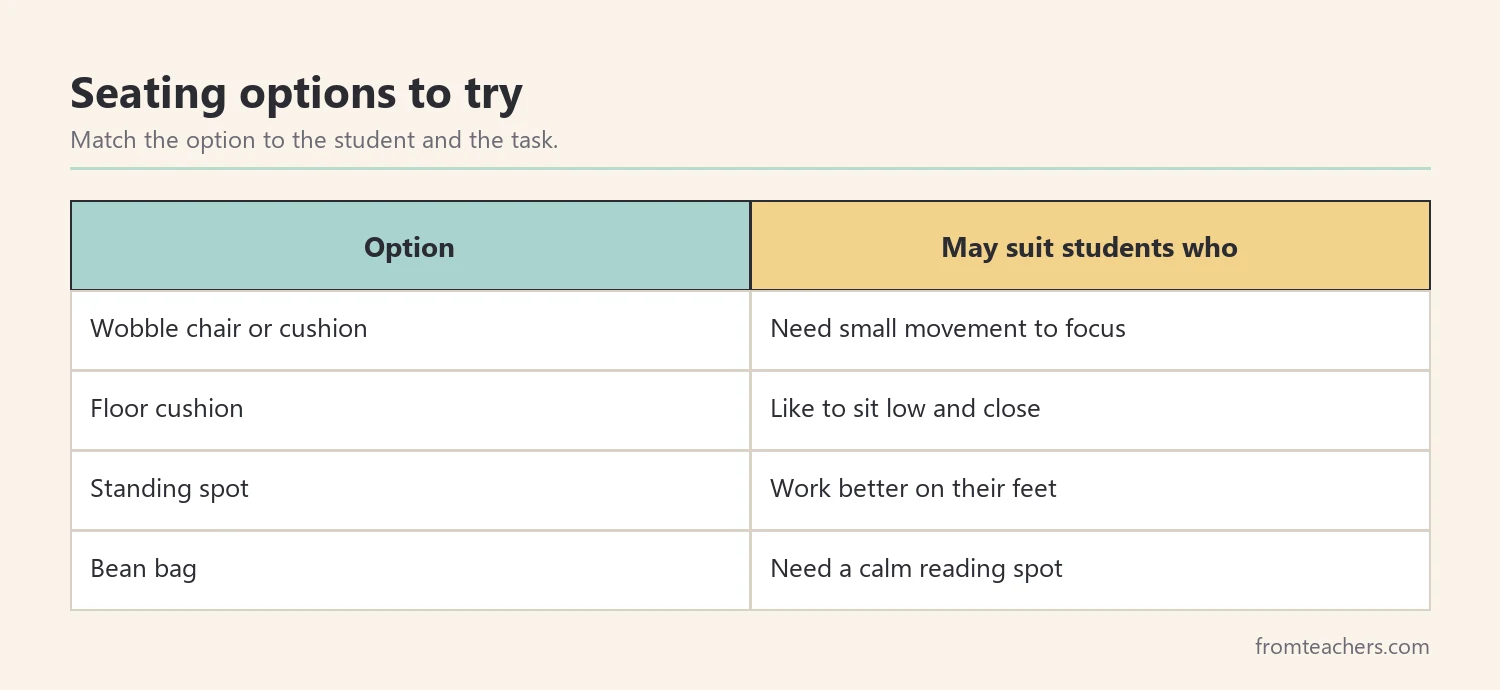
Then, set clear expectations. Teach how to use each seat safely and when students can choose. Some teachers use a simple rotation chart. Others let students choose and check in about whether the seat is helping them work.
Also, match seating to the task. A bean bag might suit independent reading, while a wobble cushion might help during desk work. Talk with students about which seats help them focus best.
If you want a simple starting list, the Top 10 Sensory-Friendly Classroom Hacks guide is a free, quick guide for teachers that lists ten practical changes you can make with simple materials, including a sensory corner, flexible seating, and visual schedules.
Worked example. Ms. Rivera adds a wobble cushion and two floor cushions. Noah tries the wobble cushion during math. After a week, he says it helps him “stay still inside.” She keeps it at his desk for math and writing.
4. Soften sound and light with sensory classroom hacks
Next, turn down the background load. Noise and lighting affect everyone, but some students find them especially hard. Small sensory classroom hacks for sound and light often help the whole class feel calmer.
First, look at the lights. Bright fluorescent lights can feel harsh. Some teachers use lamps for part of the day or add light filters, where school rules allow. Softer light can create a calmer, more soothing room.
Then, address noise. Felt pads on chair legs reduce scraping. Noise-canceling headphones can help students who are distracted by sound during independent work. Some classrooms use a white noise machine to soften sudden sounds.
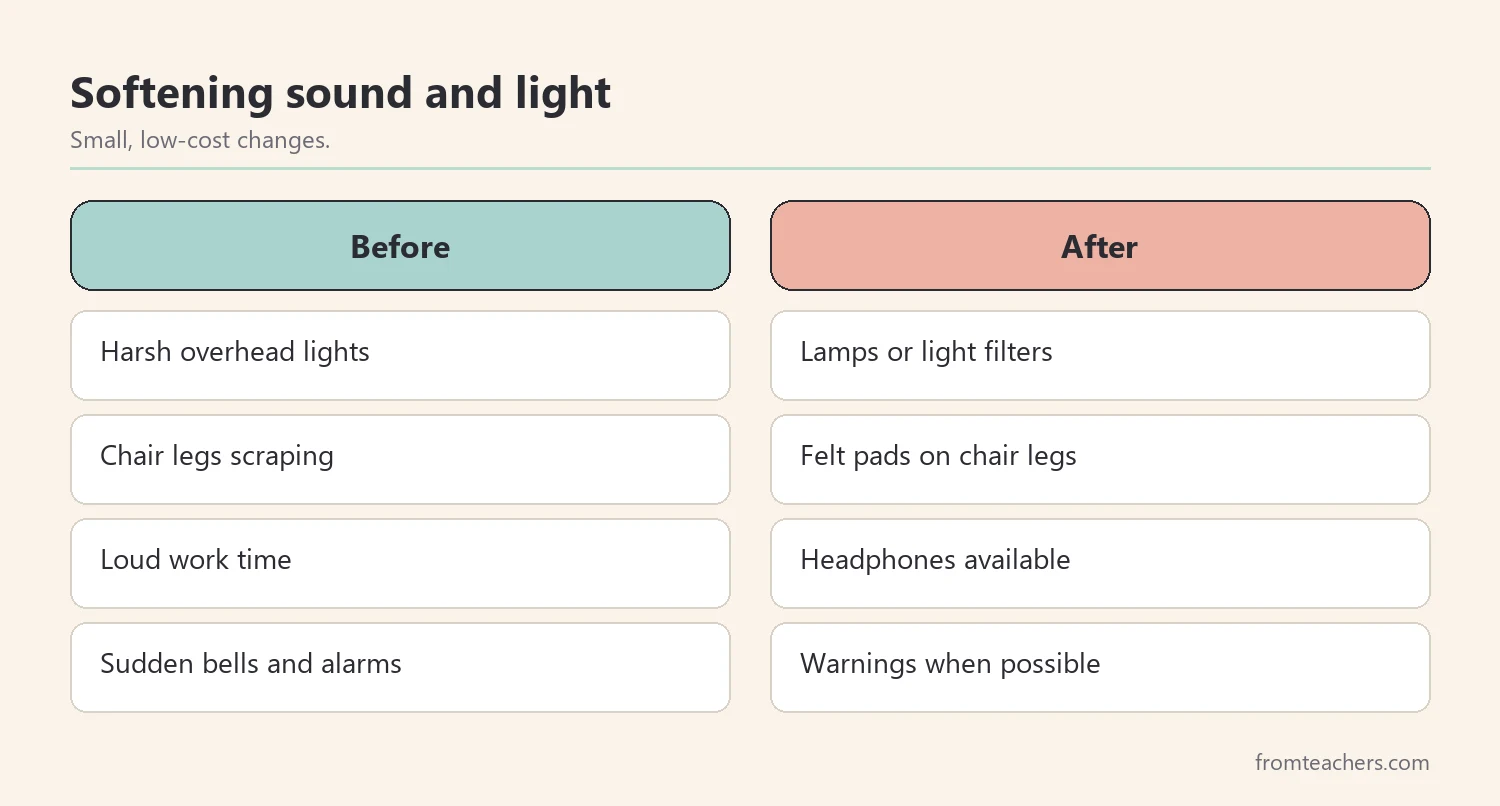
Also, prepare for loud moments you cannot avoid. Bells, fire drills, and assemblies are part of school life. When possible, give a warning before a loud event, and let students who need it wear headphones or sit near the exit.
In addition, reduce visual noise. Busy walls can be as distracting as loud sounds. Try keeping one wall calm and simple, especially the wall students face during lessons.
Worked example. Ms. Rivera turns off half the overhead lights during independent work and uses two lamps. She adds felt pads to chair legs and offers two pairs of headphones. Noah chooses headphones during writing and covers his ears less often.
5. Add visual schedules and review what works
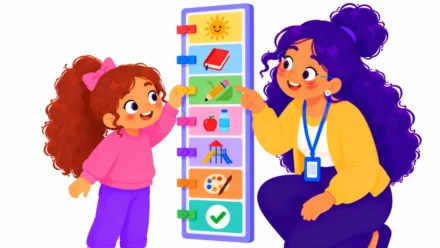
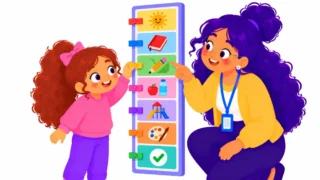
Finally, help students know what comes next. Uncertainty can raise stress, especially during transitions. A clear, picture-based daily schedule helps students anticipate changes and can reduce worry.
First, post the schedule where everyone can see it. Use pictures and short words. Point to it at the start of the day and before each transition. For some students, a small personal schedule on the desk works even better.
Then, review your sensory classroom hacks after a few weeks. Which changes helped? Which ones were not used? Keep what works and adjust or remove the rest. A quick count, such as how often a student returns to work after a break, gives you useful information.
Also, involve students. Ask them which changes help most. Students often give honest, useful answers, and asking them builds ownership of the calm classroom.
In addition, share what you learn with the team. If a student has an IEP or 504 plan, your observations can help the team decide on sensory supports. Families can also try similar ideas at home.
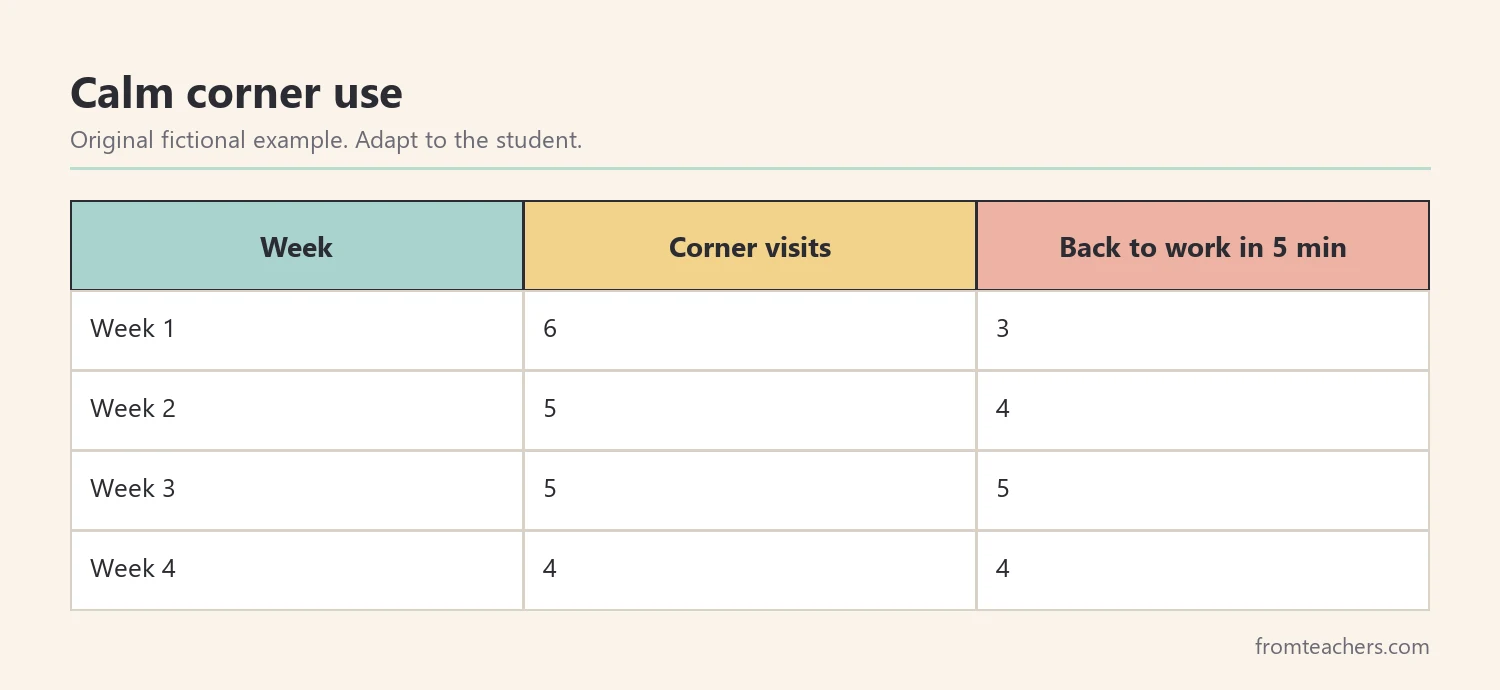
Worked example. Ms. Rivera tracks Noah’s calm corner visits. In week 1, he visited 6 times and returned to work within five minutes 3 times. In week 2, 5 visits and 4 quick returns. In week 3, 5 visits and 5 quick returns. In week 4, 4 visits and 4 quick returns. She shares the chart with his family and the occupational therapist.
Low-cost ideas to start this week
You do not need a big budget. Many sensory classroom hacks use materials you already have. Pillows from home, a desk lamp, a sand timer, and a few printed picture cards can make a real difference.
Also, start with one change at a time. Adding everything at once can be confusing for students and adults. Pick the change that matches your biggest problem, try it for a week, and then add the next.
Supporting students who seek sensory input
Some students do not avoid sensory input. They seek it. They may tap, rock, chew, or move constantly. For these students, sensory classroom hacks look a little different. Movement breaks, a wobble cushion, a standing spot, or a quick classroom job such as delivering papers can give the input they need in a helpful way.
Also, plan movement into the day. Short whole-class movement breaks between lessons help seekers and avoiders alike. A two-minute stretch or a quick walk can reset the room before the next task.
Sharing sensory classroom hacks with families and staff
Consistency helps students feel safe. When every adult knows the routines, a student can use the calm corner or headphones with a substitute just as easily as with you. So, write a short note listing the sensory classroom hacks your room uses and where the tools are kept.
Also, invite families to share what works at home. A family might mention that a dim lamp or a soft blanket helps their child settle in the evening. Many sensory classroom hacks translate well between home and school, and shared ideas build trust.
In addition, revisit your list each term. Classes change, students grow, and new needs appear. Keeping your sensory classroom hacks under review means the room keeps working for the students in front of you.
Common mistakes and how to avoid them
- Changing everything at once. Students and adults get confused. Fix: add one change at a time.
- Using the calm corner as punishment. Students avoid it. Fix: keep it positive and teach the routine.
- Crowding the corner with tools. It becomes distracting. Fix: keep a few well-chosen items.
- One solution for everyone. Seekers and avoiders need different supports. Fix: offer options.
- Never reviewing. Unused changes pile up. Fix: check what works after a few weeks.
- Skipping the team. Supports may not match the plan. Fix: talk with families and the OT.
Questions teachers and parents ask about sensory classroom hacks
Do sensory classroom hacks only help autistic students?
No. Many students benefit from calmer light, less noise, and flexible seating. Students with autism, ADHD, anxiety, or sensory differences may benefit most, but a calmer room helps almost everyone.
How long should a calm corner break last?
Many teachers use short breaks of a few minutes with a timer. The right length depends on the student and the plan agreed with the team.
What if I cannot change the lights?
Try other options, such as seating students away from the harshest lights, using lamps where allowed, or letting students wear a cap. Small changes still help.
Will flexible seating make the class too busy?
Clear expectations prevent that. Teach how to use each seat, start with a few options, and review often. Most classes settle into the routine quickly.
Who can help me choose sensory supports?
Occupational therapists, special education teachers, and families are good partners. They can suggest supports that fit specific students.
Related reading: Managing Sensory Overload: Practical Strategies for Autism and ADHD, 5 Practical Teaching Tips to Boost Classroom Focus and Learning, and Autism Spectrum Disorder: A Guide to Early Signs, Support, and Effective Strategies.
A companion resource for sensory classroom hacks:
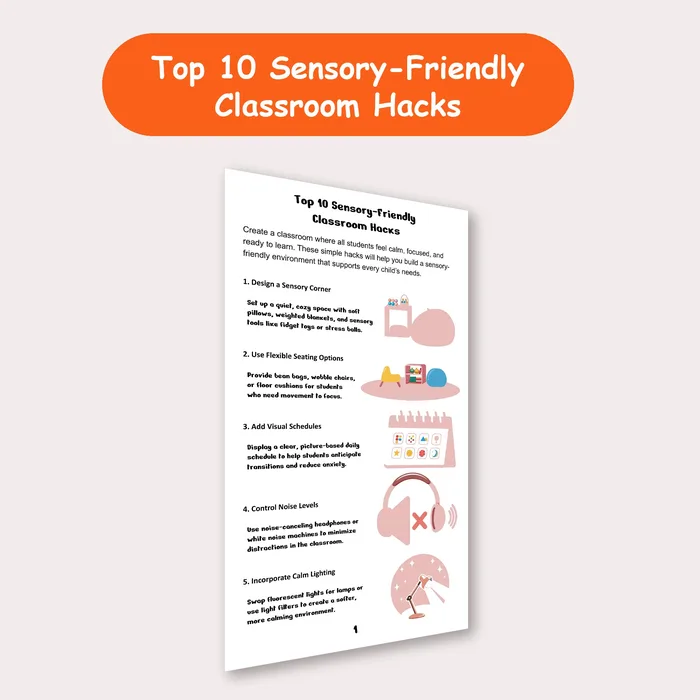
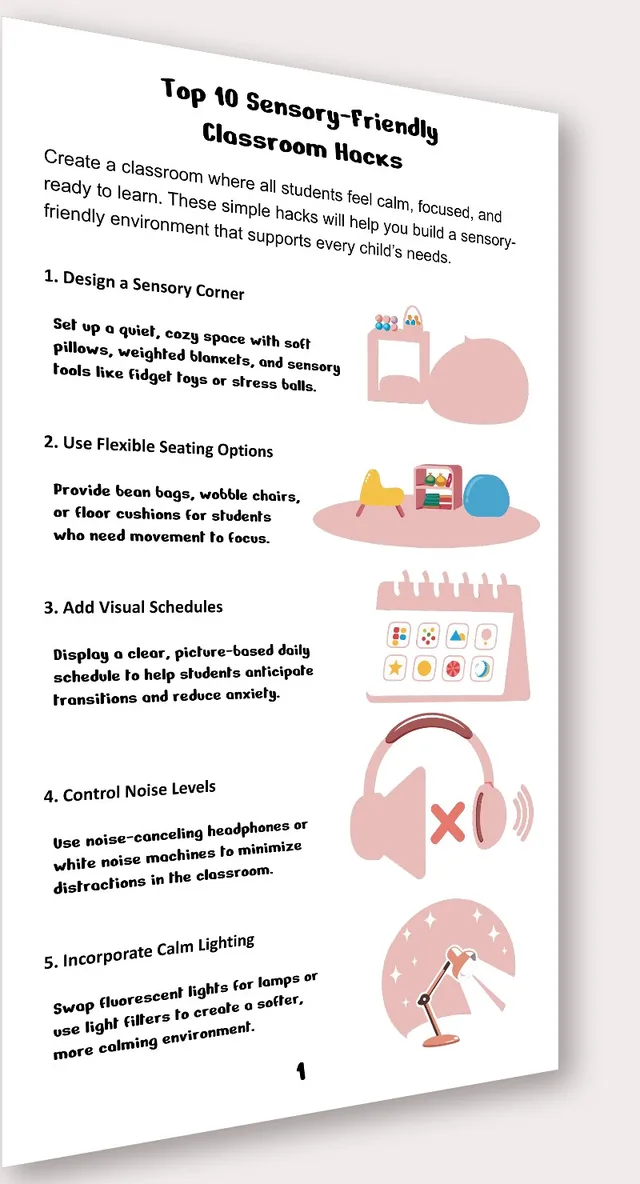
Top 10 Sensory-Friendly Classroom Hacks: a free, quick guide for teachers that lists ten practical sensory-friendly changes you can make with simple materials for a calmer classroom.
Sources and scope
- American Occupational Therapy Association (AOTA): information on occupational therapy and sensory supports.
- IRIS Center, Vanderbilt University: free modules on classroom environments and autism supports.
- CAST UDL Guidelines: a framework for designing flexible learning environments.
- Understood.org: family-friendly information on sensory processing and learning differences.
This guide covers simple classroom changes that can reduce sensory load. It does not replace occupational therapy, evaluation, or the decisions of the student’s support team.
Key takeaways
- Audit the room through a student’s senses before changing it.
- Build a calm corner and teach how to use it.
- Offer a few flexible seating options with clear expectations.
- Soften sound and light with small, low-cost changes.
- Use visual schedules and review sensory classroom hacks often.








Leave a Comment