

Writing accommodations for dysgraphia can turn writing time from a daily struggle into a chance to show what a student really knows. Picture Ms. Harper, a fourth grade teacher, and Owen, age 9. Owen tells wonderful stories out loud, full of detail and humor. On paper, he writes three slow, hard-to-read sentences, erases half of them and stops. His ideas are strong; the act of handwriting is the barrier.
This list is for teachers in grades 3 to 6, along with special education staff who support them. It ranks ten writing accommodations for dysgraphia from the easiest to set up to the ones that need more planning or equipment. Each item explains what it is, why it helps and how Ms. Harper used it with Owen. A final section shows how to track which supports actually work.
Examples are fictional. Adapt to the student’s goals and agreed supports. This is guidance, not a diagnosis.
At a glance
- Dysgraphia affects the physical act of writing, not a student’s ideas.
- Separate idea generation from handwriting whenever possible.
- Typing, speech to text and organizers are common supports.
- Accommodations change how students show learning, not what they learn.
- Track use and success so the team knows what helps.
How we ranked these accommodations
We ranked the ten accommodations by setup effort, from changes you can make tomorrow with no materials to supports that need devices, training or team decisions. The ranking does not say which accommodation is best for a given student. That depends on the student’s needs and the IEP or 504 plan.
Dysgraphia is a term often used for persistent difficulty with handwriting, spelling and getting thoughts onto paper. Students may also show related challenges with fine motor skills or written organization. Figure 1 lists the ten accommodations in order.
Before choosing, look closely at where writing breaks down for the student. Is it letter formation, spacing, speed, spelling or organizing ideas? Compare a short dictated answer with a handwritten one on the same topic. If the dictated answer is much richer, the barrier is likely in the act of writing, and the accommodations below are a good place to start. Also, ask the student which part feels hardest; students often know.
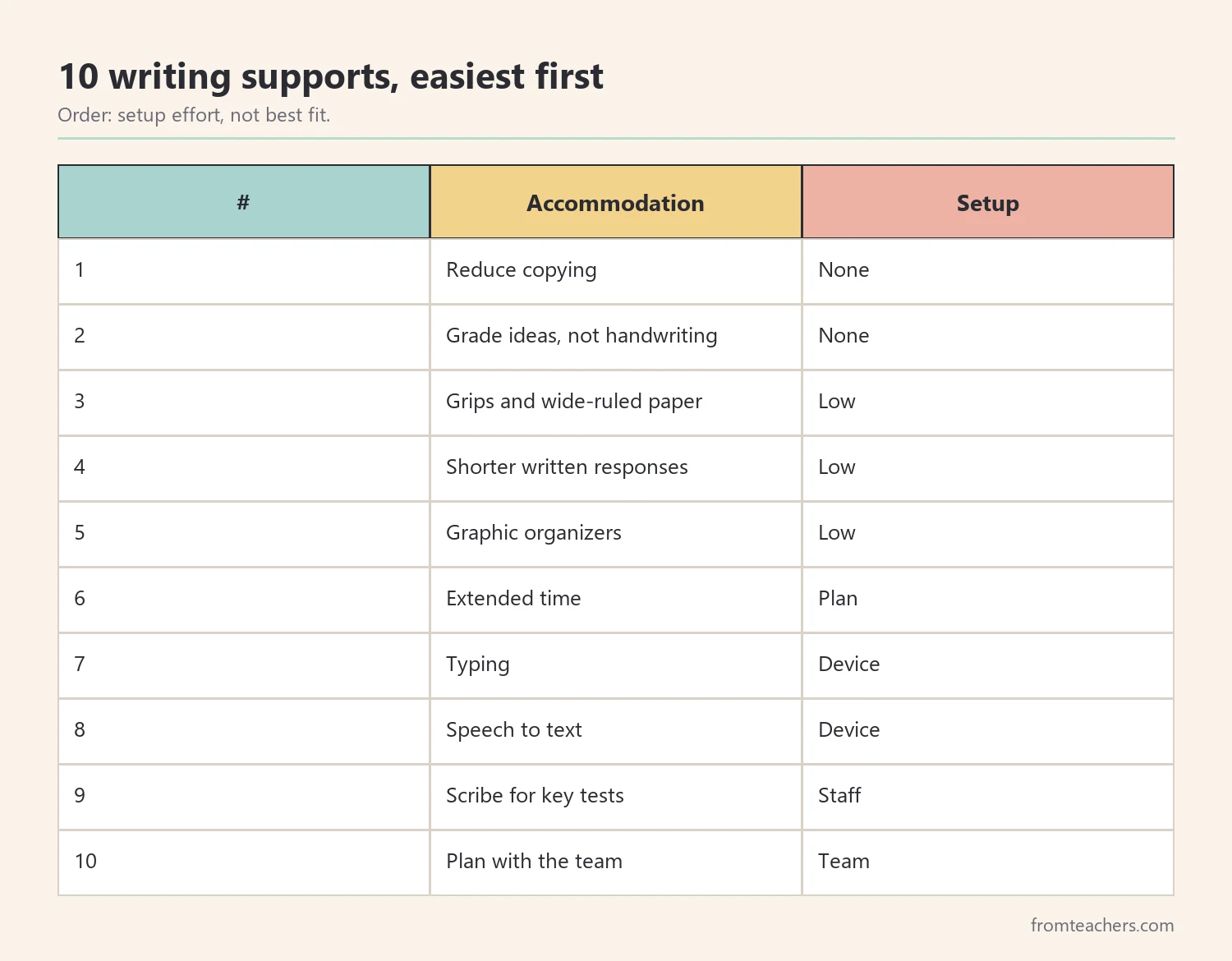
1. Reduce copying from the board
What it is: give a printed copy of notes, problems or directions instead of asking the student to copy them.
Why it helps: copying uses energy that could go to thinking. It also adds errors.
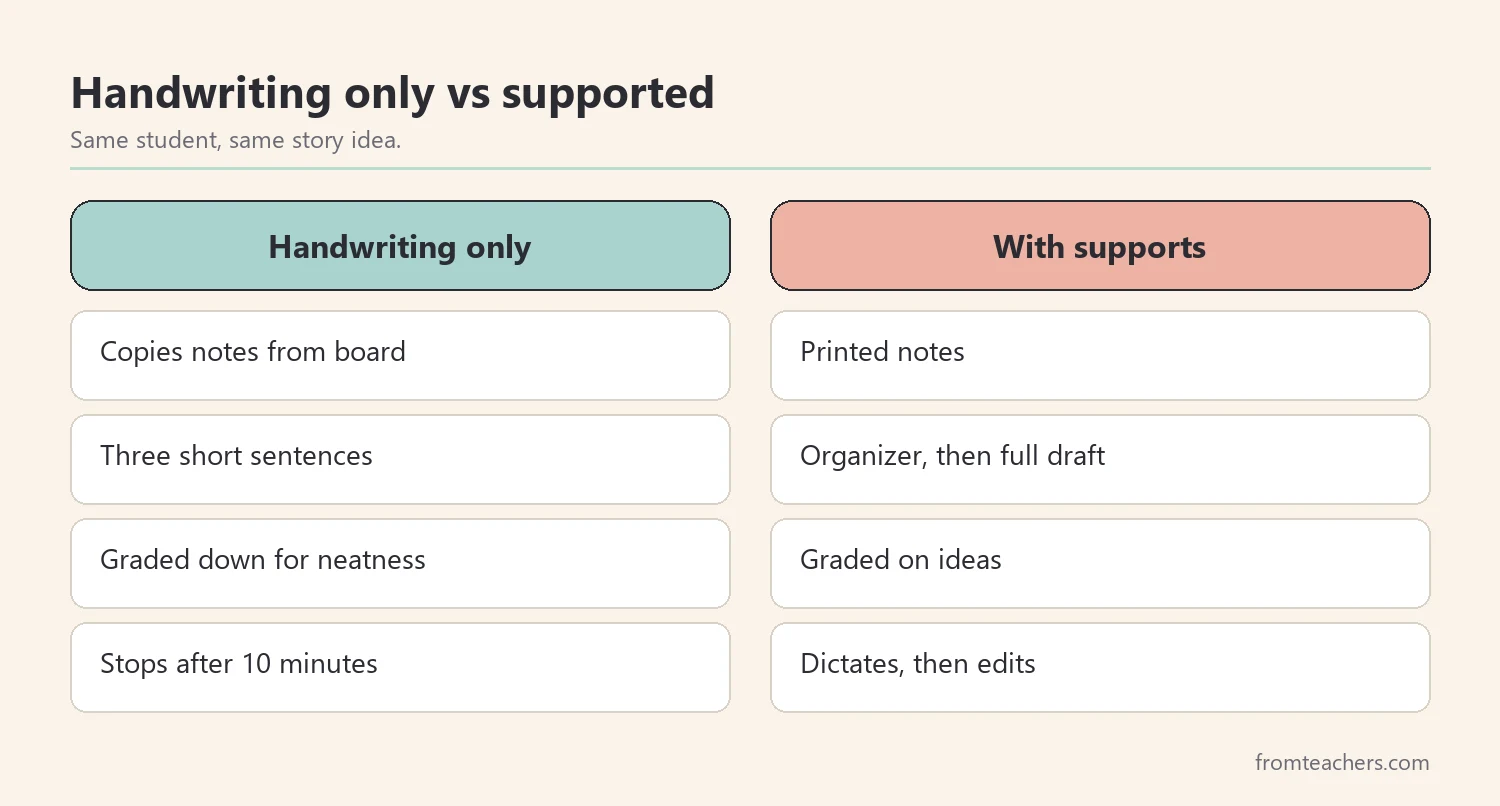
Example: Ms. Harper gave Owen a printed copy of the week’s vocabulary. He used the saved time to write sentences instead of copying words.
2. Grade ideas separately from handwriting
What it is: when the goal is content, do not lower grades for handwriting or neatness.
Why it helps: students with dysgraphia are often graded down for a skill that is a known area of difficulty.
Example: Ms. Harper’s science rubric scored only content. Owen’s grade rose, and so did his willingness to write.
3. Offer pencil grips and wide-ruled paper
What it is: simple tools, such as pencil grips, slant boards, raised-line or wide-ruled paper.
Why it helps: some students find writing more comfortable and legible with these tools. An occupational therapist can recommend specific options.
Example: Owen tried three grips and chose one. His writing did not become perfect, but he said his hand hurt less.
4. Allow shorter written responses
What it is: accept fewer written sentences when the goal is to show understanding, or let the student answer some questions orally.
Why it helps: it focuses effort on quality of thinking. Note that if expectations change what is learned, it may be a modification, which needs team agreement.
Example: For reading response, Owen wrote two strong sentences and explained the rest orally to Ms. Harper. She checked that his plan allowed this.
5. Use graphic organizers
What it is: structured planning sheets, such as story maps, paragraph frames or idea webs.
Why it helps: organizers separate planning from writing and reduce the load of holding ideas in mind while forming letters.
Example: Owen filled in a story map with words and quick sketches before writing. His stories became longer and better organized.
6. Give extended time for writing tasks
What it is: extra time for written assignments and tests, as agreed in the plan.
Why it helps: handwriting is slower for many students with dysgraphia, so time limits can hide what they know.
Example: Owen received extra time on written quizzes. He used it on most quizzes and finished with complete answers.
7. Allow typing
What it is: the student types longer assignments on a computer or tablet instead of handwriting them.
Why it helps: many students produce more and clearer writing when typing, especially with practice. Spell check can also help.
Example: Owen typed his weekly narrative on a classroom laptop. In the first month he typed slowly, so Ms. Harper added short keyboarding practice twice a week.
8. Use speech to text
What it is: the student dictates writing to a speech to text tool, then edits it.
Why it helps: it lets strong oral storytellers get ideas down at the speed of thought.
Example: Owen dictated his first draft in a quiet corner with a headset, then edited it with Ms. Harper. His draft was three times longer than his handwritten ones.
9. Provide a scribe for key assessments
What it is: an adult writes down the student’s dictated answers, word for word, on selected tasks.
Why it helps: it removes the writing barrier on tasks that measure content knowledge. It needs staff time and clear rules, so it is usually reserved for key assessments.
Example: For the end of unit science test, a paraprofessional scribed Owen’s answers in a separate room. His score reflected his real understanding.
10. Plan supports with the team
What it is: work with the IEP or 504 team, including an occupational therapist where available, to choose, document and review supports.
Why it helps: formal accommodations stay consistent across classes and years, and the team can add instruction in handwriting or keyboarding where needed.
Example: Owen’s team added typing, speech to text and organizers to his plan. A simple editable accommodations and modifications tracker helped Ms. Harper show which supports he used and how well each worked.
Tracking which supports work
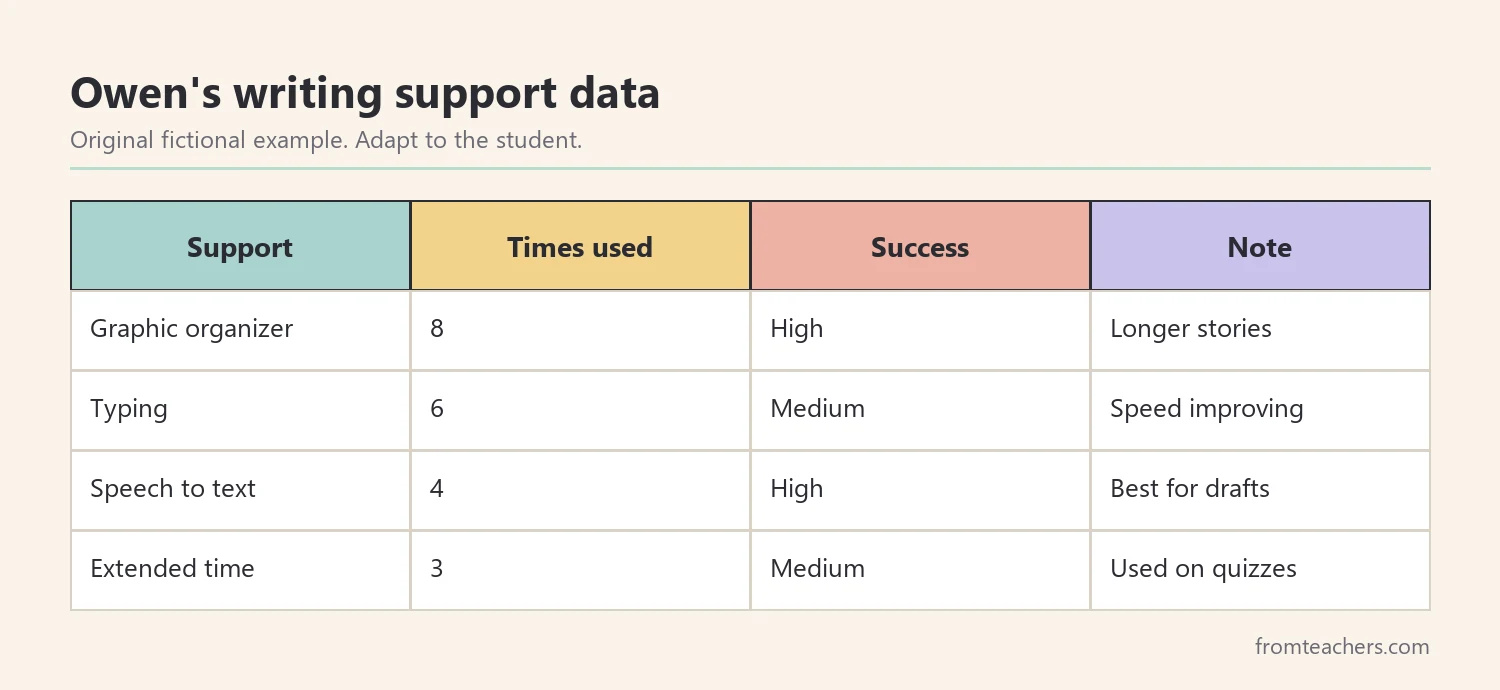
Not every accommodation helps every student. Tracking turns guesses into evidence. The table below shows a fictional four-week summary of Owen’s writing supports.
| Support | Times used | Success | Note |
|---|---|---|---|
| Graphic organizer | 8 | High | Longer stories |
| Typing | 6 | Medium | Speed improving |
| Speech to text | 4 | High | Best for drafts |
| Extended time | 3 | Medium | Used on quizzes |
The data helped the team decide to keep organizers and speech to text, and to continue keyboarding practice.
A simple writing support routine
Figure 4 shows a routine that combines several writing accommodations for dysgraphia in one lesson: plan with an organizer, draft by typing or speech to text, edit with support and share orally.
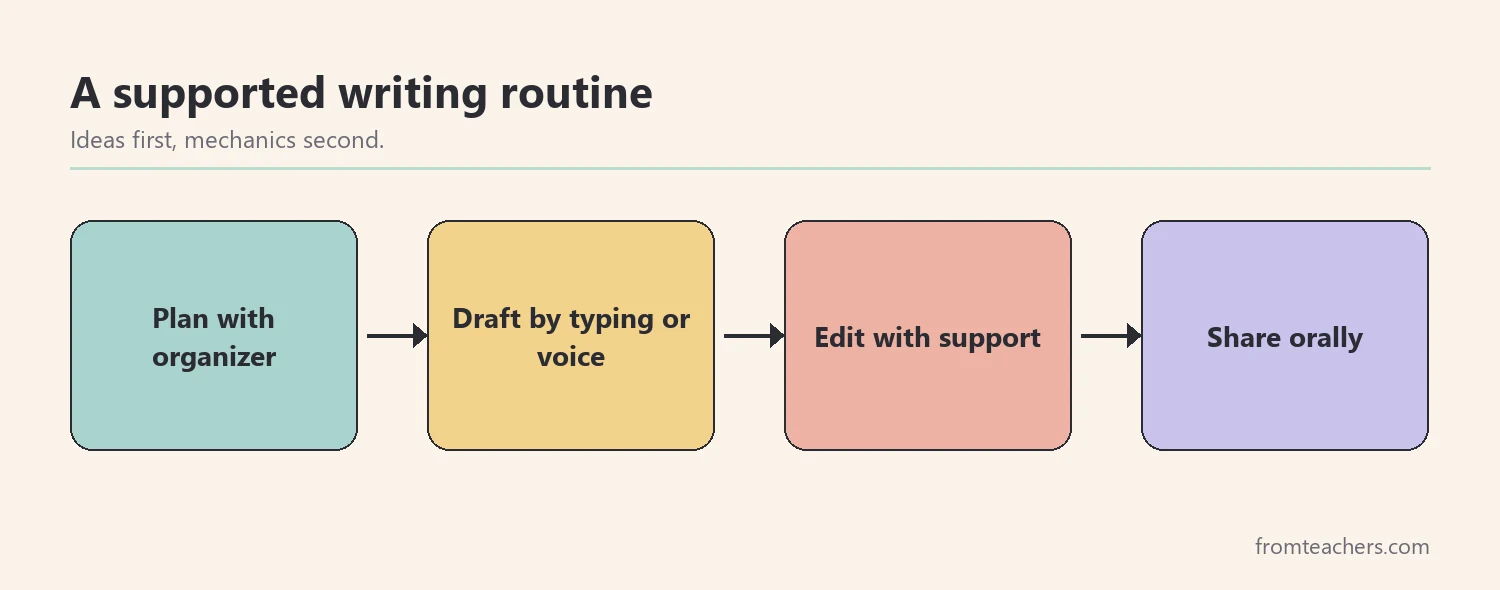
This routine keeps the focus on ideas while still building writing skills. Also, it fits many students, not only those with dysgraphia, which makes it easy to use with the whole class.
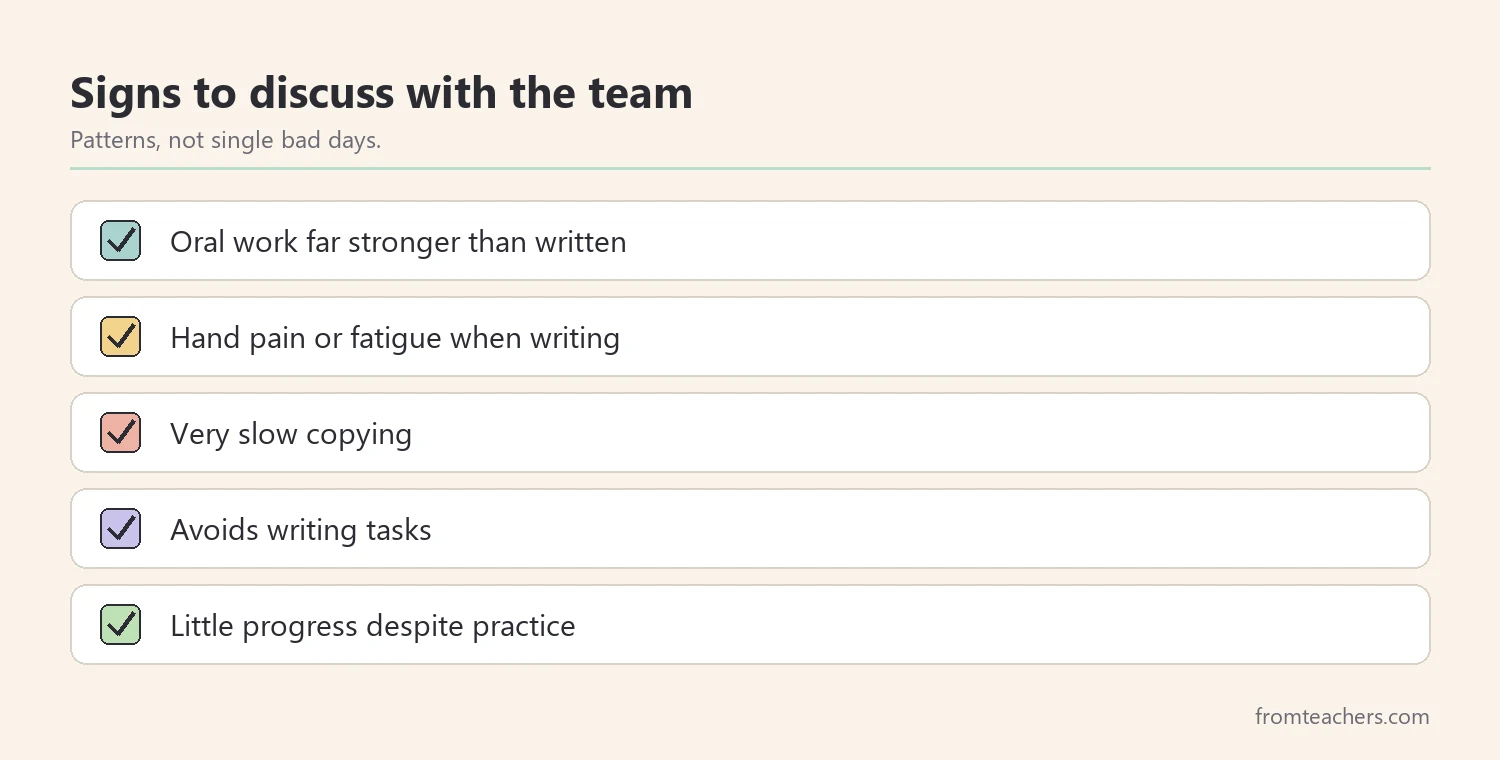
Figure 5 lists signs that a student may need a closer look by the team.
Common mistakes with writing accommodations
- Assuming the student is lazy. Fix: compare oral and written work.
- Only offering more handwriting practice. Fix: combine skill building with accommodations.
- Introducing typing without practice. Fix: plan short keyboarding sessions.
- Changing expectations informally. Fix: check the plan and talk with the team.
- Not tracking. Fix: record use and success for each support.
Talking with families
Families often see the same struggle at home: long homework battles over short writing tasks. Share which supports help at school, such as organizers or speech to text, and suggest using them for homework when appropriate. Also, ask families what they notice. Some children write more at home on a tablet or tell detailed stories at dinner, which is useful information for the team.
Owen’s mom said he dictated a story about his cat into her phone one evening without being asked. That was a clear sign that the accommodations were rebuilding his confidence as a writer.
Questions teachers ask about writing accommodations for dysgraphia
Will typing stop my student from learning handwriting?
Not necessarily. Many teams combine accommodations with continued handwriting or keyboarding instruction. Discuss balance with the team and an occupational therapist.
Is speech to text cheating?
No, when it is an agreed accommodation and the goal is to show ideas or content. It changes how the student shows learning, not what they know.
Can I use these supports without a diagnosis?
Many general supports, such as organizers and printed notes, can help any student. Formal accommodations come through the IEP or 504 process.
How do I know which accommodation to try first?
Start with the easiest options that fit the task, then track what helps. Ask the team for guidance on device-based supports.
What is the difference between dysgraphia and messy handwriting?
Many children have messy handwriting at times. Dysgraphia usually involves persistent difficulty that affects written work despite instruction. Only a qualified evaluation can identify it.
Related reading: Accommodations vs Modifications in Special Education, Dyslexia Solutions in the Classroom, and The Power of Data Tracking in Special Education.
You may also need: Classroom Accommodation Feedback Form: IEP and 504 Effectiveness Tracker.
A companion resource for tracking writing accommodations for dysgraphia:
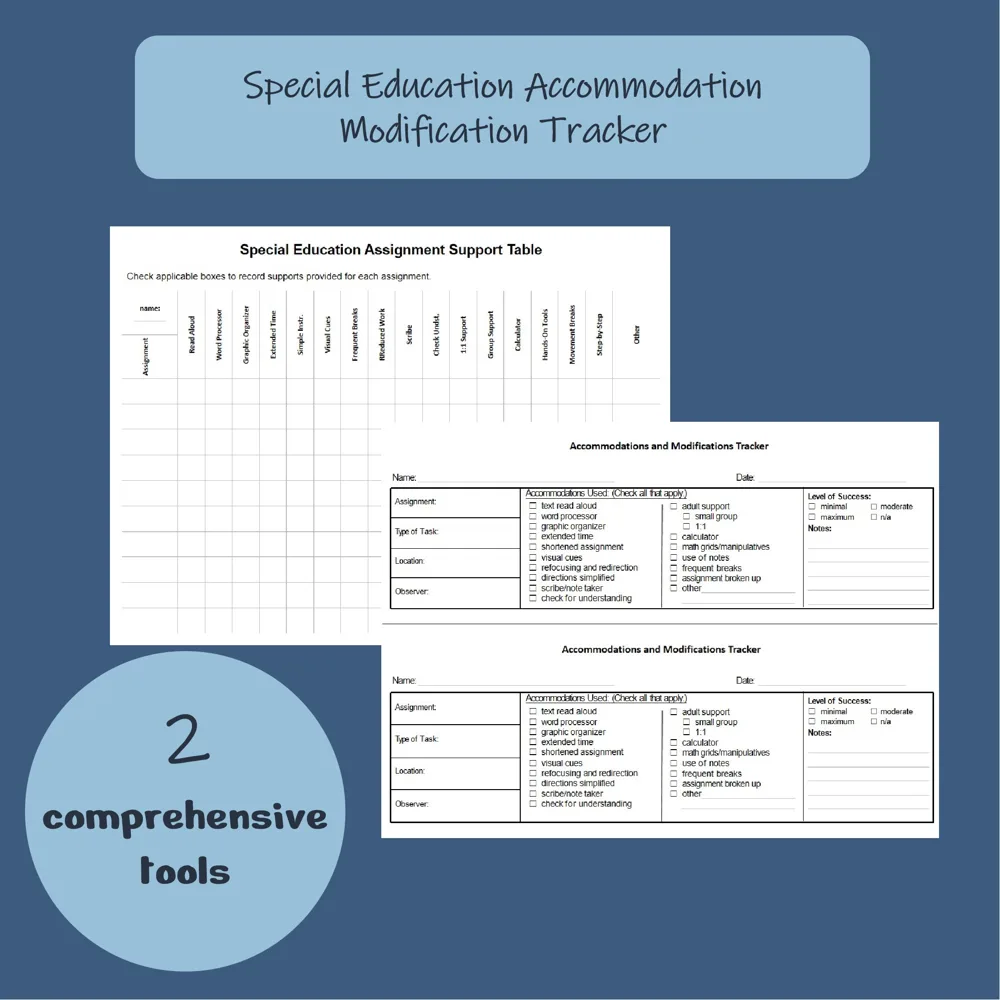
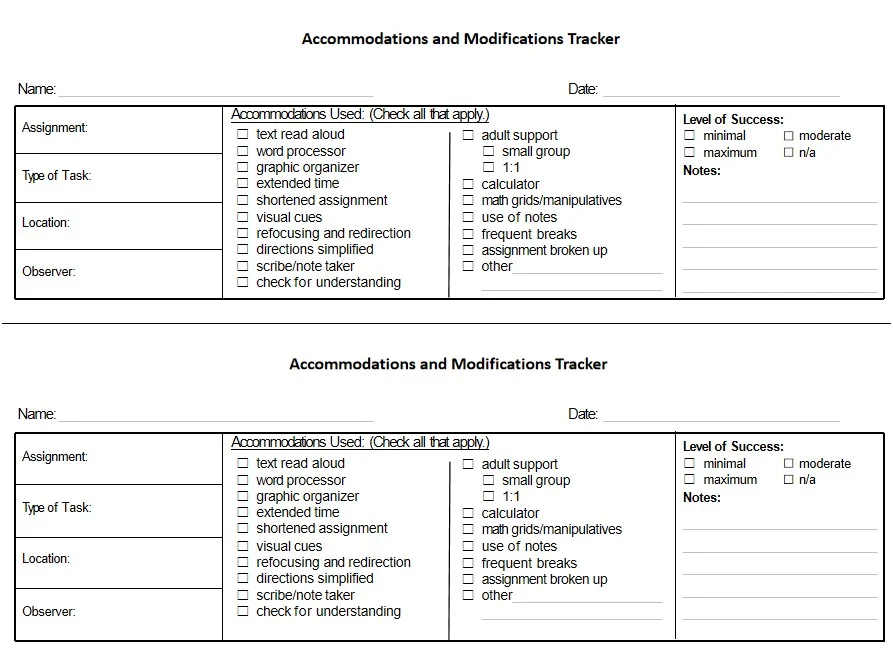
Accommodations & Modifications Tracker: Editable IEP Forms: two editable forms: a Special Education Assignment Support Table to check off supports such as read aloud, word processor, graphic organizer, extended time, scribe and breaks across many assignments, and an Accommodations and Modifications Tracker with date, assignment, task type, location, observer, a full checklist, a level of success rating and notes.
Sources and scope
- Understood.org: plain-language articles on dysgraphia, writing challenges and classroom supports.
- International Dyslexia Association: fact sheets on dyslexia and related difficulties, including dysgraphia.
- LD OnLine: articles for educators on learning disabilities and written expression.
- CAST: Universal Design for Learning resources on offering multiple ways for students to express what they know.
This list covers classroom writing accommodations for students who have, or may have, dysgraphia. It does not diagnose dysgraphia or replace an evaluation, occupational therapy or the decisions of the IEP or 504 team.
Key takeaways
- Writing accommodations for dysgraphia separate ideas from handwriting.
- Start with easy supports: printed notes, fair grading and organizers.
- Typing and speech to text work best with practice and team agreement.
- Keep accommodations and modifications clearly separate.
- Track use and success so the team can keep what works.







Leave a Comment