

Teacher energy management is rarely taught in training, yet it shapes every lesson after lunch. Picture Ms. Lin, a grade 7 science teacher, at 1:50 on a Wednesday. Her fifth period is lively, her coffee is cold, and she realizes she has not had water since 7 a.m.
This list is for teachers, co-teachers and support staff who want more steady energy across the school day. It ranks eight simple habits from the quickest to start to the ones that take a little more planning. By the end, you will know which habits to try first, how to notice your own peaks and dips, and how to track one week without adding another chore.
Examples are fictional. Adapt to the student’s goals and agreed supports. This is guidance, not a diagnosis.
At a glance
- Your energy follows patterns you can learn by writing them down.
- Small habits, like water and a short movement break, are easiest to start.
- Plan your hardest tasks for your highest energy time when you can.
- Track for one week before changing anything big.
- Ongoing exhaustion deserves a professional conversation, not just a new habit.
How these habits are ranked
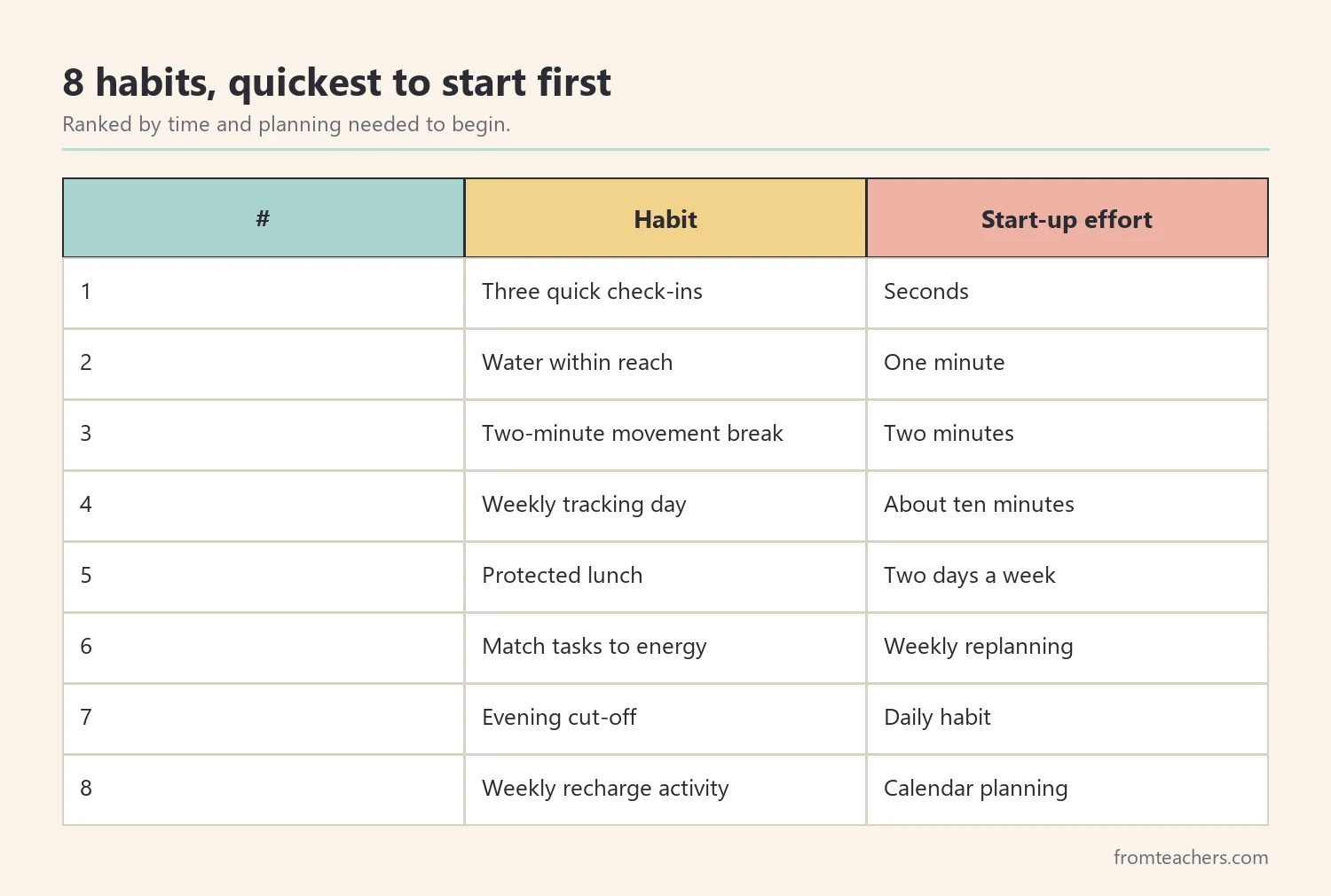
We did not rank these habits by how “powerful” they are, since that differs from person to person. Instead, the order follows one clear criterion: how much time and planning each habit needs before you can start. Habit 1 takes a few seconds. Habit 8 asks for a short weekly planning session.
As a result, you can begin at the top and stop wherever your week has room. Figure 1 shows the full ranking with a rough start-up effort for each habit.
1. Check in with yourself three times a day
The quickest teacher energy management habit is noticing. Before first period, after lunch and at the final bell, pause for a few seconds and rate your energy from 1 to 5. That is all.
Why it helps: most of us only notice energy when it is already gone. A quick rating catches the dip earlier, while you still have options.
How to start: attach the check-in to something you already do, like taking attendance. In addition, write the number on a sticky note or in your planner.
Example: Ms. Lin rated herself 4 at 8 a.m., 2 at 1:45 and 2 at 3:15. Seeing the same afternoon dip three days in a row surprised her.
2. Keep water within reach
Teachers often go hours without drinking because the next class is always arriving. A full bottle on your desk removes the need to plan.
Why it helps: it is a simple, low-cost habit, and many people notice they feel better when they are not thirsty. It also gives you a natural reason to pause for a moment.
How to start: fill a bottle before you leave home and again at lunch. Then sip during student work time rather than waiting for a break.
Example: Ms. Lin started refilling at lunch. Her tracker showed she finished one bottle on most days instead of almost none.
3. Take a two-minute movement break with your class
Next, movement. A short stretch or walk between activities can help both students and teachers reset. National physical activity guidance for adults encourages moving more and sitting less across the day.
Why it helps: it breaks long stretches of standing still or sitting, and it often lifts the mood of the room.
How to start: pick one transition, such as the start of fifth period, and lead a two-minute stretch. Students usually enjoy it, so it costs no teaching time worth worrying about.
Example: Ms. Lin added a stretch before her fifth-period lab. She rated her afternoon energy a little higher on most of those days.
4. Track a full day once a week
Ratings tell you when energy drops. A full tracking day tells you why. Once a week, record your energy, mood and activity at several points, plus sleep, meals, caffeine and movement.
Why it helps: patterns appear quickly. You may find that late caffeine affects your sleep, or that a skipped breakfast shows up as a mid-morning slump.
How to start: use a simple one-page sheet so the tracking takes minutes, not an evening. The daily energy level tracker with sleep, mood and habit reflection fits this well: it has a morning check-in, a table from early morning to night, a habits section and a short reflection with one thing to try tomorrow.
Example: Ms. Lin filled one in each Wednesday. After three weeks, she saw that her lowest point always followed a lunch spent grading at her desk.
5. Protect part of your lunch break
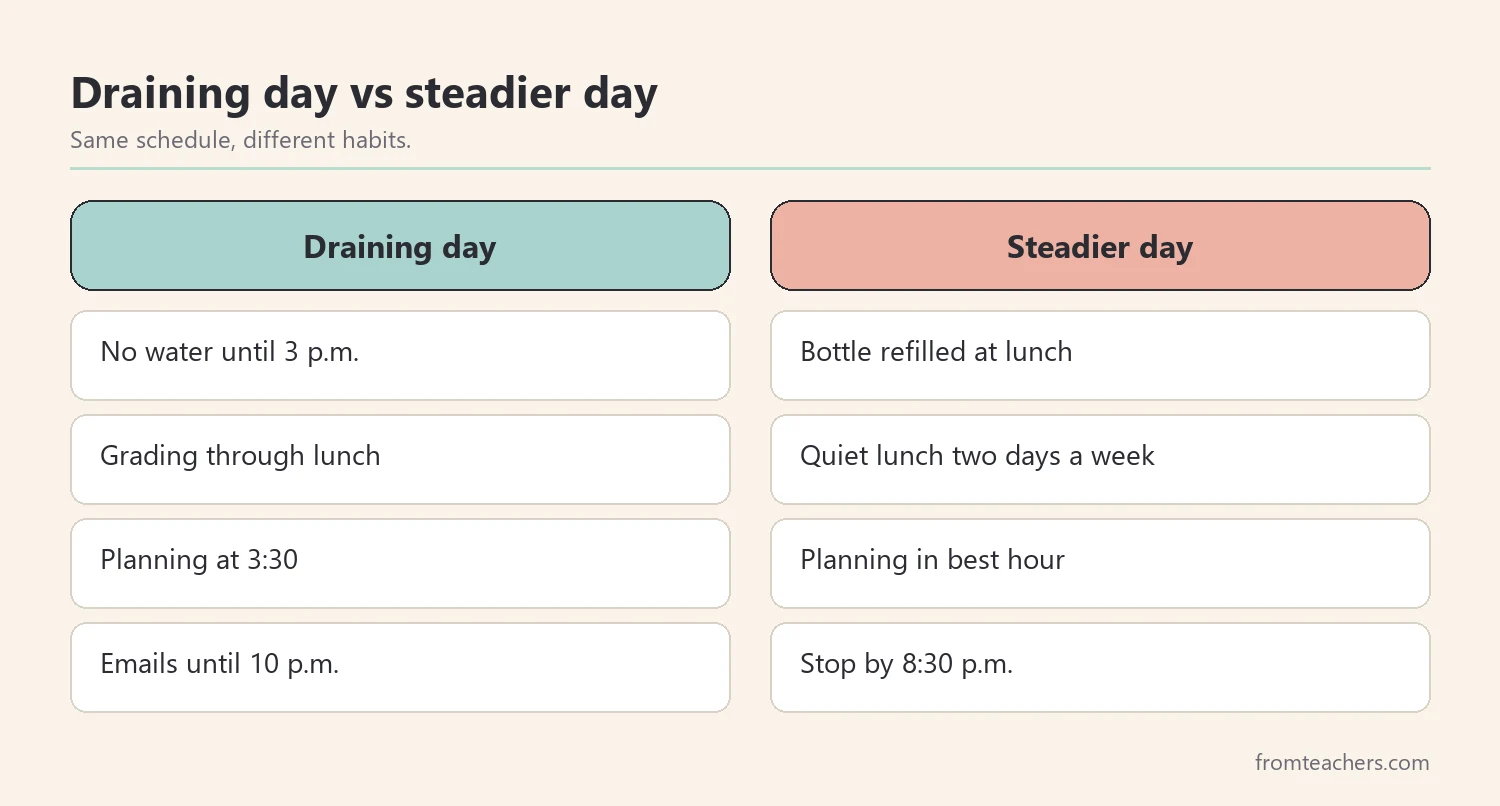
Many teachers use lunch for grading, emails or student help. Some of that is unavoidable. Still, a fully working lunch every day leaves no time to recharge before the afternoon.
Why it helps: even ten quiet minutes can make the afternoon feel different.
How to start: choose two days a week as “real lunch” days. Eat away from your desk if you can, perhaps with a colleague, and leave grading for another time.
Example: Ms. Lin ate in the staff room on Tuesdays and Thursdays. Her tracker showed fewer 1 ratings on those afternoons.
6. Match tasks to your energy
Once you know your peaks and dips, you can plan around them. Demanding tasks, such as writing a new unit or a difficult parent email, go into high-energy time. Routine tasks, such as filing or copying, go into low-energy time.
Why it helps: you stop fighting your own rhythm. The same work often feels easier at a better time.
How to start: look at one week of notes and mark your best hour. Then move one demanding task into that hour next week.
Example: Ms. Lin moved lesson planning from 3:30 to her free period at 9:10, when she usually rated herself 4. Planning took noticeably less time.
7. Set a simple evening cut-off
Teaching work expands to fill every evening if you let it. A clear stopping time protects rest and, in turn, the next morning.
Why it helps: sleep supports daytime functioning, as public health sources explain. Late-night grading often eats into it.
How to start: choose a realistic cut-off, such as 8:30 p.m., and write tomorrow’s top three tasks before you stop. Then close the laptop.
Example: Ms. Lin’s tracker showed better sleep-quality ratings on nights she stopped work by 8:30.
8. Plan one recharge activity each week
Finally, the habit that takes the most planning: one activity each week that gives you energy rather than using it. A walk, a hobby, time with friends or simply an evening off.
Why it helps: it gives the week something to look forward to and reminds you that you are more than your job.
How to start: put it on your calendar like a meeting. Then protect it the same way.
Example: Ms. Lin booked a Saturday morning hike with a friend. She noted it as the highest-energy point of her week.
One week of teacher energy management, tracked
Here is how Ms. Lin’s first full week looked after adding the first five habits. Notice that the numbers are her own ratings, not a test score. Their value comes from comparing days, not from being perfect.
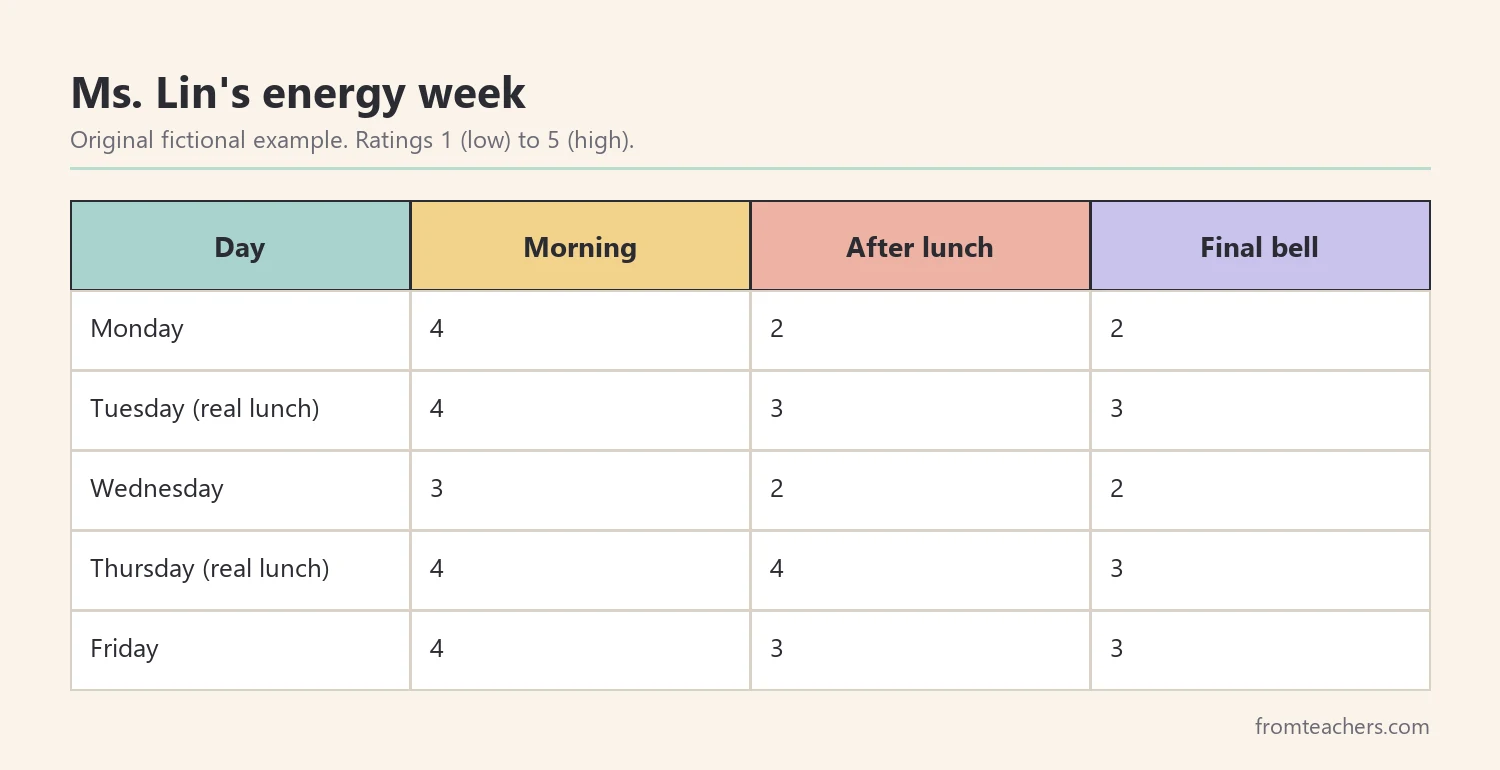
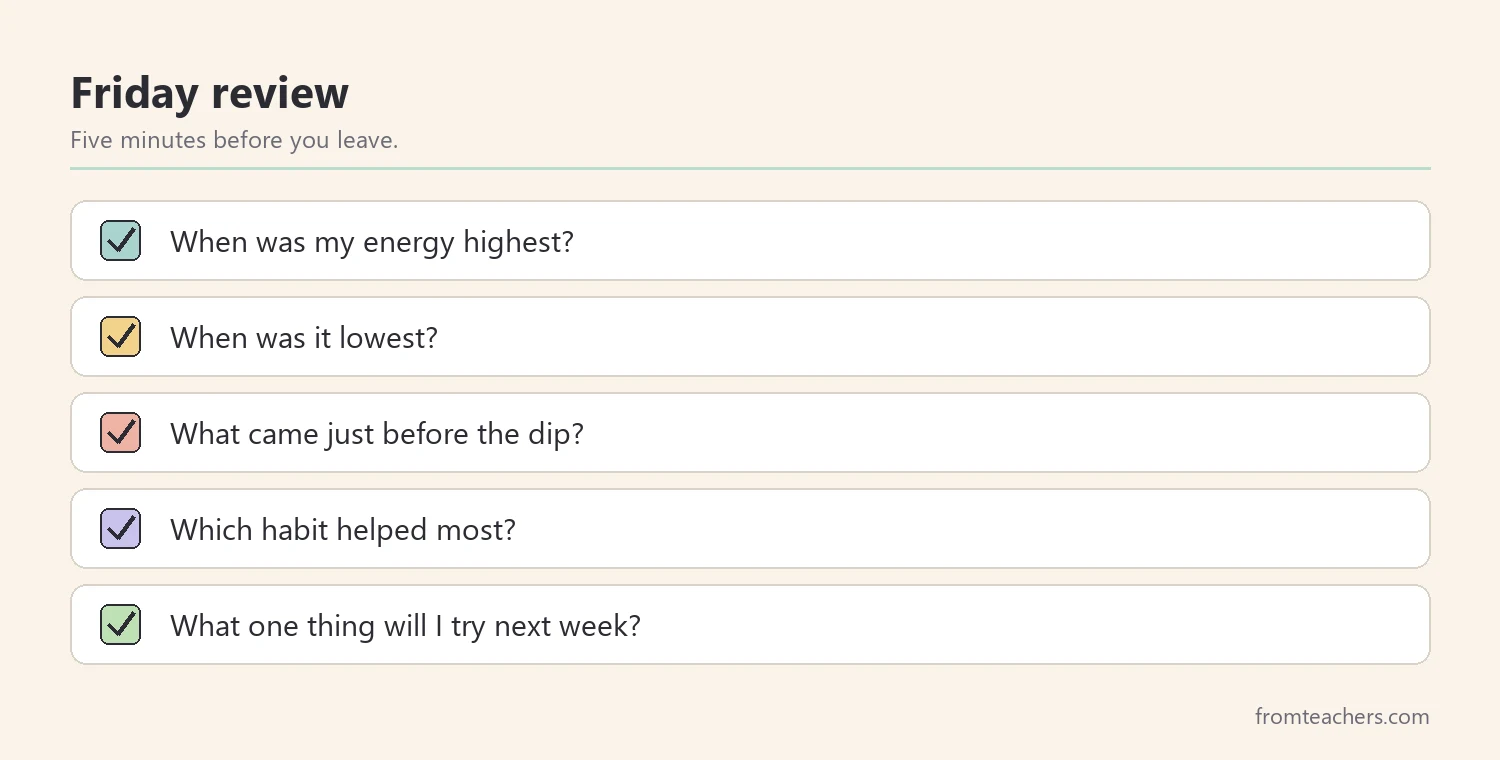
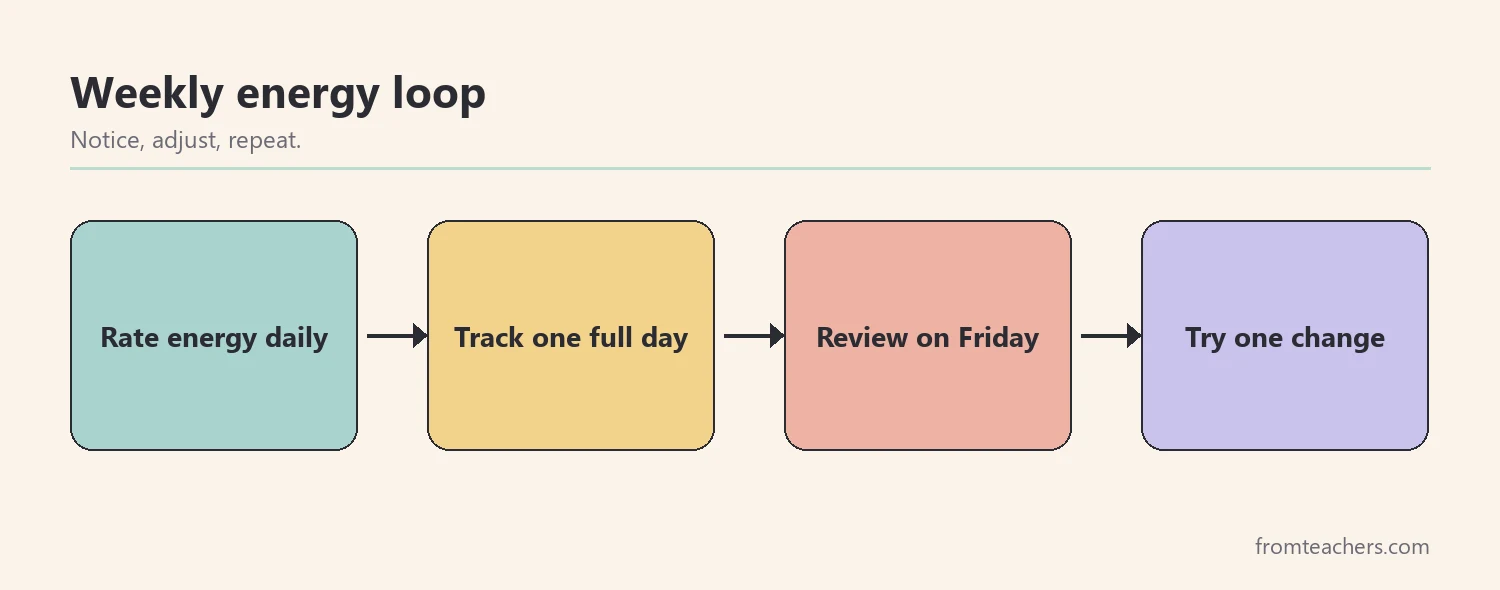
Her pattern was clear: the afternoon dip shrank on days with a real lunch and water. Consequently, she kept those two habits and planned to add a movement break next. Figure 4 lists the questions she used for her Friday review, and Figure 5 shows the weekly loop.
A simple starter plan for next week
If the list feels like a lot, here is a gentle way to begin. On Monday, start the three daily check-ins and keep water on your desk. On Wednesday, fill in one full tracking day. Then, on Friday, spend five minutes with the review questions above.
In week two, add a protected lunch on two days and compare those afternoons with the others. By week three, you will usually have enough notes to try matching one demanding task to your best hour. Meanwhile, keep the evening cut-off flexible at first, because report card weeks and parent nights will not always allow it.
Above all, keep the process kind. Teacher energy management is not another performance target. It is a way to understand your own day, so that you can give your students your best hours and still have something left at home.
Common mistakes and how to avoid them
- Trying all eight habits at once. Fix: start with one or two from the top of the list.
- Tracking every day forever. Fix: one full tracking day a week is usually enough.
- Judging yourself for low ratings. Fix: treat the numbers as information, not a grade.
- Ignoring exhaustion that does not lift. Fix: talk with a doctor or another qualified professional.
- Giving up after one hard week. Fix: report cards and events skew any week, so look at three or four.
Questions teachers ask about teacher energy management
Is this the same as preventing burnout?
Not exactly. These habits support everyday energy. Burnout is more complex and often linked to workload and working conditions, so personal habits are only part of the picture. If you feel burned out, consider talking with a professional and your school leadership.
How long should I track my energy?
Many people find patterns within two to four weeks of tracking one day a week. After that, you can track only when something changes, such as a new schedule.
Can I use the same tracker with students?
Yes. The tracker was designed for students and anyone building self-awareness, so you can model it yourself and then invite older students to try it.
What if my schedule leaves no time for these habits?
Start with habit 1, which takes seconds. Even a few ratings a day can show you where a small change would help most.
Should I share my tracker with colleagues?
Only if you want to. Some teams compare patterns to plan meetings at better times, but your notes are yours.
Related reading: Reflect and Plan: A Teacher’s New Year Guide, Addressing Challenges in Special Education, and 5 Practical Teaching Tips to Boost Classroom Focus.
You may also need: Daily Reflection Journal for Students, SEL check-in and goal setting sheet.
A companion resource for teacher energy management:
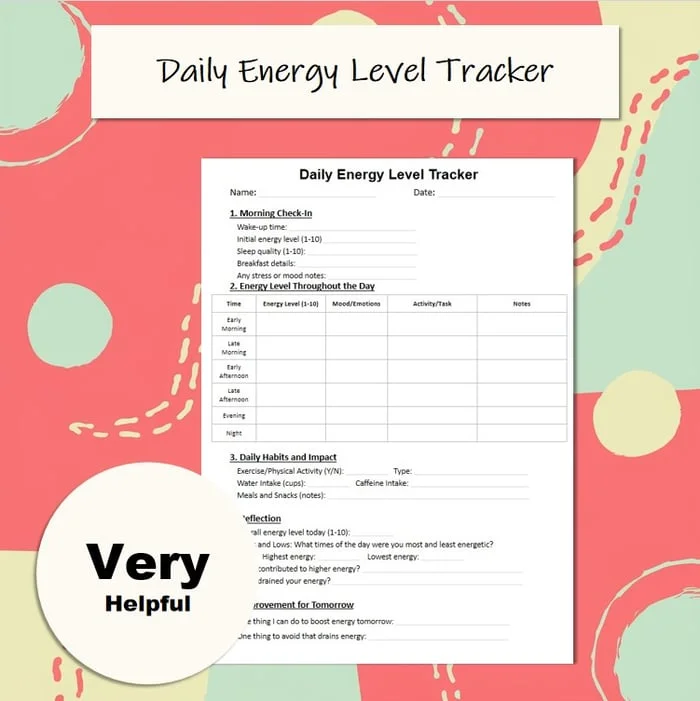
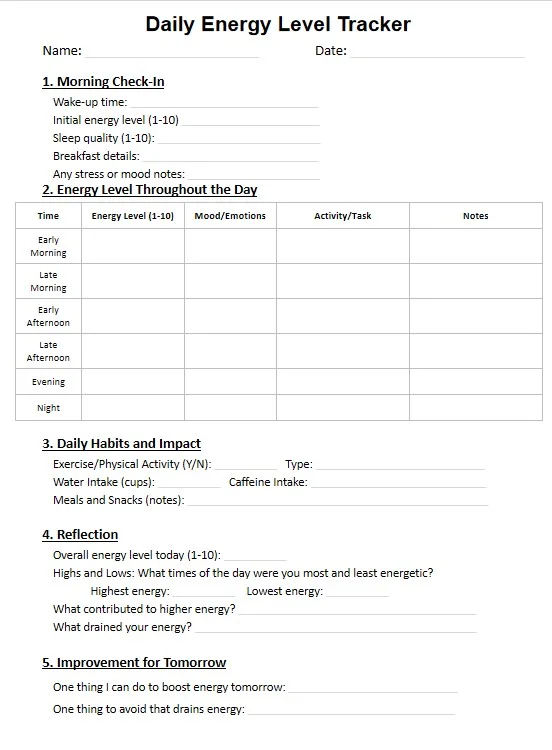
Daily Energy Level Tracker Sleep Mood and Habit Reflection Worksheet: a one-page printable tracker with a morning check-in, an energy and mood table from early morning to night, daily habits such as exercise, water, caffeine and meals, and a reflection with one thing to try tomorrow.
Sources and scope
- National Heart, Lung, and Blood Institute: Sleep: general information on how sleep affects health and daytime functioning.
- Move Your Way (U.S. Office of Disease Prevention and Health Promotion): plain-language physical activity guidance for adults.
- American Psychological Association: Stress: information on stress and everyday coping strategies.
- American Psychological Association: Healthy Workplaces: resources on wellbeing and work demands.
This guide shares everyday habits for noticing and protecting energy during a teaching day. It is not medical advice. Ongoing exhaustion, sleep problems or low mood deserve a conversation with a doctor or another qualified professional.
Key takeaways
- Teacher energy management starts with noticing your own peaks and dips.
- The quickest habits, check-ins and water, are the easiest wins.
- One tracking day a week shows patterns without adding much work.
- Match demanding tasks to your best hours when you can.
- Persistent exhaustion deserves professional support.









Leave a Comment