

Sensory break ideas give students a short, safe way to help their bodies feel just right so they can get back to learning. Imagine a third grader who keeps leaning back on his chair legs, chewing his sleeve, and covering his ears when the class gets loud. He is not trying to disrupt. His body is telling him something, and he does not yet have a better way to answer it.
This guide gives you five steps: understand what sensory breaks are for, observe the student’s needs, build a menu across six categories, plan breaks into the day, and review what works. By the end, you will be able to choose sensory break ideas that fit a real student, not just a generic list.
Examples are fictional. Adapt to the student’s goals and agreed supports. This is guidance, not a diagnosis.
At a glance
- A sensory break helps a student’s body feel calm, alert, and ready to learn.
- Observe first: some students seek input, others avoid it, many do both.
- Group ideas into six categories: deep pressure, tactile, movement, auditory, visual, and oral motor.
- Planned breaks at set times often work better than waiting for distress.
- Review choices with the student and the occupational therapist.
1. Understand what sensory breaks are for
First, be clear about the goal. A sensory break is a short activity that gives the body input it needs, or a pause from input it cannot handle. The aim is a body that feels calm, alert, and ready. It is not a reward, a game, or time off from learning.
Next, remember that every student is different. One student needs to move to feel settled. Another needs quiet and dim light. A third needs firm pressure. That is why a single calm corner rarely works for everyone, and why a menu of sensory break ideas is more useful.
Also, know your role. Teachers notice and support. Occupational therapists assess sensory needs and recommend specific strategies. Families know what helps at home. Good sensory break ideas usually come from all three working together.
In addition, think about timing. A short break before a hard task can prevent overload. A break during a rough moment can help a student recover. Both are useful, but planned breaks often prevent the hardest moments from happening at all.
Worked example. Sam is a fictional third grader. His teacher, Ms. Huang, notices that he struggles most after recess and during long writing tasks. She asks the school occupational therapist to observe, and she starts a simple notebook of what she sees.
2. Observe before choosing sensory break ideas
Next, watch the student over a few days. Sensory needs show up in behavior. Some students seek input: they crash into things, chew objects, touch everything, or cannot sit still. Others avoid input: they cover their ears, avoid messy textures, or pull away from light touch. Many students show both, depending on the day.
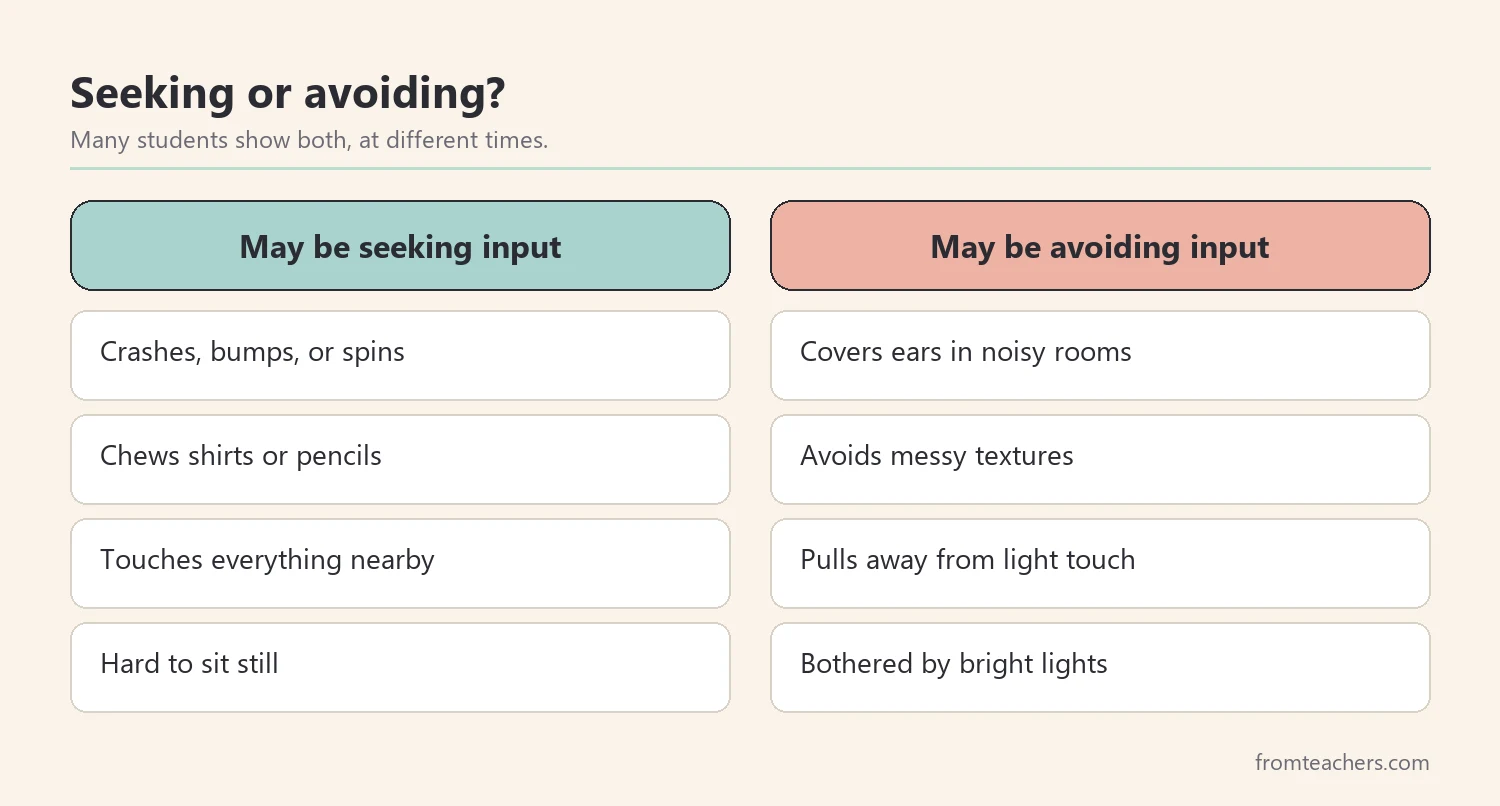
First, write down what you see, not what you think it means. “Covered ears during assembly” is more useful than “is anxious.” Facts help the team spot patterns.
Also, note the setting. Which room, what time, what noise level, and what task? Patterns often point straight to the best sensory break ideas. A student who struggles in loud spaces may benefit from auditory breaks. A student who fidgets during seat work may need movement first.
In addition, ask the student. Even young children can say or show what helps: “I like squeezing things” or “The lights are too bright.” Their answers make the menu more personal and more likely to be used.
Worked example. Over one week, Ms. Huang records that Sam leans on his chair legs during reading, chews his sleeve during writing, and covers his ears in the lunchroom. The occupational therapist suggests trying deep pressure, oral motor, and auditory options first.
3. Build a sensory menu in six categories
Next, organize sensory break ideas into clear groups. Six categories cover most needs: deep pressure, tactile, movement, auditory, visual, and oral motor. Grouping makes the menu easier to scan and helps students learn what kind of input helps them.
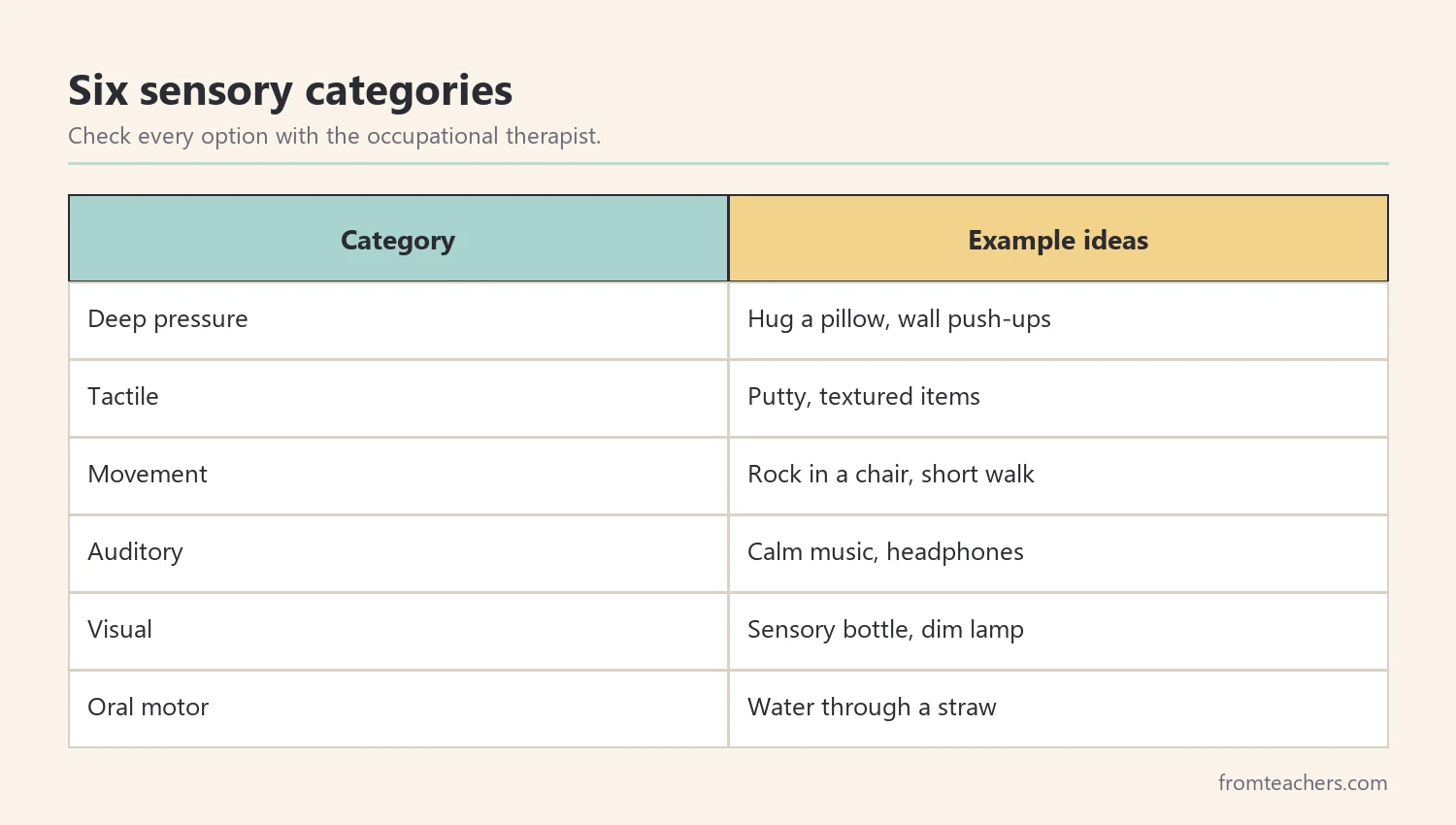
For example, deep pressure ideas include hugging a pillow, wall push-ups, or a weighted lap pad if the therapist recommends it. Tactile ideas include putty, slime, textured items, or a fidget. Movement ideas include rocking in a chair, marching in place, or a short hallway walk.
Also, include calming options for the other senses. Auditory ideas include calming music, noise-canceling headphones, or a quiet corner. Visual ideas include watching a sensory bottle, looking at a dim lamp, or using a visual timer. Oral motor ideas include sipping water through a straw, blowing bubbles, or chewing gum if allowed.
In addition, keep the menu short for each student. Choose two or three favorites from the full list and mark them on a personal card. Too many choices can overwhelm a student who already feels off balance.
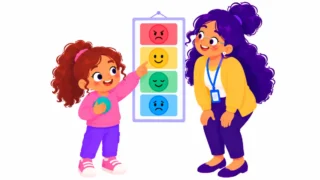
Then, make it visual. Pictures help every student, especially younger children and those who are upset. The sensory break ideas poster with six illustrated categories is one way to give the whole class a shared menu.
Worked example. Ms. Huang builds Sam a personal card with four sensory break ideas: wall push-ups, putty, headphones with calm music, and sipping water through a straw. Each has a small picture so Sam can point instead of explaining.
4. Plan sensory breaks into the day
Next, schedule breaks before they are needed. Many occupational therapists recommend planned sensory input at regular points, rather than waiting until a student is overwhelmed. A planned break is calm and predictable. A rescue break is often harder for everyone.
First, look at the student’s hardest times and place a short break just before each one. If writing is hard, try movement or deep pressure first. If the lunchroom is loud, try an auditory break right after.
Also, keep each break short. Two to five minutes is common. A visual timer helps the student see when the break ends and makes returning easier.
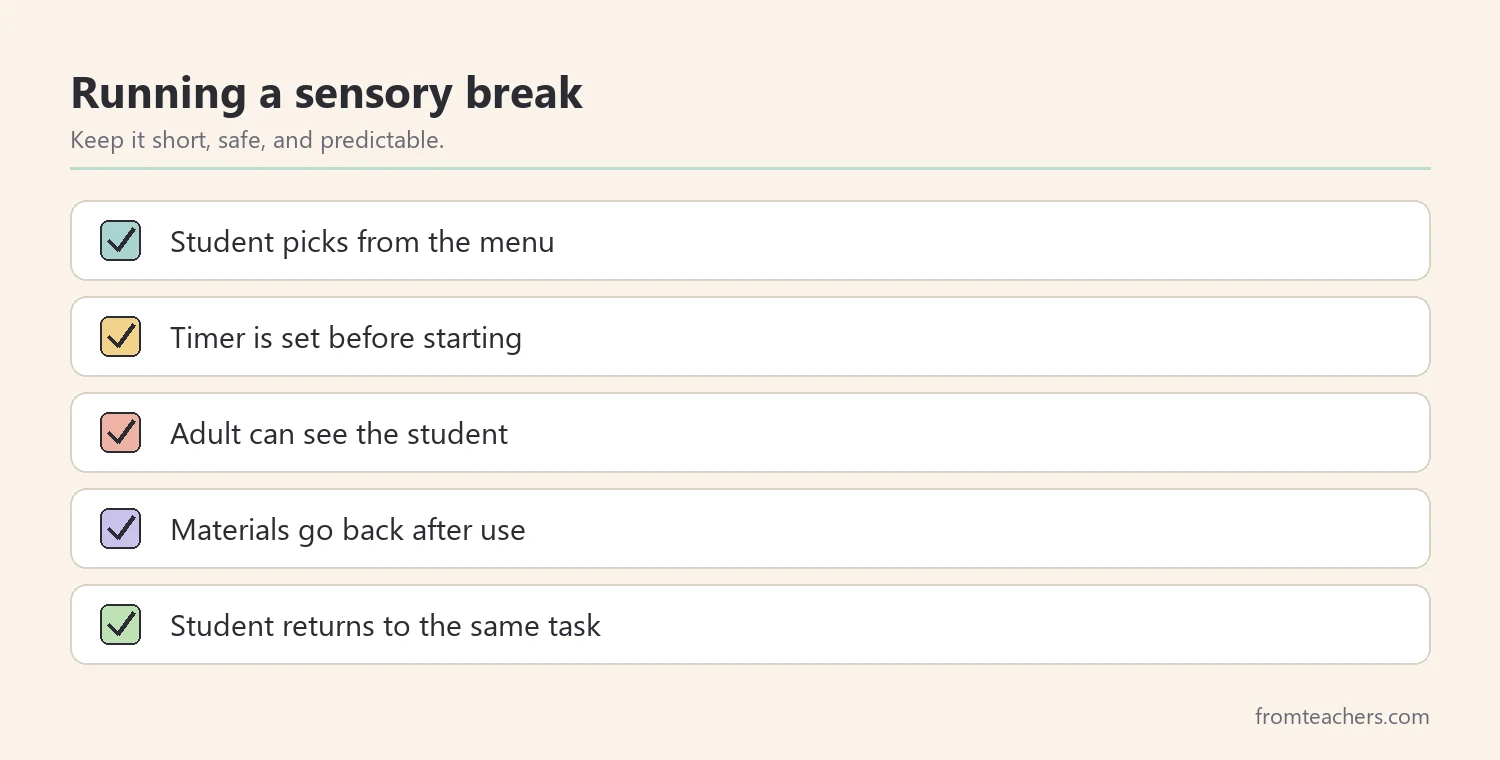
In addition, set up a simple routine. The student picks from the menu, sets the timer, uses the break where an adult can see them, puts materials back, and returns to the same task. Practice this routine when the student is calm.
Meanwhile, think about the rest of the class. Many teachers offer sensory break ideas to everyone, such as a whole-class movement minute. This helps all students and means no one stands out.
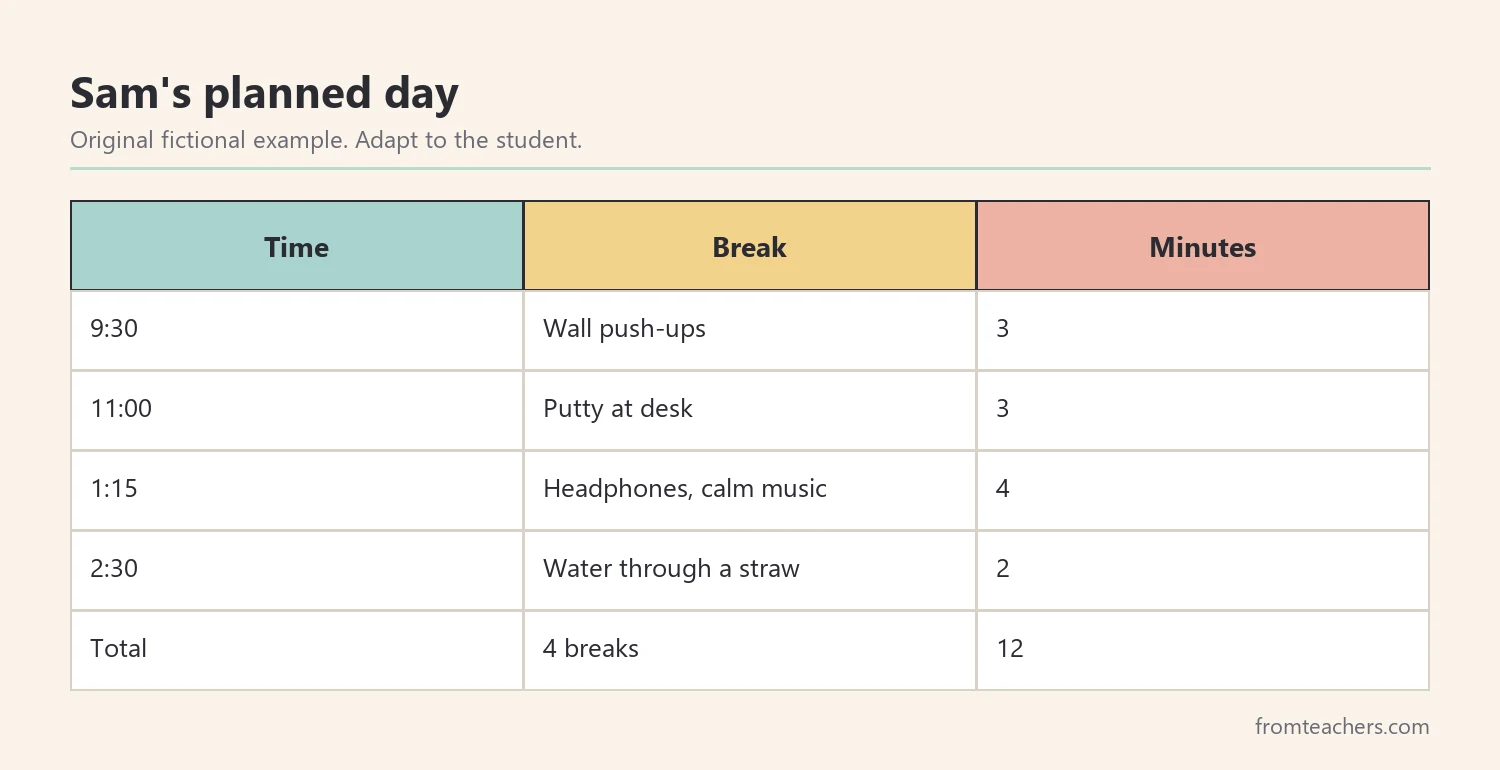
Worked example. Ms. Huang plans four short breaks for Sam: wall push-ups at 9:30 before reading, putty at 11:00 during writing, headphones at 1:15 after lunch, and water through a straw at 2:30. That is 3, 3, 4, and 2 minutes, or 12 minutes in total.
Keeping sensory breaks safe and fair
Safety comes first. Some sensory break ideas, such as weighted items, chewing tools, or spinning, should only be used with advice from an occupational therapist. Keep an adult in view of the student during every break, and check materials regularly for wear and hygiene.
Also, think about allergies and food rules. Gum, crunchy snacks, or scented items may not be allowed in every school. Check school policy and the student’s health plan before adding them to a menu.
In addition, explain fairness to the class. Students sometimes ask why a classmate gets headphones or putty. A simple answer works well: “Everyone gets what they need to learn. Some people need glasses, some people need a quiet break.” Many teachers find that offering a few sensory break ideas to the whole class reduces these questions.
Finally, protect dignity. Avoid announcing a break in front of peers, and never use sensory tools as a sign that a student is “in trouble.” A private signal and a calm routine help breaks feel normal, which makes students more willing to use them.
5. Review sensory break ideas with the team
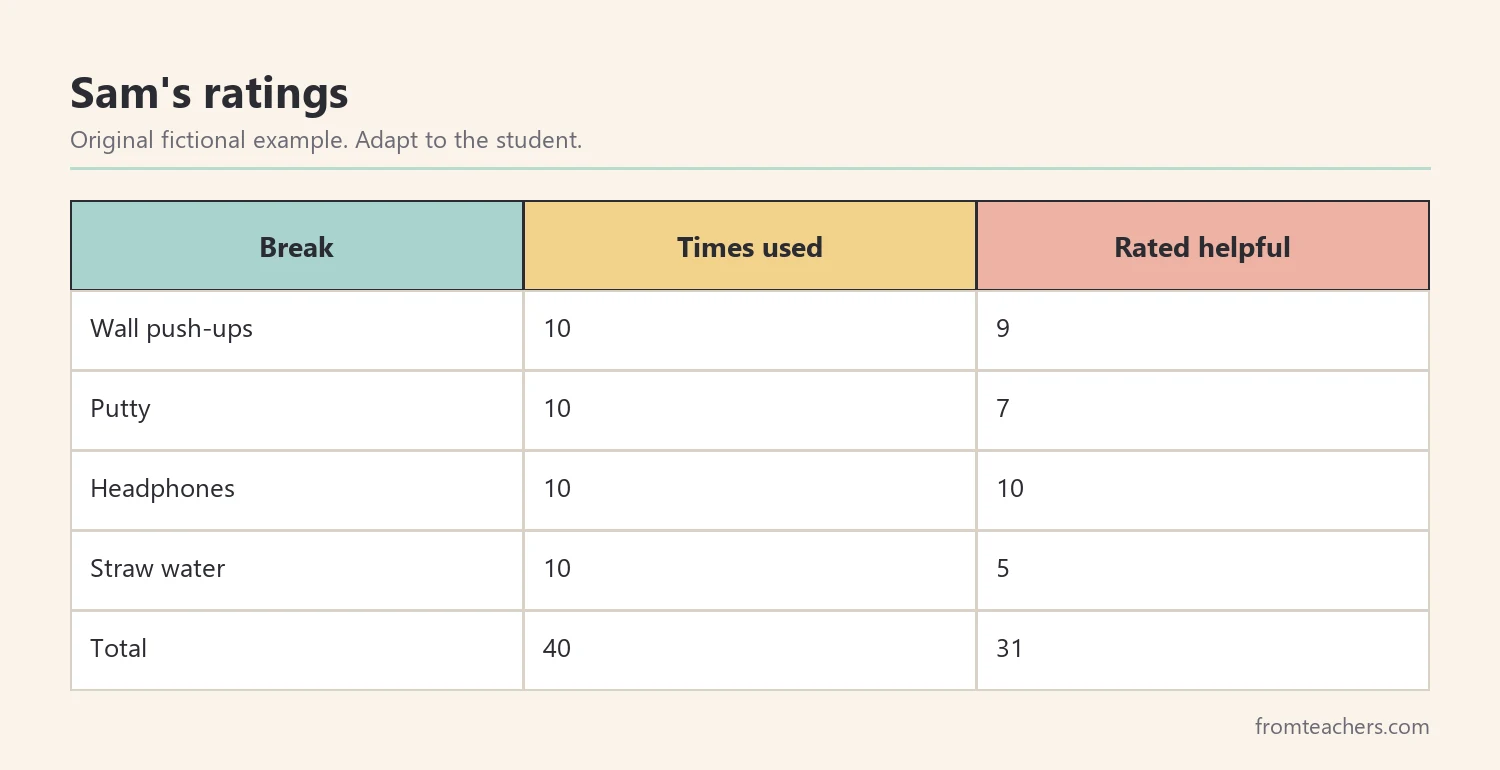
Finally, check what is working. A simple log is enough. Note which break the student used and whether it helped them return to work calmly. Ask the student to rate it with a thumbs up or down.
Next, share the log with the occupational therapist and family. They may suggest new sensory break ideas, changes in timing, or ways to use the same strategies at home.
Also, keep what works and drop what does not. A break the student rarely finds helpful is taking up time. Replace it with a new option from the same or a different category.
In addition, plan for change. Sensory needs can shift with growth, stress, sleep, or a new classroom. Review the menu each term, and after any big change in routine.
Then, build independence. Over time, many students learn to notice their own signs and pick the right break without prompts. Praise this self-awareness. It is one of the most valuable skills a student can take into later grades.
Worked example. After two weeks, Sam has used each of his four breaks 10 times, 40 in total. He rates headphones helpful 10 times, wall push-ups 9 times, putty 7 times, and straw water 5 times. That is 31 helpful ratings out of 40. With the therapist, Ms. Huang replaces straw water with a short hallway walk.
Sensory break ideas at home
Families can use the same categories at home. A pillow for squeezing, a small box of textured items, and a quiet spot with headphones are easy to set up. Using the same words at home and school helps children recognize what their body needs.
Also, keep home breaks short and calm, especially during homework. A few minutes of movement or deep pressure before starting can make a long task feel easier.
Common mistakes and how to avoid them
- Using one break for everyone. Needs differ. Fix: build a menu across six categories.
- Waiting for a meltdown. The student is too upset to choose. Fix: plan breaks before hard times.
- Breaks that run too long. Learning time is lost. Fix: use a visual timer and a clear return step.
- Skipping the occupational therapist. Some options need professional advice. Fix: check the menu with the OT.
- Treating breaks as rewards. Students lose access when they need it most. Fix: keep breaks neutral.
- Never reviewing. Unhelpful breaks stay on the menu. Fix: log, ask the student, and adjust.
Questions teachers and parents ask about sensory break ideas
How often should a student take a sensory break?
It depends on the student. Some need a short break every hour, others once or twice a day. The occupational therapist and team can help decide, using your observations.
Do sensory breaks only help autistic students?
No. Many students, including those with ADHD and those with no diagnosis, benefit from short sensory breaks. Whole-class movement breaks can help everyone settle.
What if a break makes the student more excited?
Some movement breaks can raise energy instead of calming it. Try ending with a calming option, such as deep pressure or quiet music, and discuss the pattern with the therapist.
Can sensory break ideas be part of an IEP?
Sensory breaks are sometimes listed as accommodations or related supports. That decision belongs to the student’s team. Your data can help the team decide.
What supplies do I need to start?
Very little. A pillow, some putty, headphones, a sensory bottle, and a visual timer cover many categories. Add other items only with team input. Start small, watch what the student actually uses, and add one new option at a time so you can tell what helps.
Related reading: Managing Sensory Overload: Practical Strategies for Autism and ADHD, Understanding Autistic Burnout and School Exhaustion: Prevention and Support Strategies, and Effective ADHD Classroom Strategies to Support Student Success.
A companion resource for sensory break ideas:
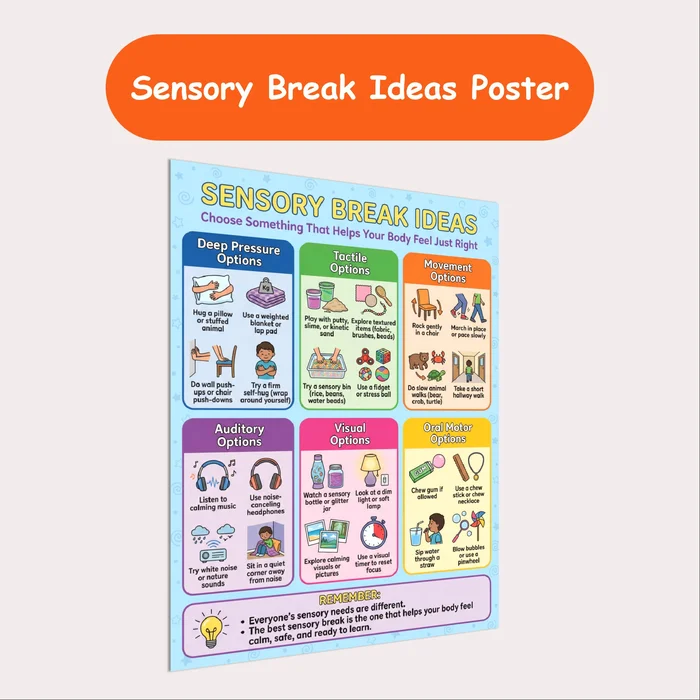
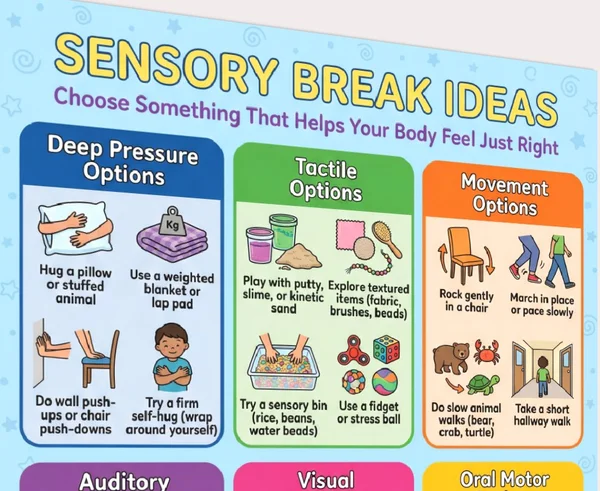
Sensory Break Ideas Poster: a printable poster that helps students choose something that makes their body feel just right, organized into six sensory categories. A practical sensory poster for autism support, OT-informed classrooms, and calm corners.
Sources and scope
- American Occupational Therapy Association (AOTA): information on occupational therapy and sensory supports in schools.
- IRIS Center, Vanderbilt University: free modules on autism, behavior, and classroom supports.
- Understood.org: family-friendly information on sensory processing and learning differences.
- IDEA, U.S. Department of Education: the law behind special education and related services.
This guide covers everyday classroom and home use of short sensory breaks. It does not replace an occupational therapy evaluation, a sensory plan, or the decisions of the student’s support team.
Key takeaways
- Sensory break ideas help the body feel calm, alert, and ready to learn.
- Observe seeking and avoiding signs before choosing breaks.
- Organize ideas into six categories and pick a few favorites.
- Plan short, timed breaks before the hardest parts of the day.
- Review ratings with the student, the OT, and the family.








Leave a Comment