

Mindfulness steps give students a simple way to slow down, notice what is happening, and feel calmer before they return to learning. Picture a second-grade class coming in from a loud recess. Some children are still laughing, one is upset about a game, and nobody is ready to listen. A two-minute routine can change the whole tone of the next lesson.
This guide shows you how to teach mindfulness steps in six stages: set up a calm time and place, teach pausing and breathing, guide a senses and feelings check, practice letting thoughts go, return to the moment, and build a daily habit. By the end, you will have a short routine that fits into a busy school day.
Examples are fictional. Adapt to the student’s goals and agreed supports. This is guidance, not a diagnosis.
At a glance
- Mindfulness is a practice, not perfection.
- Short, regular sessions work better than long, rare ones.
- Teach each step with clear, simple words and a model.
- Students can use the senses and kind phrases to stay grounded.
- Always end by guiding attention back to the next task.
1. Set up a calm time and place for mindfulness steps
First, choose when to practice. Good moments include the start of the day, after recess or lunch, before a test, or during a transition. A predictable time helps students know what to expect, and it makes the routine easier to remember.
Next, keep sessions short. Two to five minutes is plenty for most classes, especially at the start. Short sessions feel doable, and students are more likely to take part when they know it will not last long.
Also, set simple ground rules. Students can sit or stand, eyes open or closed, and nobody has to share what they noticed. Making participation feel safe matters, because some students feel uneasy closing their eyes in a group.
In addition, display the mindfulness steps where everyone can see them. A visual guide lets students follow along, and it lets them use the steps on their own later, for example in a calm down corner.
A ready-made option is the mindfulness steps poster with a calming guide for students, a seven-step visual in which each step has a clear goal.
Worked example. Ms. Reyes teaches a fictional grade 2 class. One student, Theo, often comes back from recess upset and struggles to settle. Ms. Reyes plans a three-minute practice right after recess each day, with the steps displayed beside the reading rug.
2. Teach students to pause and notice their breathing
The first of the mindfulness steps is to pause the body. Students sit or stand in a steady, comfortable position, place hands in the lap or by their sides, and take one slow breath. The goal is to create stillness so the mind can pay attention.
Then, guide attention to breathing. Ask students to breathe in through the nose and out through the mouth, and to feel the chest or belly rise and fall. Breathing slowly can help the body shift into a calmer state.
Importantly, model it yourself. Sit in front of the class, breathe slowly, and describe what you notice in a calm voice. Then let students try with you. Children copy the pace and tone of the adult leading the practice.
Also, avoid forcing a “perfect” breath. Some children feel uncomfortable focusing on breathing. Offer a simple alternative, such as placing a hand on the belly or quietly counting three breaths. These mindfulness steps should feel gentle, never like a test.
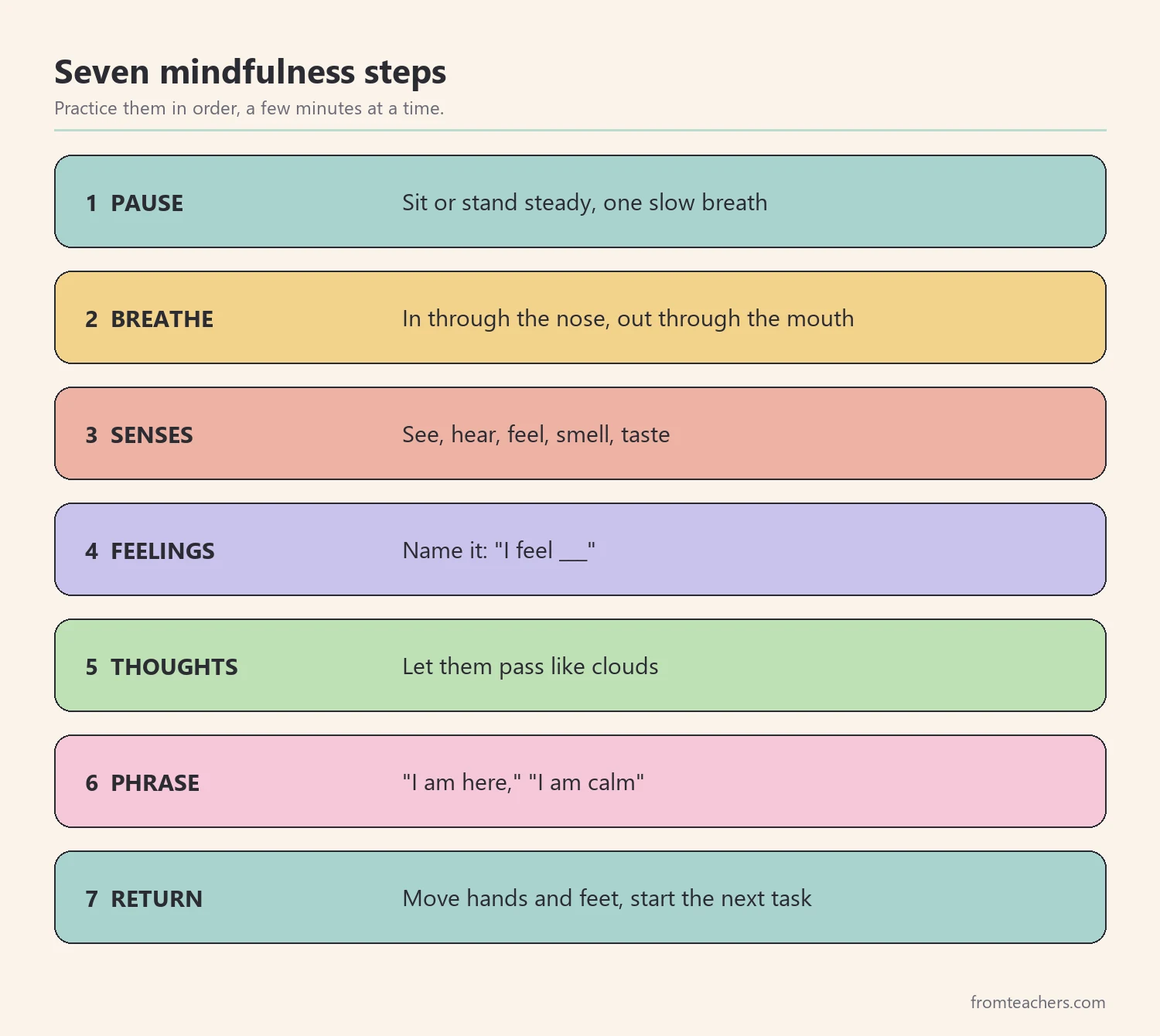
Worked example. On day one, Ms. Reyes models a slow breath and asks students to feel their belly rise. Theo giggles and fidgets. She lets him place a hand on his belly and count three breaths instead. By day three, he joins in quietly.
3. Guide a senses check and a feelings check
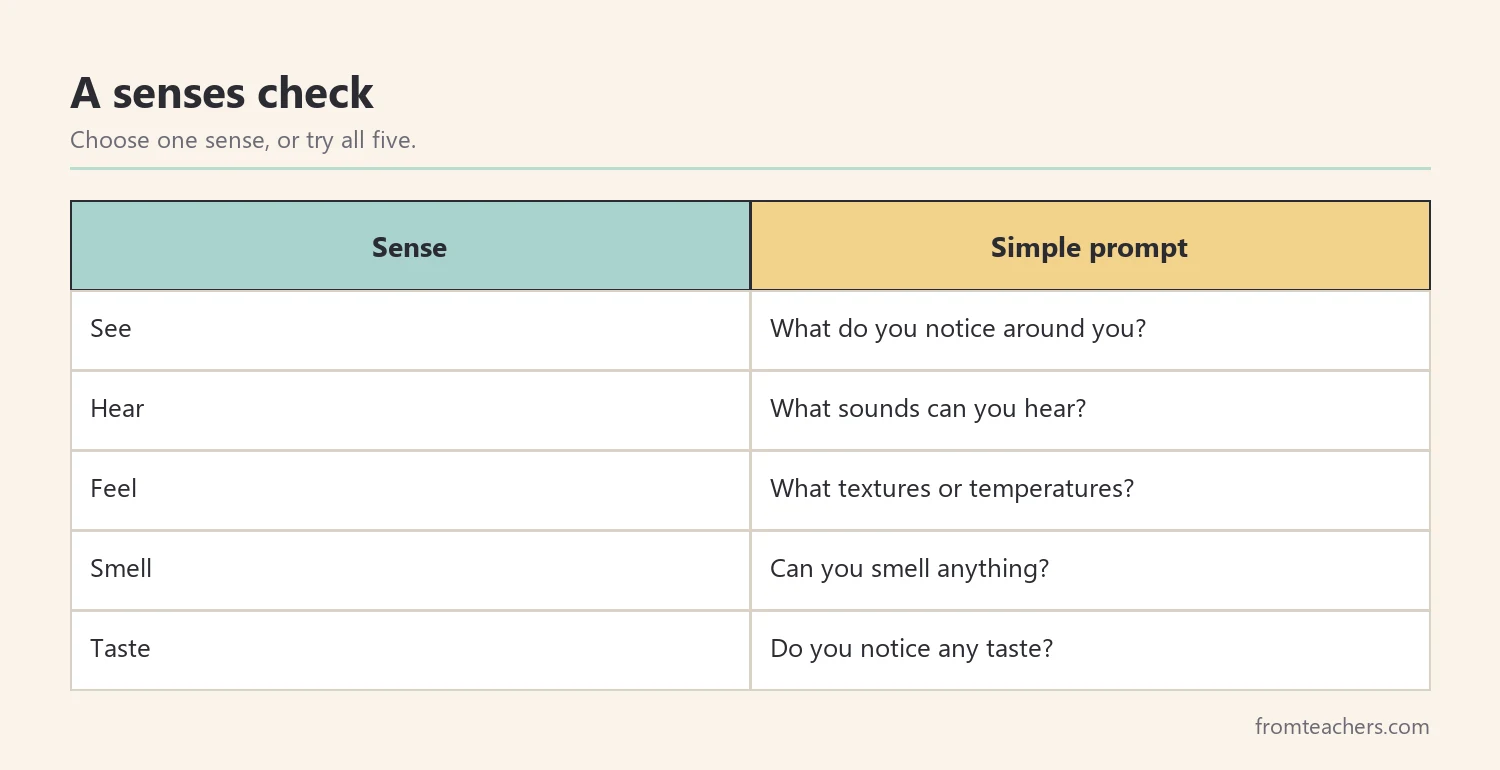
Next, invite students to focus on their senses. Ask them to choose one sense or try all five. What do you see around you? What sounds can you hear? What textures or temperatures can you feel? Can you smell anything? Do you notice any taste? Using the senses anchors attention in the present moment.
After that, move to feelings. Ask, “What emotion do you feel? Where do you feel it in your body?” Students can say “I feel ___” silently or out loud. Naming feelings can help the brain calm down and organize emotions.
Also, keep prompts short and concrete. “Find three blue things” works better than “notice your surroundings.” For younger students, one sense at a time is usually enough.
Meanwhile, accept every answer. If a student says “I feel nothing” or “I feel bored,” that is still noticing. Mindfulness steps are about awareness, not about feeling a certain way.
| Prompt | Sample student answer |
|---|---|
| What do you hear? | “The heater humming.” |
| What do you feel? | “The cold floor.” |
| Where is the feeling? | “My tummy feels tight.” |
Worked example. Ms. Reyes asks the class to listen for two sounds. Theo whispers, “Birds and the clock.” Then she asks how they feel. Theo says, “I feel mad in my hands.” She thanks him and moves on, without asking him to explain.
4. Practice the mindfulness steps for thoughts and phrases
Thoughts often pull students away from the moment. So, teach them to imagine thoughts like clouds passing in the sky. They do not need to judge them or chase them. They just notice and let them float away. This step aims to reduce stress by not getting stuck on every thought.
Then, add a short mindful phrase. Options include “I am here,” “I am safe,” “I am calm,” and “I can handle this moment.” A grounding phrase gives students something steady to hold onto when their mind feels busy.
Importantly, let students choose their own phrase. A phrase they picked feels personal, and they are more likely to use it outside of practice. Some students like to write it on a card for their desk.
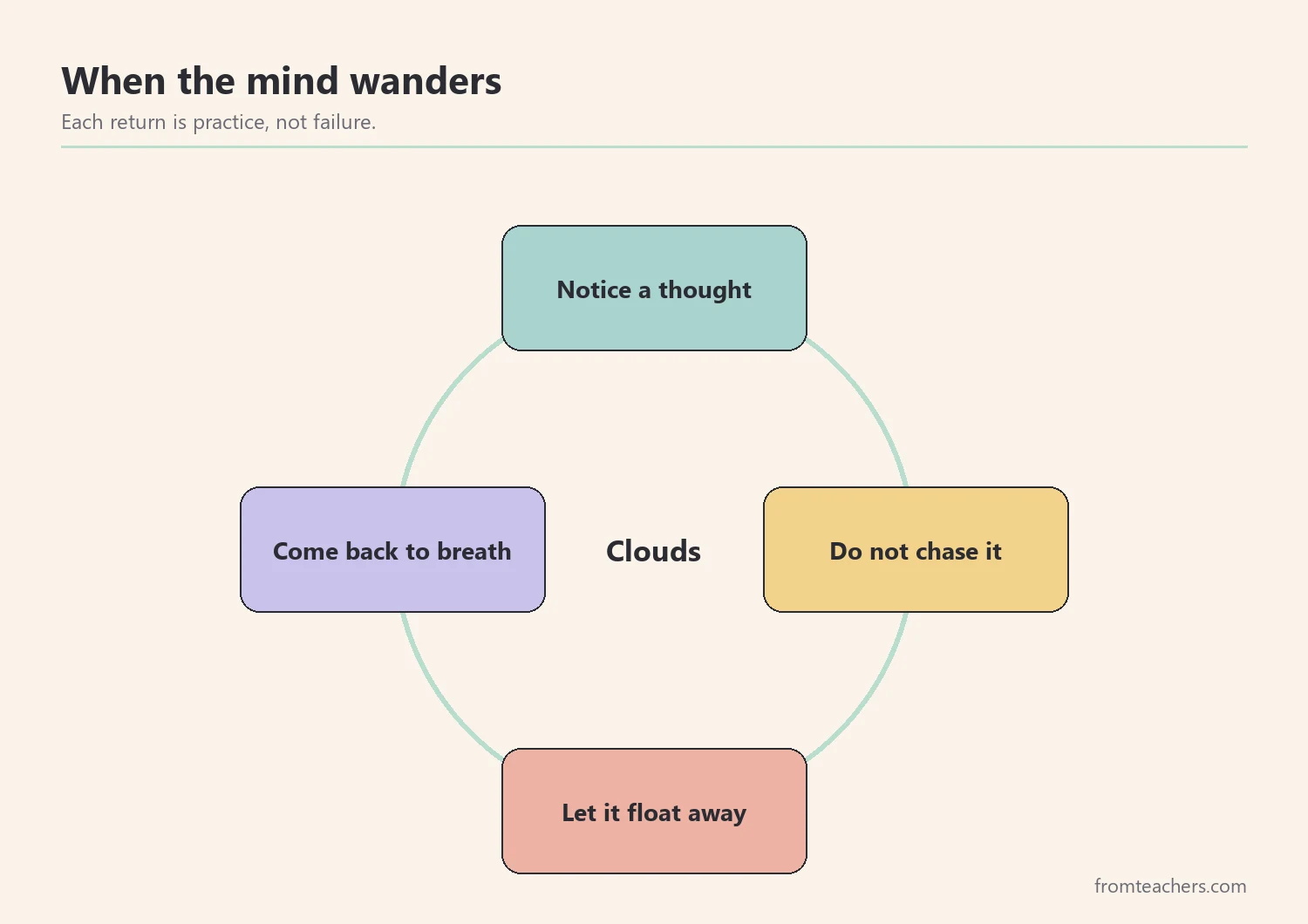
Also, normalize wandering. Minds wander, and that is expected. Each time a student notices the wandering and comes back, they are practicing the skill. These mindfulness steps work through gentle repetition, not through holding perfect focus.
Worked example. Theo says his mind keeps going back to the recess game. Ms. Reyes tells him that is fine: “Notice it, let it float by like a cloud, and come back to your breath.” Theo chooses “I am calm” as his phrase and writes it on a sticky note.
5. Return to the moment and to learning
The last of the mindfulness steps brings students back. Ask them to take one last deep breath, gently move their hands and feet, and focus on the next thing they need to do. The goal is to bring calm attention back into the activity or classroom.
Next, give a clear, simple next instruction right away. “Open your reading book to page 12” is better than a long explanation. The calm you built in practice carries straight into the lesson.
Also, keep the transition smooth. Avoid going from quiet breathing straight into a loud activity. A calm, short task, such as reading the first page or writing the date, helps the calm last longer.
In addition, notice how the class responds. Do students start work faster? Are fewer students upset? These small signs tell you whether the mindfulness steps are helping and when to practice them.
Worked example. After the final breath, Ms. Reyes says, “Wiggle your fingers and toes. Now open your reader to the bookmark.” Theo opens his book and starts reading with the group, instead of sitting with his head down as he often did before.
6. Build a daily habit with mindfulness steps
Finally, make practice regular. Mindfulness is a practice, not perfection. The more students use these steps, the easier it becomes to stay calm, focused, and present.
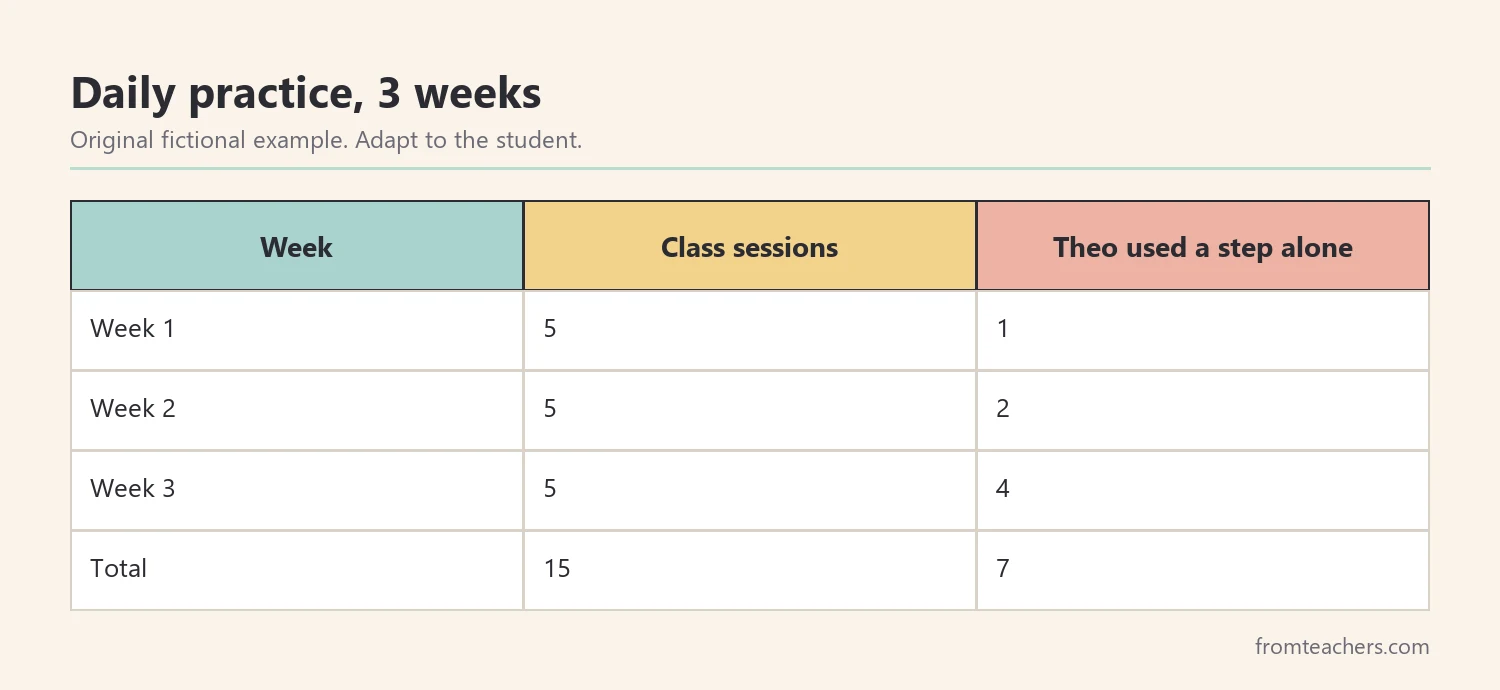
Then, track simple information for a few weeks. Count how many days you practiced, and note when students use a step on their own, such as taking a breath before a hard task. This shows whether the routine is becoming a habit.
Also, vary the practice to keep it fresh. One day focus on sounds, another day on feelings, another on a mindful phrase. Small changes keep interest high without changing the core routine.
In addition, share the routine with families. Parents can use the same mindfulness steps at bedtime or before homework. Using the same words at home and school helps students practice more often.
Worked example. Ms. Reyes practices 5 days each week for three weeks, so 15 sessions in total. Theo uses a step on his own 1 time in week 1, 2 times in week 2, and 4 times in week 3, which is 7 times in all. Most often, he takes one slow breath and says his phrase before a new task.
Using the steps in a calm corner
A calm corner is a natural home for the routine. Place the poster at eye level, with a cushion, a small timer, and a card for each student’s mindful phrase. Students can then use the mindfulness steps independently when they feel upset.
Also, teach how the corner works before anyone needs it. Practice visiting it, following the steps, and returning to the group. A corner with clear steps feels like a helpful tool rather than a punishment.
Adapting the routine for different students
Every class includes students with different needs. For a student who finds sitting still hard, allow standing, gentle rocking, or holding a soft object. For a student who uses few words, use picture cards for each step and let them point to a feeling instead of naming it.
Also, shorten the routine when needed. Some students may only manage the first two mindfulness steps at first, a pause and one breath. That is a real start, and you can add the senses check or a phrase later.
Finally, watch for signs of discomfort. If a step seems to upset a student, skip it and offer another. Check in with the family or the school team when you are unsure what will help.
Common mistakes and how to avoid them
- Sessions that run too long. Students lose interest. Fix: keep it to two to five minutes.
- Forcing eyes closed. Some students feel unsafe. Fix: allow open eyes and a soft gaze.
- Expecting perfect focus. Students feel they failed. Fix: treat each return of attention as success.
- Using it only as a consequence. Students see it as punishment. Fix: practice it daily, for everyone.
- Skipping the return step. Calm fades before learning starts. Fix: end with one clear next task.
Questions teachers and parents ask about mindfulness steps
What age are mindfulness steps suitable for?
Many young children can start with simple steps, such as one slow breath or listening for one sound. Older students can use the full routine. Adjust the length and the words to the group.
Is mindfulness religious?
In schools, mindfulness is usually taught as a simple attention and calming skill. The steps in this guide involve breathing, noticing senses and feelings, and returning to the task.
What if a student does not want to join?
Do not force it. Let the student sit quietly or simply listen. Many reluctant students join in once they see the routine is short and safe.
Can mindfulness replace other support?
No. It is one helpful classroom tool. Students with ongoing emotional or mental health needs should also get support from the school team or qualified professionals.
How quickly will I see a change?
It varies. Some classes settle faster within days, while for others it takes weeks. Consistent daily practice matters more than any single session.
Related reading: Essential Trauma-Informed Teaching Strategies for Modern Classrooms, Managing Sensory Overload: Practical Strategies for Autism and ADHD, and 5 Practical Teaching Tips to Boost Classroom Focus and Learning.
A companion resource for mindfulness steps:
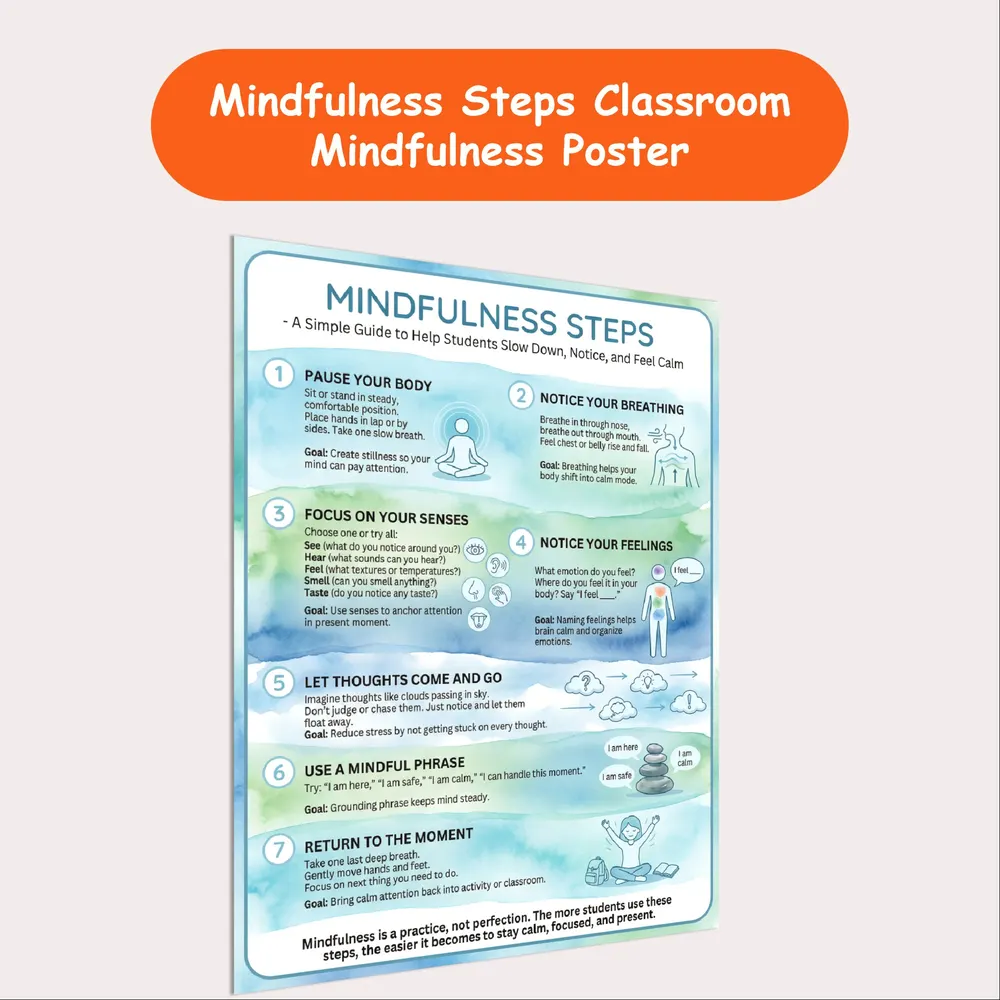
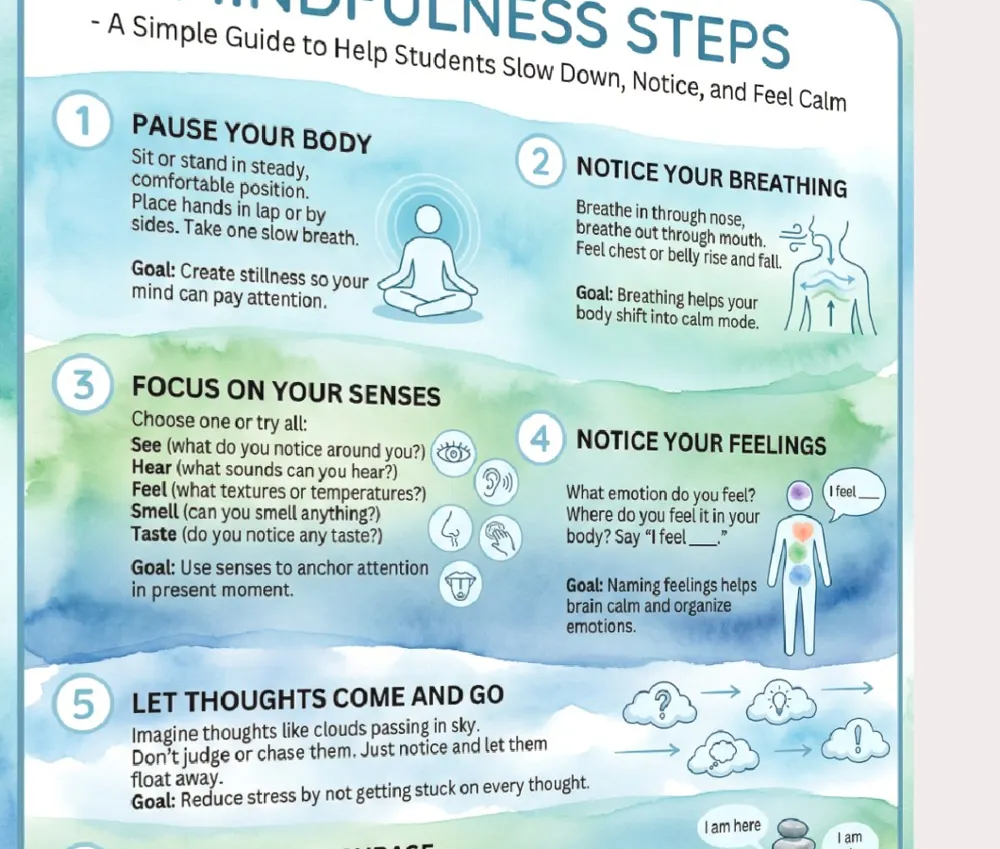
Mindfulness Steps Poster: a printable seven-step guide that helps students slow down, notice, and feel calm. Each step has a clear goal, which makes it a gentle visual for a classroom or calm down corner.
Sources and scope
- CASEL: a leading organization for social and emotional learning, including self-awareness and self-management.
- Greater Good Science Center, UC Berkeley: articles and practices related to mindfulness and well-being.
- HealthyChildren.org, American Academy of Pediatrics: parenting information on child development and emotional health.
- Understood.org: family-friendly information on attention, emotions, and learning differences.
This guide covers a short classroom mindfulness routine for students. It does not replace mental health care, therapy, or the advice of qualified professionals.
Key takeaways
- Teach mindfulness steps in short, predictable sessions.
- Start with a pause and slow breathing, modeled by an adult.
- Use senses, feelings, and a chosen phrase to stay grounded.
- End by guiding attention to one clear next task.
- Practice daily and track when students use steps on their own.








Leave a Comment