

Some students shut down the moment they hear “Take out your notebook.” Meanwhile, others argue, hide under desks, or leave the room. For many autistic students, students with PDA-style profiles, and students with trauma histories, the problem is not the task itself. In other words, it is the feeling of demand. A low-demand classroom is a way of teaching that reduces that pressure so students can feel safe enough to learn.
What Is a Low-Demand Classroom?
However, a low-demand approach does not mean no expectations. Instead, it means lowering the perceived pressure of expectations while keeping learning goals in place. Also, teachers adjust how requests are made, how much control students have, and how the environment feels, so that the nervous system stays regulated.
When a student feels threatened, the brain switches into fight, flight, or freeze. In that state, no amount of rewards or consequences will produce learning. That’s why regulation has to come first.
Signs a Student Needs a Low-Demand Classroom
- Refusing or avoiding even preferred activities when they are framed as instructions
- Using distraction, jokes, or excuses to escape requests
- Meltdowns or shutdowns after a build-up of small demands
- Frequent school refusal, stomach aches, or exhaustion on school mornings
- However, reward charts and consequences making behavior worse, not better
8 Practical Low-Demand Classroom Strategies
1. Use declarative language
Instead of “Put your shoes on,” try “I notice it’s almost time to go outside.” As a result, statements invite action without triggering a demand response.
2. Offer real choices
Give two or three acceptable options: “Do you want to start with the map or the questions?” Above all, choice restores a sense of control.
3. Reduce the number of instructions
First, audit your day. Which requests are truly necessary? For example, removing even five small demands can make the important ones possible.
4. Lead with connection
Greet, joke, or share an interest before you ask for anything. After all, a regulated, connected student is far more likely to engage.
5. Make tasks feel like play or curiosity
“I wonder how many words we could find in this sentence” feels very different from “Complete the worksheet.”
6. Build in predictable regulation breaks
Breaks should be scheduled, not earned. On the other hand, taking them away as punishment raises stress and makes behavior worse.
7. Lower the audience
Many students mask or panic when watched. Also, allow answers on sticky notes, whiteboards, or privately with you.
8. Repair after hard moments
After a meltdown, skip the lecture. Next, reconnect, help the student feel safe, and plan together for next time once everyone is calm.
Is a Low-Demand Classroom Fair to Other Students?
Fair does not mean everyone gets the same thing. In fact, it means everyone gets what they need to succeed. Most classmates quickly understand that some students need different supports, just as some students need glasses. Many low-demand strategies, like choice and declarative language, actually help the whole class.
Building a Low-Demand Classroom With Families
Students who struggle with demands often hold it together at school and fall apart at home, or the reverse. Share what works in class, ask what works at home, and agree on consistent language. As a result, a shared plan reduces stress for the child and the adults around them.
Ready-to-use resource:
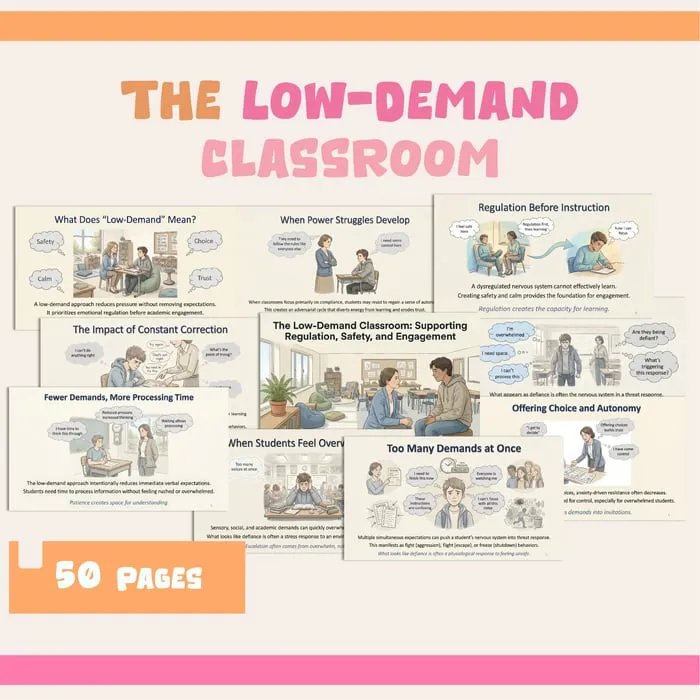
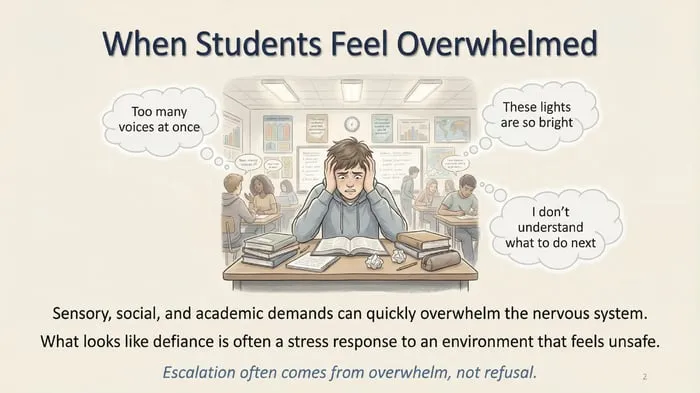
The Low-Demand Classroom: Supporting Regulation, Safety, and Engagement gives you step-by-step strategies, language scripts, and planning tools to reduce pressure while keeping students learning.
Related reading: Understanding Demand Avoidance and School Refusal and Meltdowns vs Tantrums: A Guide to Understanding and Responding.
Also on FromTeachers:
Key Takeaways
- Low-demand does not mean low expectations. Instead, it means lower pressure.
- In short, regulation comes before learning.
- Declarative language, choice, and connection are your strongest tools.
- Finally, breaks should be planned, never taken away as punishment.









Leave a Comment