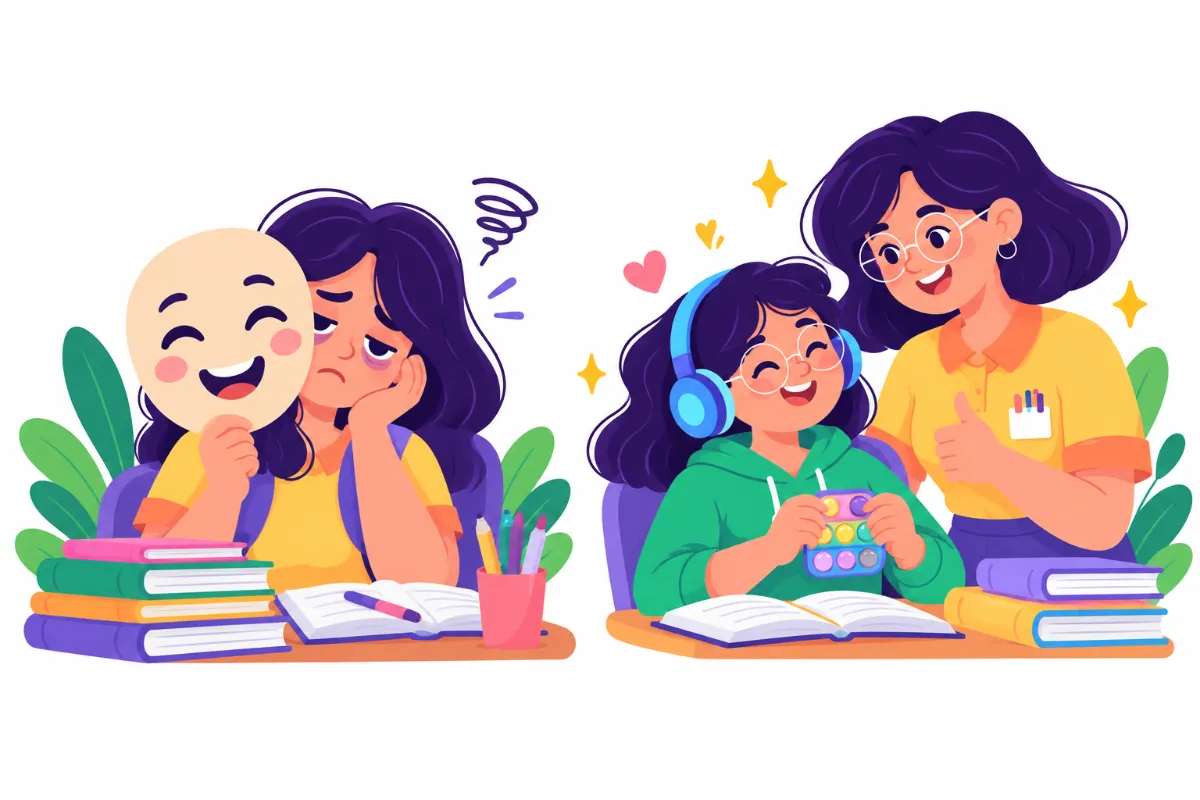

She follows every rule, never causes trouble, and gets good grades. Then she goes home and melts down for two hours. If that sounds familiar, you may be seeing autistic masking. In fact, masking is one of the most overlooked reasons autistic students, especially girls and quiet students, burn out without anyone at school noticing.
What Is Autistic Masking?
Masking (also called camouflaging) is when an autistic person hides or suppresses their natural traits to fit in. Also, it can be conscious or automatic, and it usually develops after years of being corrected, teased, or misunderstood.
For example, masking can look like:
- Forcing eye contact even when it is painful
- Copying classmates’ facial expressions, jokes, or tone of voice
- Suppressing stimming such as rocking, hand-flapping, or fidgeting
- Rehearsing conversations in advance
- Hiding sensory distress from noise, lights, or crowded hallways
- Agreeing with others to avoid conflict (people-pleasing)
Why Autistic Masking Is So Exhausting
However, masking uses enormous mental energy. As a result, the student is learning the lesson and constantly monitoring and adjusting their behavior. Over time this leads to anxiety, depression, shutdowns, and autistic burnout: a state of deep exhaustion and loss of skills that can last weeks or months.
Because masking students look fine at school, they are often denied support, and parents who report after-school meltdowns are sometimes not believed.
Signs of Autistic Masking in Students
- Big differences between behavior at school and at home
- Extreme tiredness after school, weekends spent recovering
- Perfectionism and intense fear of making mistakes
- Rarely asking for help, even when confused
- Frequent headaches or stomach aches, especially on Monday mornings
- Few genuine friendships despite appearing social
How Teachers Can Reduce Autistic Masking at School
Make it safe to be different
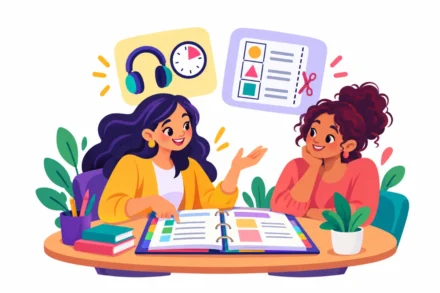
Allow stimming, fidgets, and movement. Also, never require eye contact. When students see that differences are accepted, they need to hide less.
Offer quiet ways to ask for help
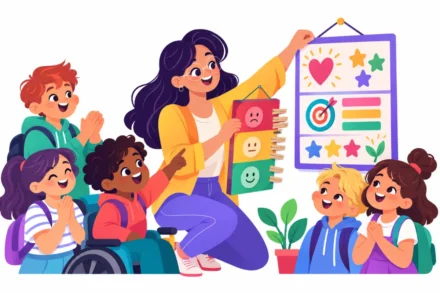
For example, help cards, a check-in signal, or a private chat channel let students ask without being watched.
Reduce sensory load
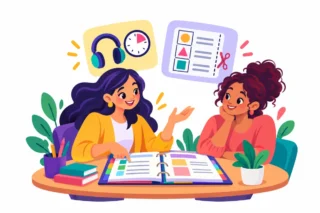
Next, provide a calm corner, headphones, or permission to leave early for transitions to avoid crowded hallways.
Check in privately and regularly
Finally, ask open questions: “What part of today felt hardest?” Above all, masking students rarely volunteer struggles in front of others.
Believe families
If a parent says their child is struggling at home, take it seriously even if school looks smooth. The school day may be the cause of the after-school collapse.
Teach self-advocacy
Help students name their needs and practice simple scripts like “I need a break” or “Can you explain that a different way?”
Ready-to-use resource:
Autism Masking & People-Pleasing: Recognizing Burnout in Quiet Students helps teachers spot masking early, understand the link to burnout, and put practical supports in place.
Related reading: Understanding Autistic Burnout and School Exhaustion and Managing Sensory Overload: Strategies for Autism and ADHD.
Also on FromTeachers:
Key Takeaways
- In summary, masking means hiding autistic traits to fit in, and it is exhausting.
- “Fine at school, falling apart at home” is a major warning sign.
- In short, acceptance, sensory support, and private check-ins reduce the need to mask.
- Above all, listen to families. After all, they often see what school does not.




Leave a Comment