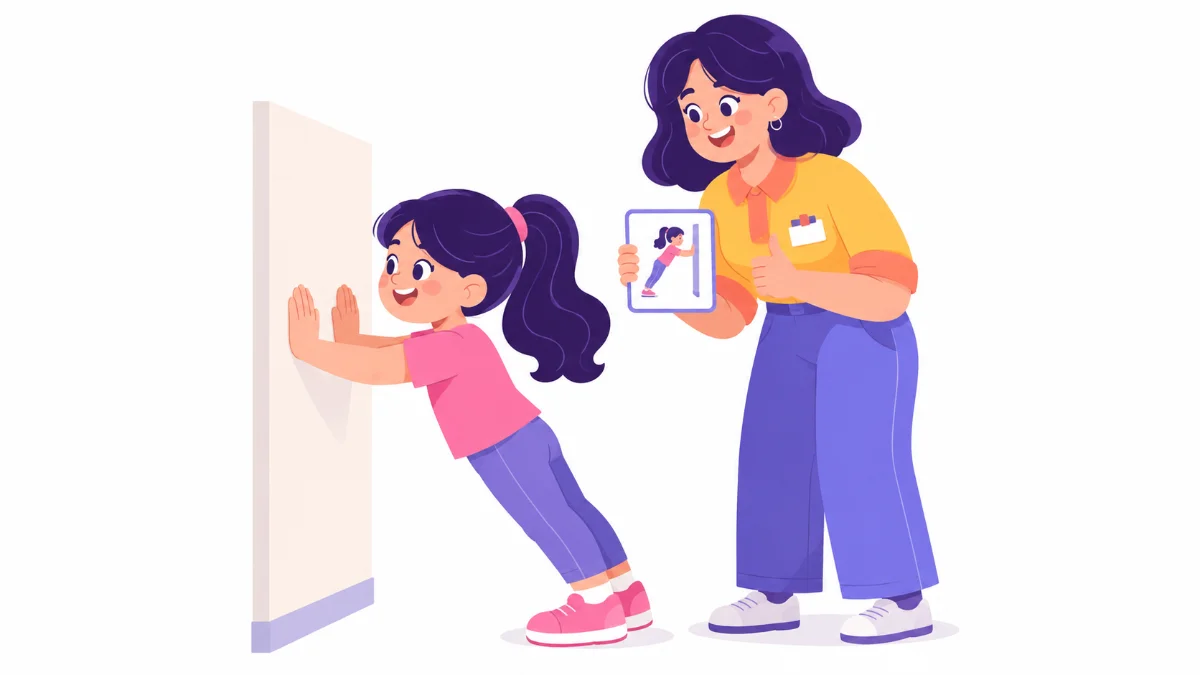

Healthy coping skills for kids give children safe ways to handle big feelings, stress, and overwhelming moments. Picture a student who slams a book shut, pushes a chair, and storms toward the door after a hard math page. The feeling is real. What the child needs is a safer way to let it out and settle down.
This guide gives you five steps to teach healthy coping skills for kids at school and at home: explain what safe coping means, offer a small menu of choices, practice when calm, prompt during hard moments, and reflect afterward. By the end, you will know how to turn a coping poster into a routine children actually use.
Examples are fictional. Adapt to the student’s goals and agreed supports. This is guidance, not a diagnosis.
At a glance
- Safe coping choices help children calm down without hurting themselves or others.
- Different feelings and children need different tools, so offer a menu.
- Skills are learned when calm, not in the middle of a meltdown.
- Short, calm prompts help a child pick a tool in the moment.
- Reflection afterward builds independence over time.
1. Explain what healthy coping skills for kids look like
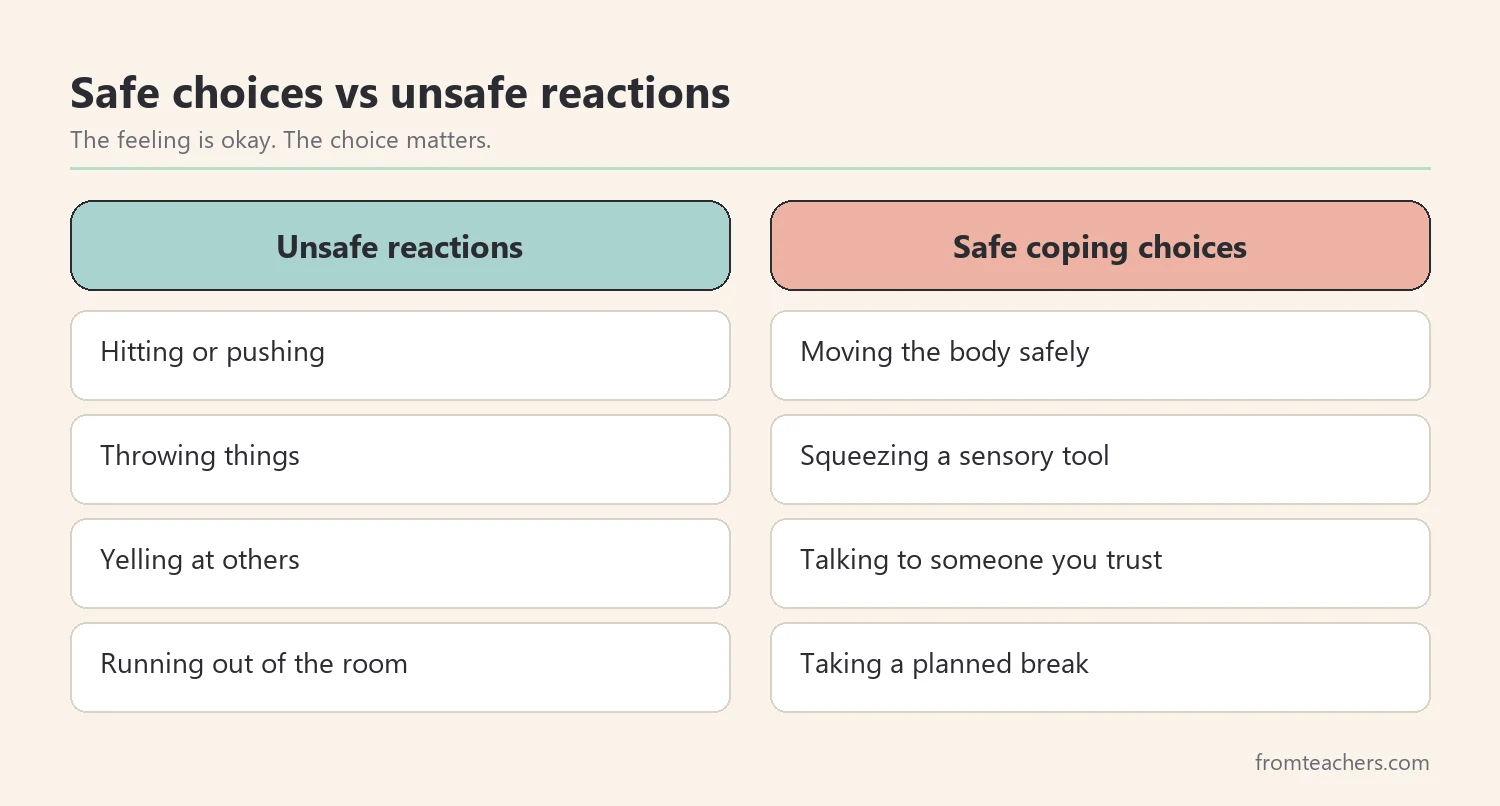
First, give children a clear idea of the goal. Coping is anything we do to handle a hard feeling. Some ways of coping are safe and helpful, such as taking a break or talking to someone. Others, like hitting, throwing things, or hiding a problem, may feel good for a moment but cause new problems.
Next, keep the message simple and kind. Every person has big feelings, and every person needs coping tools. The aim is not to stop feelings. Instead, the aim is to choose a way through the feeling that keeps everyone safe.
Also, connect coping to the body. Many children notice their body before they can name a feeling. A hot face, tight fists, or a racing heart can be the signal to choose a coping tool. Teaching these clues helps children act earlier, before the feeling grows too large.
Avoid shame
In addition, avoid shame. A child who throws a pencil does not need a lecture about bad behavior in that moment. Later, when calm, you can talk about what happened and which safe choice might help next time. Shame tends to shut down learning, while calm curiosity keeps the door open.
Then, involve the adults around the child. Teachers, parents, counselors, and support staff should use the same simple words, such as “safe choice” and “calm down tool.” Consistent language makes healthy coping skills for kids easier to learn, because children hear the same message everywhere.
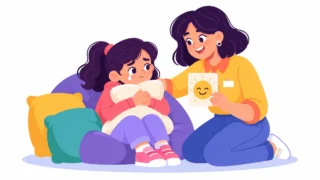
Worked example. Lena is a fictional grade 5 student who often pushes her chair back and leaves her seat when work feels hard. Her teacher, Ms. Owens, meets with her during a calm moment and says, “Everyone gets frustrated. Let’s find some safe choices that help your body feel better.”
2. Offer a menu of healthy coping skills for kids
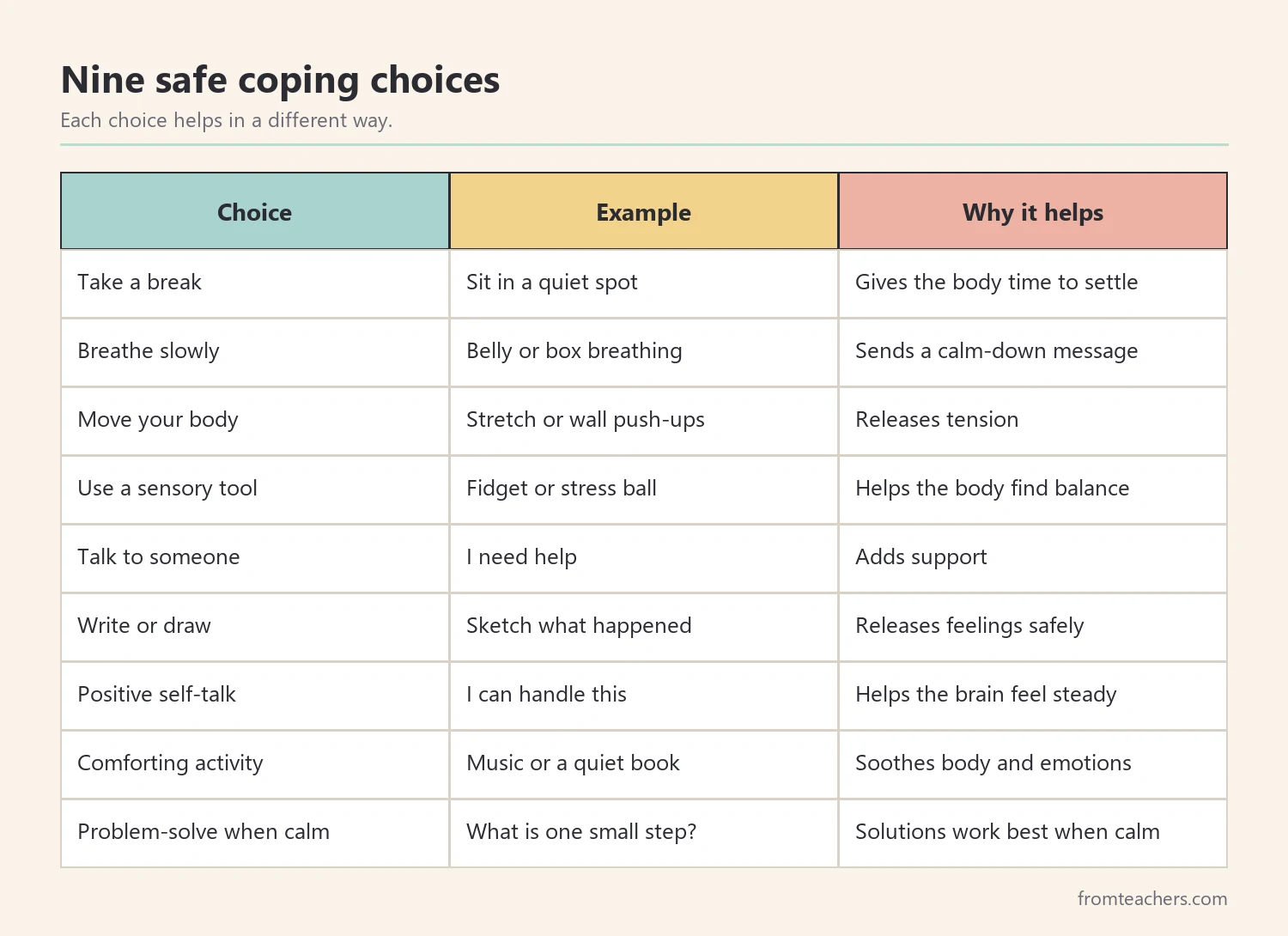
Next, give children options, because healthy coping skills for kids are never one size fits all. No single strategy works for every child or every feeling. A menu lets a child pick what fits their body and the situation. Nine choices is a practical number for a classroom poster, while a personal card might show only three or four favorites.
For example, useful categories include taking a break in a quiet spot, breathing slowly, moving the body, using a sensory tool, talking to someone you trust, writing or drawing feelings, positive self-talk, a comforting activity, and problem-solving once calm. Each one works in a slightly different way.
Also, explain why each choice helps. Children are more likely to use a tool when they understand it. Slow breathing sends a calm-down message to the brain. Movement releases tension. Talking to someone adds support. Short “why it helps” notes turn a list into real learning.
Use a visual menu
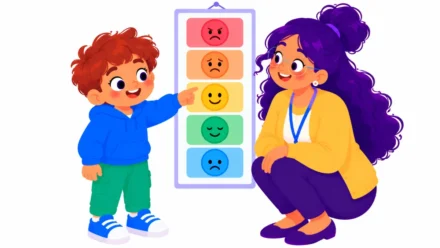
In addition, a visual menu saves time. The safe coping choices poster shows nine healthy ways to handle big feelings, each with a short “why it helps” note, which makes it easy to post in a calm down corner or near the classroom door. Students can point to a choice when words are hard.
Meanwhile, let children choose their favorites. After introducing the full menu, ask each child to pick three choices that feel right for them. These become their personal coping plan, which is easier to remember during a hard moment than a long list.
Worked example. Ms. Owens reviews the nine choices with Lena. Lena picks three: move your body with wall push-ups, use a sensory tool such as a stress ball, and write or draw her feelings. Ms. Owens writes them on a small card that Lena keeps in her desk.
3. Practice healthy coping skills for kids when calm
Next, practice healthy coping skills for kids before you need them. A child in the middle of a big feeling rarely learns something new. The thinking part of the brain is busy, so skills need to be familiar already. Short, calm practice sessions build the habit.
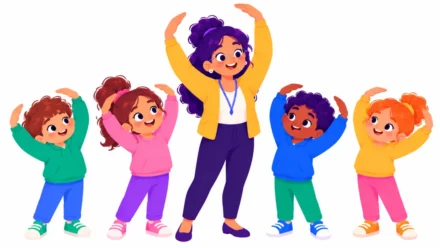
First, schedule practice. Two or three minutes at the start of the day, after recess, or before a test works well. Practice one choice at a time. For example, try belly breathing on Monday, wall push-ups on Tuesday, and positive self-talk on Wednesday.
Also, make it playful. Children can rate each tool with a thumb up or down, or draw how their body felt before and after. Practice feels less like a lesson and more like discovering what works.
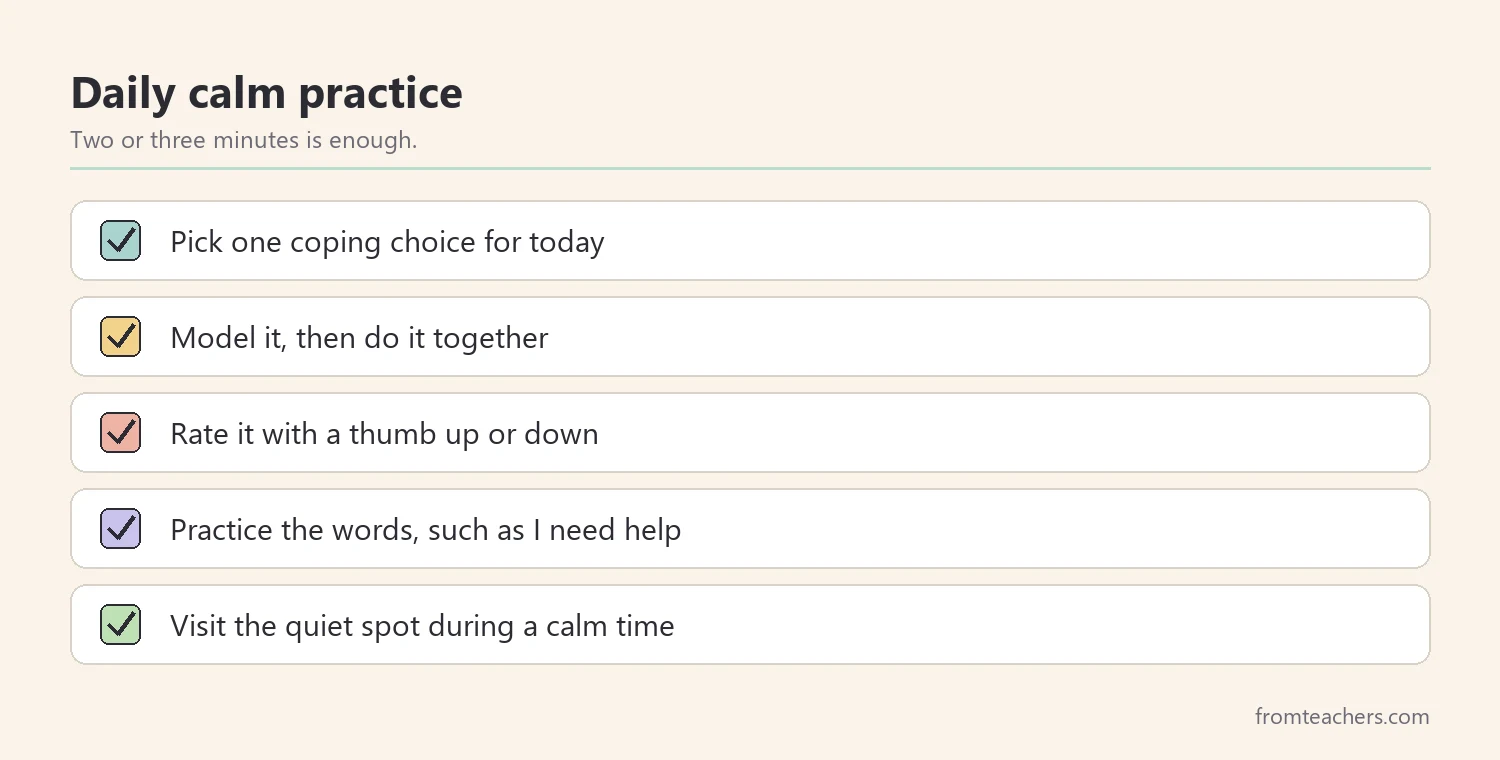
In addition, practice the words, not only the actions. Phrases such as “I need help,” “Can I talk to you?” and “I can handle this” are healthy coping skills for kids too. Children who rehearse these words find them easier to use when upset.
Then, practice in the real place. If a calm down corner or quiet spot is part of the plan, walk there together during a calm time. Show where the tools are kept and how to return to class. Familiar places feel safer during hard moments.
Worked example. For two weeks, Ms. Owens leads a three-minute coping practice each morning. Lena practices wall push-ups, squeezing a stress ball, and sketching a quick drawing of her mood. She tells Ms. Owens that wall push-ups work best when she feels “fizzy.”
4. Prompt a coping choice during hard moments
Next, plan what adults will say when a big feeling arrives, since healthy coping skills for kids work best with calm adult support. In these moments, less talking is usually better. A calm voice, a short prompt, and a visual cue help a child shift from reacting to choosing.
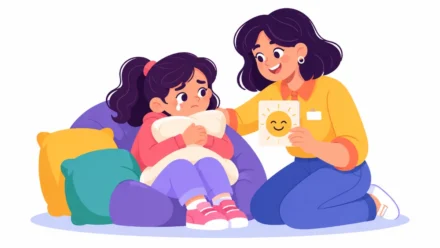
First, notice early signs. Watch for the body clues you taught in step 1. When you see them, move in quietly and say, “I see your body is getting tight. Which safe choice will you use?” Pointing to the poster or the child’s card helps.
Also, offer two choices instead of nine. A child who is overwhelmed may freeze when faced with a full menu. “Push-ups or stress ball?” is easier to answer. The choice gives the child some control while keeping the options safe.
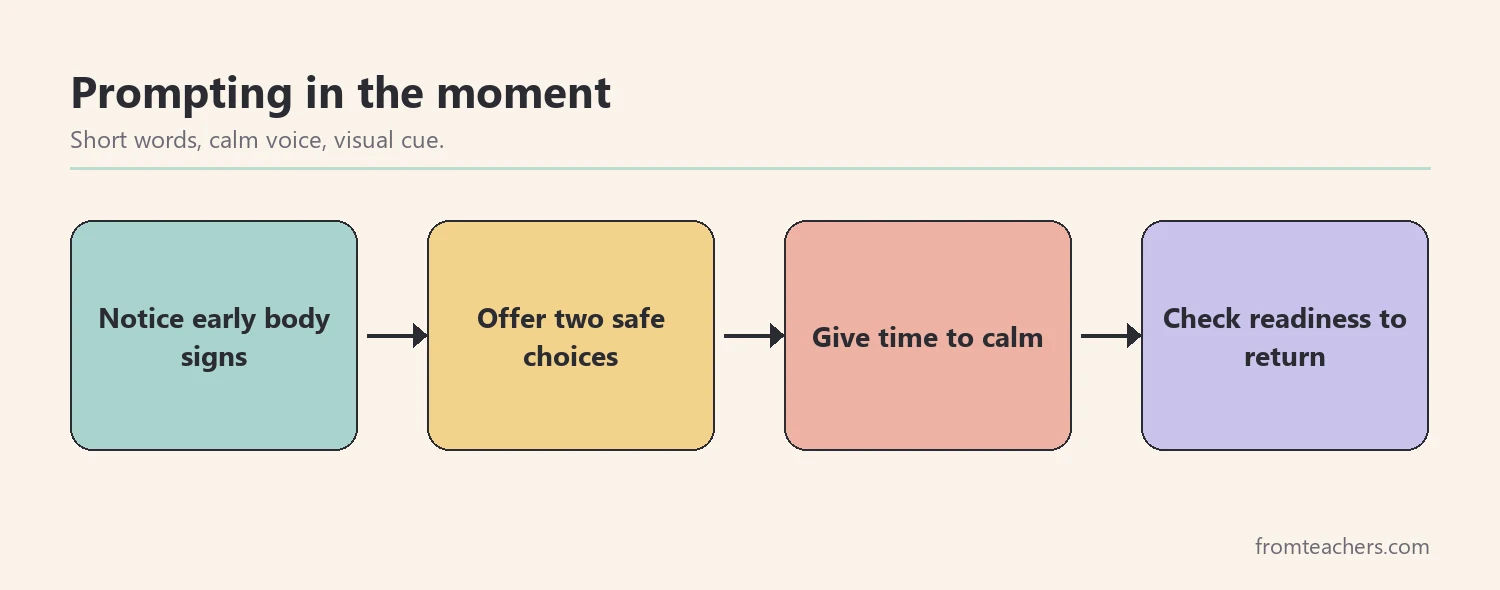
In addition, give time. Coping takes a few minutes, and pushing a child back to work too early can restart the feeling. Use a timer or a simple check-in such as “Tell me when your body feels ready.”
Meanwhile, keep everyone safe. If a child is at risk of hurting themselves or others, follow your school’s safety procedures and the child’s plan. Coping prompts support regulation, but they do not replace safety plans agreed by the team.
Worked example. During a fractions lesson, Ms. Owens sees Lena’s fists tighten. She quietly taps Lena’s card and asks, “Push-ups or stress ball?” Lena chooses push-ups at the back wall, then squeezes the ball for two more minutes. After about five minutes, she returns to her seat.
5. Reflect on healthy coping skills for kids and track progress
Finally, help children learn from each hard moment. Once the child is calm, a short reflection builds problem-solving skills. Ask three questions: What happened? What did you need? What is one small step you can take now?
First, keep reflection brief and friendly. It is not a punishment or a long talk. Two or three minutes is enough. Praise the safe choice specifically: “You chose push-ups instead of pushing your chair. That was a safe choice.”
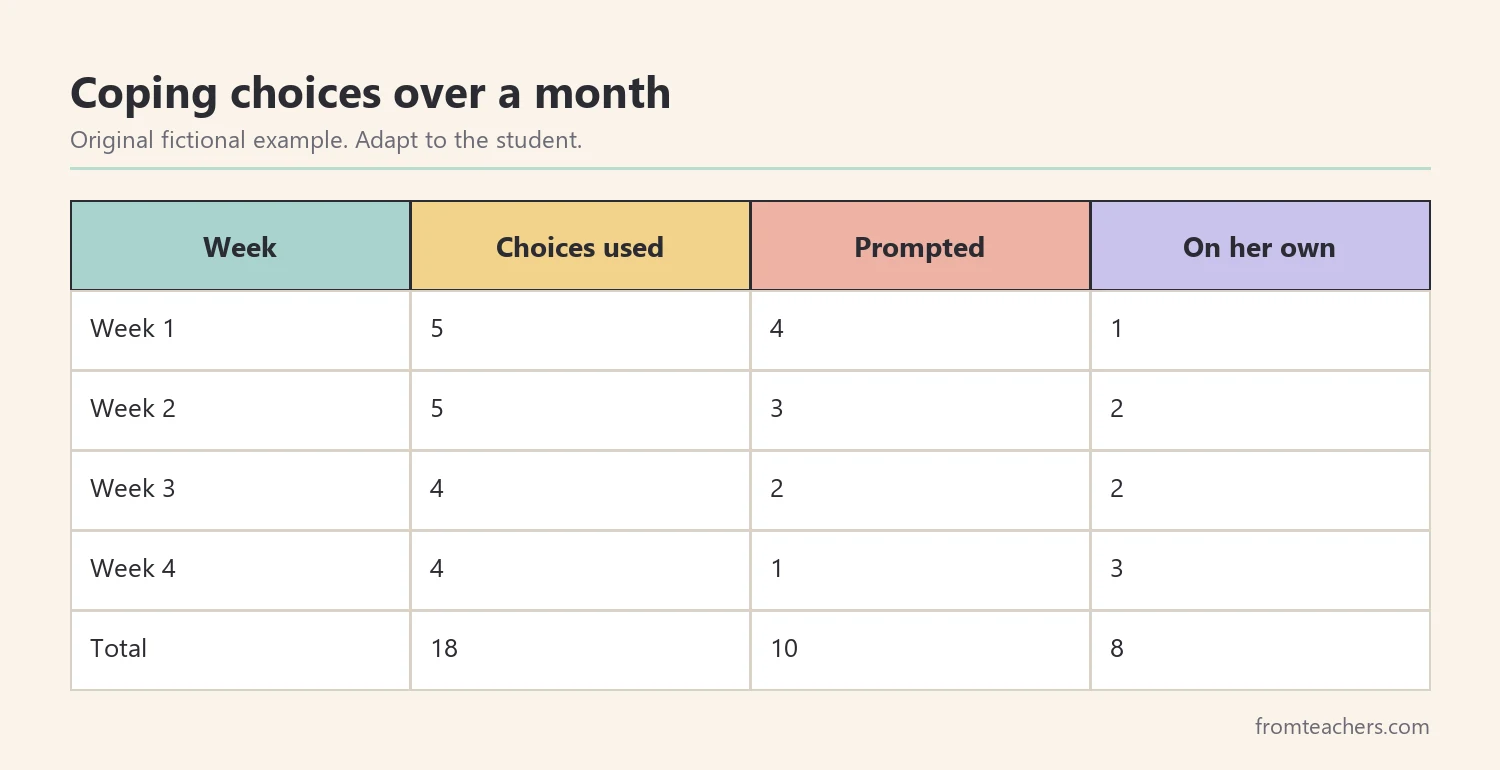
Also, track a few simple numbers. Count how many times an adult prompted a coping choice and how many times the child chose one independently. Over weeks, the independent number should grow, which shows that healthy coping skills for kids are becoming habits.
In addition, share wins with families. A short note such as “Lena used a safe choice on her own today” encourages the child and helps families use the same language at home.
Then, update the plan so the healthy coping skills for kids still fit the child. If a tool never works, swap it out. If a new trigger appears, add a matching choice. Coping plans grow as children grow.
Worked example. Ms. Owens records Lena’s coping choices for four weeks. In week 1, Lena used 5 coping choices, 4 prompted and 1 on her own. Week 2 had 5 choices, 3 prompted and 2 on her own. In week 3, 4 choices, 2 prompted and 2 on her own. By week 4, 4 choices, 1 prompted and 3 on her own. Across the month, that is 18 coping choices, 10 prompted and 8 independent.
Supporting coping at home
Families can use the same menu of healthy coping skills for kids at home. Ask your child which three choices help most, and post them on the fridge or in their room. Practice one together when everyone is calm.
Also, model coping out loud. Saying “I’m frustrated, so I’m going to take three slow breaths” shows children that adults use healthy coping skills too.
Common mistakes and how to avoid them
- Teaching healthy coping skills for kids only during meltdowns. The child cannot learn then. Fix: practice daily when calm.
- Offering too many options at once. The child freezes. Fix: offer two choices in the moment.
- Talking too much. Words add pressure. Fix: use a calm voice, a short prompt, and a visual.
- Rushing back to work. The feeling returns. Fix: give time and check readiness.
- Using coping as a consequence. Tools start to feel like punishment. Fix: present them as helpful choices.
- Never updating the plan. Tools stop fitting. Fix: review choices every few weeks.
Questions teachers and parents ask about healthy coping skills for kids
At what age can children learn coping skills?
Teaching healthy coping skills for kids can start early. Young children can learn simple tools such as slow breathing, hugging a soft toy, or asking for help. Older students can add journaling, self-talk, and problem-solving. Adjust the language and visuals to the child’s age and needs.
What if my child refuses every coping choice?
Refusal is common at first. Try again during a calm time, let the child choose their own favorites, and model the tools yourself. If refusal continues, talk with the school counselor or the child’s support team.
Is taking a break the same as avoiding work?
Not when it is planned. A short, structured break with a clear return helps a child reset. Use a timer and a simple check-in so the break ends with a return to learning.
How many coping choices should a child have?
A class poster can show a full menu, such as nine choices. However, most children do well with a personal plan of three favorites that they know well.
When should we ask for more help?
If big feelings happen very often, last a long time, or put the child or others at risk, talk with the school counselor, the child’s team, or a health professional for further support.
Related reading: Meltdowns vs Tantrums: A Guide to Understanding and Responding, Managing Sensory Overload: Practical Strategies for Autism and ADHD, and Building Stronger School Counseling Programs: A Framework for Student Success.
A companion resource for healthy coping skills for kids:
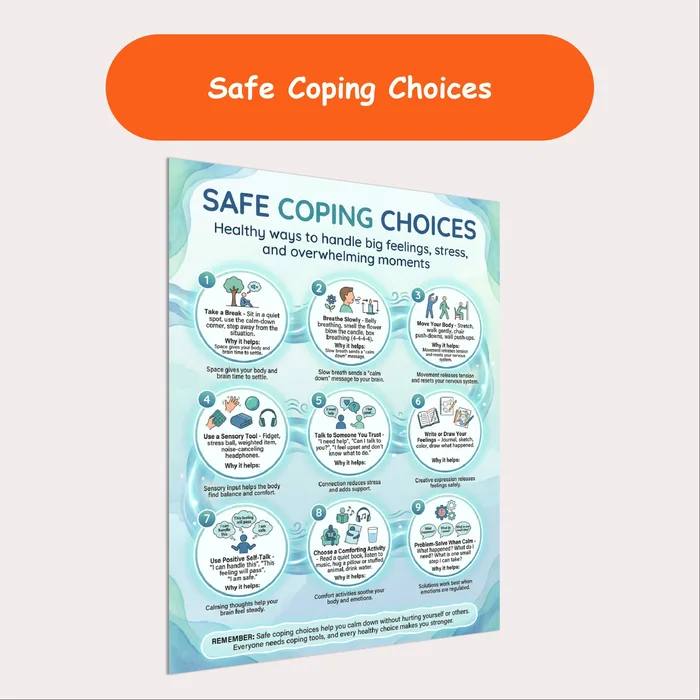
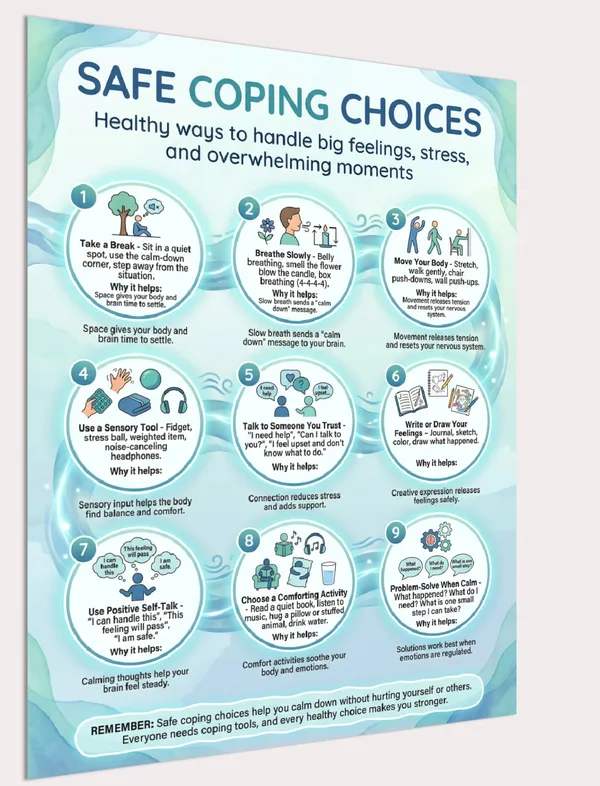
Safe Coping Choices Poster: nine healthy ways to handle big feelings, stress, and overwhelming moments, each with a “why it helps” note, for classrooms and calm down corners.
Sources and scope
- CASEL: resources on social and emotional learning, including self-management skills.
- Centers for Disease Control and Prevention (CDC): general information on children’s mental health and well-being.
- American School Counselor Association: information on the role of school counselors in student well-being.
- Understood.org: family-friendly information on learning and thinking differences and emotions.
This guide covers everyday classroom and home strategies for teaching safe coping choices. It does not replace mental health care, diagnosis, safety plans, or the decisions of a child’s support team.
Key takeaways
- Healthy coping skills for kids keep everyone safe during big feelings.
- Offer a menu, then help each child pick three favorites.
- Practice tools daily when calm.
- In the moment, use a short prompt and two choices.
- Reflect afterward and track independent choices over time.


Leave a Comment