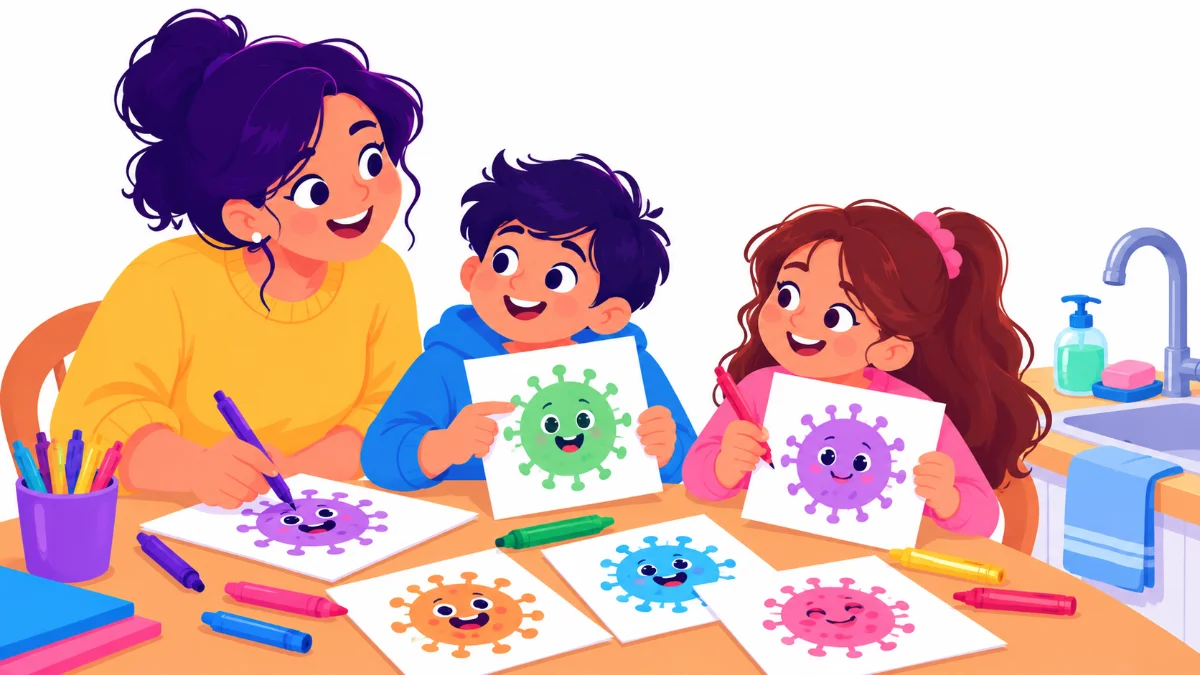

Good germ facts for kids turn an invisible topic into something children can picture, laugh about and actually use. Picture a seven-year-old at the bathroom sink, splashing his fingers for two seconds and calling it done. You explain germs, and he asks, “But where are they? I can’t see any.” That is the problem with germs: they are real, but you cannot point to them.
This list gives parents and homeschool families twelve accurate facts about germs, grouped in a learning order that works well for ages 6 to 11. For each fact, you will find a simple explanation, why it matters, and a quick way to show it at home. You will also meet Leo, a fictional seven-year-old, and his sister Ava, age ten.
Examples are fictional. This is general science learning, not medical advice. Ask your doctor about any health concerns.
At a glance
- Germs are tiny living things (or particles) too small to see without a microscope.
- There are several main types, and many are helpful, not harmful.
- Soap and running water for at least 20 seconds remove germs from hands.
- Kids remember facts better when germs become characters with personalities.
- Keep the message calm: germs are interesting, not scary.
How we ordered these facts
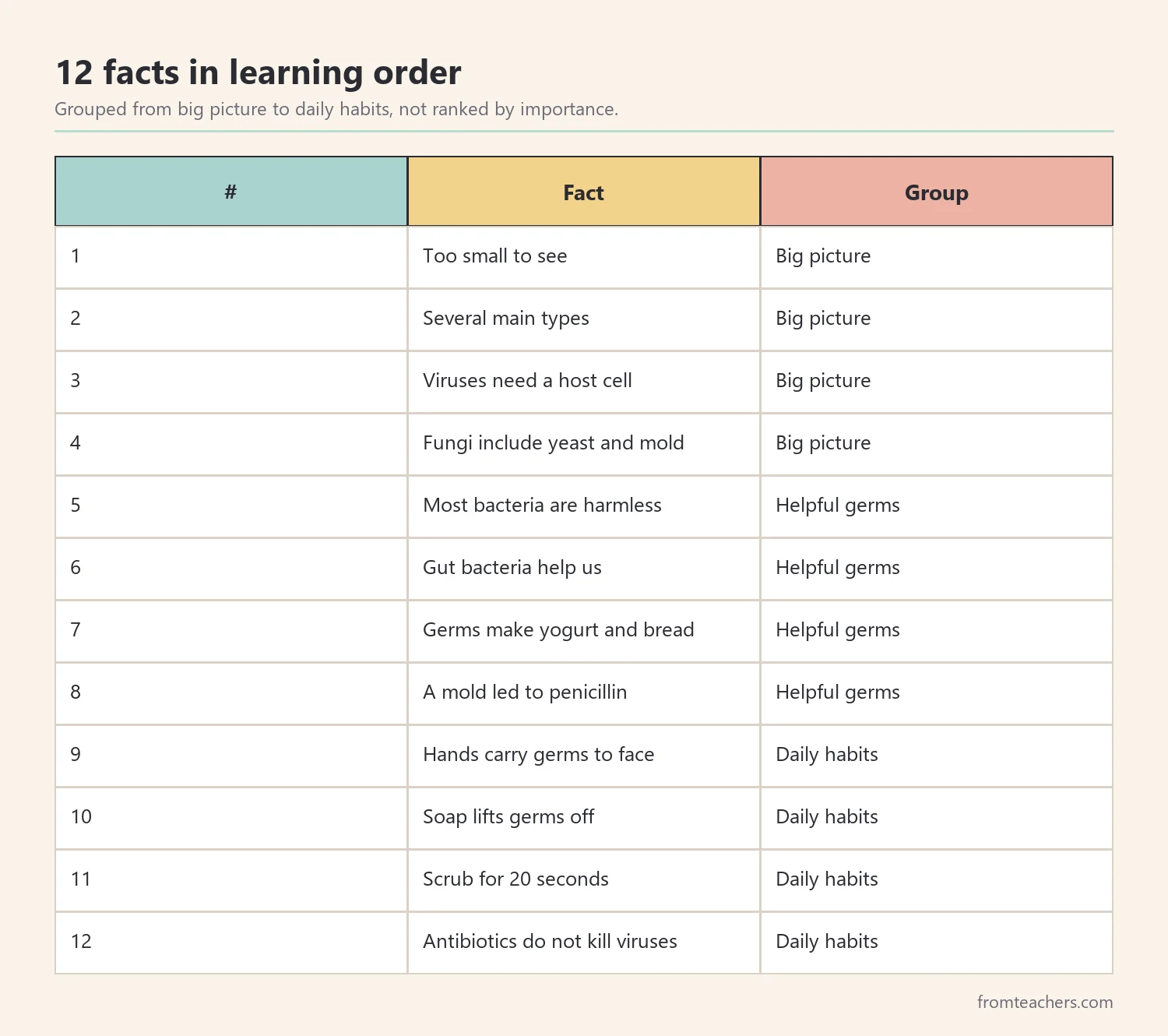
We did not rank the facts by importance, because every child needs a slightly different starting point. Instead, we grouped them in the order that makes the most sense to learn: first the big picture of what germs are, next the helpful germs most children never hear about, and last the daily habits that keep harmful germs away.
All facts are general science that you can check with sources such as the CDC and KidsHealth. When a fact is simplified for children, we say so.
1. Germs are too small to see
The fact: germs are so tiny that you need a microscope to see most of them. Thousands could fit on the period at the end of this sentence.
Why it matters: once children understand that “invisible” does not mean “not there,” handwashing starts to make sense.
Try it at home: sprinkle a little pepper on a plate of water and touch it with a soapy finger. The pepper scatters. It is not a germ test, but it shows that soap changes things we cannot always see.
2. There are several main types of germs
The fact: the main groups children learn about are bacteria, viruses, fungi and parasites. Some science resources also add prions, which are unusual misfolded proteins.
Why it matters: naming types helps kids understand why a cold, a stomach bug and athlete’s foot are different problems.
Try it at home: give each type a character. This is exactly the idea behind the If Germs Were Humans science resource, which turns bacteria, viruses, fungi, parasites and prions into characters with job titles, catchphrases and real facts. Leo decided bacteria were “the crowd at a stadium” because there are so many of them.
3. Viruses need a living cell to multiply
The fact: a virus cannot make copies of itself on its own. It needs to get inside a living cell, such as a cell in your nose, to multiply. This is a simplified version, but it is accurate for children.
Why it matters: it explains why colds spread from person to person.
Try it at home: ask your child to act as a virus that “borrows” a factory. Ava drew a cell as a cookie factory and a virus as a sneaky visitor who uses the machines to make more of itself.
4. Fungi include yeast and mold
The fact: fungi are a big group that includes mushrooms, yeast and mold. Some fungi can cause infections, such as athlete’s foot.
Why it matters: children see mold on old bread and yeast in baking. Connecting those to “germs” makes the topic real.
Try it at home: place a slice of bread in a sealed bag for a few days and observe it, but do not open the bag once mold grows. Throw it away sealed.
5. Most bacteria are harmless
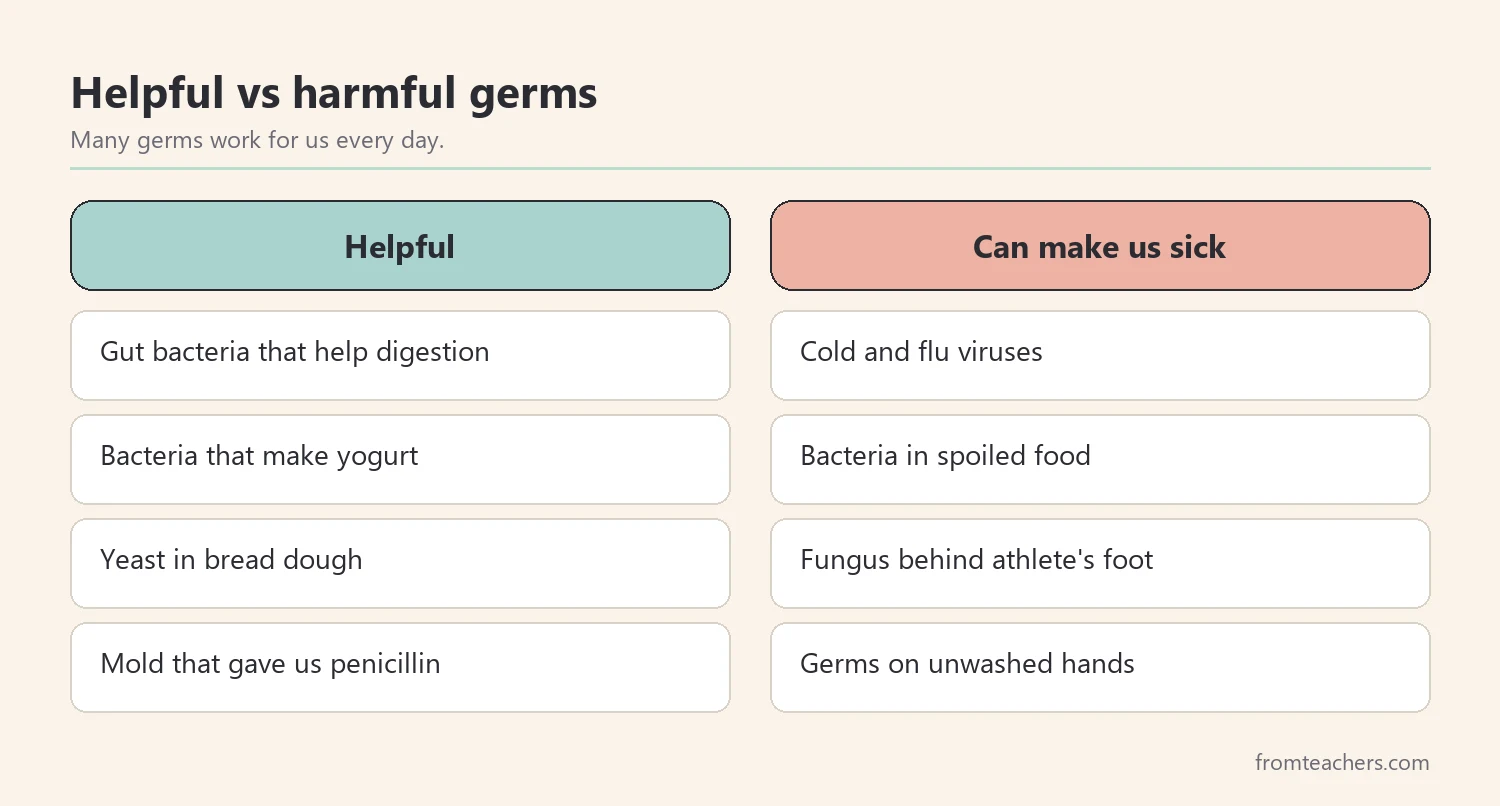
Among all germ facts for kids, this one surprises children the most.
The fact: only a small share of bacteria make people sick. Many bacteria live harmlessly on our skin and inside our bodies.
Why it matters: children who think all germs are bad can become anxious. A balanced message keeps learning calm.
Try it at home: ask, “If most bacteria are harmless, why do we still wash hands?” Leo answered: “Because we can’t tell which ones are the bad guys.” That is a great answer.
6. Gut bacteria help your body
The fact: the bacteria living in your intestines help break down food and support your health.
Why it matters: this fact shows children that their bodies work together with tiny helpers.
Try it at home: draw a “gut city” where helpful bacteria are workers. Keep it simple and positive.
7. Germs help make yogurt, cheese and bread
The fact: bacteria turn milk into yogurt and help make cheese. Yeast, a fungus, makes bread dough rise, and sourdough also uses helpful bacteria.
Why it matters: food is the easiest way to show that some germs are useful.
Try it at home: read a yogurt label together and look for words like “live cultures.” Ava was surprised that her favorite snack depended on bacteria.
8. A mold led to a famous medicine
The fact: in 1928, scientist Alexander Fleming noticed that a mold called Penicillium stopped bacteria from growing. That discovery led to penicillin, one of the first antibiotics.
Why it matters: it shows children that scientists learn by noticing surprising things.
Try it at home: ask your child, “What would you have done if you found mold in your experiment?” Many children say “throw it away,” which makes Fleming’s curiosity even more interesting.
9. Hands carry germs to your face
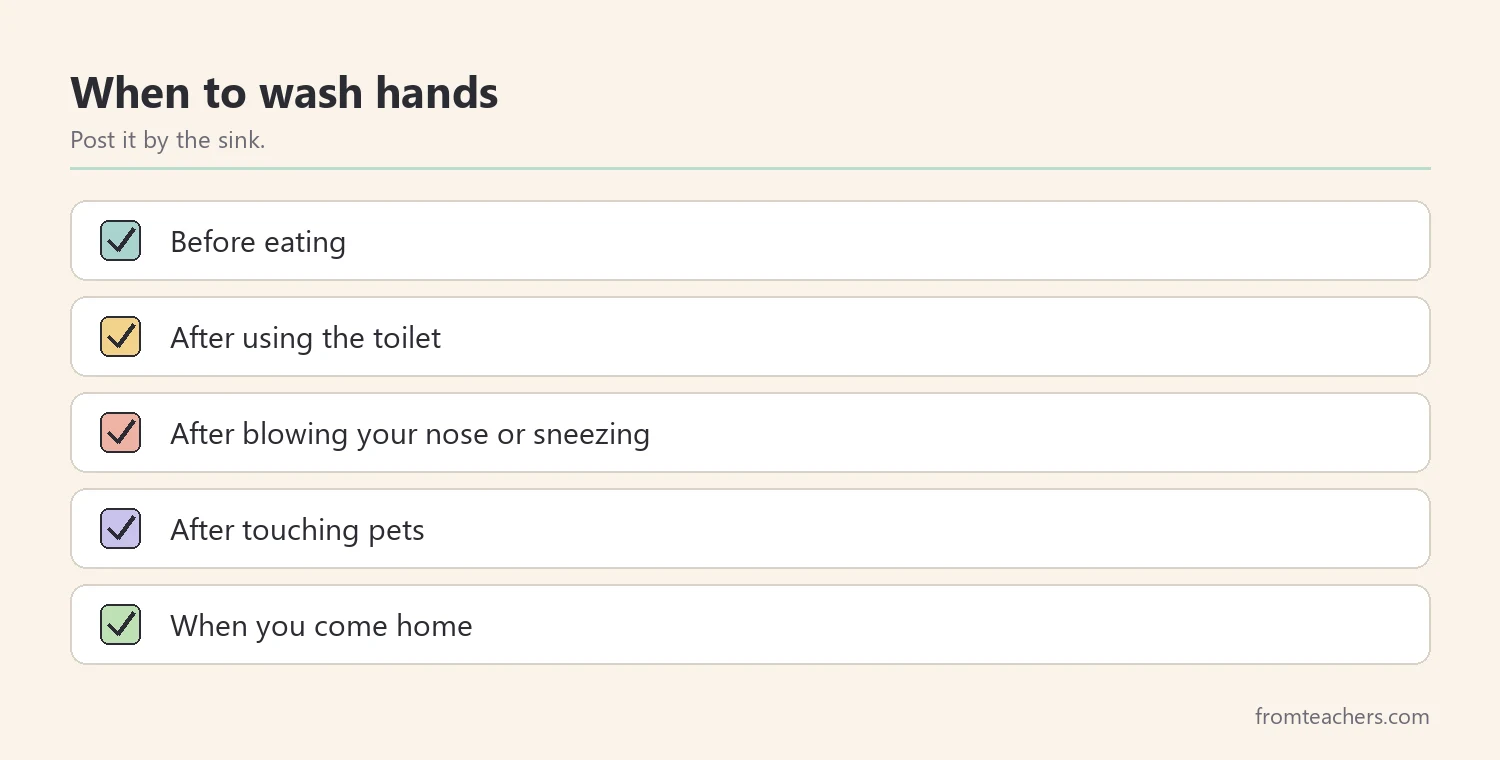
The fact: people often touch their eyes, nose and mouth without noticing. Germs on hands can enter the body this way.
Why it matters: this is the main reason handwashing matters for children.
Try it at home: during a show, count how many times family members touch their faces. Leo counted his dad six times in ten minutes, which everyone found very funny.
10. Soap lifts germs off your skin
The fact: soap helps loosen dirt, oils and germs from skin so running water can rinse them away. Plain water alone removes much less.
Why it matters: children often think water is enough. A simple test changes their mind.
Try it at home: put a little cooking oil and glitter on your child’s hands. First rinse with water only, then wash with soap. The glitter stands in for germs.
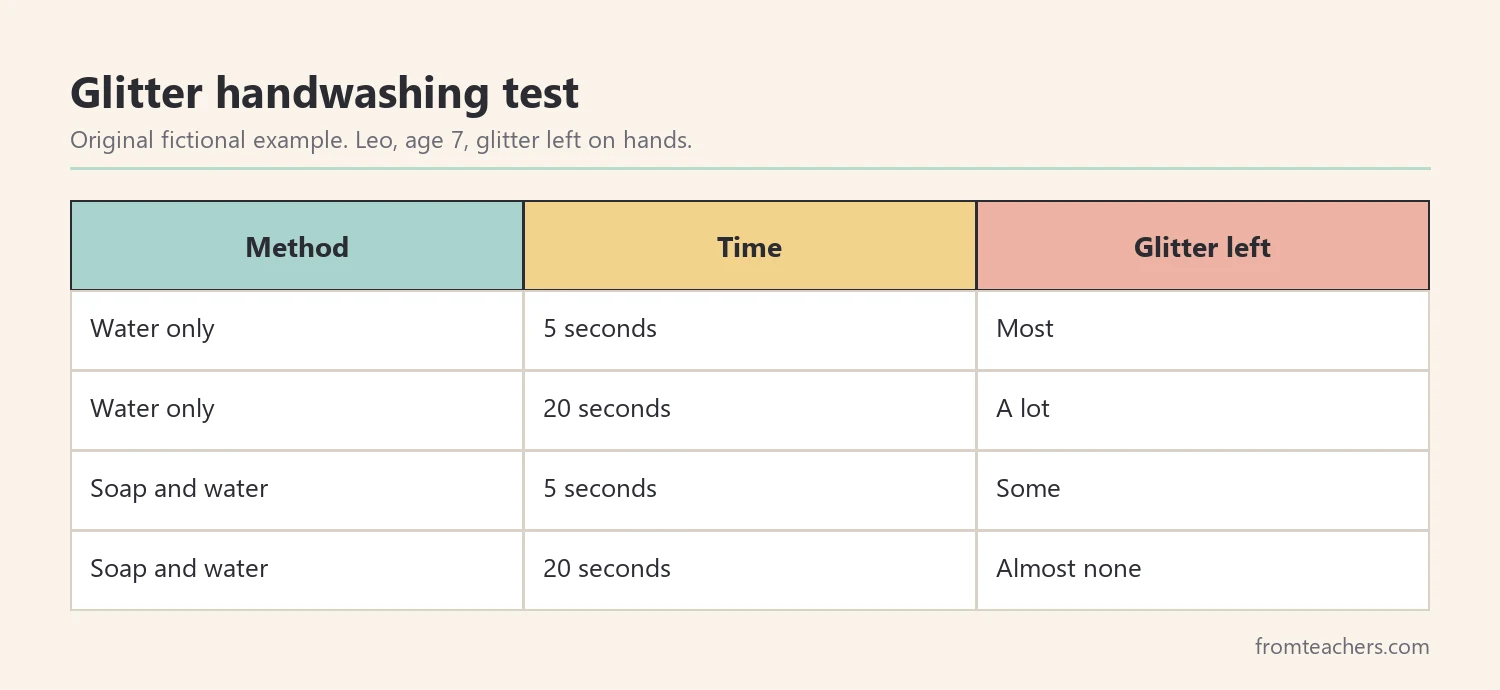
Leo’s results were clear: water alone left most of the glitter, while soap and 20 seconds of scrubbing removed almost all of it. Of course, this is a demonstration, not a lab test, but children remember it.
11. Scrub for at least 20 seconds
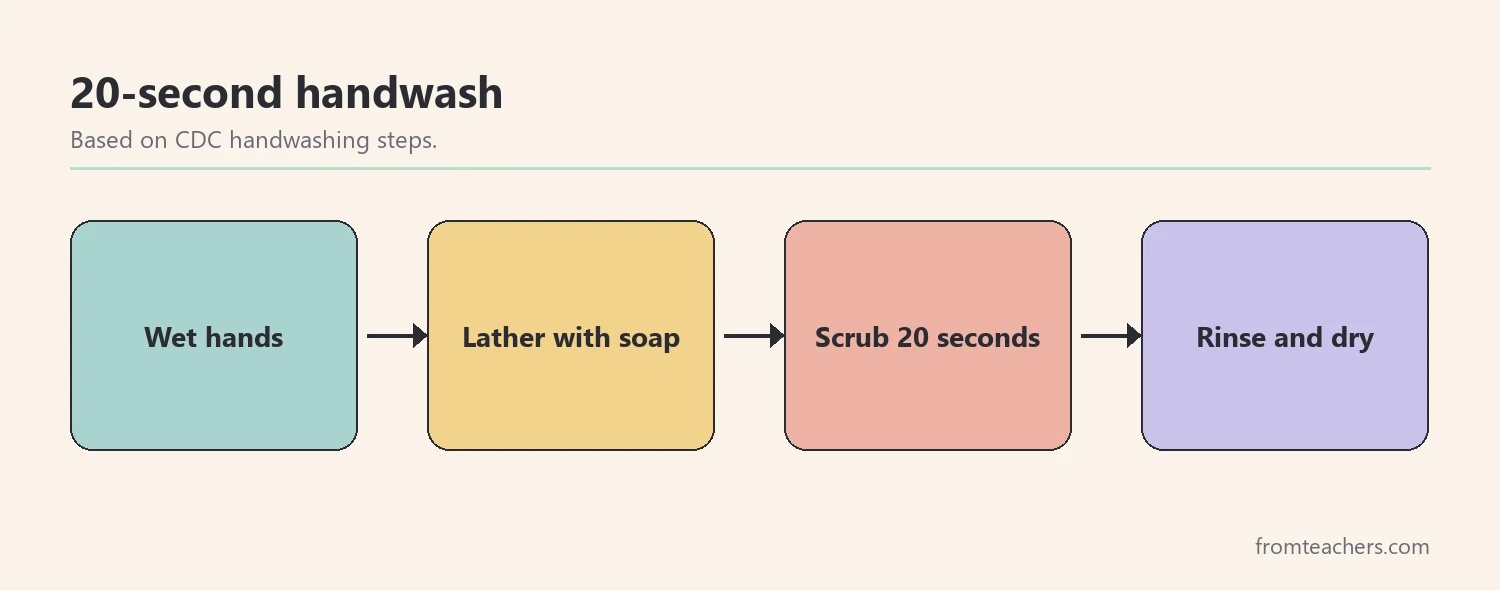
The fact: the CDC recommends scrubbing hands with soap for at least 20 seconds, about as long as humming “Happy Birthday” twice.
Why it matters: most children wash for only a few seconds.
Try it at home: choose a 20-second song together and post a small picture of the steps by the sink.
12. Antibiotics do not work on viruses
The fact: antibiotics treat certain infections caused by bacteria. They do not work against viruses like those that cause colds.
Why it matters: it helps older children understand why the doctor does not always give medicine for a cold.
Try it at home: ask Ava’s favorite question: “So what helps with a cold?” Answer simply: rest, fluids and time, plus whatever your doctor advises.
A 15-minute kitchen table germ lesson
If you want a simple plan, this short session works for most families. It uses three facts and one activity, so children stay interested.
- Minutes 1 to 3: ask what your child already knows about germs. Write down their ideas without correcting them yet.
- Minutes 4 to 7: share one big picture fact, such as fact 1, and one helpful germ fact, such as fact 7.
- Minutes 8 to 12: do the glitter test or draw a germ character with a name and a job.
- Last, minutes 13 to 15: wash hands together for 20 seconds and look back at the first list. What changed?
Leo and Ava did this on three Saturday mornings. By the third week, Leo was reminding his dad to scrub longer, and Ava had drawn a whole poster of germ characters for the bathroom wall.
Matching facts to your child’s age
Not every fact fits every child. Here is a simple guide to where to start.
| Age | Start with | Activity |
|---|---|---|
| 5 to 6 | Facts 1, 9, 11 | Glitter hands, handwashing song |
| 7 to 8 | Facts 2, 5, 7, 10 | Germ characters, yogurt label |
| 9 to 11 | Facts 3, 4, 6, 8, 12 | Factory drawing, Fleming story |
In addition, mix one “helpful germ” fact into every lesson. It keeps the topic positive and reduces worry for sensitive children.
Common mistakes and how to avoid them
- Making germs scary: balance every warning with a helpful germ fact.
- Oversimplifying to “all germs are bad”: teach that most bacteria are harmless.
- Too many facts at once: share two or three per session.
- Talking without showing: use glitter, bread or labels so kids see something.
- Skipping the habit: end every lesson with a real handwash at the sink.
Questions parents ask about germ facts for kids
How do I explain germs to a five-year-old?
Keep it short: “Germs are tiny living things too small to see. Some help us, and some can make us sick. Washing with soap takes the sick ones away.” Then show the glitter test.
My child is now afraid of germs. What should I do?
Focus on helpful germs and on what your child can control, such as handwashing. If worry about germs becomes intense or affects daily life, talk with your pediatrician.
Is hand sanitizer as good as soap?
The CDC recommends soap and water when available. When it is not, an alcohol-based sanitizer with at least 60% alcohol is an option for older children with adult supervision.
Are germ characters scientifically accurate?
Characters are a memory aid. They work well when each character is paired with real facts, as in resources that add true science to every germ personality.
What subject does this fit in homeschool?
It fits science and health units on the human body, as well as a cooking lesson on yogurt or bread.
Related reading: learning styles and student success, homeschooling vs public schooling.
A companion resource for germ facts for kids:


If Germs Were Humans!: a playful, illustrated science resource that explains the five main types of germs, gives individual germs their own character slides with a job title, a funny catchphrase and real facts, and reminds students that not all germs are villains, from gut bacteria to the microbes behind yogurt, cheese and sourdough bread. A fit for elementary and middle school science and homeschool families.
You may also need: Healthy Habits Hero: Hygiene, Dental and Handwashing for Kids.
Sources and scope
- CDC: Clean Hands: handwashing steps, timing and when to use hand sanitizer.
- KidsHealth (Nemours): child-friendly articles on germs, bacteria and viruses.
- CDC: Antibiotic Use: why antibiotics do not treat viral infections.
- HealthyChildren.org (American Academy of Pediatrics): parent information on children’s health and hygiene.
This list offers general science facts and home activities for children ages 6 to 11. It does not give medical advice; ask a doctor about illness or infection.
Key takeaways
- The best germ facts for kids mix the big picture, helpful germs and daily habits.
- Germs are tiny, and most bacteria are harmless or helpful.
- Soap and at least 20 seconds of scrubbing remove germs from hands.
- Characters and simple experiments make invisible germs memorable.
- Keep the tone curious and calm, not scary.


Leave a Comment