

Choosing the right co-teaching models can make or break an inclusive classroom. When two teachers share a room well, students get more support and more attention. However, when the partnership struggles, everyone feels the tension.
This guide explains the common models, when each one fits, and how to fix a partnership that has stalled. It is written for general and special education teachers working side by side.
Why Co-Teaching Models Matter
Co-teaching pairs a general educator with a special educator to serve diverse learners together. In addition, it allows students with IEPs to access grade-level content with support.
Yet many teams default to one teacher leading while the other walks around. As a result, the special educator’s expertise is underused. Choosing a model on purpose changes that.
The Six Common Co-Teaching Models
One Teach, One Observe
One teacher leads while the other collects data on specific students. This is useful for progress monitoring.
One Teach, One Assist
One teacher leads and the other circulates to help. However, overusing this model can make one teacher feel like an aide.
Station Teaching
Students rotate through stations, with each teacher leading one. Also, an independent station can be added.
Parallel Teaching
The class splits in half, and both teachers teach the same content. Smaller groups mean more participation.
Alternative Teaching
One teacher works with a small group for reteaching or enrichment, while the other teaches the larger group.
Team Teaching
Both teachers lead together, trading roles naturally. This requires strong trust and shared planning.
Matching Co-Teaching Models to Your Lesson
No single model is best. Instead, choose based on the lesson goal. For example:
- New content: parallel teaching reduces group size.
- Practice and review: station teaching keeps everyone active.
- Targeted gaps: alternative teaching supports small groups.
- Data collection: one teach, one observe gives focused information.
Also, vary models across the week so both teachers lead regularly.
Spotting When a Partnership Stops Working
Problems often build quietly. For example, one teacher always plans alone, or students only ask one teacher for help. In addition, frustration may show up as silence or sarcasm.
Therefore, notice these signs early. A practical set of if-then-why co-teaching scenario tables helps teams name issues before resentment builds.
Having the Hard Conversation
Honest talks protect the partnership. First, choose a calm time, not right after a tough lesson. Next, use “I” statements, such as “I’d like to lead more of the math warm-ups.”
Then, agree on one change to try for two weeks. Finally, check in and adjust. Small, regular conversations prevent big conflicts.
Planning Time and Shared Roles
Strong teams plan together, even briefly. A weekly 30-minute meeting can cover upcoming lessons, model choices, and student needs.
In addition, agree on shared responsibilities like grading, parent contact, and behavior support. The IDEA website explains the legal basis for serving students in the least restrictive environment, which co-teaching supports.
Co-Teaching Models and Student Grouping
Grouping is where co-teaching shines. However, avoid always placing students with IEPs in the same group with the special educator. That can create a “class within a class.”
Instead, use flexible groups based on the skill of the day. For example, a student might need reteaching in math but enrichment in reading. As a result, every student works with both teachers over time.
Grouping Tips
- Base groups on recent data, not labels
- Change groups often
- Have both teachers lead advanced and support groups
- Use the same expectations across groups
Showing Students You Are Equal Partners
Students quickly notice who the “real” teacher is. Therefore, share leadership visibly. For example, put both names on the door, take turns opening lessons, and share grading.
In addition, use “we” language with students and families. Because parity builds trust, rotating co-teaching models across the week helps both teachers stay engaged and respected.
Getting Started This Week
First, sit down together and list the models you already use. Next, pick one new model to try in the coming week. Then, plan who leads each part of the lesson. In addition, agree on a quick signal for adjusting in the moment. Finally, debrief for five minutes after the lesson. Small experiments build trust and help both teachers grow.
Frequently Asked Questions
Which co-teaching model is used most?
One teach, one assist is the most common, but it should be balanced with models where both teachers lead.
How much planning time do co-teachers need?
Even a short weekly meeting helps. Consistent planning matters more than long sessions.
What if my co-teacher won’t share the lead?
Start with a calm conversation and suggest one specific model to try. Involve an administrator only if needed.
Ready-to-use resource:
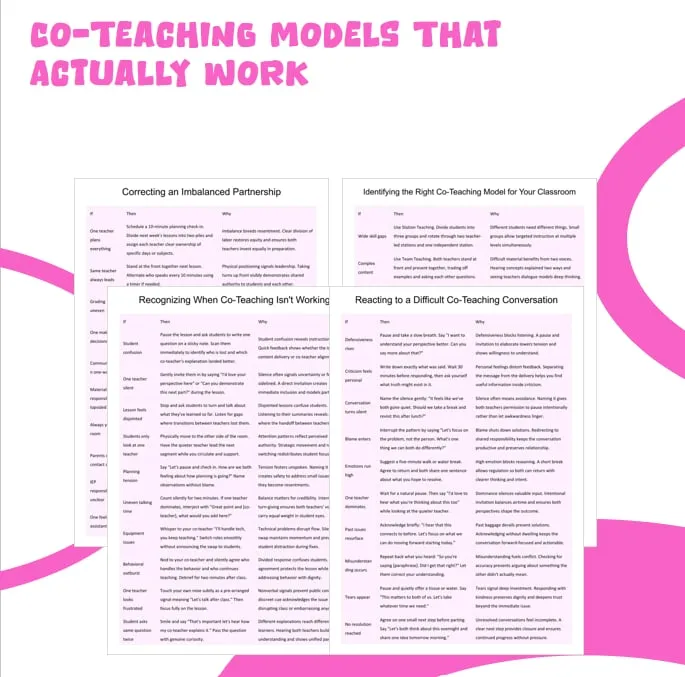
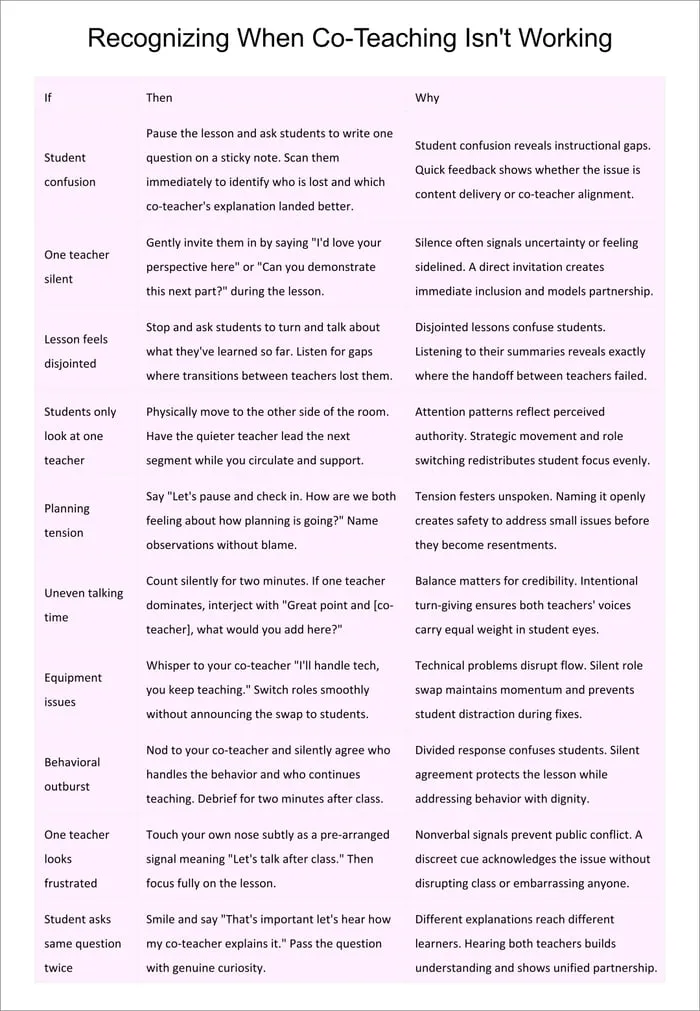
Co-Teaching Models That Actually Work: 12 pages of if-then-why tables that help co-teachers pick the right model and resolve partnership problems early.
Related reading: 10 powerful special education strategies and parent-teacher collaboration in special education.
Also on FromTeachers:
Key Takeaways
- Co-teaching models should be chosen on purpose, based on the lesson goal.
- Six common models offer different benefits for students and teachers.
- Watch for early signs that a partnership is struggling.
- Short, honest conversations and shared planning keep teams strong.







Leave a Comment