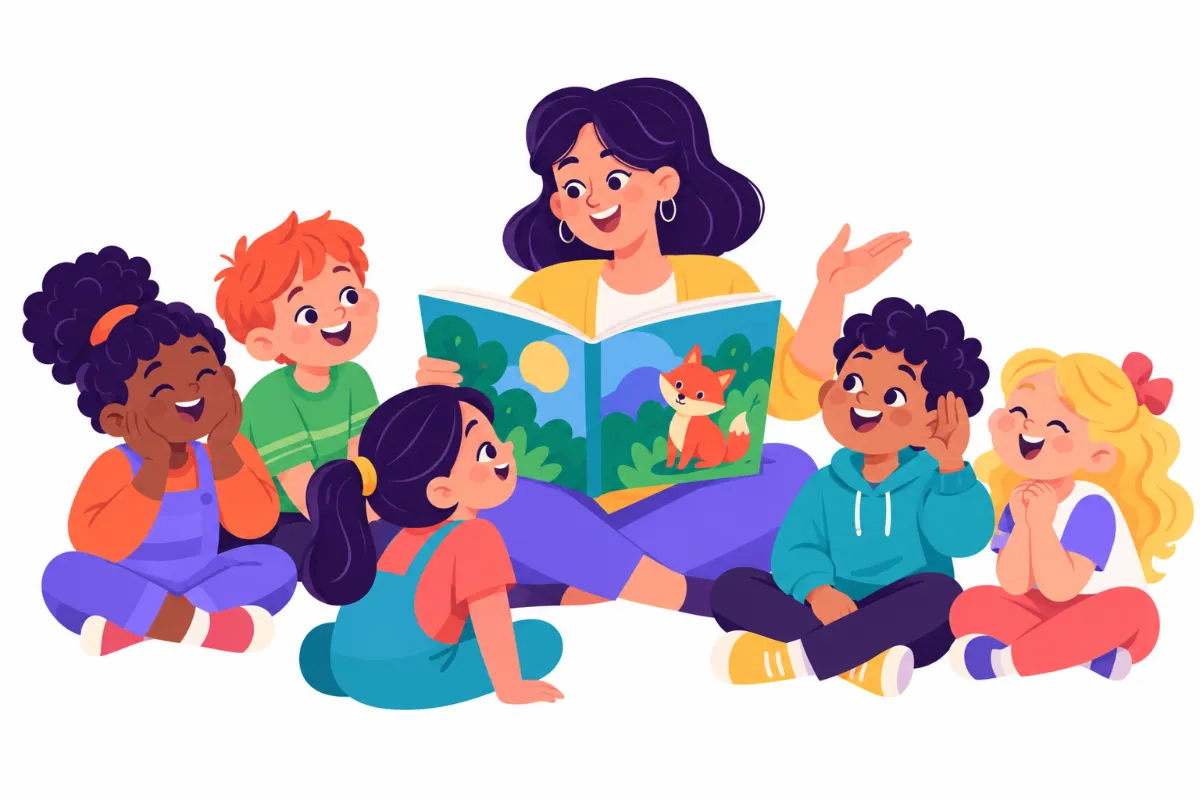

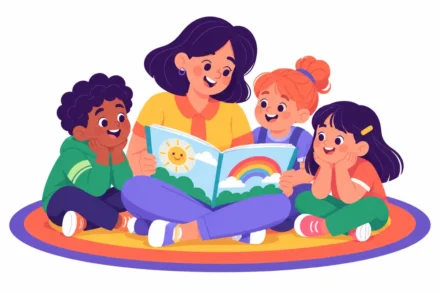
Active listening for kids is a skill you can teach, not just a rule you repeat. Picture story time on the rug: one child rolls on the floor, another chats with a friend, and a third stares at the ceiling. When you ask a question about the story, almost no one can answer.
After reading this guide, you will be able to break listening into small parts children can see and practice, teach those parts with short games, and track progress in a simple way. The steps work in a classroom, a small group, or at home.
Examples are fictional. Adapt to the student’s goals and agreed supports. This is guidance, not a diagnosis.
At a glance
- Describe listening as four visible actions: eyes, ears, quiet mouth, and calm body.
- Teach one part at a time with modeling and short games.
- Use the same picture cues at school and at home.
- Practice in short, fun bursts before expecting long listening.
- Track one small measure, like answering a question about what was said.
1. Define what active listening for kids looks like
“Listen!” is one of the most common words adults say to children. However, many children do not know what it means in practice. So, the first step in teaching active listening for kids is to describe it in concrete actions a child can see and do.
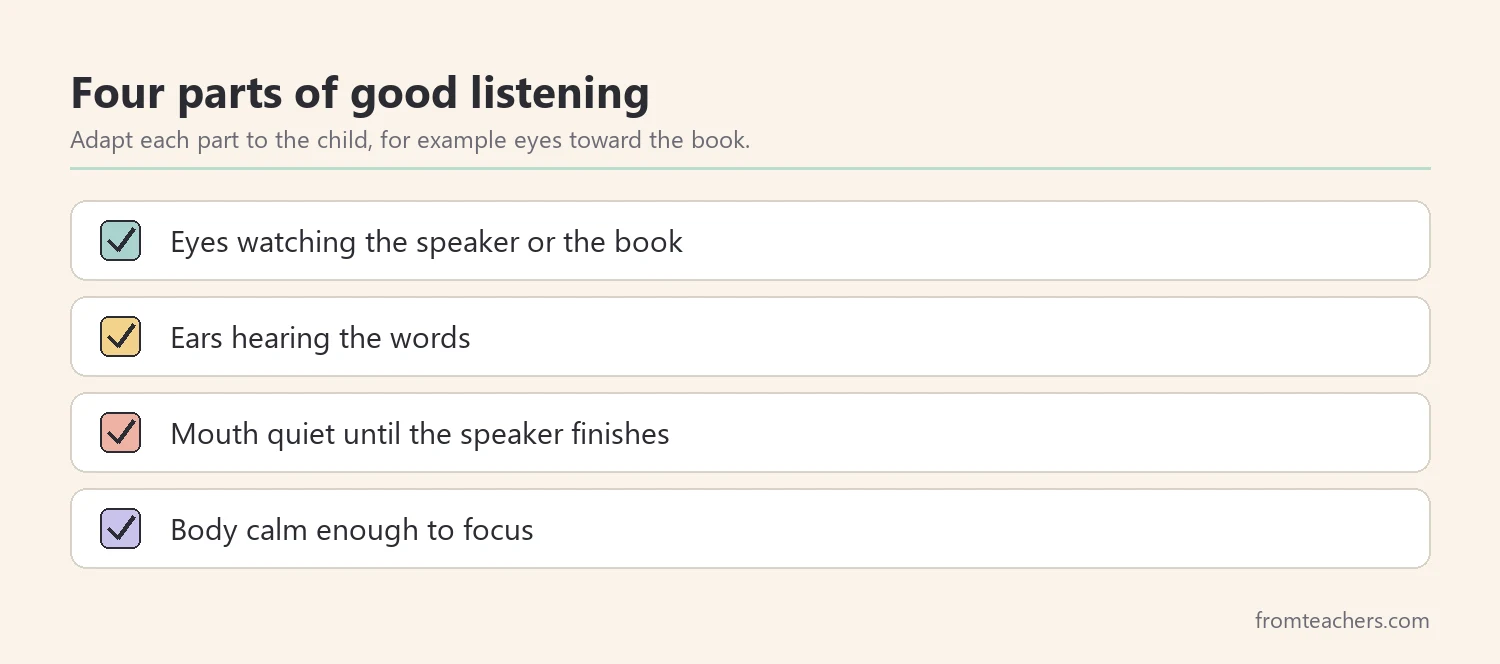
A simple, child-friendly breakdown uses four parts:
- Eyes watching: looking toward the speaker or the thing being shown.
- Ears hearing: paying attention to the words.
- Mouth quiet: waiting to talk until the speaker finishes.
- Body calm: hands and feet still enough to focus.
Keep in mind that these are starting points, not strict rules. Some children listen better when they look away or move a little, and eye contact can be uncomfortable for some. Therefore, adapt each part to the child, for example “eyes toward the book” instead of “look at my eyes.”
Here is a fictional example. Leo is in grade 1. During read-alouds, he often talks over the teacher and cannot answer questions afterward. His teacher, Ms. Hart, writes one sentence that describes success for him: “Leo keeps his body calm and his mouth quiet during a five-minute story, then answers one question about it.”
Notice that this goal is short, observable, and linked to a real classroom moment. In addition, it focuses on two of the four parts first. That makes active listening for kids feel reachable instead of overwhelming.
2. Teach each listening part with modeling
Next, teach the parts of active listening for kids directly. Children learn listening the same way they learn other skills: by seeing it, trying it, and getting feedback. Long lectures about listening rarely work, but short, lively models do.
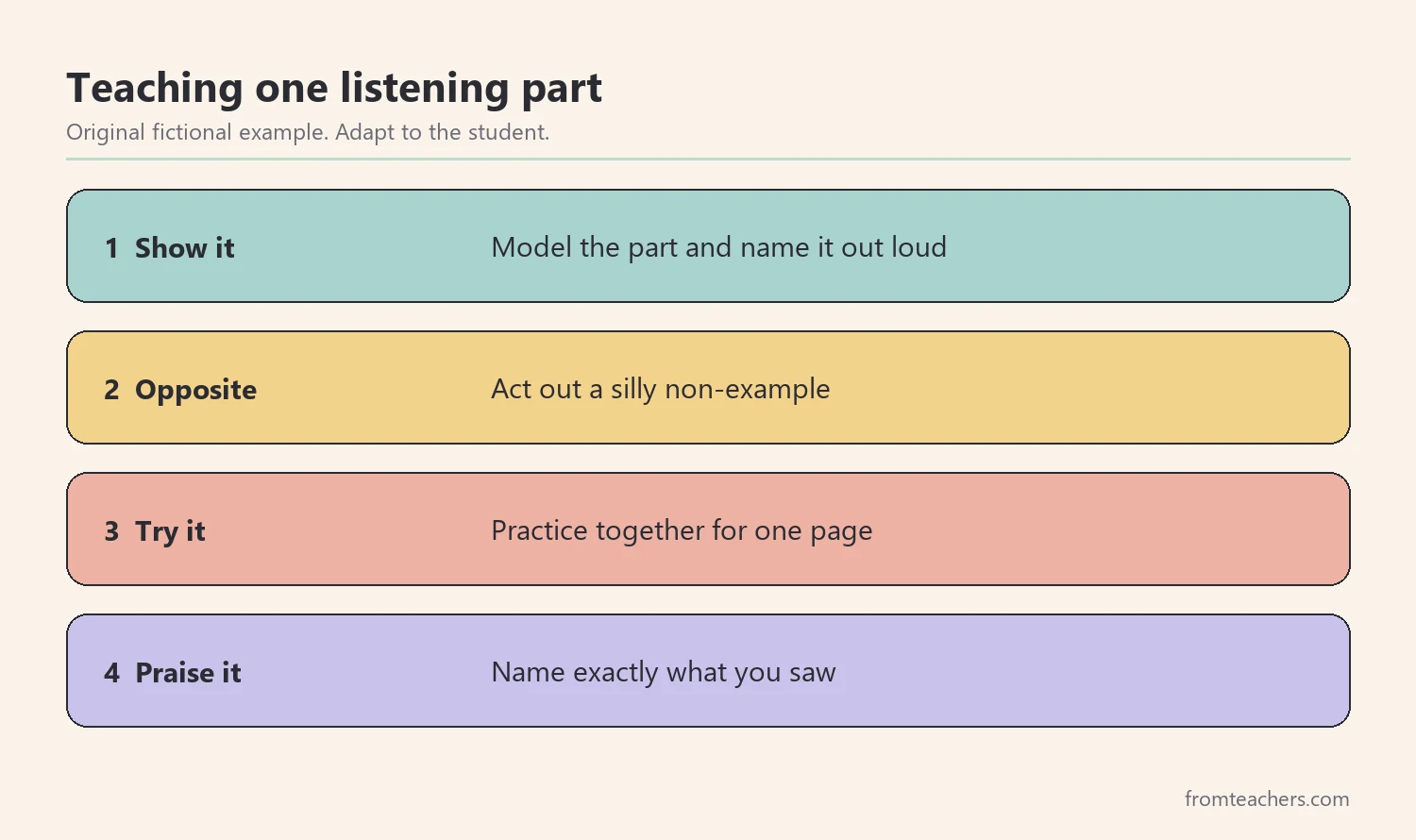
Use a simple teaching routine for each part:
- Show it: model the part yourself, then name it. “My body is calm. My hands are in my lap.”
- Show the opposite: act out a silly non-example, like wiggling everywhere, and ask children what went wrong.
- Try it together: practice for 30 seconds while you read one page.
- Praise it: name what you saw. “Leo, your mouth stayed quiet for the whole page.”
Teach one part per day or per session. After all four parts are taught, practice them together. This slow build keeps active listening for kids positive, because each child gets many quick wins.
Characters can make this more memorable. For instance, a friendly ear, a wise owl, and an attentive puppy can each stand for a listening skill. Social stories also help, because they show the skill in a familiar situation before children need to use it. A ready-made option is the Learning to Listen social story for kids, which uses guide characters and an adventure map to break listening into steps.
For Leo, Ms. Hart focused on “body calm” first. She modeled it, practiced it during one short page, and praised it right away. Then, two days later, she added “mouth quiet.” Because each part was small, Leo had several chances to succeed in one morning.
3. Practice active listening for kids with games
Once children know the parts, they need many chances to practice. Games make practice playful, and they let you stretch listening time slowly. In fact, active listening for kids grows fastest when practice is short, frequent, and fun.
Here are a few simple games:
| Game | How it works | Skill practiced |
|---|---|---|
| Simon Says | Follow only commands that start with “Simon says” | Ears hearing |
| Sound detective | Close eyes and name a hidden sound | Ears hearing |
| Freeze story | Freeze when you hear a key word in the story | Body calm |
| Pass the message | Repeat a short sentence to the next child | Mouth quiet, ears hearing |
Keep each game to two to five minutes. Also, end before children get tired, so they leave wanting more.
Ms. Hart played “Freeze story” with the whole class twice a week. Each time the word “frog” came up, children froze like statues. Leo loved freezing, and soon he was listening closely for the word. As a result, his calm body during stories started to come more easily.
At home, families can play the same games. For example, a parent can play sound detective in the kitchen or Simon Says before bedtime. Using the same games at school and home helps the skill transfer.
4. Use visual cues and prompts
Next, add visual cues for active listening for kids, so children can remember the skill without a long reminder. A picture card or hand signal is quiet, quick, and does not interrupt the lesson. In contrast, repeated verbal reminders can become background noise.
Try these cues:
- A small card with four pictures: eyes, ears, closed mouth, and still hands.
- A hand signal, such as touching your ear, that means “ears on.”
- A short chant before stories, such as “Eyes watching, ears hearing, mouth quiet, body calm.”
- A desk or rug spot marker that shows where the body stays during stories.
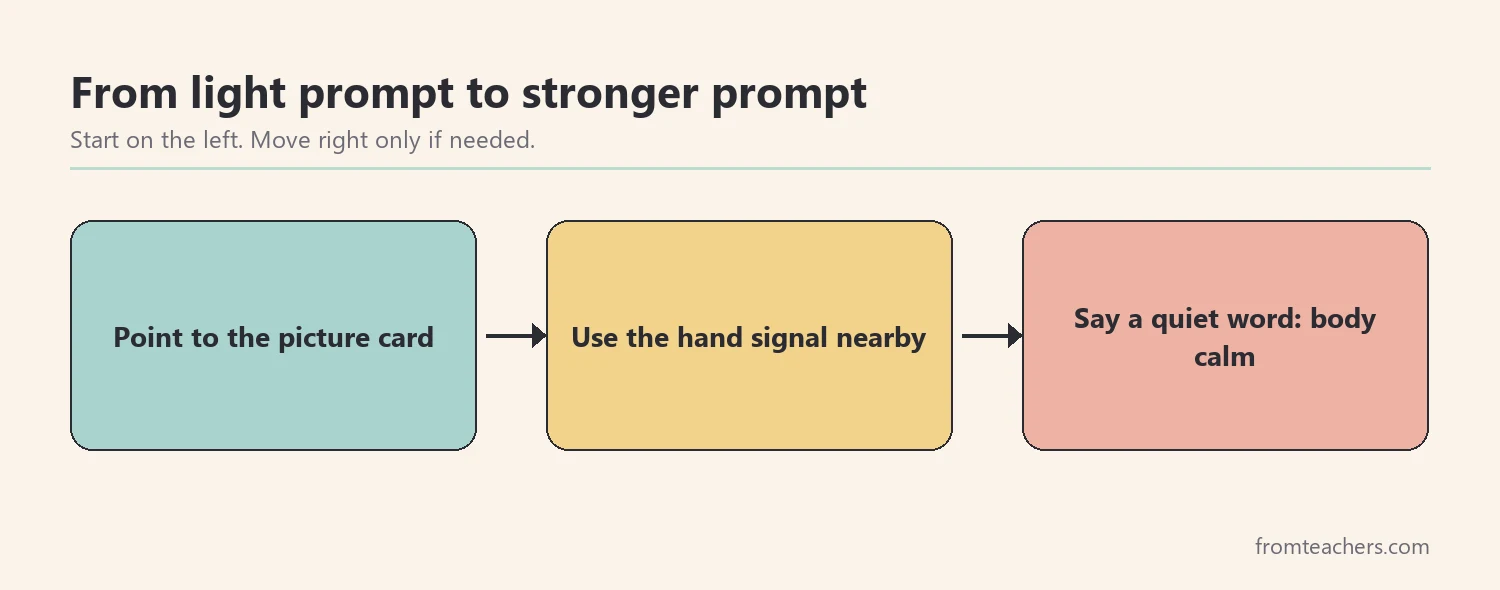
Also, plan how you will prompt. Start with the lightest prompt that works. For example, first point to the card. If that does not help, use the hand signal near the child. Only then use a quiet word, such as “Body calm.” Over time, fade the prompts so the child relies on the cue less.
Ms. Hart taped a small listening card to Leo’s rug spot. When he started to talk during the story, she pointed to the “mouth quiet” picture. Most of the time, that was enough. In addition, she sent home a copy of the card, so his family could use the same cue at dinner.
Remember that active listening for kids does not mean silence all day. Children still need plenty of time to talk, share, and ask questions. The cue simply marks when it is time to listen.
5. Track active listening for kids in real moments
Then, check whether the skill is growing. A short record keeps your plan honest and shows small gains you might otherwise miss. Tracking active listening for kids does not need complex data. One simple measure, taken a few times a week, gives you a clear picture.
A practical measure is: “After a short story or direction, can the child answer one question about it?” This shows that listening led to understanding, which is the real goal. You can also note how often you needed to prompt.
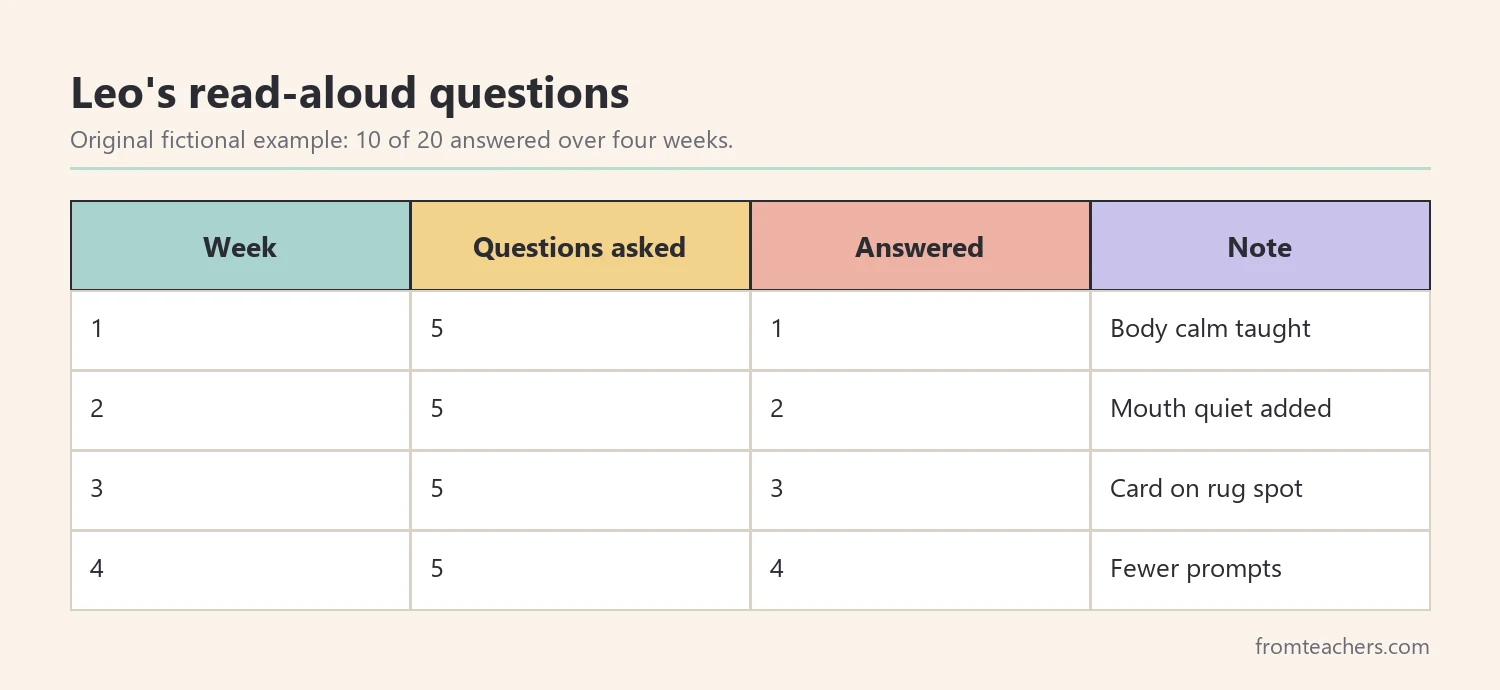
Ms. Hart tracked Leo’s progress across four weeks. Each week, she asked one question after each of five read-alouds.
| Week | Questions asked | Answered correctly | Note |
|---|---|---|---|
| 1 | 5 | 1 | Body calm taught |
| 2 | 5 | 2 | Mouth quiet added |
| 3 | 5 | 3 | Card on rug spot |
| 4 | 5 | 4 | Fewer prompts needed |
Across the four weeks, Leo answered 10 of 20 questions, and the trend went up each week. That is a clear, simple story to share with his family. Also, the notes column shows what changed, so Ms. Hart can see which steps seemed to help.
If progress stalls, look at the setting first. For example, is the story too long, or is the rug spot next to a distracting friend? Small changes to the situation often help more than more reminders.
6. Build the habit at home and school
Finally, help children use active listening for kids skills across the day, not only during stories. Skills grow stronger when adults use the same words and cues in many places.
Share a short plan with families. Include the four parts, the cue card, one or two games, and a simple tip: praise listening when you see it. Also, ask families what works at home, since they may notice useful details.
Look for natural practice moments:
- Following a two-step direction during cleanup.
- Listening to a friend share news at morning meeting.
- Hearing a recipe step while cooking at home.
- Listening for a name during a car ride game.
Leo’s family began playing “pass the message” at dinner. A month later, his teacher noticed he was waiting for classmates to finish before speaking. These small wins show that listening is becoming a habit, not just a rug rule.
Also, involve the child in the plan. Ask which listening part feels easiest and which feels hardest. Then, let them pick one part to practice this week. When children help choose, they often care more about the goal.
In addition, check that the setting supports listening. A quieter seat, a shorter story, or a clear start signal can make active listening for kids much easier before any new teaching is needed. Likewise, at home, turning off the television before giving a direction can help a lot.
Keep celebrating effort. Children who feel successful at listening are more likely to keep trying, especially when the task gets longer or harder.
Common mistakes and how to avoid them
- Saying “listen” without teaching what it means. Fix: name and model the four parts with clear examples.
- Insisting on eye contact. Fix: accept “eyes toward the book or speaker” and respect children who listen better without looking.
- Expecting long listening too soon. Fix: start with one page or one minute and stretch slowly.
- Using only verbal reminders. Fix: add a picture card or hand signal and fade prompts over time.
- Practicing only at school. Fix: share cues and games with families so practice happens in both places.
Questions teachers and parents ask about active listening for kids
At what age can children learn active listening?
Even young children can learn simple parts of active listening for kids, such as quiet mouth or calm body. Keep practice short and playful for younger kids. Then, add more parts and longer listening time as they grow.
Is my child not listening on purpose?
Often, children have not yet learned what listening looks like, or the setting makes it hard. Attention, hearing, language, or sensory needs can also play a role. If you have concerns, talk with the child’s teacher, pediatrician, or a speech-language pathologist.
How do social stories help with active listening for kids?
Social stories show a skill in a familiar setting before the child needs to use it. They give clear words and pictures that adults can repeat later. As a result, the skill feels more predictable.
Does a child need to sit still to listen?
Not always. Some children listen better while holding a small fidget or moving a little. The goal is that the body is calm enough for the child to focus, so adapt what “calm body” means for each child.
How long should practice sessions be?
Short sessions of two to five minutes work well for practicing active listening for kids. Several short practices across the day help more than one long session. Also, stop while children are still having fun.
Related reading: 5 Practical Teaching Tips to Boost Classroom Focus and Learning, Autism Social Skills Development: Practical Strategies for Growth, and ADHD in Children: A Guide to Effective Classroom and Home Support.
A companion resource for active listening for kids:
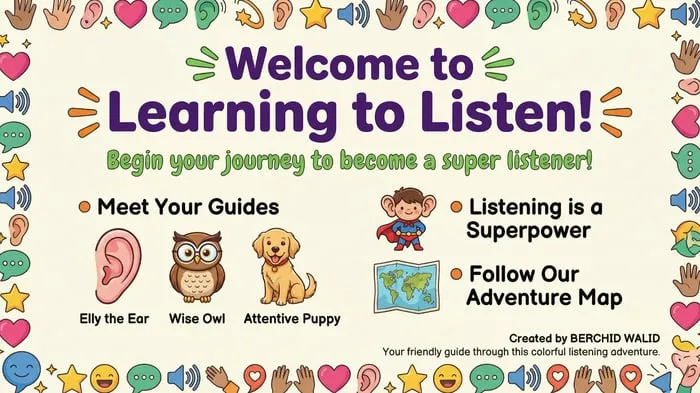
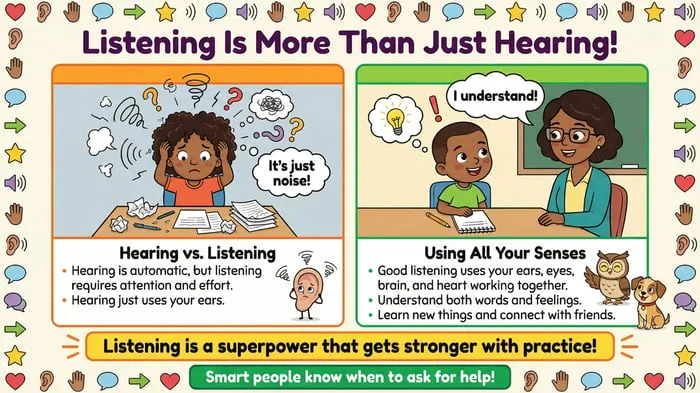
Learning to Listen: Social Story for Kids: an illustrated story with guide characters Elly the Ear, Wise Owl, and Attentive Puppy, teaching eyes watching, ears hearing, mouth quiet, and body calm through an adventure map format.
Sources and scope
- American Speech-Language-Hearing Association (ASHA): information for families on communication, listening, and language development.
- CASEL: a widely used framework for social and emotional learning in schools.
- Centers for Disease Control and Prevention: general information on child development and milestones.
- Understood.org: practical articles for families and teachers on attention and learning.
This guide covers everyday teaching of listening behaviors at school and home. It does not cover hearing tests, speech or language evaluations, or diagnosis, which belong to qualified professionals.
Key takeaways
- Active listening for kids becomes teachable when you break it into eyes, ears, quiet mouth, and calm body.
- Model one part of active listening for kids at a time and practice it in short bursts.
- Games and social stories make practice fun and memorable.
- Use light visual cues and fade prompts over time.
- Track one simple measure and share cues with families.
Leave a Comment