

If you have ever sat in an IEP meeting and heard the words accommodation and modification used as if they mean the same thing, you are not alone. In fact, they are two of the most confused terms in special education, and mixing them up can change a student’s grades, diploma track, and long-term options. That’s why this guide to accommodations vs modifications explains the difference in plain language, with classroom examples you can use tomorrow.
The Short Answer
An accommodation changes how a student learns or shows what they know. A modification changes what the student is expected to learn.
In other words, with an accommodation, the student is still held to the same grade-level standard. By contrast, with a modification, the standard itself is adjusted.
Accommodations vs Modifications: What Is an Accommodation?
Accommodations remove barriers without lowering expectations. As a result, the content, the skill, and the grading standard stay the same. For example, think of eyeglasses: they do not make the reading easier, they make the text visible.
Common accommodations include:
- Presentation: audiobooks, enlarged print, text-to-speech, directions read aloud
- Response: answering orally, using speech-to-text, typing instead of handwriting
- Setting: preferential seating, a quiet testing room, noise-cancelling headphones
- Timing and scheduling: extended time, frequent breaks, tests split across sessions
Example: A fifth grader with dyslexia takes the same science test as classmates, but the questions are read aloud. However, she still has to know the same science content.
What Is a Modification?
In contrast, modifications change the learning target. Because of this, the student is working on different or reduced content, usually because the grade-level standard is not yet accessible even with supports.
Common modifications include:
- Fewer or simpler test questions covering only core concepts
- Below-grade-level reading passages
- Alternate assignments (for example, a labeled diagram instead of a five-paragraph essay)
- Different grading criteria based on individual IEP goals
Example: A student with an intellectual disability works on identifying the parts of a plant while classmates study photosynthesis equations.
Accommodations vs Modifications: Side-by-Side Comparison
| Accommodation | Modification | |
|---|---|---|
| Changes | How the student learns or is tested | What the student learns or is tested on |
| Grade-level standard | Stays the same | Is adjusted |
| Who can use it | Students with IEPs or 504 plans | Usually students with IEPs only |
| Effect on diploma | Usually none | Can affect diploma track in some states |
Why Accommodations vs Modifications Matters
However, choosing a modification when an accommodation would work can quietly lower expectations for years. Also, once a student is taught reduced content, gaps grow, and in many states heavily modified coursework can lead to an alternate diploma rather than a standard one.
In short, a good rule of thumb: try accommodations first. Move to modifications only when data shows the student cannot access the standard even with strong supports in place.
Questions to Ask at the IEP Meeting
- Is this support changing how my student learns, or what they learn?
- Have we tried accommodations alone, and what did the data show?
- How will modifications affect grades, transcripts, and diploma options?
- How will we know when a modification can be faded back to an accommodation?
Tracking Supports So They Actually Happen
Writing supports into an IEP is only half the job. Meanwhile, the other half is making sure every teacher, aide, and substitute delivers them consistently, and documenting whether they work. For this reason, a simple tracking system protects the student and the teacher.
Ready-to-use resource:
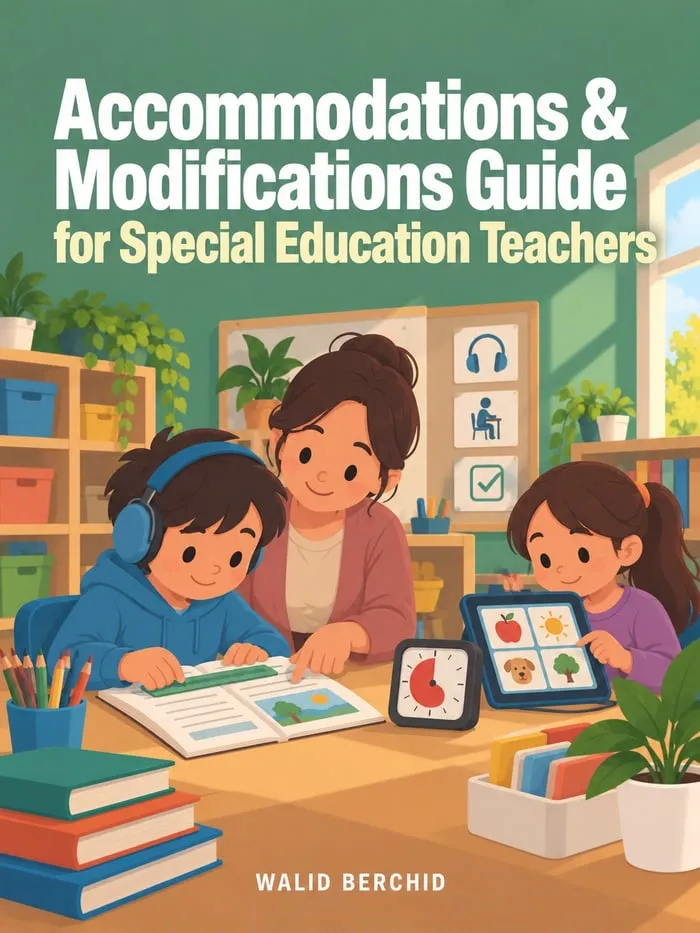
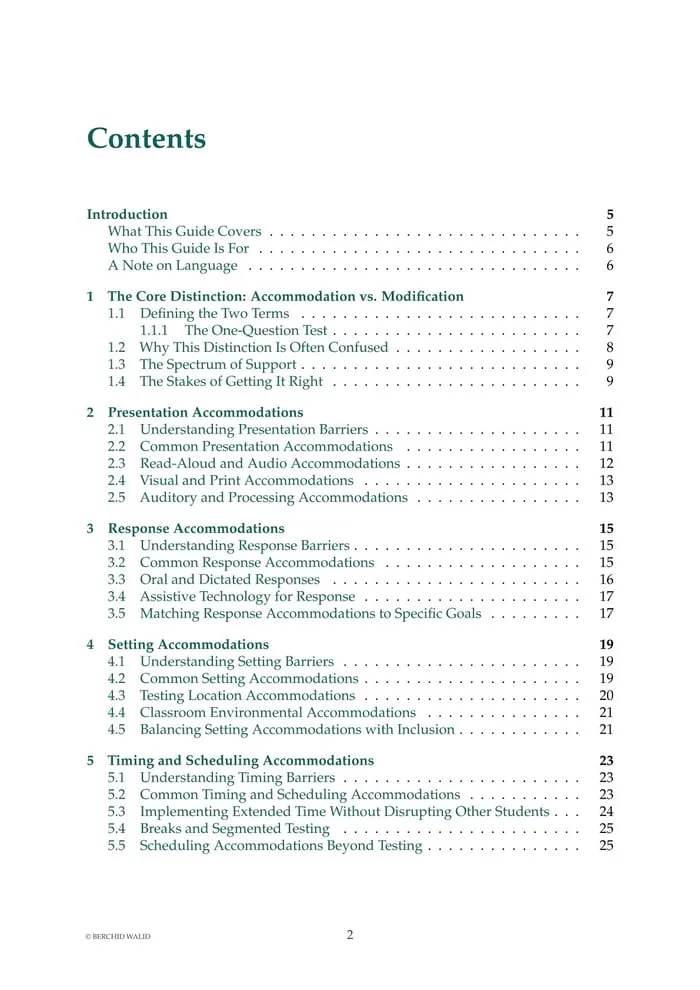
The Accommodations & Modifications Guide for Special Education Teachers includes clear definitions, examples by disability area, and printable planning pages to help your team choose the right supports and use them consistently.
Related reading: Special Education Accommodation and Modification Tracker and Special Education: A Complete Guide for Parents and Educators.
Also on FromTeachers:
Key Takeaways
- Accommodations change the how; modifications change the what.
- Accommodations keep the grade-level standard; modifications adjust it.
- First, start with accommodations and use data before moving to modifications.
- Next, track every support so it is delivered and reviewed regularly.









15 Comments