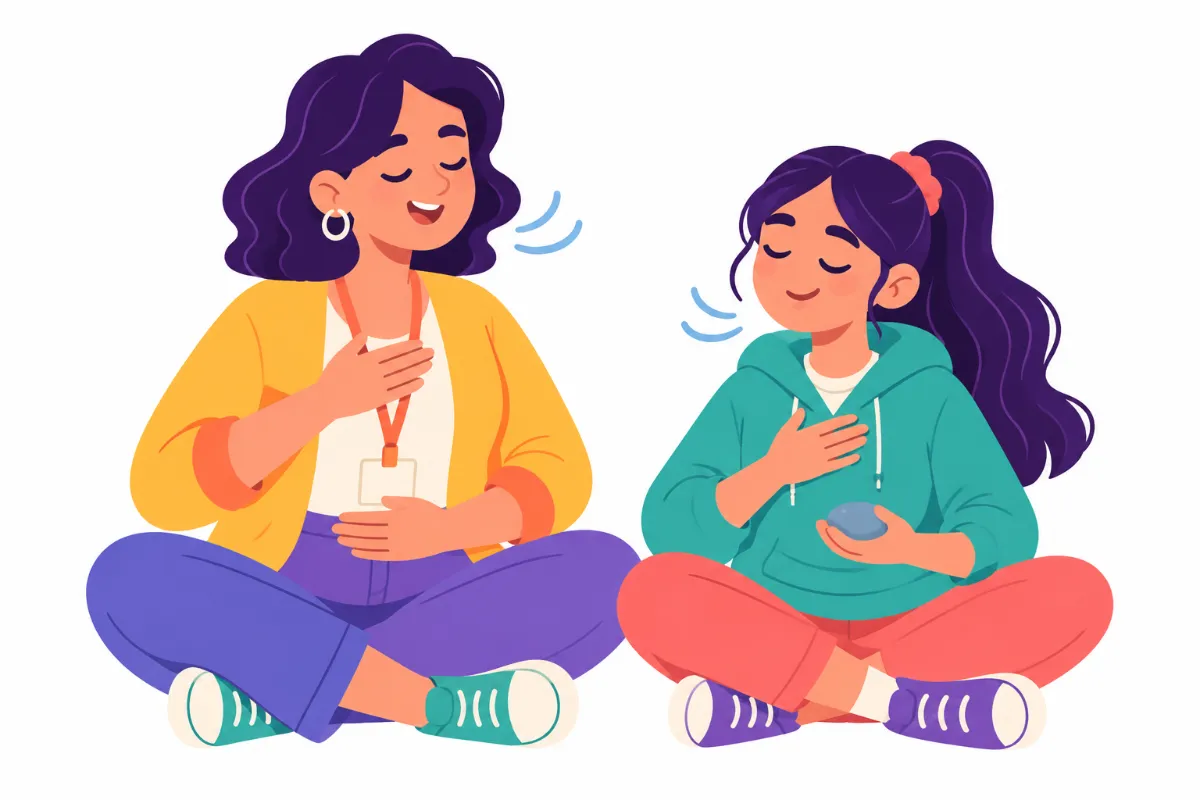

Panic attack coping strategies matter most in the moment a student grips the edge of a desk, breathes fast, and whispers that something is very wrong. The heart races, the hands shake, and the room suddenly feels too small. Adults nearby often freeze too, because nobody planned what to do next.
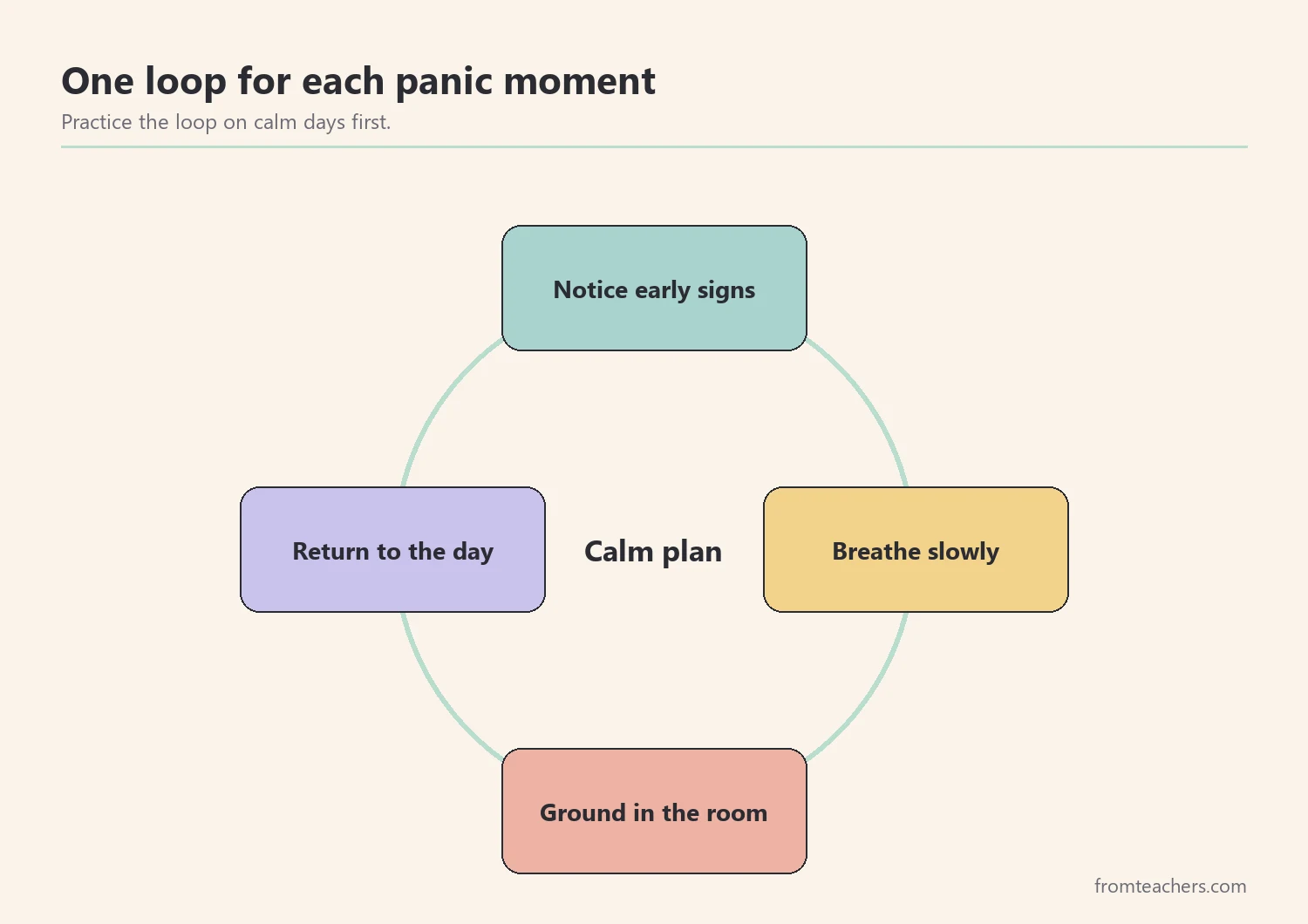
This guide gives you a five-step process for school and home. You will learn how to spot early signs, teach calm breathing, use grounding, build a short calm script, and review a simple plan with the student and family. By the end, you will have a small, practiced routine instead of guessing during a hard moment.
Examples are fictional. Adapt to the student’s goals and agreed supports. This is guidance, not a diagnosis. If symptoms are new, severe, or could be a medical emergency, contact a medical professional or emergency services right away.
At a glance
- Learn the student’s early signs so you can step in sooner.
- Teach slow breathing on calm days, not only during panic.
- Use grounding to bring attention back to the room.
- Keep adult words short, calm, and the same every time.
- Review a simple written plan with the student, family, and counselor.
1. Notice early signs before using panic attack coping strategies
Panic rarely arrives without warning signs, even when it feels sudden. Some students go quiet and pale. Others tap their feet, hold their chest, ask to leave, or say they feel dizzy. Because every student is different, the first step is learning what the early part of the wave looks like for this person.
To begin, talk with the student on a calm day. Ask what their body feels like when panic starts, where it usually happens, and what helps even a little. Then, ask the family and the school counselor what they have seen. Write down two or three signs that show up first. Keep the list short, because a long list is hard to remember during a busy class.
Put this step into practice
Also, notice the setting. Panic attack coping strategies are easier to choose when you know whether hard moments cluster around tests, crowded halls, or the start of the day. Over time, those patterns tell you where to place support before the wave builds.
For example, meet Maya, a fictional ninth grader. Maya told her counselor that her hands tingle and her chest feels tight just before panic sets in. Her teachers noticed she often stops writing and stares at the door. Her family said mornings before tests are the hardest. Together, those notes became her early warning list.
| Source | What they noticed |
|---|---|
| Maya | Tingling hands, tight chest |
| Teachers | Stops writing, stares at the door |
| Family | Hardest on test mornings |
Knowing these signs changes everything. Instead of reacting at the peak, adults can offer panic attack coping strategies at the first tingle. As a result, the wave often stays smaller and passes faster for many students.
2. Teach slow breathing as one of your panic attack coping strategies
Fast, shallow breathing is part of how panic feels. Slowing the breath gives the student something concrete to do with their body. However, breathing skills are hard to learn during panic, so practice them first on calm days.
Box breathing is a good place to start. The student breathes in for a count of four, holds for four, breathes out for four, and holds for four, then repeats. Some students prefer a longer exhale, such as breathing in for four and out for six. Others like slow pursed-lip breathing, like gently blowing out a candle. Let the student try a few and choose the one that feels best. Ownership matters, since students are more likely to use panic attack coping strategies they picked themselves.
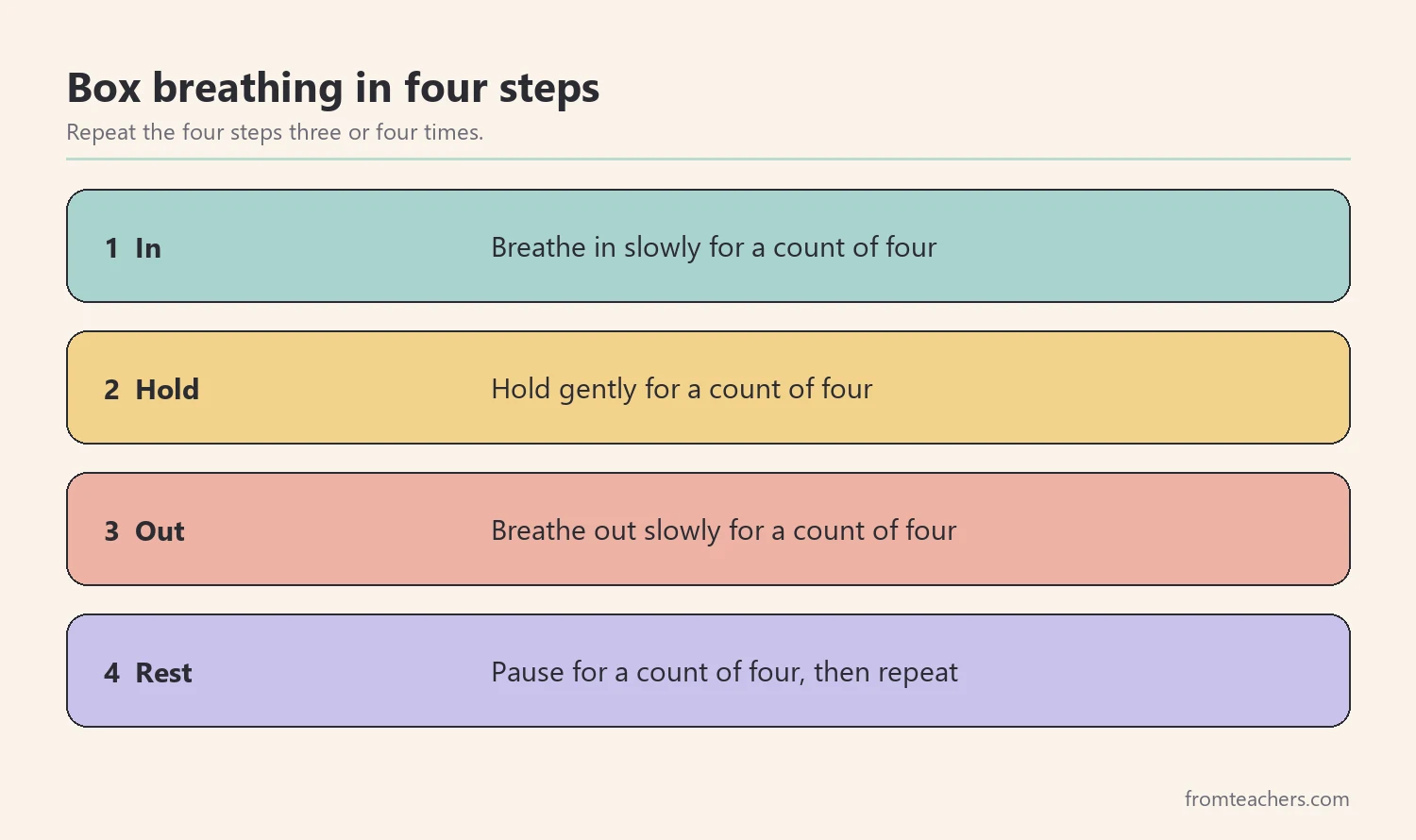
Next, make practice short and routine. Maya practiced box breathing with her counselor for two minutes at the start of each Monday session. She also kept a small card with the four steps in her pencil case. By the end of the month, she could lead the count herself without looking at the card.
A quick classroom example
In addition, model it yourself. When an adult breathes slowly beside the student, the student often follows without needing many words. That shared rhythm is one of the quietest and most useful panic attack coping strategies you can offer.
Finally, avoid pushing deep breaths too hard. Some students feel worse if they are told to “take a big breath” during panic. Slow and steady usually works better than big and forced.
3. Use grounding to return to the room
During panic, attention often turns inward to scary sensations and thoughts. Grounding brings attention back to the room through the senses. As a result, the student has something neutral to focus on while the wave passes.
In addition, the 5-4-3-2-1 method is the best known. The student names five things they can see, four they can touch, three they can hear, two they can smell, and one they can taste. Other grounding options include pressing feet firmly into the floor, holding something cool, or naming objects of one color in the room.
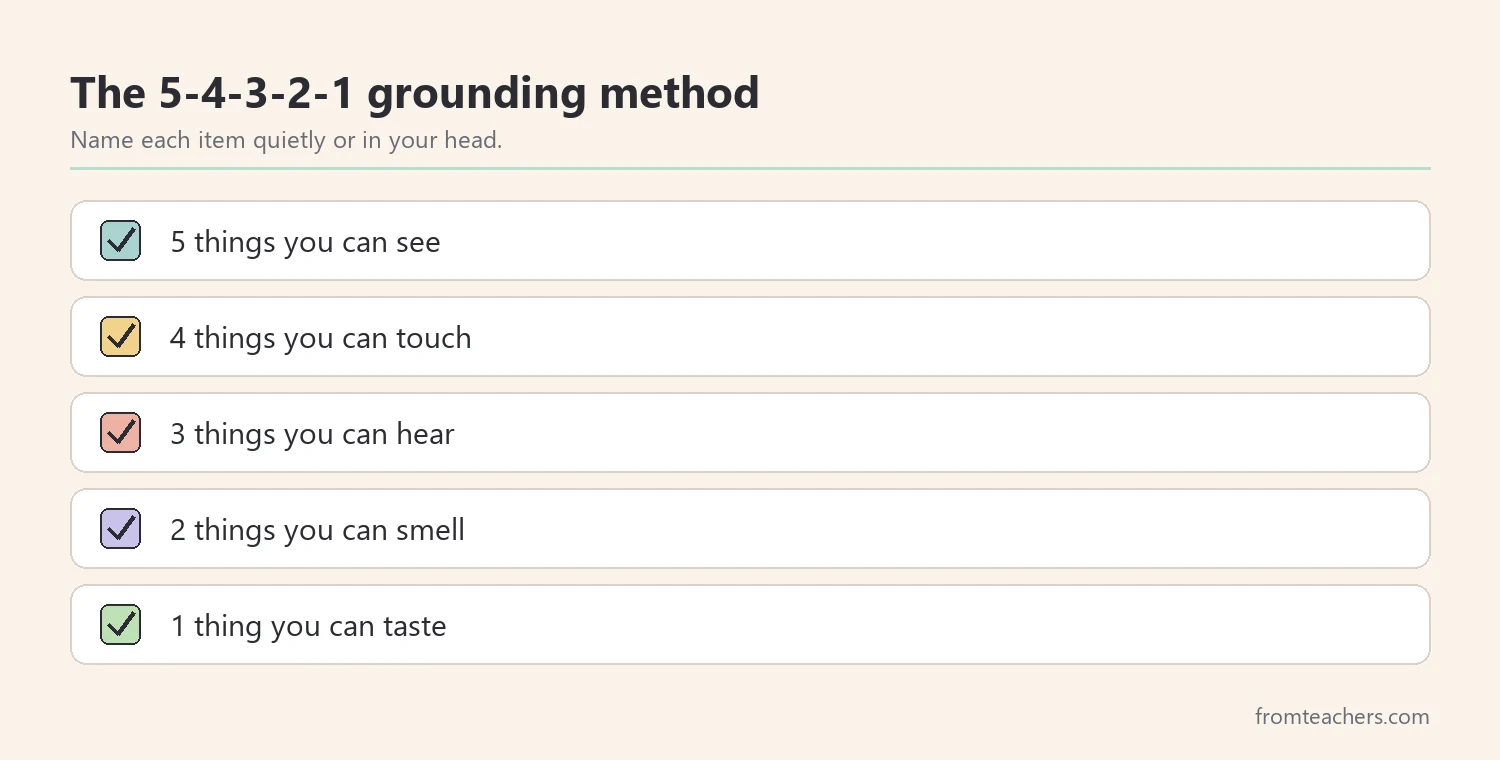
For Maya, naming five things she could see worked best because it was easy to do quietly at her desk. She also kept a smooth stone in her pocket to hold during tests. Her teachers agreed she could hold it at any time without asking.
Make it stick
When you want more options, the Panic Attack Strategies coping tables organize breathing, grounding, movement, cognitive, visualization, and social support techniques into clear tables with steps and benefits. That makes it easier to try one new strategy at a time instead of guessing.
Movement can also help some students. A short walk with an adult, a few slow stretches, or pressing hands together firmly can release tension. Still, always match the strategy to the setting and to what the student says helps.
Similarly, keep a short menu rather than a long one. Two or three panic attack coping strategies the student knows well are more useful than ten they half remember. Maya’s menu listed only box breathing, five things she could see, and holding her stone. Later, once those felt automatic, her counselor added one movement option for days when sitting still felt impossible.
4. Build a calm script for adults with panic attack coping strategies
What adults say during panic matters as much as what the student does. Long explanations, questions, and reassurance like “You are fine” can feel overwhelming. Instead, a short, calm script keeps everyone steady.
For example, a good script has three parts. First, name what is happening in simple words. Second, offer one strategy the student already knows. Third, stay nearby and quiet. For example: “This is a panic wave. It will pass. Let’s do box breathing together.” Then, breathe slowly and wait.
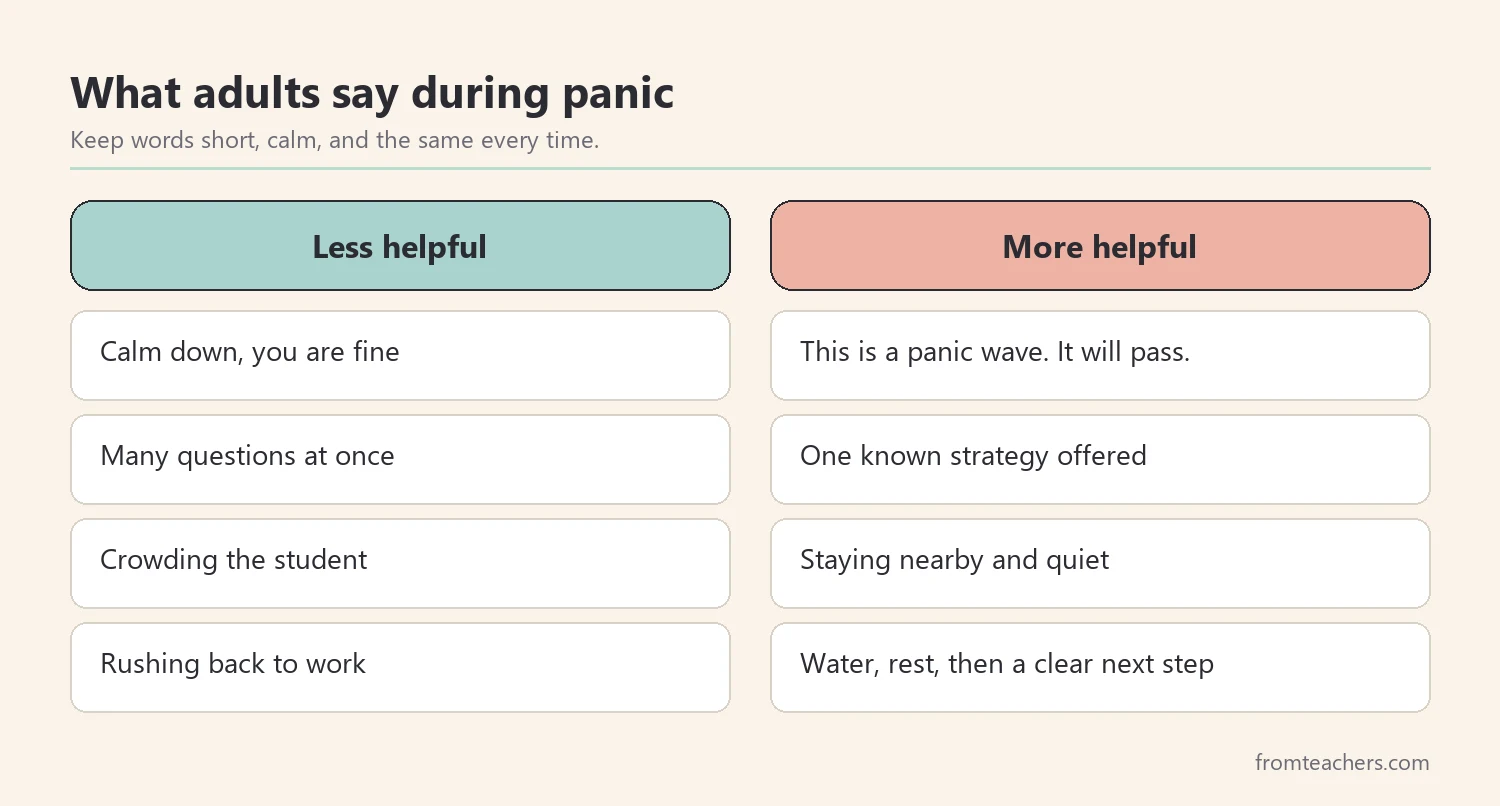
Maya’s team wrote her script on a single card that every teacher kept in their plan book. It also named a quiet spot near the counseling office she could go to with an adult. Because every adult used the same words, Maya knew what to expect, which lowered her worry about panicking in class.
What this looks like day to day
Also, plan the return. After the wave passes, the student may feel tired or embarrassed. Offer water, a short rest, and a clear next step, like rejoining the class at the next activity. Avoid asking many questions right away. Instead, talk about what helped later, once the student is calm.
Clear panic attack coping strategies work best when the whole team uses them the same way. Share the script with substitutes, coaches, and family members who may be present during a hard moment. A brief note in the substitute folder is often enough to keep the response consistent.
Moreover, invite the student to help write the script. When Maya chose the words “It will pass,” the phrase felt like hers rather than something adults said at her. In short, panic attack coping strategies land better when the student had a voice in shaping them.
5. Track and review the plan with the family
A simple record helps you see whether the plan is working. Keep it short: the date, where the panic happened, which strategy was used, and roughly how many minutes until the student felt ready to return. Then, review the record every few weeks with the student, family, and counselor.
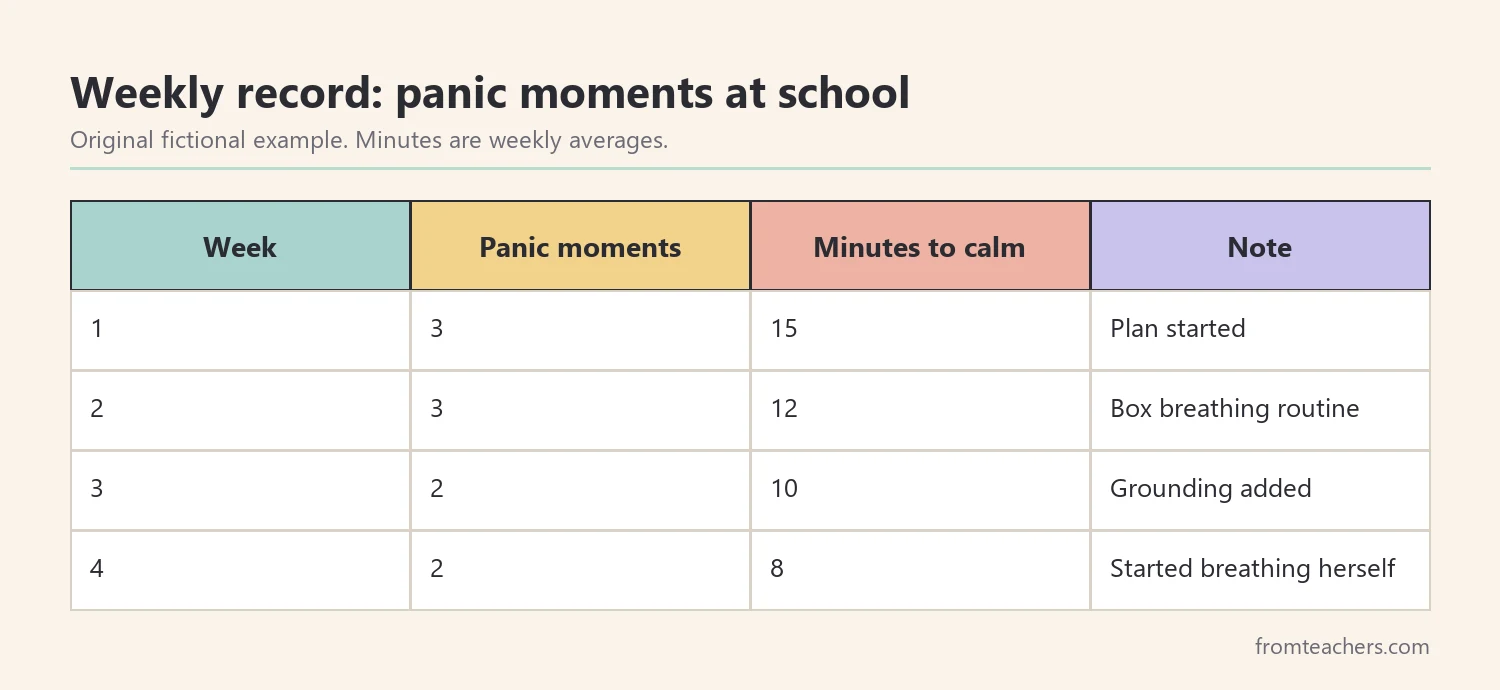
In week 1, Maya had 3 panic moments at school, and it took about 15 minutes on average before she was ready to return. By week 2, she again had 3, but the average dropped to 12 minutes once box breathing became routine. In week 3, after she added naming five things she could see, she had 2 moments with an average of 10 minutes. By week 4, she had 2 moments with an average of 8 minutes, and she started the breathing herself both times.
Numbers like these are not a cure, and they do not need to reach zero to show progress. Rather, they show whether the student is using the panic attack coping strategies more independently and recovering a bit faster. When progress stalls, change one thing, such as trying a new grounding option or adjusting the quiet spot.
Keep it simple
Above all, keep the family and school counselor involved. If panic attacks are frequent, getting worse, or affecting daily life, encourage the family to talk with a qualified health or mental health professional. School panic attack coping strategies support that care; they do not replace it.
Finally, celebrate small wins with the student. Saying “You started your breathing before I even got there” helps the student see their own growth. That sense of control is often what makes panic attack coping strategies stick for the long term.
Common mistakes and how to avoid them
- Teaching breathing only during panic. Fix: practice for a few minutes on calm days so the skill is ready when needed.
- Too many words. Fix: use a short script and then stay quiet and nearby.
- Telling the student to calm down. Fix: name the wave and offer one known strategy instead.
- Different adults, different responses. Fix: share one written plan and script with every adult involved.
- No plan for the return. Fix: offer water, rest, and a clear next step back into the day.
- Ignoring warning signs that need a professional. Fix: involve the counselor and encourage families to seek qualified help when needed.
Questions teachers and parents ask about panic attack coping strategies
Which panic attack coping strategies work best for kids?
There is no single best strategy for every child. Slow breathing and simple grounding are good starting points because they are easy to learn and use anywhere. Let the child try a few and choose what feels best.
Should a student leave class during a panic attack?
Sometimes a quiet space helps, and sometimes leaving makes the moment feel bigger. Decide this ahead of time with the student and counselor. Write the agreed option into the plan so every adult responds the same way.
How can parents help at home?
Parents can practice breathing and grounding with their child on calm days. They can also use the same short script the school uses. That consistency helps the child feel safer in both places.
Can teens use these strategies on their own?
Yes, many teens learn to start breathing or grounding independently with practice. A small card or phone note with their chosen steps can help. Over time, adults can step back as the teen takes the lead.
When should we seek professional help?
Seek help if panic attacks are frequent, intense, getting worse, or interfering with school, sleep, or friendships. A qualified health or mental health professional can assess and recommend next steps. In an emergency, contact emergency services.
Related reading: Building Stronger School Counseling Programs: A Framework for Student Success, Managing Sensory Overload: Practical Strategies for Autism and ADHD, and Essential Trauma-Informed Teaching Strategies for Modern Classrooms.
A companion resource for panic attack coping strategies:
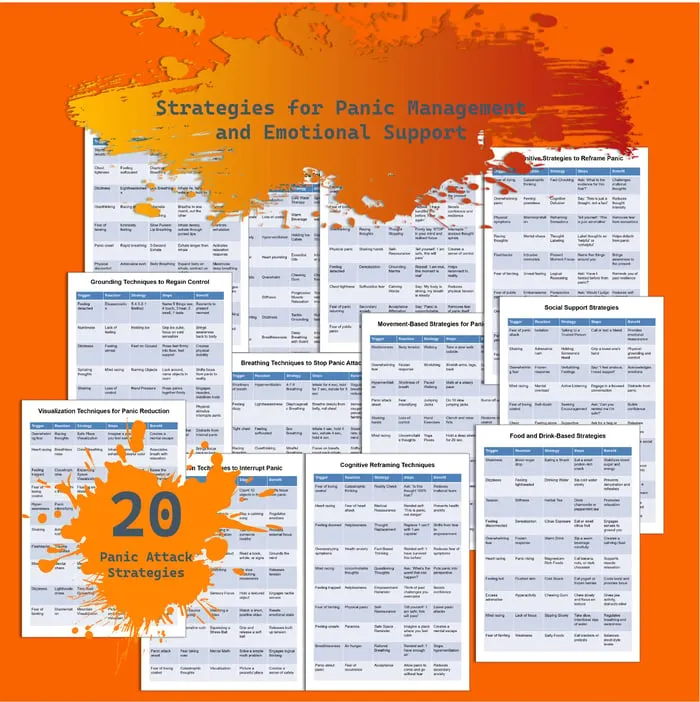
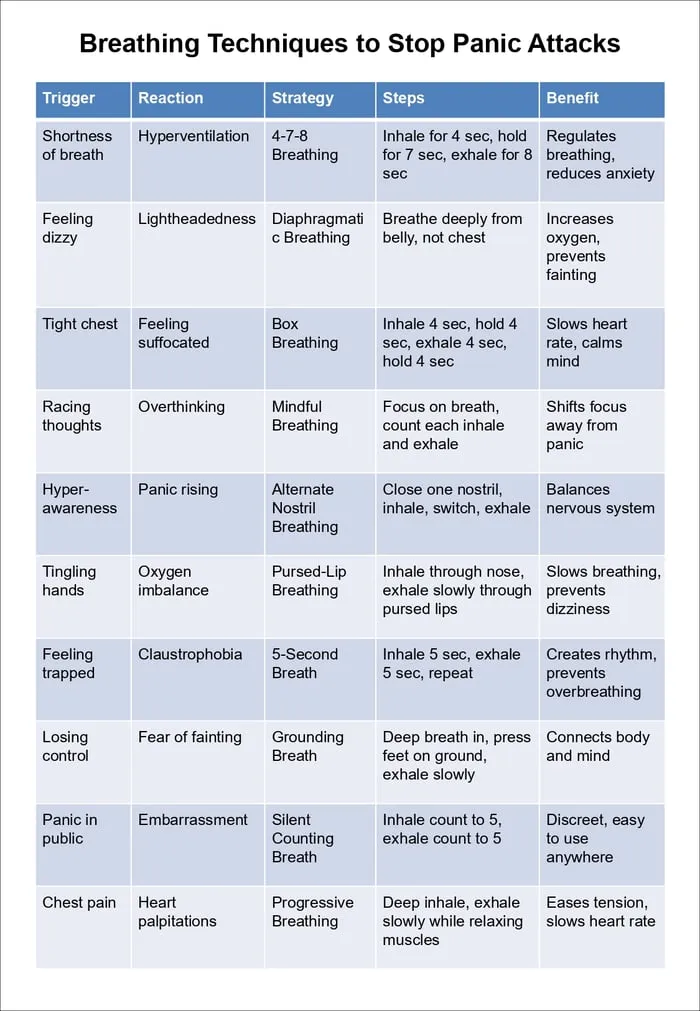
Panic Attack Strategies: 20 Coping Tables: twenty strategy categories, including breathing, grounding, movement, cognitive, visualization, and social support techniques, each paired with a trigger, a concrete technique, step-by-step instructions, and its benefit.
Sources and scope
- National Institute of Mental Health: general information on anxiety and panic, and on finding help.
- American Psychological Association: public resources on anxiety, stress, and coping.
- American Academy of Child and Adolescent Psychiatry: family-friendly information on children’s mental health.
- American School Counselor Association: resources on the role of school counselors in student well-being.
This guide covers everyday coping routines that teachers and parents can practice with students. It does not cover diagnosis, therapy, medication, or emergency care, which belong to qualified professionals.
Key takeaways
- Panic attack coping strategies work best when you know the student’s early signs.
- Practice slow breathing and grounding on calm days.
- Use a short, calm script that every adult shares.
- Plan the return to class, not only the calm down.
- Review panic attack coping strategies with the family and counselor every few weeks.






Leave a Comment