
Teaching community places for kids often begins with a hard moment: a child freezes at the grocery store door, covers their ears in the gym, or refuses to step off the school bus at a new stop. The place is not dangerous, but it is unfamiliar, loud, and full of unwritten rules. For many children, especially students in special education and life skills programs, not knowing what will happen next is the hardest part.
This guide gives you a clear, five-step plan. By the end, you will be able to choose which places to teach first, build simple picture cards, pre-teach before an outing, practice in small steps, and record progress so each visit feels calmer than the last.
Examples are fictional. Adapt to the student’s goals and agreed supports. This is guidance, not a diagnosis.
At a glance
- Start with the places the child actually visits, not a long list of every place in town.
- Give each place one picture card that explains what it is for and what to expect.
- Pre-teach with cards and short stories before the real outing.
- Practice outings in small, planned steps and end on a success.
- Record a few simple measures so the team can see real progress.
1. Choose the community places for kids to teach first
First, resist the urge to teach every place at once. A child who is anxious about new settings learns best when the list is short and meaningful. So, start with two or three community places for kids that the child will really visit in the next month.
Next, ask the family where the child goes each week. Common answers include the grocery store, the playground, the library, the doctor’s office, and the school bus. Then add the places school will use for community-based instruction. The best community places for kids to teach first are the ones that appear in both lists, because the child gets practice at home and at school.
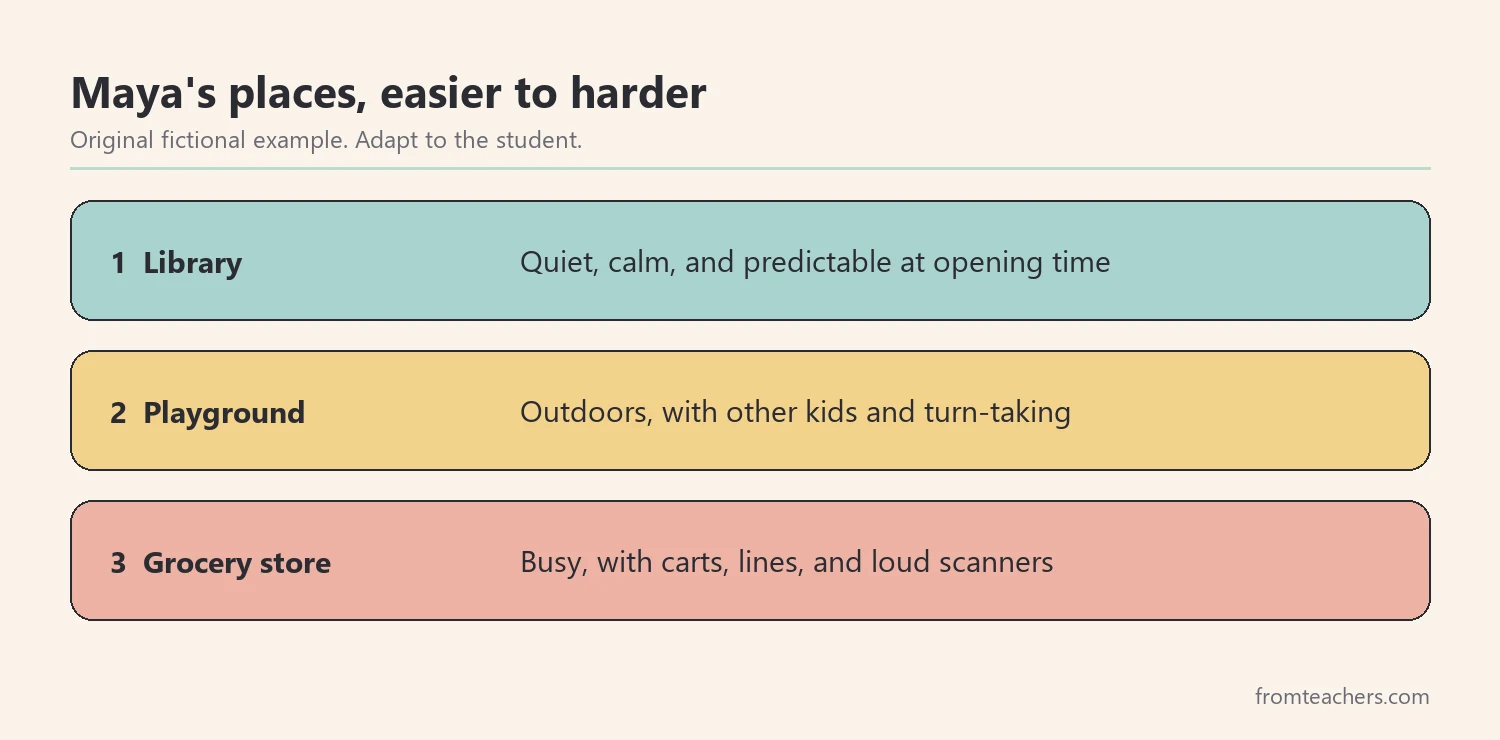
Also, think about difficulty. A quiet library at opening time is easier than a busy store on a Saturday. Therefore, order the places from easier to harder and plan to start with the easier ones.
| Place | What it is for | What to expect |
|---|---|---|
| Grocery store | Buying food | Carts, lines, beeping scanners |
| Playground | Playing outside | Other kids, taking turns |
| Library | Borrowing books | Quiet voices, a desk to check out |
| School bus | Riding to and from school | Assigned seat, stops, a driver |
Worked example. Maya is a fictional student, age 8, in a life skills class. Her parents say she visits the grocery store and the playground every week but gets upset at both. Her class also plans a library trip next month. So, her teacher picks three community places for kids like Maya: library first, then playground, then grocery store.
In short, a short, ordered list keeps teaching focused. As a result, each success makes the next place easier.
2. Build a picture card for each place
Once you have your list, give each place one clear picture card. Cards are the core tool for teaching community places for kids, because a picture stays the same even when the real place is noisy or busy. A good card answers three questions for the child: What is this place? What do people do here? What will I see, hear, and do?
For example, a library card might show a bright picture of shelves and a desk. Underneath, one short line says, “The library is where we borrow books.” A second line says, “People use quiet voices. I will pick one book and take it to the desk.” Keep the language simple and positive, and use “I will” statements the child can repeat.
In addition, match the card to the child. Some children need real photos of the exact place. Others do well with clear illustrations. If the child reads, add words. If not, keep one picture and say the description aloud each time.
Here is a quick checklist for a strong card:
- One place per card, with a large, clear picture.
- One sentence about what the place is for.
- One or two sentences about what to expect, including sounds.
- Words the child already knows, or will learn this week.
- The same card used at school and at home.
When you need a full set quickly, a ready-made pack of illustrated community environment cards for special education saves hours of drawing and writing. It covers everyday places such as the playground, grocery store, gym, school, school bus, and home, each with a short description of what to expect.
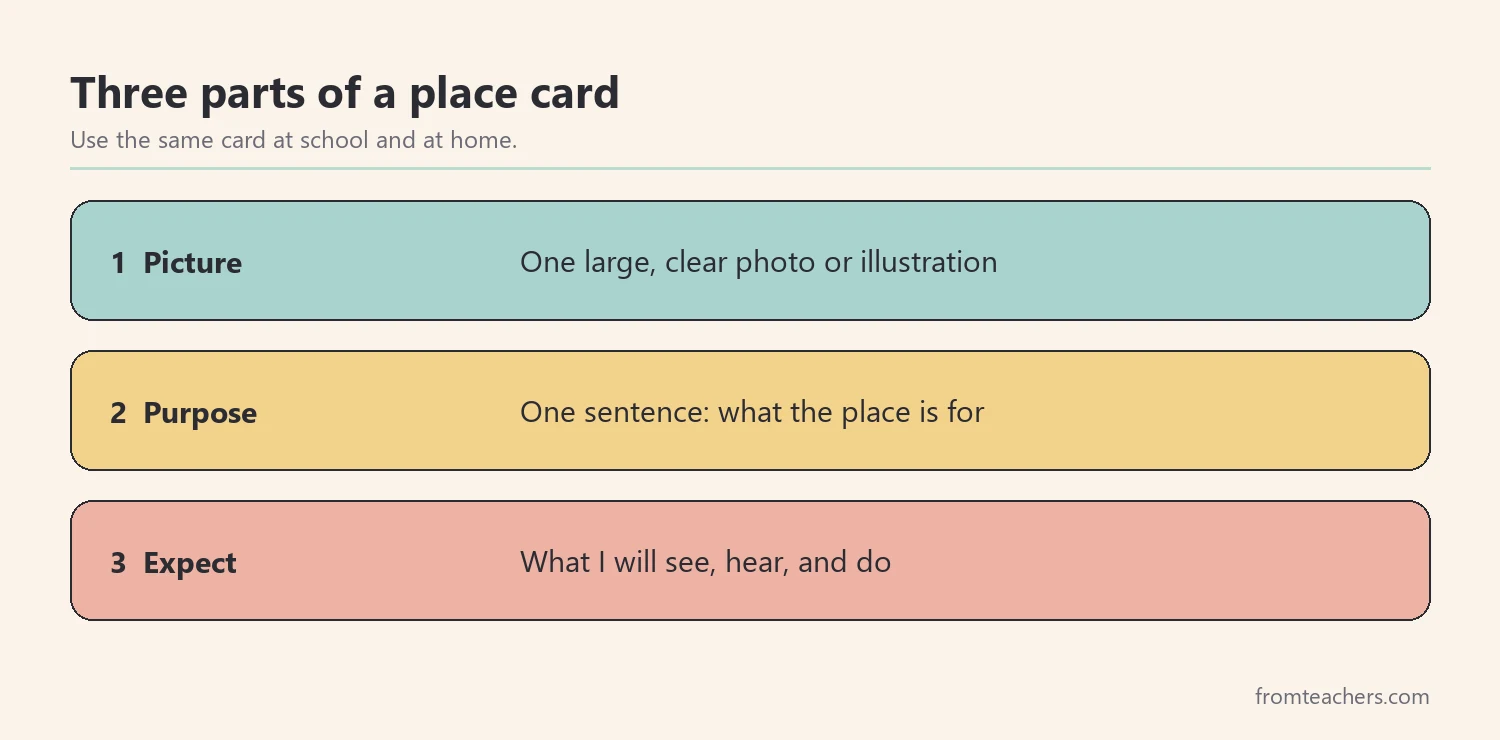
Worked example. Maya’s teacher makes her library card first. It says, “The library is where we borrow books. I will use a quiet voice. I will choose one book.” Maya’s mom keeps a copy on the fridge.
3. Pre-teach community places for kids before the outing
Next, use the cards before the child ever leaves the classroom. Pre-teaching is the step that makes community places for kids feel familiar before the first visit. Pre-teaching means the child meets the place in a calm moment first. Because the child already knows what to expect, the real visit feels less like a surprise.
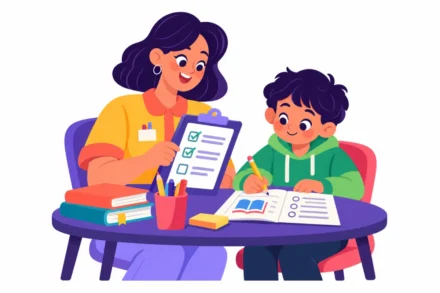
First, look at the card together for two or three minutes a day, for about a week before the trip. Read the sentences, point to the picture, and ask simple questions: “What do we do at the library?” “What kind of voice do we use?” Then, praise any correct answer, even a point or a nod.
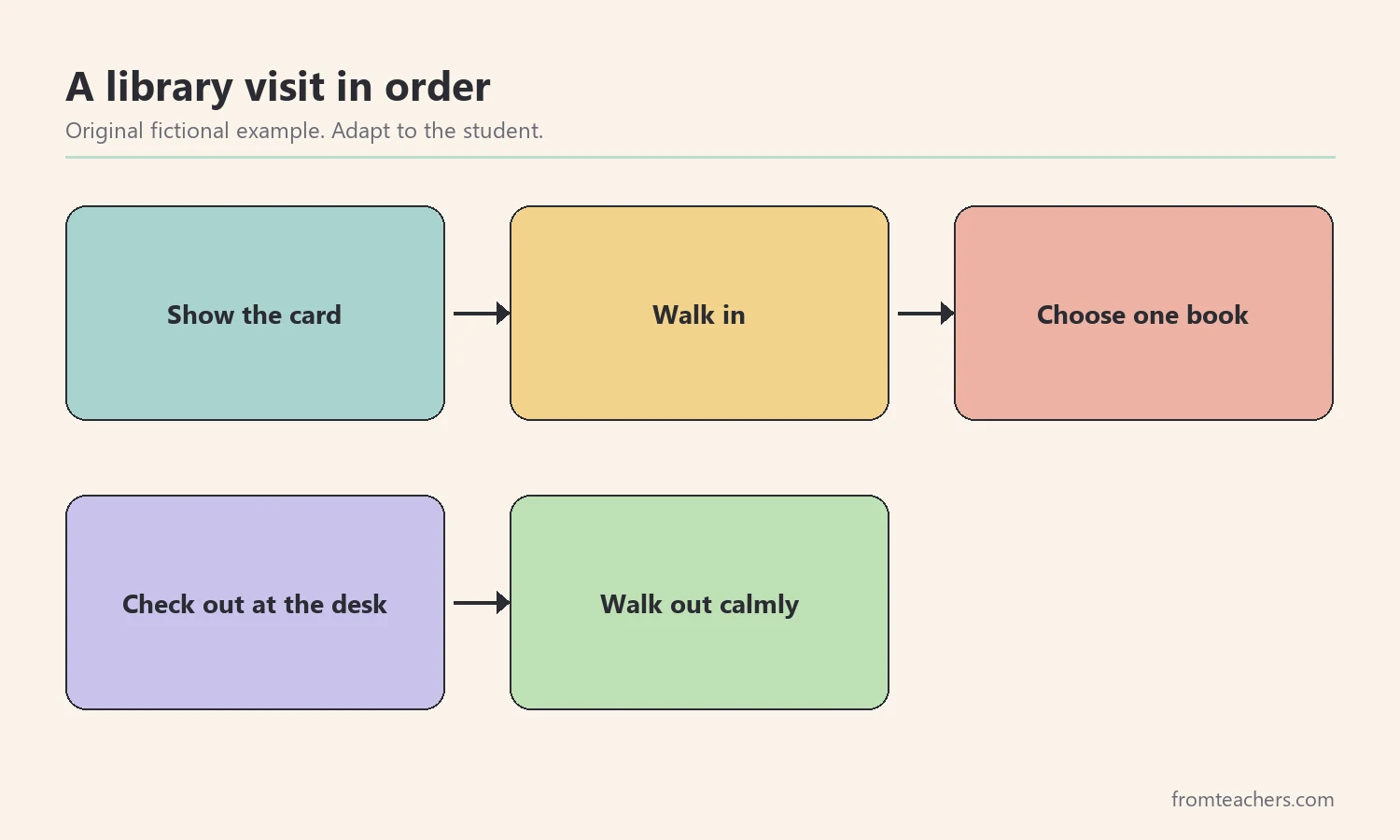
Also, add a short social story or a sequence strip. A sequence strip shows the visit in order: get on the bus, walk in, choose a book, go to the desk, walk out. In addition, show a photo or short video of the real place if you can. Finally, practice one key skill in class, such as using a quiet voice or waiting in a short line.
| Day | Pre-teaching activity | Time |
|---|---|---|
| Monday | Read the library card | 3 minutes |
| Tuesday | Read the card, sort quiet and loud pictures | 5 minutes |
| Wednesday | Look at photos of the real library | 5 minutes |
| Thursday | Role-play choosing a book and checking out | 10 minutes |
| Friday | Review the card and the trip schedule | 3 minutes |
Worked example. Maya practices for five days, 26 minutes in total. On Thursday, the class sets up a pretend checkout desk, and Maya hands her book to a classmate playing the librarian. By Friday, she can say, “Library. Quiet voice. One book.”
Overall, a few minutes a day is enough. As a result, teaching community places for kids becomes a routine part of the week rather than a big event.
4. Practice the outing in small steps
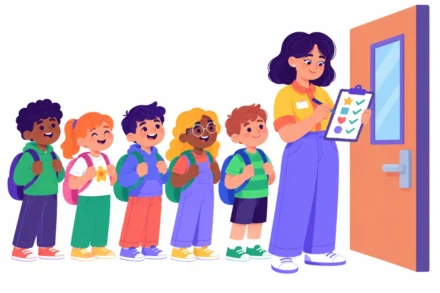
Then it is time for the real place. Practice is where community places for kids stop being pictures and become real experiences. However, the first visit does not need to be a full trip. Instead, break the outing into small steps and end each visit on a success, even if it is short.
For example, the first library visit could be ten minutes: walk in, find the picture book shelf, choose one book, and leave. The second visit adds the checkout desk. The third adds sitting at a table to look at the book. Each step builds on the one before.
Before you go, show the card once more and name the plan. During the visit, carry the card and point to it when the child needs a reminder. Also, plan a calm exit. If the child becomes upset, it is fine to leave early and try again later. Leaving calmly is not a failure; it teaches the child that the adult keeps them safe.
In addition, think about timing and support. Visit at quiet times first, bring noise-reducing headphones if the child uses them, and agree on one simple signal for “I need a break.” After the visit, look at the card again and talk about what went well.
Worked example. On her first visit, Maya walks in, picks a dinosaur book, and leaves after eight minutes. On her second visit, she hands the book to the librarian. Her teacher holds up the card each time Maya’s voice gets loud, and Maya lowers it.
In short, small, successful visits build trust in community places for kids and in the adults who guide them. Therefore, the child is ready for a longer trip much sooner than with one big outing.
5. Record and review progress with community places for kids
Finally, keep a short record after each visit to the community places for kids on your list. Data does not need to be complicated. Three or four simple measures tell the team whether the plan is working and when to move to the next place.
For example, record how long the child stayed, how many steps of the sequence they completed, how many reminders they needed, and one short note. Use the same measures every time so you can compare visits fairly.
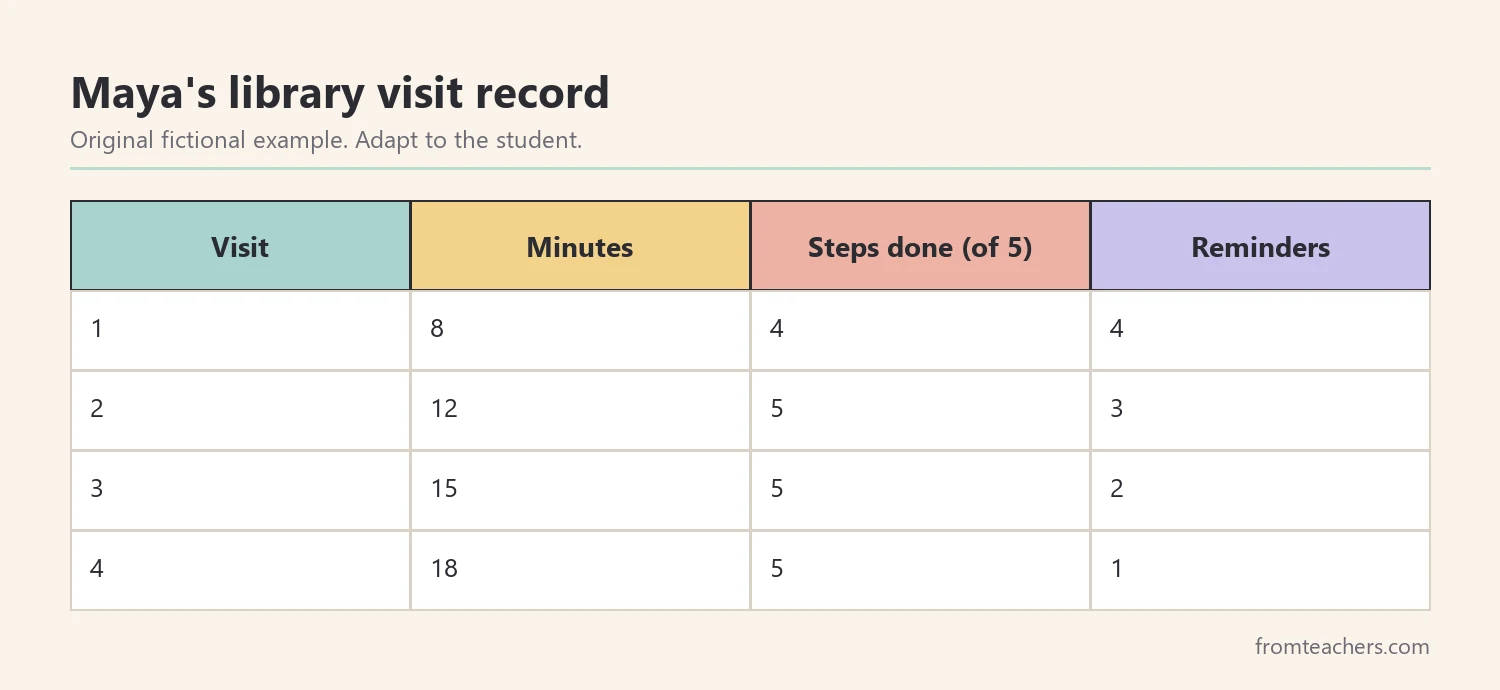
Worked example. Over four library visits, Maya completes 4 of the 5 steps on her first visit, skipping checkout as planned, and all 5 on each visit after that. Her time in the library grows from 8 to 18 minutes. Her reminders drop from 4 to 3, then 2, then 1. After the fourth visit, her team decides she is ready to start the playground card.
Next, review the record with the family every few weeks. Ask what they notice at home. For instance, Maya’s mom might report that Maya now asks to go to the public library on weekends. That is useful information for the team.
Also, use the review to adjust. If progress stalls, ask simple questions: Is the place too busy? Is the card clear? Does the child need a shorter first step? Then change one thing at a time. For instance, keep the same place but visit at a quieter hour, or keep the same time but shorten the sequence by one step. Small, single changes show you exactly what helped.
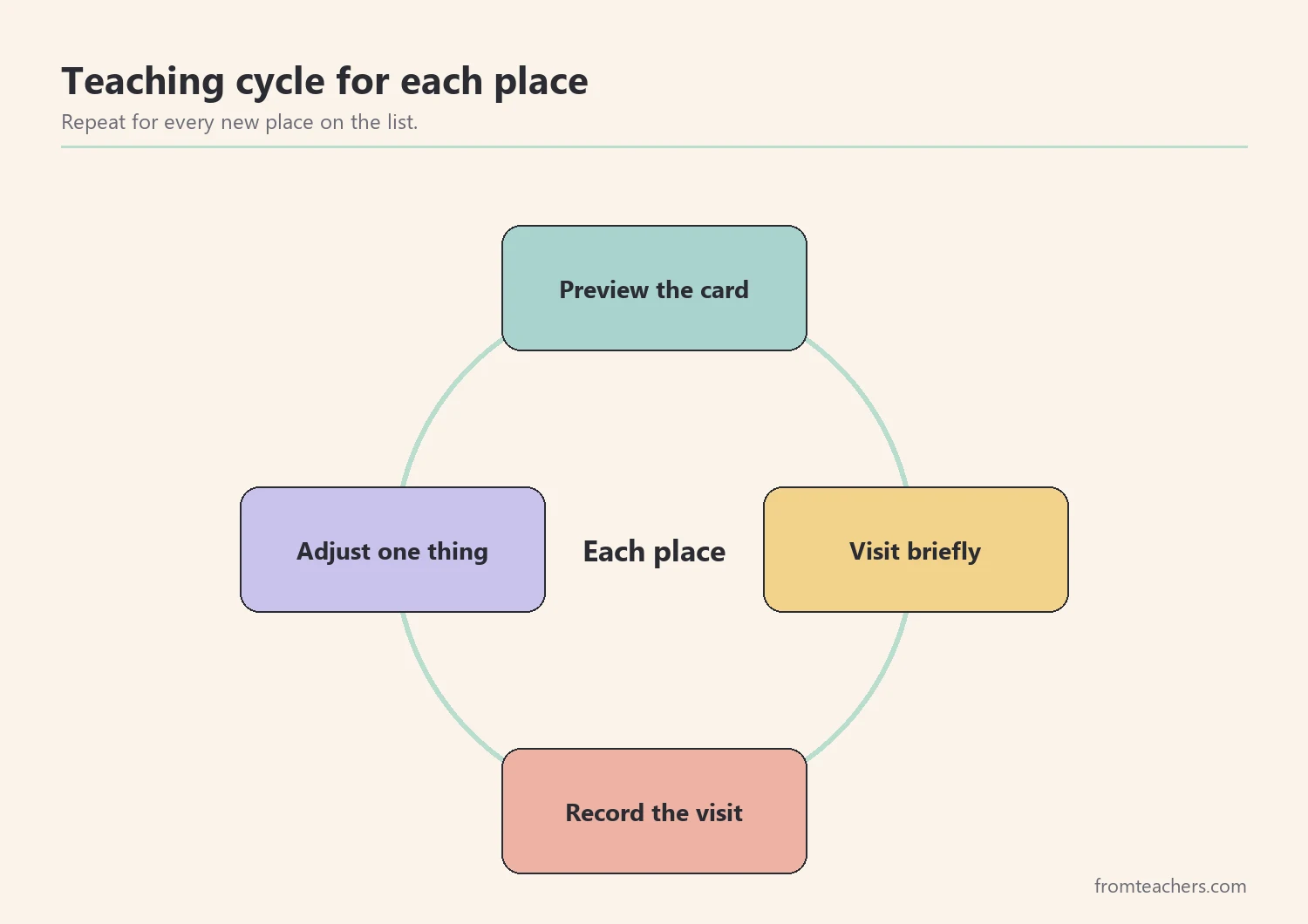
Over time, the same cycle works for each of the community places for kids on your list. As a result, the child gains not only knowledge of each place but also a general skill: knowing how to prepare for something new.
Common mistakes and how to avoid them
Even careful plans for community places for kids can go off track. Here are the most common problems and simple fixes.
- Teaching too many places at once. Fix: start with two or three places the child really visits, then add more.
- Using long, wordy cards. Fix: keep each card to one picture and two or three short sentences.
- Making the first visit too long. Fix: plan a short first visit with a clear end, and build from there.
- Different words at home and at school. Fix: share the same cards and phrases with the family.
- Skipping the record. Fix: write three numbers and one note after each visit, every time.
- Treating an early exit as failure. Fix: leave calmly, review the card later, and try a shorter step next time.
Questions teachers and parents ask about community places for kids
What age is best for teaching community places for kids?
Children can learn about community places for kids from preschool onward. Picture cards work well for elementary and middle school students, especially in special education or life skills programs. Older students can use the same steps with more detail and more independence.
How many places should I teach at one time?
Start with two or three places. Choose the ones the child visits most often. When the child handles those calmly, add one new place at a time.
What if my child gets upset during a visit?
Stay calm, use your agreed break signal, and leave if needed. Later, review the card together and plan a shorter visit. Many children need several short visits before a place feels familiar.
Can parents use the same cards at home?
Yes. In fact, using the same cards for community places for kids at home and at school helps the child learn faster. Keep a copy near the door or in the car, and look at it before each outing.
Do picture cards replace real outings?
No. Cards prepare the child, but real practice in the real place is where the skill grows. Use the cards before, during, and after each visit to connect the two.
Related reading: Navigating the Path to Adulthood: Building Essential Life Skills, Managing Sensory Overload: Practical Strategies for Autism and ADHD, and Meltdowns vs Tantrums: A Guide to Understanding and Responding.
A companion resource for teaching community places
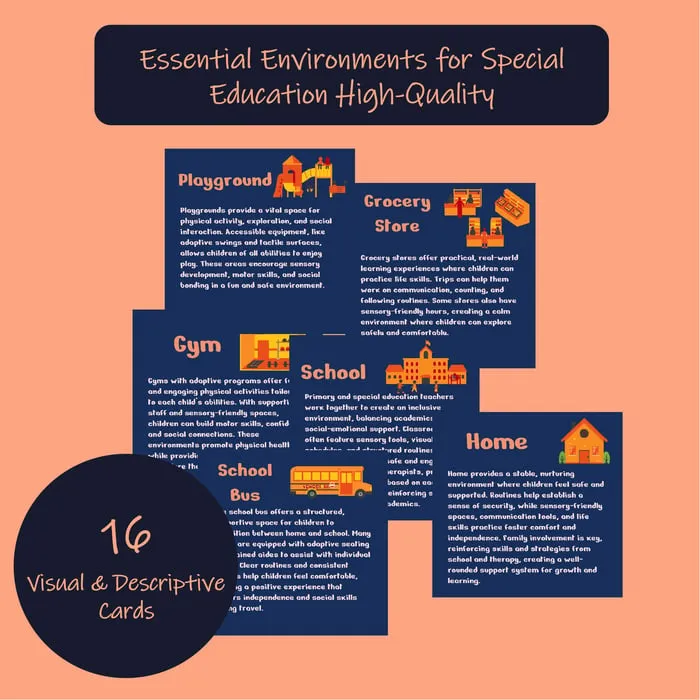
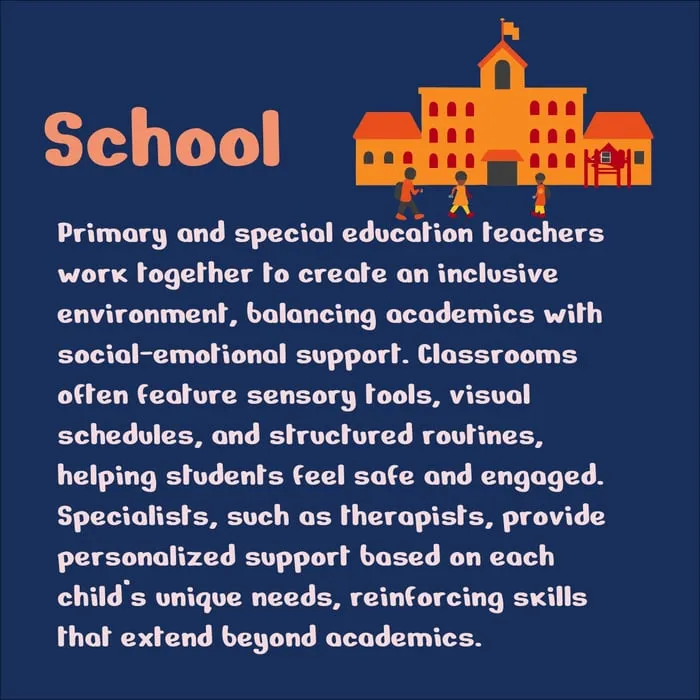
Essential Environments Cards for Special Education: 16 illustrated, printable cards that explain everyday places like the playground, grocery store, gym, and school bus in simple words, ideal for pre-teaching community outings at school or at home.
Sources and scope
- IRIS Center, Vanderbilt University: free modules on instruction and supports for students with disabilities.
- Understood.org: practical guidance for families and educators of children who learn and think differently.
- CAST UDL Guidelines: a framework for offering multiple ways to access information, including visuals.
- IDEA, U.S. Department of Education: the law behind IEPs, including transition and functional skills planning.
This guide covers everyday strategies for preparing children for familiar community places with picture cards and short practice visits. It does not replace the decisions of the child’s IEP team, therapy, or advice from a qualified professional.
Key takeaways
- Choose a short list of community places for kids that the child actually visits.
- Give each place one simple card: picture, purpose, and what to expect.
- Pre-teach for a few minutes a day before the real outing.
- Break outings into small steps and always end on a success.
- Record a few measures and repeat the same cycle for each new place.
Leave a Comment