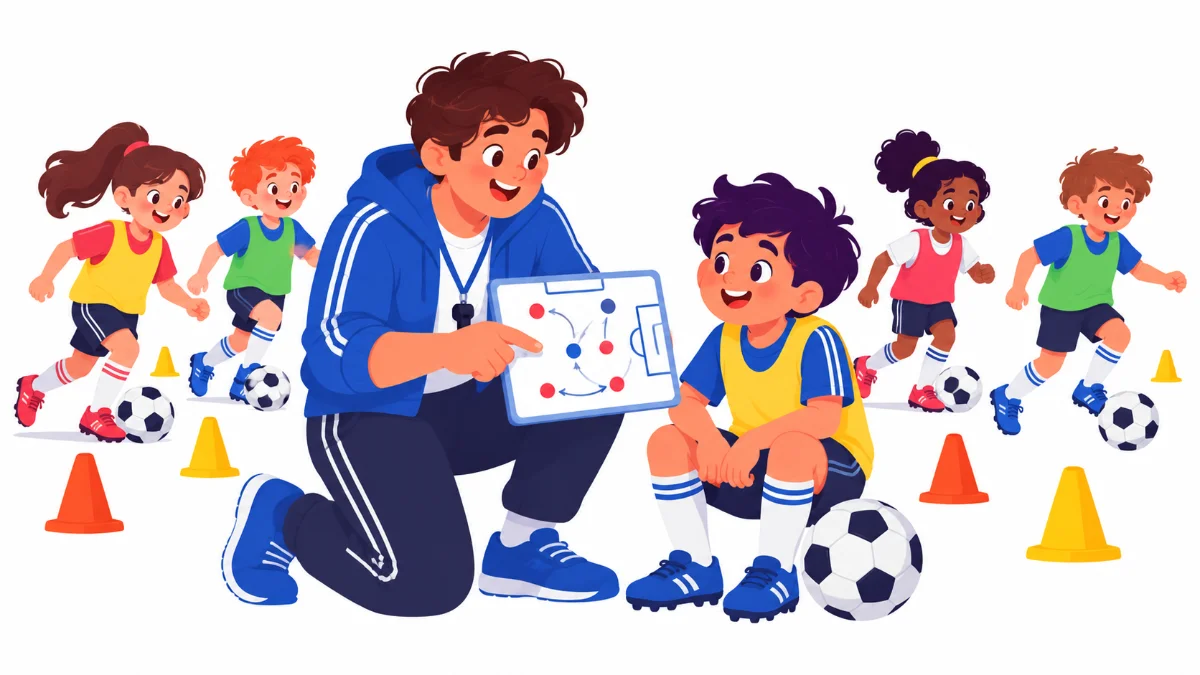

Coaching kids with ADHD in sports can be wonderful, because many of these children love movement, energy and action. It can also be frustrating when a player runs the wrong way during a drill, talks through instructions or melts down after a lost game. Picture Coach Dana, a volunteer soccer coach, and Mateo, age 9, who has ADHD. Mateo is fast, funny and fearless, but he rarely waits his turn and often misses the plan for the next drill.
This list is for youth coaches, volunteer parents and PE staff who lead after-school sports. It ranks eight tips by how easy they are to start at the next practice. Each tip covers what to do, why it helps and how Coach Dana used it with Mateo. The ideas also help many players without ADHD.
Examples are fictional. Adapt to the student’s goals and agreed supports. This is guidance, not a diagnosis.
At a glance
- Give short instructions, one at a time, with a demo.
- Keep waiting time short and active.
- Use clear, predictable practice routines.
- Praise effort and specific actions often.
- Partner with families and agree on calm reset strategies.
How we ranked these tips
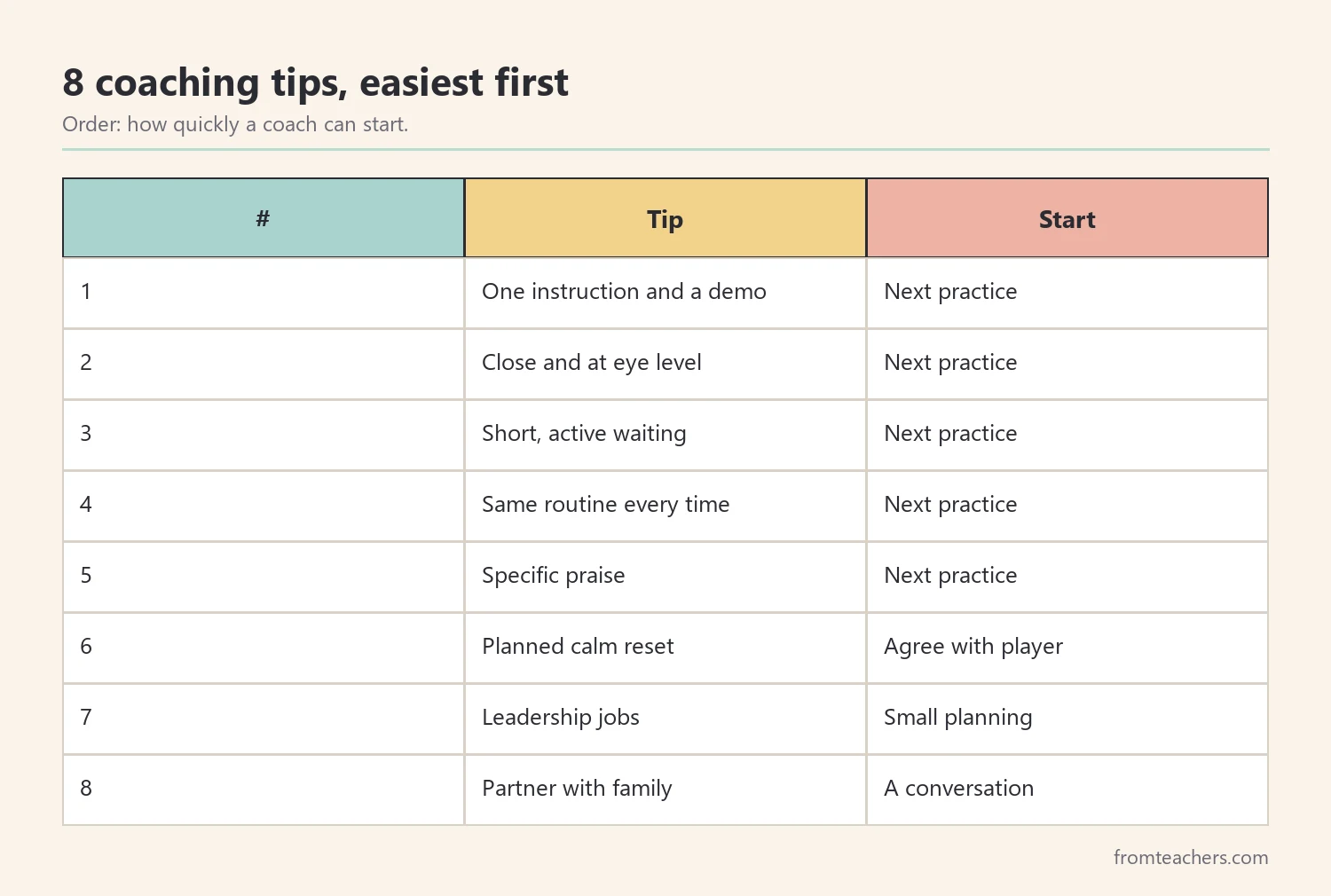
We ranked the eight tips by how quickly a coach can use them, from changes you can make at the very next practice to strategies that need a conversation with families or some planning. All of them cost nothing.
ADHD affects attention, impulse control and activity level, and it looks different in every child. As a result, no tip works for everyone. Treat this list as a menu. Figure 1 shows the ranking.
Start with two or three tips that address your biggest practice problem, whether that is listening, waiting or big feelings after mistakes. Keep them for a few weeks before adding more. Also, remember that a calmer practice benefits the whole team, not only one player, so these changes rarely feel like extra work once they become routine.
1. Give one instruction at a time, with a demo
What to do: keep instructions to one or two short sentences, then show the drill. Ask one player to repeat the plan.
Why it helps: long talks are hard for many children with ADHD to hold in mind. A demo gives them a picture to follow.
Example: Instead of explaining the whole passing drill, Coach Dana said, “Pass, then run to the cone,” and showed it once. Mateo got it on the first try.
2. Get close and at eye level
What to do: when giving directions, gather players close, face them and make sure the sun and distractions are behind you, not behind them.
Why it helps: fewer distractions mean more attention on you.
Example: Coach Dana moved huddles away from the playground. Mateo stopped looking at the swings and started listening.
3. Keep waiting short and active
What to do: avoid long lines. Use small groups, multiple stations and active waiting, such as ball taps while waiting.
Why it helps: waiting is often the hardest part of practice for children with ADHD. Short, active waits prevent many problems.
Example: Coach Dana split the team into three stations. Mateo spent less time waiting and more time playing, and his pushing in line stopped.
4. Use the same practice routine every time
What to do: follow a predictable order, such as warm-up, skill drill, small game, cool-down and team cheer. Post it on a small whiteboard.
Why it helps: predictable routines reduce uncertainty and make transitions easier.
Example: Mateo began checking the whiteboard himself and telling teammates, “Next is small game!”
5. Praise effort and specific actions often
What to do: notice and name what the player did well, such as “Great job waiting for the whistle” or “Nice pass to an open teammate.”
Why it helps: many children with ADHD hear frequent corrections. Specific praise builds confidence and shows exactly what to repeat.
Example: Coach Dana aimed for several specific praise comments for each player per practice. Mateo started waiting for the whistle more often to hear “great waiting.”
6. Plan a calm reset for big feelings
What to do: agree in advance on a short reset for frustration, such as getting water, taking three breaths or jogging to the fence and back.
Why it helps: losing, mistakes and unfair calls can trigger strong reactions. A planned reset is calmer than a public argument.
Example: After a missed goal, Mateo threw his water bottle. The next week, Coach Dana and Mateo agreed on “fence jog and back.” He used it twice that season and rejoined calmly both times. The ADHD Support Toolkit for classroom and home includes emotional regulation strategies and scripts for meltdown moments that adapt well to the field.
7. Give leadership jobs
What to do: assign roles such as cone captain, warm-up leader or equipment helper.
Why it helps: jobs channel energy and give children a positive way to stand out.
Example: Mateo became cone captain. He set up cones quickly and proudly, and he arrived early to do it.
8. Partner with the family
What to do: ask parents what works at home and school, such as signals, rewards or routines, and share what you see at practice.
Why it helps: consistent strategies across settings help children learn faster. Families also know triggers and strengths.
Example: Mateo’s dad shared that a quiet “thumbs up” signal worked well at school. Coach Dana used it at practice, and Mateo responded right away.
A sample practice plan
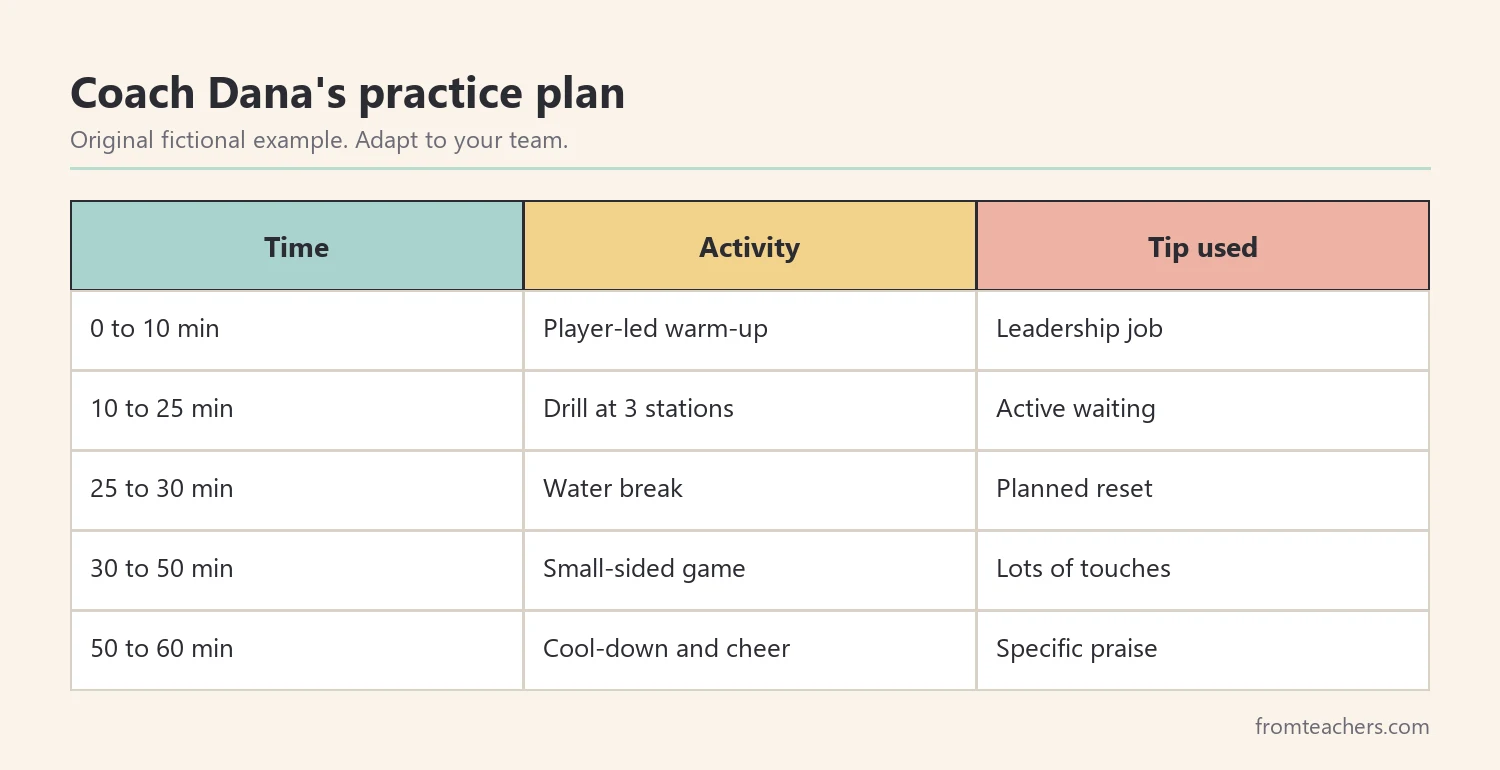
The table below shows Coach Dana’s 60-minute practice plan, designed with these tips in mind. Times are a fictional example.
| Time | Activity | Tip used |
|---|---|---|
| 0 to 10 min | Warm-up led by a player | Leadership job |
| 10 to 25 min | Skill drill at 3 stations | Short, active waiting |
| 25 to 30 min | Water break | Planned reset |
| 30 to 50 min | Small-sided game | Lots of touches |
| 50 to 60 min | Cool-down and team cheer | Specific praise |
A simple game-day flow
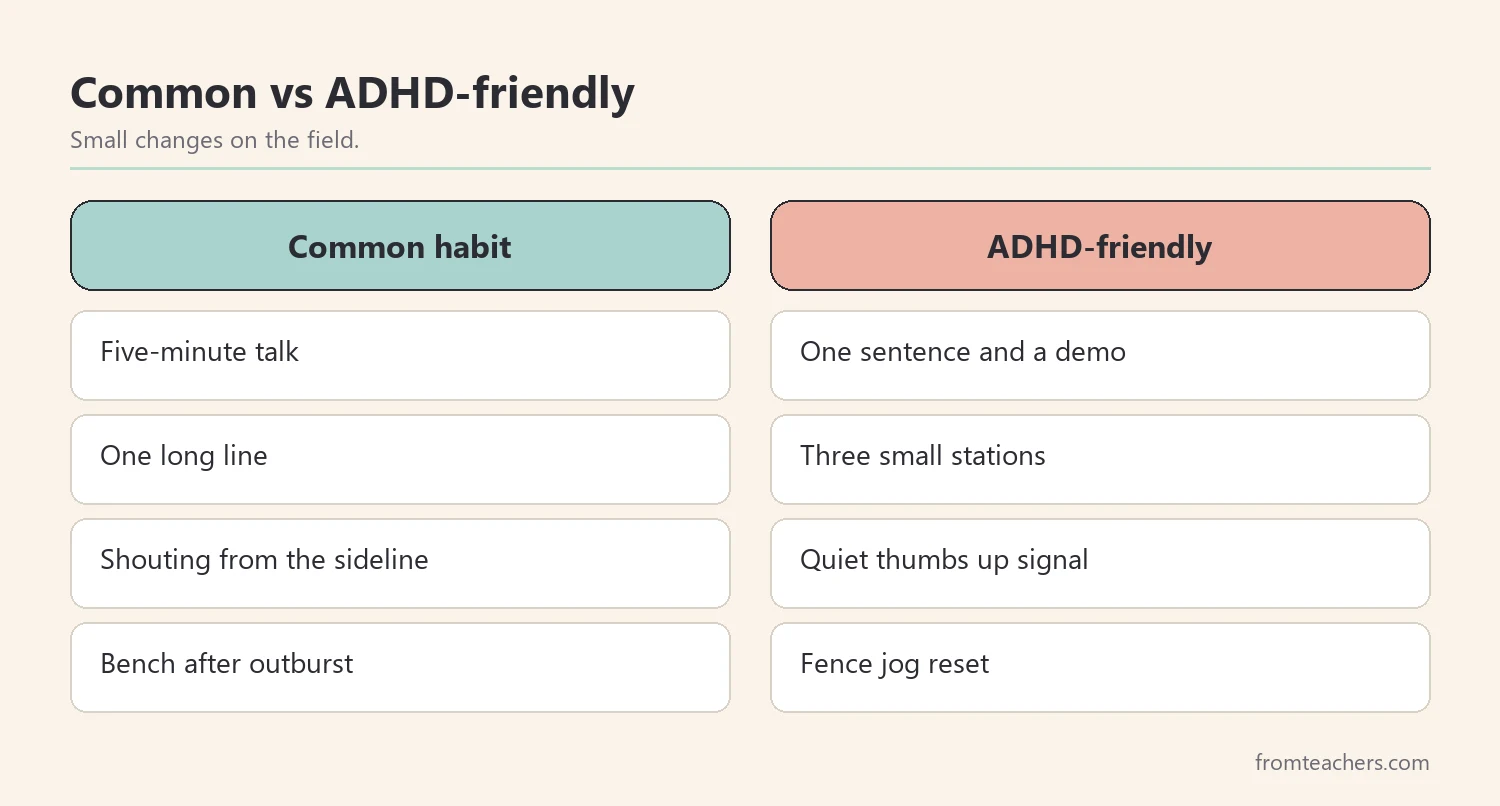
Games add excitement, noise and pressure. Figure 4 shows a four-part flow that keeps game days calmer for players who struggle with attention and big feelings.
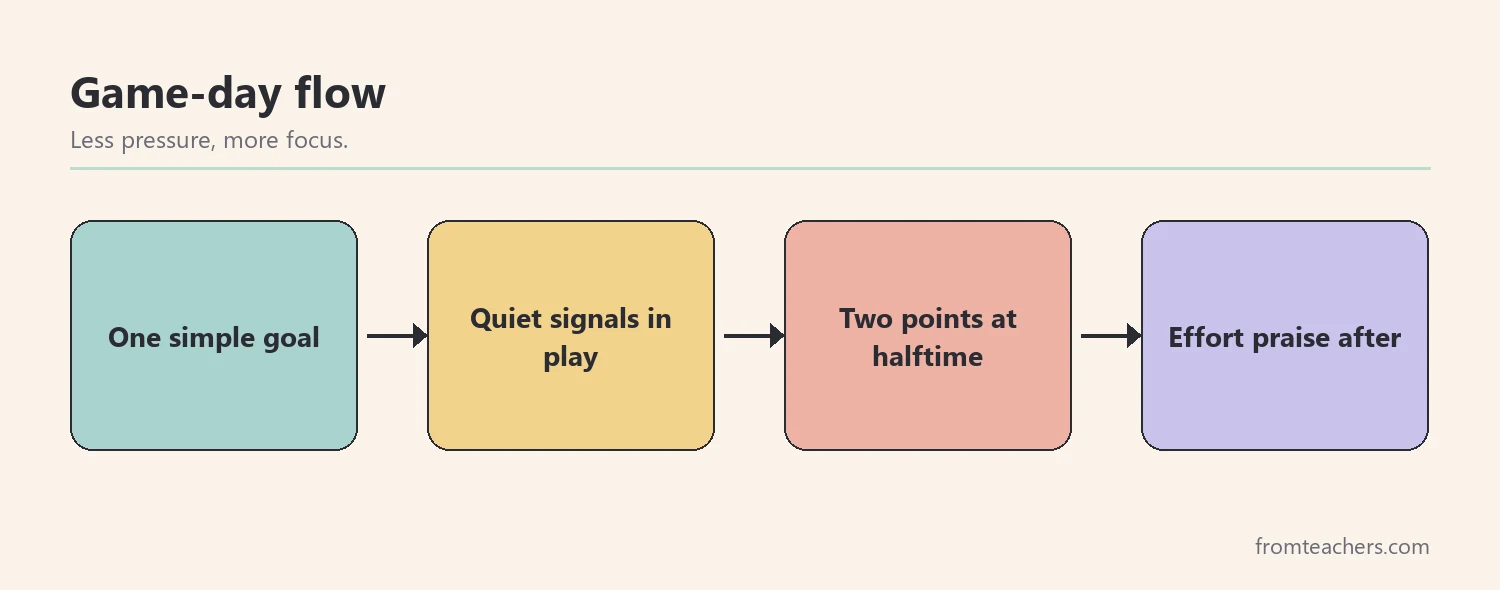
Before the game, remind players of one simple goal. During the game, use short signals instead of shouting from the sideline. At halftime, give one or two points only. After the game, praise effort first, whatever the score.
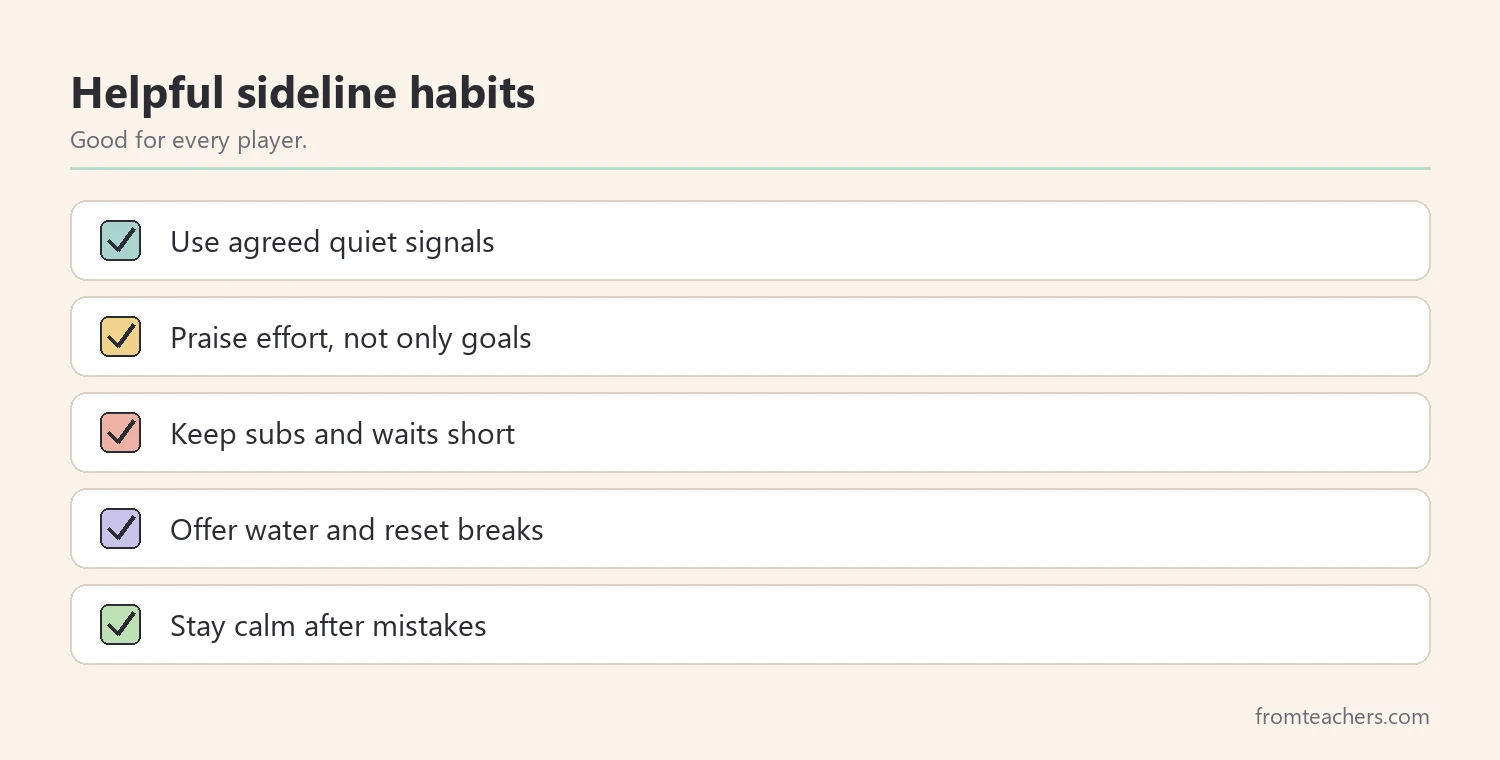
Figure 5 lists sideline habits that help every player, not only those with ADHD.
Adapting the tips by age
Younger players, around ages 5 to 8, usually need the shortest instructions, the most demos and very short drills. Games with lots of touches and simple rules work best. Praise should be frequent and immediate.
Players around 9 to 12 can handle a little more strategy, but still benefit from one instruction at a time and visual plans. This age group often responds well to leadership jobs and personal goals, such as “three good passes today.”
Teens may feel embarrassed by obvious support. Use private check-ins, quiet signals and responsibilities that look like normal team roles. Also, involve teen players in choosing their own reset strategies, since ownership matters more at this age.
Bringing assistant coaches on board
Consistency matters. If the head coach uses short instructions and quiet signals but an assistant shouts long corrections, players get mixed messages. Before the season, share your routine, signals and reset plan with every adult who helps. A short written page works well. Coach Dana gave her assistant a half-page summary, and practices felt calmer within two weeks.
Common coaching mistakes
- Long speeches. Fix: one instruction and a demo.
- Long lines. Fix: small groups and stations.
- Public punishment. Fix: quiet redirection and a planned reset.
- Benching for energy. Fix: give jobs and active roles.
- Coaching alone. Fix: ask families what works.
Why sports can be a strength
Many children with ADHD shine in sports. Energy, speed and enthusiasm are real strengths on the field. Also, team sports offer chances to practice waiting, following rules and handling frustration in a setting the child enjoys. When coaches set up practices that fit, children often carry those wins into school and home.
In Mateo’s case, his mom reported that he talked about “being cone captain” for weeks. That sense of belonging mattered as much as any skill he learned. By the end of the season, he also waited for the whistle on most drills, a skill his teacher noticed in class lines too.
Questions coaches ask about coaching kids with ADHD in sports
Should I ask whether a player has ADHD?
No. Families choose what to share. Ask all families what helps their child do well at practice, and use those tips.
What if a player is unsafe during practice?
Stop the activity calmly, guide the player to a reset and talk with the family afterward. Follow your league’s safety rules.
Are some sports better for kids with ADHD?
Every child is different. Many enjoy sports with frequent action and short waits, but interest matters most. Let the child try several.
How do I handle a player who talks during instructions?
Shorten instructions, stand closer and use a quiet signal. Praise the player when they listen.
Should I give rewards?
Specific praise and leadership jobs often work better than prizes. If you use rewards, keep them simple and fair for the whole team.
Related reading: ADHD Children Support Strategies, Understanding Autism and ADHD Meltdowns, and Managing Sensory Overload in Autism and ADHD.
You may also need: Homework Help for ADHD: Focused, Simple, and Supportive Study Strategies.
A companion resource for coaching kids with ADHD in sports:
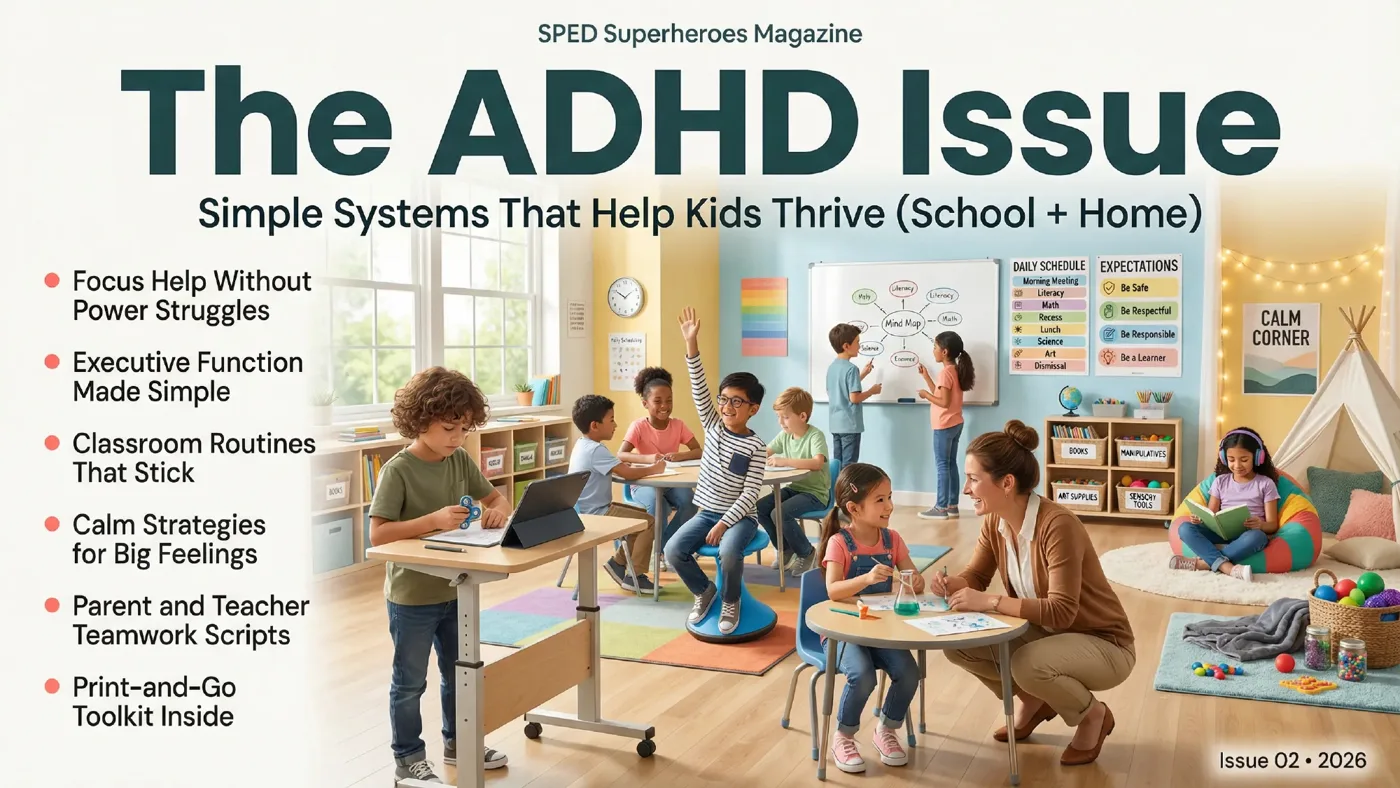
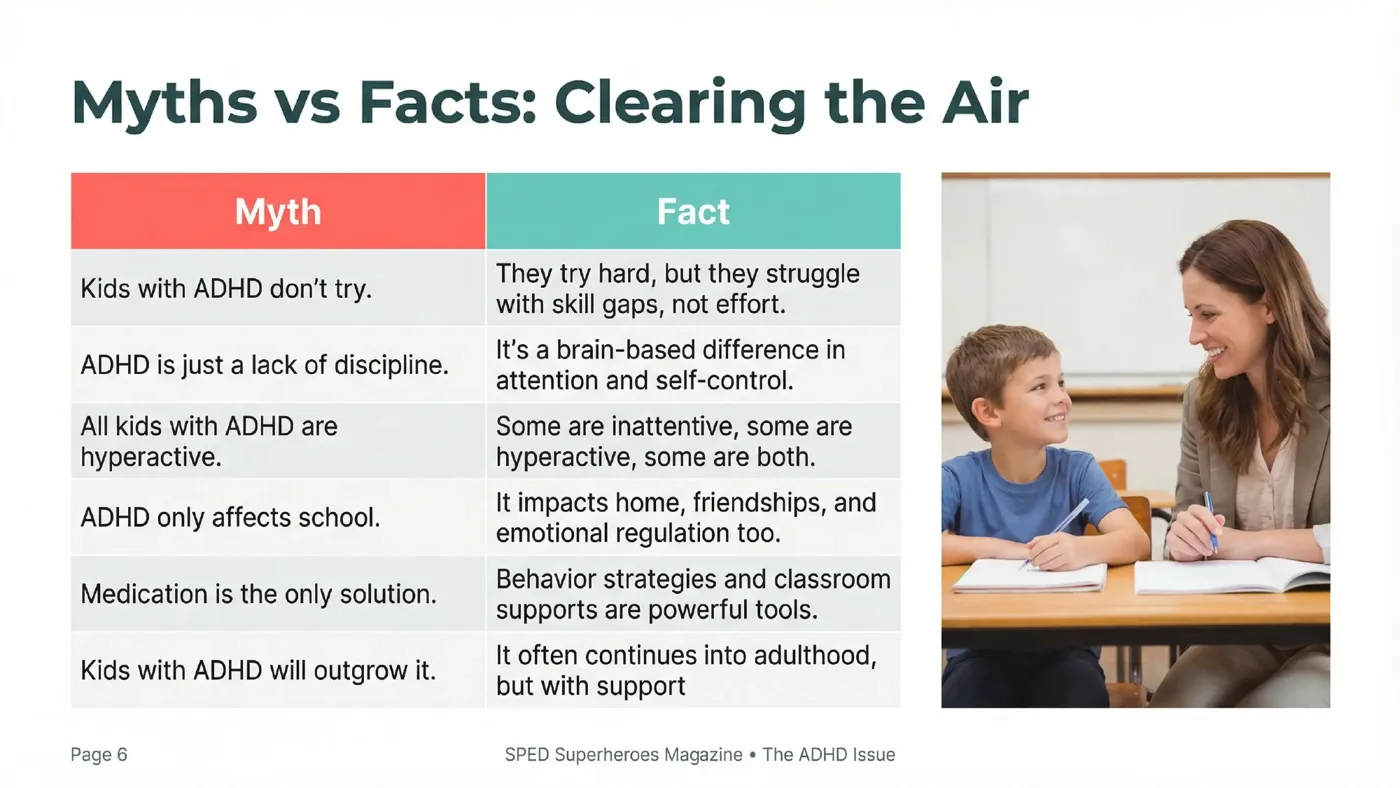
ADHD Support Toolkit: Classroom And Home Strategies: a 49-page guide for teachers and parents with a plain-language ADHD explanation and strengths spotlight, routines for transitions, directions and movement breaks, executive function help, impulsivity and emotional regulation strategies, scripts for meltdown moments, guidance on motivation without bribing, home routines, parent partnership scripts and printable trackers.
Sources and scope
- National Institute of Mental Health: ADHD: an overview of ADHD symptoms and how they can affect daily life.
- CHADD: family and educator resources on ADHD, including activities and self-esteem.
- KidsHealth (Nemours): family-friendly health information, including articles on ADHD and physical activity.
- Understood.org: practical guidance for families on focus, impulsivity and confidence.
These tips are general coaching strategies for youth sports and activities. They are not medical advice. Talk with families about any health, medication or safety needs, and follow your league’s rules.
Key takeaways
- Coaching kids with ADHD in sports works best with short instructions and demos.
- Keep waiting short and active, and follow a predictable routine.
- Praise specific actions often and plan a calm reset for big feelings.
- Give leadership jobs that use the player’s energy.
- Partner with families for consistent strategies.









Leave a Comment