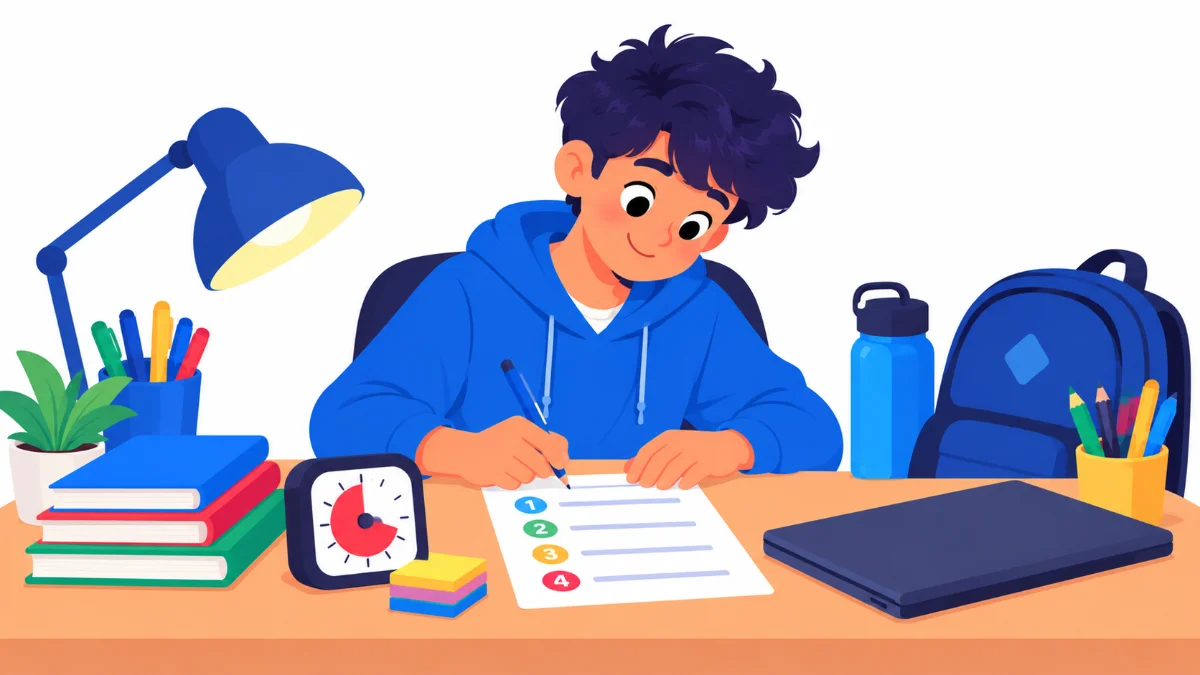

Planner habits for teens are not about owning the prettiest planner. They are about getting from “I know I should start” to actually starting. Picture Jordan, a high school sophomore. He knows his history project is due Friday. On Monday, he thinks about it. On Wednesday, he panics. By Thursday night, he is still choosing a topic. Sound familiar?
This list is written for you, the student. It ranks ten planner habits from easiest to build to most involved. You do not need all ten. Pick one, try it for a week, and add another when it feels automatic. Each habit includes why it helps and how it worked for Jordan.
Examples are fictional. Adapt them to your own classes, accommodations and goals. This is guidance, not a diagnosis.
At a glance
- A planner only helps when you open it at the same time every day.
- Breaking a task into small steps makes starting much easier.
- Guessing how long things take, then checking, builds real time sense.
- Short reflection after a task helps you plan better next time.
- Asking for help early is a planning skill, not a weakness.
How this list is ranked
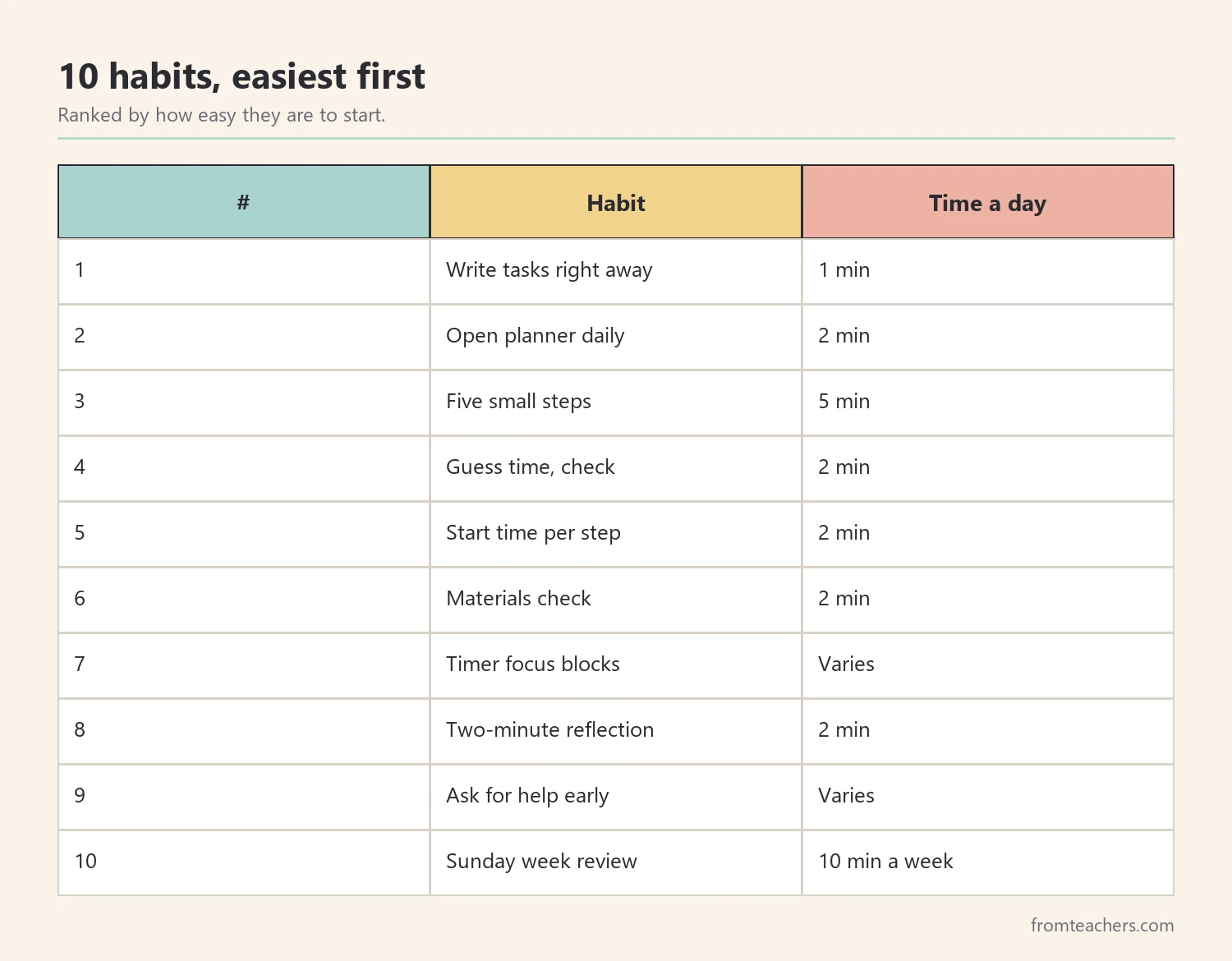
We ranked these ten planner habits for teens by how easy they are to start. The first habits take a minute a day. Later ones take a little more thinking but give you more control over your week. We did not rank them by importance, because everyone gets stuck in a different place.
Also, use any format you like: a paper planner, a one-page task sheet, a notes app or a calendar. The habit matters more than the tool. Figure 1 shows the full ranking.
1. Write down one task, right when you hear it
First, the simplest habit: when a teacher gives an assignment, write it down before you leave the room. Do not trust your memory, even if it feels clear.
Why it helps: most missed work is not lazy work; it is forgotten work.
Jordan’s version: he typed every assignment into his phone before packing his bag. In week one, he caught two tasks he would have missed.
2. Open your planner at the same time every day
Next, link your planner to something you already do, like after lunch or right when you get home. Among planner habits for teens, this one keeps all the others alive.
Why it helps: a habit tied to a routine needs less willpower.
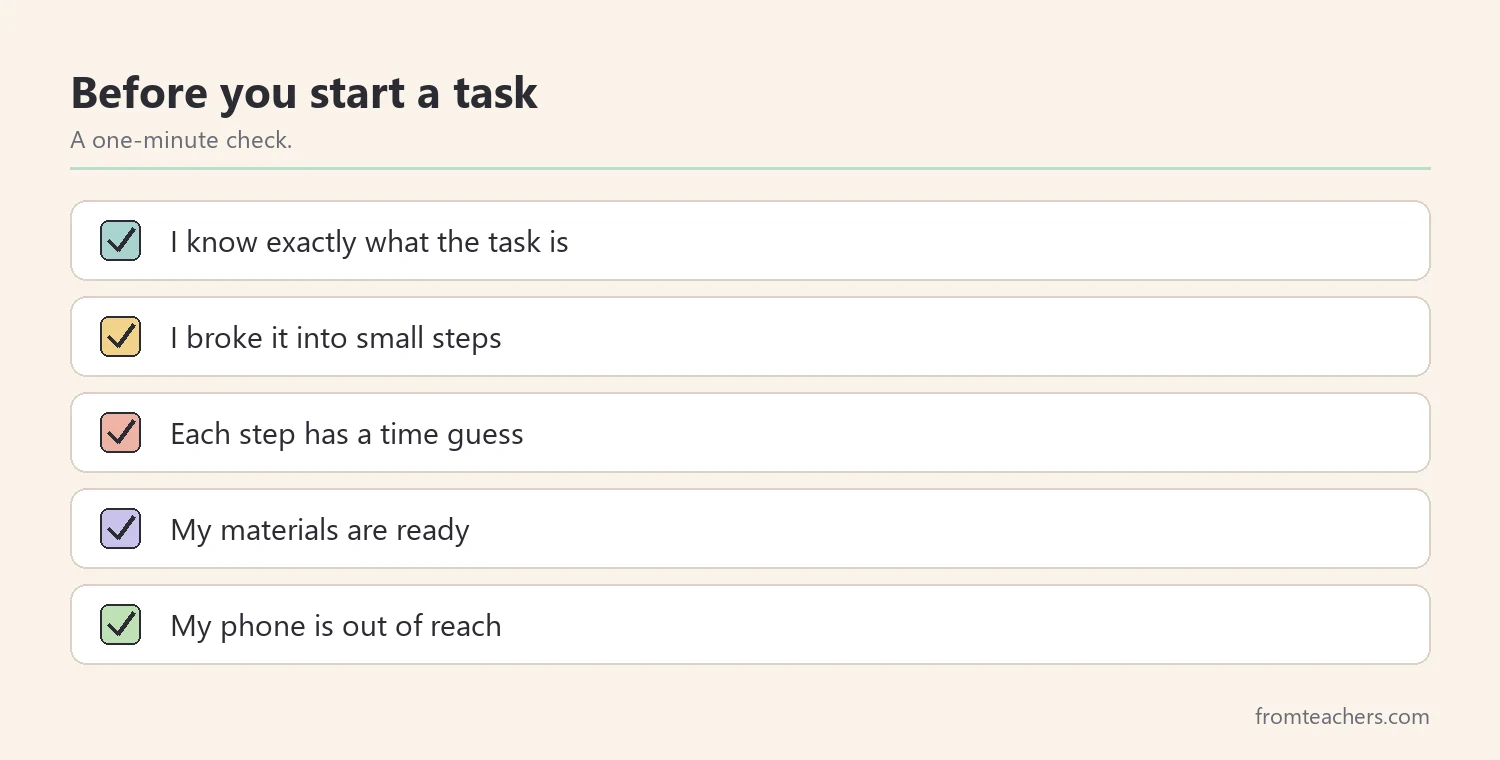
3. Break big tasks into five small steps
Then try one of the most useful planner habits for teens: take any task bigger than one evening and split it into steps you could finish in one sitting. “History project” becomes “choose topic, find three sources, write notes, draft, make slides.”
Why it helps: a small first step is easy to start. A giant task is easy to avoid.
Jordan’s version: his first step was “choose a topic from the list,” which took ten minutes. Once he started, the next step felt possible.
4. Guess how long each step will take
Next, write a time estimate next to each step. Then, after you finish, write the actual time. Many students are surprised how far off their guesses are at first.
Why it helps: good planning depends on knowing how long things really take. Checking your guesses builds that sense.
| Step | My guess | Actual |
|---|---|---|
| Choose topic | 5 min | 10 min |
| Find sources | 20 min | 40 min |
| Write notes | 30 min | 35 min |
| Make slides | 30 min | 50 min |
5. Pick a start time, not just a due date
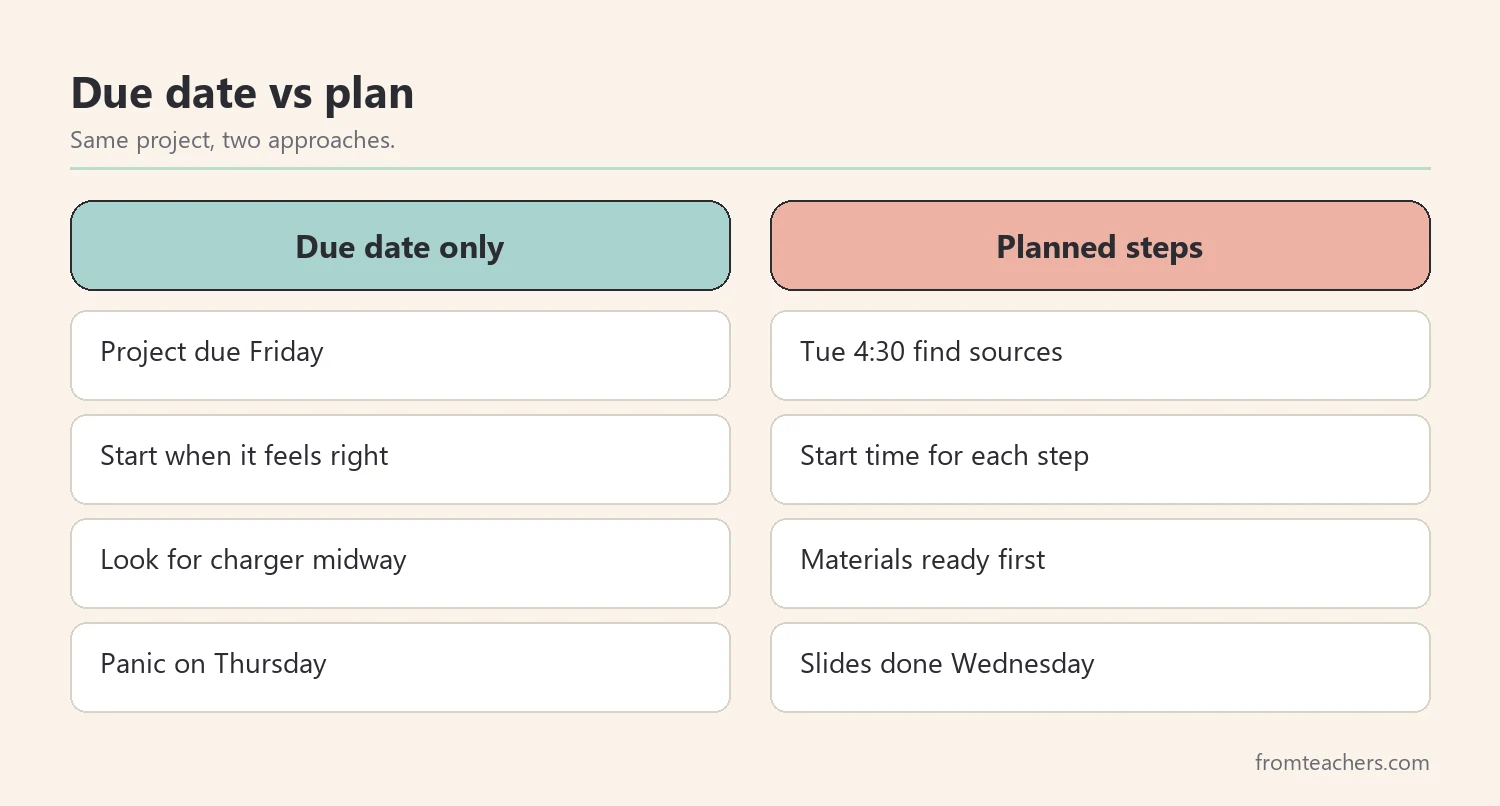
Similarly, a due date tells you when work must be done. A start time tells you when to begin. Planner habits for teens work best when every step has a “start by” time.
Jordan’s version: “Tuesday, 4:30, find sources” worked better than “project due Friday.”
6. Check your materials before you start
Next, list what you need: laptop, charger, notes, textbook, login. Nothing kills momentum like stopping after five minutes to look for something.
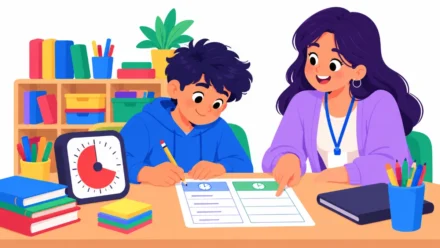
A one-page sheet can hold your steps, time estimates and materials list in one place. The executive functioning task planning sheet for students walks you through steps, timing, materials and a short reflection for any assignment.
7. Use a timer for short, focused bursts
Then try working in short blocks, such as 20 or 25 minutes, followed by a short break. Set a timer and put your phone in another room.
Why it helps: a clear end point makes starting feel less heavy. Many students find it easier to focus when they know a break is coming.
8. Do a two-minute reflection when you finish
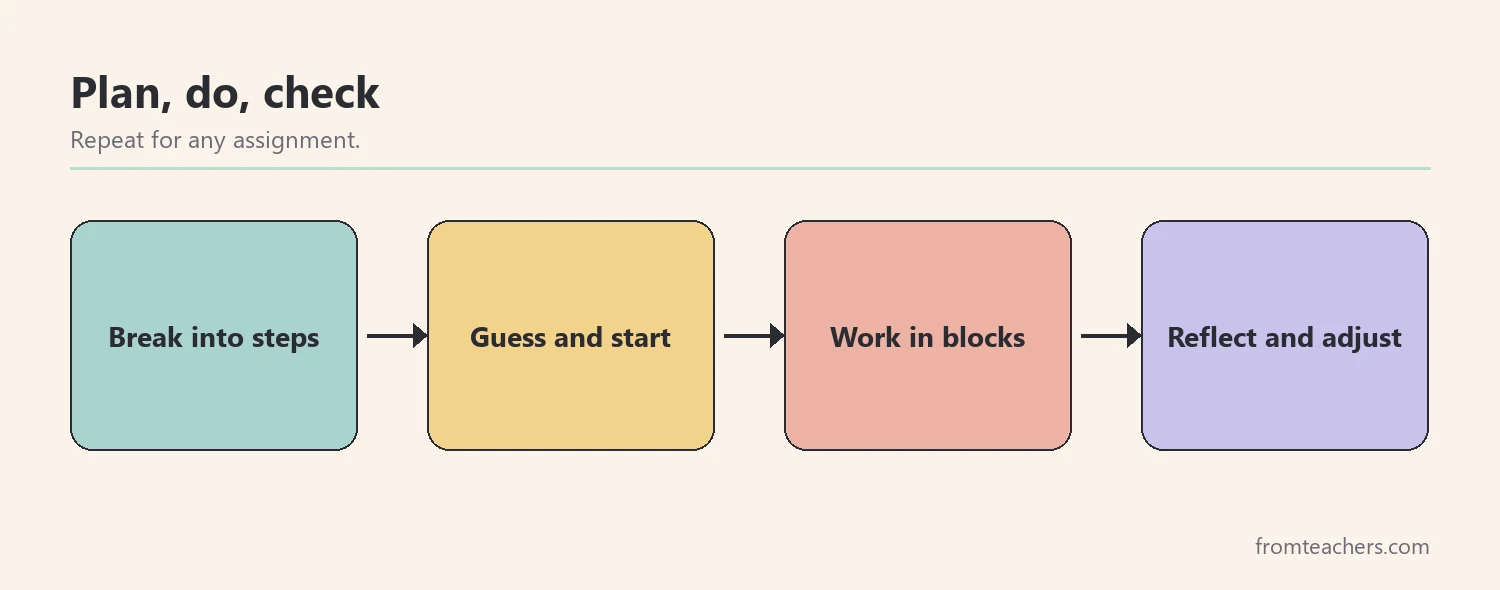
Next, ask yourself three questions after each task: Did I follow my steps? What got in the way? What will I do differently next time? Planner habits for teens grow stronger when you learn from each task.
Jordan’s version: he noticed that his phone was the problem every single time. His next goal was “phone in the kitchen during homework.”
9. Ask for help before you are stuck for days
Then plan your questions. If a step confuses you, write “ask Ms. Ruiz” as the next step. Asking early saves hours of stress later.
Why it helps: teachers can help much more on Tuesday than at 11 p.m. on Thursday. If you have accommodations, such as extended time, planning ahead helps you use them well.
10. Review the whole week on Sunday
Finally, the most involved habit: spend ten minutes each Sunday looking at the coming week. What is due? What tests are coming? Which evenings are busy with sports or work?
Why it helps: you see crunch points before they arrive and can move steps earlier.
Jordan’s version: he noticed a game on Thursday night, so he moved his slides to Wednesday. For the first time, he turned in a project without an all-nighter.
Planner habits for teens with ADHD or learning differences
Some students find planning especially hard because of ADHD or other learning differences. If that is you, these habits still help, but you may need more structure and more reminders.
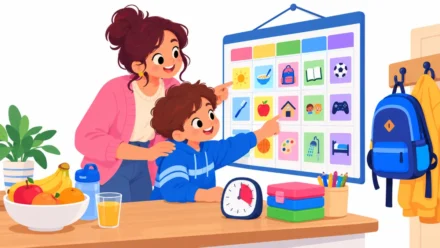
First, keep everything in one place. Two planners mean twice the chance of losing track. Next, use visual cues, such as color for each class or a checklist on your desk. Then talk with your school team about supports, such as teacher check-ins or a copy of class notes.
Also, be kind to yourself. Missing a day does not mean the habit failed. Just pick it up again the next day.
Tracking your progress
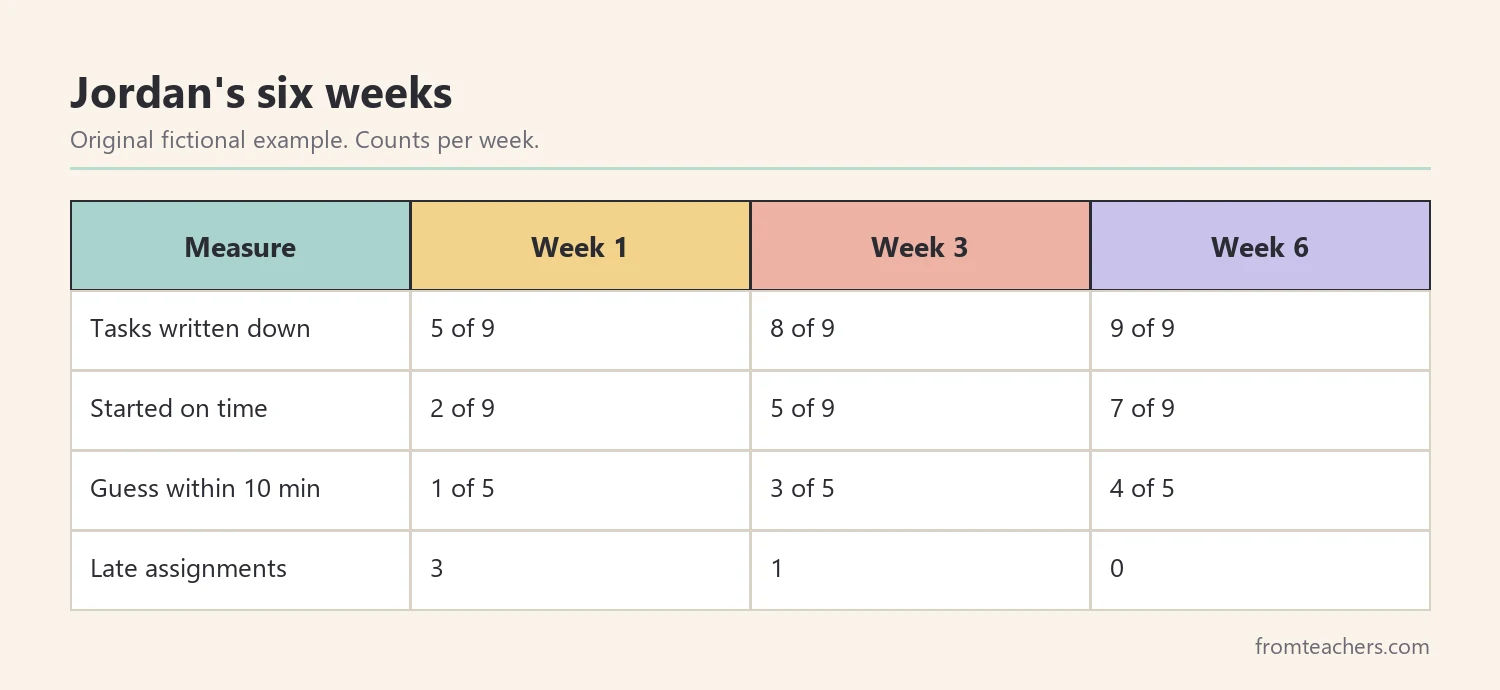
It helps to see change. For example, Jordan tracked four things for six weeks: assignments written down, tasks started on time, times he guessed within ten minutes and late assignments. Figure 3 shows his results. Not every week was perfect, but the overall trend was clear.
Also, share your progress with a parent, teacher or counselor if you like. People who see you trying are often happy to help more. Figure 5 shows a simple loop you can repeat for any task.
How parents and teachers can support planner habits for teens
This list is for students, but adults can help without taking over. If you are a parent or teacher reading along, ask questions instead of giving orders: “What is your first step?” or “When do you plan to start?”
Next, praise the process, not only the grade. “You started your project on Tuesday, that is great planning” builds the habit more than “Good job on the A.”
Finally, let teens own their planner. Planner habits for teens stick best when the student chooses the format, the timing and the goals. Adults can offer tools and check in, but the plan should belong to the teen.
Planner habits for teens during busy seasons
Some weeks are harder than others: exam season, a big game, a family event, a part-time job. Busy seasons are exactly when planner habits for teens pay off, but they are also when habits slip.
First, shrink the routine instead of skipping it. If you cannot do a full Sunday review, spend two minutes listing the three most important tasks for the week. Next, protect sleep. Late nights to catch up often make the next day worse.
Then look for small pockets of time. Ten minutes on the bus can be enough to choose a topic or review notes. Also, tell teachers early if you see a conflict coming; many are flexible when you ask before the due date, not after.
Planner habits for teens who work or play sports
Many teens juggle school with practice, rehearsals, a job or caring for younger siblings. These commitments are fixed, so your schoolwork has to fit around them. That makes planner habits for teens even more important for busy students.
First, write your fixed commitments into your planner before anything else. Practice from 3 to 5, work on Saturday morning, babysitting on Wednesday. Next, look at the gaps that remain and place your task steps there. Then be realistic: a night after a late game is not the night for a big essay draft.
For example, Jordan played basketball three evenings a week. Once he wrote his practice times in his planner, he saw that Monday and Wednesday afternoons were his best study windows, and he put his hardest steps there.
Common mistakes and how to avoid them
- Writing tasks but never looking again. Fix: open your planner at a set time daily.
- Planning the whole project as one step. Fix: split it into small steps.
- Only writing due dates. Fix: add a start time for each step.
- Working with your phone nearby. Fix: put it in another room during focus blocks.
- Quitting after one bad week. Fix: restart the next day without guilt.
Questions students ask about planner habits for teens
Paper planner or app?
Either can work. Choose the one you will actually open every day. Some students use both: an app for reminders and paper for breaking tasks into steps.
How long does it take to build a habit?
It varies from person to person. Focus on one habit at a time and give it a few weeks.
What if I forget to plan for a few days?
Just start again. Look at what is due next and plan only the next step.
Do planner habits for teens really help with grades?
Planning helps you start earlier and miss fewer tasks, which often helps. Results depend on many things, including sleep, support and the class itself.
What if my teacher does not post assignments online?
Write them down in class and ask a classmate to compare lists once a week.
Related reading: Effective ADHD Classroom Strategies to Support Student Success, Navigating the Path to Adulthood: Building Essential Life Skills, and Building Workplace Readiness: Essential Skills for Career Success.
You may also need: Weekly To-Do List: Monday-Friday Planner.
A companion resource for planner habits for teens:
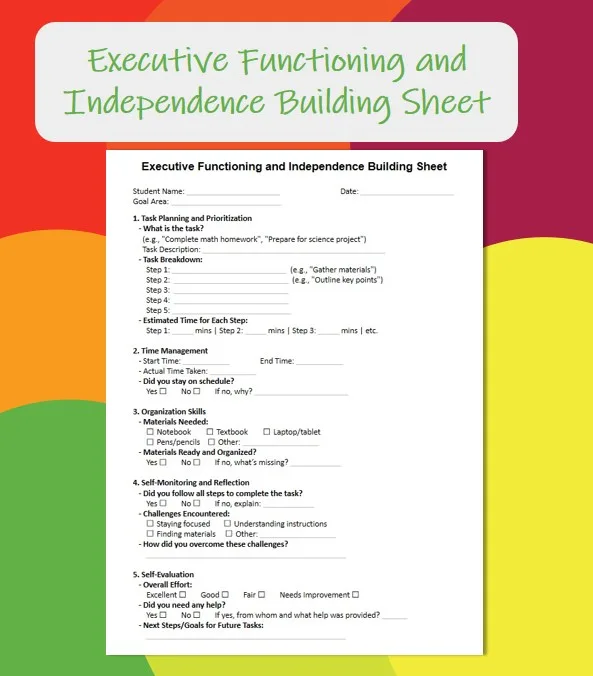
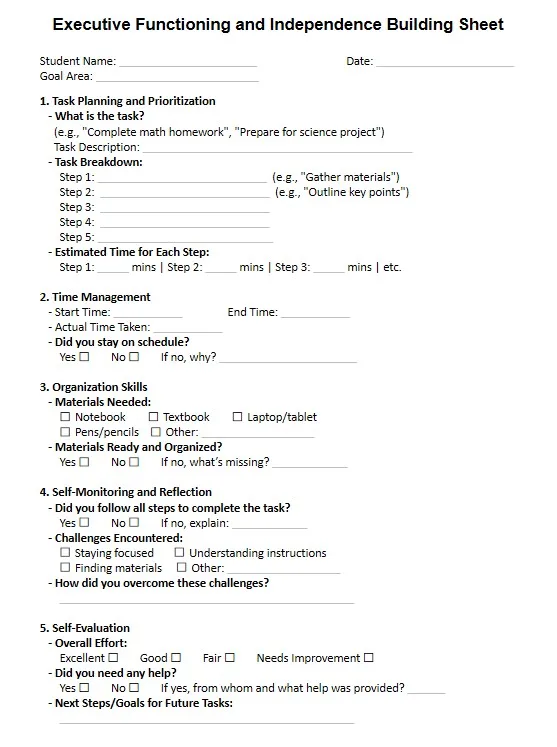
Executive Functioning Sheet: Student Task Planning and Self-Monitoring Tool: a one-page sheet that walks a student through defining a task, breaking it into up to five steps with time estimates, tracking start, end and actual time, checking materials, and reflecting on challenges, effort and next steps.
Sources and scope
- CHADD: information on ADHD, including organization and time management for teens.
- Understood: articles on executive function and study skills for students and families.
- Center on the Developing Child at Harvard University: explainers on executive function and how it develops.
- Child Mind Institute: guides for families and teens on attention, organization and stress.
This list shares everyday planning habits for teens. It does not diagnose ADHD or any other condition, and it does not replace support from your school team, counselor or doctor.
Key takeaways
- The best planner habits for teens are small and repeated daily.
- Break big tasks into steps with start times.
- Guess how long steps take, then check.
- Reflect for two minutes after each task.
- Ask for help early and review your week every Sunday.






Leave a Comment